Mountain Biking Adventures For Kids In The Swiss Alps
Mountain biking for kids in the Swiss Alps: family trips with pump tracks, lift-assisted flow trails, kid-fit bikes & safety tips (June–Sept)
Mountain biking trips for kids — Swiss Alps
I run mountain biking trips for kids in the Swiss Alps that mix lift‑accessible flow trails, forest singletrack, and gentle alpine loops.
Resorts I ride
I commonly operate from resorts including Lenzerheide, Laax, Davos, Villars, Zermatt and Saas‑Fee.
Season & access
I’m most active in June–September, though higher parks sometimes open May–October. Lift and park opening dates can vary by year — I check them before scheduling.
Trail grading and matching
Trail grades always follow each child’s ability rather than strictly their age. Typical progressions I use are:
- Green — suited to balance and very basic bike control (ages 4–6).
- Green → Easy Blue — for developing riders with basic cornering and braking (ages 6–10).
- Blue → Red — for older kids (ages 10+) who have demonstrated consistent control and confidence.
I prioritize fit and sizing over age charts: wheel sizes span 12–26″, short‑reach brakes suit small hands, and an in‑shop fitting builds confidence and control.
Bookings & logistics
I reserve rentals and lessons early for busy months, especially July–August. On the day I check trail status and weather the morning of the ride.
Packing & kit
My standard packing checklist includes:
- EN 1078 helmet (non‑negotiable)
- Basic pads (elbow/knee)
- Compact repair kit (multi‑tool, spare tube/patches, pump)
- Hydration (bottle or pack)
- Charged phone and basic first‑aid supplies
Navigation & maps
GPX routes and offline maps go on the device before I set out to avoid reliance on mobile data or cellular coverage.
Safety briefing
I give a clear briefing on safety and emergency procedures at the start of every outing — expectations, hand signals, turnaround rules, and the plan if someone is injured or separated from the group.
Key Takeaways
- I pick resorts with kids’ pump tracks, skills areas, and gondola bike transport to speed progression from balance bikes to lift‑assisted descents.
- Match trail grade to age and skill: Green for ages 4–6, Green→Easy Blue for 6–10, Blue→Red for 10+ with demonstrated control.
- Prioritize fit and sizing over age charts: wheel sizes span 12–26″, short‑reach brakes suit small hands, and an in‑shop fitting builds confidence and control.
- Don’t compromise on helmets (EN 1078), basic pads, a compact repair kit, a charged phone, and first‑aid supplies in my packing.
- Plan logistics: book rentals and lessons early for July–August, check trail status and weather the morning of the ride, and preload GPX/offline maps.
YOUTUBE VIDEO
Quick essentials for family mountain biking in the Swiss Alps
Why the Alps work for kids
I keep this essentials list short and practical. It helps families plan safe, fun outings across alpine valleys and forest singletrack.
The terrain suits kids because resorts offer a wide range of routes: forest singletrack, 3–8 km beginner loops, family alpine plateau rides of 5–15 km, and lift-assisted descents with 400–1,200 m vertical drop. Many resorts mix easy pedal loops with lift-accessed, playground-style descents so children can progress quickly from balance bikes to lift-assisted downhill.
The prime season runs June–September, with higher-altitude parks sometimes open May–October depending on snow. Most major resorts provide at least one gondola that carries bikes and families, and many towns offer bike-friendly public transport for easy access. If you want extra family ideas off the bike, I point families to practical family activities you can combine with rides.
Switzerland’s trail signage and marking system is strong, which reduces route-finding stress for parents. You’ll find widespread rental shops and professional guides who specialize in family groups. For kids-focused instruction and camps that speed up skills, I often recommend checking curated lists of mountain adventure camps and the best summer camps for options that match different ages and experience. For broader camp comparisons I also refer parents to a summer camps selection. If you want quick guidance on riding safety and rules, see advice on safe cycling, and for region-specific family rides I link to top family activities in Vaud as examples of easy, scenic loops.
Quick decision checklist for families
Use these fast-action items to choose a resort and get ready before you go:
- Target green/blue trails for first seasons; follow standard trail grading (green, blue, red, black).
- Prefer resorts with an on-site kids pump track, skills area, or a kids bike park.
- Verify lift bike-transport rules and family ticket options; gondola policies vary by resort.
- Book rentals and lessons early for July–August; spots fill fast.
- Pack a proper kids helmet (EN 1078), basic pads, hydration and a phone or offline maps.
- Check trail status and weather on the morning of your ride.
Top family-friendly Swiss resorts — fact-box profiles
Lenzerheide (Graubünden)
Elevation: valley ~800–1,000 m — top lift ~2,400 m.
Typical vertical descent: approx. 600–900 m (verify on the resort’s official site).
Number/type of family-friendly trails: multiple green/blue flow trails, 2 green/blue flow trails, beginner loops 3–8 km, kids bike park.
Skills & practice: 1 pump track; 1 skills area.
Recommended minimum age / wheel size: from balance bikes to 24″ progression; recommended minimum ~4–6 for supervised pedal loops — check specific trail signage.
Nearest hub & transfer time: 90–120 minutes from Zurich by train/car.
Notes: strong family infrastructure and gondola bike transport make this an easy choice for mixed-age groups. I recommend confirming lift-bike rules before you go.
Laax / Flims / Falera (Graubünden)
Elevation: valley ~1,000 m — top lift ~2,500 m.
Typical vertical descent: vertical drop 700–1,200 m (range; verify exact runs).
Number/type of family-friendly trails: extensive lift-assisted blue runs and family trails; kids areas and a dedicated bike park.
Skills & practice: pump track and separate kids bike park on-site.
Recommended minimum age / wheel size: well suited for 6+ on blue runs; kids areas handle younger riders.
Nearest hub & transfer time: 90–120 minutes from Zurich/Graubünden hubs.
Notes: Laax is ideal if you want lift-assisted days and structured kids programming. I often pair a day here with local summer camps for focused skill progression; see the mountain adventure camps to plan longer stays. mountain adventure camps
Davos / Klosters (Graubünden)
Elevation: valley ~1,500 m — top ~2,600 m.
Typical vertical descent: vertical drop 600–1,100 m (range).
Number/type of family-friendly trails: multiple blue/red runs and family loops; gondolas allow bike transport.
Skills & practice: pump track and kids skills areas at valley stations.
Recommended minimum age / wheel size: 6+ for blue trails; 10+ for red trails where skills matter.
Nearest hub & transfer time: 120–150 minutes from Zurich by train/car.
Notes: I like Davos for high-altitude training rides and reliable lift access; check seasonal trail openings before scheduling.
Verbier / Val de Bagnes (Valais)
Elevation: valley ~800–1,200 m — top ~2,200–3,300 m.
Typical vertical descent: variable; many family-friendly options but some steep segments — verify specifics.
Number/type of family-friendly trails: scenic family routes and valley kids areas, with steeper high-trail sections for experienced riders.
Recommended minimum age / wheel size: 8+ for mixed blue/red; younger kids do well on valley loops.
Nearest hub & transfer time: 150–180 minutes from Geneva.
Notes: I recommend picking valley loops for family days and checking each descent’s gradient before riding with younger kids.
Saas-Fee / Saastal (Valais)
Elevation: valley ~1,600 m — top lifts higher with glacier views.
Typical vertical descent: approx. 400–900 m depending on run.
Number/type of family-friendly trails: lift-access family trails, valley loops and alpine playgrounds.
Skills & practice: pump track in the valley.
Recommended minimum age / wheel size: 6+ for family trails; confirm glacier/high-altitude conditions for kids.
Nearest hub & transfer time: ~120–180 minutes from Geneva or Zurich depending on route.
Notes: high starting elevation gives shorter climbs but can introduce altitude factors—check conditions day-of.
Zermatt (Valais)
Elevation: valley ~1,600 m — high-alpine top lifts >3,000 m.
Typical vertical descent: variable — verify specific trail stats.
Number/type of family-friendly trails: valley family loops and some lift-assisted descents; car-free village accessed by train.
Recommended minimum age / wheel size: family loops suitable for 6+; technical high trails for teens/adults.
Nearest hub & transfer time: 180–240 minutes by train from Geneva/Zurich (train access to car-free Zermatt).
Notes: I favor Zermatt for scenery and village safety, but always confirm train and bike transport rules.
Villars / Les Diablerets (Vaud)
Elevation: valley ~1,000 m — top ~2,200 m.
Typical vertical descent: approx. 600–1,000 m on some runs (verify specifics).
Number/type of family-friendly trails: gentle alpine rides, valley pump track and kids areas.
Recommended minimum age / wheel size: great for 4–10 on gentle loops; pump track works for beginners.
Nearest hub & transfer time: 90–150 minutes from Geneva/Lausanne by train/car.
Notes: Villars suits families who want short transfers and soft alpine terrain. For extra family ideas in Vaud, I point readers to local family activities and weekend options. family activities
Quick comparison — pick by family goal
- Best for youngest kids (balance bike to 24″): Lenzerheide, Villars.
- Best lift-assisted progression: Laax / Flims / Falera, Davos.
- Best high-alpine scenery: Zermatt, Saas-Fee, Verbier.
- Best short transfer from Geneva/Lausanne: Villars; from Zurich: Lenzerheide or Laax.
- If you want on-site programming and camps: consider Laax and Davos and check local summer camps for kids.
Trail grades explained and what kids can handle (age/skill matrix)
I break trail grades into the common Green → Blue → Red → Black scale most Swiss regions use, though local signage or IMBA-style labels can vary. Green means very easy: wide gravel or forest tracks with minimal gradient and no technical obstacles. Blue is easy singletrack mixed with fire roads, suitable for beginners who can handle short roots and rocks. Red signals intermediate terrain: sustained singletrack, steeper pitches and technical features. Black denotes difficult, exposed, or mandatory technical maneuvers and should be reserved for experienced riders.
- Green: wide gravel or packed dirt forest tracks, gradients typically under 6%, no technical obstacles, lengths around 1–6 km — ideal for balance work and first pedal loops.
- Blue: includes singletrack sections, moderate rocks and roots, gradients roughly 6–12%, typical loops 3–10+ km — good for riders ready to try short singletrack.
- Red: sustained singletrack with technical rock/root sections, possible drops and steep pitches that exceed 12% in places — requires solid bike handling and braking control.
- Black: narrow, exposed lines with mandatory technical moves and obstacles — suitable only for skilled teens and adults with confidence on protection and exposure.
Singletrack versus fire road matters for progress and safety. Singletrack is narrow and more technical, with roots, rocks and tighter turns. Fire road (or gravel track) is wider, easier to ride and better for early-mileage confidence. I use fire roads for warm-ups and technical areas for focused skills sessions.
Age/skill matrix
I map typical ability to trail grade and include practical guidance for supervision and practice.
- Ages 4–6: Green, flat loops of 1–6 km, very low technical density. Parent escort is recommended; focus on balance, short bursts and gentle climbs.
- Ages 6–10: Green to easy Blue, 3–8 km beginner loops with short singletrack. Low–medium technical density; add pump track sessions and a skills area for turning, braking and small drops.
- Ages 10+: Blue to Red depending on competence. Reds only when the rider shows consistent control over obstacles and confidence on exposure. Experienced teens can step into light Black lines with coaching and proper protection.
When comparing trails I look at four quick metrics:
- Average gradient: <6%, 6–12%, >12%.
- Technical density: low / medium / high.
- Surface: packed dirt, gravel, roots, rock.
- Length: short loops versus sustained climbs.
I always check recent trail status and local signage before riding, and I make helmet, pads and bike condition non-negotiable. For a quick primer on gear and safety techniques, I recommend reading safe cycling as part of pre-ride planning.
Ages, bike sizing, progressive gear checklist and product examples
I recommend planning by wheel size first, then refining fit with a hands-on test. Balance bikes suit ages 2–4. Kid’s pedal bikes without gears typically work for ages 3–6 and use 12–16" wheels. Twenty-inch wheels are common for ages 5–9. Twenty-four-inch wheels fit kids roughly 8–12. From 26" upward you’re usually in small adult frames, suitable from about 11+ or whenever the child’s inseam/height matches the frame. Include 12, 14, 16, 20, 24 and 26-inch wheels in your planning and testing.
I coach parents to prioritize confidence and control over age charts. For beginners, set the saddle so the child can sit with both feet flat on the ground. Lower the saddle for standing skills and quick dismounts. Fit the bike so the pedal at its lowest point leaves the knee slightly bent — aim for about a 15–25% knee bend. That’s a functional target, so focus on fit rather than strictly on age.
Adjustable controls make a huge difference. Short-reach brake levers and light, easy-to-squeeze controls let small hands modulate speed without fatigue. Test levers and shifters in the shop. I always suggest booking a local bike shop fitting session; expert hands-on tweaks beat online sizing charts.
When you test in store, bring the child’s shoes and a known inseam measurement if you have one. Use inseam to narrow frame options, then confirm saddle height and brake reach physically. A quick in-shop checklist I run through:
- Saddle height while seated
- Ability to touch ground safely
- Pedal stroke with slight knee bend
- Reachable brake levers with a one-finger test
- Short push-off on a gentle slope to assess balance and handling
Progressive gear checklist and product examples
Use the following minimum kit and sample models to build a safe, confidence-building setup.
- Helmet and protection: Helmet meeting the EN 1078 standard; choose a snug, level fit. Consider open-face helmets for most family and all-mountain use. Use a full-face helmet only as skill and confidence increase for more technical downhill riding. Sample kid models to test: Giro Launch, Bell Sidetrack, POC POCito, Smith Holt Jr., MET Buddy.
- Pads and clothing: Gloves, knee and elbow pads for learners; Fox Youth, Demon United and Triple Eight youth pads are good options. Choose flat-soled shoes for stable pedals.
- Hydration: A small pack or bottle, 0.5–2 L CamelBak kids options depending on ride length.
- Repair kit: Spare tube or patch kit, mini-pump or CO2 inflator, compact multi-tool. Test the pump and tool on the bike before you head out.
- Safety and admin: Basic first-aid kit, ID and insurance card, mobile phone with offline maps. I keep emergency contact info taped inside a pack.
- Bike examples to try (for testing, not endorsements): Islabikes Beinn (20/24) for lightweight kids-specific geometry; Specialized Riprock 20/24 with confidence-building tyres; Trek Roscoe Jr. and Precaliber for beginner/intermediate builds; Scott Scale Junior, Cube Acid 200/240, and Puky balance and pedal bikes for budget and starter options.
- Accessories to check: Short-reach levers, child-sized grips, saddles with quick micro-adjust clamps, and a simple kickstand or transport strap if you’ll be shuttling.
I advise pairing a selected bike with a short family ride on easy trails first. Start slowly and build time and terrain gradually. You can find suitable local family activities to try as progressive steps on family activities.
Safety, accident stats, emergency preparedness and trail stewardship
I treat helmets as non-negotiable gear for kids on alpine trails. Multiple meta-analyses and national safety agencies report helmets cut head injuries roughly 50–70%, and I reference SUVA bicycle safety statistics for the Swiss context. I recommend certified helmets that fit snugly and sit level on the brow; any gap or tilt reduces protection.
I watch for the common causes of child biking incidents and coach riders to anticipate them:
- Falls on singletrack
- Collisions at crossings
- Loss of control on steep descents
- Strikes on roots or rocks
- Failures from poor maintenance
I teach braking, line choice and scanning techniques early so riders develop good habits before tackling technical terrain.
I carry basic emergency tools and prepare routes with rescue options in mind. Always bring:
- Compact first-aid kit
- Multitool
- Pump
- Spare tube or patch kit
- Charged phone
In remote areas I add a satellite communicator. Know the mountain rescue contact for the region — REGA or the local rescue service — and save those numbers in your phone.
Describe location clearly when calling for help. I give the lift name or nearest waypoint, trail number if available, valley and top-lift elevation, and the nearest station. Provide an estimated coordinate if you can. That level of detail speeds response and reduces confusion.
If a rider falls — quick checklist
Use these steps in order after a fall; they help you assess severity and decide whether to call mountain rescue.
- Check consciousness: ask the rider to squeeze your hand and respond to questions.
- Control major bleeding and confirm airway and breathing.
- Ask about pain and test limb movement; look for deformities or obvious fractures.
- If the rider is unconscious, has severe bleeding, suspected fracture, or head injury: call mountain rescue (REGA or local) immediately and provide lift name, nearest waypoint, estimated coordinates, and number of people.
I make protective choices based on terrain and skill. Open-face helmets are lightweight and ventilated and work well for most family and cross-country riding. I recommend full-face helmets with chin protection once a child is riding technical or downhill trails at speed. I also pair helmets with gloves, knee pads, and a well-fitted bike — that lowers both injury risk and anxiety.
I expect riders and guardians to practice good trail stewardship. I follow local signage and yielding rules, slow on blind corners, and avoid creating new lines. I don’t ride muddy trails that can erode quickly, and I pack out any waste. Respect for wildlife and grazing livestock keeps trails open and communities supportive of mountain biking. I also consult cycling safety guidance before longer trips for route selection and equipment checks: cycling safety
Sample itineraries, coaching, costs, packing and navigation tools
I lay out clear family itineraries with practical packing and contingency advice so you can pick what fits your group and skill level.
Sample itineraries (GPX downloads)
Below are four ready-to-use family options; download the GPX for each route and load it to your device before you ride.
- Half-day beginner loop — 3–6 km, minimal elevation, 45–90 minutes. Difficulty: easy (green). Terrain: packed dirt and gravel. Pack: water, snacks, light layers, sunscreen SPF 30+. Contingency: local bus back to valley. GPX download recommended.
- Half-day lift-assisted family descent — vertical drop 400–900 m per run; plan 2–4 runs (~2–4 hours including lifts and breaks). Difficulty: blue to easy red. Terrain: flow trails and groomed singletrack. Pack: hydration, compact repair kit, sun protection, layers. Contingency: gondola or bus descent option. GPX download recommended.
- Full-day pedal tour — 12–25 km, cumulative ascent 300–800 m, 4–7 hours with stops. Difficulty: easy–moderate. Terrain: mixed singletrack, alpine tracks, and gravel. Pack: full-day food, larger repair kit, extra layers, sunscreen SPF 30+. Contingency: plan bus or gondola bail-out segments. GPX download recommended.
- Multi-day stages — 20–40 km/day valley-to-valley or lift-assisted stages with overnight stays. Difficulty: moderate and above depending on stage choice. Terrain: long singletrack sections, sustained climbs and descents. Pack: overnight kit, layered clothing, additional spares, insurance card. Contingency: reserve flexible transport between resorts. GPX series recommended.
I coach skill progression with a simple sequence:
- Balance
- Handling
- Cornering
- Obstacles
- Controlled descents
I recommend short regular practice sessions to build muscle memory. Suggested clinic formats include:
- Half-day skills sessions
- Private 1:1 lessons
- Family-guided rides
- Resort age-group kids classes (many run from about age 4–6)
Expect balance basics to take days to weeks; confident cornering and pumping usually develop over weeks to months with weekly practice. Aim for 20–40 minute focused sessions 2–3 times per week.
Budgeting and gear
Budgeting and gear choices should match frequency of use. Typical day costs to plan for are:
- Lift pass: €20–€40 per person
- Child rental: €20–€50/day
- Lessons: €40–€120 per session
If your child grows fast, I advise renting or using travel-friendly rental bikes. For regular riders, buying a quality used or new bike often pays off.
I recommend packing:
- Helmet (EN 1078)
- Gloves
- Pads
- Hydration system
- Sunscreen SPF 30+
- Mini-pump/CO2
- Spare tube/patch kit
- Multi-tool
- ID and insurance copy
For a quick read on local off-bike options, see family activities.
Navigation and safety tools
I rely on GPX-enabled devices and apps and recommend SwitzerlandMobility and regional trail maps. Download offline maps before you go, carry a battery pack, and use a basic GPS tracker or phone-share location for safety. I always check elevation profiles so I know total ascent, not just top altitude, and I preload GPX into my device as a final step.
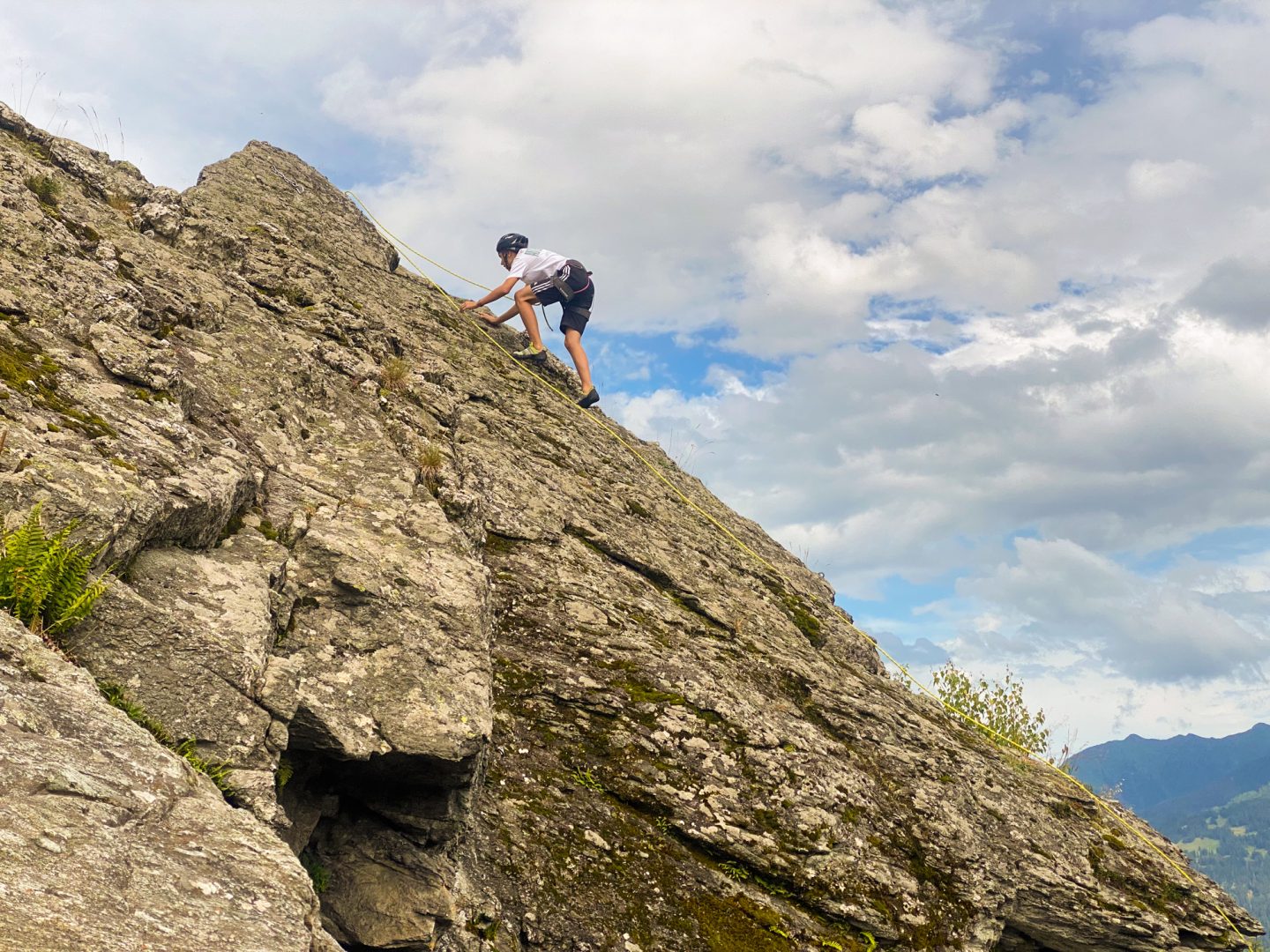
Mountain biking for kids in the Swiss Alps | family mountain biking Switzerland | kids bike park Swiss Alps | beginner mountain bike trails Switzerland
I’ll produce a full asset pack to support Mountain biking for kids in the Swiss Alps and family mountain biking Switzerland pages. I focus on assets that help parents assess safety, plan routes by ability, and convert interest into bookings and downloads.
Visual assets, SEO structure and extra content to produce
Visual assets & downloadable deliverables
Below are the core files I’ll deliver for each trail cluster and resort:
- Elevation profile images for sample routes (annotated with vertical drop 400–1,200 m and climb/descent labels).
- Labelled trail maps and printable trail maps sized for A4 and mobile screens.
- Gear flat-lay checklist image and printable family packing checklist.
- Helmet fit diagram (shows EN 1078 helmet standard fit points) and a kids wheel size chart infographic with wheel sizes 12–26 inch.
- Before/after kid progression photos and short family-run videos (30–60 seconds) with captions for social and on-site playback.
- Three downloadable GPX files (3 family routes) plus a recommendation to download GPX offline before heading out (download GPX; elevation profile; trail map).
- Printable elevation profiles and a single-sheet packing checklist for family distribution.
- I’ll also supply web-ready thumbnails, high-res print files, and short captioned clips optimized for Instagram and site hero areas.
- For family activity planning links I’ll reference regional pages like family activities and regional recommendations such as top family activities.
SEO structure, page layout and content hooks
I’ll structure pages so search engines and parents find critical info quickly. Use the exact primary SEO phrases in the main heading and the first paragraph: Mountain biking for kids in the Swiss Alps, family mountain biking Switzerland, kids bike park Swiss Alps, and beginner mountain bike trails Switzerland. Sprinkle supporting facts in subheads and captions: June–September season, beginner loops 3–8 km, full-day 12–25 km, wheel sizes 12–26 inch, and the statistic helmet reduces head injury 50–70%.
Page layout and structured data recommendations:
- For each trail/resort present a compact fact box listing: trail name; difficulty grade; distance (km); total ascent/descent (m); estimated time (hours); top/valley elevation (m); suitability by age; and icons for lift access, rental availability and on-site lessons.
- Use schema markup for Trail and Course where available and attach GPX files to each trail item.
- Place CTAs near each fact box: download GPX, book lessons, check trail status. Encourage readers to book lessons early and check trail status before arrival (book lessons early; check trail status; download GPX).
- Link to booking pages and a local events calendar such as mountain adventure camps and summer choices like summer camps and summer camps 2024 to cross-sell multi-day stays.
Product and gear callouts (one-line model notes for shopping pages):
- Islabikes Beinn — lightweight kids geometry;
- Specialized Riprock — confidence tyres;
- Trek Roscoe Jr./Precaliber — beginner-friendly;
- Scott Scale Junior, Cube Acid, Puky balance & pedal bikes;
- Helmets: Giro Launch, Bell Sidetrack, POC POCito;
- Pads: Fox Youth, Demon United.
Operational notes I’ll include on the page: recommend EN 1078 helmet standard for helmets, simple helmet fit steps shown in the infographic, and age/range guidance for kids parks. For safety primer and cycling tips I’ll reference the local safe-cycling guidance like safe cycling and suggest linking trail status feeds to keep pages current.
Sources: