

What Is Camp-Based Language Immersion for Kids?
Discover what camp-based language immersion is and how it transforms language learning through fun, real-life activities and adventures!
TL;DR:
- Camp-based language immersion immerses children in all daily activities using the target language as a means of living rather than studying. Consistency across staff and activity integration fosters faster conversational fluency, confidence, and cultural awareness. Selecting a program with full-day language policies, qualified instructors, and activity-based communication ensures genuine immersion and lasting skill development.
Camp-based language immersion is a method of language education where children and teens learn a target language by using it throughout every part of their daily camp life, not just during formal lessons. Unlike classroom-only instruction, this approach places learners inside a living, breathing environment where the language is the medium for sports, meals, friendships, and adventures. Programs like the UK English & Adventure Camp and WoW Summer Camp by Ak Nesil have built their entire models around this principle, proving that when language becomes a tool for real activity, acquisition accelerates. Youngexplorersclub applies the same philosophy in Switzerland, combining outdoor adventure with genuine linguistic immersion for international participants.
What is camp-based language immersion and how does it work?
Camp-based language immersion, known in educational research as total or partial immersion, is the practice of surrounding learners with a target language across all daily interactions. The key distinction from a standard language course is that the language is not the subject being studied. It is the vehicle through which everything else happens.
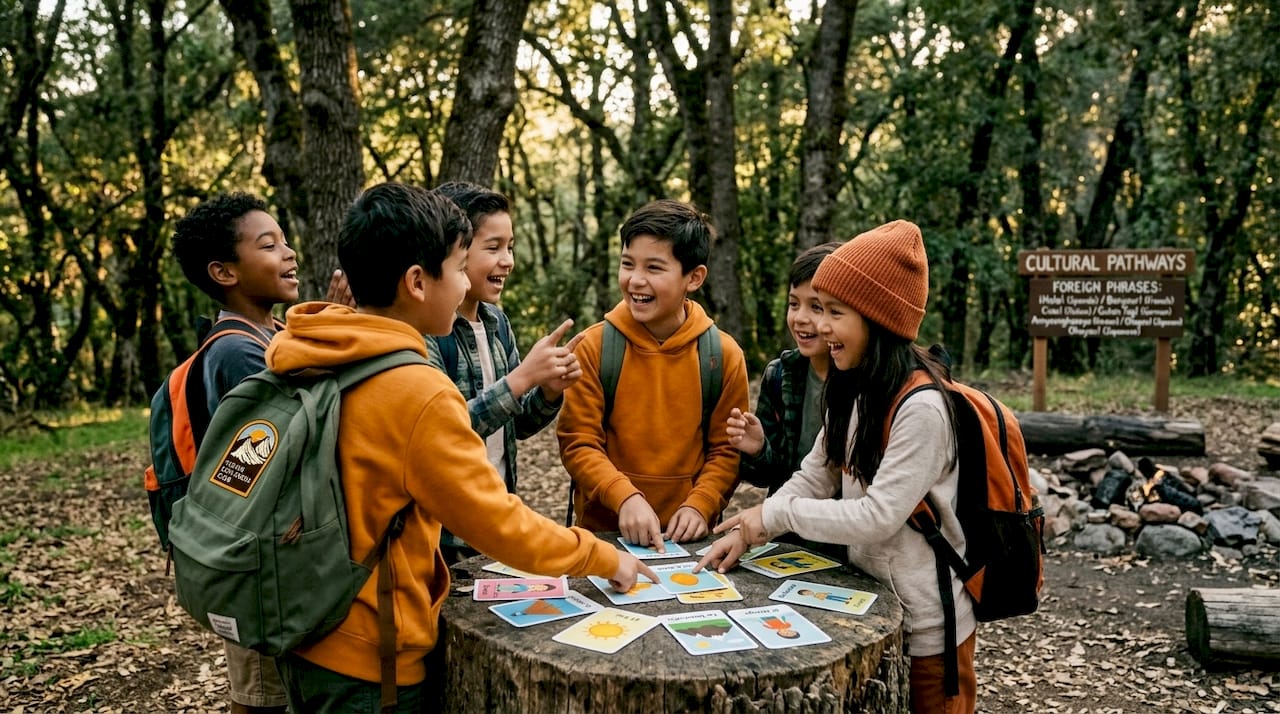
The most effective programs enforce what practitioners call the “language-only principle.” WoW Summer Camp, for example, applies an English-only rule that covers every staff member, from lead teachers to administrative workers. This matters because children are perceptive. If they notice that the kitchen staff or the activity coordinator switches to their native language, the immersion spell breaks. Consistency across all personnel is what separates genuine immersion from a symbolic program.
A typical day in a camp immersion program splits into structured learning and experiential application. The UK English & Adventure Camp, for instance, delivers 40 lessons over two weeks, with classroom instruction in the mornings and target-language adventure activities in the afternoons. That ratio matters. Learners get enough formal grammar and vocabulary input to build a framework, then immediately test it in real situations where communication is necessary to accomplish something.
The role of activity-based learning
Outdoor adventures require campers to communicate to get things done. A rock-climbing session where a child must ask a partner for equipment, describe a route, or call out safety instructions is not a language exercise. It is a genuine communication need. Turning language into a practical necessity rather than an academic exercise is the core mechanism behind why immersion camps produce faster conversational gains than traditional courses.
Project-based and play-based components reinforce this further. Drama productions, team sports, cultural excursions, and group cooking challenges all require sustained language use across a social context. Chester College’s English Summer Camp in Spain, for example, integrates music, drama, sports, and cultural excursions to make language learning a community process rather than an individual academic task.
Pro Tip: Before enrolling, ask the camp director one specific question: “Does your language policy apply to all staff at all times, including during meals and transitions?” The answer tells you immediately whether the immersion is real or just marketing.
What are the key benefits of language immersion camps for children?
The benefits of camp-based language immersion extend well beyond vocabulary gains. Research and practitioner experience point to four distinct categories of advantage.
- Accelerated conversational fluency. Children acquire conversational skills faster when language is tied to real activity. Asking for help during a kayaking session or negotiating roles in a drama rehearsal builds fluency that textbook drills cannot replicate.
- Increased confidence. Successfully communicating in a second language during a high-energy activity creates a confidence feedback loop. Each small win reinforces the belief that the language is usable, not just learnable.
- Cultural awareness and global-mindedness. Immersion camps draw international cohorts, which means children interact with peers from multiple countries. This exposure builds genuine cross-cultural understanding, not just linguistic competence.
- Social and emotional development. Team challenges, shared meals, and group adventures build resilience, cooperation, and empathy. These outcomes arrive as byproducts of the camp structure, not as separate curriculum goals.
- Cognitive benefits. Bilingual and multilingual development is linked to stronger executive function, including attention control and mental flexibility, particularly when exposure begins in childhood.
One important caveat deserves honest acknowledgment. Immersion can cause fatigue and moodiness in young children as they manage multiple linguistic and cultural systems simultaneously. This is normal and temporary. The cognitive load is high at first, but it is precisely that load that drives long-term gains. Parents should prepare children for a period of adjustment, especially in the first few days.
“Language immersion camps work because they remove the option to coast. When the only way to get what you need is to speak the language, children find reserves of communicative ability they didn’t know they had.”
You can explore more about skill development through camps to understand how confidence and bilingual ability develop together in immersive settings.
How does camp immersion compare to traditional language learning?
The comparison between camp-based immersion and traditional classroom instruction is not a competition. They serve different functions. Understanding the distinction helps parents and educators make smarter decisions about how to combine them.
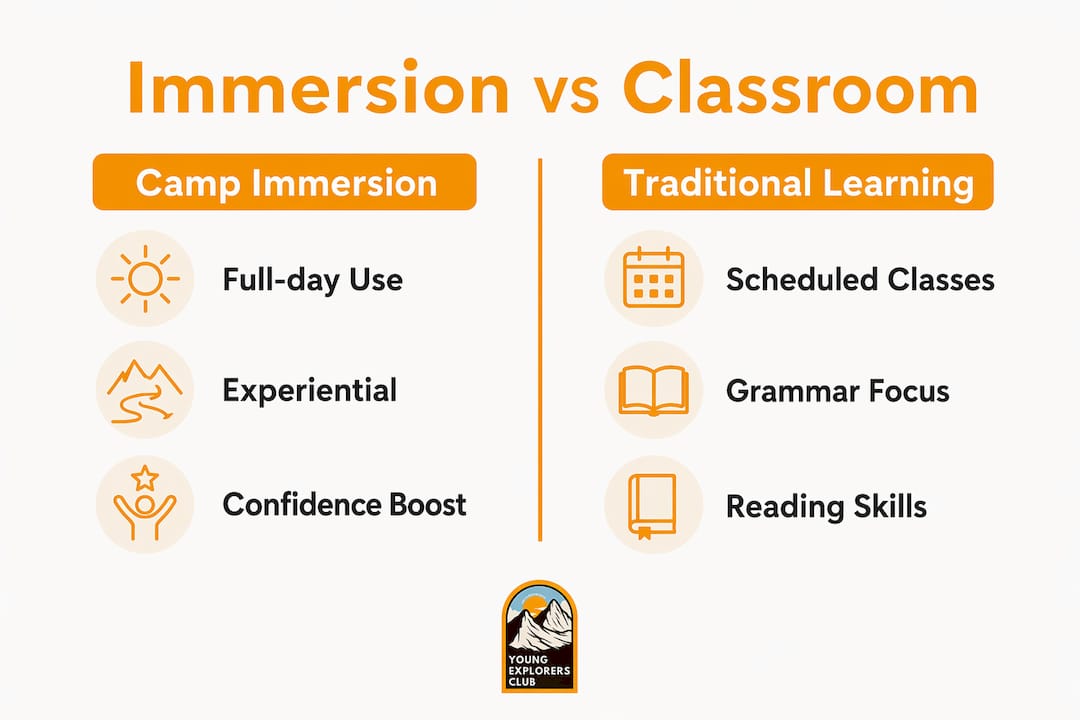
| Feature | Camp-based immersion | Traditional classroom |
|---|---|---|
| Language use | Continuous, across all activities | Limited to lesson time |
| Communication context | Real-world, social, and physical | Academic and structured |
| Feedback mechanism | Immediate, from peers and activity | Delayed, from teacher assessment |
| Cultural exposure | Direct and experiential | Indirect, through materials |
| Pace of acquisition | Faster for conversational skills | Stronger for grammar foundations |
| Emotional engagement | High, tied to adventure and play | Variable, depends on teacher |
Traditional classroom instruction builds grammatical accuracy and reading comprehension effectively. Camp immersion builds speaking confidence and listening comprehension at a pace that classrooms rarely match. The most effective language development path combines both. A child who attends a summer immersion camp after a year of classroom French will consolidate and activate everything they learned in a way that no amount of additional classroom time can replicate.
The limitation of immersion camps is equally worth naming. Short programs of one or two weeks produce real gains, but those gains fade without continued exposure. A two-week camp is a catalyst, not a complete education. Parents who treat it as the beginning of a longer language strategy, rather than a standalone solution, see the best long-term results.
Pro Tip: Pair a summer immersion camp with a consistent at-home practice habit, such as 15 minutes of conversation practice three times per week, to preserve and build on the camp gains through the school year.
What should parents look for in a camp language program?
Choosing the right program requires evaluating several specific criteria. Generic marketing language about “immersive environments” is not enough. Here is what actually separates high-quality camp language programs from average ones.
- Full-day language policy. Confirm that the language-only principle applies beyond lessons to meals, transitions, and all staff communication. This is the single most important quality indicator.
- Instructor credentials. Native or near-native speaking instructors with formal teaching qualifications produce better outcomes than fluent speakers without pedagogical training.
- Age and proficiency grouping. Quality programs group children by age and proficiency, assigning both lead teachers and assistants to maintain individual attention within the immersion environment.
- Activity integration. The adventure or cultural activities should require genuine language use, not just occur alongside it. Ask for a sample daily schedule and look for moments where communication is structurally necessary.
- Session length and group size. Longer sessions and smaller groups consistently produce better outcomes. Two weeks is a reasonable minimum for meaningful conversational progress.
- Safety and accommodation standards. For residential programs, verify staff-to-camper ratios, emergency protocols, and accommodation quality. Language learning requires a sense of physical and emotional safety to function.
- Language options. Spanish accounts for about 80% of dual-language immersion programs in schools, followed by Chinese and French. Choose a camp whose target language aligns with your child’s long-term educational goals.
For a deeper look at how to evaluate your options, the parent’s guide to language immersion at Youngexplorersclub covers the full range of program types and selection criteria.
Key takeaways
Camp-based language immersion works because it forces real communication across every part of the day, making the target language a tool for living rather than a subject to study.
| Point | Details |
|---|---|
| Immersion requires full-day language use | Language policies must cover all staff and all activities, not just formal lessons. |
| Activity-based learning accelerates fluency | Outdoor and social tasks create genuine communication needs that build conversational skills faster. |
| Benefits extend beyond language | Confidence, cultural awareness, and resilience develop as direct outcomes of the camp structure. |
| Camp immersion complements classroom learning | Use camps as a catalyst to activate and consolidate skills built through traditional instruction. |
| Program quality varies significantly | Evaluate staff credentials, grouping practices, and language policy scope before enrolling. |
Why I think most families underestimate what immersion camps actually do
I have spent years watching children arrive at camp with textbook French or classroom English and leave two weeks later holding conversations they could not have imagined on day one. The transformation is not magic. It is the result of removing every escape route from the language.
What surprises most parents is that the language gains are often not the most memorable part. The child who negotiated a rope course in a second language, resolved a disagreement with a bunkmate from another country, or performed in a drama production they wrote themselves, that child has done something that no classroom assignment can replicate. The language becomes attached to real memory, real emotion, and real achievement.
My honest observation is that families who treat immersion camps as a supplement to a broader language strategy see compounding returns. The camp activates the language. Regular practice at home preserves it. A second camp the following summer builds on a foundation that already exists. The families who treat it as a one-time experience often see gains fade by winter.
For educators, the lesson is equally direct. Camp-based immersion is not a vacation from learning. It is a different and often more efficient delivery mechanism for the same outcomes you are working toward in the classroom. The strategies for overcoming language barriers that work in immersion settings translate directly back into classroom practice.
— Guillem
Discover language immersion and adventure at Youngexplorersclub Switzerland
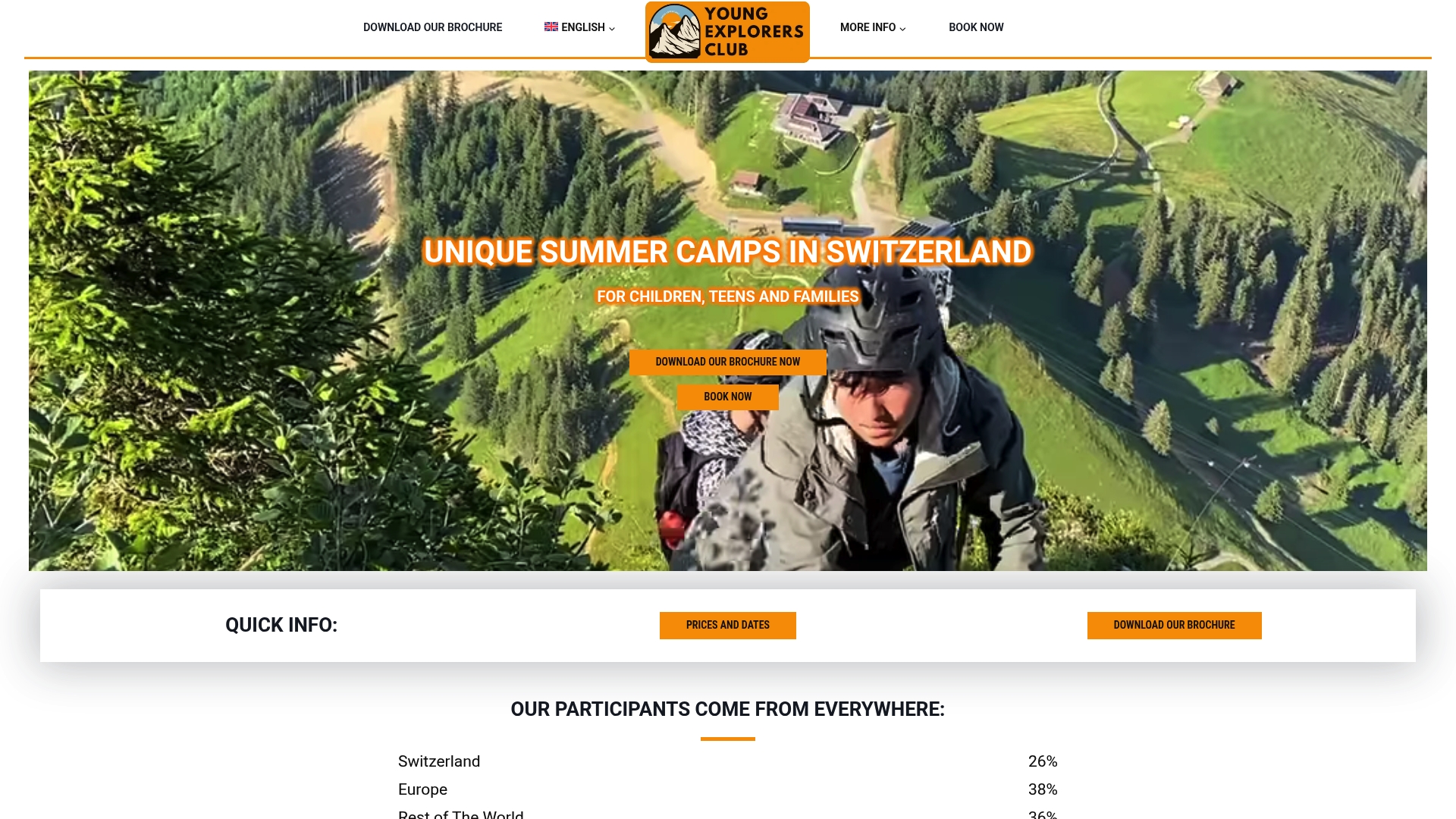
Youngexplorersclub runs international summer camps in Switzerland that combine genuine language immersion with mountain adventures, team challenges, and a multicultural community of young participants from around the world. The bilingual environment, native-speaking instructors, and full-day language engagement make it a strong fit for families and educators who want real language outcomes alongside personal development. Programs cover multiple languages, including German language immersion in the Swiss Alps, and are designed for children and teens across a range of ages and proficiency levels. Visit Youngexplorersclub to explore current programs, review session dates, and register for summer 2026.
FAQ
What is camp-based language immersion?
Camp-based language immersion is an educational approach where children learn a target language by using it across all daily camp activities, including lessons, meals, sports, and social interactions. The language functions as the medium for living at camp, not just a subject taught in class.
How quickly do children improve their language skills at immersion camps?
Conversational skills can improve noticeably within two weeks when the immersion environment is consistent and all staff communicate exclusively in the target language. Gains are fastest in listening comprehension and spoken fluency rather than formal grammar.
What languages are most common in immersion camp programs?
English, Spanish, French, and Chinese are the most common languages in immersion programs. Spanish accounts for about 80% of dual-language programs in school settings, and this pattern is reflected in many summer camp offerings.
Is language immersion too intense for young children?
Immersion can cause temporary fatigue as young children process multiple linguistic systems at once, but this typically resolves within the first few days. Quality programs manage this by grouping children by age and proficiency and maintaining supportive staff ratios.
How do I know if a camp is genuinely immersive?
Ask whether the language policy applies to all staff at all times, including during meals and non-lesson activities. A program where all staff communicate exclusively in the target language throughout the day is a genuine immersion environment. A program where only teachers use the target language is not.
