Many parents assume they can register their child for a Swiss summer camp just weeks before departure. Reality check: popular Swiss camps fill 70-95% capacity 6-12 months in advance with deposits required. International families seeking bilingual adventure programs for children aged 8 to 17 must navigate a structured registration journey that demands early planning, complete documentation, and strategic timing to secure their preferred weeks and programs.
Key takeaways
| Point | Details |
|---|---|
| Early booking timeline | Reserve spots 6-12 months ahead to secure preferred weeks during peak summer demand. |
| Documentation requirements | Valid passport, health forms, and language proficiency proof are mandatory for all registrations. |
| Deposit confirmation | Pay 20-30% deposits to confirm registration and trigger visa application processes for international families. |
| Language fluency matters | Camps require functional fluency in English, French, German, Italian, or Spanish for safety and participation. |
| Peak capacity planning | Avoid disappointment as top camps reach 95% capacity months before summer starts. |
Introduction to Swiss summer camp registration
Swiss summer camps group participants by age and require language proficiency, making them attractive destinations for international families seeking bilingual immersion combined with outdoor adventure programs. These camps typically organize children into three main age brackets: younger explorers aged 8 to 12, middle youth from 12 to 14, and teens up to 17 years old. Each group experiences programming tailored to their developmental stage and physical capabilities.
The appeal extends beyond age-appropriate activities. Parents value the dual-language environment where children practice English and French daily while participating in mountain biking, climbing, survival skills, and team sports. This combination of adventure tourism and linguistic development attracts families from across the globe who recognize Switzerland’s unique position as a multilingual hub with world-class outdoor facilities.
Registration planning becomes critical because demand consistently exceeds supply during July and August. Camps operate at near-full capacity throughout peak weeks, leaving little room for spontaneous decisions. International parents must understand that securing a spot requires coordinated effort across multiple fronts: timing, documentation, payment schedules, and post-registration logistics.
Key factors influencing successful registration include:
- Starting the research and booking process 6 to 12 months before your target camp dates
- Verifying your child meets age requirements and possesses adequate language skills in at least one camp language
- Preparing complete documentation packages including passport copies and detailed health information
- Understanding deposit and final payment deadlines that lock in your reservation
- Planning visa applications and travel insurance purchases immediately after deposit confirmation
Understanding registration timelines and deadlines
Timing separates families who secure their first-choice programs from those settling for waitlist positions or alternative weeks. The registration window opens earlier than most parents expect, with savvy international families beginning their search a full year ahead. This strategic approach provides maximum flexibility in selecting specific weeks, accommodation preferences, and optional activities before availability narrows.
Here’s how successful registration timelines unfold:
- Research phase (9-12 months before camp): Explore different camp booking dates and deposit deadlines to identify programs matching your child’s age, language level, and interests.
- Application submission (6-9 months before): Complete online registration forms and upload required documents when portals open for the upcoming summer season.
- Deposit payment (6-8 months before): Submit the 20-30% deposit payment to officially reserve your child’s spot and receive booking confirmation.
- Balance payment (30-60 days before camp): Pay the remaining fees by the specified deadline to maintain your reservation without penalty.
- Final preparations (2-4 weeks before): Confirm travel arrangements, pack according to provided lists, and review pre-arrival information sent by camp administrators.
Late registrations face harsh realities. Camps maintain strict capacity limits for safety and program quality, meaning once sessions fill, your only options become waitlists or less desirable weeks. Cancellation policies vary but typically involve forfeiting portions of your deposit if you withdraw within certain timeframes before the camp start date.
Pro Tip: Create calendar alerts for every payment deadline the moment you receive your confirmation email. Missing the final payment deadline by even one day can result in your spot being released to waiting families, forcing you to restart the entire process.
Required documentation and age/language criteria
Complete and accurate documentation separates smooth registration from frustrating delays or outright denials. Valid passport, health forms, proof of language fluency, and age verification are mandatory for registration, leaving no room for incomplete submissions. International families must gather these materials well before registration windows open to avoid last-minute scrambling.
Every camp requires these core documents:
- Photocopy or digital scan of your child’s valid passport showing photo page and expiration date
- Comprehensive health and medical information form detailing allergies, medications, dietary restrictions, and emergency contacts
- Proof of language proficiency in at least one camp language through school reports, test scores, or teacher certifications
- Signed liability waivers and permission forms authorizing emergency medical treatment if needed
- Recent photograph meeting passport-style specifications for identification purposes
Age brackets determine program placement and peer groupings. Swiss camps group participants in age categories tailored for social and activity suitability, ensuring children engage with developmentally appropriate challenges. Understanding these divisions helps you select the right program tier and set realistic expectations for your child’s experience.

| Age Bracket | Typical Programs | Language Requirements |
|---|---|---|
| 8-12 years | Junior adventure camps, introductory sports, supervised exploration | Basic conversational fluency in one camp language |
| 12-14 years | Intermediate outdoor activities, team sports, cultural excursions | Functional fluency allowing independent participation |
| 14-17 years | Advanced expeditions, leadership development, specialized skills | Strong fluency enabling complex instruction comprehension |
Language fluency standards exist for legitimate safety reasons. Instructors must communicate rules, risks, and emergency procedures clearly. Children unable to understand directions in real time face dangerous situations during activities like rock climbing, white-water sports, or mountain hiking. Camps assess language ability through submitted documentation and sometimes brief phone or video interviews before final acceptance.
Double-checking every document before submission prevents avoidable delays. Review forms for completeness, ensure digital files meet size and format requirements, and confirm signatures appear where required. These steps sound basic but account for a significant portion of registration problems that force families into rushed corrections during peak application periods.
For guidance on matching your child’s abilities to appropriate programs, explore age and language camp selection criteria that break down different camp types by skill level and linguistic demands.
Step-by-step registration process
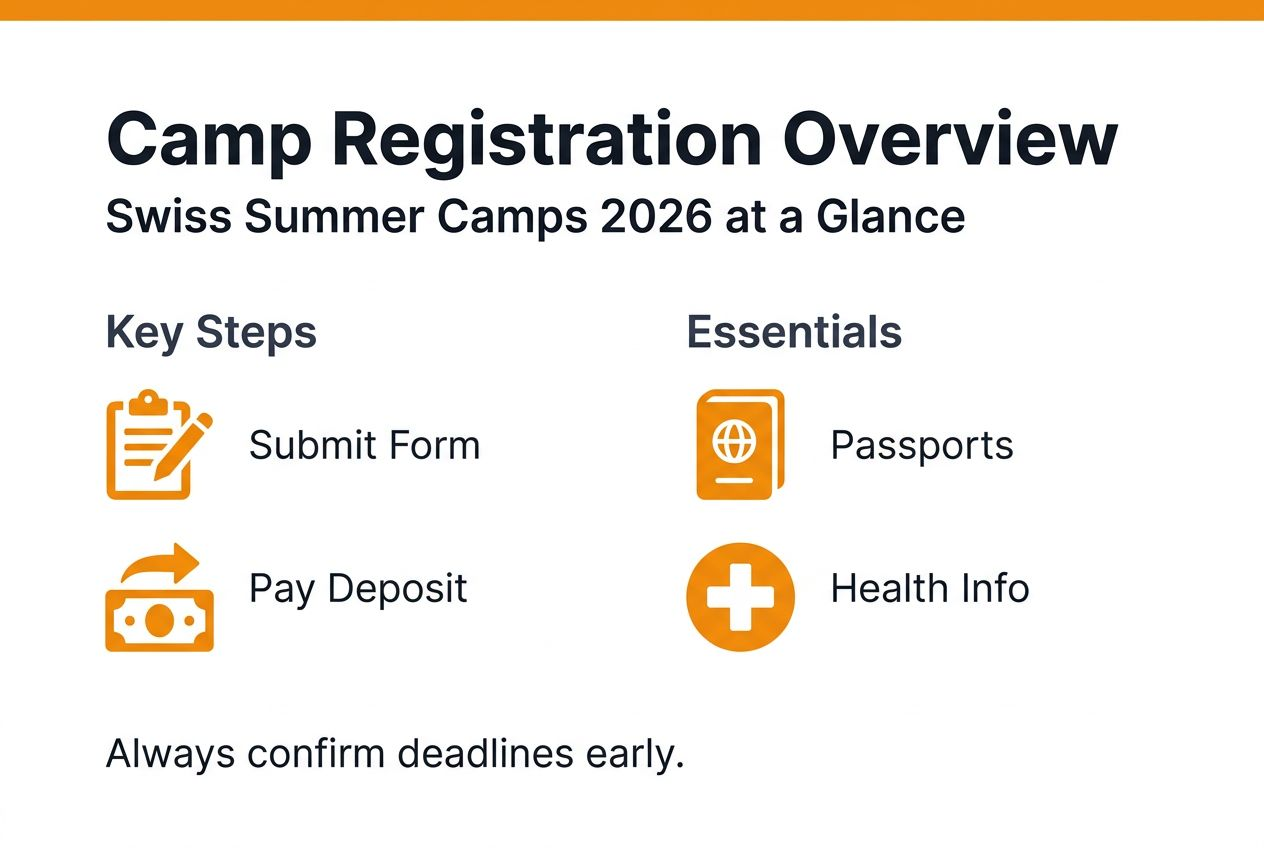
Transforming gathered documents and research into a confirmed reservation requires navigating online registration platforms methodically. Registration requires creating an online account, submitting forms, uploading documents, and paying deposits, with each step building on the previous one. Skipping ahead or rushing through sections creates errors that delay processing or trigger rejection notices.
Follow this sequence for error-free registration:
- Create your parent account: Visit the camp registration platform at least two weeks before you plan to submit your application. Set a strong password and verify your email address through the confirmation link sent to your inbox.
- Complete participant profile: Enter your child’s personal information accurately, matching passport details exactly. Include full legal names, birth dates, nationality, and current address. Any discrepancies between forms and passport documentation trigger verification delays.
- Select program and dates: Choose your preferred camp session from available weeks, noting that popular dates disappear quickly. Review the specific activities included and any prerequisites for specialized programs like advanced climbing or competitive sports tracks.
- Upload required documents: Scan or photograph all mandatory paperwork in clear, readable formats. Most platforms accept PDF or JPG files under 5MB per document. Label files clearly so administrators can match them to requirements quickly.
- Review and submit application: Read through your entire submission twice, checking for typos, missing fields, or incorrect dates. Once satisfied, click submit and note your confirmation number displayed on screen.
- Process deposit payment: Use the secure payment portal to submit your 20-30% deposit via credit card or bank transfer. Keep the transaction receipt as proof of payment in case of processing disputes.
You’ll receive a confirmation email within 24 to 48 hours acknowledging receipt of your application and payment. This message contains critical information about next steps, additional requirements, and contact details for questions. Read it thoroughly and save it in a dedicated folder for easy reference throughout the planning process.
Pro Tip: Take screenshots at every stage of your registration, especially the final submission confirmation page and payment receipt. These digital records prove invaluable if technical glitches occur or you need to reference specific details months later when preparing for departure.
For practical examples of the registration journey, examine step-by-step camp booking experiences that walk through real scenarios from initial interest to confirmed enrollment.
Visa, travel, and post-registration steps
Securing your camp registration marks the beginning, not the end, of your preparation journey. International families face additional logistics that require immediate attention after deposit confirmation. Visa applications should be started 8-12 weeks after deposit payments using camp issuance acceptance letters, giving embassies adequate processing time before your travel dates.
Post-registration priorities unfold in this sequence:
- Request official acceptance letters from the camp within 48 hours of deposit confirmation. These documents prove your child has a legitimate reason to enter Switzerland and form the foundation of visa applications.
- Apply for Schengen visas at your nearest Swiss embassy or consulate 8 to 12 weeks before camp start dates. Processing times vary by country but average 15 business days during peak summer application periods.
- Purchase comprehensive travel and insurance coverage within 7 to 14 days after paying your deposit. Policies purchased early typically offer better cancellation protection and lower premiums than last-minute coverage.
- Book international flights and arrange airport or train station transfers offered by the camp. Many programs provide shuttle services from Geneva or Zurich airports for CHF 50 to 150 per direction, eliminating navigation stress in unfamiliar territory.
- Prepare comprehensive travel folders containing passport copies, visa documentation, camp acceptance letters, insurance certificates, emergency contact cards, and copies of all registration confirmations. Keep digital backups accessible on your phone.
Visa applications demand meticulous attention to detail. Embassies require proof of accommodation, return flight bookings, sufficient funds for the trip, and comprehensive health insurance meeting Schengen requirements. Missing any element triggers automatic rejections that force you to restart the entire process, potentially missing your camp start date.
Insurance serves dual purposes beyond basic medical coverage. Quality policies protect your substantial financial investment if unexpected illness, family emergencies, or travel disruptions force cancellation. They also provide emergency evacuation coverage, trip interruption benefits, and liability protection during adventure activities.
Travel logistics extend beyond flights. Consider time zone adjustments, jet lag management for younger children, and arrival timing that allows rest before camp orientation sessions. Most camps recommend arriving at least 12 hours before official check-in to help children acclimate physically and mentally to their new environment.
Common misconceptions and registration pitfalls to avoid
Misunderstandings about Swiss summer camp registration create unnecessary stress and missed opportunities for international families. Correcting these misconceptions early prevents disappointment and ensures realistic planning from the start. Last-minute registration is often futile due to high demand; camps require fixed full-duration attendance; language fluency is mandatory.
Debunking prevalent myths:
- Myth: Last-minute spots open regularly. Reality shows popular weeks fill 70 to 95% of capacity within the first three months of registration opening. Waiting until spring to book summer camps leaves you competing for cancellation slots that rarely materialize.
- Myth: Language requirements are flexible guidelines. Camps enforce strict fluency standards because instructors cannot compromise safety by simplifying emergency communications or activity instructions for non-fluent participants.
- Myth: Partial attendance works for busy schedules. Most programs require full-duration participation to maintain group cohesion and progression through planned activities. Dropping in for partial weeks disrupts team dynamics and learning continuity.
- Myth: Younger siblings can bend age cutoffs. Age brackets exist for developmental appropriateness and legal liability reasons. Camps deny admission to children who miss cutoff dates by even days to maintain consistent peer groupings.
- Myth: Documentation can be submitted gradually. Incomplete applications sit in pending status indefinitely, with your spot remaining unconfirmed until every required document arrives. Other families with complete submissions move ahead in the queue.
Missing deadlines or ignoring language requirements frequently leads to lost spots or denied entry, forcing families to absorb financial losses and disappoint excited children who anticipated their Swiss adventure.
Failing to read cancellation policies thoroughly creates another common pitfall. Terms vary significantly between camps, with some offering full refunds minus processing fees if you cancel 90+ days out, while others implement sliding scales that reduce refunds progressively as departure approaches. Understanding these terms before committing helps you assess risk tolerance and decide whether additional insurance makes financial sense.
Payment plan confusion causes problems when families assume they can spread costs across longer periods than camps allow. Most programs offer limited flexibility, requiring deposits immediately and balances 30 to 60 days before start dates. Requesting custom payment schedules after booking rarely succeeds and can jeopardize your reservation if you miss standard deadlines.
For strategies avoiding these errors, review common registration mistakes that experienced families have encountered and overcome through better preparation.
Optional extras and additional services
Beyond base camp fees, optional enhancements personalize your child’s experience and address specific family needs. Parents can book airport transfers, private language tuition, or adventure add-ons during or after registration. Understanding these options during initial planning helps you budget accurately and secure availability before services sell out.
Commonly available extras include:
- Airport or train station transfers eliminating navigation stress in unfamiliar Swiss transportation systems
- Private language instruction or exam preparation sessions for children targeting specific proficiency goals
- Specialized adventure add-ons like glacier hiking, paragliding introductions, or championship-level sports coaching
- Extended stay options allowing arrival days early or departure days late to reduce travel pressure
- Premium accommodation upgrades providing private rooms or enhanced amenities beyond standard dormitory settings
| Optional Service | Description | Typical Price Range |
|---|---|---|
| Airport transfers | One-way shuttle from Geneva/Zurich airports to camp | CHF 50-150 per trip |
| Private language tuition | Individual instruction 5-10 hours weekly during camp | CHF 100-400 per week |
| Adventure add-ons | Specialized activities beyond standard program | CHF 75-250 per activity |
| Travel insurance | Comprehensive coverage including cancellation | CHF 50-150 total |
| Extended accommodation | Additional nights before/after official camp dates | CHF 80-150 per night |
Transfer services deliver particular value for international families unfamiliar with Swiss geography and transportation systems. Professional drivers meet children at designated airport terminals, assist with luggage, and ensure safe arrival at camp facilities. This service eliminates the stress of coordinating public transit connections or renting vehicles for short distances.
Language tuition serves families whose children sit near but not quite at required fluency levels. Intensive instruction during camp weeks can bridge gaps while immersion experiences reinforce lessons practically. Some families also book exam preparation when children plan to take official proficiency tests shortly after returning home.
Adventure upgrades appeal to teens seeking specialized challenges beyond general programming. Advanced rock climbing certifications, competitive mountain biking tracks, or wilderness survival intensives add resume-worthy accomplishments to their summer experiences.
Pro Tip: Add optional services during initial registration rather than requesting them later. Camps allocate limited spaces for extras on a first-come basis, and retrofit requests often face availability constraints or premium pricing surcharges.
For context on related services and planning considerations, explore insurance and transfer services that complement your camp registration.
Conclusion and practical checklist for parents
Successful Swiss summer camp registration demands coordinated execution across multiple timelines and requirements. This comprehensive checklist consolidates all critical steps into one actionable reference you can follow systematically:
- Begin researching camps and specific programs 9 to 12 months before your target summer weeks to maximize selection options
- Gather and verify all required documentation including passport copies, health forms, and language proficiency proof well before registration opens
- Create your online account on the camp portal 2 to 4 weeks early, familiarizing yourself with the interface before high-traffic submission periods
- Submit your complete application and upload all documents within 48 hours of registration opening for competitive weeks
- Pay the 20-30% deposit immediately upon approval to confirm your reservation and trigger acceptance letter issuance
- Request official acceptance letters within 2 days of deposit confirmation, then begin visa applications 8 to 12 weeks before travel
- Purchase comprehensive travel and cancellation insurance within 7 to 14 days after deposit payment to protect your investment
- Book optional extras like airport transfers, language tuition, or adventure add-ons during initial registration for guaranteed availability
- Mark calendar reminders for final balance payments due 30 to 60 days before camp to avoid forfeiting your reserved spot
- Prepare complete travel folders with physical and digital copies of all documentation 2 weeks before departure
Discover your ideal Swiss summer camp with Young Explorers Club
Young Explorers Club specializes in creating transformative summer experiences for international children and teens through immersive bilingual programs set in Switzerland’s stunning alpine environment. Our registration process supports families every step from initial inquiry through departure day, ensuring smooth transitions and confident preparation.
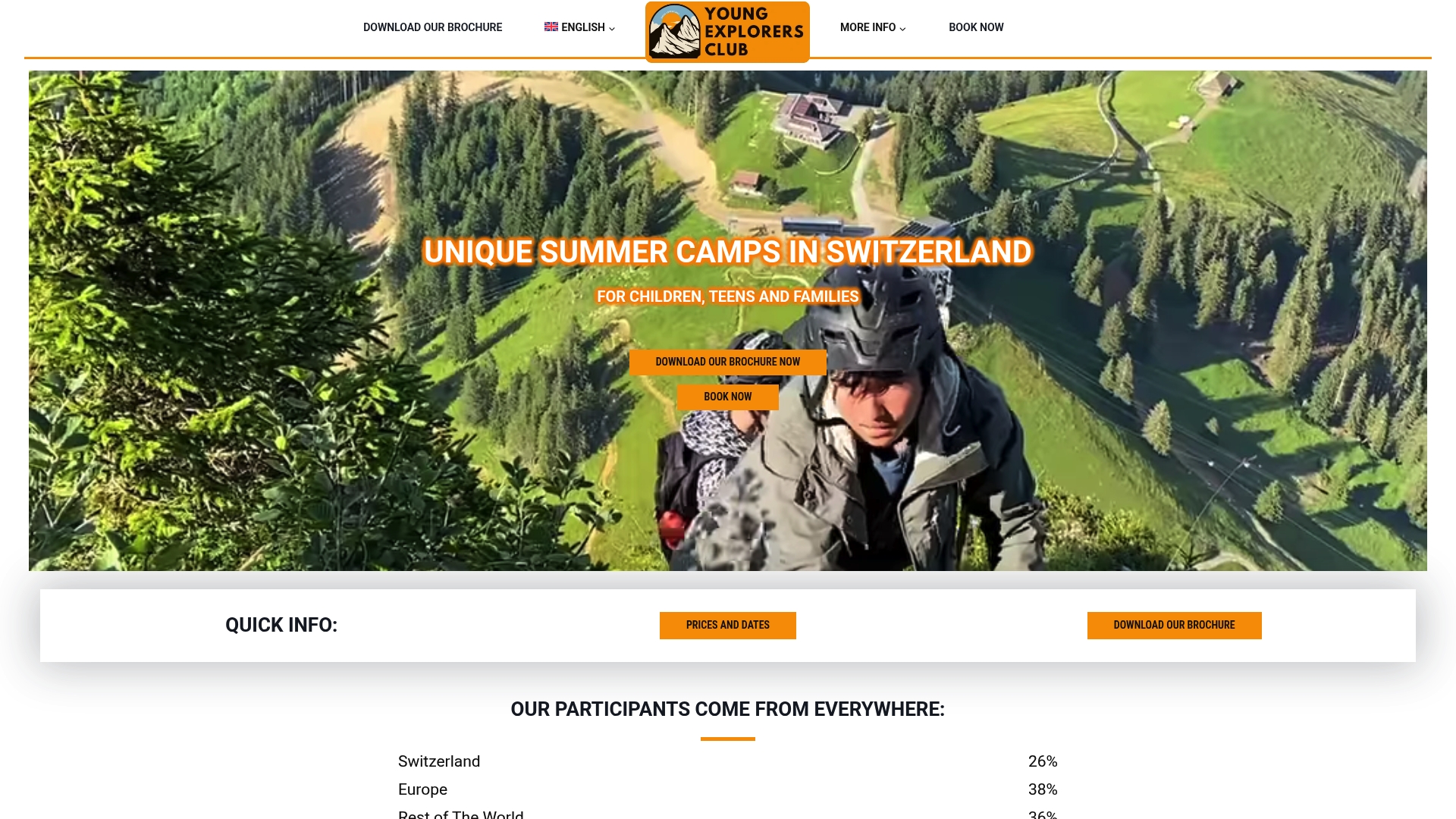
Early registration with Young Explorers Club guarantees your child secures a place in our adventure-filled programs featuring mountain biking, climbing, team sports, and survival skills taught by experienced multilingual instructors. We offer flexible options for different age groups from 8-year-old beginners to 17-year-old teens seeking leadership challenges, all within supportive environments emphasizing personal growth alongside outdoor excellence.
Explore our comprehensive summer camp offerings to review detailed program descriptions, weekly adventure activities breaking down daily schedules, and specialized teen summer camp programs designed for older youth. Our team provides expert guidance through every registration requirement, from documentation checklists to visa application support, making international camp enrollment straightforward and stress-free.