Technology-free Learning: Benefits For Kids
Tech-free learning: scheduled device-free blocks replacing screen time with hands-on, outdoor play to boost attention, language, sleep.
Overview
Technology-free learning schedules device-free blocks—short, predictable periods without smartphones, tablets, or passive video. Programs use those blocks to prioritize hands-on, social, physical, and sensory activities. Those activities strengthen sustained attention, executive function, language, creativity, and motor skills. Programs pair short, frequent tech-free windows with low-tech activities and outdoor play, and include simple pre/post metrics so educators and caregivers can cut discretionary screen time, improve sleep and social-emotional outcomes, and measure impact fast.
Key Takeaways
- Define tech-free learning as scheduled device-free blocks. Emphasize replacing recreational screen minutes with concrete activities; avoid imposing permanent bans.
- Use tech-free blocks to boost sustained attention and executive function. Measure change with brief standardized tasks, teacher time-on-task observations, and 4–8-week comparisons.
- Removing screens raises face-to-face interaction, emotion recognition, negotiation skills, and cooperative behavior. Pair dialogic reading with many daily conversational turns to boost language and literacy.
- Reallocate screen time to active play to improve gross- and fine-motor practice and sleep duration. That helps children meet activity and sleep guidelines.
- Implement gradually. Start with one tech-free block or run a two-week pilot, track screen minutes/active minutes/sleep with a simple log, and set measurable targets—for example, cut discretionary screen time by 30–60 minutes per day.
Implementation tips
- Schedule short, predictable blocks (e.g., 15–30 minutes several times per day) rather than long, infrequent periods.
- Provide a menu of low-tech activities: sensory bins, art, cooperative games, outdoor free play, dialogic reading, and movement breaks.
- Communicate expectations clearly to families and staff: focus on replacement (what to do instead), not punishment.
- Use simple tracking: daily logs for screen minutes, a short checklist for active minutes, and sleep duration notes. Compare baseline to 4–8 week follow-ups.
Measurement and outcomes
- Collect baseline data on discretionary screen time, sleep duration, and activity levels for 1–2 weeks.
- Use brief, standardized assessments or teacher observations to track attention and time-on-task.
- Reassess at 4 and 8 weeks to measure changes in screen use, sleep, and social-emotional behaviors.
- Adjust blocks and activities based on measurable progress and participant feedback.
Definition, Rationale, Prevalence, and Scope
Definition and rationale
We define “technology-free learning” as structured learning activities that intentionally avoid screens and digital devices—smartphones, tablets, computers, and educational TV—for set periods: class sessions, daily blocks, or whole days. We set those blocks to create predictable device-free windows that kids and caregivers can plan around.
We choose this approach because short, consistent breaks from screens support hands-on, social, physical, and sensory-rich experiences that deepen processing. Those experiences give children motor practice, strengthen face-to-face social skills, and expand spoken language. We also use device-free blocks to protect attention spans and to model focused work and play.
Prevalence and scope
Screen exposure is high enough that scheduled device-free time becomes essential. Common Sense Media reports average daily screen time at 2 hours 19 minutes for ages 0–8, 4 hours 44 minutes for tweens 8–12, and 7 hours 22 minutes for teens 13–18 (Common Sense Media). We pair that context with the American Academy of Pediatrics 2016 guidance recommending avoidance of screens for children younger than 18–24 months (except video-chat) and limiting ages 2–5 to one hour/day of high-quality programming (American Academy of Pediatrics, 2016). Those benchmarks guide how we size and schedule tech-free blocks.
I frame “technology-free” as scheduled device-free blocks rather than a permanent ban. We swap, not only remove, recreational screen minutes. That makes the approach realistic and sustainable for families and classrooms. To make swaps practical, I recommend specific activity choices and rhythms. Below are approaches we use and suggest for replacing screen time:
- Daily movement breaks that combine gross-motor games and short group challenges.
- Hands-on projects: art, science experiments, and tangible math manipulatives.
- Shared reading and storytelling circles that boost vocabulary and conversational turn-taking.
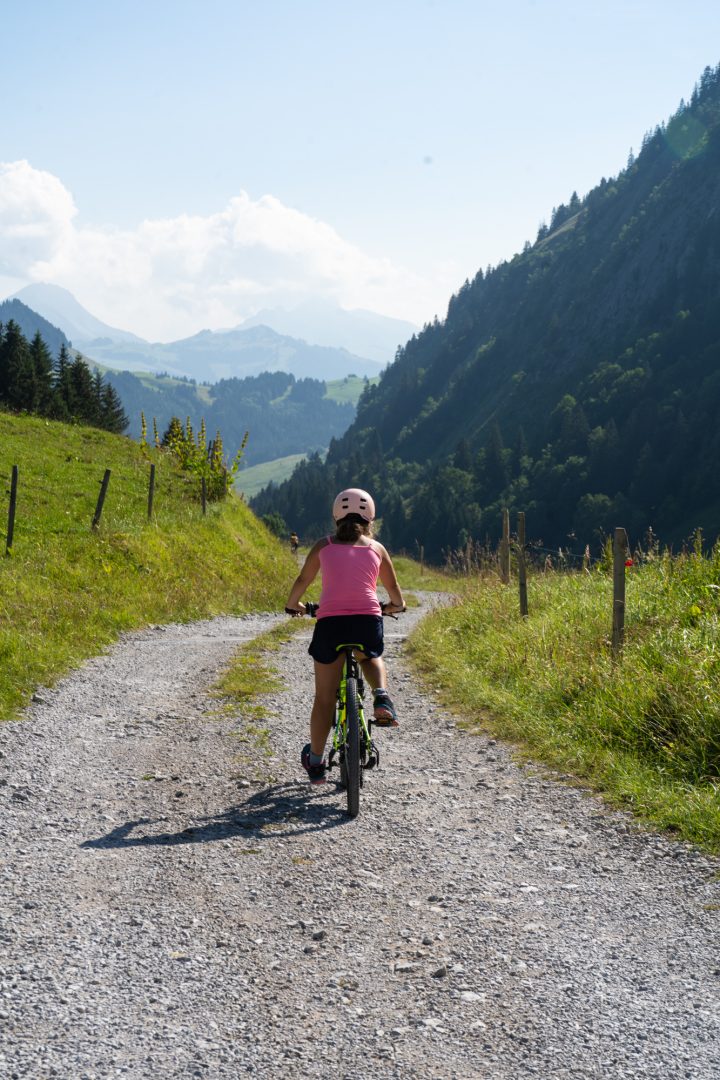
- Outdoor exploration and nature play to practice observation, risk assessment, and stamina — we encourage families to spend more time outside.
- Small-group problem-solving tasks that build collaboration and sustained attention.
We set blocks in practical chunks (e.g., 20–60 minutes) and vary them by age and context. Younger children get shorter, more frequent device-free windows. Older kids take longer blocks that mirror project or lab periods. We monitor feasibility and adjust based on engagement and learning goals.
Cognitive Development, Executive Function, and Academic Transfer
I focus our programming on tech-free activities because they strengthen sustained attention and deeper processing. Puzzles, hands-on manipulatives, and reading aloud demand working memory and inhibitory control in ways passive screens rarely do. Multiple observational and longitudinal studies link higher discretionary screen time to weaker attention and executive function (an association, not a sole cause), and intervention studies show that classroom-based, play-rich curricula and reduced passive screen exposure produce measurable gains on executive-function tasks.
I use concrete comparisons from the literature to frame expectations: low-screen users tend to score higher on attention measures than high-screen users (example association: normalized attention score — Low-screen group ≈ 100; High-screen group ≈ 85). That direction of effect—lower attention and executive scores with higher discretionary screen time—appears across several studies and is useful for planning targets and evaluating change. For policymakers and parents, the AAP 2016 guidance is a clear benchmark: “avoid screens for children younger than 18–24 months (except video-chat); for ages 2–5 limit to 1 hour/day of high-quality programming.” I use that guidance when setting age-appropriate limits and programming goals.
I recommend visualizing expected differences with a simple bar chart labeled “associations from literature“: two bars — “Low-screen users” (attention score = 100) vs “High-screen users” (attention score = 85).
Caption: An illustrative association reported across multiple studies showing reduced attention/executive scores with higher discretionary screen time.
We pair tech-free blocks with outdoor learning to amplify attention gains. Short, repeated periods of focused play and guided tasks help kids practice resisting distractions and holding goals in mind. Teachers can scaffold complexity—start with single-step puzzles, progress to multi-step projects, and add collaborative challenges that require turn-taking and planning. Those transitions translate to better classroom time-on-task and smoother academic transfer.
Measurement and simple implementation steps
Below are practical checks and steps I use to measure change and keep things actionable:
- Use brief standardized executive-function tasks for pre/post comparison (e.g., working memory span, simple inhibition tasks).
- Have teachers record time-on-task observations during a regular lesson segment (same time each day) to capture mean differences.
- Track informal indicators: number of prompts required, average uninterrupted play time, and accuracy on hands-on tasks.
- Run interventions for 4–8 weeks and compare mean attention scores before and after; aim for a measurable upward shift toward the low-screen benchmark.

Social-Emotional Development, Peer Interaction, and Mental Health
We focus on how technology-free learning boosts face-to-face interaction, emotion recognition, empathy, collaborative skills, negotiation, perspective-taking, and leadership. Kids practice reading facial cues and tone when screens are out of the picture. That practice strengthens emotion vocabulary and makes peer conflict easier to resolve.
Large-sample analyses have linked higher recreational screen time with lower psychological well‑being in children and adolescents, so we treat those findings as associations rather than proof of cause and effect (Twenge & Campbell). Classroom observational studies also report more peer-to-peer talk, negotiation, and collaborative behaviors during unstructured, device-free blocks versus device-based lessons. We present those classroom findings as patterns that support moving some learning time away from devices.
A plain contrast helps make this concrete. In role-play, children rehearse conflict resolution, get immediate feedback, try different strategies, and refine their responses. On screens, kids often observe or passively consume conflict scenarios with limited chances to practice. The active rehearsal in person improves negotiation skills and perspective-taking far more quickly than passive observation.
We also keep an eye on mental health signals. Teachers and facilitators often notice calmer transitions, reduced on-task distractions, and more peer support during tech-free blocks. Those shifts connect directly to improvements in social regulation and stress reduction; you can read more on camp effects on mental health in our short piece about mental well-being.
A quick classroom vignette shows the change in practice. A first-grade class replaced a daily 30-minute screen period with a cooperative storytelling circle. Within two weeks teachers reported more on-task peer negotiation and an increase in observed cooperative interactions per 15-minute block—from about 4 instances to roughly 9 on average. That kind of jump is practical and observable in short timeframes.
Practical measurement and implementation steps
Use the following steps to track social-emotional gains and compare before/after:
- Decide on a simple unit: count cooperative interactions per 15-minute block (examples: offers to help, negotiated turn-taking, joint planning statements).
- Establish a baseline: collect counts for 5 school days during regular practice.
- Implement tech-free collaborative practice: run two daily sessions of 20–30 minutes each focused on cooperative tasks (role-play, joint storybuilding, problem-solving).
- Run the intervention for 4 weeks, keeping session fidelity consistent across days.
- Collect follow-up data: record cooperative-interaction counts for 5 additional days after implementation.
- Compare averages: compute mean cooperative interactions per 15-minute block before and after, report SDs and simple effect size.
Add these quality checks to strengthen your measurement:
- Train two observers and rotate them to limit bias.
- Note activity type and group size with each count.
- Flag off-task behaviors separately.
If you want a quick outcome metric, track the percent change in cooperative interactions and the number of negotiated conflict resolutions observed per block.
We encourage short, frequent tech-free blocks rather than one long removal. That makes practice distributed and gives kids multiple rehearsal opportunities each day.

Language, Literacy, Creativity, and Problem Solving
We focus on live, interactive experiences because shared book-reading, dialogic reading, and play boost vocabulary, narrative skills, and later literacy far more than passive video exposure. The American Academy of Pediatrics recommends parents “avoid screens for children younger than 18–24 months (except video-chat); for ages 2–5 limit to 1 hour/day of high-quality programming” (AAP 2016 guidance).
We set a clear daily target for conversations: aim for 50+ conversational turns each day to support language development. Dialogic reading—where adults prompt children to talk about pictures, expand responses, and ask open questions—drives those turns and strengthens narrative skills. Live back-and-forth matters; infants and toddlers learn words far better from people than from screens.
I run small experimental assessments to show impact. One mini-study compares vocabulary growth after 8 weeks of daily 20-minute dialogic reading versus 20-minute educational video. For creativity and flexible problem solving, I use a pre/post Torrance-style mini-task after a 6-week tech-free creative-play program. Those assessments let me quantify change in vocabulary, narrative complexity, and divergent thinking.
Core activities to run
Below are practical station ideas you can set up quickly:
- Open-ended block corner for building and story-based challenges.
- Art station with loose parts, paint, and prompts that invite inventive solutions.
- Pretend-play area stocked with diverse props to encourage role-switching and negotiation.
- Storytelling circles that alternate child-led and adult-led narratives.
- Dialogic reading sessions using picture books and targeted prompts.
I track growth with simple, measurable tools. Count daily conversational turns, tick off vocabulary checklist items weekly, and score short creativity/problem-solving prompts before and after the program. For assessments, use 5–10 minute timed tasks that prompt multiple ideas or solutions; they’re sensitive to small gains and easy to repeat.
We also weave outdoor settings into these activities to boost engagement and reduce screen time—see our resource on outdoor learning. Keep sessions short and frequent, scaffold prompts to model rich language, and rotate materials so play stays open-ended.
Physical Health, Motor Development, Sleep, and Time Trade-Offs
Tech-free time almost always converts into movement, better sleep onset and duration, and wider practice of both gross and fine motor skills. We, at the Young Explorers Club, design activities so kids get varied motor challenges — climbing, balancing, cutting, tying — rather than another hour of scrolling. Higher sedentary screen time has been linked with higher BMI and increased obesity risk in children; that connection is reported as an association and not proof of direct cause.
WHO 2019 lays out clear activity targets: children 1–4 years should have at least 180 minutes of physical activity spread across the day, and older preschoolers and school-age children should include at least 60 minutes of moderate-to-vigorous activity daily. Sleep needs complement those activity goals. The National Sleep Foundation/AAP recommend these daily ranges:
- Toddlers (1–2 yrs): 11–14 hours
- Preschool (3–5 yrs): 10–13 hours
- School-age (6–12 yrs): 9–12 hours
- Teens (13–18 yrs): 8–10 hours
Common Sense Media reports average discretionary screen-time as roughly 2:19, 4:44, and 7:22 (hours:minutes) for different age groups. A tween averaging 4:44 discretionary screens/day (Common Sense Media) has far less available time for both structured and unstructured physical activity and for meeting sleep targets. I balance that trade-off by prioritizing active time early in the day and creating clear tech-free windows in the evening.
Sample day — tech-free allocation
I use this sample schedule to show where movement and sleep fit:
- Sleep: age-appropriate hours per National Sleep Foundation/AAP (set consistent bed/wake times).
- Morning (60–90 min): outdoor play or project-based motor activities (see outdoor learning).
- Midday (30 min): story or art circle focused on fine motor skills.
- Afternoon (30–60 min): active play or team games that boost moderate-to-vigorous activity.
- Evening (20–30 min): family reading or low-light quiet time to aid sleep onset.
I track simple metrics to measure change. Compare hours/day for screens, active play, and sleep before and after an intervention and report percentage shifts. That makes trade-offs concrete: for example, cutting discretionary screens by one hour can translate into measurable gains in active play or longer sleep. I keep results practical and actionable so caregivers and educators can reallocate time to support healthier bodies, steadier motor progress, and improved sleep.
How to Implement Tech-Free Learning: Practical Strategies, Measurement, and Low-Tech Resources
We, at the young explorers club, recommend practical, repeatable steps that fit classroom and home rhythms. I’ll outline simple schedules, measurable goals, low-tech materials, and a short pilot plan you can run in two weeks. We favor blocks that preserve choice and curiosity while cutting discretionary screen time.
Start small and predictable. Schedule a single tech-free block weekly and build from there. Create clear tech-free zones — the dining table, a reading nook, an art shelf — and label them so adults and kids know the rules. Swap short recreational screen windows for concrete activities (for example, replace 20 minutes of recreational screens with reading or art). Anchor outdoor periods to learning goals and use outdoors to extend inside lessons; for research on benefits, see our piece on outdoor learning. Align targets with AAP guidance and WHO physical-activity recommendations where they apply.
I’ll describe a simple pilot and how to measure impact. Run one tech-free block per week for two weeks as a trial. Collect baseline screen minutes, active-play minutes, and sleep times via parent logs or device-use reports. After two weeks calculate mean daily screen minutes before and after, percent change, and note shifts in behavior and sleep. Use these short checks to adjust expectations and resources.
Action Lists and Templates
-
Scheduled screen-free blocks (examples)
- 60–90 minutes/day tech-free learning block.
- A full tech-free school day once weekly.
- Daily mini-swaps: replace 20 minutes recreational screen time with a focused activity.
-
Designated tech-free spaces and swaps
- Dining table: family conversations and shared reading.
- Reading nook: quiet independent or guided reading.
- Art corner: open-ended materials for 20–45 minute sessions.
-
Sample preschool schedule
- Morning circle (30 min): tech-free songs and vocabulary prompts.
- Outdoor free play (60–90 min): gross-motor and nature observation.
- Story/art (30–45 min): dialogic reading and process art.
-
Sample school-age schedule
- Project-based learning block (60–90 min): hands-on science or construction, tech-free.
- Outdoor recess (30 min): active play and group games.
- Reading/writing workshop (30–45 min): shared and independent literacy tasks.
-
Measurable goals and metrics
- Targets: reduce discretionary screen time by 30–60 minutes/day within two weeks; aim for WHO 180 minutes/day active play for 1–4-year-olds.
- Easy-to-collect metrics: minutes/day discretionary screen time; minutes/day active play; sleep duration in hours; number of social-interaction events per observation period; simple pre/post academic checks (vocabulary lists, counting tasks).
- Reporting tips: present before/after averages, mean difference, and percent change for clarity.
-
Pilot and measurement plan
- Pilot: one tech-free block/week for two weeks.
- Data collection: parent logs or device-use reports for screen minutes; activity logs for active minutes; bedtime/wake time for sleep; brief behavior notes.
- Simple analysis: calculate mean daily screen minutes before and after, percent change, and list qualitative behavior shifts.
-
2-week tracking sheet template (columns to capture)
Date | Screen minutes | Active minutes | Bedtime | Wake time | Behavior notes
-
Low-tech resource list (use-case and rotation advice)
- Books (picture books and early readers: The Very Hungry Caterpillar, Where the Wild Things Are, leveled readers) — use-case: shared reading and dialogic prompts; rotation: rotate story baskets weekly.
- Blocks & construction (LEGO Classic, wooden blocks, Magna-Tiles, K’NEX) — use-case: spatial reasoning and collaborative construction; rotation: introduce a new challenge weekly.
- Board games (Candy Land, Hi Ho! Cherry-O, Guess Who?, Uno, Scrabble Junior, Connect 4) — use-case: turn-taking and strategy; rotation: game-of-the-week.
- Art & sensory supplies (washable paints, Play-Doh, collage supplies, sensory bins) — use-case: fine-motor skills and expressive language; rotation: sensory-bin theme changes weekly.
- Science & exploration kits (starter kits, plant-growing kits, magnifying glass, seeds) — use-case: observation and inquiry; rotation: new experiment biweekly.
- Musical instruments (percussion set, recorder, xylophone) — use-case: rhythm and patterning; rotation: introduce new songs weekly.
- Outdoor gear (balls, jump ropes, bikes with helmets, balance beams, chalk) — use-case: gross-motor development; rotation: outdoor stations rotate daily.
- Classroom tools (Montessori practical-life kits, Waldorf craft kits, loose parts) — use-case: independent practice and creativity; rotation: material shelf rotation.
-
Common objections and adjustments
- Acknowledge high-quality educational media and access needs; recommend co-viewing and balanced use rather than strict abstinence.
- Use AAP limits and WHO activity guidance to frame expectations and communicate rationale to families.
Implementation checklist (short)
- Choose one tech-free block and schedule it.
- Select three low-tech resources and prepare rotation.
- Set a measurable target (for example, -30 minutes screen/day).
- Use the 2-week tracking sheet and collect baseline data.
- Review after two weeks and adjust materials, timing, or targets.
Sources
American Academy of Pediatrics — Media and Young Minds
American Academy of Pediatrics (HealthyChildren.org) — Media and Children
Common Sense Media — The Common Sense Census: Media Use by Kids Age Zero to Eight (2017)
Common Sense Media — The Common Sense Census: Media Use by Tweens and Teens (2019)
Centers for Disease Control and Prevention — Screen Time and Children
National Sleep Foundation — Children and Sleep
JAMA Pediatrics — Associations between screen time and lower psychological well‑being among children and adolescents: Evidence from a population‑based study (Twenge & Campbell)
Harvard University, Center on the Developing Child — Serve and Return