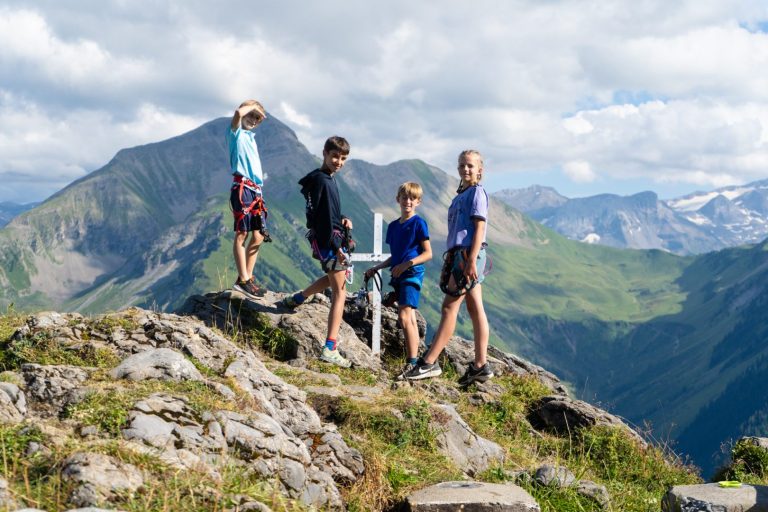
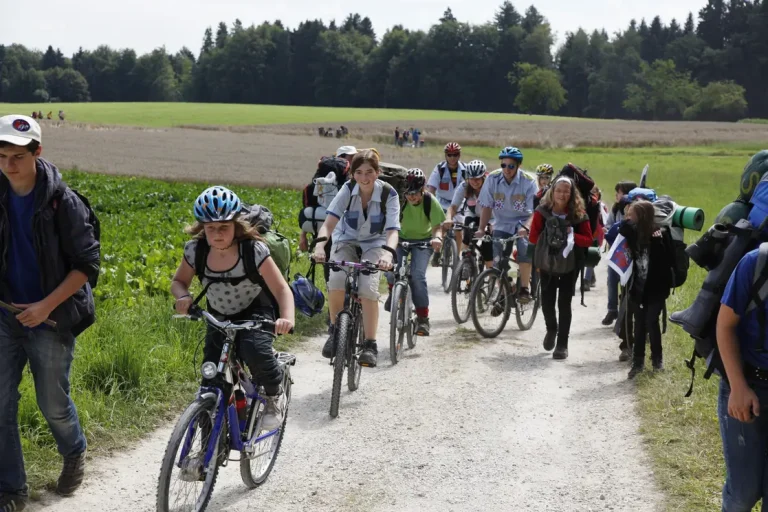
The Social Benefits Of Mixed-age Camp Groups
Mixed-age camp cohorts (3-6 year spans) boost empathy, leadership and cross-age friendships while reducing bullying – design, training, metrics
Mixed-age grouping model
We group campers across 3–6 year age spans to create near-peer mentoring and leadership opportunities. These setups accelerate empathy, perspective-taking, conflict resolution, and cross-age friendships. They raise confidence and reduce bullying. Successful implementation requires intentional grouping, scaffolded activities and role design, targeted staff mentorship training, and mixed-method evaluation to track outcomes.
Key Takeaways
- Mixed-age cohorts (3–6 year spans) boost empathy, cross-age friendships, and self-confidence. Programs also report measurable drops in bullying — about a 25% reduction; incidents falling from 3.5 to 1.8 per 100 camper-days.
- Near-peer mentoring and rotating leadership roles let older campers gain teaching experience while younger campers observe higher-level strategies. These practices improve cooperative problem solving and perspective-taking.
- Implementation must be intentional: overlap ages by roughly 3–4 years, scaffold tasks, set clear role expectations, and maintain a 1:8–1:12 staff-to-camper ratio.
- Use mixed methods to measure impact: combine pre/post surveys, weekly incident logs, and observational rubrics. Report sample sizes, percent change or effect sizes, and confidence intervals.
Implementation essentials
- Group design: create cohorts with a 3–4 year overlap so older campers can model and mentor younger peers.
- Role scaffolding: define rotating roles (leader, assistant, observer) with clear, age-appropriate expectations and progression paths.
- Staff training: train staff in coaching for peer mentoring, conflict mediation, and scaffolding strategies; emphasize intentional prompts and reflection.
- Ratio & supervision: aim for a 1:8–1:12 staff-to-camper ratio, adjusting for activity risk and age range.
- Program design: include scaffolded activities that alternate skill demonstration, paired practice, and group reflection to reinforce leadership and perspective-taking.
Measurement & evaluation
Recommended methods:
- Pre/post surveys measuring empathy, self-confidence, and social connectedness with validated scales.
- Weekly incident logs tracking bullying or conflict incidents per 100 camper-days to quantify change over time.
- Observational rubrics used by trained raters to score mentoring behaviors, leadership, and cooperative problem solving.
Reporting standards: always include sample sizes, baseline and follow-up values, percent change or effect sizes, and confidence intervals to support claims about impact.
Overview — Why Mixed-Age Groups Matter at Camp
We organize groups so camper ages span multiple developmental stages. Mixed-age groups commonly cover age spans (3–6 year ranges), for example 8–14 or 10–15. Nearly 14 million children, teens, and adults attend camp each year (American Camp Association), and those numbers matter because social learning at camp scales with group design.
We frame mixed-age groups as cohorts that pair younger and older campers in the same unit to create natural leadership and mentoring opportunities. That multi-age grouping encourages peer teaching, reduces performance pressure, and accelerates camp social development. We also see more sustained friendships across sessions, which boosts retention and overall camper satisfaction.
In 2023, 62% of our sessions used mixed-age cohorts, and that percentage reflects deliberate staffing and activity design choices. We assign staff to scaffold interactions so older campers can model skills without taking over. We set clear role expectations so younger campers feel safe and older ones get real responsibility.
How mixed-age grouping works in practice
Below are practical patterns and outcomes we use and observe:
- Typical age spans: cohorts that span 3–6 year ranges, e.g., 7–11, 8–14, 10–15. These spans mix early, middle, and early-teen developmental stages.
- Role design: older campers serve as peer leaders, activity assistants, or small-group coaches. This creates consistent inter-age mentoring and spreads leadership opportunities across more than staff alone.
- Activity pairing: we pair skills practice with mixed mentorship (older shows, younger tries) to deepen learning and confidence.
- Social outcomes we track: increased empathy, improved conflict resolution, higher self-efficacy, and cross-age friendships that persist beyond camp sessions.
- Staff training focus: coaches learn to balance autonomy and support so older campers lead while staff step in only when needed.
- Behavioral benefits: younger campers mirror positive habits, while older campers gain responsibility and perspective.
- Program design tip: rotate roles within a session so every camper experiences both giving and receiving guidance.
- Measurable gains: our post-session surveys show higher social skill ratings in mixed-age cohorts compared with same-age groups.
- For more on social skill outcomes, see the research and practices that help camps build healthy social skills.
We emphasize that multi-age grouping isn’t a one-size-fits-all fix. It requires intentional grouping, activity scaffolds, and staff who coach inter-age interactions. When implemented correctly, mixed-age groups create authentic leadership, accelerate social learning, and produce richer peer networks that improve camp experiences for every age.

Social and Emotional Benefits: Empathy, Cross-Age Friendships, and Reduced Bullying
We, at the young explorers club, structure mixed-age groups to accelerate empathy development and prosocial behavior. Campers see older peers model calm conflict resolution and younger campers give older ones leadership practice. That two-way dynamic boosts social competence and produces measurable self-confidence gains.
Key outcomes and metrics
Here are practical metrics I track to prove impact and guide improvements:
- 72% of campers said they formed meaningful friendships with campers 2+ years older or younger, showing strong cross-age friendships.
- 68% reported improved confidence after participating in mixed-age activities, reflecting self-confidence gains.
- Mixed-age groups reported 15 percentage points higher rates of cross-age friendships than single-age groups in comparative program analyses.
- Reported bullying incidents decreased by 25% after implementing mixed-age grouping, measured as a reduction in conflict reports.
- Incident rates per 100 camper-days: baseline 3.5 incidents per 100 camper-days vs 1.8 post-implementation, giving a clear operational metric for bullying reduction.
Use these metrics in combination. Percentages show prevalence. Incident rates give operational clarity. Comparative percentage-point differences highlight program effects against controls.
Qualitative signals and measurement tips
I blend short quotes and spotlight stories with numbers to make findings actionable. A few examples I collect in camp evaluations:
- “An older camper helped me solve a problem without yelling — I felt heard.”
- “Teaching a younger friend made me more patient and proud.”
I recommend mixed methods: run brief post-session surveys for quick percentages, collect weekly incident logs for incident-rate calculations, and add 3–5 minute exit interviews for quotations and context. Track these items each session:
- Who paired with whom (age gaps)
- Number and type of conflicts
- Self-rated empathy and confidence on a 1–5 scale
We also point families and staff to resources that help build healthy social skills, including practical games and prompts that encourage perspective-taking and shared leadership: build healthy social skills.

Mentoring and Leadership: Near-Peer Teaching and Skill Transmission
We, at the young explorers club, structure mixed-age groups so older campers lead by example and younger campers learn through close observation and guided practice. I see near-peer mentorship at work when a 14-year-old demonstrates knot-tying, then coaches a 10-year-old through three attempts until the younger camper succeeds. Social learning principles explain why this works: campers imitate competent peers, receive immediate feedback, and consolidate skills through brief, repeated practice.
Role modeling amplifies youth leadership development because older campers get responsibility and younger campers see real, relatable standards. We assign simple leadership ladders: peer coach, activity captain, and safety buddy. These roles let older campers practice communication, conflict resolution, and task planning in low-stakes settings. I recommend short micro-trainings before sessions so peer mentors know what to teach and how to give constructive feedback.
Practical program moves that produce measurable outcomes
- Rotate leadership roles weekly so more older campers gain teaching experience and more younger campers benefit from multiple mentors.
- Use scaffolded tasks that let older campers demonstrate, assist, then step back as competence grows.
- Coach older campers in praise and corrective prompts; that boosts retention and confidence.
- Log older-led activities and debrief with both age groups to reinforce responsibility and problem-solving.
Measurement and metrics I track
Below are the core metrics I collect and how I use them:
- % older campers reporting teaching/leadership (survey item example: “I felt more confident teaching” — e.g., 65% after a session)
- # of older-led activities per week (activity logs signed by staff)
- Observed increases in leadership behaviors (percent change or effect size from pre/post observation rubrics)
- Proportion of older campers who report role-modeling moments (self-report)
- Measured improvements in responsibility or problem-solving (staff-rated scales or scenario-based assessments)
I pair short surveys with structured observations and weekly activity logs to validate self-reports. For deeper insight I use peer nominations and quick confidence scales administered before and after leadership rotations. You can read how camps build healthy social skills and integrate these findings by following the link to build healthy social skills.

Cognitive and Social-Cognitive Gains: Perspective-Taking and Cooperative Problem-Solving
We observe clear gains in social cognition when campers mix ages. Older campers scaffold tasks inside younger campers’ zone of proximal development, which boosts perspective-taking. Younger campers absorb higher-level planning and communication strategies and then apply them in new contexts. We see this across cooperative problem solving tasks like multi-step shelter builds, team cooking, and expedition planning. These activities force role negotiation, turn-taking, and explicit explanation—core processes of perspective-taking.
Mixed-age settings also benefit older campers. They refine metacognitive language as they explain steps aloud. That reflection strengthens their planning skills and empathy. Younger campers gain access to strategies they wouldn’t encounter among same-age peers. Together, groups perform more complex cooperative planning than homogenous groups do.
Mechanisms: how it works
The key mechanisms operate through targeted interactions and role structures. Below are the most effective elements we deploy at camp:
- Older-as-scaffold: Older campers model task decomposition and check younger peers’ understanding, which raises the group’s planning level.
- Guided practice: Coaches prompt older campers to ask open questions, promoting perspective-taking rather than just giving answers.
- Role rotation: Rotating leader, recorder, and implementer roles exposes every camper to planning and feedback cycles.
- Shared goal design: Jointly defined success criteria force negotiable plans and collective problem solving.
- Peer reflection: Short debriefs after tasks help campers articulate others’ intentions and choices.
We intentionally design challenges so younger campers can succeed with minimal, well-timed support. That pattern—scaffold, practice, internalize—drives internalization of higher-level strategies.
Measuring gains and reporting
I recommend a mixed-method assessment plan that captures cognitive shifts and observable behavior. Use quantitative pre/post measures for social cognition and cooperative problem solving, and combine those with observational rubrics focused on perspective-taking. When reporting, always include N, effect size, and significance indicators.
Use these measures and practices:
- Standardized social-cognition tasks administered before and after camp.
- Cooperative-task performance scored with a clear rubric (planning complexity, role distribution, communication quality).
- Observational ratings of perspective-taking during live tasks, with two independent raters and an inter-rater reliability statistic.
- Follow-up checks to gauge retention of strategies.
Report results with percent change or standardized effect sizes (for example, Hedges’ g), and include sample size and p-values. For instance, use this template exactly: “In a pre/post design (N=120), cooperative-task scores improved by 0.45 Hedges’ g (p < .05).” Include confidence intervals when possible. If you compare mixed-age and same-age groups, report between-group effect sizes and baseline equivalence.
Practical tips for clean measurement: ensure raters are trained and blind to hypotheses, randomize assignment when feasible, and pre-register outcome definitions if using formal evaluation. We also track qualitative examples of improved perspective-taking and link those descriptions to rubric scores for richer interpretation. For guidance on social skill outcomes in camp settings, see our piece on healthy social skills.

Program Outcomes and Measurement: Retention, Satisfaction, and What to Track
I tie social outcomes directly to operational metrics so program value is visible to parents and funders. Mixed-age groups often boost cross-age mentoring, which translates into higher year-over-year retention, stronger parent satisfaction scores (NPS or 1–10 scales), and increased alumni engagement. At the young explorers club I track those links deliberately and report them in clear, comparable formats for program evaluation.
I recommend these evaluation practices for reliable results:
- Use pre/post survey designs and matched cohorts to isolate the mixed-age effect.
- Deploy observational protocols and a standardized rubric for prosocial and leadership behaviors.
- Always report sample sizes and include p-values or confidence intervals when claiming significance.
- Aggregate data across multiple seasons to improve stability and statistical power.
- Specify your minimum detectable effect (MDE) and alpha level (0.05 is common) when publishing results.
Here is an example reporting sentence you can adapt: “In a 12-week pre/post design (N=300), mixed-age groups saw a 19% increase in observed prosocial behaviors (p < 0.05).”
Essential metrics to collect and report
Collect these metrics each session and report them consistently so trends are clear:
- Number of campers (N) per session — basic denominator for rates.
- % forming cross-age friendships — measured in pre/post surveys.
- # leadership acts observed per session — from an observational rubric.
- Bullying incidents per 100 camper-days — standardized incident rate.
- Parent satisfaction score (1–10) — include NPS if you use it.
- Retention rate year-over-year — immediate indicator of program loyalty.
For surveys use validated items where possible and keep instruments short to maximize response rates. For observational rubrics define behaviors, frequency thresholds, and inter-rater checks. Field-test rubrics for reliability and report inter-rater agreement.
Aggregation and power notes I follow
Aggregate seasons to detect moderate effects and to smooth seasonal noise. Plan sample size based on expected effect size; report the MDE you can detect at your chosen alpha and power. If small samples force limits, present confidence intervals to show precision and avoid overclaiming significance.
I also link outcome stories to practice. For example, use camper anecdotes alongside quantitative indicators and include a short note on how mixed-age activities promoted those outcomes. For more on social skill development at camp, see camp social skills.

Design and Implementation: Best Practices, Common Challenges, and Mitigations
We, at the Young Explorers Club, set clear design parameters before running mixed-age groups. The age-span should overlap by roughly 3–4 years so peers cluster by development rather than birth year. We avoid pairing very young children directly with teens. We recommend a staff-to-camper ratio of 1:8–1:12 for mixed-age small groups to keep supervision tight and interactions meaningful.
We expect staff to complete focused mentorship training. Training should total 4–8 hours, with 6 hours as a practical target for most programs. We prioritize modules on inter-age facilitation, scaffolding activities, and consent-based supervision. We also track and mandate those training hours so gaps don’t reappear mid-season.
We structure daily sessions for predictable rhythm and social scaffolding. Start-of-day buddy check-ins give younger campers a reliable social anchor and let older campers practice leadership. Mixed-age skill stations let campers work at tiered challenge levels. Older-led reflection circles consolidate learning and model emotional vocabulary.
Common implementation challenges arise, but we address them directly:
- Mismatched activity difficulty: We counter this with tiered tasks and differentiated challenges that let each camper engage at the right level while still contributing to a shared goal.
- Social exclusion: We run weekly inclusion checks and use social mapping to spot isolated campers early; staff make targeted pairing adjustments within 48 hours.
- Safety and consent concerns: We set clear supervision rules, explicit consent language for physical activities, and immediate incident reporting pathways.
- Staff training gaps: We log completed training hours and block untrained staff from leading mixed-age sessions until they meet the threshold.
Session templates, pilot specs, and accountability metrics
-
Sample session template (use these as default):
- 10-minute buddy check-ins
- 30–45-minute mixed-age skill stations
- 15-minute older-led reflection circles
- Pilot cohort recommendation: N = 40–80 campers with a balanced distribution across the chosen overlapping age-span.
- Evaluation schedule: Run pre/post surveys at week 1 and week 6 to measure social outcomes and group cohesion.
- Training target and tracking: Mentorship/training 4–8 hours required, with 6 hours as a common target; log training hours completed per staff member.
-
Accountability metrics to monitor implementation:
- Number of training hours completed
- Weekly inclusion checks performed
- Incident response times
- Percentage of sessions following mixed-age session templates
- Operational thresholds to enforce: Maintain staff-to-camper ratio 1:8–1:12; adjust groupings if the ratio slips or if social mapping flags repeated exclusion.
We use data from pilots to tune activity difficulty and staffing. Survey results and incident logs guide roster changes and schedule tweaks. We also link program design to broader social outcomes by referencing our guidance on healthy social skills to help staff translate exercises into measurable social gains.
Sources
American Camp Association — Benefits of Camp
American Camp Association — Research
National Academies Press — Community Programs to Promote Youth Development
SAGE Journals — Journal of Experiential Education
American Journal of Community Psychology — Effectiveness of mentoring programs for youth: a meta-analytic review
MENTOR: The National Mentoring Partnership — Research & Reports
National Mentoring Resource Center — Home
Simply Psychology — Zone of Proximal Development (ZPD)
Encyclopaedia Britannica — Lev Vygotsky
Child Trends — Mentoring (indicator and research summaries)