Top Kid-friendly Adventure Sports In Switzerland
Family adventures in Switzerland: alpine railways, glaciers, kid-friendly skiing, tobogganing and ziplines. Easy travel with Swiss Pass.
Overview
Switzerland pairs dramatic alpine scenery with punctual public transport and family-focused mountain railways. Glacier viewpoints, cable-car rides and short scenic trails sit within easy reach of most bases. Families can pick age-appropriate adventure sports. Ski schools, toboggan runs, ziplines, family rafting and e-biking suit different ages. Local rental shops handle equipment and fit children properly. Many resorts offer childcare and clear operator rules.
Key Takeaways
- Swiss transport and mountain railways simplify family logistics; we recommend the Swiss Travel Pass to cut transfers and hassle.
-
Major kid-friendly activities:
- Skiing — schools typically accept children from about age 3.
- Tobogganing and alpine coasters.
- Aerial attractions — zips, cliff walks and tandem paragliding (check age/weight rules).
- Family rafting and canyoning (age and water conditions determine suitability).
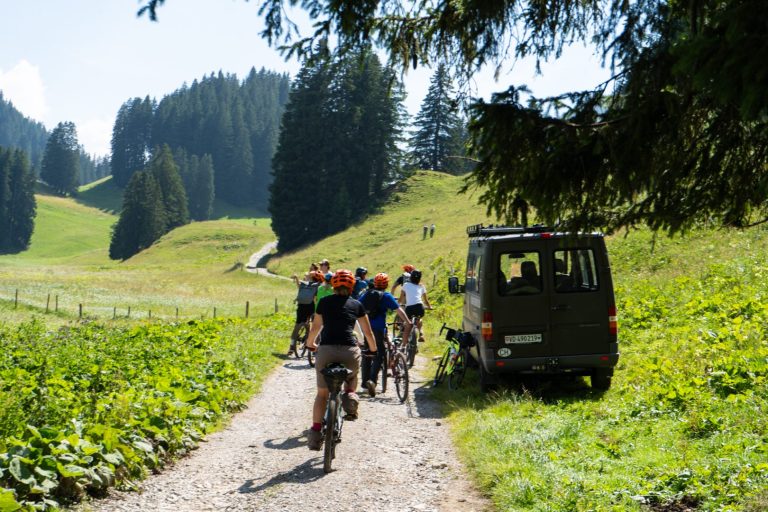
- E‑biking and mountain biking — many resorts rent child-sized bikes or tag-along devices.
- Glacier and cable‑car visits — scenic and accessible options for mixed-ability groups.
- Safety checks: confirm operator age and weight limits, check harness and guide certifications, and enforce helmets and life jackets as required.
- Altitude guidance: limit time above roughly 2,500–3,000 m for young children; alternate high-altitude visits with valley days. Pack water, snacks and warm layers.
- Booking and rentals: book lessons, rentals and guided activities 2–6 weeks ahead in high season. Pre-reserve e‑bikes and check battery ranges.
Why Switzerland Is the Ultimate Family Adventure Playground
I call Switzerland an alpine playground that delivers scale, drama and easy access. The mountains dominate the map — the Alps cover about 60% of the country — so families get sweeping valleys, glaciers, high ridgelines and many easy-access mountain stations within a short train or cable-car ride.
Trails form the activity backbone. You’ll find everything from flat valley promenades to exposed high routes — around 65,000 km of marked hiking trails — so you can design days for toddlers or teens. The range of options makes the “65,000 km hiking trails” claim a reality, not just a selling point: short lakeside walks, themed family trails with play stations, and longer alpine stages reachable by cogwheel train.
Iconic, camera-ready summit anchors sit within comfortable reach of families: Matterhorn 4,478 m; Jungfraujoch 3,454 m (Top of Europe); Titlis 3,238 m; Gornergrat 3,089 m. For a low-altitude natural showpiece that’s an easy day out, don’t skip Rhine Falls (23 m drop, 150 m wide).
Swiss public transport makes movement painless for families. Trains run like clockwork, platforms and carriages are stroller-friendly, and mountain stations often have playgrounds and family facilities. I rely on the Swiss Travel Pass to simplify logistics; it covers most regional trains and often includes or discounts mountain-railway combinations, though you should check individual operator pages for exact discounts. If you’d rather plan around local recommendations, look up “Swiss public transport family” guides and timetables before you go.
Mountain railways are genuinely family-friendly. Many resorts advertise childcare, rental gear and beginner slopes right next to the lift. You’ll find children’s ski kindergarten options in most ski towns, and rental shops routinely offer skis, bikes and e-bikes sized for kids. That infrastructure makes it easy to combine adult adventures with safe, supervised kids’ activities.
Quick planning checklist
- Pick a base with short transfer times to attractions; long drives add stress with young kids.
- Choose resorts with built-in family infrastructure: kids’ ski kindergarten, rental shops, and playgrounds at mountain stations.
- Use the Swiss Travel Pass and check mountain-railway timetables to build relaxed day trips; this cuts queue time and uncertainty.
- Layer activities by energy level: morning valley walk or lake paddle, afternoon mountain railway or glacier viewpoint.
- Reserve rentals and childcare in advance during peak season to avoid disappointment.
- Plan one high-altitude experience per trip day for younger children; save full mountain traverses for older kids and teens.
- If you want inspiration for itineraries, I recommend checking a compact family trip resource before you finalize dates.
Sprinkle in easy wins that kids remember: a short cogwheel-train climb to a glacier viewpoint, a splash at a lakeshore, or an afternoon by the Rhine Falls waterfall. Use the transport network and family services to turn those wins into a relaxed itinerary rather than a rushed checklist.
Top Winter Sports for Kids: Skiing, Tobogganing and Alpine Coasters
Skiing & lessons
I recommend starting with ski schools that accept children from age 3; many Swiss schools do. Children typically progress from nursery slopes to magic‑carpet lifts, then onto wide blue slopes as confidence grows. Group lesson sizes commonly run 6–10 kids; choose private lessons if you want smaller ratios.
I explain slope grades like this: Green = easiest, Blue = easy/intermediate, Red = intermediate, Black = advanced. Pick green or blue for beginners and nervous first‑timers; move to reds for confident intermediate kids. Group lessons usually cost around CHF 50–120 per day depending on season and region. Equipment rental is widely available at base stations, which makes quick swaps easy as kids grow.
Helmets are recommended and often required for children. Resorts enforce child‑safety rules and use clear, child‑friendly slope signage. I always check age and weight limits before booking lessons or lift passes.
Quick practical pointers for planning lessons:
- Choose resorts with a high proportion of green and blue terrain so progress feels natural.
- Consider half‑day lessons for preschoolers to keep energy and focus high.
- Ask about group sizes and instructor qualifications when you book.
- Reserve equipment rental at the base station the day before to avoid morning queues.
- Pack layers, sunscreen, and a helmet or confirm helmet rental availability.
I link practical family planning to broader trip choices; if you’re arranging a multi‑day stay, a family trip with on‑site services makes logistics easier.
Tobogganing & alpine coasters
Toboggan runs vary widely: short family runs of roughly 1 km sit alongside long descents that can reach 6–15 km. Historic options like the Preda–Bergün sled run offer long, scenic nights, while Stoos and Fräkmüntegg provide accessible family fun. Alpine coasters often run year‑round, use handbrake control, and let riders vary their speed. Age minimums commonly start at 4–6 years for passengers riding with an adult; operators set exact limits, so I always check rules before arrival.
I pick resorts that match my family’s appetite: Zermatt and Verbier for iconic scenery and beginner terrain, Grindelwald/Wengen and Davos/Klosters for varied options, and Laax for freestyle parks. Always confirm seasonal availability, age/weight restrictions, and safety briefings on the operator’s site before you go.
Useful search phrases I use while researching include:
- “kids ski lessons age 3”
- “green blue red slopes Switzerland”
- “children’s ski kindergarten Switzerland”
- “ski lesson price CHF”
- “ski helmet kids Switzerland”
- “alpine toboggan run km Switzerland”
- “Bergün sled run Switzerland”
- “toboggan age limits Switzerland”
High‑Adrenaline but Kid‑Friendly Aerial Adventures: Ziplines, Cliff Walks, Paragliding & Adventure Parks
I pick aerial attractions that balance thrill with real safety systems. Grindelwald offers the classic rush — Grindelwald First Flyer 800 m, ~84 km/h — best for older kids and teens. Titlis delivers high‑altitude drama at Titlis Cliff Walk 3,238 m with a suspension bridge of roughly 100 m for dramatic family photos and short, exposure‑friendly thrills. Tandem paragliding options around the valleys are popular for confident kids; expect paragliding flight duration min 10–30 minutes and operators across Interlaken, Lauterbrunnen and Zermatt advertise tandem flights for family groups.
Quick facts & safety checklist
Below are the compact checklists I use before booking any aerial activity.
- Grindelwald First Flyer: length about 800 m, top speed up to ~84 km/h; minimum age typically 12 for high‑speed runs; seasonal availability spring–autumn; reach by train + cable/car from Grindelwald; allow 45–90 minutes including briefing.
- Titlis Cliff Walk: sits at Titlis 3,238 m; bridge ~100 m long; minimum age varies (short exposure suitable for younger children if supervised); seasonal availability depends on weather; reach from Engelberg by cable car; typical visit 30–60 minutes.
- Tandem paragliding (Interlaken/Lauterbrunnen/Zermatt): paragliding flight duration min 10–30 minutes; many operators accept children from about age 8–12 depending on provider and confidence; common tandem weight limits 80–120 kg; plan 60–120 minutes including briefing and transfer to launch.
- Zipline age limits (Switzerland, general): many lower‑speed zips allow children from 6–8; high‑speed lines generally require minimum age 12; operators use certified harness systems, trained guides and formal safety briefings.
- Adventure parks (Arosa, Lenk and others): low‑level ropes and mini zips suitable for ages 3–6; medium/high ropes for 6+ with instructor supervision; seasonal availability mostly spring–autumn; reachable by local transport; expect 60–120 minutes depending on course.
How I plan and recommend visits
I always check operator rules first. Age and weight limits differ by site. I ask about harness certification and guide qualifications. I book slots online for peak season. Weather cancels many aerial activities, so I build a buffer day into family itineraries. I suggest pairing short zips or the Titlis Cliff Walk with a scenic cable ride to make the trip feel like an adventure for younger children.
For full family planning ideas, I link to useful family activities that cover transport and combined itineraries: family activities.
I pack warm layers, sturdy shoes and a small camera, and I factor in time for the safety briefing — that’s where you get the essential info.
Water, Wheels and Trails: Family Rafting, Canyoning, Mountain Biking & E‑biking
Interlaken is a true hub for family water sports. I recommend Interlaken family rafting for groups who want guided, calm stretches where kids can join in safely. Operators run sections suited to children and will advise which stretches match your group’s age and ability. For raw river fun, keep to river Grade I–II for family trips; steeper grades need stronger skills and older children.
Family-friendly water options
Below are practical options and what to expect on a family outing.
- Rafting: family trips often accept children from age 8; more technical runs usually require ages 12+. Aim for Grade I–II for comfort and safety, and confirm any age limits with the operator before booking.
- Canyoning: many companies offer canyoning taster sessions for older kids, but minimum ages vary by operator and by the canyon’s technical demands.
- Calm lake activities: stand-up paddleboarding (SUP), pedal boats and family canoeing are perfect for younger children and mixed-age groups.
- Locations and providers: Interlaken/Brienz/Aare have strong rafting options; Valais offers canoe and kayak choices; Lake Geneva and Vaud are great for gentle paddling.
- Safety musts: lifejackets for all, wetsuits in cold water, and an operator brief before you launch.
Mountain biking and e‑biking: fit the family
E-bikes change the game for family rides. I rent e-bikes to climb hills without wearing out younger riders. Typical battery ranges run 40–80 km depending on the model, load and terrain. Always pre-book e-bikes in high season and ask about battery capacity so you know realistic ranges for your planned route.
Helmet use is compulsory for cycling in most rental shops; I make helmets non-negotiable for every rider. For families with small children, child seats and trailers are widely available—many providers accept kids from age 1 in secure seats. For under‑6s I’ll use a tandem, trailer or child seat rather than expect them to ride independently.
Plan distances by age to keep everyone happy. As a guideline I use:
- Under 8: routes ≤ 10 km and under 200 m ascent.
- Ages 8–12: 10–25 km with 200–600 m gain.
For route ideas, look to Lake Geneva/Vaud for flat family loops and Engadin/Scuol for gentle alpine trails. Davos has bike parks and routes better suited to older kids and teens who want technical features. Always check trailer and child‑seat availability when booking rentals and confirm helmet rules. If you’re organizing a longer stay, I suggest linking your plans to a broader family trip resource like this family trip to help pick activities and timing.
Gentle High‑Altitude Thrills: Mountain Railways, Cable Cars & Glacier Experiences for Kids
I pick these destinations when I want safe, dramatic alpine exposure without long hikes. Jungfraujoch 3,454 m Top of Europe (Jungfrau Railways) is reachable by cog railway and gives families a glacier plateau, the Ice Palace and short vantage walks from the summit station. Titlis 3,238 m Rotair (Engelberg) pairs a rotating cable car with a glacier cave and the compact Cliff Walk for a memorable, short visit. Gornergrat 3,089 m Gornergrat Bahn delivers iconic Matterhorn views from a convenient ridge railway; nearby Matterhorn Glacier Paradise (Klein Matterhorn) adds high glacier viewpoints for family photos.
I pay attention to summit facilities and accessibility. Many stations include family‑friendly restaurants, short stroller‑friendly loops and small play areas. Travel times depend on your base town, but most major mountain attractions are reachable within 1–2 hours via combined train and cable connections. For activity ideas and age-appropriate options, see family activities.
I watch altitude effects closely. Children can be more sensitive at elevations above 2,500–3,000 m, so I limit summit stays and look for signs of discomfort. For very young children (under 6) I alternate high visits with valley days and carry water, snacks and warm layers. The keyword guidance children altitude 2500 3000 m is exactly the range I use for planning.
Ticketing and cost planning matters. The Swiss Travel Pass may offer discounts but rarely covers full mountain fares, so I always check operator pages and compare a Swiss Travel Pass discount Jungfraujoch / Gornergrat option against point‑to‑point tickets. For group and family discounts look at seasonal offers and combined packages.
Top family picks and practical tips
- Jungfraujoch 3,454 m Top of Europe (Jungfrau Railways): glacier plateau, Ice Palace, short summit walks.
- Titlis 3,238 m Rotair (Engelberg): rotating Rotair cable car, glacier cave, Cliff Walk.
- Gornergrat 3,089 m Gornergrat Bahn / Matterhorn Glacier Paradise (Klein Matterhorn): Matterhorn vistas and high glacier access.
- Mount Pilatus (Lucerne region): easy access from Lucerne with family services.
I also recommend checking regional pages for nearby programs and camps if you want longer stays — search summer camps or adventure options such as summer camps, best summer camps or mountain adventure camps. Families starting out can read a short first summer camp primer or a broader camp guide. For weekend ideas near Vaud and lake activities, I often point parents to local lists like family activities Vaud and beautiful lakes. For camp-specific planning, I consult the Camp Montana guide as needed.
Family Hiking, Via Ferrata, Indoor Adventure Centres — Practicalities, Safety & Booking Checklist
I pick routes to match energy, age and weather. Switzerland offers around 65,000 km of marked hiking trails, so you can always find an option near your base. For family day hikes I recommend 1–6 km with elevation gains under 300–600 m depending on children’s age and fitness. Valley and lakeside walks are often stroller-friendly. I plan valley days after any high-altitude excursion to help kids recover.
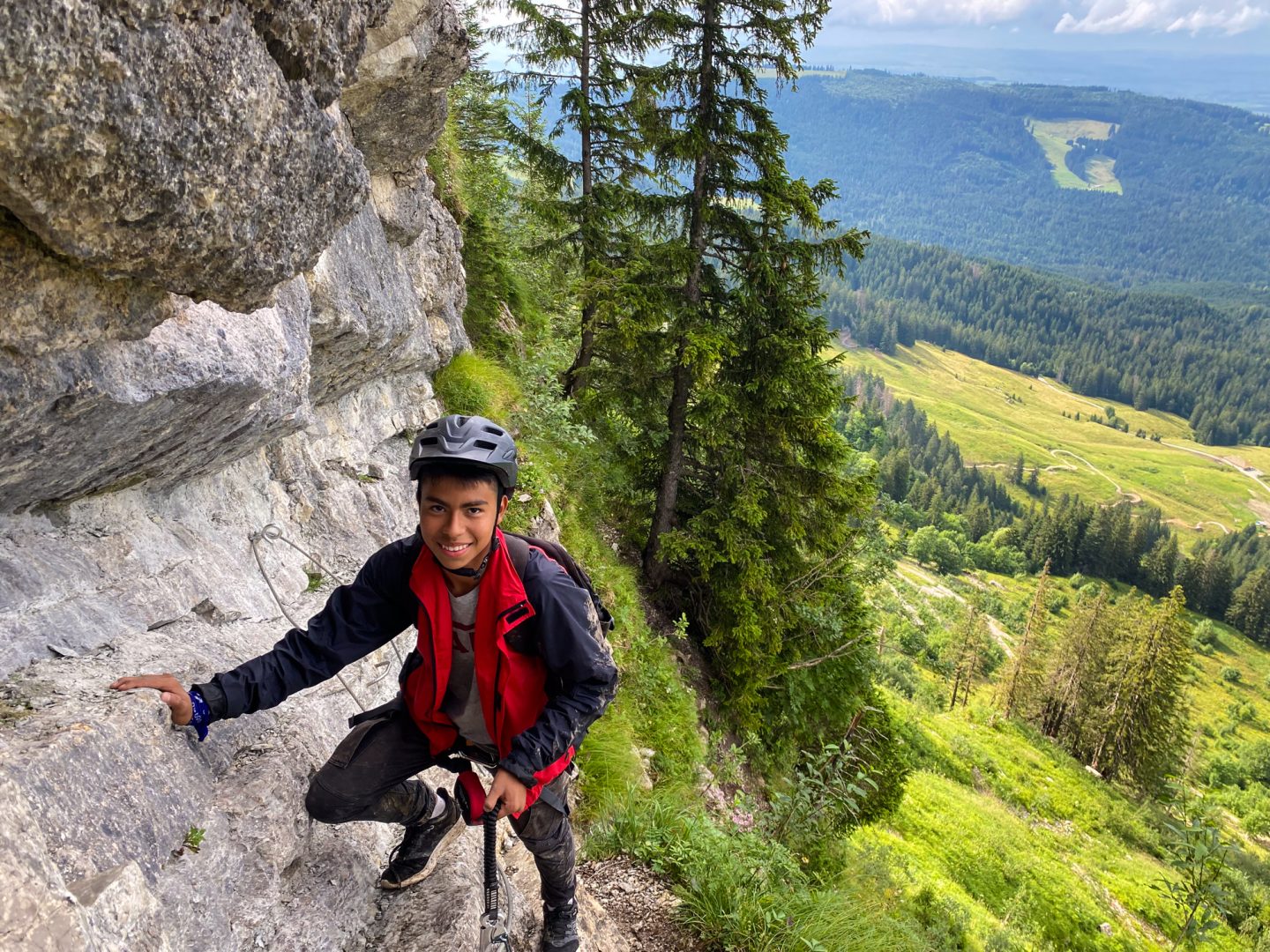
Some via ferrata routes and beginner climbs are aimed at children. Typical minimum ages start at 8+ with a harness. I always book supervised courses with certified guides for first-timers. Indoor climbing walls and adventure centres in Zurich, Geneva, Lausanne, Bern, Basel and Interlaken give low-altitude alternatives. Low‑ropes circuits take children from about 3–4 years. Medium and high ropes need ages 6+ and harnesses plus staff supervision.
I factor altitude into every itinerary. Children may be more sensitive to altitude; I keep visits short above 2,500–3,000 m and alternate with valley days for young kids. For example, Jungfraujoch sits at 3,454 m and is a single high-altitude experience rather than a multi-day base for little ones. Peak attractions like Matterhorn views (4,478 m) and glacier viewpoints are fine as day trips if you limit time above the tree line.
I schedule and budget carefully. Book lessons and guided activities 2–6 weeks ahead in high season (peak months: December–February and July–August). Typical ski group lessons run CHF 50–120 per day. Always add lift-ticket and rental costs to your daily budget and confirm operator age and weight policies at booking. I also check e-bike battery ranges (40–80 km) when planning multi-day rides and reserve helmets for everyone.
Practical safety & booking checklist
Below are the items I verify before departure and at booking:
- Helmets: standard for skiing, biking and park use; bring or rent extras.
- Insurance: travel insurance with mountain-rescue coverage; confirm policy covers activities.
- Emergency numbers: 144 for mountain rescue/medical help and 112 as the EU general number.
- Guides & lessons: book certified guides for via ferrata and first-time climbs; confirm minimum age (often 8+).
- Timing: avoid long stays above 2,500–3,000 m for young children.
- Equipment: check harness fits, rope-course requirements and operator age/weight rules.
- Booking lead time: 2–6 weeks in high season; book peak weeks earlier.
- Costs: factor lessons (CHF 50–120), lift passes, rentals and guide fees.
- Transport & transfers: allow half to a full day for alpine transfers (example: Grindelwald First day).
I often use a flexible base. Sample short plans I use: a 1‑day Grindelwald First with First Flyer + Cliff Walk + 2–3 km family hike; a 3‑day Interlaken base mixing rafting/boat, one high-altitude day and a paragliding taster; a 7‑day loop combining Zermatt and three nights in Interlaken. If you’re organizing a family trip in Switzerland, I recommend building in extra recovery and backup indoor days.