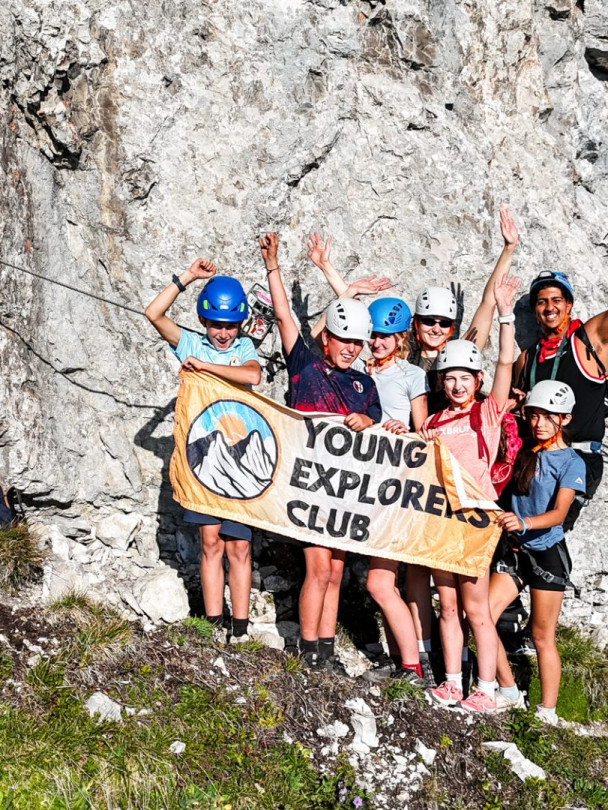
International youth camps boost social confidence by up to 30% while accelerating language learning by 40% through immersive bilingual experiences. These programs combine outdoor adventure with personal development, offering children and teens aged 8 to 17 transformative experiences that traditional classrooms cannot replicate. This guide helps parents understand what makes these camps effective and how to choose the right program for their child’s growth.
Key takeaways
| Point | Details |
|---|---|
| International youth camps serve ages 8 to 17 with culturally diverse experiences combining outdoor adventure and leadership development. | Programs typically run 1 to 3 weeks in settings that promote resilience, teamwork, and global citizenship. |
| Outdoor activities like mountain biking, climbing, and survival skills build confidence, emotional intelligence, and social competence. | These experiences create lasting impacts on personal growth beyond recreational value. |
| Bilingual immersion accelerates language acquisition by up to 40% compared to classroom learning alone. | Children practice languages naturally with peers, developing fluency and cultural empathy simultaneously. |
| Common misconceptions undervalue the developmental benefits of outdoor adventure camps and bilingual environments. | These programs deliver measurable gains in social skills, confidence, and intercultural competence. |
| Parents should verify safety certifications, staff ratios, age-appropriate programming, and program duration when selecting camps. | Proper preparation and research ensure children have safe, transformative experiences. |
Defining international youth camps
International youth camps typically serve children and teens aged between 8 and 21, hosting them in culturally diverse environments with activities promoting outdoor adventure and leadership development. For parents seeking programs for their 8 to 17 year olds, these camps offer structured experiences that blend physical challenges with personal growth opportunities.
These programs bring together participants from multiple countries, creating naturally diverse peer groups where children learn from each other’s backgrounds and perspectives. The international camp culture in Switzerland exemplifies this model, where nationality mixing becomes an intentional part of the educational design rather than an afterthought.
Typical camp structures include:
- Mixed nationality cabin or tent assignments encouraging cross-cultural friendships
- Multilingual instruction and communication fostering language practice
- Team-based outdoor activities requiring collaboration across language barriers
- Cultural exchange sessions where participants share traditions and stories
- Leadership challenges designed for diverse group problem solving
The combination of outdoor adventure and leadership programming distinguishes these camps from purely recreational options. Activities require participants to step outside comfort zones while building trust with peers from different backgrounds. This dual focus on physical challenge and social development creates environments where children discover capabilities they didn’t know they possessed.
Benefits extend beyond the camp experience itself. Exposure to new cultures during formative years shapes how children view the world and their place in it. Team-based activities teach collaboration skills that translate directly to school projects and future workplace scenarios.
Core components: outdoor adventure and personal growth
Outdoor adventure activities form the foundation of personal development at international youth camps. Mountain biking through alpine trails, scaling climbing walls, and practicing survival skills in wilderness settings push children beyond their perceived limits. These challenges create opportunities for growth that structured classroom environments rarely provide.
Social skills development such as teamwork, leadership, and resilience is significantly enhanced in youth camps due to group activities and peer interactions fostering emotional intelligence. When children navigate a difficult hiking trail together or solve a problem as a team, they develop communication abilities and empathy that serve them throughout life.
Common outdoor activities include:
- Mountain biking on varied terrain building physical endurance and risk assessment
- Rock climbing and rappelling developing trust and conquering fear
- Survival skills training teaching self-reliance and problem-solving
- Orienteering and navigation challenges requiring strategic thinking
- River activities like rafting or kayaking demanding teamwork and coordination
- Campfire cooking and wilderness camping fostering independence
These experiences promote resilience by placing children in situations where initial failure is normal and persistence leads to success. A child who struggles to complete a climbing route learns that effort matters more than innate ability. This mindset shift affects how they approach challenges long after camp ends.

The camp environment naturally supports emotional intelligence development. Living in close quarters with peers from different cultures requires patience, compromise, and communication. Children learn to read social cues across language barriers and adapt their behavior to group needs. Understanding why outdoor activities for youths matter helps parents recognize these deeper developmental benefits.
Programs that encourage kids to try new things create safe spaces for experimentation. When everyone is learning together, the fear of looking foolish diminishes. This psychological safety allows children to take risks they would avoid in more judgmental environments.
Pro Tip: Encourage your child to fully engage with challenging activities rather than staying in their comfort zone. The greatest growth happens when they push through initial discomfort and discover new capabilities.
Many custom camps and trips for schools and groups now incorporate these proven outdoor adventure models, recognizing their effectiveness for youth development.
The role of bilingual environments in youth camps
Bilingual camp settings accelerate language acquisition in ways traditional classrooms cannot match. When children need to communicate with peers and instructors in multiple languages throughout the day, learning becomes urgent and practical rather than theoretical. This immersive approach can accelerate language skills by up to 40% compared to classroom-only instruction.
International youth camps in Switzerland often operate in English and French bilingual environments, creating constant opportunities for language practice. Children hear both languages during activities, meals, and evening programs. This exposure builds comprehension naturally as context clues help decode unfamiliar words and phrases.
Cognitive benefits extend beyond language fluency:
- Improved problem-solving abilities as children translate concepts between languages
- Enhanced mental flexibility from switching between linguistic frameworks
- Better pattern recognition skills from identifying language structures
- Increased cultural awareness through language-embedded values and perspectives
- Stronger memory formation through multilingual encoding of experiences
Cultural empathy grows organically in bilingual environments. When children struggle to express themselves in a second language, they develop patience for others facing similar challenges. This shared vulnerability creates bonds that transcend nationality and builds genuine appreciation for linguistic diversity.
Global citizenship emerges naturally when children see peers from various countries as individuals rather than stereotypes. A French-speaking child helping an English speaker with vocabulary becomes a mentor. An English speaker returning the favor during a climbing activity completes the reciprocal relationship. These micro-interactions reshape how children view international cooperation.
Language courses in immersive adventure settings blend structured instruction with practical application. Morning lessons introduce grammar and vocabulary that children immediately use during afternoon activities. This tight feedback loop reinforces learning far more effectively than delayed classroom exercises.
English-French camp settings in Switzerland provide particularly strong models because both languages enjoy official status and widespread use. Children see adults switching between languages naturally, normalizing bilingualism as a practical life skill rather than an academic achievement. This modeling influences how children perceive language learning and their own capabilities.
Common misconceptions about international youth camps
Parents often misunderstand the full scope of benefits international youth camps provide. Clarifying these misconceptions helps families make informed decisions about summer programming that align with their developmental goals for their children.
Misconception: Language courses alone provide sufficient bilingual development. Reality: Structured lessons teach grammar and vocabulary, but immersive camp experiences create the practical fluency that matters in real-world situations. Children who study French in a classroom for years may still struggle with conversational speed and idioms. Camp environments force immediate application, building confidence that classroom learning rarely achieves.
Misconception: Outdoor adventure camps are only recreational fun without serious developmental value. Reality: While children certainly enjoy activities like mountain biking and climbing, these experiences systematically build social skills, emotional regulation, and confidence. The recreational aspect serves as the delivery mechanism for deeper personal growth. Understanding why experiential learning matters for kids reveals how play and development intertwine in these settings.
Misconception: Social benefits are minimal or secondary to physical activities. Reality: Social development represents a primary outcome of international youth camps, not a side effect. Group dynamics, cross-cultural communication, and collaborative problem-solving occupy as much program focus as physical challenges. The outdoor activities simply provide engaging contexts for practicing these essential life skills.
Additional misconceptions include:
- Believing camps are only for outgoing or athletic children when programs actually accommodate diverse personalities and skill levels
- Assuming language barriers create isolation when shared activities transcend verbal communication
- Thinking younger children cannot handle international experiences when age-appropriate programming ensures success
- Viewing camps as expensive luxuries rather than investments in social and emotional development
Pro Tip: Ask camp directors specific questions about how they measure social and emotional outcomes, not just what activities they offer. Programs that track developmental goals deliver more intentional growth experiences.
Parents who recognize the comprehensive nature of these programs make better matches between their children’s needs and available options. The recreational elements attract children while the structured developmental components deliver lasting benefits parents seek.
Comparing international youth camp formats
Understanding differences between camp types helps parents select programs that match their developmental priorities. Not all camps deliver equal outcomes in language acquisition, cultural competence, and personal growth.
Bilingual outdoor adventure camps combine immersive language environments with challenging physical activities. Children practice French and English while mountain biking, climbing, and navigating wilderness settings. This dual focus creates cognitive demands that accelerate both language learning and problem-solving abilities. Summer camps in Switzerland often exemplify this integrated model.
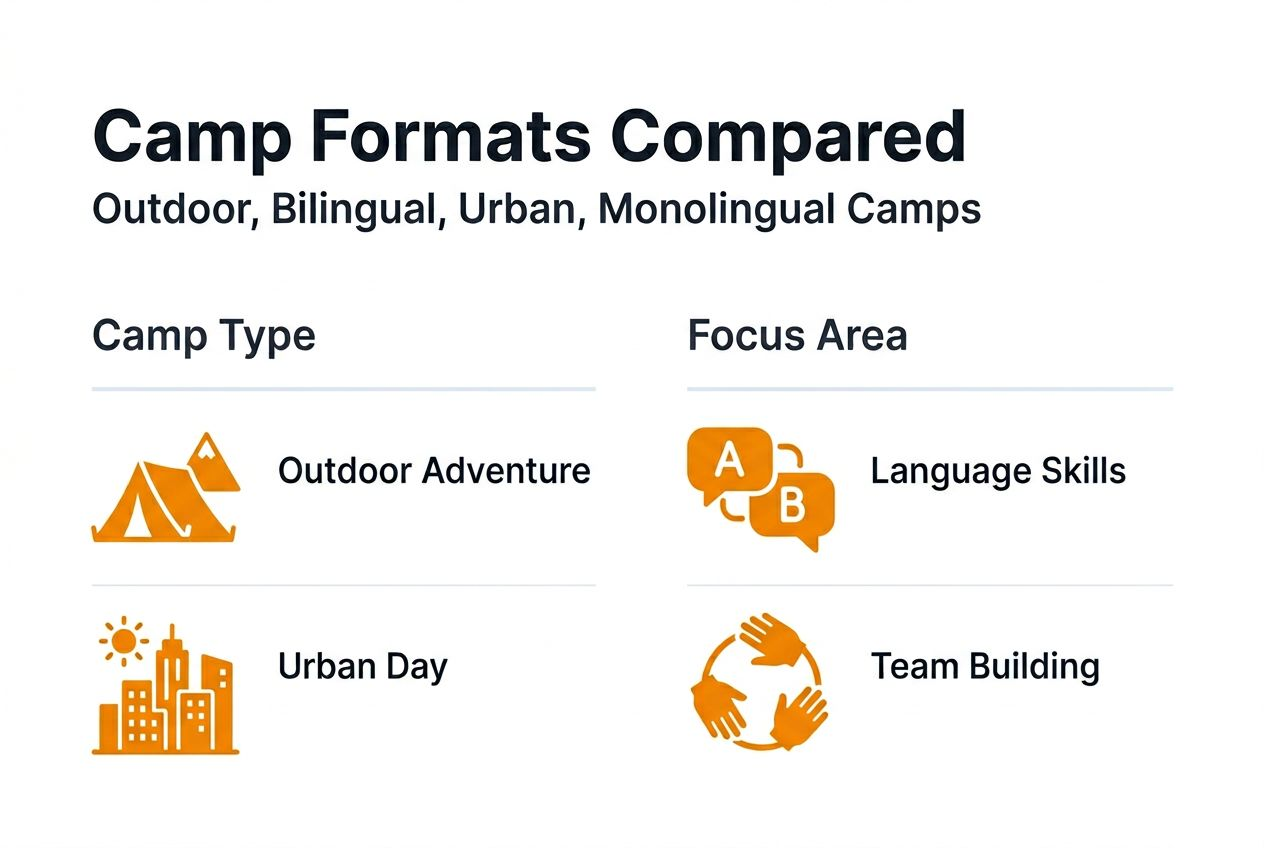
Monolingual camps eliminate language learning benefits but may offer deeper recreational programming in a single language. Children who attend monolingual camps miss opportunities to develop bilingual fluency and cross-cultural communication skills. However, these programs can provide intensive skill development in specific sports or activities without linguistic complexity.
Outdoor adventure camps prioritize physical challenges and teamwork over urban recreational alternatives. Activities like survival skills training and multi-day hiking expeditions require sustained collaboration and resilience that day camps cannot replicate. The residential nature of outdoor programs intensifies peer bonding and personal growth.
Urban recreational camps offer convenience and familiar settings but limited immersive experiences. Day programs that send children home each evening reduce opportunities for the deep friendships and independence that residential camps foster. Cultural exposure remains superficial without sustained interaction with international peers.
| Camp Type | Language Development | Cultural Immersion | Physical Challenge | Social Growth | Duration |
|---|---|---|---|---|---|
| Bilingual Adventure | High (40% acceleration) | Deep (daily cross-cultural interaction) | High (demanding outdoor activities) | High (diverse peer groups) | 1-3 weeks residential |
| Monolingual Outdoor | Low (single language) | Moderate (limited diversity) | High (similar activities) | Moderate (less diverse peers) | 1-3 weeks residential |
| Urban Recreational | Low (limited practice) | Low (superficial exposure) | Low (controlled environments) | Low (familiar peer groups) | Day programs |
| Bilingual Day Camp | Moderate (instructional time) | Moderate (limited hours) | Low (day activities only) | Moderate (daily departures limit bonding) | Daily sessions |
Bilingual adventure camps score highest on intercultural competence measures because they combine multiple developmental domains simultaneously. Language challenges during physical activities create memorable learning moments that classroom instruction cannot replicate. The residential nature allows friendships to deepen beyond surface interactions.
Parental choice significantly impacts developmental outcomes. A child attending a monolingual day camp gains different skills than one experiencing a three-week bilingual residential adventure program. Understanding these distinctions helps families invest in experiences that align with their specific goals for social, linguistic, and personal growth.
Practical considerations for parents
Selecting the right international youth camp requires evaluating several key factors that affect safety, developmental fit, and overall experience quality. These practical considerations help parents make confident decisions.
Typical international youth camp programs run from 1 to 3 weeks, accommodating different age groups with staff-to-camper ratios that optimize support and engagement. Duration affects both cost and developmental impact. Longer programs allow deeper skill development and stronger peer relationships but require more significant time and financial commitments.
Age suitability matters enormously for program success. Camps serving 8 to 17 year olds typically separate age groups for activities and accommodations. An 8 year old needs different supervision and activity complexity than a 16 year old. Verify that programs group children appropriately to ensure social comfort and challenge alignment.
Safety protocols represent non-negotiable selection criteria:
- Verify camp certifications from recognized outdoor education or youth program accreditation bodies.
- Confirm staff-to-camper ratios meet or exceed industry standards of 1:5 to 1:10 depending on activity risk levels.
- Review emergency medical procedures and access to healthcare facilities.
- Check staff qualifications including wilderness first aid, language abilities, and youth development training.
- Understand communication policies for parents during the program duration.
- Examine equipment maintenance standards and activity risk management protocols.
Age-appropriate activities ensure children feel challenged without becoming overwhelmed. An 8 year old might practice basic climbing on low walls while a 15 year old attempts advanced routes. Programs that thoughtfully scaffold difficulty levels maintain engagement across age ranges. Understanding mental health benefits of outdoor activities helps parents recognize how proper challenge levels support emotional wellbeing.
Group sizes affect individual attention and social dynamics. Smaller groups of 8 to 12 children per counselor allow more personalized support than larger ratios. However, groups need sufficient size for diverse peer interactions and team activity viability. Ask camps how they balance individual attention with social variety.
Preparation sets children up for success. Practical steps include:
- Involve children in gear selection to build ownership and excitement.
- Practice relevant skills like basic camping or language phrases before arrival.
- Discuss cultural differences and appropriate respectful behavior with international peers.
- Address homesickness strategies and communication expectations.
- Ensure proper clothing, footwear, and personal items for outdoor conditions.
Programs focused on building confidence through adventure activities provide clear developmental frameworks parents can evaluate. Ask directors how they measure and support confidence growth throughout the program.
Financial considerations extend beyond base tuition. Additional costs may include specialized gear, travel to and from camp, optional language courses, and activity upgrades. Request detailed cost breakdowns to avoid budget surprises. Some programs offer sibling discounts or early registration incentives worth investigating.
Explore Young Explorers Club: your gateway to international youth adventures
Young Explorers Club offers exactly the bilingual outdoor adventure experiences this guide describes. Based in Switzerland, our programs combine English and French immersion with challenging activities like mountain biking, climbing, and survival skills for children and teens aged 8 to 17.
Our camps embody evidence-based approaches to youth development, maintaining strong safety standards while delivering transformative experiences. We design age-appropriate programming that builds confidence, resilience, and global citizenship through experiential learning outside traditional classroom settings.
Parents can explore our summer camp offerings including weekly residential programs, specialized teen adventure camps, and immersive language courses that integrate instruction with practical application. Our website provides detailed activity descriptions, safety protocols, registration information, and testimonials from families who have experienced the Young Explorers Club difference. Discover how we can support your child’s growth through international adventure this summer.