Why Camps Are Ideal For Curious Kids
Inquiry-based camps spark curiosity: hands-on projects, mixed-age mentorship, outdoor screen-free days that build confidence and leadership.
Why camps suit curious kids
We find camps ideal for curious kids. Their size and layout create low-pressure spaces where children can tinker, fail safely, and try again. Mentors focus on learning over performance, and they’re trained to prompt exploration. Short project cycles, scaffolded prompts, mixed-age teamwork, screen-free outdoor time, and regular reflection convert repeated inquiry into measurable gains. Those gains include persistence, creativity, leadership, and social confidence.
Key Takeaways
- Camps put inquiry first. They prioritize questions, hands-on investigation, and iterative failure over one-off success.
- Deliberate program features—30–90 minute project cycles, scaffolded mentor prompts, mixed-age teams, and five-minute reflection rituals—build persistence, collaboration, and creative problem solving.
- Social and emotional gains are reported by parents and formal evaluations: greater independence, confidence, and peer skills. Multi-week immersion produces stronger leadership effects.
- Nature-based, screen-free days restore attention, increase physical activity, and improve sleep, which supports longer focus and sharper observational curiosity.
- When selecting a camp: prioritize inquiry-based design; check documented counselor training and ratios (roughly 1:4–1:12 by age); prefer sessions of two weeks or more for deeper gains; verify clear inclusion and safety practices. We, at the Young Explorers Club, recommend visiting or reviewing daily schedules and staff credentials before enrolling.
Camps as Engines of Curiosity: Lead with the Big Picture
“More than 14,000 overnight and day camps in the U.S. serve roughly 10 million children annually.” That scale matters because curiosity needs space to roam. Camps for curious kids give that space: they let kids tinker, fail safely, iterate, and get focused adult mentorship that frames exploration as learning rather than performance.
We, at the Young Explorers Club, design activities so questions come first and answers come later. Short experiments, open-ended builds, and instructor prompts encourage trial-and-error instead of one-shot success. That low-stakes environment breeds persistence, collaboration, and creative problem-solving — the exact 21st-century skills educators name as critical.
Large surveys reinforce what we see on the ground. Camps report high rates of skill and social gains; roughly 70–90% of parents observe increased independence, confidence, and social skills after camp (American Camp Association, 2023). Those gains happen because camps combine freedom with structure: clear safety and routines plus time for unstructured inquiry.
How camps accelerate curiosity (practical levers)
Below are the core mechanisms that turn a camp day into a habit of curiosity, with concrete choices we recommend for parents and program leaders.
- Scaffolding over lecturing. Start with a simple challenge, then add constraints or tools. We coach mentors to ask three open prompts before offering answers: What did you try? What changed? What will you test next?
- Low-stakes failure. Encourage rapid cycles of attempt-and-fix. We run micro-projects that last 30–90 minutes so kids iterate without fearing long-term consequences.
- Mixed-age collaboration. Pair younger campers with slightly older peers to share strategies. These pairings boost leadership while keeping tasks achievable.
- Deliberate mentorship. Mentors model curiosity by narrating their thought processes and normalizing dead ends. That framing flips exploration from performance to learning.
- Hands-on, multisensory tasks. Use physical materials, outdoor labs, and tools so abstract ideas become palpable. For examples of activities that spark creative thinking, see creativity and problem-solving.
- Clear reflection routines. Build a five-minute end-of-session ritual: what surprised you, what improved, what will you try next. We find reflection cements insight and fuels future questions.
- Day camp vs sleepaway design choices. Day programs let kids test new skills in short bursts and return home for consolidation; sleepaway camps provide extended immersion and deeper social independence. Choose based on the child’s tolerance for separation and the learning depth you want.
- Cross-disciplinary projects. Blend science, art, and play so curiosity transfers across domains. A single project can teach measurement, collaboration, and narrative thinking simultaneously.
Practical selection tips we recommend when picking a program: look for explicit inquiry-based learning camps, check staff-to-camper ratios, ask how mentors handle failure, and review daily schedules for repeated reflection time. If summer camp learning is a priority, favor programs that list iterative projects and mixed-age activities.
We aim to make camp a reliable engine of curiosity. Kids leave with questions they want to pursue, a clearer sense of how to pursue them, and habits — persistence, collaboration, and creative problem-solving — that last well beyond any single season.
How Camps Fuel Cognitive and Creative Growth: STEM, Arts, and Inquiry-Based Learning
We, at the young explorers club, run project-based, experiential programs across maker spaces, robotics clubs, nature-science labs, theater intensives, creative-writing workshops, and multi-day build challenges. Those formats let kids try ideas quickly, fail safely, and iterate with guidance. Structured STEM and maker camps often report 60–75% of campers showing increased interest in science and engineering; arts camps report similar proportions for measurable gains in creative work and portfolios (camp evaluations).
Inquiry-based learning in practice
Inquiry-based learning centers on student questions, hands-on investigation, and reflection. At camp that looks like kids generating a question, designing or running an experiment or creative effort, then reflecting with peers and counselors about what worked and what to try next. Below I map the three-step inquiry cycle to concrete camp activities so staff and parents can see how learning unfolds:
- Question — campers choose a problem or creative prompt.
- Hands-on investigation — lab experiments, build sessions, rehearsal blocks.
- Reflection — group debriefs, showcases, portfolio entries.
Activity blocks normally run 30–90 minutes, which gives time for multiple short cycles of trial, failure, and iteration. Those repeated cycles build persistence and reduce the fear of mistakes. I encourage mixing quick two-cycle tasks with longer, multi-day builds so kids taste immediate feedback and also learn sustained planning.
Staffing, mentorship, and program design
We staff deliberately to make inquiry stick. Recommended counselor-to-camper ratios are roughly 1:4–1:8 for younger children and 1:8–1:12 for older campers. That density lets mentors scaffold questions, model iterative practices, and coach honest reflection. Mentorship turns playful tinkering into durable curiosity and skill by asking one more probing question, demonstrating a small technique, or suggesting the next experiment.
I recommend these practical approaches for programs and leaders:
- Rotate stations so campers encounter maker, STEM, and arts modalities across a week.
- Use quick formative showcases to build portfolios and public speaking.
- Scaffold projects with checklists and reflection prompts to normalize iteration.
- Keep materials low-cost and reusable to encourage risk-taking.
We also integrate outdoor work and low-tech prototyping to reinforce transferable problem-solving. For programs that want to emphasize practical application and creative confidence, prioritize regular feedback loops and a culture that celebrates process as much as product. Explore how camps encourage creativity and problem solving with our article on hands-on learning for examples you can adapt immediately.

Social, Emotional, and Practical Independence: Confidence, Leadership, and Life Skills
We at the Young Explorers Club see small-group living and shared responsibilities speed up independence, empathy, leadership, and resilience. Camp routines — cabins, shared meals, rotating chores, and intentional social programming — give kids repeated chances to practice real responsibility. Parents report 70–90% increases in independence and confidence after camp. About 80% of campers say they made new friends. Many programs show measurable gains in leadership and self-efficacy during multi-day residential stays of 1–4 weeks.
I often describe the typical progression this way: a shy 9-year-old who avoids group games joins a cabin chore team in week one, practices leading a short evening game in week two, and by week three volunteers to help new campers. We see that sequence regularly; small tasks build competence, competence brings confidence, and confidence invites leadership.
- Week one: Joins a cabin chore team and practices basic responsibilities.
- Week two: Practices leading a short evening game and tries small leadership tasks.
- Week three: Volunteers to help new campers and takes on informal mentoring roles.
Many camps document campers stepping into cabin-level leadership roles by week two of multi-week sessions. For families who want more context about responsibility development, see independence at camp. Practical frameworks make those transitions predictable: rotating responsibilities, conflict-resolution circles, cooperative problem-solving challenges, and designated leadership roles in evening programs all push growth without pressure.
Life skills taught
We expect daily practice to create lasting habits, so campers work on these core skills:
- Laundry basics — sorting, washing, and folding clothes so kids leave camp able to manage their kit.
- Meal responsibility and serving — preparing, portioning, and clearing to build teamwork and accountability.
- Time management and transitions — using schedules and timers to move between activities smoothly.
- Basic first aid and safety routines — recognizing when to get help and how to handle minor injuries.
- Packing and organizing a daypack — planning what they need for hikes and activities.
- Planning and leading a group game — structuring rules, managing time, and debriefing.
I recommend parents view camp as a skills accelerator. We design small, achievable milestones so kids experience clear wins. That steady sequence — from cabin chores to running evening programs — creates measurable growth in social skills, emotional development, independence, leadership at camp, and life skills for kids.
Outdoor Learning, Attention Restoration, and Screen Breaks: Health and Focus Benefits
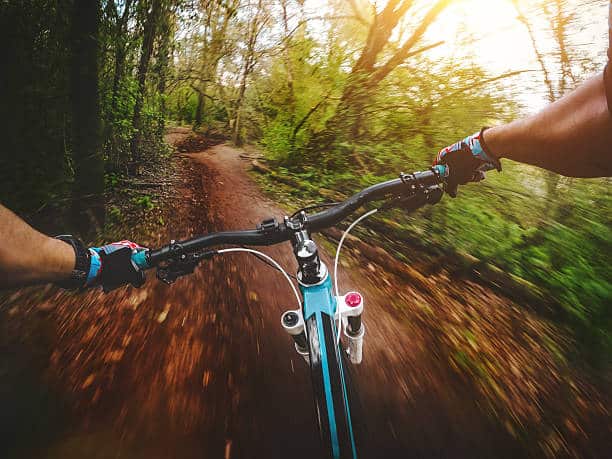
We, at the Young Explorers Club, build schedules around nature-based camp experiences that restore attention and reduce stress. Repeated contact with green spaces drives measurable attention-restoration and mood improvement, according to environmental-psychology research.
Attention, activity, and curiosity
Camps deliver clear gains in focus because they combine outdoor learning with plenty of movement. The CDC recommends 60 minutes/day of moderate-to-vigorous physical activity for children (CDC); typical camp days exceed that through hikes, waterfront time, organized games, and free play. That steady activity sharpens executive function and primes kids to notice small details in plants, insects, and landmarks. We see curiosity spike when children practice observational habits away from screens. The shift from passive media consumption to hands-on exploration reinforces longer attention spans and creative problem solving. For more on how being outside drives learning, read about outdoor learning.
Screen breaks, sleep, and what parents report
Camps act as a practical digital detox for kids. Average recreational screen time for U.S. children ranges roughly 3–7+ hours/day, so multi-day to multi-week breaks produce fast, visible gains. Parents commonly notice meaningful changes within 1–2 weeks of reduced screen access. Below are the most frequent improvements parents report after sustained screen-free camp sessions:
- Deeper evening sleep and more regular sleep schedules
- Fewer tantrums and more stable moods
- Renewed interest in hands-on play, crafts, and building
- Longer stretches of focused activity like reading or nature observation
We, at the Young Explorers Club, structure activities to support mental health benefits and sleep improvement. Removing recreational screens reduces overstimulation and helps circadian rhythms recover. At the same time, consistent physical activity for kids contributes to better sleep quality and daytime attention. The combined effect is calmer evenings, brighter mornings, and children who return home with stronger observational skills and a renewed appetite for play.
Diversity, Inclusion, and Real-World Social Learning
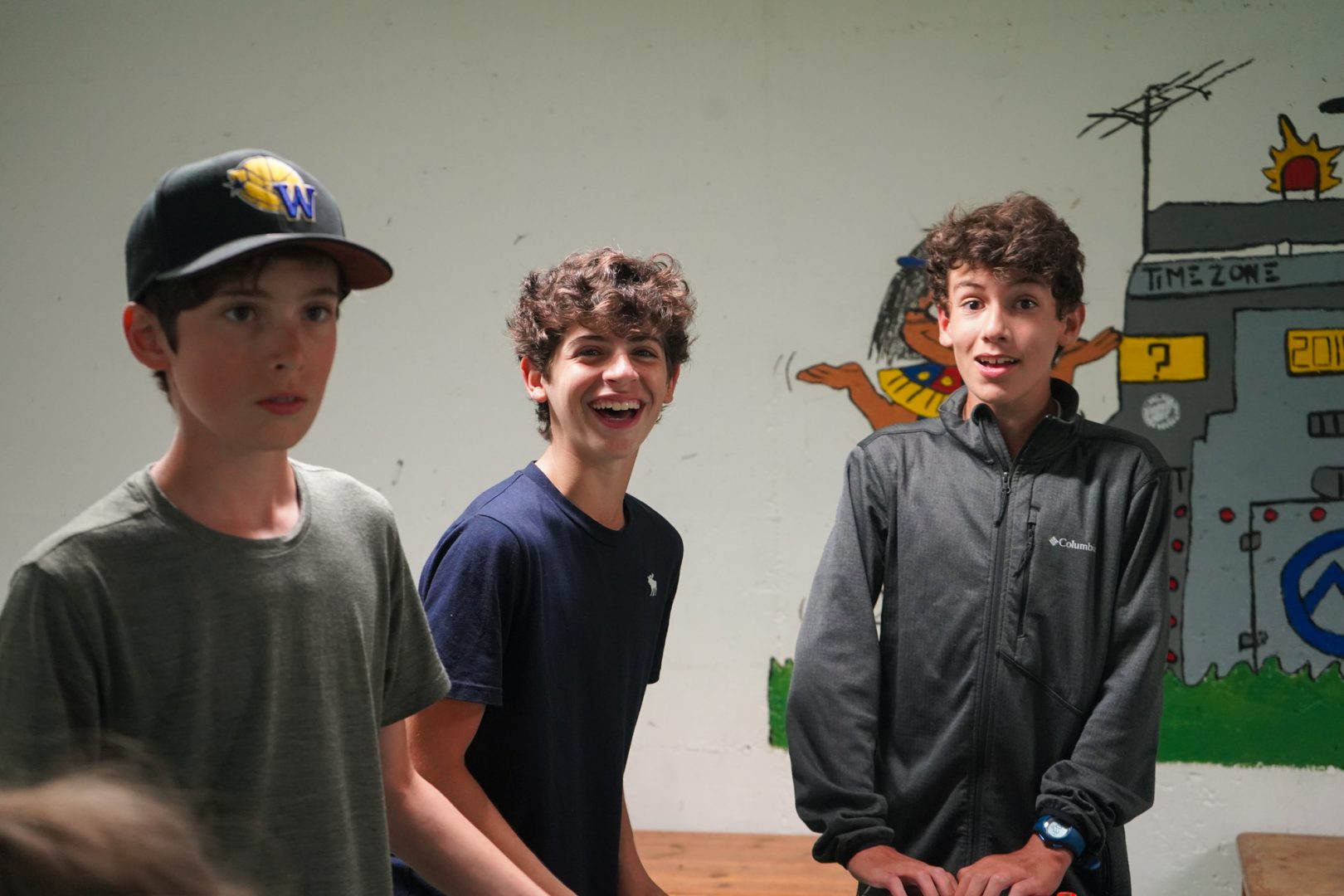
We, at the Young Explorers Club, create daily situations where kids from different backgrounds live, play, and solve problems together. Camps form lived social labs that classrooms rarely replicate; cabins, shared meals, and mixed-age activity teams force cooperation, negotiation, and real-time conflict resolution. The American Camp Association (ACA) and similar camp surveys document an increasing focus on diversity and inclusion initiatives, and report that camps with explicit inclusion training show larger measured gains in cross-cultural comfort and empathy.
Camp-based cultural learning accelerates interpersonal understanding because children practice skills rather than just discuss them. In the cabin or on an expedition a child must:
- negotiate sleeping arrangements
- compromise on activity choices
- explain traditions or food preferences
- share leadership when plans go off course
Those interactions build cultural competency fast. We see curiosity become respect when campers actually live with different routines and perspectives for a week or more.
Programs that combine clear policy with everyday practice produce the biggest gains in equity in outdoor education. When staff reflect on bias, when activities account for multiple cultural frames, and when hiring goals expand representation, campers receive constant, modeled lessons in inclusion. We structure learning so cultural competency is integrated into games, chores, and challenge courses instead of being a single classroom talk.
Inclusion practices we implement
Below are concrete practices we use to make camps inclusive and equitable:
- Scholarship and sliding-scale tuition programs to broaden access
- Targeted outreach to underrepresented communities to recruit diverse campers
- Staff diversity hiring goals to ensure representation among counselors and leaders
- Culturally responsive activity design so games, stories, and meals reflect multiple backgrounds
- Anti-bias counselor training paired with ongoing reflection sessions to keep learning active
We measure progress with both quantitative and qualitative tools. Pre/post surveys on cross-cultural comfort, observational rubrics during communal activities, and reflective interviews with campers and staff give a fuller picture than attendance numbers alone. The ACA’s surveys support this mixed approach, showing programs that document inclusion training see stronger empathy gains.
We recommend program directors treat inclusion as operational, not optional. Build outreach budgets, set hiring metrics, and schedule regular staff debriefs.
Small procedural changes create repeated, low-stakes opportunities for cross-cultural practice. Examples include:
- rotating kitchen teams so campers share food-preparation roles
- co-designing activity themes with campers to incorporate diverse perspectives
Those everyday moments are where diversity at camp moves from an ideal into a lived skill.
For related ideas about how camp environments spark inventive thinking and shared problem-solving, see how camps encourage creativity.
Measuring Impact and Choosing the Right Camp: Evidence-Based Evaluation and a Parent Checklist
I recommend a mixed-methods approach for credible camp evaluation. Start with pre/post surveys that measure confidence, curiosity, and leadership. Add behavioral observation to capture independence and social interactions. Collect portfolio artifacts — projects, photos, creative work — to show tangible growth. Follow up with interviews or longitudinal checks at 3 and 6 months to gauge sustained interest.
Collect these benchmark figures so outcomes are actionable:
- Percent change in confidence (pre → post).
- Number of new skills performed independently.
- Measures of sustained interest at 3–6 months.
Plan logistics around realistic response rates and reporting transparency. Aim for a 40–70% response rate for follow-up surveys. Always state sample size and demographics in reports. Frame results with both absolute percentage change (for example, 45% → 68% = +23 percentage points) and an effect-size estimate (small/medium/large) so readers see practical and statistical impact. Many studies recommend a minimum immersion time of 2+ weeks for measurable gains in skills and leadership; prioritize session length if leadership is a goal.
I suggest these reporting practices:
- Publish absolute percentage-point changes next to effect-size framing.
- Include response-rate, sample size, and camper demographics on every outcomes page.
- Track follow-up metrics at 3 and 6 months to show sustained impact.
For examples of measurable benefits and program design, see our camp outcomes.
Parent checklist and sample measures
Below are the core checklist items and sample survey prompts I use when evaluating or choosing a camp:
- Inquiry-based activities with clear project cycles and examples of completed projects.
- Documented counselor training, supervision protocols, and counselor-to-camper ratios.
- Session length and immersion level: day vs. overnight; consider 2+ weeks for deeper gains.
- Balanced STEM and arts offerings aligned with your child’s interests.
- Outdoor and nature emphasis plus stated daily physical-activity expectations.
- Inclusion policies, scholarship availability, and clear diversity practices.
- Safety, accreditation, and written emergency protocols.
- Documented outcome measures and willingness to share evaluation results.
Use these sample survey items on a Likert scale (Strongly disagree–Strongly agree):
- “I try new challenges without fear of failure.” (curiosity/initiative)
- “I feel confident leading small groups or activities.” (leadership/self-efficacy)
- “I am more interested in science/arts after camp.” (sustained interest)
- “I made new friends and felt included.” (social connection)
For selection guidance I recommend prioritizing multi-week overnight programs or specialty intensives for deep inquiry, independence, and leadership gains. Choose day camps or week-long options for broad exposure and exploratory sampling.

Sources
American Camp Association — Research & Reports
Centers for Disease Control and Prevention — How much physical activity do children need?
American Academy of Pediatrics — Media and Young Minds
Common Sense Media — The Common Sense Census: Media Use by Tweens and Teens
Harvard University, Center on the Developing Child — Serve and return
Proceedings of the National Academy of Sciences — The cognitive benefits of interacting with nature
Journal of Adventure Education and Outdoor Learning — Aims & scope
Child Trends — Social and Emotional Development
Harvard Family Research Project — Measuring Program Outcomes
The Wallace Foundation — Summer learning
American Camp Association — Accreditation