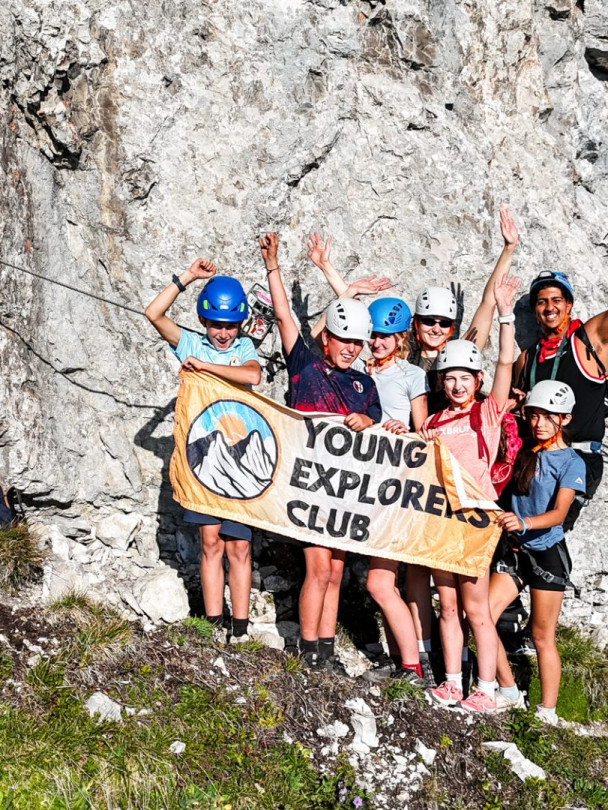
Summer camps drive concentrated, measurable personal growth
Summer camps produce rapid, transferable gains in self-efficacy, teamwork, resilience, and academic retention by pairing immersive schedules, scaffolded leadership tracks, daily outdoor activity, and clear social-emotional curricula. About 26 million children attend camps each year, and benchmarks from the American Camp Association (ACA) document substantial, measurable improvements across multiple domains.
Why camps produce fast, measurable change
Immersive schedules and scaffolded learning
Camps create concentrated learning environments where participants repeatedly practice skills in varied contexts. This includes skill practice, incremental responsibilities, and challenge activities that promote mastery. Clear progression paths (camper → leader → CIT → counselor) reinforce motivation and provide observable milestones for growth.
Sample leadership pathway
- Camper — foundational participation and skill-building.
- Leader — small responsibilities and peer mentoring.
- CIT (Counselor-in-Training) — structured leadership development and applied practice.
- Counselor — full leadership role with accountability.
Camp health triangle: nature, activity, and social support
The combination of nature exposure, daily MVPA, and strong social support produces measurable mental-health benefits. Camps typically exceed the recommended 60 minutes/day of MVPA, which—together with outdoor engagement and peer connection—cuts rumination and anxiety and raises mood and coping skills.
Preventing summer learning loss
Mixing micro-lessons, project-based enrichment, and focused reading or STEAM tracks keeps academic skills active and prevents the slide often observed during long breaks. These activities align with camp rhythms and sustain academic retention without turning camp into a traditional classroom.
Measurement, quality, and accountability
Robust programs use short, practical tools to demonstrate impact: brief pre/post SEL surveys, counselor rubrics for observable behaviors, and tracked KPIs such as confidence change, leadership completion, retention, and satisfaction. Documented staff training and clear counselor-to-camper ratios are essential for reliable delivery and parent reassurance.
Practical implications for parents and program designers
- For parents: Look for programs that publish ACA-aligned benchmarks, use short SEL measures, and provide clear staff training documentation and ratios.
- For designers: Build scaffolded leadership tracks, prioritize outdoor MVPA and social-emotional curricula, and embed simple pre/post measurement to demonstrate outcomes.
- For evaluators: Use a mix of qualitative rubrics and quantitative KPIs to capture both immediate gains (confidence, social skills) and longer-term retention (leadership completion, academic activity).
 Watch on YouTube
26 Million Campers and Measurable Outcomes
I treat the American Camp Association data as a baseline for impact. The headline figure — 26 million children attending camps annually — shows scale and potential population-level influence (American Camp Association). That reach makes the statistics that follow more than anecdotes; they reflect trends we can plan around.
Key takeaways from ACA data
The numbers point to clear, measurable gains. Here are the outcomes I consider when evaluating programs:
- 93% tried new activities, signaling broader experience and a willingness to take healthy risks (American Camp Association).
- 91% reported greater self-confidence, mapping directly to self-awareness and self-efficacy improvements (American Camp Association).
- 90% saw improved social skills, which translates to stronger peer relationships and social competence (American Camp Association).
- 86% developed independence, reflecting gains in resilience and self-management (American Camp Association).
How I translate these outcomes into practice
I use these findings to recommend concrete choices for families and program directors. I look for camps that structure deliberate opportunities to try unfamiliar activities, because 93% of campers responded positively to those challenges. I favor staff training focused on confidence-building; small, scaffolded wins produce the 91% confidence gains the ACA reports. For social skills, I prioritize programs with mixed-group projects and peer-feedback loops to mirror the 90% improvement metric. Regarding independence, I assess routines that let kids manage daily tasks and solve minor problems—habits that drive the 86% increase in self-reliance.
When advising parents I point them to practical resources like this guide on getting started with camp: 26 million campers. I also encourage tracking simple pre- and post-camp measures: confidence checklists, social-goal journals, and a short independence rubric. These let you compare outcomes against the ACA benchmarks and adjust choices the following year.
I prioritize programs where outcomes align with these ACA benchmarks because measurable growth matters. If a camp consistently hits these metrics, it likely supports lasting personal growth, improved self-confidence, and stronger social skills.
How Camps Accelerate Social‑Emotional and Leadership Development
Camps compress learning into intense, social settings so growth happens fast. I see four SEL areas that track directly to measurable outcomes reported by the American Camp Association (ACA) and by camp survey data. Those outcomes show clear gains in confidence, independence, teamwork, and leadership development.
I map leadership development onto a common ladder: camper → group leader → counselor‑in‑training (CIT) → counselor. Many programs report 80%+ leadership improvement (camp survey data). I watch progression metrics closely: percentage completing a leadership track, retention into CIT, and hires to counselor roles are the strongest indicators of lasting change.
Camps drive development through repeatable, scaffolded experiences. I use these mechanisms day to day:
- Repeated mastery (swim levels, archery badges) to build competence and self‑efficacy.
- Small responsibilities (cabin chores, gear management, role rotation) that teach accountability and decision‑making.
- Challenge courses and overnights that provide scaffolded risk and strengthen resilience.
- Peer‑led activities — leading a canoe trip, planning a skit, running mealtime roles — that combine teamwork, social competence, and practical leadership practice.
I recommend programs with explicit leadership curricula and clear progression. For focused training, consider the Youth Leadership Program; it accelerates skills with role rotations, assessments, and mentor feedback.
SEL competencies mapped to camp activities and outcomes
Below are simple mappings I use to design sessions and measure impact:
- Self‑awareness → solo challenges and storytelling → 91% increased self-confidence (ACA outcomes).
- Self‑management → independent tasks and resilience drills → 86% increased independence (ACA outcomes).
- Social awareness → small‑group living and perspective exercises → 90% improved social skills (ACA outcomes).
- Relationship skills → teamwork tasks and peer problem‑solving → 90% working in groups; 93% tried new things (ACA outcomes).
- Responsible decision‑making → daily choices, chores, and leadership roles → measurable choices that transfer offsite (camp survey data).
I pair these activities with short reflections and mentor check‑ins so progress is visible and repeatable. A quick camper quote or case study in the program sidebar will make outcomes relatable and help parents see how peer relationships and teamwork translate into real confidence and leadership.

Mental Health, Nature Exposure, and Physical Activity: The Camp Health Triangle
I recognize the scale of the challenge: about 1 in 5 young people experience a mental health condition in a given year, according to CDC. Camps address that risk by intentionally combining three protective elements — nature exposure, daily physical activity, and social support — into a single daily routine.
How each corner of the triangle helps
Nature exposure reduces repetitive negative thinking and neural activity linked to rumination. Bratman et al. (2015, PNAS) showed that time in natural settings lowered rumination and decreased activation in the subgenual prefrontal cortex, a region tied to depressive thought patterns.
Physical activity provides complementary benefits. The U.S. Physical Activity Guidelines recommend children and adolescents get at least 60 minutes of moderate-to-vigorous physical activity daily; meeting that threshold improves mood, sleep, and stress resilience.
Social support at camp — peers, counselors, group challenges — buffers anxiety and strengthens coping skills. I see these three factors interact: nature calms the mind, activity energizes the body, and social bonds give meaning and safety. Together they reduce anxiety, lift mood, and improve coping far more than any single element alone.
Sample daily MVPA schedule and comparisons
Below is a concise sample that shows how typical camp programming exceeds daily activity targets and layers restorative nature time and social contact.
- Morning hike — 20–30 minutes MVPA through trails, with quiet stretches for observation.
- Midday swim — 20–30 minutes MVPA in supervised groups that mix instruction and free play.
- Afternoon games or skills session — 20–30 minutes MVPA (team games, climbing, or activity-based workshops).
- Restorative downtime — supervised unstructured time for peer conversation and low-arousal activities.
This sequence produces cumulative MVPA comfortably above 60 minutes/day while keeping multiple social touchpoints and nature exposure. Compare that to typical school schedules: most students get PE once or twice per week, not daily, and much of school time is sedentary. I recommend camps for families who want guaranteed daily MVPA combined with outdoor recovery and social learning; for planning help, see Your first summer camp.
I suggest visual aids to communicate impact. A “Camp health triangle” infographic that places nature, activity, and peers at the three corners and arrows toward outcomes — reduced rumination, stress reduction, improved mood, better coping — makes the mechanism clear. A small chart that ties the Bratman 2015 findings to added benefits from social support and activity will help stakeholders grasp why the combined model outperforms single-focus interventions.
Practical takeaways I use in program design and family consultations:
- Prioritize daily outdoor sessions, even short ones, to capitalize on the neural benefits shown in Bratman 2015.
- Build at least two MVPA blocks into every day to meet the 60 minutes/day guideline while preserving time for skills and downtime.
- Create consistent small-group interactions so social support is reliable and skillful staff model coping and inclusion.
I keep recommendations concise and actionable. Camps aren’t just recreation; they deliver a structured, evidence-aligned path to improved well-being through nature exposure, movement, and human connection.

Academic Benefits, Summer Learning Loss, and Long‑Term Skill Pathways
Students often lose about one month of reading and up to two months of math over the summer (Cooper et al., 1996). I treat that gap as avoidable, not inevitable. Camps that mix structure with enrichment close that window by keeping skills active and relevant.
I run programs that pair focused practice with engaging projects. Educational and enrichment camps — STEAM modules, reading cohorts, and project-based tracks — provide the repeated, scaffolded practice students need to maintain gains.
Examples I use successfully include:
- Daily math challenges built into morning routines to sustain numeracy fluency.
- Small-group reading circles for targeted comprehension and discussion practice.
- Applied STEM projects like robotics or environmental science to connect concepts to real-world problems.
- Hands-on labs that intentionally map activities to curriculum standards.
I also recommend quick pre/post checks so you can see learning preserved or improved.
I design schedules to balance intensity and play. Short, daily practice prevents cognitive drift. Longer, project-based sessions build depth and application. You should aim for:
- consistent micro-lessons (10–20 minutes) for core literacy and numeracy,
- weekly applied projects that synthesize those micro-skills,
- reflection sessions so campers verbalize learning and link it to school topics.
Camps also open long-term skill pathways and career exploration. Youth encounter career-adjacent skills in settings like outdoor leadership, lifeguarding, arts production, robotics labs, and mini-entrepreneurship programs. My counselor-in-training (CIT) and counselor pipelines intentionally scaffold workplace skills: supervision, scheduling, verbal feedback, and conflict resolution. Those internships give teens résumés and concrete examples for college and job applications.
Alumni surveys often report that camp influenced career choices, and program-specific follow-ups help you measure that impact. I encourage programs to track alumni outcomes and share results with families; it builds trust and demonstrates return on time and tuition.
Camp formats that support academics
Below are three proven formats I recommend for preventing summer learning loss and building pathways:
- Academic / STEAM camps — Focused lessons plus labs. Best for maintaining math and science fluency through progressive challenges.
- Project-based experiential camps — Longer projects that require planning, measurement, and presentation. Ideal for deeper application and soft-skill growth.
- Reading / literacy camps — Small-group instruction, paired reading, and writing workshops. Most effective at sustaining and improving reading comprehension.
If you’re planning a first-time placement, see my guide to your first summer camp for practical steps on choosing formats that protect learning while growing independence.
Why Camps Are Distinct and How Programs Measure Impact
How camps differ from sports and after-school programs
I separate the most important differences into clear factors before discussing measurement. Below are the features that make camps a different developmental environment.
- Immersion: camps run as full-day programs or residential sessions that last continuous blocks of days or weeks. That continuous exposure creates intense practice and context-switching opportunities you won’t see in a weekly practice or class. For practical orientation, see advice for parents choosing a day camp.
- Breadth: campers rotate through outdoor skills, arts, STEM, and social-development tracks in a single schedule. This multidisciplinary exposure builds transferable skills faster than a single-skill team program.
- Duration: multi-day or multi-week experiences sustain learning and habit formation. Sporadic after-school sessions give short boosts; camps give cumulative growth.
- Community living: shared cabins, meals, and chores make social bonds deeper and faster than team practices that meet a few times a week. Those shared responsibilities create informal leadership chances every day.
- Participation and hours: camps tend to concentrate many hours per day over consecutive days, while after-school programs average fewer total contact hours and more fragmented schedules, a qualitative distinction noted by Afterschool Alliance.
How camps measure impact, practical tools, and realistic limits
I rely on concrete, common tools that camps use to track outcomes. Pre/post camper surveys are standard for measuring growth in self-efficacy and confidence. I recommend validated self-report scales integrated into short pre/post instruments to capture percent change in confidence and social-emotional learning.
Counselor observations and structured rubrics translate daily behaviors into scored competencies, and skill checks — like swim levels or merit-badge evaluations — give objective milestones.
Programs that care about longitudinal outcomes build alumni follow-ups and longitudinal tracking into their systems. Those data let you report retention into counselor-in-training (CIT) roles, percent completing leadership tracks, and long-term educational or civic outcomes. Typical KPIs I track include:
- Percentage change in self-reported confidence
- Percent completing the leadership pathway
- Retention into CIT
- Overall camper satisfaction scores
That set of outcome metrics keeps evaluation focused and actionable.
I also flag limitations so leaders and funders have realistic expectations. Camps aren’t a magic solution. Benefits vary strongly with program design, staff training, and camper fit. Quality variation across providers means some camps deliver large gains while others produce minimal change. Cost and access barriers further limit reach. Scholarships and financial aid help, but unmet demand persists, a pattern documented by Afterschool Alliance and NSLA.
For program teams that want visual tools, I suggest two practical artifacts:
- Comparison table contrasting camp, team, and after-school programs across hours per day, housing, activity diversity, social immersion, and leadership pathways — that table clarifies where strengths and gaps lie.
- KPI dashboard that plots pre/post SEL deltas, leadership-track completion, satisfaction, and retention into CIT across cohorts; you can update it after each session to spot trends.
A quick evaluation instrument I often use is a six-question pre/post SEL survey focused on key domains: self-efficacy, teamwork, problem-solving, leadership intent, sense of belonging, and emotional regulation. Keep each item short, use a 5-point agreement scale, and score percent change across the session. Combine that with counselor rubrics and skill-check pass rates for a triangulated view of impact.
I encourage programs to pair measurement with continuous staff training and transparent reporting. That approach improves outcome metrics, addresses quality variation, and strengthens case-making for scholarships and broader access.

Practical Checklist for Parents and Program Evaluation Metrics
I recommend treating camp selection like a short-term research project. I focus on measurable outcomes and clear policies so you can compare programs objectively. Bring this checklist to site visits and interviews, and insist on written proof for any claim.
I also suggest reading specific camp guides before you call — for a useful primer see Your first summer camp.
Printable checklist, interview prompts and measurement tools
Use the following items as a printable checklist and a toolkit you can hand to directors. Each bullet is actionable or requestable evidence.
- Developmental goals: list desired outcomes (social skills, academic enrichment, outdoor competence). Ask the camp to map activities to those outcomes.
- Staff training: confirm percent of staff with first-aid/CPR certifications and background checks; request verification of ongoing staff training. Include the phrase staff training in your notes.
- Counselor ratios: verify counselor-to-camper ratio and get it in writing. For younger campers request counselor:camper ratio <1:8 for younger campers.
- Accreditation: confirm ACA accreditation or equivalent and ask to see the certificate. Use ACA accreditation as a shortlist criterion.
- Leadership pathways: check for a formal CIT or leadership program and ask about completion rates. Include CIT in your evaluation.
- Inclusion practices: request written policies on behavior supports, IEP accommodations, and staff training on inclusion.
- Daily schedule: request a sample day that balances active hours and rest; ensure cumulative MVPA exceeds 60 minutes/day by activity type. Note the 60 minutes/day target.
- Health care: confirm on-site medical staff, emergency procedures, and medication protocols in writing.
- Food and allergy policies: demand written procedures and documented accommodations for allergens.
- Costs and aid: require transparent fees, itemized extras, and scholarship or financial aid policies; check for clear application deadlines and selection criteria for scholarships.
Interview questions to ask directors and staff
Have these written down and ask for written answers where possible:
- What percentage of your staff have first-aid/CPR certifications?
- Do you run a formal leadership/CIT program?
- What is your counselor-to-camper ratio?
- Do you administer pre/post outcome surveys and can you share anonymized results?
Sample measurement tools to request or use
Request sample instruments and scoring rubrics so you can compare programs objectively.
Sample 6-question pre/post SEL survey (six short items, self-report):
- I feel confident trying new activities.
- I feel like I belong at camp.
- I can solve problems when they come up.
- I work well in groups.
- I can do things on my own.
- I’m willing to try new challenges.
Ask how items are scored and request anonymized aggregated results.
Outcome metrics to track and report
- % change in self-reported confidence (pre/post surveys) — use as a primary SEL metric.
- % completing leadership track and retention in CIT year-to-year.
- Camper satisfaction scores (post-session).
- % meeting daily MVPA target (60 minutes/day) based on activity logs or wearable data.
- Counselor retention and staff training completion rates.
- Utilization of scholarships and financial-aid acceptance rates.
Visual and content deliverables you can request from camps
- Printable 10-item checklist (camp-provided copy).
- Sample day schedule showing >60 minutes MVPA.
- Sample pre/post survey (6 items).
- One-page KPI panel with the outcome metrics above for parents and directors to adopt.
I recommend scanning any documents you receive and saving them alongside your notes. That makes comparisons quick and keeps conversations focused on outcome metrics, counselor-to-camper ratio, and transparent policies.
Sources:
American Camp Association (https://www.acacamps.org) — “American Camp Association outcomes”
Centers for Disease Control and Prevention (https://www.cdc.gov) — “Data & Statistics on Children’s Mental Health” (CDC) https://www.cdc.gov/childrensmentalhealth/data.html
Bratman, G. N., Hamilton, J. P., Hahn, K. S., Daily, G. C., & Gross, J. J. (2015, PNAS) (https://www.pnas.org) — “Nature experience reduces rumination and subgenual prefrontal cortex activation” https://doi.org/10.1073/pnas.1510459112
U.S. Department of Health and Human Services — Physical Activity Guidelines for Americans (https://health.gov/our-work/physical-activity) — “Physical Activity Guidelines for Americans”
Cooper, H., Nye, B., Charlton, K., Lindsay, J., & Greathouse, S. (1996) (https://journals.sagepub.com) — “The effects of summer vacation on achievement test scores: A narrative and meta-analytic review” https://doi.org/10.3102/00346543066002123
Afterschool Alliance (https://www.afterschoolalliance.org) — “America After 3PM” (report/resources) https://www.afterschoolalliance.org/AA3PM/
National Summer Learning Association / Summer Learning (https://www.summerlearning.org) — “National Summer Learning Association”