

Why Switzerland Is A Dream Destination For Young Adventurers
Switzerland: 60% Alps, 65,000 km trails, 1,400 glaciers, SAC huts—perfect for hiking (Jun–Sep), skiing (Dec–Mar), e‑bike and adventure trips.
Switzerland: Compact Alpine Adventure
Switzerland‘s compact, multilingual landscape gives instant access to 60% Alpine terrain and roughly 65,000 km of marked trails. The country offers about 1,400 glaciers and a dense network of SAC huts, lifts and guided operators, creating ready-made high‑adrenaline and multi‑day routes for young adventurers. Clear seasonal windows run June–September for hiking and December–March for skiing. Widespread e‑bike and bike routes plus dependable public transport keep groups mobile. Strong mountain‑rescue and insurance systems make planning safe and transport‑efficient for youth groups and solo travelers; plan with those systems in mind.
Key Takeaways
- Infrastructure and access: 60% of the country sits in the Alps, supported by approximately 65,000 km of marked trails and extensive lift networks. Roughly 150 SAC huts let you stage multi‑day travel.
- Activity variety: Try paragliding, canyoning, skydiving, via ferrata, mountain biking/e‑biking, and choose from 150–200 ski areas for year‑round adventure.
- Seasonal timing and terrain risks: Hike June–September. Ski December–March. Glacier retreat and variable shoulder seasons change route choice and safety considerations.
- Transport and safety advantages: A 5,200 km rail network runs with high punctuality. Scenic trains and regional passes simplify logistics. We recommend carrying travel insurance that covers mountain rescue.
- Practical planning notes: Budget about CHF 40–80/day for e‑bike rentals and CHF 20–60/night for hut dorms. Book popular huts months ahead for July–August. Bring some cash for remote services.
Planning Recommendations
Book early for high season huts and guided activities. Check local avalanche and glacier reports when planning routes in spring and autumn. Use regional transport passes and scenic trains to reduce transfers and staging time. Finally, confirm that your travel insurance explicitly covers mountain rescue and helicopter evacuation, and carry emergency contact numbers for local rescue services.
Switzerland in numbers: population, languages and Alpine dominance
Population and languages
I treat Switzerland as a compact mosaic. It has about 8.7 million residents and four official languages. That mix makes travel feel like crossing national borders while staying inside one well-connected state. Below are the language shares that shape regional culture and services:
- German: 62%
- French: 23%
- Italian: 8%
- Romansh: 0.5%
These percentages matter for planning. I check regional timetables, menus and signage before I go. I also advise travelers to learn a few local phrases — they open doors and simplify independent exploration.
Alpine dominance and tourism baseline
Roughly 60% of Switzerland’s surface is mountainous Alpine terrain. That fact defines most itineraries. Trails, lifts and mountain huts are the rule rather than the exception. I plan routes assuming altitude, rapid weather shifts and terrain-driven logistics.
Tourism infrastructure grew with those mountains. Before the pandemic, around 11 million international visitors arrived in 2019, which left a dense network of hotels, guides and transport services across the country. Recent recovery has been strong; I recommend checking Switzerland Tourism or national statistics for the latest year-on-year percentage before quoting a precise figure.
If you’re organizing trips for kids or teens, I often point families toward local adventure camps to leverage that infrastructure and expert guides. For a quick look at options, see adventure camps.
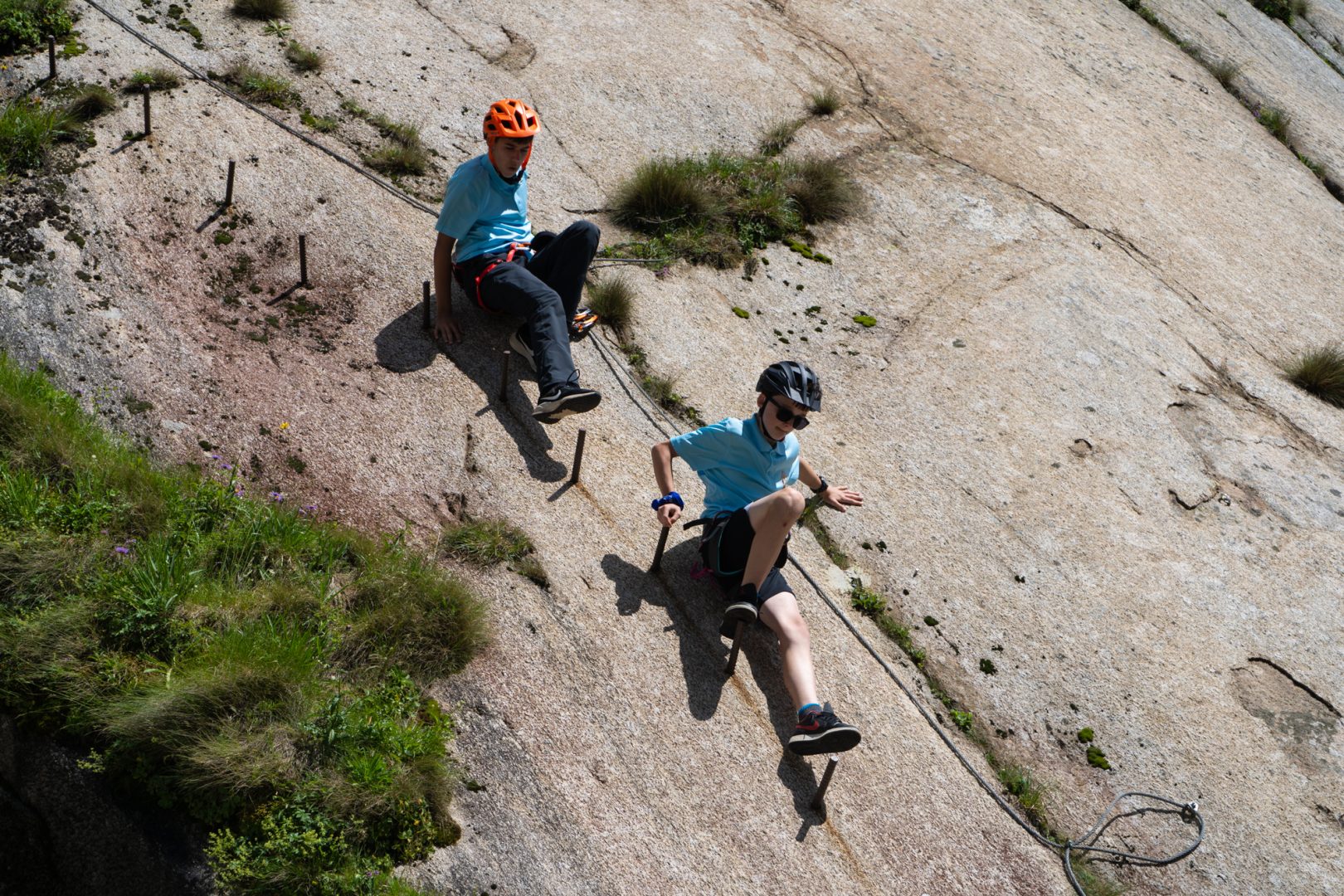
Alpine landscapes, glaciers and seasonal windows that define adventure timing
Quick facts — data at a glance
- Dufourspitze: 4,634 m.
- Approx. 1,400 glaciers in Switzerland.
- Glaciers have lost roughly 60–70% of their volume since 1850 (Swiss Glacier Monitoring/GLAMOS trend).
- The Alps cover roughly 60% of Switzerland.
A 60–70% volume reduction since 1850 is a major long-term climate signal. I watch GLAMOS data closely because Swiss glacier retreat mirrors Alpine-wide trends and affects summer water reserves. That shrinkage reshapes high routes, exposes rock and increases moraine travel. I plan routes with that shifting terrain in mind.
Accessibility and timing matter as much as peak scenery. Mountain trailheads sit within an hour of many towns. I can reach alpine day trips from Zurich or Geneva in about 2–3 hours by public transport, though I always verify exact travel times before I publish or set an itinerary. Huts and lift networks cut approach times and let me squeeze alpine days into a weekend.
Seasonal guidance — what I recommend by window
- June–September: Best for most hiking, hut-to-hut routes and flowering alpine meadows. Long daylight and open high passes make route-finding easier.
- December–March: Main ski season at most resorts; snowpack is established and marked lift networks operate. Backcountry travel needs avalanche training.
- April–May and October–November: Shoulder seasons with fewer crowds and unpredictable conditions. Expect snow patches, wet trails and some hut or lift closures.
- Late spring/early summer: Glacier and high-altitude skiing can still be available depending on the year; check glacier moraine exposure and crevasse risk.
I give practical checks before any alpine day: recent weather, trail conditions, hut openings and avalanche forecasts. For glacier travel, I carry a rope, harness, crampons and know how to use them, or I hire a guide. If you’re heading to a summer camp, review packing and prep advice in my guide to your first summer camp.
Safety note
Always check local weather, trail reports and avalanche forecasts before entering high or steep terrain. I adjust plans quickly when conditions change and favor conservative objectives over forcing a route.
Trails, huts and sample itineraries for active multi-day travel
Trail and hut scale
I rely on a few hard numbers when planning multi-day trips. Switzerland maintains about 65,000 km of marked hiking trails (Schweizmobil / Swiss Hiking Federation). The Swiss Alpine Club (SAC) operates roughly 150 mountain huts used for multi-day routes and overnighting (Swiss Alpine Club). That combination makes almost any loop or high-route possible with staged overnight stops.
Huts vary in comfort and services. Many offer dorm-style mattresses, simple meals, and no-heat drying rooms. A handful provide private rooms and hot showers. Expect dorm prices in the CHF 20–60 range depending on service level and location. Payment methods differ by hut, so carry some cash even if card payments are accepted. I always check the hut’s description on the SAC page and note whether the refuge is staffed or self-service.
Signature treks and sample itineraries
Below are three practical itineraries, with travel times and difficulty so you can match energy and skill level.
-
3-day adrenaline blast
- Route: arrival Geneva/Lausanne → train to Interlaken (~2–3 hours).
- Days:
- Day 1: arrive and settle.
- Day 2: paragliding in the morning and canyoning or tandem skydiving in the afternoon (operator-based half- to full-day activities).
- Accommodation: hostel or valley hotel for easy logistics.
- Difficulty: low technical demand, high adrenaline. Great for first-time multi-day adventurers who want minimal packing and big thrills.
-
5-day Monte Rosa / Haute Route segment
- Route: base in Zermatt → 2–3 days on Monte Rosa or Haute Route segments with SAC-hut overnighting.
- Travel time: Zermatt is ~2.5–3.5 hours from Interlaken by public transport connections.
- Accommodation: staffed SAC huts or mountain refuges.
- Difficulty: moderate to hard. Glacier approaches and high passes can require crampons, rope skills, and a guide. I recommend hiring a guide for any glacier travel.
-
7–10 day rail-and-resort loop (mixed difficulty)
- Route: Zurich → Bernese Oberland (Grindelwald/Lauterbrunnen; ~2 hours) → Zermatt (~2.5–3.5 hours from Interlaken) → St. Moritz (include Glacier Express scenic leg).
- Pace: alternate easy valley days with high alpine stages.
- Accommodation: mix of hotels, mountain inns and SAC huts.
- Difficulty: varied; good for groups who want scenic rail legs and high-alpine options without committing to continuous hard trekking.
Booking, hut operations and permits
I book popular hut nights months in advance for July and August. SAC huts typically require reservations in high summer; confirm via the SAC website or each hut’s reservation phone/email. Bring both card and cash since some huts have limited card acceptance.
Most marked trails are public and require no permit. Glacier routes and certain high-mountain itineraries do demand alpine experience, technical equipment, or a certified guide. I treat any route with glacier travel as a guided route unless the group has rope, crevasse-rescue skills, and current route knowledge.
Planning tips I use on every trip
- Verify current train and connection times on SBB before finalizing an itinerary.
- Book hut nights well in advance for July–August.
- Pack a flexible low-elevation alternative in case storms close high passes.
- Confirm hut payment methods and meal availability the day before arrival.
- If the group includes younger teens, I often pair the trek with a structured youth program like the first summer camp to simplify logistics and supervision.
All-season adventure activities: cycling, mountain biking, winter sports and extremes
Cycling, e-biking and mountain biking
I recommend Switzerland for riders of every level. SchweizMobil maintains thousands of kilometers of signed cycle routes (SchweizMobil), so planners have reliable wayfinding and a huge variety of terrain. E-bikes are widely available in towns and resorts; typical day rental runs from about CHF 40–80 depending on model and location, so you can plan costs in advance and still get strong range for longer loops.
For mountain bikers, lift-access parks shorten the uphill grind and focus the day on descents. Verbier, Davos, Lenzerheide and Zermatt are consistently top hotspots, and you’ll find dedicated downhill parks in Verbier and Laax. I advise checking lift timetables and shuttle services before you head out.
Below are practical riding notes that I use when planning trips:
- Trail choice: match singletrack difficulty to rider skills and the group’s weakest link.
- Battery management: plan 70–80 km for mixed terrain e-bikes; carry a spare tube and basic pump.
- Rentals and service: book e-bikes through local rental hubs, especially in high season.
- Shuttle and lift passes: some resorts sell combined lift-and-bike passes; compare day prices.
- Skills clinics: many parks run half-day coaching sessions for a modest fee and big safety gains.
I often point parents and teens toward summer camps during planning, since they merge guided rides with progression—see these summer camps for structured programs.
Winter sports, seasonality and extreme activities
Skiing and snowboarding happen at scale here, with roughly 150–200 ski areas and resorts across the country. Iconic high-alpine bases include Zermatt, St. Moritz, Verbier, Davos-Klosters and Laax. Lower resorts generally run from November to April, while glaciers and high-altitude venues extend the season well beyond that. I check snow reports closely for altitude-based variability before booking.
If you’re after adrenaline, Switzerland delivers:
- Verzasca Dam bungee (220 m) for a classic high-drop experience.
- Paragliding hubs like Interlaken and Lauterbrunnen that run tandem flights daily in suitable weather.
- Skydiving centers for freefall over dramatic alpine valleys.
- Canyoning in Ticino and Valais with natural slides and jumps.
- Via ferrata routes scattered across the cantons for exposed, protected climbing.
Expect typical guided adventure costs in these ranges: e-bike rental CHF 40–80/day; guided canyoning or via ferrata sessions from about CHF 80–200 for half- to full-day programs, operator-dependent. Time estimates vary by activity and group size, so factor travel and briefing time into the day.
I always prioritize proven safety practices. Use licensed operators for tandem flights, canyoning and skydiving. Check local safety briefings, ask about equipment maintenance regimes, and confirm instructor-to-participant ratios before you commit. Canyoning is best in summer when water temperatures and flow are favorable; skiing is naturally winter-focused but glaciers can allow high-altitude runs outside the traditional window.
If packing for a mixed-season trip, consult a concise packing checklist before you go. what to pack
Transport, scenic rail and safety for solo and group adventurers
Switzerland’s transport network is a core advantage for young adventurers. I rely on trains to link mountain trailheads, lakes and alpine towns with predictability and speed. The national rail network covers about 5,200 km, so you can plan ambitious multi-day routes without wasting travel time.
Scenic trains are a travel experience in themselves. I always factor flagship runs into itineraries for both transit and scenery. The Glacier Express makes a memorable alpine day with its famous strapline — “291 km, 291 bridges, 91 tunnels” — and the typical Zermatt–St. Moritz journey takes roughly eight hours (Glacier Express). The Bernina Express climbs to 2,253 m on a UNESCO World Heritage route, and I treat that ascent as part of the adventure (UNESCO). Those routes double as moving viewpoints and efficient connectors between regions.
Performance and fare options simplify planning. Swiss trains report over 90% punctuality (SBB). I use that reliability to schedule early starts for summit pushes and same-day transfers. The Swiss Travel Pass offers flexible travel across trains, buses and boats and fits many multi-day adventure plans; I also check youth and regional passes that can cut costs for younger travelers. When I need door-to-door logistics, I sometimes combine a rail day with local bus or boat legs to reach remote trailheads.
Practical transport benefits for active groups and solo travelers include a few predictable features I count on:
- Bike carriage: Many trains accept bikes; reservation rules vary by route so I always check the timetable notes and reserve if needed.
- Luggage-transfer services: Luggage-transfer services run on several tourist routes, which lets me move heavy bags while keeping daypacks light for multi-day treks.
- Early starts: Early-morning connections give access to trailheads well before crowds arrive, which helps with single-day summit attempts and staged hikes.
I also plan around capacity and reservations on popular scenic trains. Peak-season services can fill quickly, and group discounts or youth fares may require advance booking. I build buffer time into schedules to cover short delays or equipment issues.
Safety, healthcare and mountain rescue are part of every plan. Switzerland ranks in the top 10 for safety on the Global Peace Index (Global Peace Index), and the healthcare system and emergency response are excellent. Still, mountain rescue services can charge fees for helicopter evacuation or technical extractions. I always buy travel insurance that explicitly covers evacuation and mountain-rescue operations and keep policy details in my phone and printed with my kit.
Adventure safety checklist
Before any remote or alpine outing I run through this checklist to reduce risk and improve response time. Use these items when preparing solo trips or group expeditions:
- Check avalanche forecasts and local snow reports for winter and spring travel.
- Confirm insurance covers mountain rescue and helicopter evacuation.
- Register planned treks with local authorities, hut wardens or via available apps.
- Carry emergency details in both paper and digital forms (contact and insurance information).
- Note transport connections and last-return options; know which trains or buses run late in the day.
- Reserve bike carriage or luggage transfer when the route requires it.
- Pack essentials: a compact first-aid kit, a charged power bank, and a map or offline navigation tool.
I also recommend integrating a scenic train into your route where it reduces heavy road mileage and adds a memorable experience. For families and younger groups, pairing camps or activity weeks with easy rail access makes logistics simpler; I often point people toward recommended summer camps and transport-friendly bases like those listed for summer camps.

Budgeting, accommodation, practicalities and sustainable travel tips
Switzerland is one of the world’s priciest countries, so I plan costs before I leave. Typical on-the-ground prices give a clear baseline: a cheap meal runs about CHF 15–25, a sit-down dinner CHF 25–50+, beer CHF 4–7, and a dorm/hostel bed CHF 30–50 per night.
I cut costs with a few reliable strategies. The Swiss Travel Pass or regional cards can save a lot on trains and buses if you move between regions. I stay in youth hostels or campsites when I can, and I cook from supermarket basics at Migros or Coop. For high-alpine routes I use SAC huts (there are roughly 150), but I always book them well in advance for summer peaks to secure the best rates and spots.
Accommodation options are straightforward to mix and match depending on style and route:
- Hostelling International/Swiss Youth Hostels for cheap, social stays.
- SAC huts for stage stops on long routes and overnighting above the tree line.
- Campsites for low-cost outdoor nights and easy access to trails.
- Budget hotels and Airbnbs when I need privacy or a full rest day.
Practical essentials and connectivity need attention before departure. Visa rules vary; many travelers require a Schengen visa, so I confirm requirements by nationality. The currency is Swiss franc (CHF). Mobile service comes from Swisscom, Sunrise and Salt; I usually pick a local SIM or eSIM for data. Switzerland uses Type J plugs, so I pack an adapter.
Switzerland’s electricity mix is heavily hydropower-based — around 57–60% of generation, according to SFOE figures — so I favor low-energy choices on the move. I also choose trains and e-bikes over cars, carry a refillable bottle to use public water stations, and book guides and operators that carry eco-certifications when possible.
Quick budgets, packing and safety checklist
Here are compact lists I use to prepare and keep costs sensible.
- Sample 3-day budgets (season-dependent):
- Backpacker: dorm CHF 30/night ×2, meals (self-catered & cheap eats) CHF 40/day, regional transport and one activity ≈ CHF 200–350 total.
- Mid-range: mid-range hotel CHF 120/night ×2, meals CHF 60/day, transport options (short Swiss Travel Pass or point-to-point) and one guided activity ≈ CHF 500–900 total.
- Packing & connectivity essentials I always bring:
- Layered clothing, sturdy hiking shoes, waterproof jacket.
- Sunscreen, reusable water bottle, basic first-aid kit.
- Type J adapter and a local SIM or eSIM (Swisscom/Sunrise/Salt).
- Money and safety tips I follow:
- Contactless card: carry a contactless card accepted across Europe; cash in CHF for small mountain purchases.
- Tipping: modest; service charges are often included.
- Insurance: buy travel insurance that covers mountain rescue and evacuation.
- Emergency info: keep emergency contact info and local embassy details easily accessible.
- Sustainable travel habits I stick to:
- Prefer trains and e-bikes for daily travel.
- Use refill stations and avoid single-use plastics.
- Respect marked trails, mountain-hut rules and low-impact etiquette.
- Choose certified eco-operators when booking guided activities.
If you’re organizing a summer program or camp, I recommend reviewing practical camp guidance such as my post on first summer camp to match budget and logistics.
Sources:
Swiss Federal Statistical Office — (no article/blog post title provided) — https://www.bfs.admin.ch
GLAMOS / Swiss Glacier Monitoring — (no article/blog post title provided) — https://glamos.ch
Schweizmobil — (no article/blog post title provided) — https://www.schweizmobil.ch/en/
Swiss Hiking Federation (Schweizer Wanderwege) — (no article/blog post title provided) — https://www.wanderwege.ch/en/
Swiss Alpine Club (SAC) — (no article/blog post title provided) — https://www.sac-cas.ch/en/
Glacier Express — (no article/blog post title provided) — https://www.glacierexpress.ch/en/
Rhaetian Railway / Bernina Express — (no article/blog post title provided) — https://www.rhb.ch/en/
SBB (Swiss Federal Railways) — (no article/blog post title provided) — https://www.sbb.ch/en/
Swiss Travel System / Swiss Travel Pass — (no article/blog post title provided) — https://www.swisstravelsystem.com/en/home.html
Institute for Economics & Peace / Global Peace Index — (no article/blog post title provided) — https://www.economicsandpeace.org/ — https://www.visionofhumanity.org/global-peace-index/
Swiss Federal Office of Energy (SFOE / BFE) — (no article/blog post title provided) — https://www.bfe.admin.ch/bfe/en/home.html
Hostelling International / Swiss Youth Hostels — (no article/blog post title provided) — https://www.hihostels.com/ — https://www.youthhostel.ch/en
Swisscom — (no article/blog post title provided) — https://www.swisscom.ch/en/
Sunrise — (no article/blog post title provided) — https://www.sunrise.ch/en/
Salt — (no article/blog post title provided) — https://www.salt.ch/en/
Migros — (no article/blog post title provided) — https://www.migros.ch/en.html
Coop — (no article/blog post title provided) — https://www.coop.ch/en.html


