Why Switzerland Is The Safest Destination For Summer Camps
Switzerland summer camps: low crime, high healthcare capacity, Rega air rescue & strict mountain regs—safe outdoor programs for children.
Assessment of Switzerland for Camp Safety
Overall security
I rate Switzerland highly for camp safety. It has a very low violent-crime rate (homicide ≈0.6 per 100,000), which provides a secure baseline for outdoor and residential programs.
Healthcare and emergency response
Clinical capacity is dense: about 4.4–5.0 physicians per 1,000 population and roughly 4.5 hospital beds per 1,000. The country is backed by a well-resourced mountain and air rescue network (Rega ≈14,000 missions/year), so camps get fast access to emergency care and evacuation.
Transport, regulation, and public health
Stable transport and political systems support reliable operations. There are strict mountain and lift regulations, strong water and food-safety standards, and canton-level child-protection and accreditation, all of which add layers of safety for organized programs.
Operational implications
These factors let organizers build redundant protocols that keep outdoor programs safe for children, including clear evacuation plans, certified guides, and medical contingencies for remote activities.
Key Takeaways
- Low violent-crime rate and political stability give camps a secure baseline; organizers translate that into supervised routines and secure accommodations.
- High healthcare density and active air and mountain rescue services provide rapid clinical access and medevac capability for both routine and remote emergencies.
- Regulated mountain operations, certified guides, avalanche monitoring, and maintained trails enable safer alpine and trail programs and support clear evacuation plans.
- Strong public-health enforcement, reliable tap water, and canton-level child protection lower public-health and safeguarding risks at camp sites.
Recommendations for parents and organizers
- Verify written emergency plans and evacuation procedures covering remote scenarios.
- Confirm staff criminal-record checks and appropriate staff-to-child ratios.
- Check on-site medical resources and local clinical access times, including medevac arrangements with providers like Rega.
- Ensure adequate medical and repatriation insurance for participants, especially for international campers and remote activities.
YOUTUBE VIDEO
Top Safety Takeaways and Headline Stats
I focus on facts that directly affect child safety at camp. Switzerland’s public safety and emergency systems let me plan programs with confidence. Families notice the difference the moment they arrive.
Quick-hook stats
Editorial note: Always date all statistics and cite the original source (e.g., “Homicide rate: 0.6 per 100,000, Swiss Federal Statistical Office, 2020”). Replace any placeholder or approximate figures with the most recent official numbers from the sources listed before publishing.
Here are the headline indicators I use when evaluating Switzerland summer camps safety:
- Low homicide indicator: ≈0.6 per 100,000 (Swiss Federal Statistical Office, 2020)
- Physician & healthcare capacity: physicians per 1,000: ~4.4–5.0; hospital beds per 1,000: ~4.5 (OECD / Swiss health statistics, [YEAR])
- Mountain/air rescue capacity: Rega: ~14,000 missions/year (Rega annual report, [YEAR])
Callout box (icons + short lines — replace icons in layout)
- Shield icon — Low crime indicator: ≈0.6 per 100,000 (Swiss Federal Statistical Office, 2020)
- Stethoscope icon — Physician coverage/healthcare capacity: physicians per 1,000: ~4.4–5.0; hospital beds per 1,000: ~4.5 (OECD / Swiss health statistics, [YEAR])
- Helicopter icon — Mountain/air rescue: Rega: ~14,000 missions/year (Rega annual report, [YEAR])
What these numbers mean for program design
I treat the low crime rate as a baseline for relaxed campus protocols. That doesn’t mean I cut corners; I strengthen check-in, ID checks, and staff-to-child ratios because child safety demands redundancy.
High physician density and bed capacity mean I can rely on fast clinical access for routine care and emergencies. I train staff in basic emergency medical care and keep triage plans aligned with local hospital procedures. Those steps reduce response time and parental stress.
Rega’s high mission volume shows mountain rescue is active and well staffed. I use that by mapping evacuation routes, keeping weather-aware activity plans, and briefing parents about alpine procedures. I also ensure any mountain activities include certified guides and radios.
I balance infrastructure quality with program fun. That looks like:
- Clear emergency contacts and escalation steps.
- On-site first aid stations and daily health check routines.
- Activity plans that match local rescue and medical capacity.
If you’re preparing for a first summer camp, I recommend reviewing facility emergency plans and confirming staff certifications. Those checks pair with Switzerland’s systemic strengths—low crime rate, emergency medical care capacity, and mountain rescue—to make the destination one of the safest choices for children.
Low Crime, Political Stability and Transport Infrastructure
I point to Switzerland’s low homicide rate per 100,000 — about 0.6 per 100,000 (Swiss Federal Statistical Office, 2020) — as a clear baseline for camp safety. The country consistently ranks highly on the Global Peace Index (Global Peace Index, 2020), and violent crime is rare while petty crime tends to cluster in tourist areas.
I rely on predictable law enforcement and stable politics to keep group moves straightforward. Camps reinforce that stability with chaperones, secure sleeping accommodation and locked storage for valuables. I find parents appreciate the way staff translate national safety into daily routines.
Typical risks parents ask about and practical precautions
Below I list common low-level risks and the precautions camps use to manage them:
- Typical low-level risks: pickpocketing in busy tourist spots, bicycle theft, and opportunistic theft in crowded places. Violent crime is uncommon.
- Supervision measures: chaperones for city visits, group movement policies and local orientation sessions to teach safe behavior.
- Secure storage: locked rooms or safes for valuables and numbered ID systems for campers’ belongings.
- Staff vetting: thorough background checks are standard hiring practice.
- Bike and equipment safety: supervised bike parking and visible identification tags on gear.
Switzerland’s transport system strengthens the safety case. Road traffic fatality rates are relatively low among OECD countries (road fatality rate per 100,000: low; International Transport Forum, 2020), and I note high public transport safety and train punctuality in regional reports (Swiss Federal Railways, 2020). Those factors let me plan mixed-mode excursions — train to a valley hike or coach to a lakeside activity — with confidence.
Mountain and lift operations follow strict regulation. Ski-lift safety inspections and maintenance schedules are enforced by the Swiss Federal Office of Transport (FOCA, 2020), so I treat cableways and chairlifts as regulated infrastructure rather than ad hoc attractions.
Visualization suggestion: include a small bar chart comparing homicide rates for several countries (Switzerland ≈ 0.6, UK, Germany, US) with year/source labels. Caption the visual with year and source for each bar (e.g., Swiss Federal Statistical Office, 2020). Suggested data labels: country name, rate per 100,000, and the source/year.
- Chart type: simple vertical bar chart for easy comparison.
- Labels: place rate values above bars and include a legend or footnote with full sources (e.g., Swiss Federal Statistical Office, 2020).
- Accessibility: include alt text describing the comparison and the numeric values.
For practical pre-camp reading, I also point families to resources on preparing for a first summer camp.
Healthcare Capacity and Emergency Medical Services (including Rega air rescue)
Switzerland‘s health infrastructure gives me confidence when assessing safety for summer camps. The country sustains roughly 4.4–5.0 physicians per 1,000 people and about 4.5 hospital beds per 1,000, reflecting dense clinical capacity (OECD / Swiss health statistics). I point to those figures when I evaluate local surge capacity and routine access to care.
Emergency access, pediatric centers, and rescue coordination
Below are the operational facts I consider essential for camp planning:
- Universal emergency medical care is available across cantons, and Switzerland reports among the lowest under-5 mortality rates in the OECD (Federal Office of Public Health / OECD).
- Specialized pediatric resources are readily reachable in major regions — for example, University Children’s Hospital Zurich (Kinderspital Zürich) and Geneva Children’s Hospital (Hôpital des Enfants, HUG) — which I use as primary referral centers for complex pediatric cases (institution reports).
- Rega air rescue conducts about 14,000 missions per year, covering medical evacuation, search and rescue, and repatriation (Rega annual report).
- Rega works with cantonal ambulance services and trauma hospitals to provide helicopter medevac for remote alpine extractions and coordinated ground response (Rega annual report; cantonal emergency plans).
- Switzerland maintains regional trauma and stroke centers and compulsory vehicle insurance norms that support rapid post-crash care and financial coverage for victims (cantonal emergency plans).
- Camp planners should set a target of medical professional access within 30–60 minutes in populated regions; response times for remote alpine sites vary by canton and should be confirmed with local emergency services (cantonal emergency services).
- I recommend mandatory medical and repatriation insurance for every participant, plus an established liaison between camp leadership and insurers for cross-border repatriation.
Practical camp medical guidance and integration with systems
I expect camps to do the following as standard practice:
- Require at minimum a trained first responder for small groups and a nurse or doctor available for larger programs.
- Maintain up-to-date emergency contact lists and participant medical records.
- Run evacuation drills that include helicopter extraction scenarios where relevant.
- Establish direct lines to local cantonal dispatch and Rega for rapid coordination.
Camps should also review cantonal emergency plans and document response time expectations in parent materials.
For visual clarity when I brief teams, I use a small comparative table showing Switzerland vs OECD averages for physicians per 1,000 and hospital beds per 1,000 (OECD / Swiss data). I also recommend an infographic breaking down Rega mission types (medical evacuation, search & rescue, repatriation) using figures from the Rega annual report. More practical logistics for camps can be found in this guide to first summer camp.
Mountain, Trail and Water Safety for Outdoor Activities
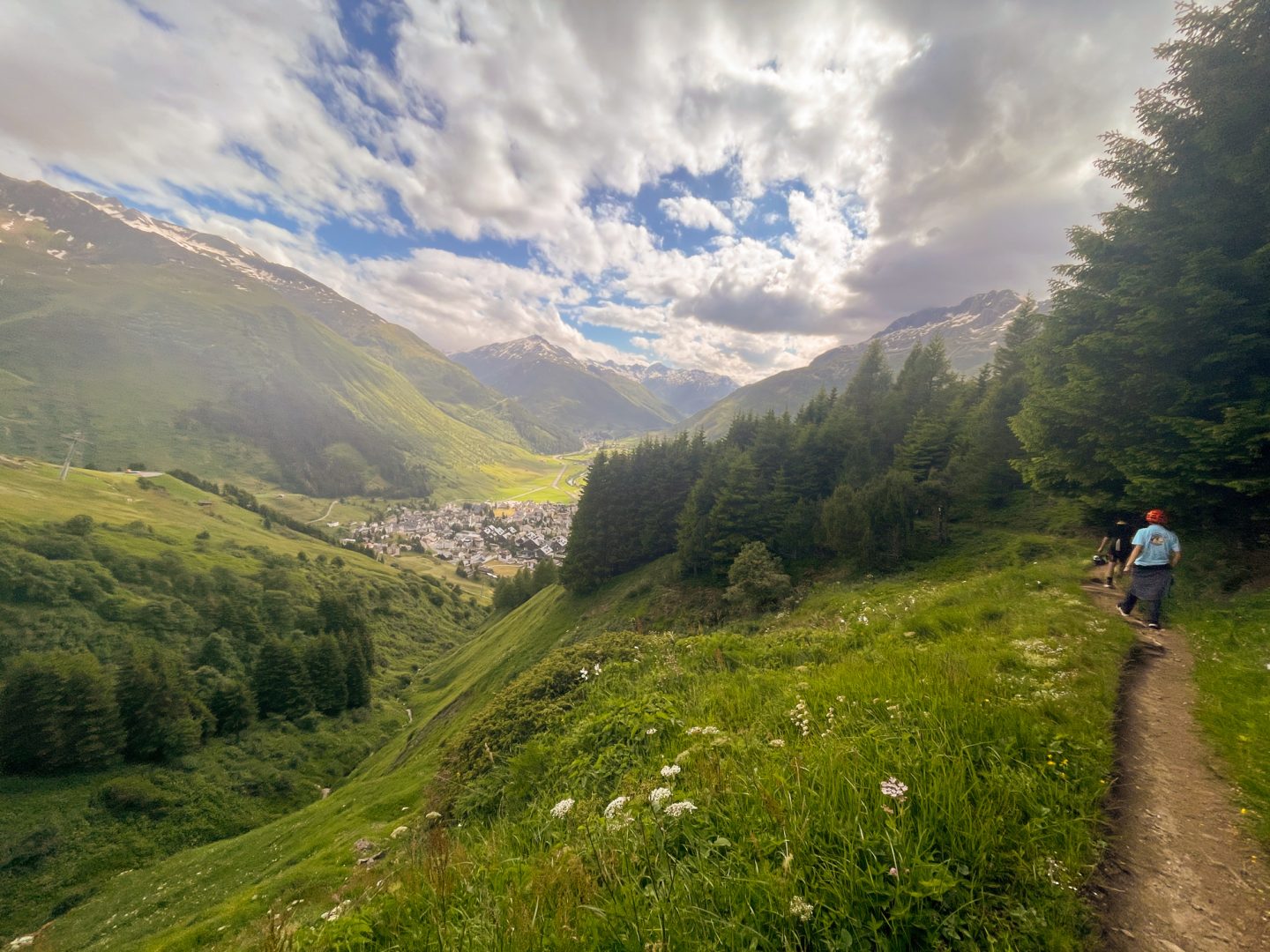
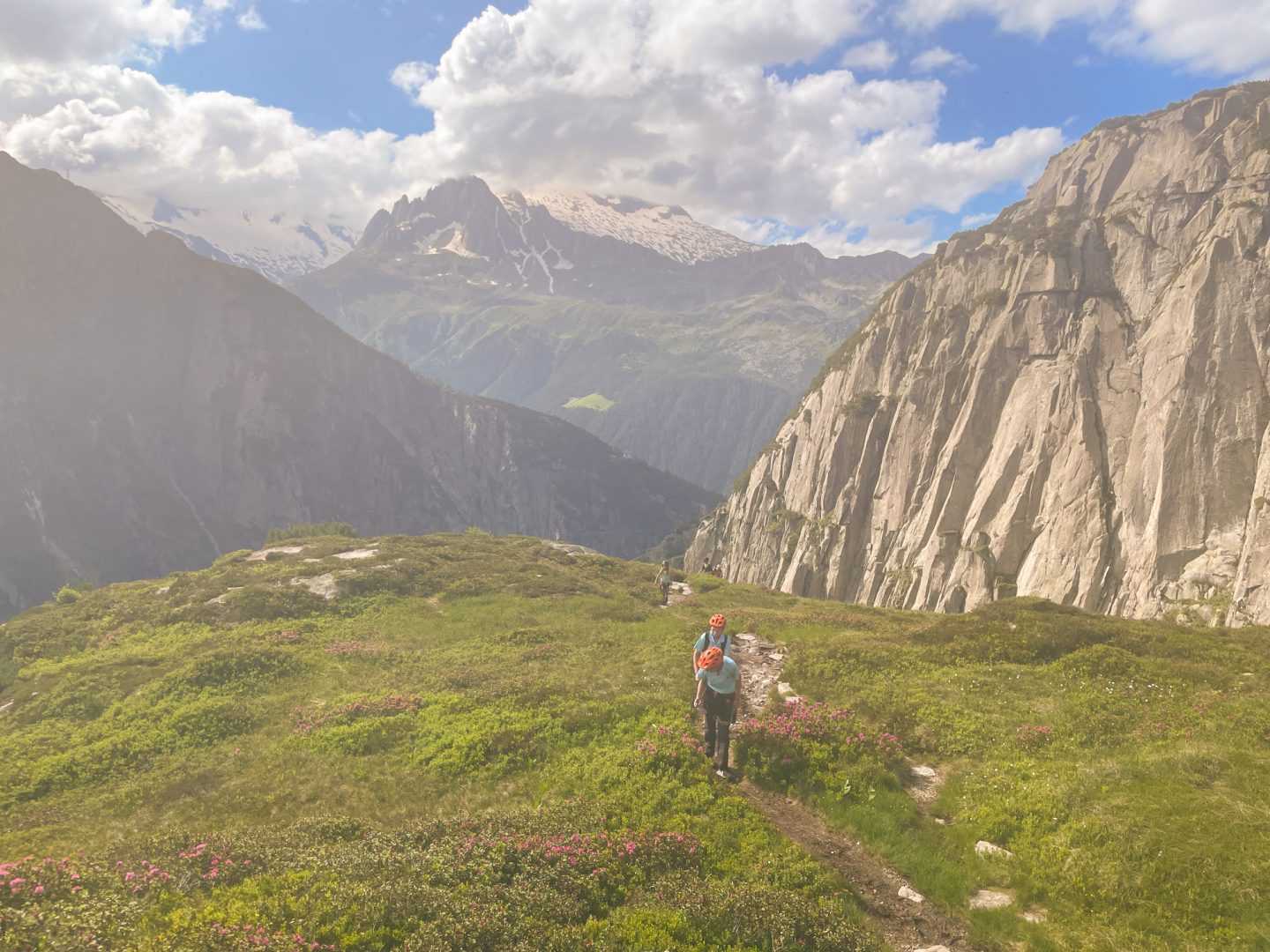
I treat safety as a primary factor when evaluating Swiss summer camps. The country’s maintained hiking trails and active avalanche control programs give camps a strong baseline for safe outdoor programming.
Switzerland manages avalanche control regionally, and camps work with the Swiss Avalanche Service / SLF/WSL data to set route rules and closures. Camps commonly rely on Swiss Alpine Club (SAC) trail grading and hire certified mountain guides for route choice and on-trail supervision. That combination lowers exposure to technical hazards and keeps groups on routes suited to age and skill.
Mountain rescue operates as a coordinated system. Rega teams, cantonal rescue services and local volunteer squads collaborate on alpine incidents, which improves rapid extraction and medevac capacity for remote hiking or climbing accidents. Camps build relationships with these services and follow cantonal rescue plans and Rega annual report guidance when they plan remote activities.
Most Swiss lakes meet high recreational water quality standards. Cantonal authorities and FOEN monitor bathing sites and public waters regularly. Camps usually favor blue-flag lakes and officially monitored beaches for swimming and water sports, and they adjust activities if cantonal alerts show degraded water quality.
I enforce seasonal mitigations to reduce alpine and water risk. Those measures include certified guides, mandatory helmets and harnesses for climbing, strict rope protocols, and route restrictions when avalanche-control activity or forecasts indicate elevated risk. I also require up-to-date route plans, local hut contacts and clear contingencies for sudden weather changes.
Essential camp practices I require
- Route selection and grading: follow SAC trail grades and choose paths matched to group ability.
- Guide certification: hire guides with recognized Swiss credentials and local experience.
- Avalanche awareness: consult Swiss Avalanche Service / SLF/WSL briefings and limit exposure during high-risk periods.
- Rescue coordination: register remote trips with cantonal rescue services and keep Rega contact protocols accessible.
- Climbing controls: enforce helmets, harnesses, double-check rope systems, and supervise all belays.
- Water safety: choose blue-flag lakes or FOEN-monitored bathing sites and station trained lifeguards.
- Communication and plans: carry radios or satellite beacons, maintain current route plans, and prepare weather-triggered evacuation steps.
For practical planning tools I recommend visual assets that clarify risk and response. Useful visuals include a trendline of mountain fatalities and controlled-release events (SLF/WSL), a region map of maintained trails and alpine huts, and a seasonal checklist infographic for avalanche season and lake safety. Always caption visuals with year and source.
If you’re preparing a first-time camper, see your first summer camp for age-appropriate program choices and safety-focused camp options.
Public Health, Food Safety, Child Protection and Camp Accreditation
Switzerland‘s drinking water quality is near-universal and safe to drink from the tap. I rely on that fact when evaluating camp sites.
Food-safety standards are strict and enforced by cantonal food inspectorates and the Federal Food Safety and Veterinary Office (FSVO, [YEAR]). Regular cantonal health inspections keep kitchens and dining routines accountable, and that lowers the risk of foodborne outbreaks.
Vaccination coverage in Swiss children is high compared with many countries. I always ask camps for their vaccination policies and for organizers to provide up-to-date immunization figures from the Federal Office of Public Health (FOPH). Editors: replace the placeholder MMR and other coverage figures with the latest FOPH percentages before publishing (FOPH, [YEAR]). Similarly, replace any foodborne illness surveillance numbers with the most recent FSVO data (FSVO, [YEAR]).
Child protection laws in Switzerland are administered at the canton level and include formal youth-welfare structures. I expect camps to comply with local canton rules for institutions serving minors and to liaise with cantonal youth-welfare offices (cantonal youth-welfare offices, [YEAR]). Many reputable camps follow national or international youth-camp standards; verify membership or accreditation with recognized Swiss camp associations and confirm canton-specific licensing requirements. Liability insurance is mandatory in many cantons for organizers. I also recommend parents secure medical and repatriation insurance for their child before travel.
Required documentation & operational checklist
Use the following checklist when assessing a camp or preparing to run one. These are the minimum items I require in writing:
- Criminal-record checks for all staff and volunteers.
- Written emergency plans and clear evacuation procedures.
- Staff-to-child ratio documentation and proof of activity-specific qualifications.
- First-aid protocols, on-site medical supplies list, and nearest-hospital contact details.
- Parental consent forms, allergy and medication records, and medical/repatriation insurance certificates.
Editors: confirm local canton rules for group accommodation and youth work, and update any legal or statistical placeholders with the latest FOPH/FSVO figures before publishing.
For parents new to the process, I recommend reading my practical guide to your first summer camp for preparation and packing tips.
Practical Logistics, Cost-Benefit for Parents, Visuals and Parent Checklist
I keep travel planning simple: major European cities link to Swiss hubs by frequent trains and short flights, so the travel time to Switzerland is often shorter than parents expect. I always advise checking current timetables—Zurich–Geneva rail times vary by service and date, so verify at time of publication.
Switzerland’s multilingual staff environment (German, French, Italian and widespread English) reduces friction at arrival, on-site communication and in emergency response; multilingual staff often means faster local coordination with hospitals and authorities.
I address cost vs safety directly. The cost of camps in Switzerland typically runs higher than in Southern Europe, but I factor in superior medical infrastructure, strict camp accreditation and higher staffing standards. I recommend parents weigh cost vs safety by listing expected benefits—on-site medical care, proximity to advanced hospitals, regulated outdoor-instructor qualifications and canton oversight—and comparing those to lower-priced alternatives. Treat any example numbers as illustrative only and replace them with up-to-date prices before publishing.
I expect every family to sort insurance before booking. For a clean checklist I recommend confirming medical insurance or travel health insurance, medical repatriation insurance, cancellation insurance and accident plus sports/adventure cover—especially if the program includes climbing, water sports or alpine treks. Ask the camp which policies they recommend and whether their own insurance interacts with participant policies.
Printable parent checklist — What parents should ask camps
I suggest parents bring this six-question checklist to phone calls or site visits:
- Do you have camp accreditation or canton approval and current insurance certificates?
- Can you provide staff criminal-record checks and background-screening policies?
- What is your emergency plan and evacuation procedure (including medevac capability)?
- What on-site medical resources are available (first aider/nurse/doctor access and nearest hospital)?
- What are your staff-to-child ratios and qualifications for outdoor activities?
- What insurance and repatriation options do you recommend for participants?
I link parents to a practical primer if they’re preparing for a first booking: your first summer camp.
Visualization and editorial guidance for visuals
I instruct editorial staff to provide clear visuals and strict captions; each visual must include year and source in the caption. Recommended visuals and labeling guidance:
- Bar chart comparing homicide rates (caption with year and source).
- Map showing hospitals with pediatric trauma capability; label facility names and year of data.
- Pie chart of Rega mission types (medical evacuation/search & rescue/repatriation) with year/source in caption.
- Timeline of avalanche fatalities and controlled releases (SLF/WSL, include full YEAR range and source).
Always date all statistics and cite the original source (e.g., “Homicide rate: 0.6 per 100,000, Swiss Federal Statistical Office, 2020”). Replace any placeholder or approximate figures with the most recent official numbers from the sources listed before publishing. Verify canton-specific rules for youth accommodation, licensing and insurance requirements prior to final publication.