Why Turkish Families Appreciate Swiss Cultural Neutrality
Türkiye kökenli aileler için İsviçre’nin tarafsızlığı, düşük suç oranı ve güçlü kamu hizmetleri güvenli, sakin bir yaşam sunuyor.
Turkish families and Switzerland’s cultural neutrality
Turkish families appreciate Switzerland’s cultural neutrality. Public debate stays restrained and politics favor consensus. These features lower public polarization and make daily spaces calmer and safer for children. That neutrality, paired with low violent‑crime rates, dependable public services, and clear legal protections for religious and cultural groups, helps families keep their identity while they’re participating in civic life.
Key Takeaways
- Neutral public discourse and consensus politics reduce visible tensions and help parents shield children from politicized conflict.
- Low violent‑crime rates and well‑funded public services reinforce families’ sense of safety and stability.
- Religious and cultural institutions (mosques, weekend schools, associations) operate with clear legal status, supporting identity and social networks.
- Multilingual school systems and targeted language supports, plus VET/apprenticeship pathways, provide practical education routes for Turkish children.
- Economic stability and legal predictability encourage entrepreneurship and steady employment, though high living costs and strict naturalization rules remain trade‑offs.
https://youtu.be/9np4fAZwE5Y
Safety, Stability and Everyday Neutrality: Why Turkish Families Feel Secure in Switzerland
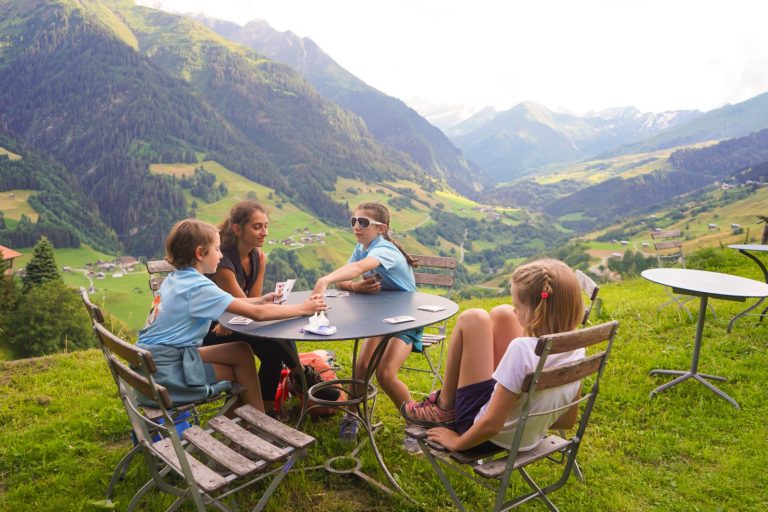
We, at the young explorers club, notice how Switzerland’s everyday political and social neutrality produces a calmer public atmosphere. Public institutions and most local media avoid taking partisan positions on foreign conflicts, so visible tension in mixed communities stays low. That restraint helps parents keep children away from heated debates and makes public spaces manageable for families.
According to the Institute for Economics & Peace’s Global Peace Index, Switzerland ranks among the world’s more peaceful states, which matches what families report. Reliable, well‑resourced public services and low violent‑crime indicators reinforce that perception. Latest international crime datasets show Switzerland’s homicide rate is substantially below many comparator countries, and that gap matters to parents choosing where to raise kids.
Community voices capture how neutrality works in practice. A Turkish community leader in Zurich told a local interviewer: “When international events flare up, people here discuss them quietly — there aren’t big street confrontations. That calm makes it easier for families to protect children from politicized conflict.” A Turkish parent in Geneva said: “Our mosque and school can run cultural events without worrying about being pulled into national political fights.” Those remarks match institutional practices like consensus politics and frequent direct-democracy votes, which encourage compromise and lower polarization in public foreign‑policy debates.
What families actually experience and practical steps to take
Below are the main features that create low‑tension daily life, with quick advice I recommend for families:
- Neutral public discourse: Media and institutions steer clear of partisan foreign-policy stances. Keep family conversations age‑appropriate and model calm responses when international news appears.
- Consensus-oriented politics: Regular referendums and coalition governance reward compromise. Teach children how voting and community meetings work so they feel included rather than threatened.
- Predictable public services: Schools, healthcare and transport are consistently funded and staffed. Register with local services early and ask about multilingual support to reduce stress.
- Low violent‑crime indicators: Street safety and low homicide levels give parents confidence. Practice normal urban safety habits and let kids explore supervised local activities.
- Community-level safeguards: Religious and cultural organizations run events without being dragged into partisan fights. Build ties with local groups; shared events normalize cross-cultural life.
- De-escalation culture: Public debate tends to be restrained rather than performative. Encourage children to use respectful language and seek adults if they feel confused by news coverage.
For families choosing programs or camps, I point them to resources that highlight safety and community fit—Switzerland’s reputation as a safe option is one reason many Turkish parents feel comfortable here; for summer choices we note it’s widely seen as the safest destination.
A Growing Turkish Community: Who Lives in Switzerland and Where
Switzerland hosts a large foreign-born population; about one quarter of residents are non‑Swiss (Federal Statistical Office (FSO)). We rely on FSO counts when we describe the Turkish presence, since the office provides official figures for Turkish nationals and tracks naturalizations over time (Federal Statistical Office (FSO)). Those series show migration and citizenship patterns that matter for families deciding where to settle.
We watch two parallel measures: the number of Turkish nationals recorded by the FSO and broader estimates of people with Turkish origins that local communities and the embassy sometimes provide. Community estimates complement the FSO totals and help explain daily life, because many Turkish-origin residents hold Swiss citizenship but keep strong cultural and social ties (Federal Statistical Office (FSO); Turkish Embassy in Bern).
Cantonal distribution and community hubs
Below are the main cantonal clusters where Turkish communities concentrate; these are the locations you’ll most often encounter Turkish associations, weekend schools and mosques.
- Zurich — the largest urban and economic center, with the biggest concentration of Turkish residents.
- Bern — both the city and surrounding canton host sizable communities and active cultural groups.
- Basel‑Stadt / Basel‑Landschaft — industrial and commercial areas attract long‑standing Turkish families.
- Vaud (Geneva region) — the lake and international jobs draw a diverse Turkish population.
- Aargau — manufacturing and commuter links to larger cities make it a common home base.
Those geographic patterns mirror employment and housing trends reported by the FSO, and they shape where community services appear (Federal Statistical Office (FSO)). We see associations cluster around transport hubs, schools and municipal centers to maximize access.
Community infrastructure
Community infrastructure supports identity and daily life. The Turkish Embassy in Bern and municipal community directories list dozens of associations and mosques across these cantons; many run cultural centers, youth programs and Turkish-language weekend schools (Turkish Embassy in Bern; municipal community directories). These organizations often serve dual roles: they preserve language and customs, and they help families access local services and schooling.
Trends and naturalization
Trends matter for integration choices. FSO naturalization data shows rising numbers of Turkish-origin Swiss citizens over recent years, which changes how communities organize and where services get funded (Federal Statistical Office (FSO)). We track those trends when we advise families on schooling, social activities and local networks.
Practical notes for families relocating
For families relocating, we suggest scouting neighborhoods near established community centers and weekend schools, and visiting municipal directories to confirm active associations. For planning trips and settling in with kids, we point families to our guide on a family trip that highlights regional differences and practical tips: family trip.
https://youtu.be/Hg6e28rzzfA
Religious Freedom and Cultural Institutions: Preserving Identity within a Neutral State
Swiss law and social practice protect religious freedom, and families find that protection tangible in daily life. We see space for worship, language teaching and festive gatherings without constant political pressure. Around 5% of the Swiss population identifies as Muslim, a share that is generally lower than in several larger Western European states but high enough to support durable community networks.
How institutions sustain identity
These organizations form practical infrastructure for cultural life. Key roles include:
- Providing regular religious services and pastoral care in Turkish-run mosques across Zurich, Basel, Geneva and Bern.
- Running Turkish-language weekend schools that keep children fluent in Turkish and connected to cultural traditions.
- Organizing seasonal festivals, film nights and music events that combine religious observance with civic participation.
- Offering civic orientation and social support, from registration guidance to intergenerational mentoring.
Community perspectives on Swiss neutrality
An imam I spoke with emphasizes that Swiss institutional restraint reduces public politicization of faith communities. He says that when state actors avoid turning religion into a partisan issue, mosques can focus on prayer, education and charity.
A community organizer adds that associations benefit from clear legal status and predictable permitting processes; they can rent halls, run classes and host public events without prolonged administrative fights.
A parent describes weekend school and mosque activities as the main channels through which children learn language, history and religious practice — and as places where families build social safety nets.
We, at the young explorers club, encourage families to engage with both religious institutions and broader civic life. Observing local norms helps: consult our guide to cultural etiquette to smooth first visits and school enrollments. Religious institutions here operate as both spiritual centers and cultural hubs. They help preserve identity while encouraging participation in Swiss public life.

Education, Language Policy and Opportunities for Turkish Children
Switzerland’s multilingual system shapes everyday school life and opportunity paths for Turkish families. We see four official languages — German, French, Italian and Romansh — and cantonal autonomy means local schools set language priorities that match community needs. We explain how that affects placement, language support and long-term career routes.
How language policy shapes schooling and outcomes
Cantons provide targeted language support for migrant children and many local schools run integration and bilingual support classes. We rely on cantonal coordinators to place students in accelerated language tracks or bilingual immersion where available. According to OECD data, a high share of Swiss upper‑secondary students opt for vocational education and training (VET) and apprenticeships, which creates a reliable route into employment and reduces dropout pressure. PISA results (OECD) offer a broad snapshot of learning outcomes and show gaps between immigrant and Swiss‑born students that targeted language and integration programs can narrow. We also notice that Switzerland’s political neutrality helps keep curriculum content less politicized, so classrooms stay focused on skills and inclusion rather than ideology — a factor many Turkish parents appreciate.
Practical pathways and supports families can use
Below are concrete options families can pursue to turn policy into progress.
- Cantonal language courses and in-school bilingual support classes that accelerate host‑language proficiency.
- Bilingual immersion programs in certain cantons that maintain home language while building academic fluency.
- Turkish weekend schools and community tutoring that preserve identity and build literacy.
- VET and apprenticeship counseling to map academic strengths onto stable job pathways. (See OECD guidance for system details.)
- School liaisons and multicultural counselors who smooth enrollment and credential recognition.
- Simple pre-arrival preparation, like learning core phrases; we encourage parents to start with basic French phrases or the local language used in their canton.
We guide families to evaluate options by asking school leaders about language-entry assessments, availability of bilingual staff and links with VET employers. We recommend combining in-school supports with community programs so children keep Turkish at home while gaining strong local‑language skills.

Economics, Work Prospects and Social Services: Trade-offs and Stability
We, at the Young Explorers Club, see why Swiss economic stability draws Turkish families. Switzerland consistently ranks near the top for nominal GDP per capita, which speaks to strong wages and purchasing power (World Bank/IMF). Labour markets are tight and unemployment stays low, reinforcing steady income prospects for newcomers (OECD/Swiss Economic Department). Public funding for healthcare and social insurance is substantial; per‑capita health spending and international comparisons place Switzerland among the highest in developed economies (OECD/WHO).
Swiss neutrality and predictable politics matter beyond headline numbers. We watch entrepreneurs—many from the Turkish community—choose Switzerland because legal certainty and a stable tax and regulatory environment reduce business risk. Chambers of commerce and Turkish business associations report steady growth in Turkish‑owned enterprises, especially in services and trade, reflecting that confidence.
Trade-offs and practical decisions
Below are the main factors families should balance and our practical recommendations.
- Cost of living vs wages: Higher gross wages often offset but don’t always eliminate higher housing, childcare and daily expenses. Prioritise net income projections and factor in cantonal tax differences.
- Housing availability: Urban centres command premium rents. Consider suburban communities for better space and schools; commuting infrastructure in Switzerland is efficient.
- Healthcare and insurance: Coverage quality is high, but mandatory insurance premiums add to monthly outlays. Compare deductibles and provider networks before choosing a plan. Citing OECD/WHO helps when comparing benefit levels.
- Employment pathways: Professional qualifications may need recognition. We recommend early credential checks and language preparation to shorten the job search. Unemployment figures from OECD/Swiss Economic Department show low rates, but entry can be sector‑dependent.
- Entrepreneurship climate: Neutrality and legal predictability encourage investment, yet startup costs and administration are non‑trivial. Use local chambers of commerce and Turkish business associations for mentorship and market entry advice.
- Education and family services: Public schooling quality and social services are strong, but local requirements and language tracks vary by canton. Visit cantonal education offices and plan for language support if needed. For practical family logistics and cultural tips, see our family trip resources.
I advise creating a simple spreadsheet that compares net salary, rent, insurance premiums and childcare across preferred cantons. Cross‑reference official macro indicators (World Bank/IMF for GDP per capita; OECD/Swiss Economic Department for unemployment; OECD/WHO for health spending) to gauge long‑term stability rather than short‑term fluctuations.
We also recommend connecting with Turkish business networks early if entrepreneurship is a goal. They offer real‑world cost estimates and customer insights that official stats don’t capture. Finally, evaluate lifestyle fit: neutrality and safety support investment and quiet daily life, but they come with higher fixed costs that families must plan for.

Historical Roots of Neutrality, Citizenship and Comparative Choices That Matter
Key historical anchors
We place Swiss neutrality in a clear historical line that Turkish families can understand. The common legal recognition came at the Congress of Vienna (1815), which set the modern diplomatic baseline. Geneva then became a global hub with the founding of the International Committee of the Red Cross (1863). Those early markers shaped a foreign policy that kept Switzerland out of military alliances and later out of NATO and the EU. The country instead negotiates bilateral treaties with the EU and keeps an independent diplomatic stance. That independence matters to families who value predictable, nonaligned host-country behavior and a stable environment for children.
Citizenship, mobility and comparative trade‑offs
We explain the rules that shape long-term settlement choices. Standard Swiss naturalization requires ten years’ residence, with the years between ages 8 and 18 counted double (State Secretariat for Migration). Facilitated routes exist for spouses and some long‑term residents, but they remain more restrictive than many European alternatives. Swiss citizenship brings strong global mobility, since the Swiss passport ranks near the top on the Henley Passport Index.
Key milestones in Switzerland’s neutral trajectory and institutions are listed below to clarify how those choices accumulated over time:
- 1815 — formal recognition of neutrality at the Congress of Vienna.
- 1863 — founding of the International Committee of the Red Cross in Geneva.
- 20th century — reaffirmations of neutrality through both world wars and diplomatic practice.
- Contemporary — continued non‑membership in NATO and the EU; reliance on bilateral agreements.
I summarize the real trade‑offs families weigh when choosing between Switzerland and other European destinations. We consider three angles: identity and community, economic opportunity, and proximity to Turkey.
- Identity and community: Germany hosts the largest Turkish diaspora in Europe, which eases cultural continuity and family networks (German Federal Statistical Office). France offers different integration dynamics with substantial urban Turkish communities. Switzerland’s Turkish population is smaller, which can preserve cultural identity for some families but may mean fewer immediate community supports.
- Economic opportunity and stability: Switzerland delivers high wages and low unemployment volatility, which many families prioritize. Comparative immigrant employment and unemployment patterns are tracked by the OECD, so families should compare sectoral opportunities rather than headline figures alone.
- Mobility and travel: Swiss citizenship and residency offer excellent travel freedom and access to European markets via bilateral treaties, while not being an EU member means Switzerland retains unique policy control. For families planning holidays or educational trips, that balance often proves attractive and can influence practical plans like a planned family trip in Switzerland.
Recommendation: Parents should weigh social networks alongside formal benefits. If staying close to a large Turkish community is crucial, Germany may win on proximity to culture and language continuity. If high per‑capita income, strong public services, and a neutral diplomatic profile matter more, Switzerland often rises to the top.
Sources
Swiss Federal Statistical Office — Population and migration statistics
Swiss Federal Department of Foreign Affairs — Neutrality
International Committee of the Red Cross — Our history
Institute for Economics & Peace — Global Peace Index
UNODC — Homicide victims (data)
State Secretariat for Migration (SEM) — Naturalisation and citizenship
Henley & Partners — Henley Passport Index
World Bank — GDP per capita (current US$)
Pew Research Center — How many Muslims live in Europe?
Embassy of the Republic of Turkey in Bern — Mission / Community information