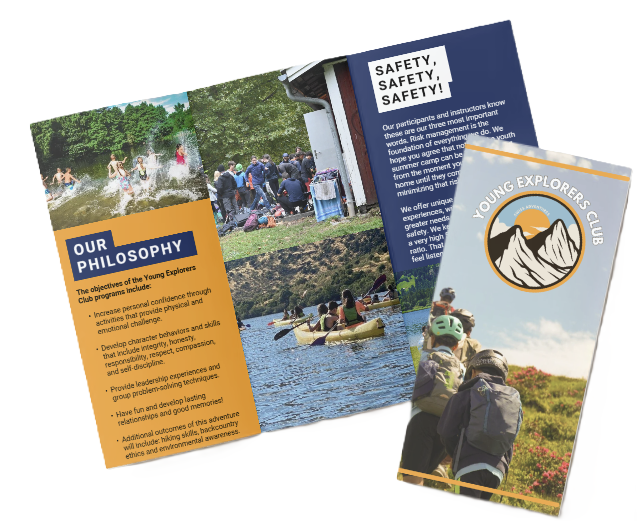
Camps That Balance Freedom And Structure
Balanced camps blend free-choice and structured skill-building to boost social, emotional and leadership gains — Young Explorers Club.
Camp program design: blending autonomy and skill-building
We’ve found camps that mix free-choice with focused skill-building drive clear social and developmental gains. They support intrinsic motivation, open safe practice pathways, and make progress visible with simple assessments. Strong programs pair a predictable daily rhythm with age-adjusted time splits, trained staff, and explicit safety and measurement protocols to give kids both freedom and dependable structure.
Key Takeaways
Balance autonomy and structure
Combining autonomy-support (free choice) and external structure produces stronger outcomes in social skills, independence, resilience, and leadership than either approach alone.
Recommended time splits
Aim for about a 50/50 to 60/40 free-choice:structured split overall. Typical benchmarks:
- Structured: ~25–40% of program time
- Free-choice: ~30–45% of program time
- Younger children: add roughly 10–15% more structured time
- Teens: give roughly 10–15% more free-choice
Predictable daily rhythm
Use a predictable daily rhythm so children can lead and practice with guidance. A practical sequence is:
- Arrival / choice — open options to select activities
- Targeted skill block — focused instruction or coaching
- Outdoor exploration — unstructured play and discovery
- Reflective small-group debriefs — guided reflection and social learning
- Self-directed evening — independent or peer-led activities
Staffing, safety, and training
Maintain clear staffing and safety standards to support both freedom and structure:
- Recommended ratios: approximately 1:4–1:10 (vary by age and activity)
- Pre-season training: require 20–40 hours for new counselors
- Written emergency plans and daily headcounts
- Activity-specific risk assessments and documented safety protocols
Measure and report outcomes
Measure and report key metrics to guide improvement and build family trust:
- Attendance and participation rates
- Parent satisfaction and camper self-reports
- Incident rates expressed per 1,000 camper-days
- Publish transparency metrics so families can make informed decisions
Why Balance Matters: Scale, Outcomes, and a One‑Sentence Value Statement
We, at the Young Explorers Club, believe balanced camps combine unstructured free-choice time (child-driven exploration) with structured skill-building activities to produce measurable gains in socio-emotional development.
About 14 million children attend U.S. camps each year (American Camp Association), so the way programs blend freedom and structure affects a huge population of developing kids. I focus on three practical reasons this balance matters: it supports intrinsic motivation, it creates safe pathways for skill growth, and it amplifies measurable developmental gains across several core domains.
Autonomy-support versus external structure — plain-language explanation and practical guidance:
- Autonomy-support (free choice) gives kids chances to choose activities, solve problems, and follow interests. That sparks creativity, builds confidence, and promotes ownership of learning. I recommend predictable pockets of open time each day where campers pick activities and lead small projects.
- External structure (planned, skill-building activities) sets routines, teaches specific skills, and manages safety and inclusion. Structure makes deliberate practice possible and helps quieter kids participate. I schedule short, focused lessons or challenges that follow clear goals and age-appropriate progression.
- Why both matter: free-choice fosters independence and creativity, while structured sessions ensure safety, equity, and steady skill development. Combining them produces stronger socio-emotional and developmental gains than either approach alone. For practical balance, I aim for roughly a 50/50 to 60/40 split of free-choice versus structured time, adjusting by age and program goals.
I design programming with a clear daily rhythm:
- Arrival and low-intensity choice time
- Targeted skill block
- Outdoor exploration
- Reflective small-group debriefs
- Self-directed evening activities
That rhythm gives kids room to lead, and moments to practice new skills under adult guidance. Staff training emphasizes offering choices, coaching rather than commanding, and stepping in to scaffold rather than take over.
Core developmental outcomes linked to balanced camps
Below are the main outcome categories that balanced programming reliably supports, with brief notes on how freedom and structure each contribute:
- Social skills (social competence, friendships): Free-choice creates natural opportunities to make friends; structured games teach turn-taking and conflict skills.
- Independence/autonomy: Choice periods let kids make real decisions; structured tasks build the capabilities needed to act independently.
- Resilience: Unstructured problem-solving exposes kids to manageable frustrations; guided challenges teach coping strategies and reflection.
- Leadership: Child-led projects reveal leadership potential; sequenced activities provide roles and feedback to grow those skills.
- Physical activity/health: Open play raises activity levels naturally; planned sessions teach technique, safety, and healthy habits.
- Connection to nature: Exploratory time builds wonder and curiosity; structured nature lessons deepen knowledge and responsible behaviors.
I link these outcomes to program design, assessment, and communication with parents. For example, I use short daily reflections and simple milestone tracking to show gains in friendships, autonomy, and persistence. That makes the developmental impact visible and actionable.
We run a summer camp that models this balance every day, so parents see confidence grow and skills sharpen in real time. For ideas on preparing kids emotionally for overnight experiences, or practical tips for parents, consult our resources on overnight camps.

How Camps Structure Freedom: Three Effective Program Models and a Typical Day Split
We, at the young explorers club, organize programs so campers get both reliable routines and real choice. Each model below pairs clear boundaries with intentional freedom, and I’ll note where they fit best and how to staff them.
Schedule-based hybrid
The schedule-based hybrid uses a daily schedule with fixed blocks (skill classes, meals, rituals) plus dedicated open-choice periods for exploration. This model works well for mixed-age groups. I set a predictable rhythm in the morning for core instruction, then open-choice windows in the afternoon for exploration. Staff a mix of specialists and floaters so you can run skill classes while supervising free choice periods. That balance keeps camper routines steady and supports safety.
Interest-based cohort model
With the interest-based cohort model, campers form cohorts by interest. Each cohort gets core structured instruction — deliberate skill progression — plus elective workshops every day. I recommend clear learning targets for the cohort and rolling electives so participants can dive deep. This model boosts engagement and creates peer accountability. Plan staffing so cohort leaders handle progression while workshop facilitators rotate.
Open-cabin/mentor model
The open-cabin/mentor model lets cabins or mentor pairs set boundaries and offer high free-choice within mentor-guided limits. This is best for older campers and leadership tracks. Mentors can negotiate cabin agreements, manage risk agreements, and approve project ideas. That approach develops leadership and camper autonomy; mentors still set non-negotiables around safety and curfew.
I use one internal resource when highlighting camper independence; see camper autonomy for ideas that pair social skill development with freedom.
Typical day benchmarks
Use these as visual guidance for planning and staffing. Example schedule split: 30–40% structured activities / 30–45% free-choice / remainder for meals/transitions.
A more detailed benchmark:
- 25–40% structured instruction/skills
- 30–45% supervised free-choice
- 15–25% transition/routine (meals, meetings)
- 5–10% unstructured social time
Apply those ranges to your site layout and staffing ratios.
Age adjustments — practical shifts to the percentages
- Younger campers: increase structured time by ~10–15% compared with the example splits. Build more routine, shorter instructional blocks, and more direct supervision.
- Teens: increase free-choice by ~10–15%. Let them lead projects, co-design electives, and use longer unsupervised project blocks.
How to decide — quick checklist
I run through these points before finalizing schedules:
- Consider camper age and developmental stage.
- Assess safety needs and activity risk level.
- Define skill goals and program outcomes.
- Plan staffing levels and float staff capacity.
- Evaluate site constraints (space, equipment, natural hazards).

Age and Developmental Guidelines: How the Balance Shifts by Age
We set clear program targets by developmental stage so staff can balance structure and choice with purpose. Our approach supports executive function and builds autonomy through predictable routines, graduated responsibility, and measurable skill checks. Staff use attention span data to pace transitions and keep engagement high.
Program targets by age
- Ages 5–7 — Structured 50–70% / Free-choice 15–30%: Keep routines predictable. Change activities every 20–40 minutes. Use short, scaffolded choices (e.g., two craft options). Emphasize transition cues and simple competency checkpoints for confidence.
- Ages 8–12 — Structured 35–50% / Free-choice 30–45%: Increase elective blocks and give repeated chances to choose. Introduce leadership tracking like small-group roles. Use mixed-duration activities (30–60 minutes) to strengthen executive function.
- Ages 13–16 — Structured 20–35% / Free-choice 45–60%: Let teens lead projects and service roles. Offer extended teen-directed time and counselor-in-training tracks. Expect longer activities and multi-day projects to sustain autonomy and mastery.
Implementation tactics
- Match transitions to attention span: younger children need shorter segments and clearer cues; older campers can handle extended focus and open-ended tasks.
- Scaffold leadership: pair older campers with peer mentors and formal counselor-in-training roles so responsibility grows with support.
- Use competency checkpoints: award mini-certificates for skills (canoe basics, rock-climbing belay, public speaking) to mark progress and motivate sustained engagement.
We align daily schedules so structure provides safety and rhythm, while choice zones fuel creativity and responsibility. Staff training emphasizes how to shift percentages during the day—for instance, a morning of structured skill-building followed by ample free-choice afternoons. We also track outcomes and adjust targets by observing on-the-ground attention span and behavior.
For resources on how camp settings support independence and related outcomes see our work on autonomy, which I use when designing teen programming.

Staffing, Supervision and Safety Benchmarks
We, at the young explorers club, balance freedom and structure by setting clear staffing and safety guardrails that let kids roam and choose, while keeping risk low. I’ll outline hard numbers, training expectations, and the operational practices that keep free-choice safe and fun.
Staffing ratios and counselor training
Use these benchmarks as guidelines to set staffing levels and prepare staff before camp opens:
- Recommended ratio ranges: 1:4–1:10 depending on age and activity; use lower ratios for younger campers or high-risk activities. This helps maintain a safe environment without over-directing play.
-
Typical common-practice ranges by age group:
- Preschool: 1:4–1:6
- Early elementary: 1:6–1:8
- Older children and teens: 1:8–1:10
Always verify local licensing and adjust by activity risk.
-
Counselor training priorities:
- Behavior management and positive guidance
- Risk assessment and activity-specific hazard control
- First aid and CPR
- Child development fundamentals
- Inclusive practices that support all campers
- Facilitating free-choice so adults act as facilitators, not directors
- Recommended pre-season training hours: 20–40 hours for new counselors, with ongoing refreshers during the season.
Document your staff-to-camper ratio policy and make it visible to families. We publish our expectations and sample training outlines so parents can see how we meet those standards; you can learn more about our approach to the overall camp experience.
Mandatory safety elements and supervision during free-choice
Written emergency plans are non-negotiable. Each site needs a clear, accessible plan that covers medical emergencies, severe weather, missing child procedures, and evacuation routes. Run daily headcounts at transition points and after free-choice blocks to confirm everyone’s present. Activity-specific risk assessments should be completed before any new activity is run and reviewed after incidents.
Medication protocols must be explicit: secure storage, a trained medication administrator on site, documented permissions, and a double-check system at distribution. I require regular emergency drills and suggest communicating a metric to families—aim for one drill per week that’s logged and summarized for parents.
Supervision strategies during free-choice should combine staff placement, simple tech or visual check-ins, and clear physical boundaries. Use these operational practices:
- Place staff at key sightlines rather than clustering in one area. That keeps activity zones visible and accessible.
- Define supervision levels (low/medium/high) for each activity and list required staff qualifications for each level. For example, low supervision might allow one counselor per group with basic first aid, while high supervision requires staff with specialized certifications.
- Implement check-in systems—visual boards, wristbands, or simple digital logs—to track camper movement without policing play.
- Assign float staff to handle transitions, gaps, and quick problem-solving. Float roles keep fixed-group staff engaged with campers and reduce blind spots.
Document risk management decisions and review them weekly. Make supervision expectations clear to staff in writing and reinforce them during daily huddles. That combination of concrete benchmarks and practical on-the-ground tactics preserves camper freedom while keeping safety non-negotiable.

Sample Daily Schedules and Activity Mixes That Work
Three sample schedules you can adapt
Ages 6–8 (more structured variant): 8:00–8:45 Breakfast / cabin time (8%); 8:45–9:30 Morning meeting / circle time (8%); 9:30–10:00 Structured skill class — arts/gross motor (8%); 10:00–10:30 Snack / transition (5%); 10:30–11:15 Group games — structured (8%); 11:15–12:00 Free-choice activity stations (10%); 12:00–1:00 Lunch / rest (12%); 1:00–2:00 Skill rotation — swim lesson or nature activity (15%); 2:00–2:30 Snack / transition (5%); 2:30–3:15 Creative studio (structured arts) (8%); 3:15–4:00 Unstructured social/play time (10%); 4:00–5:00 Cabin wrap-up / ritual (8%). I recommend keeping transitions short and visible for this age group so routines stick.
Ages 9–12 (mixed autonomy): 8:00–9:00 Breakfast / cabin time (10%); 9:00–10:30 Structured skill class or rotation (15%); 10:30–11:30 Free-choice activity blocks (10%); 11:30–12:30 Group games — structured (10%); 12:30–1:30 Lunch / rest (10%); 1:30–3:00 Electives (camper-led choices) (15%); 3:00–4:00 Unstructured social time (10%); 4:00–5:30 Evening program (camp-wide structured event) (10%). This daily routine balances skill progression with growing independence.
Ages 13–16 (elective-heavy): 8:00–9:00 Breakfast / community meeting (8%); 9:00–10:30 Project-based or leadership work (20%); 10:30–12:00 Elective blocks / workshops (25%); 12:00–1:00 Lunch / downtime (10%); 1:00–3:30 Extended field project / service / expedition (25%); 3:30–4:30 Free-choice social time or skill drop-in (8%); 4:30–5:30 Evening leadership debrief / planning (4%). I rotate multi-day projects every 3–5 days to keep momentum and learning.
Balanced activity categories, examples and evaluation cues
Below are activity examples with age range, supervision level, equipment needs, measurable goals, and staff qualifications. I group by supervision intensity.
-
Low supervision (community/creative):
- Creative arts studio — ages 6+; low/medium supervision; art supplies; goal: creative expression and portfolio pieces; counselor-led.
- Nature exploration basecamp — all ages; medium supervision; field guides/binoculars; goal: observation skills; staff with basic outdoor training.
-
Medium supervision (skill-building):
- Music lessons — ages 6+; medium supervision; instruments; goal: performance skills; qualified instructor recommended.
- Drama workshops — ages 8+; medium supervision; props; goal: collaboration and confidence; trained facilitator preferred.
-
High supervision (specialized/outdoor):
- Archery — ages 10+; high supervision; bows, targets, PPE; goal: safety and accuracy; certified instructor recommended.
- Sailing — ages 9+; medium/high supervision; boats, PFDs; goal: basic handling; certified instructor and safety boat.
- Climbing wall — ages 10+; high supervision; harnesses, belayers; goal: confidence and problem-solving; certified belayers required.
- Free swim — age limits per swim test; high supervision; lifeguards on duty; goal: aquatic skills.
Evaluation cues I track after each session: safety incidents, participation rates, camper mood/engagement. I use simple metrics:
- Attendance per activity
- Camper choice frequency
- Counselor observation notes
Tune the mix week-to-week by increasing structured time if participation or safety incidents rise; increase free-choice if engagement and voluntary participation are high. I also monitor skill progression and rotate project-based learning every 3–5 days to sustain collaboration and resilience while supporting outdoor education and elective blocks.
At the young explorers club, I use these sample schedules to keep days fun, safe, and development-focused while the program boosts confidence through camper-led choices — boosts confidence.

Measuring Outcomes, Transparency Benchmarks, and a Director’s Implementation Checklist
I track a compact set of outcomes that tell the story of program quality and camper experience. Core metrics I collect every session include:
- Attendance and retention rate
- Activity participation percentage
- Parent satisfaction percentage
- Camper self-reported gains in confidence, friendships and skills
- Incidence of injuries or medical events, expressed as an incident rate per 1,000 camper-days
I treat these as the foundation for program evaluation and outcomes measurement.
I set clear benchmark targets so families know what to expect and leadership can course-correct quickly. We aim for 80%+ parent satisfaction. For camper growth I use a model target of measurable improvement in 60–80% of campers on selected self-reported outcomes over a week or session, with adjustments by age and program intensity. Those figures guide staffing, curriculum pacing and activity choices.
I use short, validated measurement methods to reduce burden and increase response rates. Pre/post surveys include 3–6 Likert items on leadership, independence and social skills. I pair those with a parent survey at the end of each session and a daily incident log.
To compute safety metrics I normalize incidents per 1,000 camper-days using: (number of incidents ÷ total camper-days) × 1,000. That gives an incident rate that’s comparable across sessions and seasons.
I publish only claims I can back with data. Transparency elements we report publicly include:
- Enrollment growth rate and year-to-year retention
- Parent satisfaction percentage
- Percentages of campers reporting growth on target outcomes
- Incident rates per 1,000 camper-days
- Staffing ratios, staff training hours, and scholarship percentage
We also highlight program strengths like mental health supports and peer skill-building; families can read more on our approach to mental well-being in program descriptions. The metrics feed a live metrics dashboard that informs on-the-ground decisions and annual planning.
I prioritize practical measurement hygiene: keep surveys short, prompt responses within 48 hours of session end, anonymize camper reports for analysis, and obtain consent for any direct quotes or stories used in reports. I include retention rate and parent satisfaction on every family-facing summary. That creates trust and gives families straightforward evidence of our commitments.
Director’s 10-point implementation checklist
- Decide target balance by age — set freedom/structure ratios per age group (example ranges: higher structure for younger campers, more autonomy for teens); finalize targets 120 days before registration opens.
- Create weekly schedule templates (young, middle, teen) — finalize schedule templates 90 days before start.
- Establish staffing plan with ratios and float staff — use recommended ratios 1:4–1:10 depending on age and activity; document backup coverage.
- Build counselor training program — complete staff training 14 days before arrival; recommend 20–40 pre-season training hours.
- Implement mandatory safety elements — include written emergency plans, daily headcounts, activity-specific risk assessments and medication protocols.
- Define evaluation plan — include pre/post camper survey items, parent survey, incident log; compute incident rates per 1,000 camper-days and set review cadence.
- Publish transparency metrics publicly — post ratios, training hours and scholarship % in a one-page summary for families and marketing.
- Communicate commitments to families — share daily schedule outline, safety protocols, staff qualifications, counselor training hours and incident reporting timeline before arrival.
- Track accessibility and equity metrics — report “% of campers on scholarship” and local weekly cost ranges where available (day camp $150–$500; overnight $500–$2,000 — verify locally).
- Produce an annual “camp outcomes” one-page report — highlight 3–5 top metrics and 2–3 camper stories; collect consent for quotes and anonymize sensitive data.

Sources
American Camp Association — Research & Policy
American Camp Association — Resource Library: Research
Centers for Disease Control and Prevention — Guidance for Administrators of U.S. Childcare Programs and Summer Camps
Child Trends — After‑School & Summer
Journal of Experiential Education — Journal Home
Journal of Youth and Adolescence — Journal Home (Springer)
Applied Developmental Science — Journal Home (Taylor & Francis)
Journal of Adventure Education and Outdoor Learning — Journal Home (Taylor & Francis)
Administration for Children and Families (HHS) — Child Care Health and Safety Planning Tool