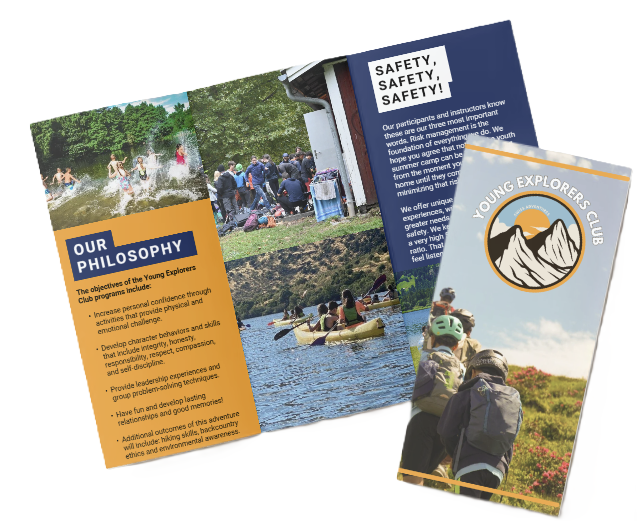
Educational Travel Ideas for Families with Kids 8-17
Discover exciting educational travel ideas for families with kids aged 8-17. Engage in hands-on learning that makes every trip unforgettable!
TL;DR:
- Educational travel experiences should match children’s developmental stages and include hands-on activities that promote real learning.
- Safety, qualified guides, and cultural immersion are crucial elements to ensure engaging and effective trips for kids and teens aged 8 to 17.
Finding travel experiences that genuinely excite kids and teach them something real is harder than it sounds. The best educational travel ideas don’t look like school with a passport. They look like painting with Antarctic ice meltwater, conjugating French verbs while snorkeling in Polynesia, or standing inside the National Archives where the Declaration of Independence lives. This article gives you a practical framework for evaluating your options, then walks through specific trips and programs that deliver real learning for children and teens aged 8 to 17, across natural science, language, history, STEM, and adventure.
Key takeaways
| Point | Details |
|---|---|
| Match the trip to the age | Activities and learning goals should suit your child’s developmental stage, not just the destination’s reputation. |
| Prioritize hands-on moments | Shore excursions, cultural workshops, and live experiments stick better than guided sightseeing tours alone. |
| Verify children’s programming | Ask providers directly what structured activities exist for kids, especially on transit or sea days. |
| Check safety before you book | Cross-reference State Department and CDC advisories for any international destination before committing. |
| Language immersion beats classroom study | Programs that embed language in daily activities produce faster, more lasting results than structured lessons alone. |
1. How to evaluate educational travel experiences for your family
Not every trip labeled “educational” earns that description. Parents need a working framework before they spend money and vacation days on something that ends up being a bus tour with a quiz sheet. Here’s how to filter your options honestly.
Age suitability comes first. A 9-year-old and a 16-year-old experience the same ruins completely differently. Check whether the program has age-grouped activities or mixes all ages together, because mixed-age programs often default to the youngest common denominator.
Look for hands-on, experiential components. The field of experiential learning is built on a simple truth: doing beats watching when it comes to retention. Cooking a local dish, excavating a simulated archaeological site, or building a shelter teaches more than a 45-minute lecture.
Consider these practical filters when comparing options:
- Does the program balance structured learning with unstructured exploration time?
- Are there qualified educators or scientists leading activities, not just tour guides?
- What subjects does the trip cover? History, STEM, language, ecology, civics, or a mix?
- What supervision ratios are in place, especially for international programs?
- Is cultural immersion built in, or is it surface-level sightseeing?
- What does the cost include? Accommodation, meals, excursions, and instruction should be itemized.
Pro Tip: Ask any provider directly whether they have dedicated children’s programming for lower-activity days like transit days or bad weather days. Programs that can’t answer this question confidently are often the ones where kids spend four hours watching a tablet on a ship.
2. Natural science and adventure exploration trips
This is where educational travel ideas earn their most enthusiastic reviews from kids. When science walks off the page and into the wilderness, engagement spikes.
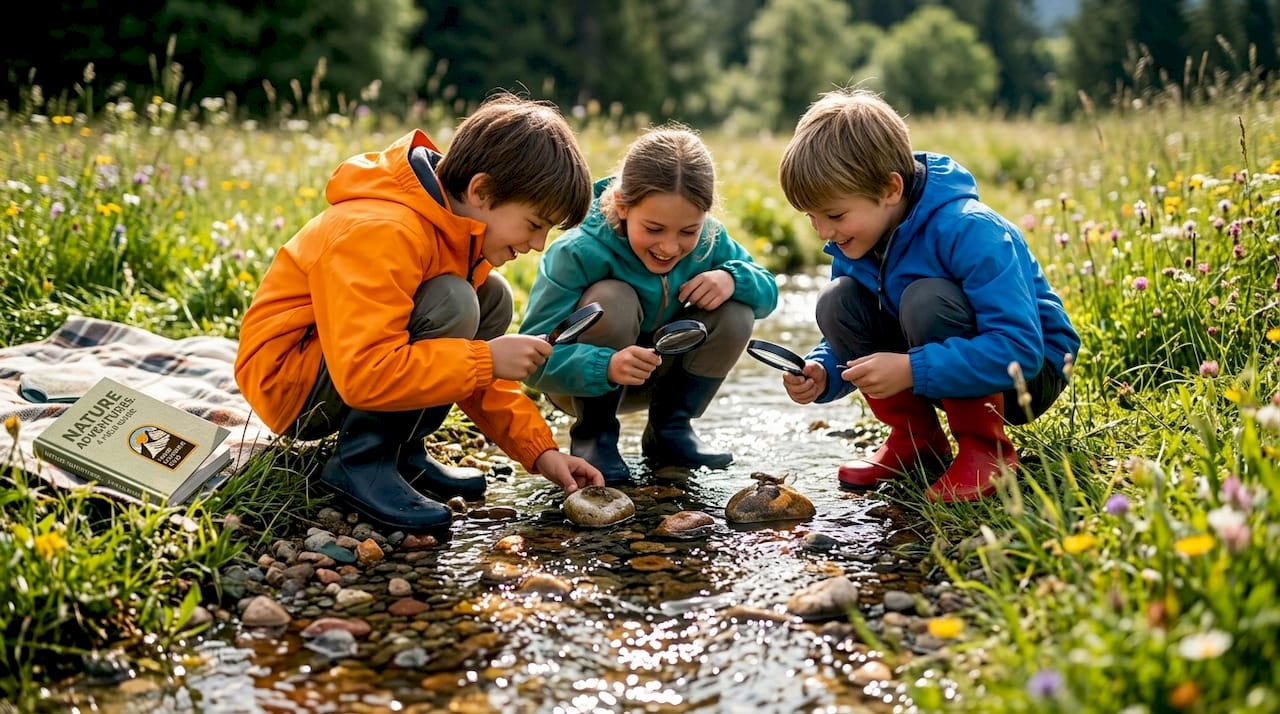
One of the most striking examples is an Antarctic family expedition that offered children hands-on sea day programming including painting with ice meltwater, wildlife drawing sessions, and direct interaction with onboard scientists. That kind of activity doesn’t just entertain. It frames Antarctica as a living laboratory rather than a cold landscape viewed through a porthole.
National parks across the United States also offer outstanding learning travel destinations, particularly for ecology and geology. Programs at places like Yellowstone, the Grand Canyon, and Great Smoky Mountains National Park include ranger-led youth programs, junior ranger badge systems, and structured observation activities that align with school science curricula.
“Children’s programming on educational expeditions is a decisive factor in engagement and learning retention, making it imperative to ask providers about such offerings before booking.” — Condé Nast Traveler
Multi-day adventure camps with embedded STEM components round out this category well. Think field geology, water quality testing in rivers, or tracking wildlife movement patterns. Designing these trips for ages 8 to 17 requires structuring both on-location immersive learning and in-between downtime activities to maintain engagement throughout.
3. Language immersion and cultural travel experiences
Cultural travel experiences that actually change how a child thinks about the world are built on immersion, not itinerary. Visiting a country is not the same as living inside its language and customs for two weeks.
French Polynesia offers one of the most compelling models available. Structured immersion programs there include 20 hours of French lessons woven directly into cultural activities: cooking classes, snorkeling excursions, and local arts. Accommodations with host families or guesthouses mean language practice doesn’t stop when the lesson ends. This is the critical design principle: immersion-based programs achieve the best outcomes when learning is embedded in cultural activities rather than delivered solely through classroom instruction.
What makes programs like this work for teens specifically:
- Host family stays create genuine accountability for language use
- Real-life contexts (markets, meals, transport) force practical application
- Cultural events like local dance, music, and festivals build emotional connection to the language
- Peer socialization in the target language removes the self-consciousness of classroom practice
For families interested in cultural immersion benefits, the research consistently points toward programs where daily life IS the curriculum, not a backdrop to it.
Pro Tip: When comparing language immersion programs, count the hours of instruction and then check how those hours are delivered. Twenty hours of classroom grammar drills and twenty hours of interactive, conversation-based cultural activities are completely different experiences for a 12-year-old.
4. Historical and civics trips that bring textbooks to life
For middle and high school students studying American history or government, Washington D.C. functions as an outdoor museum that no textbook can replicate. A typical 8th-grade D.C. itinerary covers Arlington Cemetery, the Capitol Building, the National Archives, and Smithsonian museums across two to three days.
What separates a memorable civics trip from a forgettable one comes down to depth and sequence. Standing in front of the Lincoln Memorial after your class has studied Reconstruction hits differently than arriving cold with no context. Guided tours tailored for middle school curriculum frameworks make the difference between recognition and genuine understanding.
Here is a sample two-day D.C. learning itinerary for families:
| Day | Morning | Afternoon |
|---|---|---|
| Day 1 | Arlington Cemetery and Changing of the Guard | U.S. Capitol Building and congressional visitor center |
| Day 2 | National Archives (Declaration, Constitution) | National Museum of American History, Smithsonian |
Practical logistics matter here. Pack comfortable walking shoes, bring a reusable water bottle, and plan for security lines at federal buildings. Most Smithsonian museums are free, which makes them ideal for extending the day without budget pressure. Thorough parental permission forms and adequate chaperone ratios are required for school group trips and strongly recommended for independent family visits with younger children.
5. Global STEM programs for academically motivated teens
For teens aged 16 and older who want to push beyond regular school curriculum, structured international STEM programs offer something closer to a pre-college academic experience combined with genuine travel.
The KAUST High School Summer Program 2026 stands out in this category. It combines project-based STEM education at one of the world’s leading research universities with travel to Oxford or Cambridge. Flights, full-board accommodation, and mentorship from working scientists are included. The curriculum focuses on advanced mathematics, computational thinking, and AI concepts, all taught through interdisciplinary projects rather than traditional lecture formats.
What this kind of program offers that a school trip cannot:
- Direct mentorship from research scientists, not just science teachers
- Exposure to university-level academic culture before college applications
- Peer cohorts of equally motivated students from around the world
- Unique study abroad locations that carry weight on college applications
This is a different category of family educational travel than a national parks road trip, and it should be evaluated differently. The cost is significant, the academic expectations are real, and the impact on a motivated 16-year-old can be substantial.
6. Safety and supervision when traveling abroad with kids
No educational trip is worth taking without a clear safety plan. This is especially true for international travel for education, where unfamiliar health systems, languages, and legal frameworks add complexity.
Before booking any international program, consult both the State Department travel advisory levels and CDC health notices for your destination. These two sources assess different but complementary risks: political and civil stability versus health and disease exposure. Relying on only one of them leaves you with an incomplete picture.
Key steps for any family or school group planning international educational trips:
- Enroll in the State Department’s Smart Traveler Enrollment Program (STEP) before departure
- Collect signed, detailed parental permission forms that include specific risk disclosures for off-campus activities
- Confirm chaperone-to-student ratios meet or exceed the program’s stated standards
- Select tour operators with documented children’s programming and a clear emergency response protocol
- Build a written contingency plan that covers medical emergencies, natural events, and flight disruptions
For trip inspiration and logistics support, working with a travel specialist who focuses on youth group travel reduces the planning burden and flags risks you might not think to check.
My honest take on what makes these trips actually work
I’ve worked with families and youth programs long enough to say this plainly: the destination matters less than the design. I’ve seen kids come home from exotic locations with nothing to report except what they watched on the flight. I’ve also seen 13-year-olds return from a week in Switzerland permanently changed by their first experience navigating a foreign city, trusting their own judgment, and making friends across language barriers.
What I’ve learned is that the most effective learning travel destinations share one trait: learning is invisible to the child. It’s not announced. It’s not separate from the fun. It happens during the cooking class, the wildlife sketch session, the moment a teen realizes they understood a full conversation in French.
Parents often focus on prestige destinations when choosing trips. In my experience, that’s the wrong filter. A well-designed week in a Swiss mountain camp with peer socialization, real outdoor challenges, and a bilingual environment produces more lasting growth than a two-week tour of famous capitals where kids spend most of their time on a bus.
The programs that stick are the ones where kids are genuinely active, slightly out of their comfort zone, surrounded by peers who are equally engaged, and guided by adults who treat them as capable young people. That combination is rarer than it should be, and it’s worth searching for deliberately.
— Guillem
How Youngexplorersclub takes educational adventure seriously
If you’re looking for a program that genuinely lives at the intersection of learning and adventure, Youngexplorersclub has been doing exactly that from its base in Switzerland for years.
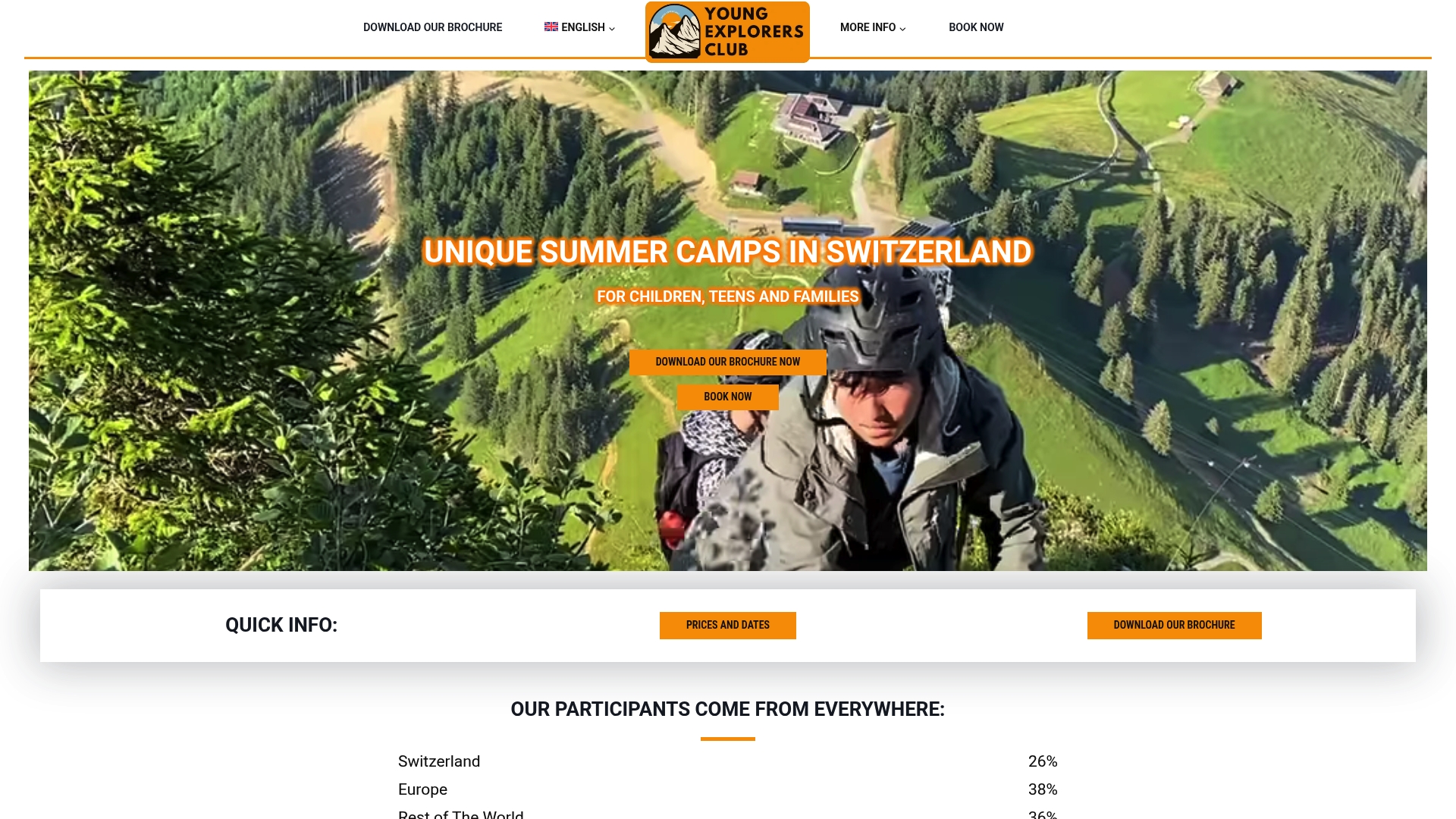
Their teen summer camps are built around the principle that real growth happens outside the classroom and outside the comfort zone. Programs include mountain biking, survival skills, climbing, and multisport adventures, all delivered in a bilingual English and French environment with optional language course add-ons. For families interested in structured group programming, school and group custom camps are tailored to specific learning goals and age groups. Safety, expert leadership, and genuine fun are built into every week, not treated as afterthoughts. If you want your child to come home more confident, more capable, and with stories that will outlast any souvenir, this is worth a close look.
FAQ
What age group benefits most from educational travel?
Children and teens aged 8 to 17 benefit strongly from educational travel, with the type of program varying by age. Younger children engage best with hands-on, sensory activities like nature exploration, while teens benefit more from structured programs with peer interaction and academic challenge.
How do I know if a travel program is truly educational?
Look for programs that include structured activities led by qualified educators or experts, hands-on learning components, and clear learning objectives tied to real subjects. Programs that can only describe their destination, not their curriculum, are primarily tourism.
Is language immersion travel worth the cost for kids?
Yes, particularly when learning is embedded in daily activities rather than delivered as classroom instruction. Programs integrating language into cultural experiences like cooking, excursions, and host family stays produce faster and more lasting acquisition than traditional classroom formats.
What safety steps should parents take before an international educational trip?
Consult both State Department travel advisories and CDC health notices before booking. Enroll in the STEP program for emergency support, and confirm that the program provider has documented safety protocols and appropriate supervision ratios.
What makes Switzerland a good destination for educational youth travel?
Switzerland offers a rare combination of outdoor adventure, bilingual cultural exposure, and high safety standards. Programs based there can deliver language immersion, nature science, and personal development in a single structured experience, making it one of the more efficient learning travel destinations for families with limited vacation time.
Recommended
- Why Colombian Families Explore European Camp Options | Young Explorers Club Switzerland
- Why Thai Families Seek European Educational Experiences | Young Explorers Club Switzerland
- Family Adventure Travel: Outdoor Learning And Safe Fun
- Why Argentinian Families Seek Adventure-based Education | Young Explorers Club Switzerland