What is mountain biking camp? A parent’s complete guide
Discover what mountain biking camp really offers! This complete guide helps parents choose the right program for their child’s growth and adventure.
TL;DR:
- Mountain biking camps are structured, coach-led outdoor programs that focus on skill development, confidence, and outdoor awareness for children aged 8 to 17. They organize participants into age- and skill-based groups, emphasizing safety, progression, and community, rather than just competition or terrain difficulty. The best camps foster personal growth, resilience, teamwork, and a sense of belonging, offering experiences that extend beyond biking skills.
Most parents hear “mountain biking camp” and picture their kid flying off a dirt jump or racing downhill at terrifying speeds. That picture is almost entirely wrong. A mountain biking camp is a structured, coach-led outdoor program where children aged 8 to 17 learn to ride trails progressively, building technique, confidence, and outdoor awareness in a supervised setting. The best programs treat the bike as a tool for personal growth, not a vehicle for showing off. Understanding what these camps actually offer is the first step toward choosing one that genuinely fits your child.
Table of Contents
- What is a mountain biking camp? Key features and experiences
- Age groups and skill levels: Structuring camps for growth and confidence
- What parents should know: Gear, safety, and preparation
- Comparing mountain biking camp options: Programs, durations, and costs
- Learning and growth beyond biking: The experiential and community benefits
- Why choosing a mountain biking camp is more than just a sport decision
- Explore youth mountain biking camps with Young Explorers Club
- Frequently asked questions
Key Takeaways
| Point | Details |
|---|---|
| Mountain biking camps explained | They offer age-appropriate, skill-focused outdoor programs combining safety, fun, and learning for youth. |
| Age and skill grouping | Camps use specific divisions to tailor challenges ensuring safety and progressive growth. |
| Essential gear and prep | Proper protective equipment and preparation are crucial for safety and enjoyment at camp. |
| Camp option variety | Programs differ widely in duration, cost, and instructional focus to fit diverse needs. |
| Growth beyond biking | Camps foster resilience, confidence, environmental stewardship, and social skills alongside riding. |
What is a mountain biking camp? Key features and experiences
At its core, a mountain biking camp is a skill-based outdoor program with trained instructors, organized daily sessions, and trails matched to each rider’s current ability. Whether your child has never ridden singletrack or already knows how to navigate switchbacks, there is a program built for them.
The day typically follows a predictable structure that keeps things safe and manageable. Campers arrive, bikes get checked by staff, groups form by skill level, and coaching begins. Sessions rotate between technique drills, guided trail rides, and fun challenges that keep energy high without overloading beginners. Mountain biking camp details vary by location and format, but the daily rhythm stays consistent across most reputable programs.
Here is what a well-run camp typically includes:
- Morning gear and bike safety checks before any riding begins
- Skill stations covering braking, cornering, body position, and balance
- Guided trail rides scaled to each group’s ability level
- Games and challenges that build bike handling without feeling like drills
- Debrief sessions where kids talk through what they learned and set next-day goals
Safety protocols are not optional extras. RED Mountain Resort offers tailored camps for ages 9 to 17 focusing on skill development from novice to advanced riders, with safety as the organizing priority throughout. That means full gear inspections, instructor-to-camper ratios, and trail briefings before every ride.
Age groups and skill levels: Structuring camps for growth and confidence
One of the most important things to understand about mountain biking camps for beginners is that no child gets thrown onto a black diamond trail on day one. Camps organize riders into age-based and skill-based groups, and both matter.
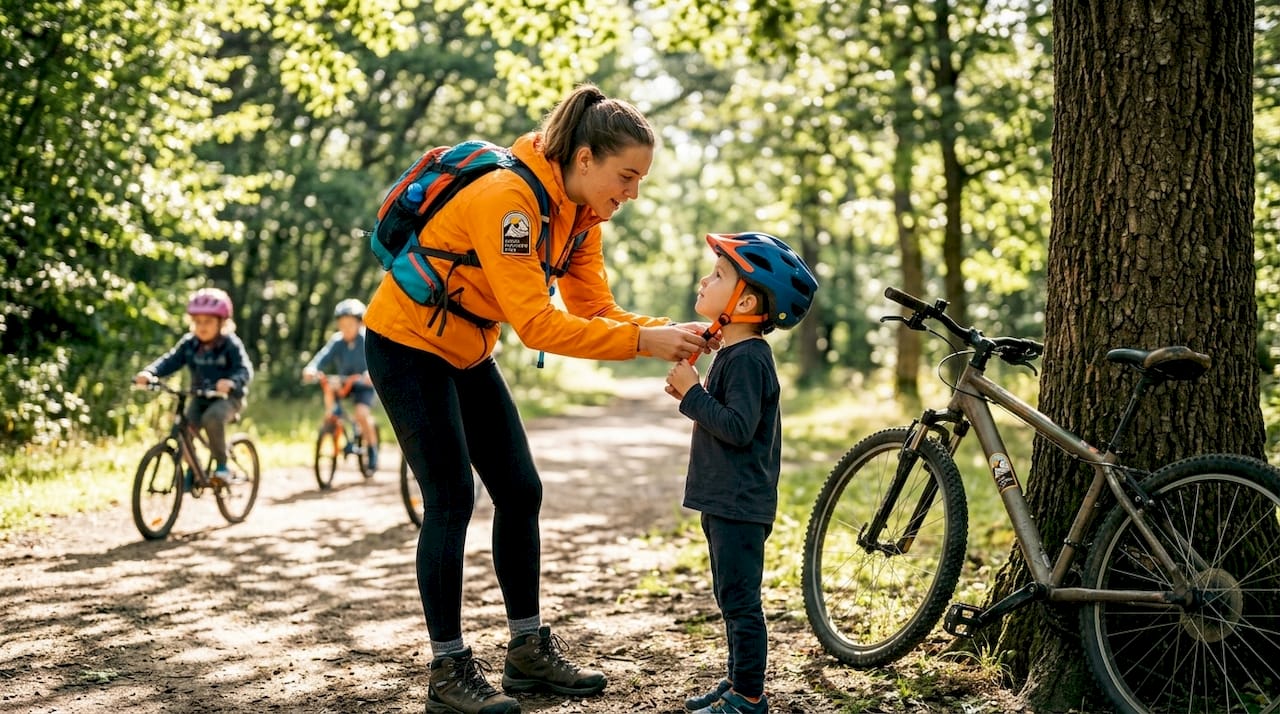
Age groupings typically look like this:
| Age group | Skill focus | Trail difficulty |
|---|---|---|
| 8 to 10 | Balance, basic braking, flat terrain | Green (easy) |
| 11 to 14 | Cornering, climbing, descending | Blue (moderate) |
| 13 to 17 | Technical features, flow trails | Blue to black |
Camps split groups by age and ability, with levels running from novice through intermediate to advanced, so that progression is customized rather than generic. A 13-year-old who has never ridden off-road will start in a novice group regardless of age, while a confident 10-year-old with solid trail experience may move up quickly.
The skill levels usually align with trail color systems most mountain bike parks already use:
- Novice: Green and easy blue trails, focus on confidence and control
- Intermediate: Blue and low-level black trails, adding technical skills
- Advanced: Black trails and optional features, refining speed and judgment
What makes this approach work is the dynamic adjustment. Good camp instructors observe riders closely each day and move kids between groups when they are ready. A child who arrives nervous but improves fast will not be held back out of rigid scheduling.
Pro Tip: Before registering, honestly assess your child’s current comfort level on a trail bike. Overestimating ability means frustration; underestimating means boredom. When in doubt, start one level lower and let the instructors move your child up.
What parents should know: Gear, safety, and preparation
Knowing what to pack and how to prepare your child makes a real difference in how their first week goes. Camps are not responsible for sending kids home because gear was missing or ill-fitting.
Here is a practical preparation checklist:
- Properly fitted bike with functioning front and rear brakes, no exceptions
- Full-face helmet for downhill-style sessions, or a certified trail helmet for cross-country focused camps
- Knee and elbow pads that fit snugly and do not slide during movement
- Gloves to protect against trail rash and improve grip
- Closed-toe shoes with stiff soles, not sandals or running shoes
- Water bottle or hydration pack filled before arrival each day
- Sunscreen applied before drop-off, with extra in a bag for reapplication
- Snacks for mid-session energy, unless the camp provides them
Safety standards for participants require working bikes with front and rear brakes, full-face helmets, and protective gear as non-negotiable minimums. This is not about liability language. It is because a child on a bike with soft brakes on a trail descent faces real risk.
Label every piece of gear with your child’s name. By day two at any busy camp, identical helmets and gloves become a logistical puzzle.
Pro Tip: Do a full gear test ride at home before camp starts. Have your child wear all their protective equipment and ride around the block. If anything pinches, shifts, or restricts movement, fix it before day one at camp.
One preparation step that most parents skip is talking to their child about camp expectations, specifically that they will fall. Falling on trails is normal, expected, and part of learning. Kids who expect it handle it far better than kids who are caught off guard.
Comparing mountain biking camp options: Programs, durations, and costs
Not all mountain biking summer camps are built the same way. Duration, cost, and focus vary widely, and parents benefit from knowing the range before committing.
| Camp format | Duration | Approximate cost | Typical focus |
|---|---|---|---|
| Half-day day camp | 3 to 5 days | $50 to $150/week | Young beginners, basic skills |
| Full-day day camp | 5 days | $300 to $510/week | Skill development, trail riding |
| Residential camp | 1 to 2 weeks | $800 to $2,500+ | Full immersion, community, advanced skills |
| International camp | 1 to 3 weeks | Varies widely | Biking plus language, culture, adventure |
Various camp formats with differing costs and age focus exist across North America and Europe, ranging from local park programs to full residential experiences in mountain destinations. The lower-cost formats are excellent for testing whether your child enjoys the experience before investing in a longer program.
When evaluating options, consider these factors:
- Instructor qualifications: Look for certified coaches or guides, not just enthusiastic volunteers
- Camper-to-instructor ratio: Eight to one or lower is the standard for safe trail riding
- Trail access: Does the camp use dedicated mountain bike park trails or fire roads? The trail quality shapes the experience significantly
- What is included: Some programs bundle snacks, gear rental, and lift tickets; others charge separately for each
For families interested in camp format and duration differences, international residential programs add a dimension that local day camps cannot match. When biking happens in a multilingual, cross-cultural setting alongside kids from different countries, the social and developmental impact multiplies considerably.
Learning and growth beyond biking: The experiential and community benefits
Here is what most camp descriptions undersell: the biking is almost secondary to what your child actually takes home.
Mountain bike training camps, when done well, teach skills that transfer far beyond the trail. The structure of outdoor challenges, controlled risk-taking, and immediate feedback from coaches creates a learning environment that school rarely replicates. Research and youth development specialists consistently point to these experiences as formative.
“Safety, fun, and learning combine to build confidence, resilience, and community spirit beyond riding skills.” Highland Mountain Bike Park frames this as the organizing philosophy of youth camp design, not a marketing line.
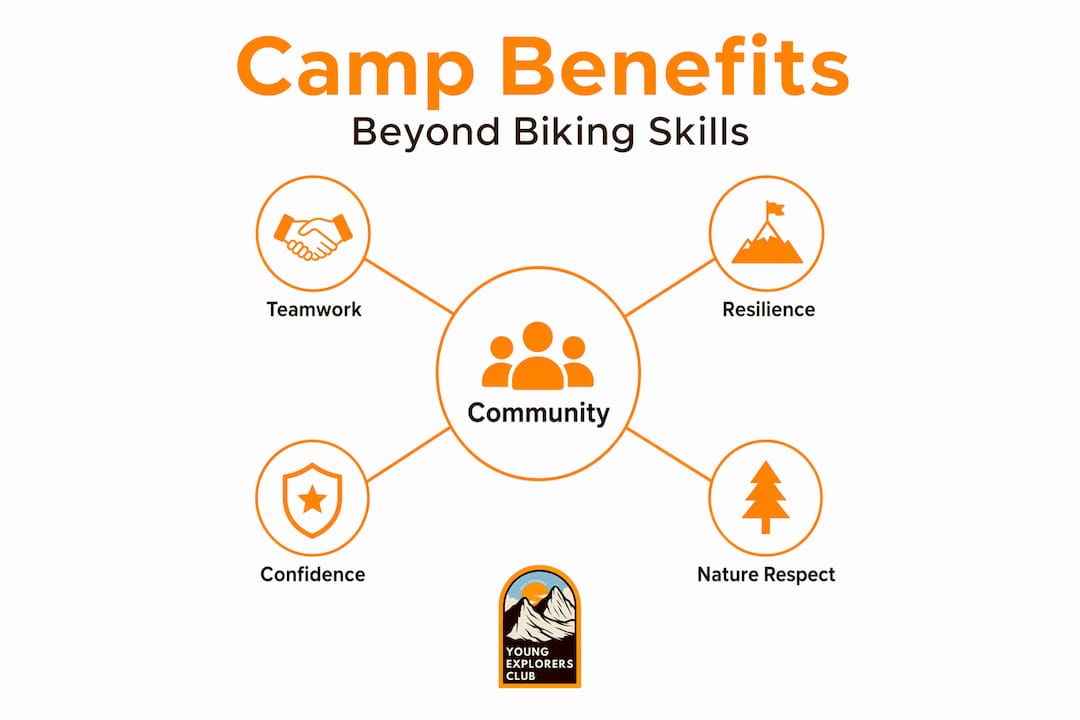
The specific growth areas most parents report seeing in their children include:
- Resilience: Failing on a trail feature and trying again without adult intervention teaches persistence in a way that is hard to manufacture in other settings
- Environmental awareness: Quality camps teach Leave No Trace principles so kids understand trail stewardship alongside riding technique
- Teamwork: Group rides require riders to wait, communicate, and look out for each other
- Self-assessment: Kids learn to judge their own readiness for a feature rather than peer pressure or ego driving decisions
- Confidence: Completing a trail section that felt impossible on day one creates a specific kind of pride that carries over into every other area of a child’s life
The social bonds formed at mountain biking camp experiences tend to last. Kids who spend a week navigating trails together, cheering each other through hard sections, and eating lunch in the dirt build friendships fast. That social layer is one of the reasons kids come back year after year.
Why choosing a mountain biking camp is more than just a sport decision
Parents often approach camp selection the way they shop for sports equipment: checking specs, comparing prices, and confirming safety ratings. That process misses the most important variable, which is culture.
Mountain biking has always carried a community identity that goes beyond the physical act of riding. Dirt Camp founder Jeff Silas emphasizes that camp culture is built on community, fun, and outdoor lifestyle rather than competitive racing outcomes. That philosophy, held by the best programs for decades, shapes everything from how instructors talk to kids to how the daily schedule is designed.
We have seen firsthand at Young Explorers Club that the kids who thrive at mountain biking camps are not necessarily the most athletic. They are the ones who get absorbed into the group culture, feel genuinely welcomed at their skill level, and leave not just with better riding skills but with a sense of belonging to something bigger than a one-week program.
The shift in how to choose a biking camp happens when parents start asking cultural questions alongside logistical ones: How do instructors handle a child who gets scared on a descent? What happens when a kid has a bad day? How are older and younger campers encouraged to support each other? These questions reveal the soul of a camp in ways that a gear list never will.
Choosing a camp purely on trail quality or cost means potentially putting your child in an environment where the real camp experience does not match the brochure. The best mountain biking camps are communities first and sports programs second.
Explore youth mountain biking camps with Young Explorers Club
If your child has the spirit for outdoor adventure and you want something that goes beyond a local day program, Young Explorers Club runs mountain biking camps in the Swiss Alps that combine expert coaching with genuine experiential learning.
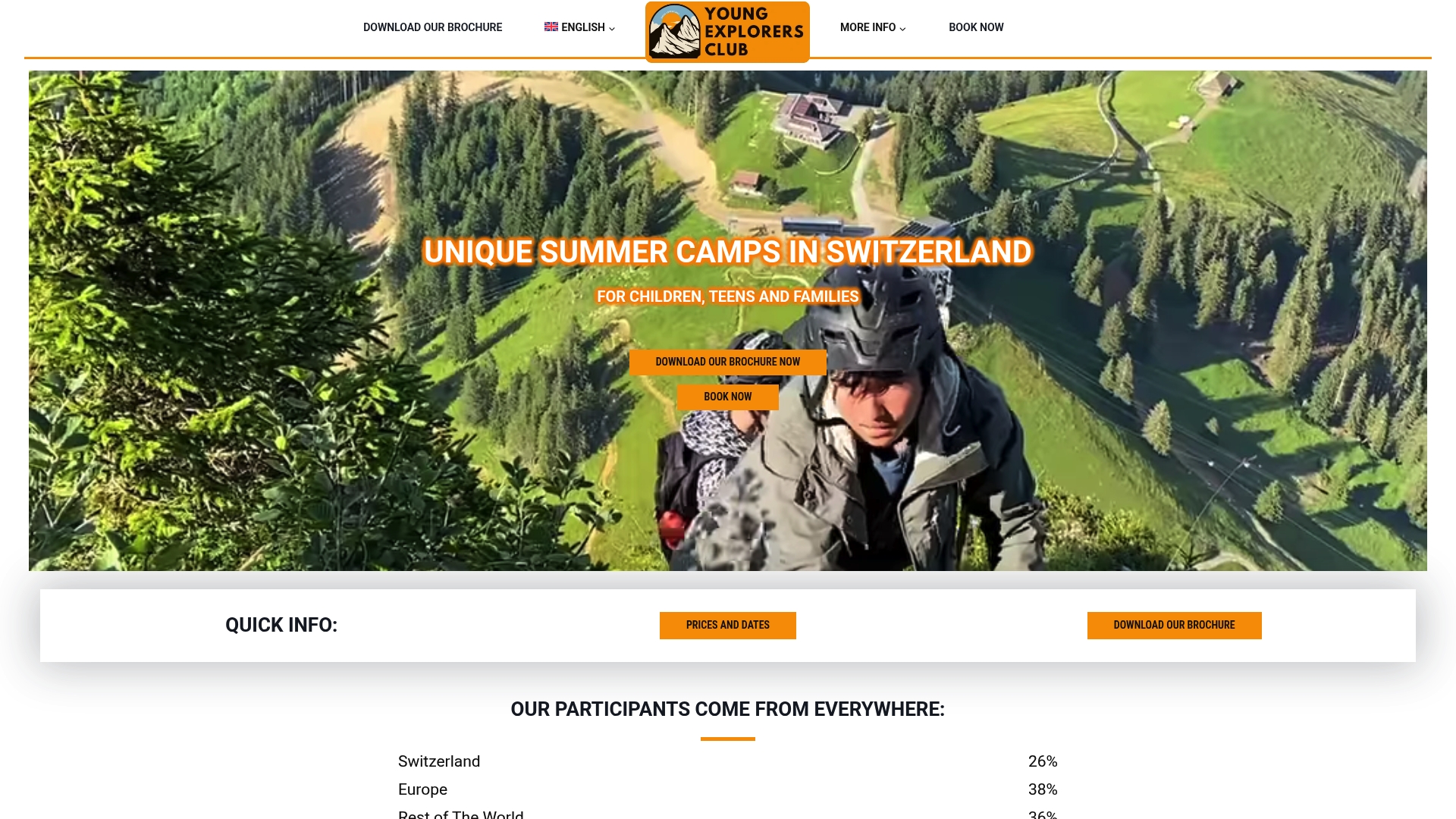
The Young Explorers mountain biking camp in Les Diablerets welcomes riders aged 8 to 17, from complete beginners to confident trail riders, in a bilingual English and French environment. Campers build real trail skills while sharing the experience with peers from across the world. For families looking at a summer camp for teens that combines adventure, language, and outdoor education in one trip, this is a program worth exploring. Browse the full program details, download the brochure, or get in touch to ask questions specific to your child’s needs.
Frequently asked questions
What age range do mountain biking camps typically accommodate?
Most mountain biking camps serve children aged 8 to 17, splitting participants into age and skill groups for safe, appropriate coaching. RED Mountain Resort and Catamount organize separate groups for ages 8 to 10, 11 to 14, and 13 to 17.
What equipment is required for a mountain biking camp?
Children need a properly fitting bike with front and rear brakes, a certified helmet, gloves, and knee and elbow pads. RED Mountain Resort requirements also include sunscreen, water, and closed-toe shoes as daily essentials.
Are mountain biking camps appropriate for beginners?
Yes. Most camps include novice levels specifically designed for first-time trail riders, with gentle terrain and patient coaching that builds confidence before advancing. Beginner options at Catamount focus on comfortable, enjoyable riding rather than pushing speed or difficulty early.
How do mountain biking camps support personal growth beyond biking skills?
Camps build resilience, teamwork, environmental awareness, and self-confidence through trail challenges and group experiences that go well beyond physical riding. Highland Mountain Bike Park’s camp philosophy treats these developmental outcomes as central goals rather than side benefits.
What should parents consider when choosing a mountain biking camp?
Evaluate the camp’s age and skill groupings, instructor qualifications, camper-to-staff ratios, and safety protocols. Beyond logistics, pay close attention to the camp’s culture and how staff describe their approach to nervous or struggling riders. That tells you more than any checklist.
Recommended
- What Is A Mountain Sports Camp? Growth And Global Friendships
- Mountainbiking-Abenteuer Für Kinder In Den Schweizer Alpen | Young Explorers Club Switzerland
- Mountain Biking Adventures For Kids In The Swiss Alps | Young Explorers Club Switzerland
- MTB Summer Camp Switzerland | Camp International Young Explorers