Why Outdoor Activities Matter for Youths
Discover the impact of outdoor activities for youths, including personal growth, teamwork, confidence, and real-world skills from Swiss summer camps.
Every parent faces that moment when their child craves more than just screen time or routine club meetings during summer break. With so many options out there, finding truly meaningful activities becomes an international puzzle, especially when your family navigates life between cultures. In Switzerland, outdoor activities for youth blend excitement, skill-building, and real-world challenges, offering your child the chance to thrive physically and personally in one of the world’s safest and most scenic learning environments.
Table of Contents
- Outdoor Activities For Youths Explained
- Types Of Outdoor Adventures In Switzerland
- How Outdoor Experiences Foster Personal Growth
- Building Teamwork And Resilience Outdoors
- Practical Benefits And Safety Considerations
Key Takeaways
| Point | Details |
|---|---|
| Diverse Outdoor Activities | Outdoor activities for youths include a range of nontraditional sports and survival skills that promote physical and mental development. |
| Authentic Learning Environments | Youths gain valuable life skills through real-world problem-solving and teamwork in outdoor settings, fostering resilience and confidence. |
| Cultural Adaptability | Outdoor experiences provide a universal platform for youth from different backgrounds to connect, learn teamwork, and build identities. |
| Safety in Adventure | Professional camps prioritize safety through strict protocols, enabling participants to face challenges while reducing risk. |
Outdoor activities for youths explained
Outdoor activities for youths go far beyond traditional sports. They encompass everything from rock climbing and mountain biking to survival skills and multisport adventures, designed to challenge young people physically and mentally while building confidence.
Think of outdoor activities as structured experiences that push your child out of their comfort zone in a controlled, safe environment. When your teen tries nontraditional sports like ultimate frisbee or BMX, they’re not just getting exercise—they’re discovering new passions and developing resilience.
What Makes These Activities Different
Outdoor activities differ from typical gym classes or after-school programs in meaningful ways.
Key distinctions include:
- Real-world problem solving under pressure, not worksheets or simulations
- Small group dynamics that build genuine friendships and teamwork
- Progressive skill development tailored to individual ability levels
- Exposure to natural environments that reduce stress and improve mental clarity
- Opportunities to face genuine challenges and overcome fear
Your child learns by doing, not by watching. A rock climbing session teaches more about perseverance in one afternoon than months of classroom discussion ever could.
Organized youth sports programs show measurable results: young participants maintain higher activity levels and develop lifelong active habits compared to their peers.
The Activities Your Child Will Experience
At summer camps in Switzerland, outdoor activities vary widely to match different interests and ability levels.
Common activity types include:
- Mountain sports—hiking, climbing, mountain biking
- Water activities—kayaking, swimming in natural settings
- Team challenges—cooperative games requiring strategy and trust
- Survival and navigation skills—reading maps, building shelters, outdoor cooking
- Adventure sequences—multisport combinations that test multiple abilities
The variety matters. A shy child might thrive in a climbing group but struggle in a team sport. A natural athlete might discover a love for wilderness navigation. Your child’s camp experience accommodates these individual differences.
Here’s a quick summary of Switzerland’s major youth outdoor activity categories and their primary benefits:
| Activity Type | Main Skills Developed | Typical Settings | Unique Benefit |
|---|---|---|---|
| Mountain sports | Endurance, strength, focus | Alps, mountain trails | Builds perseverance |
| Water activities | Balance, confidence, teamwork | Lakes, rivers | Overcomes environmental fear |
| Team-based challenges | Leadership, collaboration | Campsites, obstacle courses | Strengthens social skills |
| Wilderness survival | Self-reliance, problem-solving | Forests, meadows | Fosters independence |
| Multisport adventures | Adaptability, agility | Mixed terrain | Encourages versatility |
Why This Matters for Your International Family
When you’re raising children in multiple countries or cultural contexts, outdoor activities offer something universal—physical challenge, skill development, and confidence building that transcends language or cultural background.
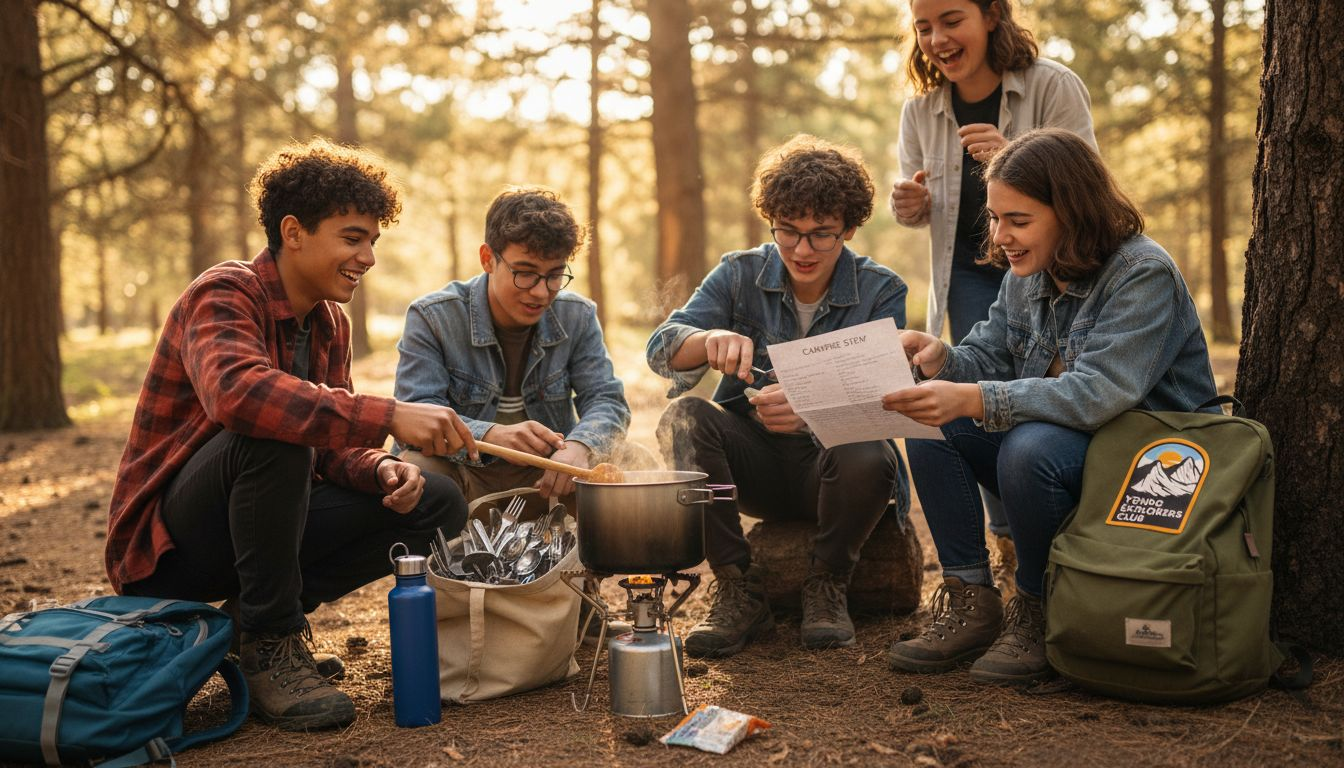
Language barriers fade when your teenager is rappelling down a cliff or navigating a mountain trail. How outdoor sports teach kids perseverance proves valuable for young people adjusting to new environments or building identity across cultures.
Pro tip: Choose a camp that pairs outdoor activities with language learning—your child builds Swiss-German or French skills naturally through conversations with peers during downtime and meals, not just in formal classes.
Types of outdoor adventures in Switzerland
Switzerland offers a staggering variety of outdoor adventures for young people. From Alpine mountaineering to water sports in pristine lakes, the landscape itself becomes your child’s classroom and playground combined.
The Swiss environment is uniquely suited to youth development. The country’s compact size means your teenager can experience multiple ecosystems—steep mountain passes, dense forests, alpine meadows, and crystal-clear lakes—all within a few hours of each other.
Mountain-Based Adventures
The Alps dominate Switzerland’s outdoor landscape, and they’re perfect for building confidence and physical strength.
Mountain activities include:
- Rock climbing on natural faces and via ferrata routes
- Hiking trails ranging from gentle nature walks to challenging alpine treks
- Mountain biking on technical terrain and cross-country routes
- Mountaineering and peak summiting for experienced teens
- Rappelling and rope skills training
Your child doesn’t need previous experience. Swiss mountain guides and camp leaders tailor routes and challenges to skill levels, ensuring everyone progresses safely.
Water and Lake Adventures
Switzerland’s lakes and rivers provide year-round water activities. When your teen participates in top outdoor activities for kids in the Swiss Alps, water-based challenges often feature prominently.
Water-based options include:
- Kayaking and canoeing on calm and flowing waters
- Swimming in alpine lakes with proper supervision
- Rafting and paddling on controlled river sections
- Stand-up paddleboarding for balance and core strength
- Coastal water activities (when camps extend to lake regions)
Water sports build comfort and reduce fear around natural environments. Your child learns respect for nature’s power while gaining genuine water competency.
Team-Based Outdoor Challenges
Beyond individual sports, Switzerland offers structured adventure activities that emphasize collaboration.
Team adventure formats include:
- Obstacle course challenges requiring group problem-solving
- Multisport relay races combining different disciplines
- Orienteering competitions with navigation challenges
- Rope course activities focusing on trust and communication
- Base camp experiences mixing daily skill-building with group goals
The Swiss landscape naturally encourages varied activities—your child builds diverse skills rather than specializing in just one sport, creating well-rounded outdoor competency.
Survival and Wilderness Skills
Beyond traditional sports, many camps teach practical wilderness survival. Your teenager learns fire-building, shelter construction, map reading, and outdoor cooking in real conditions.
These aren’t theatrical survival games. They’re genuine skills that build self-reliance and problem-solving ability. A teen who can navigate using a map and compass gains confidence that transfers to other life challenges.
Why Switzerland Specifically
The Alps provide natural barriers, varied terrain, and manageable distances that allow youth programs to offer diverse experiences safely. Your child experiences genuine adventure within controlled parameters.
Pro tip: Request a camp that combines mountain and water activities—this mix prevents monotony and allows your child to discover which adventure type truly excites them, informing future sport choices.
How outdoor experiences foster personal growth
Outdoor experiences do something classrooms rarely accomplish—they force your child to solve real problems with real consequences in real time. This pressure, applied safely, builds genuine confidence and resilience.
When your teenager navigates a hiking trail, scales a climbing wall, or paddles through moving water, they’re not following a script. They’re making decisions, managing fear, and discovering capabilities they didn’t know they possessed.
Building Self-Reliance Through Challenge
Personal growth happens at the edge of comfort. Outdoor activities intentionally place your child in situations slightly beyond their current skill level, creating manageable challenge.
How this builds confidence:
- Your teen accomplishes something they initially thought was impossible
- Success on a climbing route or hiking peak becomes proof of personal capability
- Repeated small victories compound into genuine self-belief
- Fear diminishes when faced and overcome in controlled settings
A child who believes in themselves approaches new challenges differently. They try harder, persist longer, and recover faster from failure. This psychological shift extends far beyond outdoor activities.
Collaboration and Social Growth
Outdoor teaching environments encourage collaboration that feels natural rather than forced. Your child works with peers toward shared goals without the artificiality of classroom group projects.
Authentic teamwork develops through:
- Depending on teammates for safety and success in real situations
- Communicating clearly when miscommunication creates genuine problems
- Learning different people contribute different strengths
- Building trust through shared challenge, not assigned partnerships
Your international teen gains genuine friendships with peers from other countries. Shared struggle—exhaustion on a mountain trail, difficulty in a water challenge—creates bonds stronger than typical summer programs.
Problem-Solving and Creativity Under Pressure
Outdoor situations don’t come with instruction manuals. Your teen must think creatively, adapt to conditions, and solve problems on the spot.
A rope course isn’t just exercise—it’s a puzzle requiring creative solutions. A navigation challenge teaches problem-solving when stakes feel real. Wilderness survival skills demand thinking beyond memorized facts.
Personal growth accelerates when your child faces genuine challenges requiring creativity, collaboration, and persistence—precisely what outdoor experiences provide.
Resilience and Managing Difficult Emotions
Facing fear, managing fatigue, and pushing through discomfort builds emotional resilience. Your teenager learns that discomfort isn’t dangerous and that they can feel scared and act anyway.
This transfers everywhere. A teen who summited a challenging peak handles academic pressure differently. They’ve proven they can do hard things. Setbacks feel temporary rather than definitive.
Connection to Nature and Sustainability Awareness
Time in natural environments shifts perspective. Your child develops genuine care for places they’ve experienced, not just intellectual understanding of environmental issues.
This awareness becomes personal. They’ve felt alpine air, swum in clean water, camped under stars. Protecting these places matters because they’ve lived the connection.
Pro tip: Ask your child to keep a journal during camp documenting moments of challenge, breakthrough, and growth—reviewing these entries later reinforces how much they’ve developed and builds confidence for future challenges.
Building teamwork and resilience outdoors
Teamwork isn’t built through trust falls in hotel conference rooms. It develops when your teenager’s rope partner relies on them for safety, when a group summit depends on everyone pushing through fatigue, when a navigation challenge fails because communication broke down.
Outdoor environments force authentic collaboration. Your child either works effectively with teammates or faces real consequences—not a grade, but actual failure that teaches genuine lessons.
How Outdoor Activities Build Real Teamwork
Conventional team-building feels artificial. Outdoor activities create natural interdependence that mirrors real-world challenges.
Authentic teamwork develops when:
- Individual success becomes impossible without contribution from others
- Communication breakdowns create tangible problems everyone experiences
- Each person’s unique strengths become genuinely valuable to the group
- Shared physical challenge builds bonds stronger than forced icebreakers
- Failure feels collective, motivating genuine problem-solving together
Your teen learns that good teammates aren’t the loudest voices—they’re reliable, communicative, and focused on group success. How summer camps encourage leadership in teens demonstrates how outdoor settings naturally develop these leadership qualities alongside teamwork.
Building Resilience Through Progressive Challenge
Resilience means bouncing back from difficulty, not avoiding difficulty altogether. Outdoor activities intentionally create manageable struggles that teach your teenager how to persist.
Resilience develops through:
- Facing a challenge that initially feels impossible
- Attempting solutions even when uncertain of success
- Experiencing small failures without catastrophic outcomes
- Adjusting approach and trying different strategies
- Eventually succeeding through persistence and adaptation
A teen who completes a difficult climb after three failed attempts learns something profound: struggle doesn’t mean failure. Struggle means you’re learning. This mindset transforms how they approach academics, relationships, and future obstacles.
Managing Fear and Building Confidence
Your child doesn’t build confidence by doing things they find easy. Confidence grows through doing things that scare them, safely.
Standing at a climbing wall height that triggers genuine fear, then successfully ascending it, rewires your teenager’s relationship with fear itself. They learn fear doesn’t need to stop action. They’ve proved they can feel scared and perform anyway.
Resilience isn’t the absence of struggle—it’s the ability to struggle, persist, and emerge stronger, exactly what outdoor challenges teach.
Supporting Each Other Under Pressure
Outdoor activities eliminate the option of checking out. Your teenager can’t disappear into their phone when their group needs navigation help. They can’t avoid conflict when camping together for a week.
This forced presence builds genuine social resilience. Your teen learns to communicate directly, handle disagreement productively, and support peers through difficulty. These skills transfer everywhere—to school, to family, to future workplaces.
The Compound Effect
Each challenge overcome, each team success, each moment of pushing through fear builds on previous experiences. Your teenager develops a track record of their own capability that no criticism can erase.
They’ve summited peaks. They’ve navigated without GPS. They’ve paddled through currents. They’ve trusted teammates and been trusted. This accumulated evidence of competence becomes unshakeable self-belief.
Pro tip: Before camp, discuss with your child one specific challenge they hope to overcome, then ask them to reflect after camp on how they approached it differently than they would have before—this focuses their attention on personal growth rather than comparison with peers.
Practical benefits and safety considerations
Outdoor activities deliver measurable health benefits while maintaining rigorous safety standards. Understanding both sides helps you make an informed decision about camp participation for your teenager.
Safety isn’t secondary to adventure—it’s foundational. Professional camps operate with established protocols, trained staff, and emergency procedures that allow genuine challenge within managed risk.
Physical Health Benefits
Outdoor activities provide comprehensive fitness development that exceeds typical exercise.
Health improvements include:
- Cardiovascular endurance from sustained hiking and multisport activities
- Muscle strength and balance development through climbing and technical movement
- Improved coordination and proprioception from navigating varied terrain
- Better sleep quality from physical exertion and fresh air
- Reduced anxiety and stress through nature exposure and accomplishment
Your teenager gains fitness naturally through activities they enjoy, not forced exercise they resent. A teen who climbs enthusiastically for an hour does more work than one forced to run on a treadmill for thirty minutes.
Below is a comparison of physical and mental benefits from outdoor camp experiences:
| Benefit Area | Physical Impact | Mental Impact | Long-Term Value |
|---|---|---|---|
| Cardiovascular health | Stronger heart, stamina | Reduces anxiety, stress | Better overall wellness |
| Strength & balance | Builds muscle, coordination | Sharpens focus, confidence | Increases resilience |
| Sleep quality | Deeper rest, recovery | Enhances mood | Sustained energy levels |
| Problem-solving | Navigating terrain | Flexible thinking, creativity | Improved life skills |
| Social development | Cooperative tasks | Builds trust, friendships | Lifelong teamwork skills |
Mental and Cognitive Benefits
Outdoor experiences reshape how your teen’s brain functions. Problem-solving in real environments strengthens cognitive flexibility and creative thinking.
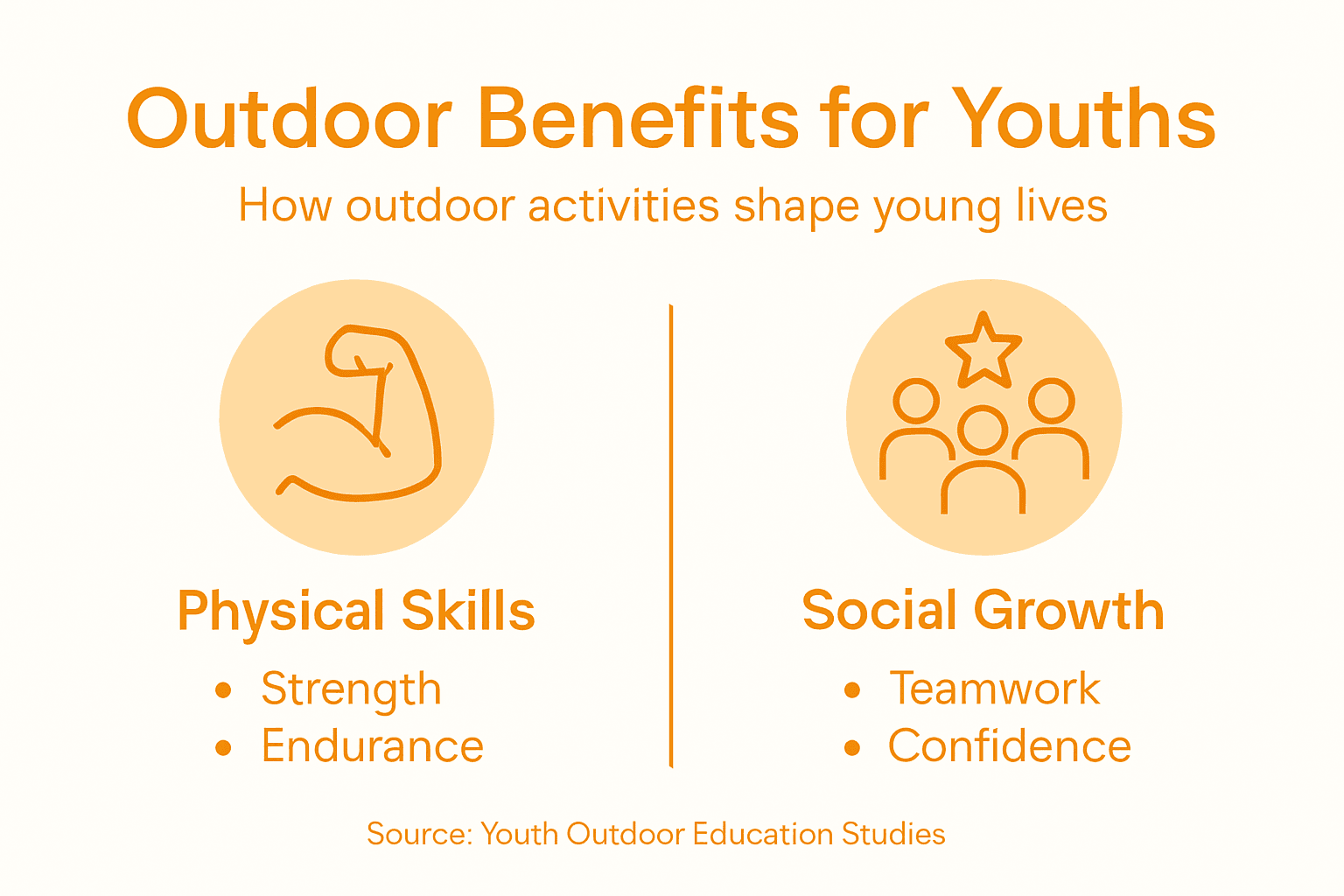
Your child learns to assess situations quickly, make decisions with incomplete information, and adapt when conditions change. These skills transfer directly to academic performance and life challenges.
Safety Standards and Risk Management
Professional outdoor camps operate under strict safety frameworks. Guides receive specialized training, equipment is regularly inspected, and activities scale to participant ability.
Standard safety practices include:
- Trained, certified instructors with first aid certification
- Regular equipment inspection and maintenance
- Activity progression matching skill development
- Group size limits ensuring supervision quality
- Weather monitoring and activity modification
- Emergency communication systems and evacuation procedures
Risk exists in any activity—including staying sedentary. Managed outdoor risk, with professional oversight, creates growth without recklessness.
Outdoor camps operate with safety protocols that exceed casual recreation, allowing genuine challenge while protecting participants from preventable harm.
What You Should Verify Before Enrollment
Don’t assume all camps maintain equivalent safety standards. Ask specific questions about instructor qualifications, safety training, equipment condition, and emergency procedures.
Questions to ask:
- Are instructors internationally certified in their specialties?
- What is the instructor-to-participant ratio for each activity?
- How frequently is equipment inspected and replaced?
- What communication systems exist during activities?
- How are weather conditions monitored and decisions made?
Reputable camps welcome these questions and provide detailed answers. If a program seems evasive about safety, that’s your answer.
Preparing Your Child for Safety Success
Your teenager’s cooperation with safety procedures directly impacts their experience. A teen who listens carefully to instructions, follows guidelines, and communicates honestly with instructors has a dramatically better camp experience.
Before camp, discuss why safety guidelines exist—not as restrictions limiting fun, but as frameworks enabling genuine adventure safely.
Pro tip: Request the camp’s detailed safety documentation and instructor qualifications before enrollment, then review the key points with your child—this demonstrates that safety matters and builds their confidence in the program’s professionalism.
Unlock Your Child’s Potential Through Outdoor Adventure
If you are looking to help your teenager build resilience, confidence, and genuine teamwork skills through real-world challenges then outdoor activities are the key. This article highlights how outdoor experiences push youths beyond their comfort zones in safe environments while encouraging personal growth and problem-solving. At the Young Explorers Club, we specialize in creating immersive summer camps in Switzerland that combine mountain biking, climbing, survival skills, and multisport adventures tailored for international families seeking transformative experiences.
Discover how our bilingual camps foster not only physical and mental development but also language skills naturally through peer interaction. Your child will learn to face fear, collaborate effectively, and build lasting friendships—all while exploring breathtaking natural landscapes. Don’t wait to provide your child with a solution that addresses the challenges of today’s world with adventure and education. Visit Young Explorers Club now to explore our program details and secure their spot for an unforgettable summer. To learn more about how outdoor activities build key life skills, check out How Outdoor Sports Teach Kids Perseverance and see why Summer Camps Encourage Leadership in Teens is trusted by families worldwide.
Frequently Asked Questions
What are the benefits of outdoor activities for youths?
Outdoor activities help youths develop physical strength, endurance, teamwork, problem-solving skills, and self-reliance, all while fostering confidence and resilience through real-life challenges.
How do outdoor activities differ from traditional sports?
Outdoor activities focus on real-world problem-solving, small group dynamics, individualized skill development, exposure to natural environments, and facing genuine challenges, as opposed to structured competition often found in traditional sports.
Can outdoor activities improve a child’s mental health?
Yes, spending time in nature and engaging in physical challenges can reduce stress, improve mental clarity, and promote overall emotional well-being for youths.
How do outdoor experiences enhance social skills among youths?
Outdoor activities encourage genuine teamwork and collaboration, allowing youths to build friendships and social resilience through shared challenges and experiences in a natural setting.