
Behind The Scenes: How We Plan Summer Camp Activities
Young Explorers Club: Time-tested summer camp planning—timelines, staffing, safety, budgets and activity mix for engaging, secure sessions.
Behind the Scenes: How We Plan Summer Camp Activities — Young Explorers Club
We run a clear, time-tested planning process for our summer camps. We map planning into a sequence with clear lead times, milestone checklists, and measurable session objectives. That structure coordinates vendors, staffing, safety, programming, and finances. Full-season planning starts 6–12 months out. Fast planning at 3–4 months works, but it has trade-offs. We enforce strict training, ratios, emergency action plans, and budgeting rules to keep sessions consistent and safe, and we audit compliance.
Key Takeaways
Plan early and deliberately
Start full-season planning 6–12 months before camp. Fast planning at 3–4 months is possible but requires trade-offs in vendor availability, staffing depth, and marketing lead time. Account for vendor lead times, open early-bird registration, and set final cut-offs 2–4 weeks before the session.
- Full-season timeline: Begin program design, vendor contracts, and recruitment 6–12 months prior.
- Fast timeline: Condensed planning in 3–4 months — acceptable for limited offerings but with higher operational risk.
- Registration cadence: Early-bird pricing to incentivize sign-ups; final registration closed 2–4 weeks before session start.
Design for outcomes and age
Define clear, observable goals for each session and tailor activities by age group. Pick 3–5 visible session objectives and 2–4 SMART outcomes per age group. Use modular time blocks so sessions can be adapted across sites and staffing levels.
- Session objectives: Keep them few and visible (3–5) so staff and families can track progress.
- SMART outcomes: 2–4 per age group to measure learning and engagement.
- Activity mix:
- Outdoor: 30–40%
- Sports: 20–25%
- Arts: 15–20%
- STEM: 10–15%
- Free play: 10–15%
Staff and training rules
Recruit and train staff to ensure consistency and safety. Maintain clear ratios, structured training hours, and a floater pool to cover absences.
- Recruitment timeline: Hire staff 3–6 months before camp start for best candidate pools.
- Ratios by age: Examples — 1:6 for ages 4–5, 1:10 for ages 9–12; adjust by program type and risk level.
- Training: Require 20–40 hours of pre-season training plus 1–3 hour weekly refreshers during sessions.
- Floaters: Maintain a 15–25% floater pool to accommodate last-minute absences and staff transitions.
Prioritize safety and readiness
Safety is non-negotiable. Enforce background checks and certifications, document emergency procedures, and standardize medical and heat protocols.
- Background checks: 100% required for all staff in contact with campers.
- Certifications: CPR and First Aid required for lead staff.
- Emergency action plans (EAPs): Documented incident-flow procedures for medical, severe weather, and evacuation scenarios.
- Medical protocols: Clear medication handling rules and on-site AED procedures.
- Heat & hydration: Set thresholds and enforced hydration/shade breaks tied to temperature and humidity.
Align finances and measurement
Budget intentionally and measure performance with clear KPIs. Allocate resources to staffing while protecting margins and tracking safety metrics.
- Budget allocation: Assign 40–60% of the budget to staffing (pay, training, and benefits).
- Margin target: Aim for a 10–20% operating margin.
- Pricing strategy: Use early-bird discounts to smooth enrollment and improve forecasting.
- KPI tracking: Monitor satisfaction, retention, enrollment velocity, and incident metrics.
- Safety KPI: Target an incident rate below 1 per 1,000 camper-days.
- Reporting cadence: Run weekly dashboards during the season and conduct post-session after-action reviews (AARs).
Fast Facts & Planning Timeline: When to Start and What to Hit
We, at the Young Explorers Club, plan camps around clear lead times and hard numbers so operations run smoothly. Full-season planning begins 6–12 months ahead. A fast-planning window is possible at 3–4 months, but it carries trade-offs. Staff hiring typically spans 3–6 months before camp, with interviews 2–3 months out. We open early-bird registration 6–9 months prior and keep final registration cut-offs at 2–4 weeks before start. Staff training requires 20–40 hours pre-season plus weekly refreshers of 1–3 hours/week. Marketing starts 6–9 months out with a major push at 3 months and again 6–8 weeks prior. We set a strict capacity cap to match counselor-to-camper ratios and facility limits and never exceed safe operating capacity. Local regulations and your camp’s governing body guidelines (ACA/local licensing) supersede these recommendations—always verify.
Milestone timeline (vertical swimlanes)
- -12 months:
- Operations: reserve site, draft annual budget, issue vendor RFPs.
- Curriculum: sketch yearly themes and 3–5 objectives.
- Staffing: define org chart, salary bands, housing options.
- Health & Safety: review regulations, update EAP templates.
- Marketing: publish save-the-date and season calendar.
- -9 months:
- Operations: finalize major vendors, confirm facility insurance.
- Curriculum: lock weekly themes and create sample curriculum grid.
- Staffing: post key leadership roles (post for 3–6 months).
- Health & Safety: start medical protocol updates.
- Marketing: open early-bird registration and begin outreach.
- -6 months:
- Operations: order specialty/custom equipment (12+ weeks lead), confirm housing/logistics.
- Curriculum: finalize session learning outcomes (2–4 per age group).
- Staffing: begin interviews for general roles (2–3 months before start).
- Health & Safety: schedule first-aid/CPR and background-check windows.
- Marketing: steady promotion and partner outreach.
- -3 months:
- Operations: finalize schedule, order routine supplies (6–8 weeks), set capacity caps.
- Curriculum: finalize activity rotations and specialty staffing assignments.
- Staffing: complete offers, start 20–40 hours of training, initiate background checks.
- Health & Safety: confirm medical staff, AED locations, medication protocols.
- Marketing: major push via email/SMS; finalize parent communications.
- Checklist highlights: finalize schedule, order supplies, confirm lifeguards and instructors, publish EAP, open final registration.
- -1 month:
- Operations: assemble kits, confirm transport, conduct final facility walk-throughs.
- Curriculum: print daily schedules, run leader training.
- Staffing: complete role-specific certs; set rosters and 15–25% backup floaters.
- Health & Safety: run mock EAPs; finalize medication logs and storage.
- Marketing: send pre-camp welcome 2–4 weeks out and packing checklist.
- Week 0:
- Operations: check-in, enrollment verification, inventory check.
- Curriculum: opening circles and baseline assessments.
- Staffing: last orientation refresher and team meetings.
- Health & Safety: on-site AED and first-aid readiness.
- Marketing: activate daily communications and first-week feedback channel.
Fast-planning vs full planning — practical trade-offs
We pick a fast-planning route (3–4 months) when speed matters and budgets are tight. That lowers upfront carrying costs and speeds time-to-market. Expect higher risk of supply and staff shortages, compressed hiring, limited marketing reach, and potential premium pricing on specialty items. Full planning (9–12 months) gives better vendor pricing, a full recruitment funnel, stronger early-bird registration conversion, and room for thorough 20–40 hours training and safety checks. It demands more upfront resources and a longer commitment. For a concrete example of how we break down a multi-day trip at scale, see our planning a multi-day bike trip.

Designing the Program: Objectives, Themes, Age Groups, Daily Flow, and Activity Mix
Program framework and core objectives
We set 3–5 objectives for every session and make them visible to staff and parents. They guide theme choices, staffing, and assessment. Here are objectives we use most often:
- Social skills: cooperative games, conflict resolution, and daily reflection prompts.
- Outdoor skills: trail safety, navigation basics, and low-impact camping practices.
- STEM literacy: hands-on engineering challenges, measurement, and data logging.
- Creative arts: multi-step projects that build process and presentation skills.
- Leadership development: role rotation, planning tasks, and peer feedback.
We run 1–2 week themes, using one-week blocks for short sessions and two-week cycles for deeper immersion. Each age group gets 2–4 measurable outcomes per session written to SMART criteria. For example, ages 9–12 might have outcomes such as: tie three knots independently; complete a 30-minute group problem-solving challenge demonstrating teamwork and communication; assemble a personal camp kit and lead a 10-minute mini-hike. We record progress with simple rubrics and short end-of-day reflections so outcomes are trackable and repeatable.
Age-differentiated learning, daily flow, and activity mix
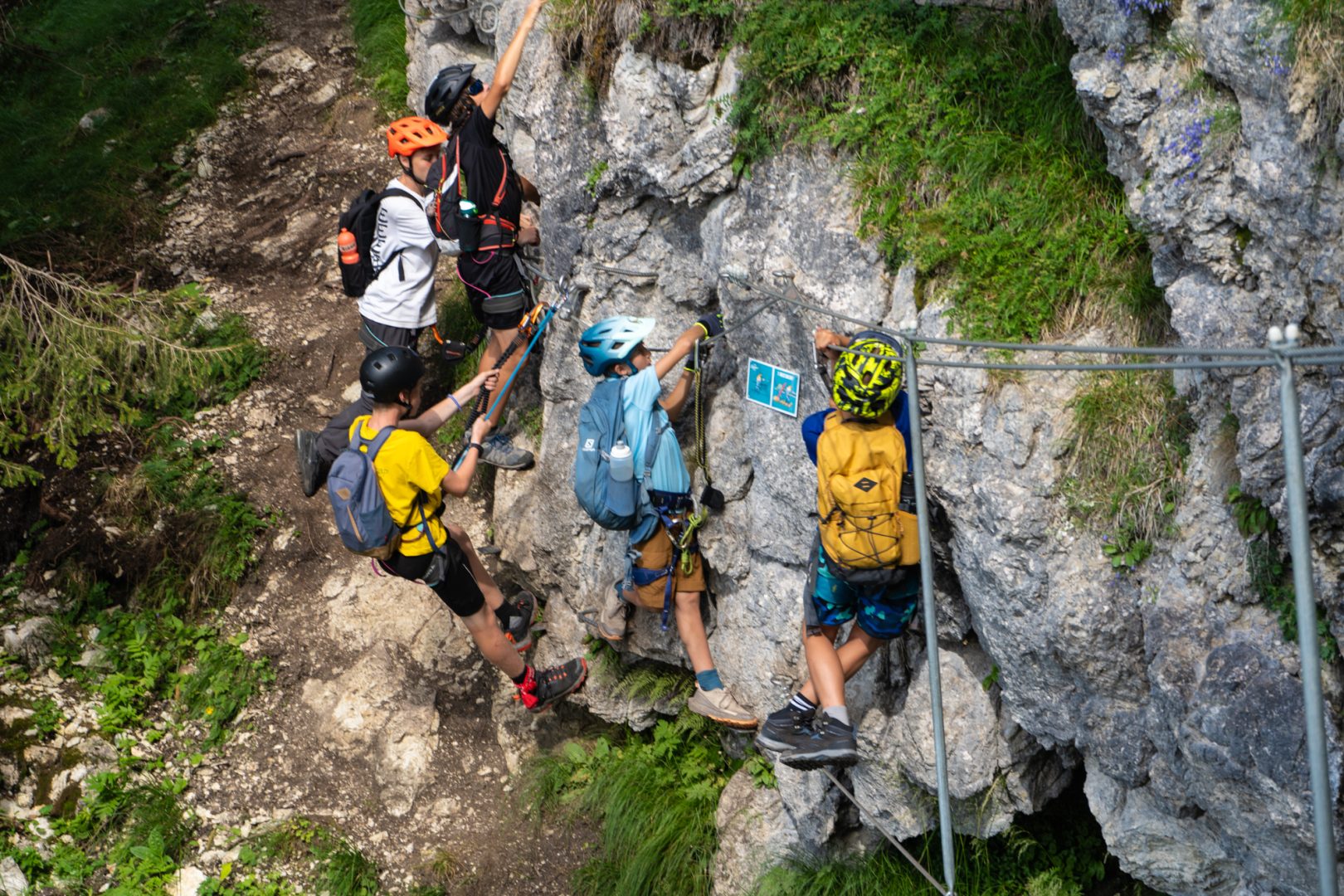
We set counselor-to-camper targets by age: 1:6 for ages 4–5, 1:8 for ages 6–8, 1:10 for ages 9–12, and 1:12–1:15 for teens and leadership groups. Block lengths follow developmental attention: 20–30 minutes for the youngest, 30–45 minutes for mid-childhood, and 45–60 minutes (90-minute options) for ages 10–15. That balance keeps engagement high while allowing projects to breathe. Specialty/high-risk activities—swimming, ropes, archery—always run with specialty certified instructors on staff.
A typical day fits a 6–9 hours model; below is an 8-hour example we use frequently:
- 8:30 arrival and free play
- 9:00 opening circle and goals
- 9:15–10:00 Activity A
- 10:00–10:15 snack/hydration
- 10:15–11:00 Activity B
- 11:00–12:00 specialty rotation (swim/sports)
- 12:00 lunch
- 1:00 rest/quiet time
- 1:45 rotations or workshops
- 3:00 free choice/social play
- 4:15 closing circle
- 4:30 dismissal
We design blocks as modular units so two 30-minute blocks can become one 60-minute workshop when weather or special events require flexibility. That approach supports both attention spans and logistics.
Our activity mix aims for a balanced week: 30–40% outdoor/adventure, 20–25% sports, 15–20% arts & crafts, 10–15% STEM, and 10–15% free play/social time. For a STEM-heavy week, expected outcomes include completing a 30-minute engineering challenge, documenting trials, and reflecting on team roles. In an arts-focused week, outcomes shift to planning and finishing a multi-step project, demonstrating fine motor techniques, and presenting work in a 5-minute show-and-tell.
We map these elements into a simple curriculum grid across weekly themes. Sample entries look like this in practice: ages 4–5 on Week 1 (Outdoor Skills) — name three outdoor items and practice basic trail safety; ages 6–8 on Week 2 (STEM Challenge) — build and test a small bridge and record results; ages 13–15 on Week 2 (Leadership) — run a project cycle from planning to demo.
We keep parent handouts concise and practical, repeating the daily schedule above and listing the 2–4 measurable outcomes for each camper’s session. Staff training emphasizes translating outcomes into 20–60 minutes blocks of work, supported by role-specific checklists. For insight into how we plan multi-day trips and integrate logistics with programming, see our write-up on planning a multi-day bike trip.

Staffing, Ratios, Recruitment, Training, and Retention
We, at the young explorers club, set staffing timelines and targets so staffing never becomes a last-minute scramble. I open leadership and specialty role postings on a 3–6 months posting window, and I plan hires assuming a 15–25% backup pool to cover attrition and unexpected gaps. I aim for clear counselor-to-camper ratios by age: 1:6 for ages 4–5, 1:8 for ages 6–8, 1:10 for ages 9–12, and 1:12–1:15 for teens. For water activities I follow lifeguard certification guidance and account for lifeguard ratios 1:10–1:25 depending on age, water type, and conditions.
I build retention into hiring math. My target is a 70–85% retention target year-to-year for returning counselors. I boost that with housing, meals, and professional development incentives. Those extras reduce turnover and strengthen institutional memory.
Pre-camp and in-season training keep staff safe and confident. I require 20–40 hours training before camp starts, including role-specific certification modules. During the season I schedule 1–3 hours/week of refreshers and briefings. I insist that 100% CPR & First Aid be current for all lead staff. Specialty staff — lifeguards, ropes, archery — must hold the relevant certifications and be present 100% of the time during those activities.
When I calculate headcount, I use simple, repeatable rules. For a mixed-age day camp with 120 campers and an average counselor-to-camper ratio of 1:10, base counselors = 120 / 10 = 12. I add floaters at about 15–25%; at 20% that’s roughly 3 floaters. Then I add part-time specialty instructors—assume three for swim/ropes/archery rotations—and three lead staff (program director, assistant director, health officer). Total payroll headcount for peak days comes to 21. I always schedule at least one shift supervisor per 12–20 staff to keep oversight tight.
I track funnel and hiring metrics so I can predict time-to-fill and adjust outreach. For practical parent-facing logistics related to staffing and program coverage, I point families to our tips for parents.
Recruitment funnel, training checklist, and feedback items
Below are the stages and metrics I follow, plus core training modules and sample feedback questions.
- Recruitment funnel
- Applicants → Screening → Interviews → Offers → Background checks → Hires → Onboarding/Training
- Metrics I monitor
- Applicants per opening
- Interview-to-offer rate
- Offer-accept rate
- Completion of background checks
- Time-to-fill
- Core training curriculum checklist (required modules)
- Orientation & culture
- Child protection & mandated reporting
- CPR & First Aid (100% CPR & First Aid for leads)
- Activity-specific skills and risk management
- De-escalation & behavior management
- Inclusion & cultural competency (2–4 hours)
- Medication protocols & medical readiness
- Emergency Action Plan drills
- Sample exit interview questions
- What were the best parts of your role this season?
- What challenges affected your job satisfaction?
- What training or resources would have helped you more?
- Would you return next year? Why or why not?
- Staff satisfaction survey items (Likert 1–5)
- I felt prepared by pre-camp training.
- My supervisor provided clear guidance.
- I felt safe and supported on-site.
- Housing/compensation were fair for the role.
- Open comment box for suggestions.
I track these items closely and act on trends. If interview-to-offer rates fall or time-to-fill climbs, I move postings earlier or increase recruiter outreach. When floaters or specialty staff are hard to secure, I raise compensation or bundle shifts to make roles more attractive.

Safety, Health, Emergency Protocols, Inclusion, and Behavior Management
We, at the Young Explorers Club, require 100% background checks for staff and regular volunteers and mandate abuse-prevention training (Safe Sport or equivalent). We include 2–4 hours of cultural competency in orientation so teams arrive ready to support diverse campers. Staff complete scenario drills and annual refreshers to keep skills sharp.
We log every event and follow strict 24-hour reporting to camp leadership; we keep an incident log for each camp day and track metrics against our aspirational goal of <1 incident per 1,000 camper-days. Immediate responses are the norm: secure the scene, provide first aid, notify leadership, notify parents on the parent timeline, document and review.
Emergency Action Plan (EAP) & Incident Flow
Below is a one-page reference of the EAP elements and the incident flow for quick team use.
- EAP Header: Camp name | Address | On-site director & cell
- Emergency numbers: Local EMS, Fire, Police, Poison Control, nearest hospital and ETA
- On-site contacts: Medical staff name/phone, Program Director name/phone
- Evacuation assembly point(s): primary/secondary routes; Shelter-in-place location
- Roles: Incident commander, safety officer, parent liaison, media liaison
- Communications protocol: who calls 911, who notifies parents, who logs incident
- Basic supplies: first-aid kits, AED location, emergency roster, transportation plan
Incident reporting flow:
- Immediate response → Secure scene & provide first aid
- Notify on-duty supervisor
- Notify director
- Parent notification timeline: serious incidents: same-day; non-serious: within 24 hours
- Document in incident log
- Internal review & corrective action
- Report to licensing/ACA if required
Heat, sun, and hydration are non-negotiable. We modify program when the heat index reaches 90°F / 95°F thresholds: shade breaks, enforced hydration protocols, and scheduling strenuous activities for cooler parts of the day. Staff rotate shaded rest periods and monitor for heat-related signs.
Medication and medical readiness are tightly controlled. We store meds in locked cabinets; controlled meds require a 2-staff sign-off and we maintain a medication log with timestamps for every administration. Medical supplies meet minimums: 1 kit / 25 participants. We keep at least one AED on site and aim for an AED 3–5 minute response from any program area.
Accessibility and behavior support drive program design. We aim for 90% adaptable activities and use a clear code of conduct, positive behavior plans, and individualized supports when needed.
- Facility accessibility: ramps and clear pathways
- Restrooms: at least one accessible stall per block
- Designated calming rooms for regulation and de-escalation
- High-contrast signage in multiple languages
- Activity modifications: sensory breaks, alternate equipment, peer buddy plans
Sample incident log entry (example format we use):
Date/time: 2026-07-12 10:42
Camper: J. Smith, Age 9
Staff on scene: A. Perez
Incident: fell during trail walk, head bump, brief LOC (10s)
Immediate action: assessed, stabilized, ice applied, 911 called
Outcome: transported to ER, parent notified at 10:55, director on site at 11:05
Follow-up: incident report filed, internal review scheduled, updated risk assessment for trail activity
For operational case studies and how I apply these protocols in multi-day logistics see Behind the scenes, which I use to refine on-the-ground procedures.

Budgeting, Procurement, Supplies, and Equipment
Budget breakdown & financial targets
We, at the Young Explorers Club, allocate budgets to protect program quality while hitting financial targets. Typical cost per camper sits at $150–$500 for day camp and $400–$1,200 for overnight, depending on region and activities. Major budget allocation generally falls into these bands: 40–60% staffing, 10–20% facilities & utilities, 8–12% food & catering, 5–10% equipment & supplies, 3–6% insurance & compliance, and 2–5% marketing & registration systems.
We aim for a 10–20% profit margin target and keep refund/withdrawal rates under 5–10%. We reserve a contingency fund equal to 5–10% of the annual budget to cover weather closures, staffing gaps, or last-minute logistics. For pricing decisions I use a simple break-even formula: Break-even enrollment = fixed costs / (price per camper − variable cost per camper). I run sensitivity analysis showing the impact of −10% and −20% enrollment on profit and cashflow, and model a contingency drawdown scenario so leaders know when to scale back activities or open additional sessions. Separate capital (one-time) from recurring (operational) costs in the ledger so capital purchases don’t distort weekly margins.
Inventory, procurement timing, checklists, and tools
Plan purchases with lead times in mind and keep a rolling inventory that supports operations. Key rules I follow:
- Timing and stock: place common-item orders on a 6–8 week order cycle; plan 12+ weeks for specialty items; maintain a 2–4 week stock of consumables to avoid mid-season shortages.
- Sample kit checklists:
- Arts & Crafts — non-toxic paint (enough for multiple projects), 30 brushes, smocks, 100 glue sticks, heavy paper stock.
- Sports — 50 cones, 10–20 balls per sport, staff whistles.
- Water activities — rescue tubes, life jackets in varied sizes, throw bags, whistles.
- Inventory template fields to track:
- Item
- Unit cost
- Quantity on hand
- Reorder point
- Lead time (weeks)
- Supplier
- Notes
- Procurement calendar & vendor checklist:
- 12+ weeks out: confirm specialty vendors, minimum order quantities (MOQs) and contracts.
- 8 weeks out: order standard supplies.
- 4 weeks out: confirm shipping ETA and prepare receiving/logistics plan.
- For each vendor verify pricing, lead times, return policy, contact person, and an alternate supplier.
I rely on a small set of tools to keep everything coordinated: CampMinder or CampBrain for registration & CRM, CampDoc for health forms, QuickBooks (or Wave) for accounting, Stripe or PayPal for payments, and Google Sheets/shared drives for day-to-day coordination. For cut-and-dry operational decisions I reference the budget spreadsheet inputs (fixed costs, variable cost per camper, price, target enrollment) and update the model as enrollment and vendor quotes change.
We keep vendor relationships transparent and contractual so supply shocks don’t threaten program delivery.

Registration, Communication, Data, and Templates for Continuous Improvement
We, at the Young Explorers Club, build registration and communication systems so camps run reliably and parents feel informed. We target a 10–30% conversion from inquiries and use early-bird pricing strategically — an early-bird +15–30% sign-ups is a realistic boost when modeled against fixed and variable costs. Sample funnel math helps set expectations:
- 1,000 impressions → 40 inquiries (4%)
- → 12 site visits (30% of inquiries)
- → 4 registrations (33% of visitors)
- = 4 registrations (0.4% overall)
I model price elasticity: if an early-bird discount lifts early enrollment by 20% and secures fixed-cost coverage sooner, net revenue can rise even after the discount.
Communication cadence and tools are non-negotiable. We send a 2–4 weeks pre-camp welcome that includes a packing list, arrival instructions, and a CampDoc health-forms reminder. We keep families engaged with weekly updates and issue same-day incident notifications for serious events; other incidents go out within 24 hours. End-of-session materials include a report card and highlights. Primary tools we use are:
- Mailchimp for email
- Remind for SMS
- Parent portal via CampMinder/CampBrain
- CampDoc for health forms
- App push notifications for urgent updates
KPIs, dashboards, and the improvement cycle
I track a focused set of KPIs and run them every week in season. Targets I use are satisfaction 85–95% and aim for NPS +30–+60 where practical. We aim for retention of 70–85% returning families and staff, keep incident rate below 1 per 1,000 camper-days, and hold refund/withdrawal rate under 5–10%. Weekly dashboards publish enrollment, attendance, incident log entries, staff coverage, and low-stock supply alerts.
Post-session, we conduct an after-action review and create a post-session report with assigned action items. Annually, we fold survey responses, financial KPIs, and staff exit interviews into a strategic review. I run A/B tests for programming tweaks (for example, a 90-minute workshop versus two 45-minute blocks) and use the after-action review to decide whether to scale changes.
Templates and parent/staff communications
Below are the core templates and sample snippets we use so staff and families get consistent, fast answers.
- Welcome email (2–4 weeks pre-camp welcome): Welcome to Camp X! Attached: packing list, drop-off/pick-up plan, and health form instructions. Please complete CampDoc forms at least 7 days before arrival.
- Packing list sample: swimwear, water shoes, sunscreen (labeled), hat, refillable water bottle, lunch if not provided, change of clothes.
- Inclement weather plan sample: In the event of lightning or severe weather, activities move indoors to Shelter A. Parents will be notified by SMS and emailed within 30 minutes.
- Incident communications: serious incidents → same-day incident notifications; other incidents → within 24 hours; follow-up report in end-of-session packet.
- Parent survey template (post-week and end-of-summer): Likert 1–5 items on communication, staff, child engagement, safety; include NPS question: “How likely are you to recommend camp to a friend (0–10)?”
- Escalation matrix for parent concerns:
- Step 1 — Counselor
- Step 2 — Program Director
- Step 3 — Camp Director
- Step 4 — Formal written grievance review committee
Core file templates (available on request as .xlsx/.docx/.pdf):
- Budget_BreakEven_Sensitivity.xlsx — update local fixed/variable costs; run -10%/-20% scenarios before publishing rates.
- EAP_Template_OnePage.docx — fill in camp contacts, evacuation routes, assembly points; distribute to staff and post by the office.
- Daily_Schedule_Template.docx — customizable blocks by age; print for staff and parents and post at activity hubs.
- Staff_Training_Checklist.docx — 20–40 hour module list (CPR, child protection, activity-specific); require signatures and store in personnel files.
- Incident_Log_Template.xlsx — maintain daily with date/time, parties involved, actions taken, parent notification, and follow-up; review weekly in leadership meetings.
Operational notes I insist on
- Use the Budget file to test price/enrollment scenarios before opening registration.
- Run an EAP drill within the first week and confirm staff have the one-page EAP.
- Push weekly updates that include highlights and clear reminders so parents read them.
- Keep a live incident log and circulate a weekly summary to leadership to drive prevention.
I also encourage parents to read practical guidance; for quick planning tips see our tips for parents which covers packing, arrival, and expectations.

Sources
American Camp Association — Camp Policies and Best Practices
American Camp Association — Designing Developmentally Appropriate Camp Programs
Centers for Disease Control and Prevention — Heat & Sun Safety
Centers for Disease Control and Prevention — Guidance for Operating Youth and Summer Camps
Occupational Safety and Health Administration — Heat Safety
National Recreation and Park Association — Planning a Safe and Inclusive Summer Camp
CampDoc — Camp Health Trends Report
CampMinder — Camp Management Best Practices
U.S. Center for SafeSport — Participant Protection Policies
American Red Cross — Lifeguarding and First Aid Training
Child Care Aware of America — Child Care Ratios and Group Size Guidance