French-speaking Summer Camps In Switzerland For Kids
French-speaking summer camps in Switzerland (Geneva, Vaud, Valais). 1–4 week day or residential stays for ages 5–17. Book early.
French-speaking summer camps in Switzerland
Overview
French-speaking summer camps in Switzerland run from late June through August, with July as the busiest month. Programs typically offer 1–4 week sessions in day, residential and short-stay formats and serve children aged 5–17. Most camps emphasize small class sizes (about 6–12 students) and maintain counselor ratios near 1:6–1:12.
Locations & Timing
Camps are based in French-language hubs such as Geneva, Vaud (Lausanne, Montreux), Valais (Verbier), Neuchâtel and the Jura. The season runs from late June to August, with most families targeting July weeks for peak activity.
Program formats & Ages
Day camps suit local families and shorter commitments. Residential stays provide the deepest French immersion and on-site supervision. Short-stay options let families try a program with less commitment. Age ranges commonly span 5 to 17 years with age-appropriate groupings and activities.
Class sizes & Staff ratios
Camps keep class sizes small (usually 6–12) and aim for counselor-to-child ratios around 1:6–1:12, depending on age and activity risk level.
Activities & Themes
Themed activities commonly include sports, arts, STEM and riding. Many programs mix classroom French instruction with practical immersion through activities, excursions and evening programs for residential sessions.
Registration, Safety & Logistics
Most camps ask families to book early; enrollment windows usually open January–April, and many camps fill by May for the July peak weeks. Expect requests for travel planning, visas (if required), and written medical and child-safety policies. Ask camps for staff background-check procedures, first-aid certifications, emergency plans and local medical contacts.
Costs & Timeline
Typical pricing is about CHF 150–450 per week for day camps and CHF 800–2,500 per week for residential stays. Deposits commonly run around 10–30%. Send completed medical forms roughly eight weeks before the start date. Buy travel and health insurance and arrange visas well in advance where needed.
Key Takeaways
- Book early: enrollment usually opens January–April; reserve spots as soon as listings appear. Many camps fill by May for July peak weeks.
- Choose the right format: day camps suit local families, residential stays give the deepest French immersion, and short-stay options reduce commitment.
- Check travel logistics: Geneva and Lausanne are the main gateways. Transfers typically take 20 minutes to several hours depending on camp location.
- Prioritize safety and proof: request written child-safety policies, staff background checks, first-aid certifications, emergency plans and local medical contacts.
- Budget and timeline: expect CHF 150–450 per week for day camps and CHF 800–2,500 per week for residential stays. Plan for deposits around 10–30 percent, send medical forms about eight weeks before the start date, and arrange insurance and visas if required.
Essential facts: season, formats, locations and travel gateways
We, at the Young Explorers Club, run and advise on camps that follow Switzerland’s summer rhythm: the season runs from late June through August, with the busiest weeks in July. Camp programs typically open enrollment between January and April and many fill by May, so book early if you search for “summer camps Switzerland July August” or “French-speaking summer camps.” Sessions most often last 1–4 weeks, and many camps let families stack sessions for longer stays.
Season, French context and primary hubs
French is one of Switzerland’s four national languages and roughly 22.8% of the population speaks it. The fully French-speaking cantons are Geneva, Vaud, Neuchâtel and Jura. Valais (Wallis) and Fribourg are bilingual cantons with large French-speaking areas. Key camp hubs to focus your search on are Geneva, Lausanne (Vaud), Montreux, Verbier (Valais), Neuchâtel and the Jura region. If you want a language-immersion model or mixed-language activities, consider our recommendations on bilingual camps for practical comparisons and outcomes.
Travel logistics for those hubs — check the nearest airport or major station and typical transfer times before booking:
- Geneva (GVA) serves as the main gateway for Vaud, Valais and Neuchâtel; many camps are 20–90 minutes by car or 30–90 minutes by train from Geneva station or an airport transfer.
- Lausanne (Vaud) is best reached by a 30–60 minute train from Geneva airport, with local transfers of 20–60 minutes to camp locations.
- Montreux (Vaud) is accessible via Geneva or Lausanne; expect 40–90 minutes by train or car.
- Verbier (Valais) is reachable from Geneva with a road transfer of roughly 1.5–2.5 hours, or by train to Martigny plus a shuttle; seasonal mountain transfers are common.
- Neuchâtel has 1–2 hour train connections from Geneva or Zurich with straightforward regional links to nearby camp sites.
- The Jura region is often best reached from Geneva or Basel/Zurich depending on exact location; regional transfers typically run 1–2 hours.
Always confirm the nearest airport or train station and typical transfer times when you book.
Camp formats — quick comparison
Below I compare the three common formats so you can match logistics, budget and immersion goals.
- Day camps: Lower cost and kids return home each day. They run activity blocks and usually provide lunch or a snack. They suit local families and are ideal for ages 5–14. Day camps fit parents who want intensive daytime activity without overnight supervision.
- Residential camps: These are boarding programs for full immersion. Sessions usually last 1–4 weeks and they’re the best choice for deep French immersion and international families. Residential options cost more but include a full schedule and 24/7 supervision. They work well when you want language confidence and independence.
- Short-stay (1–3 days/week): These give flexible partial immersion or weekend-intensive modules. They’re great as trial periods before committing to a longer stay and fit families who want to blend camps with home routines.
Plan booking, travel and packing around your chosen format. We advise confirming transfer logistics and arrival windows with the camp before you buy tickets. If you need help choosing a hub or format, contact us with your child’s age, language goals and travel preferences and we’ll narrow options that match your dates.

Types of camps, language models, age groups and group sizes
We, at the Young Explorers Club, offer three core program models that fit different learning goals and family needs. Full French immersion combines 1–3 hours of formal classroom time with 2–4 hours of supervised activity-based practice every day. Bilingual camp (French-English) alternates French and English sessions and suits kids who are building confidence; for details see our camp d’anglais. Activity camps put sports, arts or STEM front and center and include shorter formal lessons with language practice embedded in sessions.
We break programs down by thematic specialism so parents can match interests and language objectives. Options include:
- Sports & outdoor (hiking, sailing)
- Arts & theatre
- STEM/coding (STEM camps enfants)
- Horse camps
- Multilingual family camps
We accept campers aged 5–17 and group them to keep activities age-appropriate. Typical intake bands are:
- 5–7
- 8–11
- 12–15
- 15–17
We place campers by age and level so social fit and language exposure align.
We keep language lesson groups small to maximize speaking time. Class size for language lessons typically runs 6–12 students. Counselors and coaches are chosen for both language skill and child care experience. Typical counselor-to-child ratios are:
- 1:6 for ages 5–8
- 1:8 for ages 9–12
- 1:10 (up to 1:12) for teens
Quick reference and sample weekly templates
Use this quick reference to compare models, age bands, ratios and a sample daily rhythm.
Program models and French exposure:
- French immersion camp: 1–3 hours classroom + 2–4 hours activity-based immersion per day; high daily language exposure.
- Bilingual camp (French-English): rotation of French and English sessions; ideal for confidence-building and bridge learners.
- Activity-focused camps: primary sports/arts/STEM with shorter formal lessons and language practiced during activities.
Age bands, counselor ratios and class sizes:
- Ages 5–7: counselor ratio 1:6; class size 6–8 students.
- Ages 8–11: counselor ratio 1:8; class size 8–12 students.
- Ages 12–15: counselor ratio 1:10; class size 8–12 students.
- Ages 15–17: counselor ratio 1:10–1:12; class size 6–12 students.
Full immersion (Mon–Fri sample):
- 08:30–09:00 breakfast/arrival
- 09:00–10:30 French class (90 min)
- 10:45–12:00 Activity 1 (sports/arts)
- 12:00–13:00 lunch
- 13:30–16:30 Afternoon specialty (hiking/sailing/robotics) with language practice
- 17:00–18:00 free time/shower
- 19:00–20:00 Evening program (games/theatre)
- 21:00 lights out (residential)
Bilingual / activity-focused (Mon–Fri sample):
- 09:00–10:00 French mini-lesson
- 10:15–12:30 Activity (sport/STEM) with bilingual coaches
- 13:30–15:00 Skills workshop (art/coding) in French or English
- 15:30–17:00 Group project and review
Recommendation: I recommend families pick the model that matches both interest and language ambition. Smaller class size (6–12 students) and clear counselor-to-child ratios (1:6, 1:8, 1:10) make a real difference in speaking practice and supervision.

Activities, accommodation, meals and facilities
We at the Young Explorers Club group activities by type so families can match a child’s interests and ability. Sessions are practical and safety-focused. Staff briefings and certified instructors are standard. We include hiking, sailing, climbing, swimming, horseback riding, arts, STEM and coding in our weekly rotations.
Sample activities, session lengths and safety notes
-
Mountain & land sports
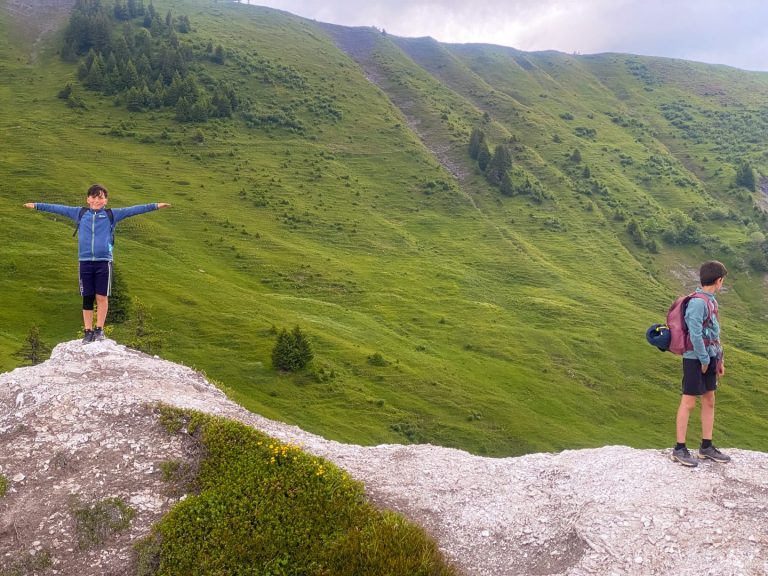
- Hiking: 2–6 hour half‑day to full‑day hikes; routes graded from beginner to advanced; guides give route briefings and insist on appropriate footwear.
- Mountain biking: 1–3 hour sessions on graded trails; helmets mandatory.
- Via ferrata / rock climbing: half‑day sessions with certified climbing instructors; harnesses and helmets provided.
- Ropes courses / orienteering: 1–3 hour staff‑led activities with clear safety lines and spotters.
-
Water sports
- Swimming: 45–90 minute swim sessions with lifeguards on duty and swim checks before water entry.
- Sailing: 2–4 hour sessions taught by certified instructors; lifejackets always required.
- Canoeing / kayaking / paddleboarding: 1–3 hour sessions; personal flotation devices (PFDs) required and shore briefings held before launch.
-
Team sports & riding
- Football, tennis, basketball: 1–2 hour practices and games at beginner to advanced levels; staff coach‑to‑camper ratios adjusted by age.
- Horseback riding: 1–3 hour lessons with accredited instructors and helmets enforced.
-
Arts & performance
- Theatre, music, dance, visual arts, photography: 1–3 hour workshops that build to evening performances or exhibitions; material safety and supervision provided.
-
STEM & nature
- Robotics and coding workshops: 60–180 minute sessions with hands‑on kits and clear learning goals.
- Nature science and environmental education: half‑day or full‑day fieldwork that includes species ID and low‑impact protocols.
-
Cultural excursions
- Museums, chocolate factory tours, local markets: typically half‑day trips with chaperones and pre‑visit briefings.
We run day options and residential programs so families can choose what fits their rhythm. For families interested in language immersion, see our camp d’anglais en Suisse for combined language and activity scheduling.
Accommodation options and comparisons
Day camp means campers return home each evening and has the lowest accommodation cost. Shared dormitories and family-style cabins are the norm in residential camps; expect bunk beds, shared bathrooms and a strong social vibe. Small private rooms or premium options are offered by higher‑end programs for families wanting extra privacy; these are available at an additional cost. We advise checking linens, supervision arrangements for late arrivals, and mixed‑age rooming policies.
Meals and dietary care
Most residential camps provide three meals per day plus snacks. We accommodate common dietary needs such as allergies, vegetarian, halal and kosher requests. Parents should request a sample weekly menu and the camp’s food allergy policy before enrollment. Ask for clarification on cross‑contamination controls, staff training in emergency response, and whether epinephrine protocols are practiced.
Common facilities
Common facilities you should expect include sports fields, climbing walls, lake access or other waterfront facilities, computer labs, art studios and secure equipment storage. Laundry services are often available; confirm whether they’re included or charged as an extra. Always check medication storage, on‑site medical rooms and staff first‑aid certifications.
Practical questions to ask
Useful questions families should ask before enrolling:
- Can you provide a sample weekly menu and your allergy policy?
- Is laundry included or available for a fee?
- What medical and food‑handling protocols do you use for severe allergies?
We at the Young Explorers Club answer these directly so families can feel confident about safety, food and daily logistics.

Safety, accreditation, staff qualifications and trustworthy features
We, at the Young Explorers Club, hold safety as a non‑negotiable. I expect clear answers on background checks, first aid coverage, a written child safeguarding policy, medical access and insurance before I recommend any camp.
Ask for proof, not promises. Confirm the camp’s approach to background checks and whether they require criminal‑background policy checks for every hire. Verify how many staff hold Swiss Red Cross first‑aid certification and the ratio of certified first‑aiders on site. Insist on a child safeguarding policy in writing with defined reporting procedures. Check whether they have medical staff on-site or a documented protocol to access local healthcare, plus a named local hospital contact. Confirm they carry assurance responsabilité civile and ask if medical repatriation or extra travel insurance is recommended for international campers. Look for staff bios, certified instructors, lifeguards, testimonials, third‑party reviews and certificates on file.
I also look for formal trust signals. Membership in recognized camp associations and compliance with cantonal youth/leisure regulations matter. Detailed staff bios should list qualifications, roles and any lifeguard or instructor certifications. Verified parent testimonials and independent third‑party reviews strengthen credibility. A written emergency plan and clear evacuation procedures should be standard.
Checklist to request from camps (use these exact phrases)
- “Please provide your staff background-check policy and percentage of staff with Swiss Red Cross first-aid certification.”
- “Do you carry assurance responsabilité civile and can you confirm medical repatriation insurance requirements for international campers?”
- A copy of the written child safeguarding policy and reporting steps.
- The camp’s emergency plan, evacuation procedures and ratio of certified first‑aiders.
- List of medical staff on-site or the documented protocol to reach local hospitals, with named contacts.
- Staff bios with scanned certificates for certified instructors and lifeguards.
- Recent verified parent testimonials or independent third‑party reviews.
Avoid camps that give vague answers or refuse documentation. Red flags include no clear medical policy, vague staff references, absence of a written child safeguarding policy, refusal to provide insurance details or local emergency contacts. If you’re comparing programs, I recommend checking our summary of reputable camps d’été for extra context.

Costs, application steps, insurance, cancellations and visa/travel logistics
We outline clear cost ranges so families can plan with confidence. Typical day programs run around camp cost CHF 150–450 per week for day camps, with city locations and included meals pushing prices higher. For overnight stays, expect residential camp CHF 800–2500 per week depending on prestige, activity intensity, and boarding level. Plan for extra fees such as airport transfer and equipment rental that often appear on top of the headline price.
Additional cost lines you should expect are straightforward. Camps commonly charge for airport or major train station pickups, special excursions, and equipment rental (bikes, wetsuits). Travel and visa costs vary by home country. Many operators also require travel insurance and may offer optional cancellation insurance. Look for early-bird discounts of 5–10%, sibling discounts, and reduced rates for long sessions. Deposits commonly fall in the 10–30% range to secure a place.
We explain insurance and cancellation options so you can make the right choice. Basic travel insurance should include medical repatriation cover and emergency medical expenses. Cancellation insurance protects fees if illness or family emergency prevents travel; check policy exclusions closely. Camps often apply a sliding refund scale: full refund before a cut-off, partial refund closer to start, and no refund within a few weeks of arrival. Some families add a separate cancellation waiver when they pay the deposit (10–30%).
Schengen rules affect many international families. Many non‑EU children need a Schengen visa for minors; verify requirements with the local embassy well before booking. Camps frequently offer a paid camp airport transfer option and will coordinate arrival times with major flight and train schedules. Prepare a parental consent letter if your child travels without both parents, as border agents and airlines may ask for it.
Prepare these travel documents for each camper: passport, Schengen visa for minors (if required), European Health Insurance Card for EU children, international travel insurance including medical repatriation, and a signed parental consent letter for unaccompanied travel. Keep digital copies of all paperwork and forward them to the camp when you submit the medical form.
Application steps and timeline
Below is a typical sequence most camps follow; follow it closely to avoid last‑minute problems.
- Complete the online application form as soon as you pick dates.
- Pay the deposit (10–30%) to secure the booking.
- Submit the medical form and dietary requirements at least 8 weeks before the session.
- Organize visas and travel documents if needed, starting 2–3 months before travel.
- Make the final payment 6–8 weeks before camp start.
- Book camp airport transfer or train pickup at time of final payment, if offered.
Inevitably some families book late. We recommend applying by January–April for peak sessions, though off‑peak camps may accept later bookings. If you need an earlier decision, ask the camp about waitlists and last‑minute availability.
Use this sample budget for a two‑week residential stay to check totals:
- Camp fee (2 weeks): CHF 2,000 (mid‑range residential)
- Airport transfers (roundtrip GVA): CHF 150
- Equipment rental: CHF 80
- Travel insurance & medical repatriation: CHF 80–150
- Pocket money/excursions: CHF 80
Estimated total: CHF 2,390–2,460.
We encourage families to read a detailed camp guide before committing; our camp guide explains program types, safety standards, and what’s included so you can compare offers confidently. Camp airport transfer arrangements, visa support letters, and the exact medical form are usually provided after booking. Keep all receipts and confirm cancellation terms in writing when you pay any deposit.
Packing, sample program and parent FAQs
We, at the Young Explorers Club, keep packing simple and practical so families can focus on the experience. Use this packing list and double-check key items like passport, insurance, medication and sunscreen before travel.
Printable packing checklist (grouped)
Documents
- Passport/ID and visa (if required), plus photocopies.
- Health insurance card/European Health Insurance Card.
- Camp consent forms, medical form and parental consent letter (if the child travels alone).
Medication & health
- Prescription meds with clear instructions and copies of prescriptions.
- Emergency inhaler / EpiPen if needed.
- Small first-aid kit and any written allergy action plan.
Clothing & footwear
- Weather-appropriate layers and a reliable rain jacket.
- Sturdy hiking shoes or boots; sandals or water shoes for wet activities.
- Swimwear, hat, several pairs of socks, and pajamas.
Activity gear
- Small day backpack and refillable water bottle.
- Sunscreen and sunglasses.
- Helmet if required (or confirm if the camp provides one) and clearly labeled equipment (riding boots, sports gear).
Toiletries & extras
- Quick-dry towel, basics in a toiletry bag, and a laundry bag.
- Power adaptor only if allowed by camp rules.
- Small comfort item for homesickness.
Tech policy note: Many camps restrict phones and electronics. Check the camp rules before packing any device.
Sample 1-week program (itinerary)
-
Day 1: Arrival, orientation, icebreakers and a short town walk or on-site activity to get everyone settled.
-
Days 2–6: Mornings start with breakfast at 08:30. From 09:00 you’ll have concentrated language classes; the schedule typically includes French lessons for 90–180 minutes depending on immersion level. Mid-morning moves into activity sessions like hiking, sailing or art. Lunch is at 12:30. Afternoons run specialty blocks — think STEM workshop or horseback riding — with free time at 17:00. Evenings from 19:00 to 20:00 host the evening program with theatre, games or camp-wide challenges. This sample itinerary mirrors what many of our camps use.
-
Day 7: Departure or a full-day excursion to nearby attractions. For immersion-focused families, see our camp d’anglais options.
Homesickness, contact and medical FAQs (top 10 Q&A for parents)
-
Q: How do you handle homesickness? A: We use gradual integration, buddy systems, welcome packs and scheduled parent calls as part of our homesickness support. Staff stay close and encourage familiar items.
-
Q: What is the phone/contact policy? A: Policies vary. Many camps restrict phone use and offer scheduled calls. Ask your camp for specific call times and emergency contact procedures.
-
Q: Who administers medication? A: Designated staff or a nurse handle meds with written instructions. We keep medication logs and secure storage.
-
Q: Are there native French speakers on staff? A: Ask for the ratio; many language camps provide a mix of local and native French teachers. Confirm how often native teachers lead classes and supervise activities.
-
Q: What if my child has food allergies? A: Provide a written allergy action plan. Camps should have protocols and can share sample menus and accommodations.
-
Q: Is medical care on-site? A: Many camps offer medical care on-site or have agreements with local clinics; request local hospital contact and after-hours procedures.
-
Q: What are visitor/leave policies? A: Camps usually limit visitors and require appointments. Day trips are supervised and follow strict sign-out rules.
-
Q: What is the cancellation policy? A: Get written terms, a refund schedule and consider cancellation insurance for travel disruption.
-
Q: How are new campers integrated? A: Orientation, small groups and peer buddies help new kids settle in and build friendships quickly.
-
Q: What emergency procedures exist? A: Ask for the written emergency plan, evacuation routes and drill frequency.
Suggested questions to ask camps
- Phone/electronics policy and scheduled call times.
- Request staff bios and certificates (first-aid, lifeguard, instructor).
- Confirm how many native French speakers teach or supervise.
- Check the food allergy policy and ask for a sample menu.
- Verify whether airport/train transfers are offered and what the fees are.

Sources
Swiss Federal Statistical Office — Languages in Switzerland
Switzerland Tourism (MySwitzerland) — Family-friendly summer activities
Swiss Red Cross — First aid courses and youth training
Canton of Vaud (VD.ch) — Tourism and summer leisure information
Valais/Wallis Tourism — Official destination and summer activities
Geneva Tourism — Things to do and family activities
State Secretariat for Migration (SEM) — Visas for entering Switzerland (Schengen)
Swiss Federal Railways (SBB) — Travel and regional connections
Institute for Economics & Peace / Vision of Humanity — Global Peace Index
Federal Office of Public Health (FOPH/BAG) — Health guidance and recommendations
Jugend+Sport (Swiss Federal Youth & Sport) — Youth sport training and certifications
ch.ch (Swiss Confederation) — Entry to Switzerland, visas and travel for minors