Discover the benefits of global camp communities
Discover how global camp communities build confidence, language skills, and resilience in children and teens. Evidence-backed insights for parents choosing international camps.
TL;DR:
- Global camps create multicultural environments that foster confidence, language skills, and social-emotional growth.
- Kids develop resilience and friendships through immersive experiences and outdoor challenges across language barriers.
- The intentional design of these camps results in lasting personal identity changes beyond summer benefits.
Most parents picture summer camp as a few weeks of campfires, canoe trips, and bug spray. That picture is incomplete. Global camp communities are something different entirely: structured, multicultural environments where kids from dozens of countries share daily life, tackle outdoor challenges together, and develop skills that stick long after the summer ends. The research backs this up. Studies consistently show that well-designed international camps produce real, measurable gains in confidence, language ability, and social-emotional skills. This guide breaks down exactly how those outcomes happen and what parents should realistically expect.
Table of Contents
- What makes global camp communities unique
- How global camps support personal growth and social-emotional learning
- Language skills, friendships, and resilience: The immersive effect
- Practical outcomes and managing challenges: Evidence for parents
- Why parents should consider global camp communities: A fresh perspective
- Explore immersive global camps for your child
- Frequently asked questions
Key Takeaways
| Point | Details |
|---|---|
| Boosts confidence | Global camp communities help children and teens develop self-confidence and independence supported by evidence-based outcomes. |
| Language immersion | Daily multilingual interactions accelerate language acquisition and build real-world communication skills. |
| Social and emotional growth | Camps provide a safe environment that nurtures interpersonal skills, resilience, and positive self-image. |
| Long-lasting benefits | Evidence shows camp gains persist for many, especially with supportive staff and structured activities. |
| Practical guidance | Parents receive tips and advice for choosing and preparing for immersive global camp experiences. |
What makes global camp communities unique
A global camp community is not simply a local camp with a few international kids mixed in. It is a purposefully designed environment where children and teens from multiple countries live, eat, play, and learn together under a shared program structure. The difference matters more than most people realize.
Traditional local camps tend to draw from a single region, speak one language, and reflect one cultural norm. Global camp communities flip that model. International camp culture is built around diversity as a feature, not an accident. When a cabin group includes a child from Brazil, one from Japan, and one from Switzerland, every conversation becomes a small cross-cultural exchange.
Here is what that difference looks like in practice:
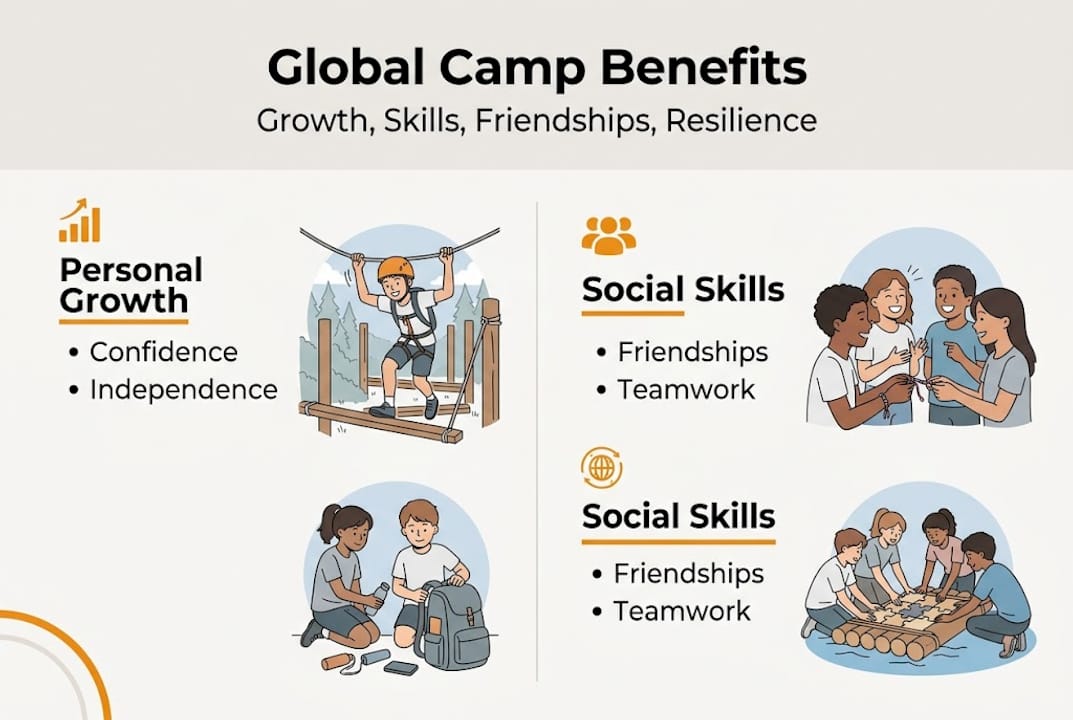
- Multilingual daily life: Campers navigate real communication challenges every hour, not just in a classroom.
- Peer-driven cultural learning: Kids teach each other customs, foods, humor, and perspectives without any lesson plan.
- Intentional independence: Being away from home in a foreign environment pushes children to solve problems and self-regulate in ways a familiar local camp rarely demands.
- Structured outdoor challenges: Activities like climbing, survival skills, and mountain biking are designed to require teamwork across language barriers.
The outcomes are not anecdotal. 70-90% of campers report gains in confidence and independence after attending international summer camps, which is a striking figure that local camp research rarely matches.
Comparing global and traditional camp environments:
| Feature | Traditional local camp | Global camp community |
|---|---|---|
| Language environment | Single language | Multilingual, immersive |
| Peer diversity | Regional/local | International, multicultural |
| Independence demands | Moderate | High, cross-cultural |
| Language skill gains | Minimal | Significant |
| Cultural awareness | Limited | Core program feature |
| Confidence outcomes | Moderate gains | 70-90% reporting gains |
This table makes the case clearly. When you stack the two models side by side, global camps offer a qualitatively different experience, one that is designed to stretch kids in productive ways.
How global camps support personal growth and social-emotional learning
Social-emotional learning, often called SEL, refers to the process of developing self-awareness, empathy, emotional regulation, and relationship skills. Schools work on SEL too, but research suggests that residential outdoor camps may do it faster and more durably.
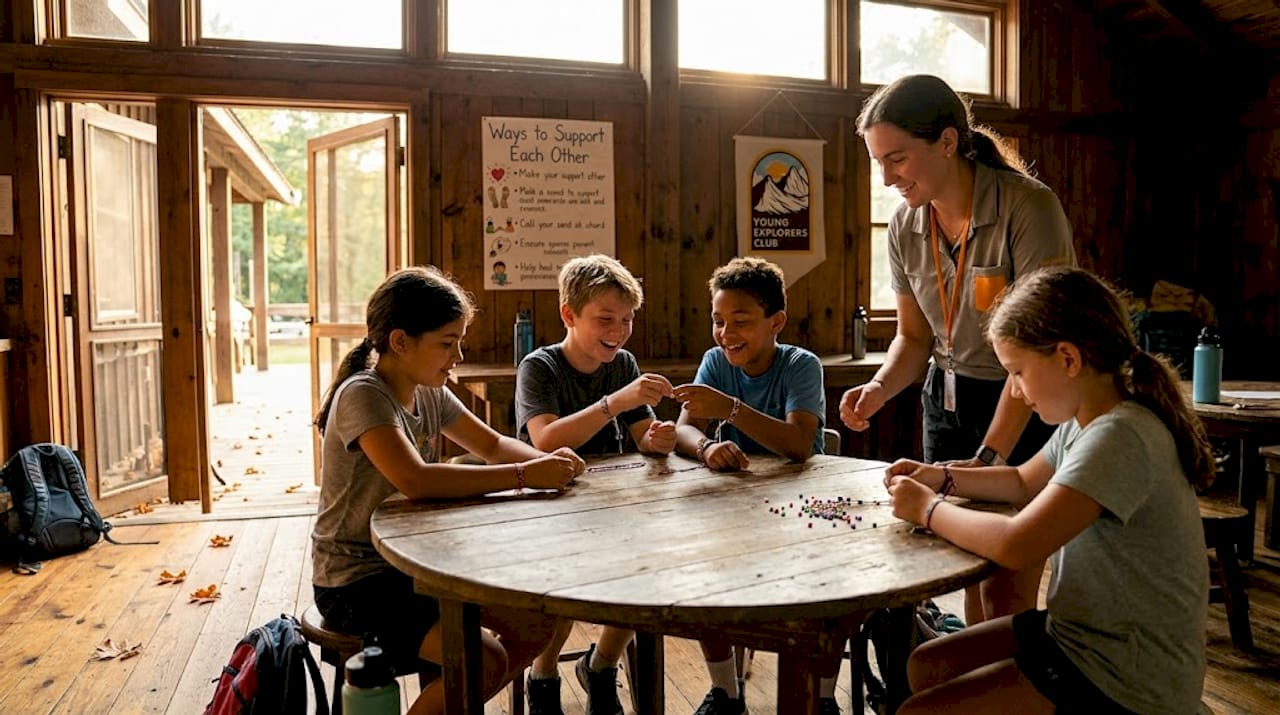
One key reason is the environment. Program quality predicts SEL growth, and safe, well-structured programming strongly correlates with both interpersonal and intrapersonal development. At a global camp, the environment itself applies gentle pressure. A child who struggles to communicate with a bunkmate from another country has to find creative ways to connect. That problem-solving is SEL in action.
The mechanisms are layered:
- Language immersion forces active listening and patience, two core SEL competencies.
- Adventure tasks like high ropes or night hiking require trusting others and managing fear.
- Multicultural exposure builds empathy by making difference visible and normal.
- Daily routines with peers create low-stakes practice for conflict resolution and cooperation.
The data supports these mechanisms. A meta-analysis of camp outcomes found a small but statistically significant reduction in anxiety after overnight camp attendance (Cohen’s d = -0.25), alongside measurable increases in positive mood and self-confidence. That may sound modest, but for an 11-year-old navigating a new social world, even a small anxiety reduction is meaningful progress.
There is also a real link between how parents approach this decision and the outcomes their kids experience. When parents embrace the idea of boosting confidence and independence through structured challenge rather than protection from discomfort, they set their child up to get more out of the experience.
Pro Tip: Before camp starts, talk with your child about one specific skill they want to work on, whether it is making friends across a language barrier or trying a new outdoor activity. Having that personal goal increases engagement and gives them a metric for their own growth.
At Young Explorers Club, the adventure-based learning philosophy is built around exactly this model: using outdoor challenge as a vehicle for measurable personal development, not just entertainment. The result is that kids leave with both a story and a skill set.
What the research shows at a glance:
| Outcome | Effect | Source |
|---|---|---|
| Anxiety reduction | Significant (d = -0.25) | Meta-analysis, 2025 |
| Positive mood increase | Significant | Meta-analysis, 2025 |
| Self-confidence gains | Significant | Meta-analysis, 2025 |
| SEL growth | Linked to program quality | ACA-aligned research |
The numbers are encouraging, and the mechanisms are clear. Global camps are not magic. They work because of intentional design.
Language skills, friendships, and resilience: The immersive effect
One of the most underrated benefits of global camp communities is what happens to language skills when kids are simply living in a multilingual space. Classroom language learning is slow because the feedback loop is slow. You practice a phrase, wait for correction, and move on. At camp, the feedback is immediate: either your bunkmate understood you or they did not, and you figure it out together.
This immersive model works. 92% of campers at international programs report a positive self-image, and language confidence is a major driver of that number. When a child successfully cracks a joke in a second language and the whole table laughs, something shifts. That moment is more powerful than any grammar worksheet.
Beyond language, the friendships formed in global camps tend to be unusually deep. Shared challenge accelerates bonding. When you climb a mountain with someone who does not speak your native language, you learn to read body language, share effort, and celebrate together. Youth development research consistently shows that camp friendships are among the most meaningful social connections adolescents report.
The key benefits of the immersive camp experience include:
- Accelerated language acquisition through real, high-stakes daily use.
- Cross-cultural friendships that persist beyond the summer through digital connection.
- Resilience built through outdoor challenge: failing at a climbing wall, regrouping, and trying again is resilience training in its purest form.
- Greater gains for kids with behavioral challenges: research suggests youth who struggle most in structured school settings often thrive in the less rigid, more physical camp environment.
“Camp gives children a rare gift: the chance to discover what they are capable of when the usual safety nets are removed.” This is especially true in a global setting where every day presents a new small challenge to navigate.
Residential living is central to this. Residential camp life means 24 hours a day of shared experience, which simply cannot be replicated in a day program. The relationships formed and the resilience built happen precisely because the kids are there, fully present, without the escape hatch of going home each evening.
Practical outcomes and managing challenges: Evidence for parents
Parents want more than inspiration. They want to know: does this actually last? The honest answer is yes, for most kids, though not identically for every child.
Lasting gains in 40-60% of campers persist well beyond the summer across key activity areas including confidence, teamwork, and outdoor skills. Quality staff support is the most reliable predictor of which campers sustain those gains, which is why choosing a well-run program matters enormously. You can learn more about what to look for through this evidence for camp benefits resource.
Homesickness is real and worth addressing honestly. It is extremely common, especially in the first 48-72 hours. But it is also manageable. Camps with structured routines, engaged counselors, and purposeful activities give kids less mental space to spiral. The discomfort of missing home often becomes the first challenge a child successfully works through on their own, which is itself a confidence-building experience.
Here is a practical checklist for parents preparing their child for a global camp:
- Talk about independence before camp starts. Normalize the idea that they will solve some problems without your help, and frame that as exciting.
- Read about what to expect together. The adventure education guide for parents is a useful starting point for honest conversation.
- Pack strategically. Include a few comfort items but avoid overpacking, which signals anxiety.
- Set communication expectations. Many global camps limit daily calls intentionally. Trust the process.
- Debrief after camp. Ask specific questions: “What was the hardest moment?” and “What made you proud?” These conversations reinforce the growth that happened.
Pro Tip: Kids who attend camp with a sibling or a friend from home often bond less with new peers. If possible, consider sending your child independently. The initial discomfort usually leads to faster and deeper new friendships.
Global camps also run custom camps and trips for school groups, which can be a powerful first step for kids who are not ready to go fully solo.
Why parents should consider global camp communities: A fresh perspective
Here is the part most camp guides skip: global camp communities do not just improve specific skills. They shape identity.
Conventional thinking frames camp as a fun summer activity, a break from school, a way to keep kids busy. That framing undersells the experience significantly. When a 13-year-old spends three weeks navigating life with peers from eight different countries, managing outdoor challenges, and building friendships across language barriers, they come home a slightly different person. That is not marketing language. That is identity formation happening in real time.
What most guides miss is that the discomfort is the product. The moments when your child does not know what to say, does not know how to act, or fails at a task in front of international peers are the moments that produce the most growth. Parents who understand this stop trying to minimize every friction point and start trusting the process.
Building global friendships in adolescence also has a compounding social benefit. The child who has navigated real cross-cultural connection at 12 is better equipped to lead diverse teams at 22. That is not a small return on a summer investment.
Our honest take: the research is clear, but the real evidence is the kid who comes home standing a little taller.
Explore immersive global camps for your child
If this guide has sparked genuine interest in what a global camp community could offer your child, the next step is straightforward.
Young Explorers Club runs teen summer camp programs in Switzerland that are built around exactly the outcomes covered here: confidence, cross-cultural friendship, language development, and outdoor resilience. For families who want to add structured language learning to the adventure, the language camp programs offer immersive French, English, and German courses woven into the outdoor experience. Visit the Young Explorers Club main site to browse programs, download the brochure, and find registration details for 2026.
Frequently asked questions
How do global camp communities support shy or anxious children?
Global camps provide structured, supportive environments that reduce anxiety and build self-confidence step by step, making them particularly well-suited for shy or anxious kids who thrive with clear routines and encouraging peers.
What are the main benefits of sending my child to an international summer camp?
International camps consistently foster confidence, independence, language skills, resilience, and cross-cultural friendships, with 70-90% of campers reporting measurable gains and 92% showing a positive self-image.
How is homesickness managed at global camps?
Homesickness is normal and expected, but quality staff support combined with structured daily activities helps campers adjust, and working through that discomfort is often one of the most confidence-building parts of the experience.
Will my child improve language skills at a global camp?
Yes. Immersive daily use of a second language in real social situations accelerates acquisition far faster than classroom practice, and language confidence gains are among the most commonly reported outcomes by international campers.