How outdoor personal development builds confident kids
Discover how outdoor personal development builds resilience, confidence, and leadership in kids aged 8-17 through structured, nature-based camp experiences.
TL;DR:
- Outdoor programs foster lasting personal growth through challenge, reflection, and experiential learning.
- They improve resilience, self-esteem, teamwork, and mental health in children and teens.
- Effective programs emphasize safe risk-taking, group challenges, and structured debriefs for meaningful development.
Most parents sign their kids up for summer camp expecting fun, friendships, and a break from screens. What they don’t expect is measurable, lasting personal growth. But that’s exactly what well-designed outdoor programs deliver. Outdoor education refers to structured, impactful programs that use nature as a classroom for real development, not just recreation. The research backs this up: kids who participate in these programs come home more resilient, more confident, and better equipped to handle life’s challenges. If you’ve ever wondered whether camp is worth the investment, the answer goes far deeper than you might think.
Table of Contents
- What is outdoor personal development?
- Key methods: How outdoor programs build growth
- Proven benefits for children and teens
- Important nuances: What parents should know
- What most guides never tell you about outdoor personal development
- Ready to give your child the gift of outdoor personal development?
- Frequently asked questions
Key Takeaways
| Point | Details |
|---|---|
| More than fun | Outdoor personal development is a research-backed process for building confidence, resilience, and life skills. |
| Hands-on learning | Challenge-based activities in nature foster teamwork, responsibility, and problem-solving. |
| Proven benefits | Studies show these programs boost optimism, reduce anxiety, and promote well-being in youth. |
| Choose wisely | Not all camps are equal—parents should look for intentional programs with structured reflection and qualified mentors. |
What is outdoor personal development?
Outdoor personal development, or OPD, is a structured approach to youth growth that uses natural environments and hands-on experiences to build real-world skills. It’s not about keeping kids entertained for a week. According to outdoor education basics, it involves organized programs that use nature and experiential learning to create meaningful growth in young people.
The difference between OPD and a traditional summer camp is significant. A traditional camp might offer swimming, arts and crafts, and campfire songs. OPD programs are intentionally designed with specific learning outcomes in mind: resilience, self-confidence, teamwork, leadership, and environmental awareness. Every activity is a vehicle for growth, not just entertainment.
Here’s what that looks like in practice. Activities in OPD programs typically include:
- Hiking and trail navigation using maps and compasses
- Ropes courses and climbing walls that build trust and physical courage
- Group problem-solving challenges like building shelters or crossing obstacles
- Survival skills such as fire-making, foraging, and wilderness first aid
- Reflective journaling and group debriefs after each experience
Studies suggest that participation in structured camp programs can boost optimism by 20% among youth, a figure that speaks to the emotional impact these environments create.
| Feature | Traditional summer camp | Outdoor personal development |
|---|---|---|
| Primary goal | Fun and recreation | Skill-building and growth |
| Activity design | Entertainment-focused | Outcome-driven |
| Reflection included | Rarely | Always |
| Leadership training | Incidental | Intentional |
| Measurable outcomes | Uncommon | Standard practice |
OPD also builds what educators call “soft skills”: the ability to communicate under pressure, manage emotions, and support others. These are the same qualities employers and universities look for years later. Taking on camp responsibilities in a real outdoor context gives kids a taste of genuine accountability that no classroom exercise can replicate. And for kids who struggle with self-worth, building self-esteem outdoors through tangible achievement is often transformative.
Key methods: How outdoor programs build growth
Understanding what OPD is only gets you halfway there. The real question is: how do these programs actually produce change in a child? The answer lies in a set of evidence-based methodologies that are quite different from conventional education.
Experiential learning, the backbone of all OPD programs, works by placing youth in situations where they must act, reflect, and adapt. It’s the opposite of passive instruction. Programs like Outward Bound and NOLS expeditions have refined this into leadership frameworks that guide youth through increasingly complex challenges over days or weeks.
Here’s the typical progression in a well-run OPD program:
- Challenge: Youth face a real obstacle, physical, social, or navigational, with genuine stakes.
- Responsibility: Each participant takes on a specific role within the group, sharing accountability for the outcome.
- Struggle: The discomfort is real, and that’s intentional. Growth happens at the edge of comfort zones.
- Reflection: Guided group discussion helps kids name what they felt, what worked, and what they’d do differently.
- Transfer: Facilitators help participants connect the experience to their everyday lives at home and school.
One principle that separates quality programs from average ones is “challenge by choice.” This means no child is forced to attempt something beyond their current readiness. They’re encouraged, supported, and given permission to step back if needed. This approach protects psychological safety while still creating genuine stretch moments.
Research shows that a 90-minute walk in nature significantly reduces repetitive negative thoughts compared to walking in an urban environment, pointing to nature itself as a therapeutic and growth-enabling space for young people.
Pro Tip: The most powerful growth happens when youth work together, not just alone. Look for programs that deliberately structure group challenges, because shared struggle builds trust faster than almost anything else.
For parents who worry about peer pressure or social dynamics, programs that focus on encouraging teamwork without competition create environments where every kid can shine. And safe spaces for growth are fundamental to why these methods work: children take more risks when they feel genuinely supported. Research on resilience and mental health gains confirms that outdoor adventure programs reduce hopelessness and anxiety while increasing resilience in adolescents.
Proven benefits for children and teens
Parents need more than theory. They need to know whether these programs actually work. The good news: the evidence is strong.
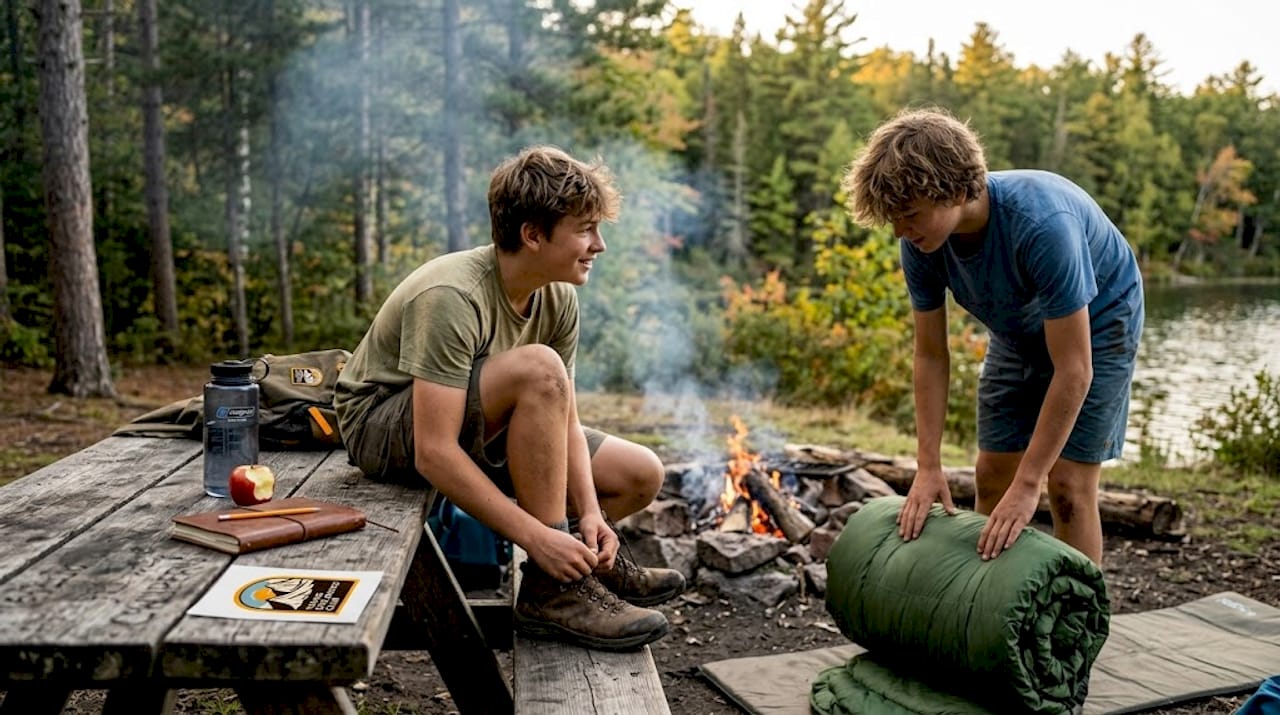
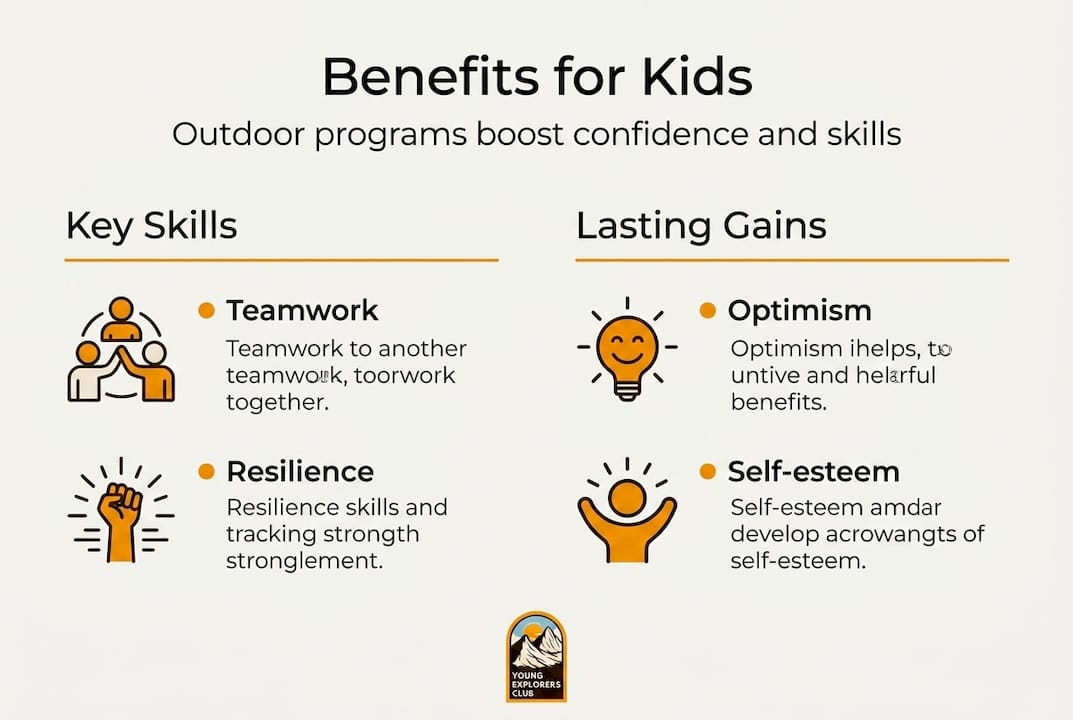
Empirical data consistently shows that OPD programs improve self-esteem, resilience, leadership capability, and reduce symptoms of anxiety and depression in youth. These aren’t subjective impressions from happy campers. They’re measured outcomes tracked by researchers across multiple studies and age groups.
Systematic reviews confirm that outdoor programs produce gains across three major developmental domains:
- Physical: Improved coordination, stamina, and body confidence
- Cognitive: Better problem-solving, decision-making, and focus
- Social-emotional: Stronger empathy, communication, and self-regulation
Additional systematic review findings highlight how these gains often persist well beyond the camp itself, particularly when programs include structured reflection.
| Program type | Activity | Measured benefit | Example result |
|---|---|---|---|
| Wilderness expedition | Multi-day hiking | Resilience and leadership | Teens report higher self-efficacy |
| Ropes and challenge course | Team obstacle course | Trust and communication | Group cohesion scores improve |
| Navigation challenge | Map-based exploration | Cognitive confidence | Decision-making speed increases |
| Survival skills program | Fire, shelter, foraging | Self-reliance and calm | Reduced anxiety markers |
Participation in structured camp programs can raise optimism scores by 20% in youth. A single 90-minute nature walk reduces negative thought patterns measurably. These aren’t minor effects.
For teens especially, the confidence gained from completing a genuine outdoor challenge carries over into how they handle school pressure, social conflict, and setbacks. Families that prioritize mental health improvements for their kids will find outdoor programs are one of the most effective tools available. For groups or schools looking for structured options, custom camp programs can be tailored to specific developmental goals.
Important nuances: What parents should know
Impressive as these benefits are, it’s important for parents to know the nuances and potential limitations of outdoor personal development. Not every program delivers the same results, and not every child is ready for every experience.
First, understand the distinction between educational and therapeutic camps. OPD programs are designed for motivated youth seeking growth. Therapeutic wilderness programs, on the other hand, are clinical interventions designed for at-risk youth and operate under professional mental health oversight. Enrolling a child who needs clinical support in a standard OPD camp, or vice versa, won’t serve them well.
Second, reflection is not optional. Research on OAE principles confirms that challenge by choice, managed risk, and structured debriefing are what separate effective programs from forgettable ones. An adventure without reflection is just an activity.
Third, not all activities offer the same benefits. For example, paddling-based programs show particularly strong outcomes for relational resilience, the ability to maintain and repair relationships. Other activities may be better suited for individual confidence or physical courage.
Also worth noting: some studies show non-significant effects, often because program duration was too short or sample sizes too small to detect change. A one-day outing won’t transform a child. Multi-day, immersive experiences are where the real gains happen.
Here are key questions to ask any OPD provider before enrolling:
- How do you structure reflection after activities?
- What is your staff-to-youth ratio?
- How do you handle a child who wants to opt out of a challenge?
- What training and certifications do your counselors hold?
- How do you communicate with parents during and after the program?
Pro Tip: Look for camps that explicitly mention “challenge by choice” and structured debriefing in their program descriptions. These two elements are the clearest signals that a program is serious about genuine development, not just entertainment.
For parents curious about why these outdoor lessons stay with kids long after they return home, understanding why nature learning sticks better than classroom instruction helps explain the lasting impact. And if you’re wondering about the role of screen-free nature immersion, it turns out removing devices is itself a powerful intervention for many teens.
What most guides never tell you about outdoor personal development
Here’s the honest truth that most camp brochures won’t say out loud: outdoor personal development doesn’t work for everyone, and the reasons are not what you’d expect.
Growth doesn’t happen by accident. It requires structure, skilled mentors, and genuine psychological safety. A poorly run program with unqualified staff can actually reinforce a child’s fear of failure rather than dissolve it. The mountain doesn’t teach the lesson. The mentor does.
Real transformation also requires buy-in from the child. An unwilling participant, dragged to camp against their will, will resist every growth opportunity. The most effective approach is to involve your child in the decision, explain what the experience offers, and let their curiosity lead.
No-tech immersion is a genuine superpower in 2026. When teens are removed from social media and comparison culture for even a week, something shifts. They start measuring themselves against real challenges instead of curated highlight reels. That shift in self-reference is profound.
Finally, the group debrief matters as much as the climb. We’ve seen kids summit a peak and feel nothing until the evening circle, where a counselor asks the right question and unlocks the meaning of what just happened. Reflection turns experience into wisdom. Don’t skip it, and don’t let your child’s camp skip it either. Choose programs that treat safe camp environments as a design priority, not an afterthought.
Ready to give your child the gift of outdoor personal development?
If reading this has sparked something in you, that quiet certainty that your child is ready for a real challenge, trust that instinct.
At Young Explorers Club, our programs in Switzerland are built on exactly the principles covered here: structured challenge, expert mentorship, genuine reflection, and no-tech immersion in some of Europe’s most stunning landscapes. Whether you’re looking at weekly adventure programs for younger kids or teen summer camps designed to build real confidence, we’ve built every experience around meaningful growth, not just a great Instagram backdrop. Explore what’s possible at Young Explorers Club and take the first step toward a summer your child will carry with them for life.
Frequently asked questions
What ages are best suited for outdoor personal development programs?
Most outdoor personal development programs are designed for ages 8 to 17, with some programs specializing for teens and others tailored specifically for younger tweens starting around age 8.
Are outdoor personal development camps safe for all children?
Most quality programs manage risk carefully using challenge by choice and structured safety protocols, but suitability depends on your child’s motivation, health, and readiness, so always speak with program directors before enrolling.
Do children keep the benefits after camp ends?
Lasting benefits are most likely when the program includes reflection and debriefing, since benefits may not transfer without deliberate connection between camp experiences and everyday life.
What if my child is anxious about attending?
Supportive OPD programs use the challenge by choice principle to let kids progress at their own pace, which significantly reduces anxiety and builds confidence gradually rather than through pressure.
How is outdoor personal development different from therapy camps?
Outdoor personal development programs focus on growth for motivated youth, while therapy camps are clinical programs designed for at-risk youth and operate under professional mental health oversight with very different goals and structures.
Recommended
- How Outdoor Challenges Build Self-esteem | Young Explorers Club Switzerland
- How Outdoor Experiences Shape Long-term Confidence | Young Explorers Club Switzerland
- Helping Kids Build Confidence Through Adventure | Young Explorers Club Switzerland
- Why Camps Are A Safe Space For Personal Growth | Young Explorers Club Switzerland