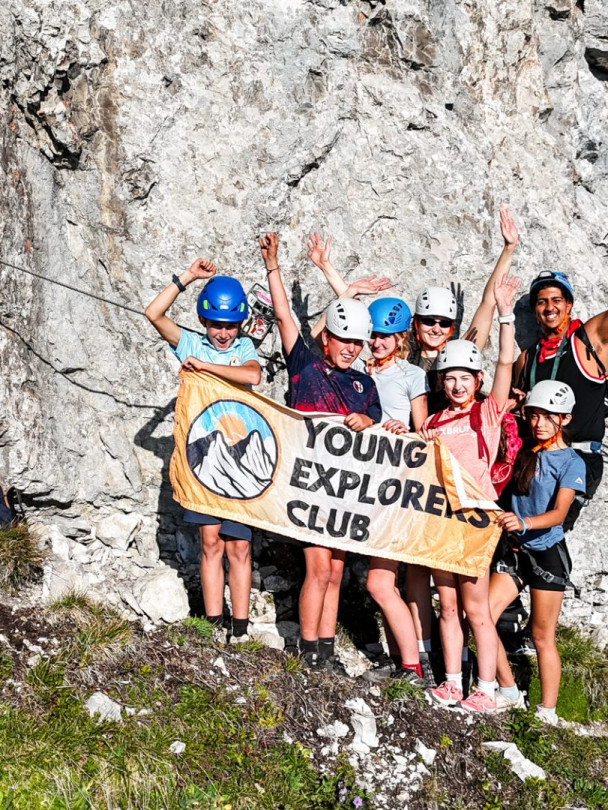
Young Explorers Club — Swiss Summer Camps
Program Overview
The Young Explorers Club runs Swiss summer camps that reconnect city children aged 6–15 with nature. These programs use immersive, hands-on outdoor skills and environmental education across lakes, forests and alpine zones. Offerings range from day camps to multi-week residential stays. We follow strict safety and accessibility standards, employ bilingual staff, and have added pre/post surveys and step trackers to document gains in activity, confidence and stewardship.
 Watch on YouTube
Quick Essentials: Mission, Outcomes and Program Options
We, at the Young Explorers Club, reconnect city kids (ages 6–15) with nature through hands-on outdoor skills, environmental education, physical activity and social development. We use immersive, nature-based learning across Swiss landscapes so children practice real skills: map reading, safe firecraft, low-impact camping, plant and water awareness, and group problem solving. We build programs that push physical confidence and emotional resilience while keeping safety and accessibility front and center. For practical planning, see our summer camp page for details about locations and daily rhythms.
We track measurable outcomes so families see clear progress. Sample targets we aim for include:
- +2,000 steps/day (or roughly +20% daily physical activity)
- 70%+ of participants reporting higher confidence and improved social skills
- 75%+ showing better attention and mood on pre/post questionnaires
- 80% demonstrating basic environmental stewardship by completing a small conservation task
We monitor those metrics with simple pre/post surveys and wearable step trackers when families opt in. We share results in plain language and recommend follow-up activities parents can use to keep gains going.
We design programs for ages 6–15 and for flexible durations from 1 to 28 days. We balance accessibility and immersion across three core formats and coordinate logistics so urban families can choose what fits school calendars and budgets. For pricing guidance, see the Costs section, which outlines recommended ranges and what’s included in each option.
We compare formats directly so families can pick the best fit. Day camps maximize accessibility, lower cost, and simplify family logistics; they work great for first-time campers and shorter school breaks. Residential sessions create stronger independence and deeper friendships and let kids learn overnight skills like sleeping outdoors and multi-day hiking. Multi-week residential stays give the most sustained skill-building and leadership chances, producing larger gains in confidence and routine-based physical activity.
Program options, typical facts, and practical tips
Below are the program types, quick facts, and a few recommendations to help families decide.
-
Day camps (1–5 days): Ages 6–15; local pickup/drop-off; best for busy families or younger first-timers; lower cost and flexible scheduling. Recommended basic kit:
- Layered clothing (weather changes fast in the mountains)
- Small daypack
- Refillable water bottle
- Sunscreen and a small personal first-aid item
- Short residential sessions (3–7 days): Ages 7–15; includes overnight stays and progressive skill lessons; good balance of immersion and manageable logistics. We advise a trial 3–4 day stay before committing to longer sessions and recommend a short pre-camp orientation call with staff.
- Multi-week residential (2–4 weeks): Ages 8–15; deep learning arc for outdoor skills, independence, and leadership; ideal for repeat campers or those ready for sustained responsibility. Practical tips: stagger packing lists, label personal gear, and schedule a brief pre-camp orientation call with staff to cover expectations.
- Typical facts and logistics: program lengths 1–28 days; age range 6–15; sample outcomes tracked via surveys and step counts. We encourage families to complete health forms and confirm emergency contacts early.
- Choosing guidance: pick day camp for accessibility or to test interest; choose short residential to build independence without long separation; opt for multi-week residential when the goal is lasting behavior change and leadership development. We emphasize gradual progression—start shorter then extend stays as confidence grows.
https://youtu.be/V0k0kCVlY_w
Why Swiss Nature Is Ideal for City Kids
We run summer camps across Switzerland because the country compresses huge geographic variety into short travel times. With 26 cantons, four official languages and a population around 8.7 million, Switzerland still devotes roughly 60% of its territory to the Alps. That mix gives urban children immediate access to lakes, forests and high-alpine terrain within a single week.
Altitude zones, sample sites and travel notes
Altitude changes become a teaching tool: lowland lakes and forests sit around 350–600 m, the pre-Alps rise from roughly 700–1,500 m, and alpine meadows and huts begin at 1,500–2,500+ m. Iconic high points like the Dufourspitze (4,634 m) and Matterhorn (4,478 m) spark curiosity about geology and glaciation. Major lakes such as Geneva, Zurich and Lucerne offer contrasting shorelines and easy pond-study opportunities. We point families to Swiss nature for further reading on how these settings work as outdoor classrooms.
Typical camp bases and travel examples that work well for city kids:
- Interlaken (~570 m) — about 2 hours from Zurich by train; ideal for lake-to-valley programming.
- Zermatt-area base (~1,600 m) — roughly 3–3.5 hours from Zurich by train; excellent for alpine meadows and glacier views.
- Entlebuch UNESCO Biosphere Reserve — a compact example of lowland-to-pre-Alps biodiversity and karst landscapes we use for citizen-science projects.
We recommend picking one or two altitude bands per week so kids experience clear ecological gradients without fatigue. Short train rides reduce screen time and give a gentle transition from urban routines.
Landscape contrasts and curriculum uses
Use these contrasts to plan hands-on learning and varied daily rhythms. Below are sample pairings and why they work:
- Lakeshore ecology vs alpine meadows: pond dipping and wetland plant ID on the lake; wildflower and pollinator surveys in meadows.
- Forested valleys vs rocky alpine terrain: forest skills, shelter-building and bird surveys in valleys; rock identification, erosion demos and simple topo navigation higher up.
- Lowland karst (Entlebuch) vs pre-Alps slopes: water chemistry and subterranean features in karst; slope ecology and soil studies on pre-Alps pastures.
We design schedules that alternate active exploration with reflective activities — insect sorting, field journals and short evening talks about biodiversity and conservation. Camp teams use the landscape to teach altitudinal ecology, species adaptation, and a hands-on sense of conservation, especially in protected areas like the Entlebuch Biosphere Reserve.

Activities, Curriculum and Sample Daily/Weekly Schedule
We, at the Young Explorers Club, structure activities around core outdoor skills and inquiry-based learning. The program blends Forest School approaches with the experiential learning cycle — observe → ask → do → reflect — and integrates Leave No Trace principles into every session. I design each day so kids spend roughly 60% of their time in active outdoor learning and 40% in reflection, skills clinics and group projects.
Core activities and learning frameworks
Below I list the primary activity categories and how they map to learning goals and methods:
- Low-impact hiking: short ridge walks and valley circuits that teach route choice, pace awareness and habitat observation; ideal for orienteering practice.
- Orienteering & map skills: 1:25,000 map reading, compass use and simple route planning tied to measurable navigation targets.
- Pond dipping & biodiversity surveys: hands-on species counts, simple data recording and basic ID work for a biodiversity survey.
- Rock/rope basics: introduction to rope handling, three essential knots (bowline, clove hitch, figure-eight) and helmet checks before practice.
- Forest crafts & nature journaling: material-based craft projects and daily journal entries to support observational skills and reflective learning.
- Sustainable living: short composting clinics, recycling habits and a group conservation project that connects action with reflection.
- Overnight camping & stargazing: practical camp skills, campsite selection with Leave No Trace checks, and guided constellation talks.
I embed the Forest School ethos by giving children choice, extended time with materials and teacher-facilitated reflection. Each activity follows the experiential cycle so that observation leads to questions, experiments and then reflection in journals or group debriefs. For context on the importance of outdoor play, I link this approach to wider benefits for kids and nature with a short resource on kids and nature.
Pacing, measurable objectives, safety and sample schedules
I plan 2–3 active learning blocks per day, each 60–120 minutes long. That pacing keeps energy high and attention fresh. Mornings are best for navigation and higher-focus tasks; afternoons suit biodiversity work, crafts and skills clinics. Evening programs include reflection, light games, cultural stories or stargazing.
Sample learning objectives and measurable targets:
- Cognitive: By week’s end each camper will identify 10–20 native plants or animals and record observations in their nature journal.
- Navigation: Read a 1:25,000 map and use a compass to follow a 2–3 km route with no more than one instructor prompt per group.
- Practical skills: Tie and safely demonstrate three knots (bowline, clove hitch, figure-eight) and perform basic rope checks.
- Social/emotional: Participate in a group conservation project and report increased confidence on a pre/post survey.
Safety parameters I enforce on every activity:
- Conduct activity-specific risk assessments before departure and update them daily.
- Maintain age-appropriate adult-to-child supervision ratios (typical ratios 1:6 for younger groups, 1:8–1:10 for older kids).
- Perform helmet and rope checks before any rope or rock basics session.
- Defined water-safety procedures for pond dipping: shallow-water zones, adult spotters, and flotation options when needed.
- Keep first-aid trained staff on-site and carry communication devices for all excursions.
Assessment and reporting
Assessment methods include a short nature-connection questionnaire (Likert items), a basic skills checklist (plant ID, knot-tying, map-reading) and pedometer step counts as pre/post measures. I present anonymized aggregated change scores in the camp blog (mean pre vs mean post, percent improvement and illustrative charts) so families see measurable growth.
Sample residential daily schedule (example)
- 07:30 — wake
- 08:00 — breakfast (30–45 min)
- 09:30 — morning activity block 1 (90–120 min) — often orienteering or a full biodiversity survey
- 12:00 — lunch & rest (45–60 min)
- 14:00 — afternoon activity block 2 (90–120 min) — pond work, crafts or rope basics
- 16:30 — free play / skills clinic (60 min)
- 18:00 — dinner (30–45 min)
- 19:30 — evening program (60–120 min) — reflection circle, conservation debrief or stargazing
- 21:00 — wind-down
Weekly rotation example
- One half-day excursion focused on local habitat study.
- One full day hike with navigation objectives.
- One group conservation project that culminates in a small, measurable outcome.
- One free-choice skills day for campers to pursue interests.
- One cultural or local Swiss visit to connect nature with community.
I keep each activity purposeful, measurable and safe so city kids leave with stronger outdoor skills, deeper curiosity and practical habits they can bring home.

Safety, Health, Staffing and Accessibility
We, at the Young Explorers Club, set safety and health as non-negotiable elements of every session. I require an up-to-date emergency plan for each site and written risk assessments for every activity. Swiss emergency numbers are posted and drilled with staff: ambulance 144, police 117 and fire 118. Wherever applicable I follow SUVA guidance and keep an on-site first aid responder available at all times.
I favour a conservative approach to first aid and health management. I recommend at least one certified first-aid responder with a pediatric module per group, or a minimum of one per camp session. All children arrive with completed written health forms and clear medication instructions. I maintain strict medication protocols, allergy management procedures and food policies, and I verify that parents have shared up-to-date insurance details before arrival.
Staffing and supervision are planned around age-specific staff-to-child ratio guidance so supervisors can act quickly and confidently. Suggested ratios I use are:
- ages 6–8: 1:6–1:8
- ages 9–12: 1:8–1:12
- ages 13–15: 1:10–1:15
Typical camp capacity ranges from 40–120 children per session, so I scale staffing to maintain those ratios and to allow for rest-period coverage, activity transitions and emergency response.
I require clear minimum qualifications for all staff. Core credentials include:
- outdoor leader certification
- pediatric first aid
- child safeguarding training
- food-safety training
Every hire completes a criminal background check and documented safeguarding training before working with children. I also assign at least one senior staff member to oversee emergency communications and insurance verification.
Accessibility and practical logistics matter, especially since roughly 74% of the population is urbanized and many families travel from cities. I coordinate group train travel with SBB to secure convenient pickup points and to reduce transfer times. I staff sessions with bilingual or multilingual leaders (German/French/English) to match family needs. I offer fee assistance and scholarships when possible, and I adapt activities for mobility needs wherever safe and feasible. Families can find practical packing and readiness advice on how to prepare your child for outdoor adventures.
Required parent documentation is enforced before drop-off. I won’t accept a camper without:
- a completed health form
- emergency contact information
- signed activity consent
- insurance details
- written medication instructions
Session checklist
Here are the essentials I confirm for each camp session and activity:
- Emergency numbers displayed and emergency plan accessible (144 / 117 / 118).
- Written risk assessment for every activity and site.
- At least one qualified first-aider per group or minimum one per session.
- Staff-to-child ratios aligned with age groups.
- Staff qualifications: outdoor leader, pediatric first aid, safeguarding, food-safety, background check.
- Allergy management and clear food policies documented and communicated.
- Medication protocols and secure storage on site.
- Insurance verification for every camper.
- SBB-coordinated travel plans and clear pickup points.
- Bilingual staff assigned to sessions as needed.
- Accessibility adaptations logged and pre-approved with parents.
https://youtu.be/V0k0kCVlY_w
Logistics, Accommodation, Food, Gear and Sustainability
Transport, timing, accommodation and meals
We, at the Young Explorers Club, plan arrival options around parent drop-off, charter buses and SBB regional trains to keep logistics simple and reliable. Train travel via SBB is often the fastest and calmest option for kids; Zurich–Interlaken takes about ~2h, while Zurich–Zermatt runs ~3–3.5h. Charter buses give door-to-door convenience for groups; parent drop-off stays handy for local families and early departures.
I outline accommodation types and trade-offs so families can choose what fits best. Mountain huts give a highly immersive alpine experience but provide basic facilities. Youth hostels are comfortable, low-cost and convenient for larger groups. Rented chalets offer more comfort and self-catering options and work well for multi-week stays. Tents give maximal outdoor immersion and need the least infrastructure.
Meal planning focuses on energy and safety. We serve planned breakfasts, packed lunches for excursions and warm dinners. Written meal plans support dietary accommodation: vegetarian, vegan and allergy needs are logged in advance and followed with strict allergen-control protocols. Staff check labels, separate prep areas where needed, and keep written instructions for medications or emergency responses.
I recommend checking our options when picking a summer base — for families comparing formats, see summer camp for more details.
Gear, altitude notes and sustainability
Pack smart; alpine conditions change quickly and nights at 1,500–2,000 m can drop to single digits Celsius even in summer. Below are essentials we require and extras we recommend:
- One pair of sturdy hiking boots, well broken-in
- Waterproof jacket and layered clothing (thermal base, mid-layer)
- Hat, sun protection and a water bottle (500–1,000 ml)
- Small daypack and spare socks (3–4 pairs)
- Sleeping bag if needed by the accommodation
- Headlamp, personal medications with written instructions
- Optional: insect repellent, binoculars, field guide, swimwear
We teach and apply the seven Leave No Trace principles every day to keep impact low and set a good example for kids. The principles we follow are:
- Plan ahead and prepare
- Travel and camp on durable surfaces
- Dispose of waste properly
- Leave what you find
- Minimize campfire impacts
- Respect wildlife
- Be considerate of other visitors
Operational sustainability measures are practical and measurable. We run a weekly waste audit that records kilograms produced and kilograms diverted. We track the percentage of local food sourcing and minimize single-use plastics by using refill stations and reusable water bottles. Staff buy from local suppliers and teach simple practices like composting and recycling on hikes and at camp.

Costs, Evaluation, Marketing, Testimonials and Parent FAQs
Costs & financial aid
We set transparent price bands so families can plan. Typical ranges are: day camp per week CHF 150–600 and residential camp per week CHF 400–1,500+. We ask for an early-bird cut-off eight weeks before camp and recommend a deposit of 20–30% at registration. We suggest offering 5–15% of spots as scholarships, plus sibling discounts and staged early-bird pricing.
Below is a sample cost breakdown per child per week:
- Accommodation: CHF 150–600
- Food: CHF 70–140
- Activities & gear: CHF 50–250
- Transport: CHF 20–200
- Insurance & administration: CHF 20–100
We make scholarship applications simple and clearly mark discounted places at sign-up. Families can download a packing checklist to ease prep — packing checklist
Evaluation, reporting, marketing, testimonials & FAQs
We measure impact with practical tools. Key methods include pre/post surveys on nature connection, pedometer step counts, basic skills checklists and parent feedback. We track 3–6 core KPIs such as percent positive change in confidence (target 70%+), average +2,000 steps/day vs baseline, and percentage of kids accomplishing target outdoor skills. We present anonymized mean change scores and the share meeting targets, plus short case-study quotes to bring numbers to life. For deeper reading on nature outcomes we reference our nature connection measures — nature connection
We use these reporting practices:
- Anonymize participant data and show mean change scores.
- Highlight percent meeting each KPI and include short, attributed quotes.
- Share a one-page KPI summary for partners and funders.
We market where parents and schools look. Primary channels are school newsletters, municipal youth offices, expat groups, social media and community events. We form partnerships with Pro Natura, Jugendherbergen, municipal youth funds and coordinate logistics with SBB group travel for larger transfers. Those partners help amplify reach and lower transport friction.
I share sample testimonials and measurable outcomes we collect:
- Parent: “Our shy city kid came home brimming with stories and confidence.”
- Child: “I loved sleeping under the stars for the first time.”
- Staff: “We saw skills grow fast once kids had two full days outdoors.”
- Quantified outcome: 80% of participating children tried sleeping outdoors for the first time.
We keep a short FAQ pack ready so families get quick answers. Frequent topics we address include illness and medication policy, cancellation and refund terms, staff credentials, the daily routine and our phone policy. We also include clear CTAs: families can sign up for our programs — summer camp in Switzerland — schedule a pre-camp orientation, apply for scholarship support or download the packing checklist.
https://youtu.be/4yjhBlgkw1U