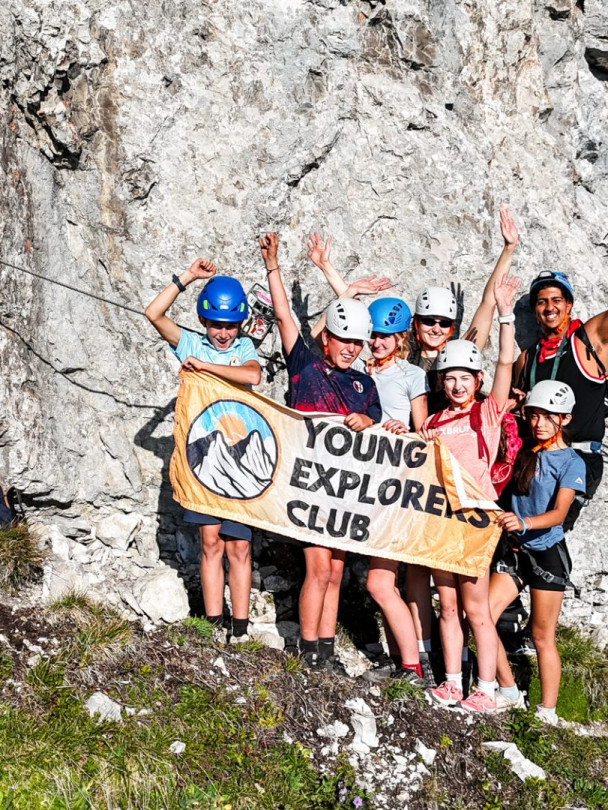
Young Explorers Club Emergency System
We, at the Young Explorers Club, centralize national emergency numbers (144, 118, 117, 112) and REGA (1414) with exact GPS coordinates, laminated caller scripts and pre-configured apps. This setup lets teams place fast, accurate calls and coordinate multiple agencies. The system pairs a four‑tier notification tree and strict escalation windows with redundant communications, documented consents and multilingual, low‑literacy materials to secure lawful, timely care in remote and alpine settings.
Key Takeaways
Primary numbers and caller scripts
Post and use the primary emergency numbers (144, 118, 117, 112) and REGA (1414) with exact GPS or clear landmark details. Carry laminated caller scripts and read them verbatim during an emergency to ensure consistent, accurate information.
Prescribed call flow
Follow the prescribed call flow and include the following information:
- Who you are and your role.
- Exact location — coordinates, canton and landmark.
- Number and condition of casualties.
- Immediate hazards on scene.
- A callback number.
Four‑tier notification tree and escalation windows
Apply the four‑tier notification tree and follow the escalation windows rigorously:
- Tier 1 — on‑site responder.
- Tier 2 — director.
- Tier 3 — family.
- Tier 4 — authorities.
Escalation timing: escalate within 0–5 minutes for immediate actions; move to Tier 2 or call 144 at 5–15 minutes if unresolved; and notify Tier 3/4 after 15 minutes.
Pre‑configured apps and redundant communications
Pre‑configure AlertSwiss, REGA and first‑aid apps before fieldwork. Carry redundant communications and power solutions:
- Local SIMs
- VHF/UHF radios
- Satellite phone option
- Power banks and spare phones
- On‑site AEDs as required
Records, consent, training and continuous improvement
Maintain secure participant records and written consent for emergency treatment and air evacuation. Provide multilingual, low‑literacy materials, run regular drills, and keep incident reports and after‑action reviews to drive continuous improvement.
 Watch on YouTube
Essential Emergency Numbers and Immediate Actions
We at the Young Explorers Club keep emergency contacts visible at every camp entrance, activity hut and on printed material. We post GPS coordinates and the nearest landmark alongside the numbers so staff or visitors can call fast. Families can also find our published emergency numbers for reference.
Quick reference lists
Keep these items on laminated cards, staff phones and wristbands so any caller can read them verbatim.
Primary national emergency numbers (display prominently):
- 144 — Ambulance / medical emergency (national)
- 118 — Fire brigade (national)
- 117 — Police (national)
- 112 — European emergency number (works in Switzerland via mobile phones)
- 1414 — REGA (Swiss Air-Rescue) emergency request line (air rescue specialist)
Recommended apps and alert platforms (pre-configure on staff devices):
- AlertSwiss — federal civil protection alerts and push warnings
- REGA app — aeromedical assistance, membership info and direct call options
- Swiss Red Cross First Aid app — on‑scene guidance and first‑aid instructions
Simple call flow to post at check‑in and staff rooms:
- Serious medical emergency (unconscious, not breathing, severe trauma, major bleeding) — Call 144 immediately.
- Fire or explosion — Call 118 immediately; evacuate and use extinguishers if safe.
- Suspicious activity / immediate threat — Call 117 (police).
- Missing child — Search local area; if not found within 5–10 minutes or if safety concern, call 117 and notify camp Tier 2.
- Remote/air extraction needed or long‑range repatriation — Call 1414 (REGA) after initial medical assessment.
What to include on any call — read this first:
- Who you are and role (e.g., camp director or first aider).
- Exact location: GPS lat/long and Swiss grid if available, plus nearest landmark and canton.
- Number injured and brief clinical status.
- Immediate hazards (fire, unstable slope, ongoing threat).
- A callback number that stays switched on.
Sample caller scripts (laminate these exact lines and print on wristbands):
-
Expanded emergency call script example to 144 or 1414:We have [age/number] with [unconscious/major bleeding/altered breathing]. We need ambulance/air rescue.
Placements, multilingual notes and when to call
We place laminated cards at check‑in desks, staff rooms, near phones, kitchens and all activity huts. Wristbands for children show the camp name and primary emergency number. We pin printed maps in common areas with marked ambulance access points and helicopter landing zones.
We translate emergency numbers and the two sample scripts into German, French, Italian and any working camp languages. We always tell the dispatcher the canton and nearest landmark because cantonal procedures differ even if 112 routes on mobile phones.
144 vs 1414 — which to call:
- 144 (land ambulance): Call for sudden illness or trauma where ground access is available. Ground crews give initial treatment and short‑range transport to the nearest hospital. Make this the first call for accessible incidents.
- 1414 (REGA air rescue): Call when ground access will be delayed (typically >30 minutes), when the patient needs urgent aeromedical evacuation, for alpine extractions or long‑distance repatriation. REGA handles helicopter extraction and international repatriation; note that interventions can have specific cost or membership implications. Ensure staff know whether a family has REGA membership and how that affects billing and repatriation arrangements.

Camp Contact Records, Notification Trees and On-the-Spot Procedures
We document contact records to enable a rapid, organised response to medical, fire, missing-person, severe-weather and security incidents. We scale notification trees to camp size: day camps (10–100 participants) and residential camps (20–300 participants) require different depth and redundancy. We keep a printed and digital copy of the active roster at check-in and in staff rooms.
We use a four-tier notification tree and clear escalation windows:
- Tier 1: on-site responder (on-duty leader) — take immediate actions, secure the scene, provide initial care.
- Tier 2: camp director / off-site director — coordinate resources and begin family notification if needed.
- Tier 3: parent/guardian — contacted per policy and incident severity.
- Tier 4: external authorities / cantonal contacts (144/118/117/1414) — engaged when required.
We apply strict escalation thresholds. If Tier 1 can’t resolve a medical emergency within 10 minutes, we call 144. Use these sample windows as an operational standard:
- 0–5 min — immediate actions and stabilisation.
- 5–15 min — notify Tier 2 and call 144 if unresolved.
- 15+ min — notify Tier 3 and escalate to Tier 4.
We maintain templates and checklists at check-in and in staff rooms so no one improvises during an incident. Keep laminated on-site emergency contact cards for leaders and a paper + digital backup of arrival/check-in forms. Map the staff rota so an on-duty leader is always Tier 1 and an off-site director is reachable 24/7.
I keep local cantonal facts front of mind and note the canton on every incident report. Switzerland has 26 cantons and four official languages; population ≈ 8.7 million (2023). Canton boundaries determine primary police/medical services. A quick reference I use:
- Zurich → Kantonspolizei Zürich
- Bern → Kantonspolizei Bern
- Geneva → Police cantonale Genève
- Valais (Wallis) → Police cantonale Valais
- Vaud → Police cantonale Vaud
I also keep local emergency numbers and healthcare guidance handy; see the emergency numbers page for how we organise those lists.
Required records, contact policy and templates
Participant record fields to capture at registration:
- Full name
- Date of birth
- Home address
- Primary guardian name & relationship
- Primary phone (mobile)
- Secondary phone
- Physician name and phone
- Insurance details (insurer, policy/number)
- Known allergies / medications
- Consent status for emergency treatment (signed)
Emergency-contacts policy: at least 3 contacts per participant — primary guardian, alternate guardian, local emergency contact. Maintain a 24–72 hour emergency kit per camp (food, water, basic medical supplies).
Templates to keep accessible:
- Participant single-line template: “Participant | DOB | Allergies | Medications | Primary contact | Phone 1 | Phone 2 | Physician | Insurance | Consent for treatment”
- Notification tree template with thresholds: “0–5 min: Tier 1 actions; 5–15 min: Tier 2 notified; 15+ min: Tier 3/4 escalated”
- Arrival/check-in emergency data capture (paper + digital backup)
- On-site emergency contact card (laminated)
- Staff rota mapping so Tier 1/Tier 2 coverage is continuous
We record the canton on every incident report and keep a canton contact list with phone numbers for local coordination. This reduces delay and prevents misdirected calls during critical minutes.

Communication Tools, Equipment and Coverage Considerations
Apps, data needs and coverage trade-offs
We use a small set of apps and pre-configure them before every camp. Alertswiss provides federal warnings and civil-protection bulletins; we enable push notifications and verify mobile data will deliver alerts. The REGA app gives direct air-rescue contact and stores membership info; we confirm member IDs are entered. The Swiss Red Cross First Aid app downloads key guides for offline use and stays useful when data drops out. For group messaging we choose the solution that matches family expectations — WhatsApp groups for real-time chat, SMS broadcast for guaranteed delivery, or a dedicated mass-notification platform for escalations.
We match tools to coverage. Mobile networks score high in lowlands but can be patchy in high mountains. VHF/UHF radios work line-of-sight and perform well with mountaintop repeaters. Satellite phones give true global reach for remote sites, at higher rental and per-minute cost. We require local SIMs for data-driven apps, a radio plan or licence for VHF/UHF, and satellite activation plus brief training for non-expert users.
Notes on app/data behaviour:
- Alertswiss: push notifications; some features need mobile data.
- REGA app: useful for direct REGA contact; may require membership details.
- Swiss Red Cross First Aid app: many guides work offline once downloaded.
Practical pre-camp checklist and hardware
I introduce the essential items we pack for clear, redundant communications. Below is the checklist we include in every equipment pack.
- Smartphones with local SIMs (≥2 per base)
- Power banks ≥20,000 mAh (≥2 per base) and spare batteries
- Chargers, multi-plug adapters and USB-C cables
- VHF radios (1 per patrol group in remote terrain)
- Satellite phone rental option for very remote sites (>30 min from road)
- At least 2 functioning phones per camp base and one radio per patrol group
- First aid kit per 10–20 participants; enhanced medical kit for overnight sites
- AED on-site for overnight camps with >50 participants
- Printed emergency contact lists and laminated maps
We also set clear responsibilities. One staff member owns power management and keeps power banks charged. Another handles app configuration and verifies family contact lists. We test all radios and phones on site before departure. For satellite rentals we run a test call and document activation steps.
We keep one copy of emergency contacts digitally and one printed for each base. Families can find local emergency numbers and healthcare guidance on our link to emergency numbers for quick reference.
https://youtu.be/V823vgQB6hk
Remote, Mountain and Air-Rescue Protocols
We, at the young explorers club, treat alpine incidents as multi-agency operations: REGA (dial 1414), cantonal mountain rescue units and SAC-affiliated teams are routinely involved. I keep helicopter landing zones, nearest ambulance access points and local mountain-rescue procedures mapped before any mountain activity. That prep shortens response times and prevents guesswork during a crisis. For parent-facing details about contacting services and what to expect, refer to our emergency numbers guidance.
Remote-response checklist and step-by-step protocol
-
Remoteness triggers — flag a site for enhanced planning if any of these apply:
- No mobile signal OR expected >30 minutes hiking from road OR altitude >2,000 m.
- If flagged, require radios, confirmed helicopter access and on-site stabilisation plans.
-
Staff qualifications and on-site training minimums:
- At least one staff member with outdoor first responder or wilderness first-aid training per overnight mountain camp.
- CPR + AED certification as the baseline; ensure CPR/AED-certified personnel are present at all times.
- Recommended staffing: one outdoor first aider per camp, plus additional trained responders for larger groups.
-
Response-time and cost guidance:
- Use ground ambulance when road access is quick; choose helicopter for severe trauma or extractions that would otherwise take too long.
- Clarify membership and billing ahead of time: REGA interventions, international repatriation and specific billing rules vary. Decide who is financially responsible—participant, insurer or camp—before departure.
-
Example operational case study (remote mountain incident):
- Incident: participant falls on trail, suspected femur fracture, 45 minutes from nearest road.
- Tier 1 (on-site leader): ensure scene safety, immobilise patient, use radio/phone to request help, and note exact GPS coordinates plus nearest trail junction.
- Call 144 (if reachable) and 1414 (REGA) if ground access >30 minutes or patient unstable. Provide coordinates and recommended landing-site info.
- Tier 2 (camp director): secure landing zone, assign staff to mark and clear the LZ, prepare patient for handover, and notify family (Tier 3) and cantonal authority.
- REGA coordinates helicopter arrival; on-site staff maintain radio contact and relay patient vitals and mechanism of injury.
- Post-incident: complete an incident report and conduct an AAR within 7–14 days to capture lessons and update plans.
-
Sample emergency wording for initial call to REGA or emergency services (use exact formats):
Nearest road access: [distance/time]. Landing zone: [describe or request LZ assistance].
-
Practical LZ planning items to map and print before camp:
- Pre-identified helicopter landing zones with coordinates.
- Map of ambulance access points and road distances (time estimates).
- LZ safety checklist: clear area approx. 25 x 25 m, marked and secured from bystanders, remove loose gear, avoid overhead hazards and slope runoff.
Use GPS coordinates and a local map layer in paper form; batteries fail and signals drop. Assign LZ responsibility to a named staff member for every activity and rehearse the handover once before the first overnight. Log REGA membership details and insurance contacts on the camp manifest so cost and authority questions don’t delay care.
Legal, Privacy, Insurance, Multilingual and Cross-Border Considerations
Data protection and consent
We follow the FADP (Federal Act on Data Protection) and store emergency contact and medical data securely. Access is limited to authorised staff only, and we keep records only as long as necessary. I obtain written parental consent for emergency medical treatment and transport at registration. We include explicit consent language for air evacuation where relevant and note those consents clearly on the participant file. For parents who want more detail on on-site care and decision protocols, see our guidance on medical care.
We prepare multilingual, low-literacy emergency materials. Critical instructions appear in German, French, Italian, Romansh and any other languages represented by participants. Laminated bilingual emergency cards and simple pictograms sit with first-aid kits. We assign at least one bilingual staff member for each common participant language to ensure fast, reliable communication.
Registration, insurance and cross-border checklist
Below are the items we require and verify at sign-up:
- Registration form with clear, bilingual consent language and tick-boxes for emergency transport, photography, and data sharing with emergency services.
- Proof of participant health insurance: insurance card or policy number on file (copy or number recorded).
- Confirmed written parental consent for emergency treatment and evacuation, including explicit air-evacuation consent where applicable.
- Note of participant’s preferred language and any interpreter needs; assign bilingual staff accordingly.
- Secure data storage: encrypted digital database, role-based access controls, and a defined retention period. Maintain a signed paper copy of critical consents on-site in a locked file for rapid access.
- Record camp liability insurance coverage and recommend travel health insurance for international participants.
We verify cross-border procedures for camps near a border. Mobile calls can reach 112 across borders, but local canton response and mutual-aid protocols vary. For camps within roughly 10 km of a border we document liaison points with neighbouring-country emergency services and record which service will respond. We also note differences in cross-border healthcare rules for EU versus non-EU visitors and flag any follow-up needed for billing or transfer.
We keep records audit-ready and routinely review consent language, retention schedules, and interpreter coverage so staff can act quickly and lawfully in any emergency.

Training, Drills, Reporting and Continuous Improvement
Training and drill schedule
We, at the Young Explorers Club, require clear, certifiable competencies for every staff member. All staff hold basic first aid and CPR + AED certification, and at least one person per site carries advanced first-aid or Wilderness First Responder qualifications. I ensure training records are current before each season and log expirations for automated renewal reminders.
Below are the minimum drill and training commitments we run each year:
- At least two full-scale emergency drills per season: one medical scenario and one evacuation/fire exercise.
- Monthly tabletop exercises that test decision chains, communications, and role clarity.
- Role-specific refreshers after any personnel change or identified gap.
We schedule drills to include realistic constraints such as limited daylight, reduced radios, and simulated injuries. We rotate scenario lead roles so multiple staff gain command experience. Parents receive a short summary of drill outcomes to build trust and reduce anxiety.
Reporting, KPIs and continuous improvement
We track incidents as KPIs and log every event with a consistent template. Key metrics include:
- Incident frequency (incidents per 1,000 participant-days)
- Average time from incident to first contact with emergency services (minutes)
- Time from notification to on-site response (minutes)
- Outcome categories (transported to hospital / treated on site)
We calculate incident rates like this: a 10-day camp with 50 participants is 500 participant-days; two medical incidents equals (2 / 500) * 1000 = 4 per 1,000 participant-days.
Every incident report includes these fields:
- Date/time
- Location (coordinates)
- Persons involved
- Immediate actions taken
- Who called which emergency numbers and at what times
- Transport details
- Injury classification
- Follow-up actions
- Family communications log
We complete the formal incident report within 24–72 hours and escalate critical events immediately by phone. A formal after-action review (AAR) follows within 7–14 days and documents timeline, actions, contacts notified, outcome, and recommended corrective actions.
We measure performance continuously and set realistic improvement targets. A common first-year goal is a 10% reduction in average notification-to-response time. We review monthly KPI trends and flag regressions for focused training. If an AAR identifies a communication failure, we convert the recommendation into a corrective action with an owner, deadline, and verification drill.
Corrective-action examples are practical and specific:
- If LZ marking was delayed by eight minutes in a drill, we assign an LZ team, pre-print LZ markers for store kits, and schedule a focused LZ deployment drill the following month.
- If radio handoffs fail between tents and base, we standardize call-signs, reduce radio traffic by delegating non-critical updates to logs, and require a two-minute radio check at shift change.
We maintain a central incident log to aggregate data for trend analysis and regulator reporting. That log supports automated KPI dashboards and quarterly summaries for leadership and parents. We coordinate medical escalation and local provider expectations, and we link operational plans to our on-site procedures for medical care so families understand how we manage serious events (medical care).