What is an educational camp? Benefits and guide 2026
Discover what educational camps offer: 30% confidence boost, 40% faster language learning, and structured personal growth. Complete 2026 guide for parents choosing Swiss programs.
Educational camps deliver measurable developmental gains that surprise most parents. Children who attend Swiss educational camps experience 30% improvement in confidence and problem-solving skills. These programs combine outdoor adventure, language immersion, and personal growth in structured settings designed for ages 8 to 17. You’ll discover what defines educational camps, their unique benefits, safety standards, and how to choose the right program for your child’s summer in Switzerland.
Table of Contents
- Definition And Scope Of Educational Camps In Switzerland
- Benefits Of Outdoor Adventure In Child Development
- Language Learning Through Immersive Camp Environments
- Safety And Supervision Standards In Swiss Educational Camps
- Personal Development Outcomes Beyond Adventure And Language
- Common Misconceptions About Educational Camps
- Comparison With Traditional Camps And Travel Camps
- Practical Guide: Choosing, Costs, And Duration
- Explore Top Educational Camps With Young Explorers Club
- Frequently Asked Questions About Educational Camps
Key takeaways
| Point | Details |
|---|---|
| Program structure | Educational camps blend adventure activities, language immersion, and personal development in 2 to 8 week programs |
| Developmental impact | Outdoor activities boost confidence and teamwork by 30% while immersion accelerates language learning by 40% |
| Safety standards | Camps maintain strict 4:1 camper-to-staff ratios with 24/7 supervision and certified protocols |
| Cultural diversity | Programs host participants from 30 to 50 nationalities, fostering international friendships and cultural awareness |
| Parental satisfaction | Developmental outcomes earn 4.7/5 satisfaction ratings from families |
Definition and scope of educational camps in Switzerland
Swiss educational camps blend outdoor adventure, immersive language learning, and personal development in multicultural settings. These programs differ fundamentally from traditional recreational camps by integrating clear educational goals with experiential learning activities. Designed for children and teens ages 8 to 17, they typically run for 2 to 8 weeks during summer months.
The multicultural nature sets these camps apart. Programs attract international participants who create diverse cohorts where children engage with peers from dozens of countries. This environment naturally supports language practice and cultural exchange beyond what traditional classroom settings can offer.
Educational camps emphasize structured programming with measurable outcomes. Rather than simple recreation, activities follow developmental frameworks that build specific skills. Mountain biking sessions teach risk assessment and perseverance. Climbing walls develop problem-solving and trust. Survival skills workshops foster self-reliance and teamwork.
The Swiss model integrates language instruction seamlessly into daily camp life. Children don’t just attend isolated language classes. They use English and French throughout meals, activities, and social time, creating authentic immersion that accelerates acquisition. This approach transforms language learning from academic exercise into practical communication tool.
Benefits of outdoor adventure in child development
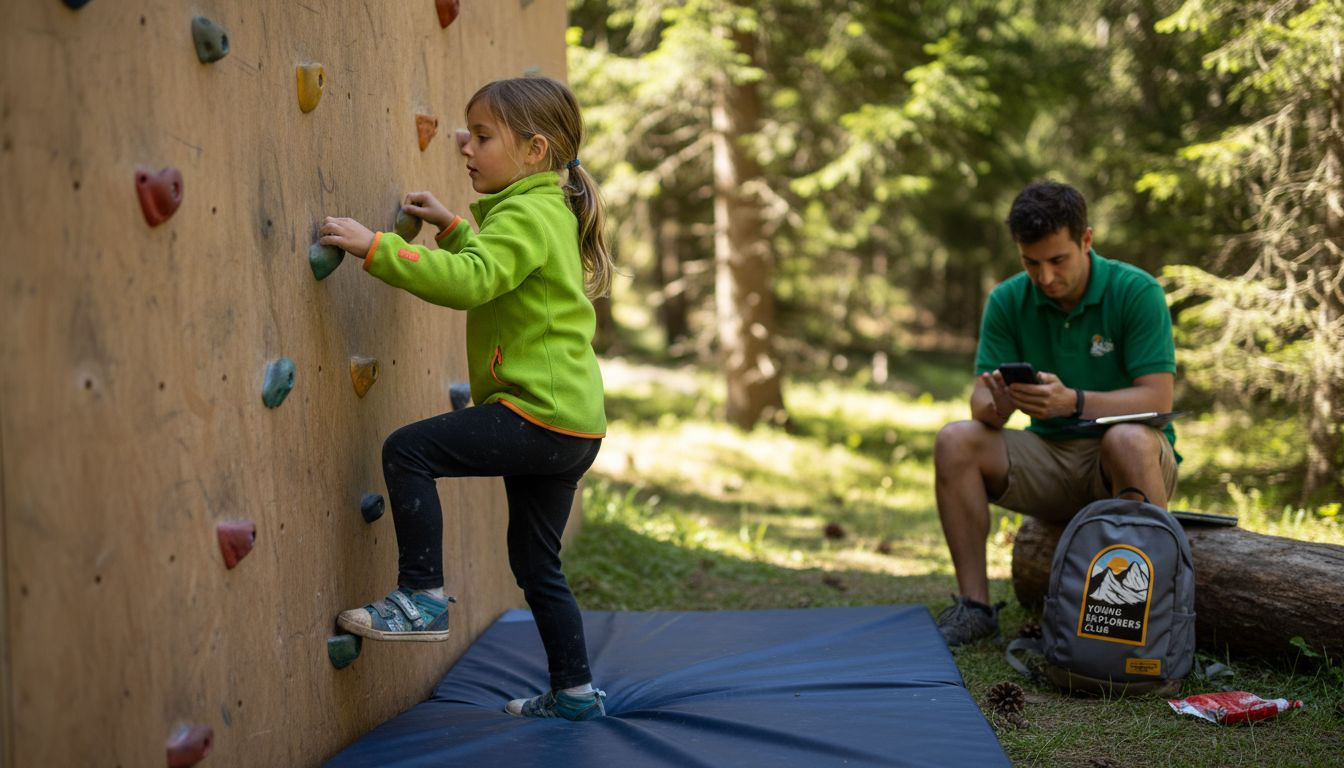
Outdoor adventure activities form the foundation of educational camp experiences. Mountain biking, climbing, and survival skills directly build capabilities that translate beyond summer programs. Children develop 30% improvement in confidence and problem-solving through these structured challenges.
Physical challenges create mental breakthroughs. A child who conquers a climbing wall learns that perceived limits can be exceeded with effort and technique. Group navigation exercises teach decision-making under uncertainty. These lessons stick because children experience them physically, not just conceptually.
Nature engagement supports mental health in measurable ways. Time outdoors reduces stress hormones and improves mood regulation. When children spend days hiking Swiss trails or camping under stars, they disconnect from screens and reconnect with natural rhythms. This reset proves particularly valuable for young people from urban environments.
Teamwork emerges organically during adventure activities. Successful raft building requires collaboration and communication. Multi-day expeditions demand shared responsibility for group success. These social bonds often become the most memorable aspects of camp experiences, with friendships extending years beyond the program.
Pro Tip: Look for camps offering a balanced mix of individual challenges like climbing and group adventures like orienteering. This combination develops both personal confidence and collaborative skills, maximizing your child’s developmental growth across multiple dimensions.
Parents can verify adventure quality by reviewing Swiss outdoor adventure experiences and examining how programs structure progression from beginner to advanced skill levels. Quality camps also emphasize building independence at camps through age-appropriate responsibility increases.
Language learning through immersive camp environments
Immersive bilingual environments accelerate language acquisition beyond traditional classroom methods. Immersion can accelerate language learning by up to 40% compared to conventional instruction. This dramatic improvement stems from constant practical application in social contexts.
Swiss educational camps typically operate in bilingual English-French settings. Children use both languages throughout the day, not just during dedicated lessons. Morning activities might use English instructions while afternoon sessions incorporate French vocabulary. Mealtimes become conversation practice. Evening programs blend both languages naturally.
The social motivation to communicate drives rapid progress. Children want to connect with peers from different countries. This desire creates authentic need for language skills that no textbook can replicate. A German child learning French to chat with Swiss friends experiences language as connection tool, not academic requirement.
Structured language classes complement this organic immersion. Certified instructors provide grammar foundations and vocabulary building that support the practical use happening elsewhere in camp. The combination of formal instruction and constant real-world application creates ideal learning conditions. Programs offering immersive language courses balance these elements effectively.
Key immersion advantages include:
- Daily conversation practice with native speakers across multiple contexts
- Immediate feedback and correction in authentic situations
- Cultural context that makes language learning relevant and engaging
- Peer motivation that sustains effort beyond what grades can inspire
Parents should seek camps with certified language instructors and diverse international enrollment. The broader the nationality mix, the more authentic the immersion experience becomes for language development.
Safety and supervision standards in Swiss educational camps
Safety protocols distinguish quality educational camps from recreational programs. Swiss boarding school summer camps maintain a camper-to-staff ratio around 4:1 with 24/7 supervision to ensure both security and personalized attention. This staffing level enables close monitoring during high-risk activities like climbing and mountain biking.
Qualified educators receive extensive training in child development, first aid, and emergency response. Staff members hold relevant certifications for their activity specializations. A climbing instructor carries technical certifications plus youth education credentials. This dual expertise ensures both skill instruction and age-appropriate pedagogy.
Camps comply with EU and Swiss safety regulations that cover everything from food handling to activity risk management. Emergency protocols address scenarios from minor injuries to severe weather events. Regular drills prepare both staff and campers for unlikely but serious situations.
Adventure activities follow strict safety progressions. Children master basic skills before attempting advanced challenges. Equipment undergoes daily inspection. Weather conditions determine activity modifications or cancellations. This conservative approach prioritizes well-being while still delivering meaningful challenges.
Parents can request detailed information about staff qualifications and safety certifications before registration. Quality programs provide transparent access to camp supervision team details, including staff backgrounds and training credentials. Review these materials carefully, especially if your child has specific medical or behavioral needs requiring extra attention.
Personal development outcomes beyond adventure and language
Educational camps deliver holistic growth that extends well beyond physical skills and language proficiency. Participants develop leadership capabilities, emotional resilience, and global awareness that shape their character long after camp ends. Parental satisfaction with these developmental outcomes rates very high at 4.7 out of 5.
Educational camps in Switzerland offer a multicultural environment with participants from 30 to 50 different nationalities, fostering cultural sensitivity and international friendships. This diversity creates natural opportunities for perspective-taking and empathy development. A child from London collaborating with peers from Tokyo, São Paulo, and Dubai learns that different approaches can solve the same problem.
Leadership emerges through age-appropriate responsibilities. Older campers often mentor younger participants, developing coaching and encouragement skills. Group projects require someone to coordinate efforts and resolve conflicts. These leadership moments happen organically within the camp structure, not through forced exercises.
Workshops focused on personal development complement the experiential learning. Sessions might cover goal-setting, emotional regulation, or effective communication. These structured lessons provide frameworks that help children understand and articulate the growth they’re experiencing through activities.
Key personal development outcomes include:
- Enhanced self-awareness and confidence in unfamiliar situations
- Improved conflict resolution and communication skills
- Greater cultural sensitivity and appreciation for diversity
- Stronger sense of personal agency and problem-solving capability
International friendships formed at camp often last years. Children maintain contact through social media and sometimes reunite at future programs. These relationships reinforce the global perspective gained during the camp experience. Many programs incorporate character education in Swiss camp programs to formalize this developmental focus.
Common misconceptions about educational camps
Several persistent myths prevent parents from recognizing the true value of educational camps. Clearing these misconceptions helps families make informed decisions about summer programming.
Myth: Educational camps are expensive vacations with minimal learning. Reality shows these programs produce 30% confidence gains and 40% faster language skills through structured developmental activities. The outcomes justify the investment for families prioritizing growth over entertainment.
Myth: Outdoor adventure camps compromise safety for excitement. Quality programs maintain strict 4:1 camper-to-staff ratios with certified instructors and comprehensive emergency protocols. Adventure activities follow careful progressions that challenge children appropriately while prioritizing their well-being.
Myth: Language immersion delivers no advantage over regular classes. Immersive environments engage practical daily use and social interaction that classroom settings cannot replicate. Children acquire language naturally through authentic communication needs rather than memorization exercises.
Myth: All camps offer similar experiences regardless of type. Educational camps integrate multiple developmental domains through intentional programming. Traditional recreational camps focus primarily on fun activities without structured learning objectives or measurable outcomes.
These misconceptions often stem from unfamiliarity with modern educational camp models. Parents who investigate thoroughly discover programs that balance enjoyment with genuine developmental benefits through evidence-based approaches.
Comparison with traditional camps and travel camps
Understanding the distinctions among camp types helps parents select the best fit for their child’s needs and family goals.
| Feature | Educational Camps | Travel Camps | Traditional Day Camps |
|---|---|---|---|
| Location | Single Swiss base | Multiple countries | Local community |
| Language focus | Immersive bilingual daily use | Cultural exposure during travel | Minimal or classroom only |
| Adventure activities | Structured skill progression | Varied by destination | Basic recreational sports |
| Cultural diversity | 30 to 50 nationalities | Moderate international mix | Primarily local participants |
| Duration | 2 to 8 weeks residential | 2 to 4 weeks touring | Daily sessions, no overnight |
| Developmental outcomes | Measurable confidence, language, leadership gains | Cultural awareness, adaptability | Social skills, physical activity |
Educational camps provide stable environments where children build deep skills through repeated practice. The consistent setting allows progression from novice to proficient in climbing, language use, or teamwork. Friendships deepen over weeks of daily interaction in ways that travel camps’ rotating locations cannot support.
Travel camps offer exposure to multiple cultures and locations within a single program. Children might visit France, Italy, and Switzerland across three weeks, experiencing diverse environments and customs. However, constant movement can create logistical stress and limit skill development depth. Some children thrive on variety while others need stability to truly grow.
Traditional day camps serve families seeking local, affordable options without residential commitment. They provide recreational fun and basic social development but rarely deliver the language immersion, international diversity, or intensive personal growth that residential programs enable.
Key selection factors include:
- Your child’s readiness for extended time away from home
- Priority on language acquisition versus cultural sampling
- Preference for skill depth versus breadth of experiences
- Budget constraints and travel logistics
Each camp type serves different family needs. Educational camps excel when developmental outcomes, language proficiency, and international connections top your priority list.
Practical guide: choosing, costs, and duration
Selecting the right educational camp requires evaluating multiple factors against your child’s needs and family circumstances. Typical fees range CHF 3,300 to CHF 7,000+ per two weeks depending on program comprehensiveness, location prestige, and included services. Programs run June to August for 2 to 8 weeks.
| Program Length | Typical Cost Range | Best For |
|---|---|---|
| 2 weeks | CHF 3,300 to CHF 4,500 | First-time campers testing residential experience |
| 4 weeks | CHF 6,500 to CHF 9,000 | Children seeking significant skill development |
| 6 to 8 weeks | CHF 9,500 to CHF 14,000+ | Serious language learners and experienced campers |
Follow these steps to choose effectively:
- Research program options for educational quality, safety credentials, and activity variety that match your child’s interests
- Review program durations and plan travel logistics around your family schedule and child’s readiness for extended separation
- Verify safety protocols including staff ratios, certifications, emergency procedures, and medical support capabilities
- Register early by February 2026 as popular programs fill months in advance and early booking often secures discounts
Common pitfalls to avoid include overlooking safety verification in favor of exciting activities, choosing programs without certified language instruction if language development matters, and delaying registration until spring when spots become scarce. Late applicants often settle for less ideal programs or miss out entirely.
Pro Tip: Book by January for the widest selection and potential early-bird discounts of 10% to 15%. Many programs offer sibling discounts and payment plans that ease the financial commitment for families sending multiple children.
Consider how camp fits into balancing camps with childhood to ensure summer programming supports rather than overwhelms your child’s overall development and family time.
Explore top educational camps with Young Explorers Club
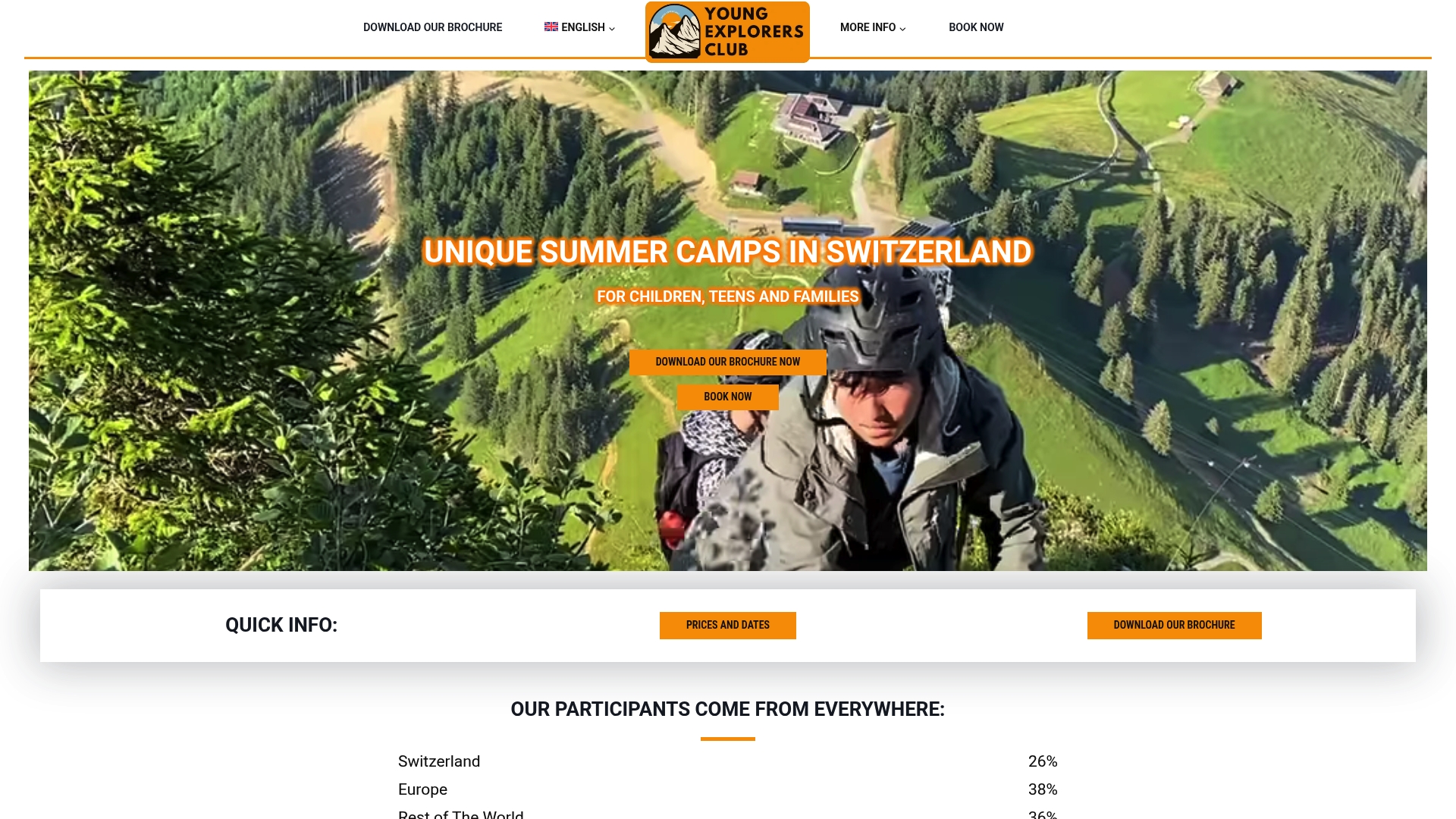
Young Explorers Club offers immersive educational camps in Switzerland that embody the developmental principles covered throughout this guide. Programs combine outdoor adventure, language learning, and personal growth for children ages 8 to 17 in multicultural settings with participants from dozens of countries.
Expert-trained staff maintain the strict safety standards and personalized attention your child deserves. Choose from intensive summer camp for teens programs, flexible weekly activities in Vaud club options, or dedicated immersive language courses that accelerate French, English, or German proficiency.
Early registration ensures your preferred dates and program format. Spaces fill quickly as families across Europe recognize the measurable benefits these experiences deliver. Visit the website to explore detailed program information, review staff credentials, and secure the summer experience that will challenge and transform your child in the Swiss Alps.
Frequently asked questions about educational camps
What age groups are best for educational camps?
Educational camps typically serve children ages 8 to 17, with programs designed for specific developmental stages. Ages 8 to 11 focus on foundational skills and group cooperation, while 12 to 14 year olds tackle more independent challenges, and teens 15 to 17 engage in leadership roles and advanced activities.
How do these camps ensure children’s safety during adventures?
Camps maintain 4:1 camper-to-staff ratios with certified instructors providing 24/7 supervision. All activities follow strict safety progressions, equipment receives daily inspections, and comprehensive emergency protocols address medical and environmental situations with professional response teams on call.
Can language immersion camps help if my child is a beginner?
Absolutely. Immersion programs serve all proficiency levels through differentiated instruction and natural language exposure. Beginners benefit most as they acquire foundational vocabulary through authentic use rather than abstract study, while structured classes provide grammar frameworks supporting their daily interactions.
What are typical program durations and flexibility options?
Programs range from 2 to 8 weeks running June through August. Two-week sessions suit first-time campers, four weeks enable substantial skill development, and longer durations maximize language proficiency gains. Some camps offer flexible start dates allowing families to customize timing around other summer commitments.
Are educational camps suitable for children with special needs?
Many camps accommodate children with specific learning differences, dietary restrictions, or medical needs given advance notice. Contact programs directly to discuss your child’s requirements and verify available support services. Staff-to-camper ratios and individualized attention often make camps more adaptable than families initially expect.
Recommended
- Custom Camps And Trips For Schools And Groups | Young Explorers Club Switzerland
- Como Os Campos De Férias Bilingues Ajudam As Crianças A Aprender Mais Depressa (fr/en) | Young Explorers Club Switzerland
- The Benefits Of International Friendships Formed At Camp | Young Explorers Club Switzerland
- International Camp Culture: Building Global Friendships
- For Parents – Sunflower Nursery