What Kids Should Expect At A Swiss Outdoor Adventure Camp
Swiss outdoor adventure camps: 4-6 hr days of hiking, climbing & biking for ages 6-17. Day, 5-7d residential or multi-week; safety.
Swiss Outdoor Adventure Camps — Practical Guide
I'd recommend families expect structured days at a Swiss outdoor adventure camp. Plan on about 4–6 hours of supervised outdoor activity each day. Activities typically include hiking, climbing, mountain biking and water sports. Staff run evening programs that mix skills clinics and downtime. Camps operate as day programs, residential 5–7 day immersions or multi-week tracks. They typically serve ages 8–17, with intro weeks from age 6. Group sizes usually fall between 12 and 20 participants. I'd advise parents to confirm safety, medical and travel procedures before booking.
Key Takeaways
Program formats and ages
- I help families choose between day, residential (I recommend 5–7 day stays for international visitors) and multi-week options.
- Typical participant ages run 8–17, with leadership pathways for older teens and 18+.
Daily rhythm and activities
- I set up active mornings with two core activity sessions and evening programs.
- Typical activities include:
- Alpine hiking (~6–12 km/day).
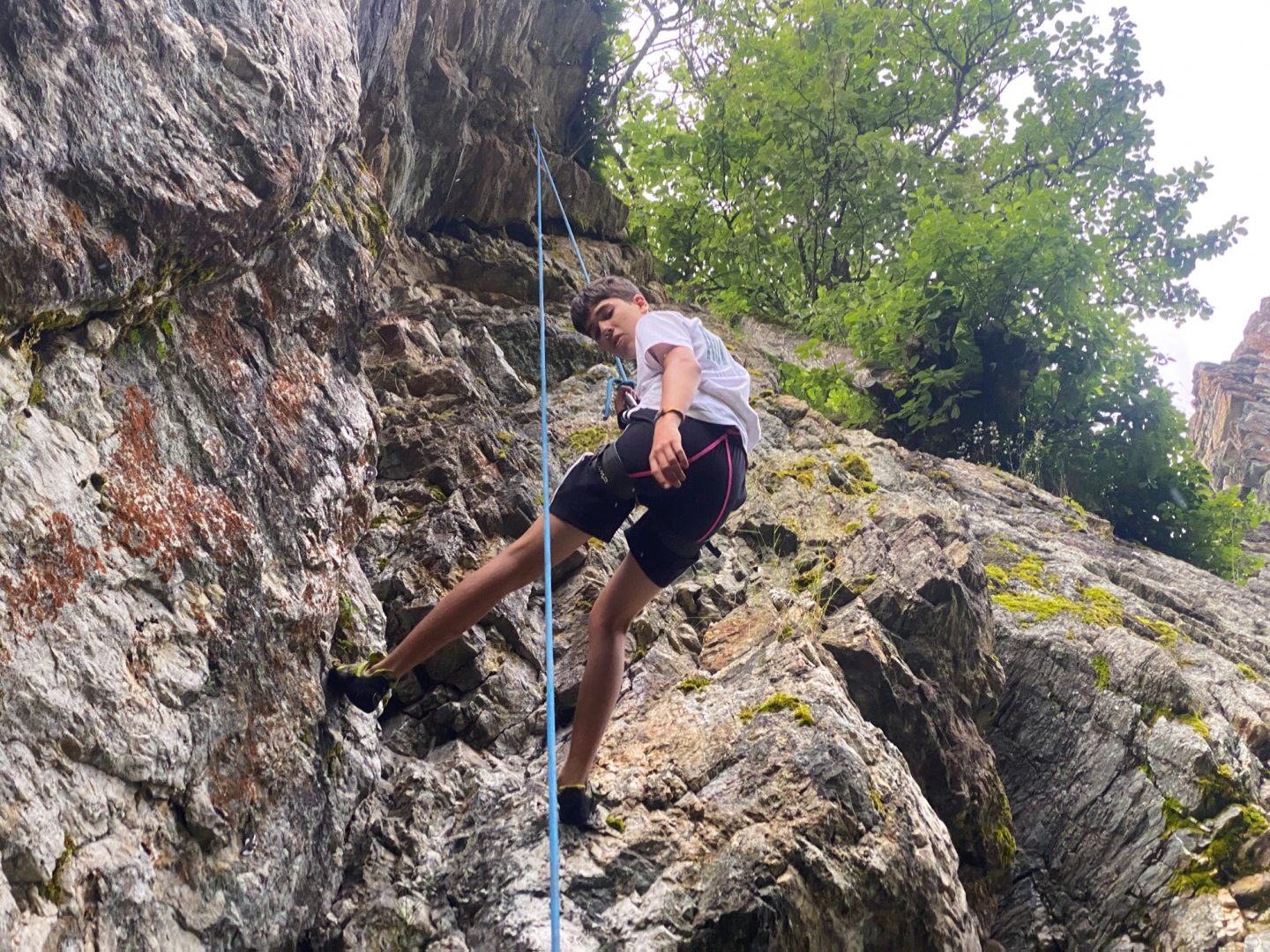
- Climbing sessions (~90–120 minutes).
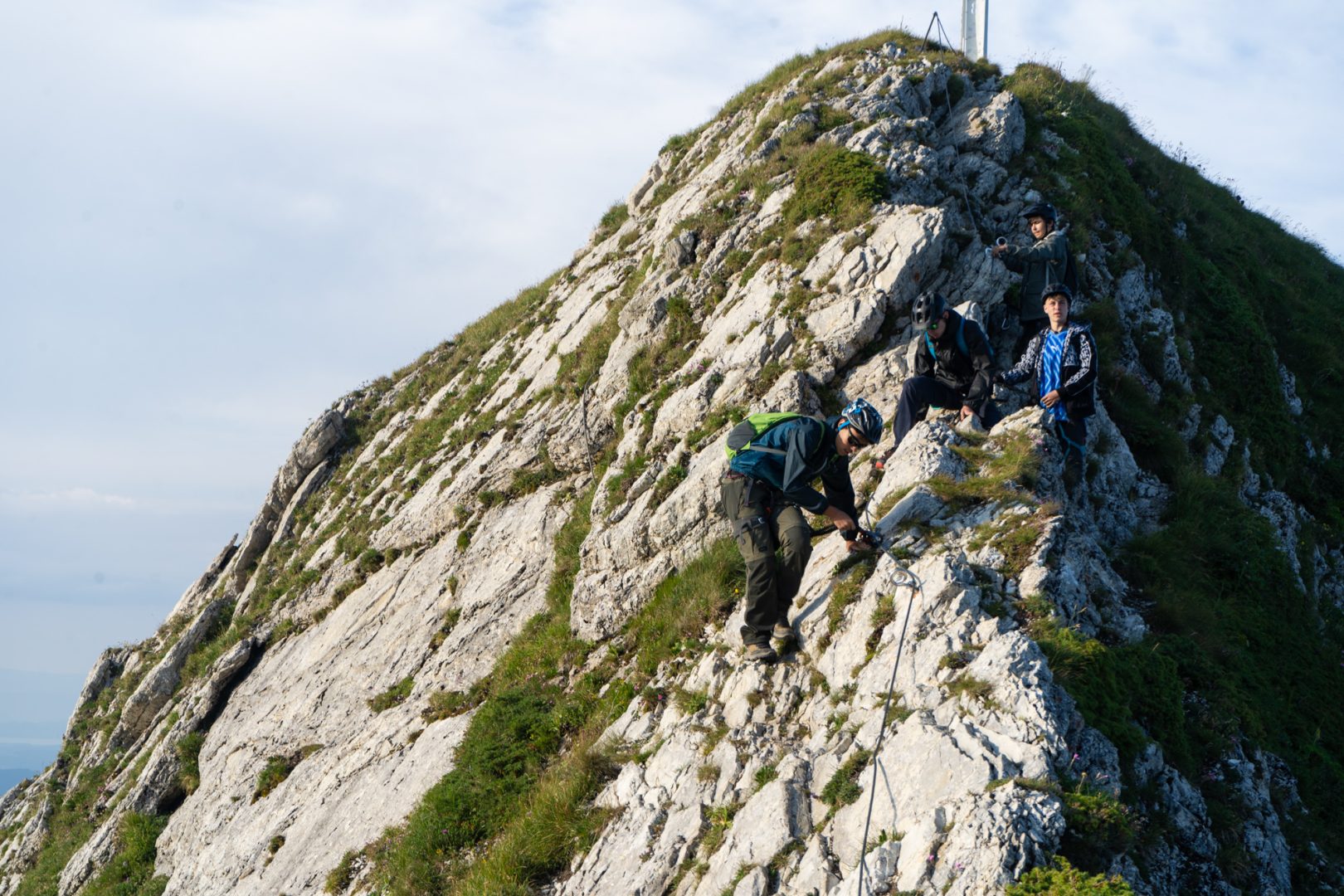
- Via ferrata, mountain biking, canoeing and supervised bivouacs.
Safety and supervision
- I maintain staff-to-child ratios around 1:6–1:10, using 1:6 for younger kids or higher-risk activities.
- Instructors hold Wilderness First Aid/CPR and activity-specific certifications.
- Camps keep on-site first aid, AED access and written emergency protocols.
Accommodation and gear
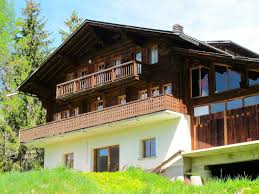
- I place campers in huts, chalets or tents depending on the program.
- Packing recommendations:
- Layered clothing (base, insulating, waterproof).
- Supportive hiking boots.
- 20–50 L daypack.
- Sleeping bag and headlamp.
- Camps supply technical safety gear like helmets and harnesses.
Costs and booking
- I list residential weeks at CHF 700–2,500 and day camps at CHF 150–600.
- Typical deposits run 20–30%.
- I'd recommend booking 3–6 months ahead.
- Ask for an itemized fee breakdown and a clear list of what’s included and excluded.
Practical Advice Before You Book
Before confirming a spot, contact the camp to request their safety policies, medical procedures, and travel contingency plans. Verify instructor qualifications and ask for references or recent parent reviews. For international families, confirm language of instruction and arrival/departure logistics.
Packing Checklist (Quick)
- Layered clothing (moisture-wicking base, warm mid-layer, waterproof outer).
- Hiking boots and comfortable activity shoes.
- 20–50 L daypack with water bottle.
- Sleeping bag, headlamp and small personal first-aid kit.
- Sunscreen, sunglasses and a hat.
Final Note
Swiss outdoor camps offer excellent opportunities for skill-building and independence. With clear safety protocols, appropriate gear and reasonable advance booking, most families find the experience highly rewarding.
What a Swiss outdoor adventure camp is
A Swiss outdoor adventure camp is a structured program that mixes daily outdoor skills, guided activities and supervised free time. I describe the common formats so you can match options to a child’s needs.
Camps typically come in these formats:
- Day camps — for local families who return home each evening.
- Residential week-long sessions (5–7 days) — intensive, overnight stays.
- Two-week sessions — extended skill work and social bonding.
- Multi-week seasonal programs — for deeper progression and leadership tracks.
Many providers promote a residential 5–7 day Swiss adventure model for overseas families, since it fits international travel schedules and gives a concentrated immersion. I often recommend residential weeks for kids who want overnight experiences and deeper skill work.
Age ranges and leadership pathways are straightforward. Most programs run ages 8–17. Some camps offer younger introductory weeks from age 6. Teen leadership, junior-leader and volunteer options are commonly open to 18+ participants who want training and supervisory experience.
Group size and overall capacity affect supervision and social dynamics. Typical group size sits between 12–20 children per group, which keeps instructor-to-kid ratios manageable. Overall camp capacity usually ranges from about 30 to 150 participants depending on the site and season. I advise asking about staff ratios and emergency protocols when you pick a program.
Location shapes the activity focus. Popular regions include Interlaken, Zermatt and Engadin. I see many programs clustered in the Bernese Oberland, the Jungfrau area and around Lake Geneva/Lavaux. If scenery and alpine access matter, camps in Interlaken often offer fast access to hiking, climbing and lakeside activities — I recommend checking local listings for specifics.
Quick comparison parents need up front
Immediate fit: Typical ages 8–17; common session lengths: day camp (single days to week), residential sessions 5–7 days (two-week or multi-week options available).
Below are the core trade-offs I point out to families:
- Day camps: Best for local kids who want daily activity and the comfort of home each night; lower cost and easier logistics.
- Residential 7-day immersion: Best for overnight skill development, team-building and rapid independence; higher intensity and full supervision.
- Two-week/multi-week: Best for serious skill progression, leadership tracks and longer social bonds; requires greater time commitment and travel planning.
Typical day, activity load and core activities
I run days so kids move, learn core mountain skills and still have downtime. The sample rhythm below reflects typical Swiss outdoor adventure camps: active mornings, skills or rest after lunch, then a second outdoor session and an evening program.
Daily rhythm, session lengths and one-week sample
Below I list a representative daily schedule, typical session timings, and a compact one-week itinerary you can expect.
Sample daily schedule (typical 07:30–21:30 day)
- 07:30 wake-up and cabin chores
- 08:00 breakfast
- 09:00 activity session 1 (usually 90–120 minutes)
- 12:30 lunch
- 13:30 rest, skills clinic or low-intensity session
- 15:00 activity session 2 (90–120 minutes)
- 18:30 dinner
- 20:00–21:30 evening program (games, reflection, short workshops)
- Lights-out typically 21:00–22:00 depending on age
Typical session and safety notes
- Active outdoor time: expect about 4–6 hours per day, split into 2–3 sessions.
- Climbing sessions: usually 90–120 minutes, adult-led, with instructor:child ratios around 1:6–1:8 for outdoor top-rope.
- Intro climbing/rope courses: start around ages 6–8; advanced via ferrata or multi-pitch climbs are generally 12+ and led by experienced guides.
- Canyoning: typically restricted to 12+.
- Safety rules: I enforce helmet, harness and guide supervision rules for technical activities and brief pre-session skill checks.
Typical hiking workload
- Distance: 6–12 km per day depending on age and route.
- Elevation gain: 300–900 m cumulative ascent per day based on difficulty.
- Route planning: I combine distance and elevation so difficulty matches the group’s age and conditioning.
One-week sample itinerary
- Day 1: Arrival, orientation, easy valley hike and team games.
- Day 2: Mountain-base skills, 6–8 km hike with ~300–400 m ascent, introductory climbing session.
- Day 3: Full-day via ferrata (K1–K2) or rotation of skills (climbing, navigation, ropes).
- Day 4: Mountain-biking on blue/red trails and lake canoeing.
- Day 5: Overnight bivouac or mountain hut stay (residential camps), plus navigation challenge.
- Day 6: Longer hike 8–12 km with 500–800 m ascent and skills assessment.
- Day 7: Wrap-up, reflection and departure.
I pace activities to suit ages and build confidence. Younger kids (8–11) get shorter sessions, more breaks, and hikes around 6–8 km/day with games and fundamentals. Teens (12–17) handle higher intensity, longer hikes up to 12 km, larger elevation gains and technical tasks like K2–K3 via ferrata or red mountain-bike trails, plus leadership responsibilities.
Core activities I include across most programs:
- Alpine hiking and navigation.
- Rock climbing: top-rope, crag routes and via ferrata.
- Ropes and low-ropes challenge courses.
- Mountain biking on blue/red graded trails.
- Kayaking or canoeing on lakes and calm rivers.
- Canyoning for older groups.
- Overnight bivouacs or hut stays.
- Environmental and mountain-safety education.
How difficulty is measured: I use two simple metrics — distance and elevation for hikes, and standard trail/grading systems for technical activities. Via ferrata is commonly graded K1–K3 for beginner to intermediate routes. Mountain-bike trails use blue (easier) and red (intermediate) grading. I brief campers on grading before they commit to a route.
Practical tips I give parents and campers:
- Train with day hikes before arrival if your child will join longer routes. Short regular hikes with a pack make a huge difference.
- Pack layered clothing and sturdy footwear; comfort on technical terrain matters more than brand names.
- Expect adjustments: Weather, group fitness and mountain conditions shape the final plan.
- First-timers: If it’s your child’s first time, read a short guide like my first summer camp primer to set expectations and packing priorities.
I balance challenge and safety so kids progress stepwise. Each day blends skill practice, supervised challenge and time to unwind, which keeps momentum high and motivation steady.
Safety, supervision, staff qualifications, medical requirements and emergency protocols
I expect clear, concrete answers on safety before I book. Camps typically set staff-to-child ratios between 1:6–1:10. Younger children and high-risk activities usually have 1:6. Older kids and low-risk sessions often run 1:8–1:10. Lower ratios raise staff costs, but they also raise supervision and safety margins; that trade-off is worth weighing for activities like climbing or swift-water sessions.
I check instructor qualifications in detail. Instructors should hold Wilderness First Aid / CPR certification and have youth safeguarding or child protection training. Activity-specific leaders often meet IFMGA / SAC guide standards or equivalent national instructor certificates. Water sessions must be run by certified lifeguards. If a camp can name the certificates and issue copies on request, I treat that as a strong signal of competence.
On-site medical capability needs to be visible and reliable. Camps routinely carry first-aid kits and many keep an AED at central sites. An on-site first aider should be present at all times, and larger or international groups often have formal partnerships with a nurse or a local clinic. I expect camps to have a documented procedure for handing medication, including secure storage and signed parental instructions.
I always confirm required paperwork up front. A medical form and parental consent are standard; the form should list allergies, medications, emergency contacts and an up-to-date vaccination record. For vaccine guidance I tell parents to check FOPH. Clear documentation prevents confusion during an emergency and speeds care if a child needs treatment.
Emergency services and rescue are part of the plan. Switzerland’s emergency number for ambulance is 144. Mountain extractions may involve Rega air rescue, which operates nationally. Those rescues can carry significant costs, so I advise parents to arrange appropriate rescue insurance—Swiss mountain rescue and air evacuation can be expensive without coverage. Camps should include emergency contact protocols and a 24/7 contact for parents.
What I ask and confirm before booking
I use a short checklist when I call or email a camp; these are the items I always confirm:
- Staff-to-child ratio — confirmation of 1:6–1:10 for the age and activities planned.
- Specific certifications — Wilderness First Aid / CPR certification, IFMGA / SAC guide standards for guides, and lifeguard certification for water staff.
- On-site medical presence — presence of an on-site first aider, AED availability, and clinic or nurse partnerships.
- Required paperwork — medical form and parental consent required, plus clear allergy and medication procedures.
- Emergency procedures — confirmation of emergency number 144 use, Rega awareness, and rescue insurance recommended.
- Parent communications — a 24/7 emergency contact for parents and written FAQ answers to “What certifications do guides have?” and medication handling.
- I also recommend parents read your first summer camp for practical preparation tips.
I expect camps to be upfront about costs tied to safety decisions. If a provider resists disclosing staff ratios, specific certificates, or their emergency protocols, I take that as a red flag. When programs present clear documentation and sensible ratios, I feel comfortable that they’ve prioritized safety while keeping the adventure real.
Accommodation types, meals, travel logistics and on-site practicalities
Accommodation and hut realities
I explain the typical sleeping options and what they mean for comfort and logistics. Camps usually operate at camp base elevations 600–1,800 m with day trips or overnight stays in huts above 2,000 m. Options include multi-bed cabins/dormitories, family-style chalets, mountain hütte with shared bunks, and tent camping for bivouac experiences. Many SAC huts sit at hut elevations 1,500–3,000 m and typically have shared dorms (4–20 people); huts provide basic heating and meals but some have limited hot water or no showers.
Below I give a compact comparison and a practical packing checklist for hut stays.
- Hut (shared bunks) — Pros: authentic alpine experience, simple meals, group bonding. Cons: shared dorms 4–20 people, limited hot water, basic facilities.
- Chalet — Pros: more privacy, family-style spaces, showers often available. Cons: higher cost, fewer high-mountain access points.
- Tent/Bivouac — Pros: wilderness feel, flexible locations, great for older kids. Cons: weather dependent, colder nights, extra gear needed.
- Packing checklist for hut stays — sleep sheet liner, lightweight sleeping bag or liner, slippers or camp shoes, small quick-dry towel, headlamp with spare batteries, warm mid-layer, waterproof shell, spare socks, personal toiletries, basic first-aid kit, prescription meds, printed allergy/action plan and EpiPen if required. For a full pre-camp packing list see what to pack.
Meals, dietary management and travel logistics
I plan meals around the activity profile. Standard meal pattern is 3 meals + 2 snacks/day designed for high-energy needs, focusing on carbohydrates and protein. Camps can usually accommodate vegetarian and vegan diets and many allergies with advance notice. Severe allergies require explicit medical plans and devices (for example, EpiPen) and clear communication with staff. Swiss tap water is potable in most locations, so reusable bottles work well.
I cover travel essentials and timing. Nearest international airports are Zurich ZRH, Geneva GVA and Basel BSL. Switzerland’s SBB rail network links to mountain towns; many camps use regional buses or cable-car transfers for the final leg. Typical travel times include Zurich–Interlaken ~2 hours by train and Zurich–Zermatt ~3.5 hours; Geneva–Zermatt is about 3–4 hours. I recommend aiming to arrive midday before first dinner so children can settle and brief staff can do health checks. Consider a Swiss Travel Pass or half-fare card for families. Note that kids under 6 often travel free with a paying adult on many services.
Gear, packing, weather expectations and physical preparation
I expect parents to pack for wide swings in temperature and active days. Use a layering system — base/mid/shell so a child can shed or add layers fast. Start with a moisture-wicking base layer (merino or synthetic), add a fleece or lightweight down mid-layer, and finish with a waterproof, breathable shell.
Alpine summer temps vary a lot. Daytime in valleys is typically 10–25°C. Above 2,000 m expect 0–12°C by day and nights that can approach 0–5°C. Plan for sun, wind and sudden showers. I recommend a sun hat and a warm hat in the pack at all times.
Choose daypacks and footwear with fit and load in mind. Daypack sizes:
- younger kids: 20–35 L
- teens: 30–50 L
Keep loaded daypacks to about 20–25% of the child’s body weight. Typical loaded daypack weights I see are 4–7 kg. For footwear, buy supportive ankle hiking boots in children’s sizes and break them in before camp.
Camps usually supply technical safety gear — helmets, harnesses and ropes — but parents supply personal kit: backpack, boots, sleeping bag and base layers. Brand examples for shopping:
- Backpacks: Osprey, Deuter, Vaude
- Footwear: Salomon, Keen, Meindl
- Jackets and layers: Mammut, Patagonia, The North Face, Vaude
- Sleeping bags: Mammut, Mountain Equipment, Fjällräven
- Helmets and harnesses: Petzl and Black Diamond
- Headlamp: Petzl Tikkina or Black Diamond Spot
- Water bottles: Nalgene or SIGG
Altitude and fitness guidance is practical. Altitude sickness risk increases above 2,500–3,000 m, so most child-friendly camps operate below those heights or build in gradual acclimatization. I advise 4–6 weeks pre-camp fitness prep with progressive walking and hikes while carrying a loaded daypack. Example plan: if the trip includes a 3-day huts hike with ~600 m ascent per day, practice two 8 km walks carrying a 3–4 kg pack.
Quick packing checklist
Here’s a compact list to use while finalizing gear:
- Base layer tops and bottoms (merino or synthetic)
- Fleece mid-layer and lightweight down jacket
- Waterproof/breathable shell jacket and rain trousers
- Hiking boots (broken in) and 2–3 pairs hiking socks
- Daypack (20–50 L depending on age) with rain cover
- Sleeping bag rated for cool alpine nights (check brand specs)
- Headlamp (Petzl Tikkina or Black Diamond Spot), water bottle (Nalgene/SIGG)
- Small first-aid, sunscreen, sunhat and warm hat
- Practice kit: use the same pack/boots during training walks
If you want a printable list and precise pack-sizing tips, see my page on what to pack for Switzerland.

Costs, booking expectations, rules, likely benefits and top tips for parents
Costs, booking and what’s included
Typical costs: Full-week adventure camps usually run CHF 700–2,500 per week; day camps are generally CHF 150–600/week. Deposits are commonly 20–30% at booking, and I recommend reserving popular summer weeks 3–6 months ahead. Always ask for an itemized fee breakdown before you pay.
What’s usually included and what’s extra:
- Usually included: accommodation, meals, basic activity instruction, and group equipment rental such as helmets and harnesses.
- Often excluded: personal travel to camp, travel insurance, specialist personal equipment (your child’s bike or boots), optional excursions, and extended rescue costs.
Pack-and-doc checklist I tell parents to follow:
- Label all gear: I prefer sewn-in name labels for durability.
- Documents: passport/ID, completed medical form, insurance details.
- Meds: keep them in original packaging and include a clear action plan for severe allergies (EpiPen details).
- Clothing/kit: pack layers, sturdy boots, a small amount of pocket money, and the camp’s 24/7 emergency contact.
- Photo consent: sign the form camp provides if you approve image use.
Rules, communication, measurable benefits and practical tips
Rules: Camps enforce common rules: no unsupervised wandering, a buddy system for water and mountain activities, limited phone use, lights-out times, and strict bans on alcohol and drugs.
Communication: Many camps send daily or every-other-day updates and provide a 24/7 emergency contact for parents.
Expect measurable learning outcomes. Look for gains such as confidence and resilience, navigation and outdoor skills, teamwork and leadership, environmental awareness, and improved fitness. Useful benchmarks to request from the camp include:
- Able to lead a 6–8 km hike using map and compass with instructor sign-off.
- Demonstrates basic knot-tying and a supervised top-rope belay.
- Can explain and apply Leave No Trace principles on an outing.
Practical tips I give parents:
- Label all gear and keep meds accessible with instructions.
- Pack layers and a reliable pair of boots.
- Provide the camp with a clear contact plan and any special medical or behavioural notes.
- If you want comparisons while deciding, I often point parents toward the best summer camps for context.
Sample daily bulletin parents can expect: “Today: 6 km hike + climbing rotation; Weather: sunny, light showers possible; Notes: no issues, meds administered as planned”
Sources:
IFMGA (International Federation of Mountain Guides Associations)
SAC (Swiss Alpine Club)
Rega air rescue (Rega)
Swiss Federal Office of Public Health (FOPH)
SBB (Swiss Federal Railways)
Swiss Travel Pass (Swiss Travel System)
Petzl
Black Diamond
Mammut
Osprey
Deuter
Vaude
Salomon
Keen
Meindl
Patagonia
The North Face
Mountain Equipment
Fjällräven
Nalgene
SIGG