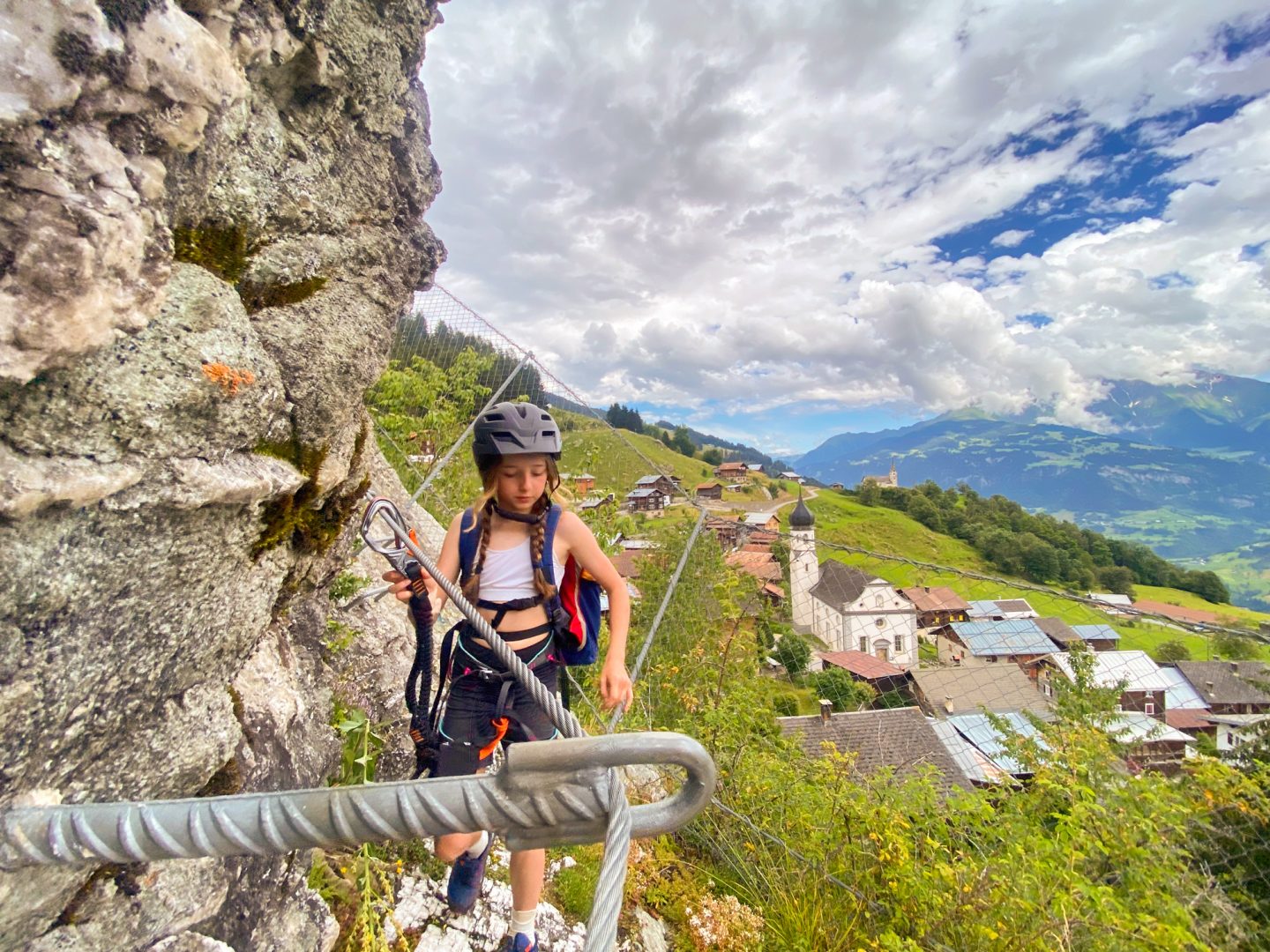
What To Bring On A Family Hike In Switzerland
Family hikes in Switzerland: pack layers, 2-3L water/adult, SAC-rated footwear, maps, first-aid. Start before 09:00 to avoid storms.
Family hiking essentials — Switzerland
Clothing and layers
We recommend a simple layering system for a safe, comfortable family hike in Switzerland: a moisture‑wicking base, an insulating mid layer, and a waterproof breathable shell. Include sun and cold protection (hat, sunglasses, gloves) so you can adjust quickly to changing conditions.
Footwear and packs
Choose footwear that fits the SAC trail rating for your planned route (T1–T2 = trail shoes; T3+ = mid/high boots). Break in new boots before the trip. Use 20–40 L daypacks and make sure the hipbelt is adjusted for each wearer.
Hydration and food
Pack 2–3 L of water per adult and 0.5–1.5 L per child, plus a filter or spare bottles for refills. Bring frequent, calorie‑dense snacks to keep energy levels steady.
Navigation
Carry paper SwissTopo maps and offline phone maps for navigation. Post planned routes and times to someone at home when possible.
Safety and emergency gear
Bring a compact family first‑aid kit, a headlamp, a power bank, and a small repair kit. Post emergency numbers (144, 112, 1414) where they’re visible. Know how to call rescue with an exact location (map grid, landmark, or GPS).
Timing
Aim to start hikes before 09:00 to reduce the chance of afternoon thunderstorms and to give your family more margin for delays.
Key Takeaways
- Layer clothing and accessories for quick shifts in temperature and weather: moisture‑wicking base, insulating mid layer, waterproof shell, plus sun and cold protection.
- Plan hydration and food: 2–3 L per adult (0.5–1.5 L per child), use filters or purifiers when refilling, and pack frequent, calorie‑dense snacks.
- Match footwear to trail difficulty (T1–T2 = trail shoes; T3+ = mid/high boots), break in boots before the trip, and use 20–40 L daypacks with the hipbelt adjusted.
- Bring paper and offline digital navigation, apply the route‑timing formula with a 30–50% family buffer, and check public transport and lift schedules ahead of time.
- Carry a compact family first‑aid kit, headlamp, repair kit and emergency gear; know how to call rescue with an exact location and follow livestock and trail etiquette.
Quick facts & one‑minute prep checklist
We, at the young explorers club, keep this short sheet for fast decisions before a family hike in Switzerland. Switzerland has roughly 65,000 km of signposted hiking trails. The SAC trail scale runs T1–T6; yellow marks easy hikes, blue‑white‑red marks alpine terrain (SAC). A typical family day hike covers 5–15 km with 200–800 m of elevation gain. Expect steady paces of about 4–5 km/h on easy terrain, around 3 km/h in steep mountain sections, and an ascent rate near 300–400 m/hour.
Emergency numbers
Emergency numbers — display these clearly:
- 144 — medical / ground rescue
- 112 — EU emergency
- 1414 — REGA air rescue / medical consult
One‑minute prep checklist
Use this checklist aloud or on a quick phone photo before you set off:
- Tell someone your route and estimated finish time.
- Carry 2–3 L water per adult; children 0.5–1.5 L depending on age and activity.
- Pack a small family first‑aid kit and a headlamp with fresh batteries.
- Start before 09:00 to reduce the risk of afternoon thunderstorms.
- Check MeteoSwiss and SwissTopo for forecasts and route info; consult SAC and MeteoSwiss mountain/avalanche bulletins for alpine warnings.
- Have a paper map and mark key waypoints (parking, junctions, huts, escapes).
- Carry a phone with an offline SwissTopo map and a charged power bank.
- Wear footwear suitable for the SAC rating and test shoes and packs on shorter walks beforehand.
For a quick gear refresher, see our what to pack page and for planning tips on family hikes see our family trip guide.

Clothing, layers and seasonal weather to plan for
We at the young explorers club plan clothing around a simple layering system that handles heat, cold and sudden storms. Keep layers light and compressible so kids can shed or add clothing quickly on steep climbs. Always pack a reliable waterproof shell and a lightweight insulating mid layer, regardless of season.
Layering system — what to bring
Below are the core layers I insist every family carries on Swiss hikes:
- Base layer: moisture‑wicking next‑to‑skin fabric. Merino wool is my top pick — it controls odor and stays warm when damp.
- Mid layer: fleece or synthetic insulation. Choose a light puffy or fleece that packs small but provides warmth when the temperature drops.
- Shell: waterproof, breathable jacket and overtrousers. Target a hydrostatic head above 2,000 mm for a reliable rain shell.
- Accessories: sun hat, warm hat, lightweight gloves (and a warmer pair if you’ll cross snow), UV sunglasses, and sunscreen SPF 30+.
Valves and pockets matter for kids. Pick jackets with underarm zips and adjustable hoods. Layers should fit comfortably with room for movement and one extra mid layer for colder days.
Temperatures and altitude effects
Valley summers usually sit between 15–25 °C. Above roughly 2,000 m expect 0–10 °C and fast temperature swings. Night and early‑morning chills are common even in July. Snow and ice can persist on high trails above about 2,200–2,500 m well into summer, so check your route before committing.
Sun and UV at altitude
UV exposure rises about +10% per 1,000 m of elevation. Wear broad sun protection whenever you’re above the tree line. I always carry lip balm with SPF and reapply sunscreen every two hours, sooner if you sweat.
Weather patterns and timing
Afternoon thunderstorms are common in summer. Start hikes before 09:00 to reduce risk and aim to be off exposed ridges by midday. If clouds build quickly, descend to safer terrain; densely wooded valleys shelter you faster than open ridgelines.
Seasonal checks and mountain bulletins
Always consult weather and hazard sources before a multi‑day or high route. Check MeteoSwiss and the SAC for mountain/weather and avalanche bulletins, and confirm SAC hut opening dates (many run mid‑June to mid‑September).
Practical packing tips I recommend
- Pack a small repair kit and a lightweight emergency bivvy.
- Layer kids individually so you can redistribute clothing between children.
- Replace cotton with synthetics or merino across all layers to keep heat when wet.
- Stash a waterproof bag for electronics and extra clothes.
If you want a broader family checklist for Switzerland, see our family trip guide for gear and logistics on planning a comfortable outing.
https://youtu.be/
Footwear, backpacks and child carriers
I focus on match and fit first: pick footwear that suits the Swiss SAC rating of the trail. For typical family routes (T1–T2) we use sturdy trail shoes. For T3 and above we step up to mid or high‑cut boots. Aim for lug depth around 5–10 mm for reliable grip on wet rock and dirt. Break new boots in over 1–2 weeks of walks before a longer family hike so you avoid blisters.
We size daypacks to the day. For most family hikes adults carry 20–30 L packs. For longer days or when hauling extra layers, snacks and kid gear choose 30–40 L. Test every pack loaded with the items you’ll actually bring. Adjust the hip belt so most weight sits on hips, and tweak shoulder straps for even balance. Leave about 1–2 cm of toe room in footwear to allow for downhill foot travel.
Child carriers make more hikes enjoyable and safer for toddlers. We recommend carriers until roughly 3–4 years or until the carrier’s maximum weight — commonly 15–22 kg. For toddlers in carriers keep trail length modest: roughly ≤8 km and ≤400 m total ascent. Plan breaks every 30–60 minutes so the child gets movement time and you can check fit and comfort.
Fit and field tips I use on family hikes:
- Try shoes with the socks you’ll wear, and test on a slope to check for forward slide.
- Load the pack and walk 10–20 minutes around the house to fine‑tune hipbelt and sternum strap tension.
- For kids’ shoes factor in toe clearance and fast, easy closures; velcro or quick laces save time.
- Keep a small repair kit and duct tape in the daypack for quick fixes.
Recommended gear by category
- Adults footwear: Lowa Renegade GTX Mid, Salomon X Ultra 4 GTX, Meindl Vakuum, Meindl Bhutan.
- Kids footwear: Keen Targhee Mid, Jack Wolfskin Vojo (kids), Salomon kids models.
- Daypacks: Osprey Talon 22, Osprey Tempest 20, Deuter Speed Lite 20–30.
- Child carriers: Osprey Poco AG, Deuter Kid Comfort, Thule Sapling (watch weight limits).
- Gaiters and extras: Rab and Outdoor Research gaiters for muddy or snowy approaches.
I also recommend checking our planning notes for a smooth outing; see our guide to a family trip in Switzerland for packing and trail ideas that match these gear choices.

Food, snacks and hydration strategy
Hydration guidelines
We plan water first. For a moderate summer day I budget 2–3 L per adult. Children get 0.5–1.5 L depending on age and activity. Use a baseline pace of roughly 0.5 L per hour for moderate effort. Increase toward 1 L per hour on hot, sunny days or long ascents.
Freeze a portion of water overnight to keep bottles cool on the first hours of the hike. Refill at huts, springs and public taps across Swiss trails, but carry a purifier if you’re unsure about a source. I recommend filters and purifiers such as LifeStraw, Sawyer Mini or a SteriPEN for high-altitude spring collection.
For hands-free sipping bring hydration packs like the CamelBak Crux 2.0 L or Osprey Hydraulics, and complement them with a sturdy 1 L bottle such as a Nalgene for shared refills.
Snacks, meals and gear
We meet energy needs with planned calories and regular feeding. Aim for 300–600 kcal per adult every three hours. Children need fewer total calories but more frequent treats; give small snacks every 30–60 minutes. Pack lunches that are simple, filling and resilient to a warm pack: sandwiches with cheese or Nutella, wraps, or pre-cooked pasta salad. Use compact, calorie-dense snacks to keep everyone moving and happy.
Here are the items I always include on family hikes:
- Nuts and seed mixes for fat and protein.
- Dried fruit and fresh fruit for quick carbs.
- Pretzels or crackers for salt and crunch.
- Hard cheeses that tolerate a few hours out of a fridge.
- Swiss chocolate as a morale boost.
- Granola and energy bars (Clif, Trek) plus Nutri‑Grain or Kind bars for variety.
- Small portions of nut butter or single-serve spreads for sandwiches.
- An insulated food pouch for perishable lunches and to extend cooling from frozen water.
I pack gear to support eating and refilling: a small filter or purifier, at least one spare bottle per two people, and an insulated cooler bag if we carry cheese or pasta salad. We also carry a lightweight cutlery set and a small trash bag so we leave no trace. For pacing, I follow the 0.5 L/hour baseline and raise intake for heat or steep climbs. For more detailed packing ideas for a family trip, see what to pack from our guides.

Navigation, timing, transports and route timing math
Navigation essentials and tools
We, at the Young Explorers Club, always pack a mix of paper and digital navigation tools. Below are the items we never leave behind:
- Paper SwissTopo map and a compass — reliable when batteries fail.
- Smartphone with downloaded SwissTopo offline maps — download the SwissTopo app and mark key waypoints before you leave.
- Popular route apps: SwissTopo app, Komoot, Outdooractive and SBB Mobile for schedules and connections.
- Printed or saved SAC hut opening times and emergency contact numbers.
- Payment options and passes: Half‑Fare Card or day passes for planned lifts and trains.
Keep the paper map unfolded and the compass ready. We check offline maps in the valley and confirm waypoints. Cell coverage in Switzerland is generally good but it can drop out in high alpine areas, so the paper map and compass are essential.
Timing, route math and public transport tips
We use simple, reliable rules to estimate a route and avoid surprises. Typical paces and climb rates: flat 4–5 km/h, mountain pace ≈ 3 km/h, and ascent roughly 300–400 m per hour.
Basic formula: time = (distance ÷ chosen speed) + (ascent ÷ ascent rate) + buffer
We then add a family buffer of 30–50% for children, snack breaks and a slower pace. For example, a 10 km route with 600 m ascent at a chosen speed of 3 km/h and ascent 350 m/h becomes: (10 ÷ 3) + (600 ÷ 350) ≈ 3.33 + 1.71 = 5.04 hours, then multiply by 1.4 for a 40% family buffer ≈ 7.06 hours.
Public transport and cable cars are hiking‑friendly but need extra time. We plan transfers with SBB and allow an extra 15–30 minutes per transfer for kids and gear. If you’re using lifts or mountain trains, verify schedules and opening times the day before. Buying a Half‑Fare Card or day pass can cut costs and simplify decisions on returning by train or cable car.
Practical checks we perform before setting off:
- Confirm SAC hut hours.
- Download offline maps and pre‑mark waypoints.
- Charge power banks.
- Bring printed emergency contacts and payment options.
For more family logistics and packing advice, see our family trip in Switzerland guide.

First aid, emergencies, livestock and trail etiquette
I carry a compact first‑aid kit on every family hike and I expect you to do the same. We keep items small but effective and review them before every departure.
Family first‑aid checklist (pack)
Use this checklist as a pack template; adapt quantities for the number and age of children.
- Adhesive plasters (various sizes)
- Blister pads and sterile dressings
- Sterile gauze and adhesive tape
- Antiseptic wipes and antiseptic cream
- Triangular sling and sport/elastic tape
- Tweezers and a tick remover
- Sting/bee relief (antihistamine wipes or gel)
- Emergency blanket / bivy
- Whistle
- Headlamp (Petzl Actik Core or Black Diamond Spot 350) plus spare batteries or a power bank
- Any prescription medicines in original packaging and printed dosing/medical info
Blister and sprain care needs to be simple and fast. I follow these steps:
- Clean and dry the area. Use antiseptic wipes to reduce infection risk.
- For blisters, protect with a blister pad or sterile dressing. Don’t pop large intact blisters unless they severely impair walking. If you must, drain with a sterile needle and cover.
- For sprains, use rest, ice, compression and elevation (RICE). Immobilize with a triangular sling or elastic tape. Seek help for severe pain, numbness, or instability.
Bring explicit child medication details. I pack exact dosing instructions, original packaging, and a written note of allergies and emergency contacts. That short note saves time and panic if med decisions are needed.
Know the emergency numbers and what to tell rescuers. Call 144 for immediate ground ambulance or rescue. Dial 1414 to request REGA air rescue or medical consult. 112 works EU‑wide. When you call, give a precise location: mountain name, nearby hut or cable‑car station, or GPS coordinates / SwissGrid from the SwissTopo app. Say how many people are hurt, describe their condition, and repeat the phone number you’re calling from.
Address common risks before they become problems. I plan starts early to avoid afternoon storms; aim to be off exposed ridges well before 09:00 to reduce thunderstorm exposure. Expect blisters and sprains on steep or long sections; carry good footwear and trekking poles. Watch for ticks in lowland meadows and check children after the hike. Above roughly 2,000–2,500 m I prepare for hypothermia risk: pack warm layers and a windproof shell even on sunny days.
Respect livestock and dogs on pasture routes. Trails often cross alpine pastures with cows and sometimes calves; dogs protecting livestock may be present. I keep our dog leashed where required and always keep children close near cattle. Never pass between a cow and her calf. Give cows a wide berth and choose a detour if animals look agitated. Move steadily; avoid sudden movements or loud noises.
Observe trail etiquette and leave the trail better than you found it. Uphill hikers usually have right of way on narrow paths; step aside where safe to let them pass. I follow Leave No Trace principles, close gates after passing, and respect private property signs. If you want packing reminders for families, check our guide to what to pack for Switzerland with specific items for kids and multi‑day hikes.

Sources
mySwitzerland — Hiking in Switzerland / Facts about Swiss trails
SwissTopo — Hiking maps and navigation
SwissTopo / map.geo.admin.ch — Online topographic maps and coordinates
Swiss Alpine Club (SAC) — SAC scale T1–T6 and mountain-hut information
MeteoSwiss — Mountain weather, forecasts and warnings for hikers
REGA (Swiss Air-Rescue) — What to do in mountain emergencies / REGA rescue info (1414)
Swiss Federal Railways (SBB) — Public transport and hiking connections
Federal Office of Public Health (BAG) — Ticks and Lyme borreliosis / prevention advice
Adventure Medical Kits — First aid kit recommendations for hikers
Petzl — Choosing a headlamp and headlamp recommendations
Bern Tourism — Regional route, hut and transport information for Bernese Oberland