Personal Development Activities for Youth: 2026 Guide
Discover effective personal development activities for youth in our 2026 guide. Boost your child’s confidence, resilience, and teamwork skills!
TL;DR:
- Effective youth personal development activities involve practicing multiple SEL skills through active engagement and peer interaction. Small group, routine-integrated experiences like goal setting and outdoor challenges foster lasting confidence and resilience. Focused, consistent participation over six to eight weeks yields meaningful growth beyond passive learning.
Most parents know they want their kids to grow up confident, resilient, and good at working with others. What’s harder is knowing which activities actually produce those results versus which ones just look good on a schedule. Personal development activities for youth aren’t all created equal. Some build real skills. Others are just busy work. This guide gives you a research-backed list of the most effective options, a comparison table to match activities to your child’s needs, and practical tips for making them stick.
Table of Contents
- Key takeaways
- What makes personal development activities for youth actually work
- Top 8 personal development activities for youth
- 1. Strengths collage for self-confidence
- 2. CAST: group coping and resilience training
- 3. Emotion vocabulary journaling
- 4. Collaborative challenge tasks
- 5. Role-play conflict resolution
- 6. Goal ladder planning
- 7. Community problem mapping
- 8. Mindfulness grounding exercises
- How these activities compare
- Matching activities to your child’s profile
- My honest take on what actually moves the needle
- How Youngexplorersclub supports youth personal development
- FAQ
Key takeaways
| Point | Details |
|---|---|
| Choose multi-skill activities | Activities that practice several SEL competencies at once produce stronger, faster results than single-focus tasks. |
| Small groups work better | Programs with 6 to 8 youth build more genuine peer support and give every child more practice time. |
| Embed skills into daily life | Passive exposure to good values doesn’t build skills. Repeated practice inside everyday routines does. |
| Match activity to the child | Introverted kids need different entry points than naturally social teens. One size rarely fits all. |
| Experiential learning accelerates growth | Structured outdoor and camp programs compress months of skill-building into weeks of real experience. |
What makes personal development activities for youth actually work
Not every activity labeled “personal development” delivers the same results. The most reliable framework for evaluating options comes from CASEL’s five SEL competencies: Self-Awareness, Self-Management, Social Awareness, Relationship Skills, and Responsible Decision-Making. When you evaluate any youth self-improvement activity, ask how many of those five it actually practices.
The strongest activities hit at least two or three competencies at once. A journaling exercise that only builds self-awareness is useful. A journaling exercise paired with group sharing that also builds relationship skills and social awareness is three times more powerful.
Here’s what else to look for:
- Active practice over passive exposure. Research confirms that exposure alone is insufficient. Skills must be practiced repeatedly with adult modeling and structured feedback.
- Peer interaction. Activities that include peer feedback produce measurably higher gains in self-confidence and self-awareness than solo exercises.
- Age-appropriateness. An activity designed for 15-year-olds rarely lands well with a 9-year-old. Check that the format matches your child’s developmental stage.
- Group size. Smaller groups give each child more reps. Groups of 6 to 8 youth maximize skill practice and positive peer culture.
- Routine integration. Activities done once in a while have limited impact. The same activity practiced weekly inside a routine compounds quickly.
Pro Tip: Don’t try to run five new activities simultaneously. Pick one or two that address your child’s specific growth area and do them consistently for six to eight weeks before adding more.
Top 8 personal development activities for youth
1. Strengths collage for self-confidence
This structured activity asks youth to collect images, words, and symbols that represent their personal strengths, then share them with peers for a gallery-style feedback session. Prompts like “What games are you good at?” help even quieter kids identify skills they overlook. The follow-up is critical: each participant writes or records a short self-affirmation letter or video based on the peer compliments they received.
Best for ages 8 to 14. Works well in small groups of four to six. Takes about 60 to 90 minutes. Parents can run this at home with siblings or a small group of friends.
2. CAST: group coping and resilience training
The Coping and Support Training program is a 12-lesson group program originally developed for ages 11 to 18. It builds coping skills, self-esteem, goal-setting, and mood management through peer culture and structured sessions. Each group works through real-life scenarios, practices decision-making, and sets personal goals with accountability built in.
You won’t run this at your kitchen table, but you can look for licensed school counselors or community programs that offer it. It’s one of the most research-supported group formats available for teen resilience.
3. Emotion vocabulary journaling
Most kids have a limited emotional vocabulary: happy, sad, mad. That limitation makes it harder to identify what they’re feeling, which makes it harder to manage those feelings. Emotion journaling expands that vocabulary deliberately. Each entry starts with a feeling word from an expanded list, then moves to what triggered it and what the child did in response.
This is a strong personal growth exercise for youth across a wide age range, from about 9 to 17. Pair it with the best journaling prompts designed specifically for young people to keep it from feeling like homework.
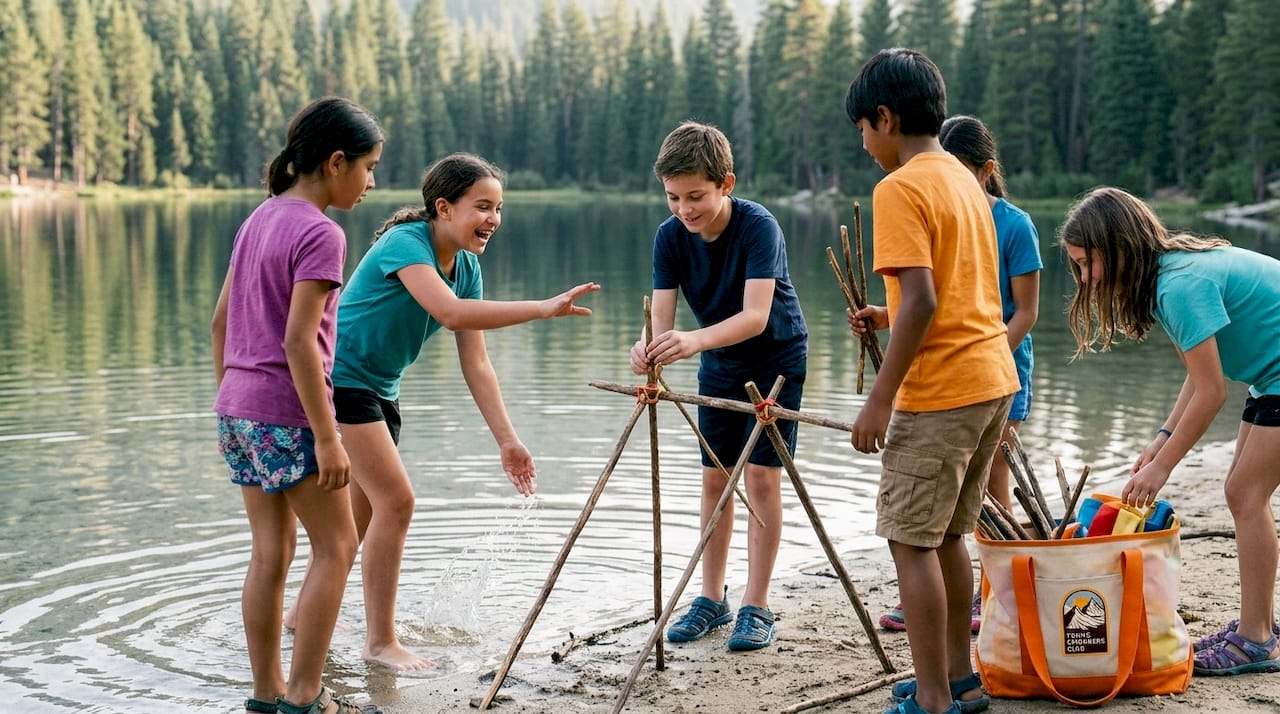
4. Collaborative challenge tasks
Give a small group a problem they can only solve together. Build a structure out of limited materials. Plan a fake road trip with a fixed budget. Design a community garden layout. The specific task matters less than the structure: no single person can finish it alone.
This is one of the most effective fun activities for youth development because it creates genuine interdependence. Kids learn to listen, negotiate, divide tasks, and support each other’s ideas without a lecture on teamwork. Works well from age 8 through 17 with appropriate task complexity.
5. Role-play conflict resolution
Present a realistic conflict scenario and ask youth to act out different responses. Then debrief: which response kept the relationship intact? Which one made things worse? The power here is in the debrief, not the performance.
Skills development for teens improves significantly when they practice conflict responses in low-stakes settings before they face real ones. This activity builds relationship skills and responsible decision-making simultaneously. Keep scenarios realistic and age-relevant. A dispute over a video game hits different than a workplace scenario for a 10-year-old.
6. Goal ladder planning
A goal ladder breaks one larger goal into five or six concrete weekly steps. The visual format matters. When kids can see the rungs they’ve already climbed, it builds momentum and self-efficacy. This is a self-management activity that also teaches realistic planning.
Start with a goal that genuinely matters to the child. A goal chosen by a parent has a short lifespan. Let the child pick: a skill they want to learn, something they want to create, a habit they want to build. Then build the ladder together.
Pro Tip: Photograph the completed ladder and put it somewhere visible. Kids who can see their progress are significantly more likely to keep going than those tracking it mentally.
7. Community problem mapping
Ask youth to identify one real problem in their neighborhood, school, or community and map it out: who does it affect, what causes it, what a realistic solution might look like. This builds social awareness and responsibility while practicing analytical thinking.
For teens especially, this activity connects personal development to something larger than themselves. Real-life experiences with service and leadership are among the most effective ways to build resilience and purpose-driven confidence in this age group.
8. Mindfulness grounding exercises
Simple five-minute grounding techniques, like the 5-4-3-2-1 sensory exercise or slow breathing with counted exhales, give youth a tool for managing stress in real time. The key is practice before the stress hits, not only during it.
For younger children, physical anchors help: hold something textured, notice five colors in the room, press your feet into the floor. For teens, building self-esteem through consistent positive self-talk and independence works alongside these exercises to create a full stress-response toolkit.
How these activities compare
Use this table to quickly match an activity to your child’s primary growth goal, setting, and available time.
| Activity | Primary SEL focus | Age range | Group or solo | Time needed | Adult involvement |
|---|---|---|---|---|---|
| Strengths collage | Self-Awareness, Relationship Skills | 8 to 14 | Small group | 60 to 90 min | Moderate |
| CAST program | Self-Management, Decision-Making | 11 to 18 | Group of 6 to 8 | 12 sessions | High (facilitator) |
| Emotion vocabulary journaling | Self-Awareness, Self-Management | 9 to 17 | Solo or paired | 15 to 20 min | Low |
| Collaborative challenge tasks | Relationship Skills, Social Awareness | 8 to 17 | Group | 45 to 60 min | Moderate |
| Role-play conflict resolution | Relationship Skills, Decision-Making | 10 to 17 | Group | 30 to 45 min | High |
| Goal ladder planning | Self-Management, Self-Awareness | 8 to 17 | Solo with support | 20 to 30 min | Low to moderate |
| Community problem mapping | Social Awareness, Decision-Making | 12 to 17 | Group or solo | 60 to 90 min | Low to moderate |
| Mindfulness grounding | Self-Management | 8 to 17 | Solo or group | 5 to 15 min | Low |
One thing this table reveals: activities focused on teamwork almost always require a group. If your child doesn’t have regular peer contact outside of school, that’s worth addressing directly. How camps encourage healthy peer relationships is worth reading if you’re thinking about structured programs that provide consistent group exposure.
Matching activities to your child’s profile
Choosing the right activity means knowing your child, not just the activity.
For younger children aged 8 to 11: Start with concrete, hands-on formats. Strengths collage, collaborative challenges, and mindfulness grounding are all accessible without requiring advanced abstract thinking. Keep sessions short and visually engaging.
For teens aged 12 to 17: They can handle more complexity and benefit from autonomy in the process. Goal ladder planning, community problem mapping, and CAST-style programs give them real agency. Digital SEL programs show significant results for social-emotional skills, but prioritize programs with active practice over passive content consumption.
For introverted or shy youth: Don’t skip peer interaction activities. Skip the pressure instead. Start with paired activities before moving to larger groups. Journaling and goal ladders build internal skills first, which creates a stronger foundation for peer interaction later.
For adapting group activities at home:
- Role-play conflict resolution works with just two people (parent and child)
- Collaborative challenges can involve the whole family
- Community problem mapping works solo and then becomes a conversation starter
For sustained growth: Embedding activities into daily routines rather than treating them as one-time events is the single biggest factor in whether skills stick. Five minutes of journaling every morning beats a two-hour workshop once a month.
Structured programs like summer camps accelerate all of this. The combination of consistent peer groups, new challenges, adult facilitation, and removal from habitual comfort zones creates an environment where outdoor challenges build self-esteem in ways that are hard to replicate at home alone.
My honest take on what actually moves the needle
I’ve watched a lot of parents invest time and money in youth development programs and activities. What I keep seeing is the same pattern: the activities that create lasting change share one quality. They require the child to do something, not just observe or listen.
Sitting through a workshop on teamwork doesn’t build teamwork. Arguing with a teammate about how to build a raft and then figuring it out together does. The emotional charge of a real shared challenge, even a small manufactured one, is what converts an abstract concept into a remembered skill.
I’ve also seen parents exhaust their kids by stacking too many enrichment activities at once. More isn’t better. What I’ve found is that two or three focused activities, done consistently with genuine reflection time built in, outperform six fragmented ones every time. Kids need space to process what they experienced, not just more experiences piled on top.
The other thing I’d push back on: don’t assume shyness means a child shouldn’t be in group settings. I’ve seen reserved kids transform over a few weeks in the right peer environment, precisely because they weren’t pushed prematurely. The key is finding groups where the culture is genuinely supportive and adult facilitators understand how to draw quieter kids in without spotlighting them. That skill on the adult side is often underrated.
Finally, fun isn’t a consolation prize. It’s a delivery mechanism. When a child is genuinely engaged and enjoying an activity, their brain is in a state that’s neurologically more receptive to learning. The best personal development activities for youth aren’t the ones that feel most like work. They’re the ones kids want to do again.
— Guillem
How Youngexplorersclub supports youth personal development
If you’re looking for a structured program that puts all of this into practice, Youngexplorersclub runs weekly activities and summer camp programs in Switzerland designed specifically for youth aged 8 to 17.
The programs are built around experiential learning: mountain biking, climbing, survival skills, and multisport challenges that embed SEL competencies into every session. Kids practice real teamwork, build genuine confidence through outdoor achievement, and develop resilience in a bilingual environment with peer groups from across the world. These aren’t passive programs. They’re exactly the kind of active, peer-supported, adult-facilitated experiences the research consistently points to as most effective.
Check out the summer camp for teens for a full overview of what’s available, or explore the weekly activities in Vaud for year-round options closer to home. Both are designed to give your child the kind of growth that carries well beyond the summer.
FAQ
What are the best personal development activities for youth?
The most effective activities practice multiple SEL competencies at once, involve peer interaction, and include structured adult feedback. Strengths collages, collaborative challenges, and goal ladder planning consistently produce strong results across age groups.
How do I choose the right activity for my child’s age?
Children aged 8 to 11 respond best to hands-on, visual activities like collages and physical challenges. Teens aged 12 to 17 benefit from goal-setting, community problem mapping, and group programs like CAST that give them real autonomy and accountability.
Can personal growth exercises for youth be done at home?
Yes. Emotion vocabulary journaling, goal ladder planning, and mindfulness grounding require no special equipment and minimal adult facilitation. Group-based activities like collaborative challenges can be adapted for family settings with two or more participants.
How long before personal development activities show results?
Consistent practice over six to eight weeks typically produces noticeable changes in self-confidence and self-management. Activities embedded into daily routines compound faster than occasional workshops.
Are summer camps effective for youth skills development?
Structured summer camp programs combine peer interaction, adult facilitation, and repeated skill practice in a way that accelerates personal growth significantly. Real-life leadership experiences like those offered at camps are consistently linked to stronger resilience and leadership skills in teens.