Role of outdoor activities in youth development 2026
Discover how outdoor activities at Swiss summer camps build confidence, independence, and resilience in youth aged 8-17 through research-backed experiential learning.
Many parents view summer camps as a fun break from school, a chance for kids to play outdoors and make friends. Yet structured nature experiences support youth mental, emotional, and social health in measurable ways that extend far beyond recreation. Research shows outdoor activities at international camps in Switzerland directly enhance confidence, independence, and resilience in children aged 8 to 17. This guide unpacks the evidence-based benefits of outdoor programming and shows how adventure-based learning fosters genuine personal growth.
Table of Contents
- How Outdoor Activities Foster Mental, Emotional, And Social Growth
- Building Confidence, Independence, And Social Skills Through Adventure
- Safety, Inclusivity, And Program Design Nuances In Outdoor Youth Activities
- How Experiential Outdoor Learning Applies To Your Child’s Growth
- Explore Exceptional Outdoor Summer Camps In Switzerland
- What Role Do Outdoor Activities Play In Kids’ Mental Health?
- How Do Outdoor Activities Improve Mental Health In Children?
- Are Outdoor Camps Safe For My Child?
- Will My Child Make Friends At Outdoor Camp?
- How Do Outdoor Activities Support Academic Learning?
- How Do Outdoor Camps Help My Child Develop Independence?
- Are Outdoor Summer Camps Safe For Children With Special Needs?
- What Makes Swiss Summer Camps Unique For International Campers?
Key takeaways
| Point | Details |
|---|---|
| Mental and emotional gains | Outdoor activities reduce anxiety and improve mood through structured nature immersion. |
| Confidence and independence | Adventure challenges build self-efficacy and leadership skills in youth. |
| Social development | Most campers form lasting friendships and develop cooperation skills. |
| Safety and inclusivity | Well-designed Swiss camps prioritize accessibility and rigorous safety protocols. |
| Experiential learning | Hands-on outdoor challenges foster resilience and prevent summer learning loss. |
How outdoor activities foster mental, emotional, and social growth
MESH competencies refer to mental, emotional, and social health skills that help young people navigate challenges, regulate emotions, and build healthy relationships. For youth aged 8 to 17, these competencies form the foundation for lifelong well-being and success. Structured nature experiences support youth mental, emotional, and social health by providing immersive environments where kids practice coping strategies, emotional regulation, and teamwork in real time.
The mental health domain is the most studied and significant benefit from outdoor camp experiences. Research consistently shows that time spent in nature lowers stress hormones, reduces symptoms of anxiety and depression, and improves overall mood. When combined with the social structure of summer camps, these effects amplify. Kids learn to manage frustration during a challenging hike, celebrate small victories on a climbing wall, and support peers through difficult moments.
Emotional regulation improves as campers face controlled risks and navigate unfamiliar situations. Social skills flourish through group activities that require communication, conflict resolution, and collaboration. Mental well-being strengthens as children build a sense of competence and belonging. Experiential learning matters for kids because it engages them in active problem-solving rather than passive observation.
Consider these specific gains:
- Reduced anxiety and improved mood through daily nature exposure
- Enhanced emotional regulation via adventure challenges and reflection
- Stronger social connections from cooperative group activities
- Increased mental resilience through overcoming obstacles
Experts emphasize the transformative potential of these experiences:
Structured outdoor programs create safe spaces for youth to test their limits, build trust, and develop coping skills that transfer to everyday life. The combination of physical challenge and social support makes camps uniquely effective for personal growth.
Understanding the importance of summer camps for growth helps parents recognize that outdoor activities serve as powerful tools for developing the whole child, not just a summer diversion.
Building confidence, independence, and social skills through adventure
Self-concept refers to how children view themselves, while self-efficacy describes their belief in their ability to succeed at specific tasks. A child with strong self-concept might think, “I am capable and valued,” while high self-efficacy sounds like, “I can learn to paddleboard if I practice.” Adventure programs produce moderate measurable gains in both areas by placing kids in situations where they overcome fears, master new skills, and receive positive feedback.
Independence grows naturally when children make decisions away from home. At camp, they choose activities, manage personal belongings, and navigate social dynamics without parental intervention. Leadership skills emerge as older campers mentor younger ones, lead group discussions, or take responsibility for team tasks. These experiences build a foundation for autonomy that serves youth well into adulthood.
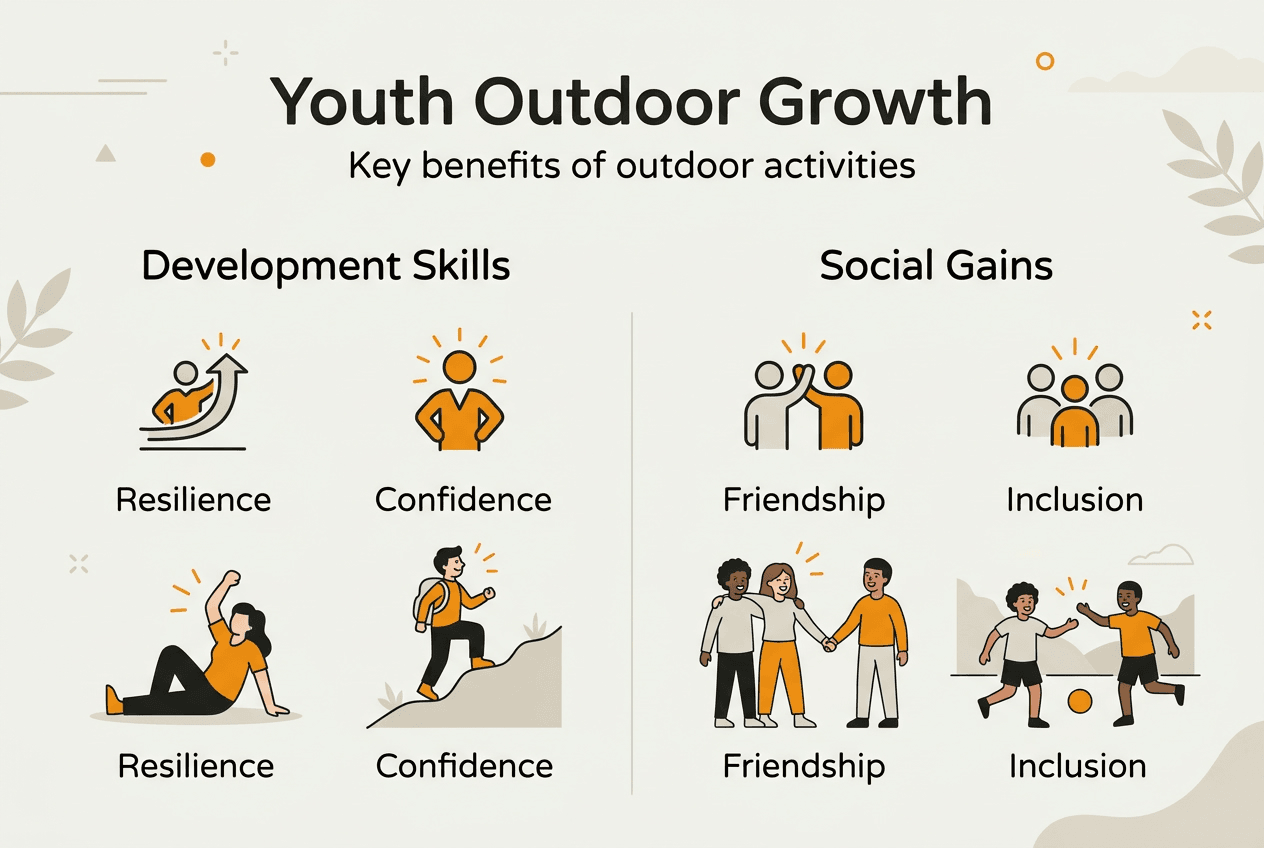
Social benefits are equally significant. 70 to 90% of campers make new friends during their stay, forming bonds that often last beyond the summer. Roughly 70 to 80% report feeling more independent after camp. The communal living environment teaches cooperation, empathy, and respect for diverse perspectives. A sense of belonging develops as kids find their place within a supportive community.
Camp activities scaffold personal development through these progressive steps:
- Initial skill practice in low-stakes environments builds foundational competence.
- Small group responsibilities teach accountability and teamwork.
- Challenge courses and adventure activities push comfort zones safely.
- Leadership roles allow campers to guide peers and reflect on growth.
- End-of-session celebrations reinforce achievements and personal progress.
Data from the American Camp Association provides clear benchmarks for these outcomes:
| Outcome | Percentage of Campers |
|---|---|
| Gained self-confidence | 74% |
| Made new friends | 96% |
| Became more independent | 69% |
| Improved social skills | 70% |
| Tried new activities | 92% |
These statistics reflect why summer camps are essential for personal growth, demonstrating that the majority of participants experience meaningful development across multiple domains.
Pro Tip: Encourage your child to keep a simple journal during camp, noting one challenge they faced and one thing they learned each day. Reviewing these entries together after camp reinforces the growth they achieved and boosts self-confidence.
Parents seeking to support boosting confidence and independence should look for programs that offer age-appropriate challenges and clear pathways for increasing responsibility. Social skills development at camps happens most effectively when activities require genuine collaboration and when counselors model positive communication.
Safety, inclusivity, and program design nuances in outdoor youth activities
Parents naturally worry about safety when sending children to outdoor camps, especially in rugged environments like the Swiss Alps. Common concerns include injury risk, supervision quality, emergency response capabilities, and whether programs accommodate children with varying abilities or special needs. Addressing these concerns requires transparency from camp operators and informed decision-making from families.
Switzerland’s high safety standards and structured programs mitigate risks at outdoor camps through several key measures:
- Certified instructors with wilderness first aid and CPR training
- Regular equipment inspections and maintenance protocols
- Clear emergency action plans with hospital access and communication systems
- Age-appropriate activity design with graduated difficulty levels
- Low camper-to-staff ratios ensuring close supervision
Inclusivity efforts have expanded significantly in recent years. Many Swiss camps offer scholarships or sliding-scale fees to make programs accessible to families with limited budgets. Activity options range from high-intensity adventure sports to gentler nature exploration, allowing children with different physical abilities and comfort levels to participate meaningfully. Staff training increasingly includes strategies for supporting neurodiverse campers and those with physical disabilities.
Program design philosophy matters deeply. Differing beliefs about trauma and harm lead to very different approaches to outdoor leadership practices. Some programs emphasize challenge by choice, where campers decide their level of participation in risky activities. Others use a more directive approach, encouraging all participants to attempt challenges with strong safety nets. Understanding a camp’s philosophy helps parents choose programs aligned with their values and their child’s needs.
Inclusive program design and scholarships address accessibility concerns without compromising quality. The best camps balance high standards with flexibility, ensuring that every child can experience growth regardless of background or ability.
Pro Tip: Ask prospective camps to provide detailed safety protocols, staff certification information, and emergency action plans in writing. A quality program will share this information readily and discuss how they tailor activities for different skill levels.
Experts emphasize the importance of infrastructure:
Facility standards and staff qualifications are non-negotiable. Parents should verify that camps maintain current accreditations, conduct background checks on all staff, and have established relationships with local medical providers. These factors directly impact both safety and program effectiveness.
Families preparing for camp can review parents camp preparation tips to understand what questions to ask and how to support their child’s readiness. Learning about a camp’s adventure-based learning philosophy provides insight into how challenges are framed and supported.
How experiential outdoor learning applies to your child’s growth
Experiential learning means gaining knowledge through direct experience rather than lectures or textbooks. At outdoor camps, this translates to learning teamwork by navigating a ropes course together, developing problem-solving skills by building a shelter, or understanding ecology by observing wildlife in natural habitats. Swiss outdoor camps integrate experiential learning into every activity, creating multiple daily opportunities for skill development and personal reflection.
Comparing traditional summer activities with experiential outdoor learning reveals distinct advantages:
| Aspect | Traditional Activities | Experiential Outdoor Learning |
|---|---|---|
| Learning method | Observation and instruction | Hands-on practice and reflection |
| Skill retention | Moderate, often forgotten | High, reinforced through experience |
| Personal growth | Limited to specific skills | Broad development across domains |
| Social interaction | Structured and supervised | Organic collaboration and leadership |
| Challenge level | Predictable and comfortable | Progressive and adaptable |
The scaffolded approach used by quality camps follows these developmental steps:
- Skill practice begins with basic techniques in controlled settings, such as learning knot-tying before attempting climbing.
- Small responsibilities like setting up tents or preparing meals teach accountability within supportive teams.
- Challenge courses introduce calculated risks, pushing comfort zones while maintaining safety.
- Leadership roles emerge as campers gain competence, allowing them to guide activities or mentor peers.
- Reflection sessions help youth process experiences, identify growth, and set future goals.
Well-designed camps prevent summer learning loss by mixing micro-lessons, project-based enrichment, and focused STEAM tracks into outdoor programming. A geology hike teaches earth science concepts through direct observation. Navigation exercises apply mathematical thinking to real-world problems. Journaling activities maintain writing skills while encouraging self-expression.
Camps accelerate growth with scaffolded, repeatable experiences and clear leadership pathways that allow older or returning campers to take on increasing responsibility. This progression mirrors healthy development, where mastery in one area builds confidence to tackle new challenges.
Outdoor programs build resilience by requiring campers to face challenges, reflect on setbacks, and persist despite difficulty. A child who struggles to reach the top of a climbing wall learns that effort matters more than immediate success. A team that gets lost during orienteering discovers they can problem-solve together and find their way back. These lessons transfer directly to academic, social, and personal challenges beyond camp.
Pro Tip: Encourage your child to reflect regularly during and after camp by asking open-ended questions like, “What surprised you today?” or “How did you handle that challenge?” This practice deepens learning and helps them recognize their own resilience and growth.
Families interested in camps encouraging new skills should prioritize programs with diverse activity offerings and strong reflection components. Understanding why summer camps are essential for personal growth helps parents articulate the value of these experiences to their children and support their development throughout the summer.
Explore exceptional outdoor summer camps in Switzerland
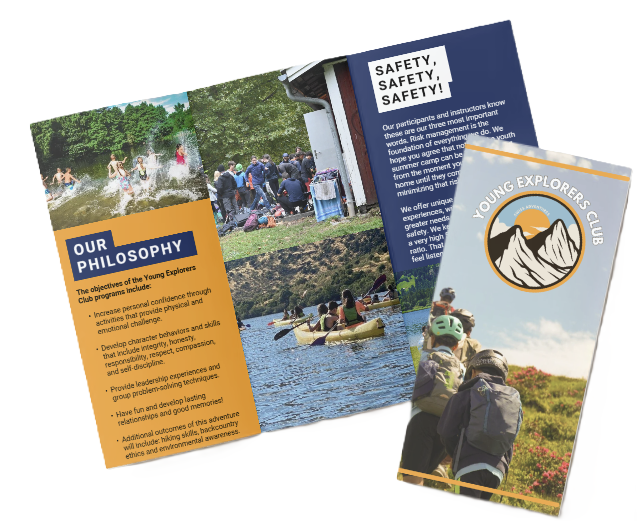
Young Explorers Club offers international summer camp options designed specifically for children aged 8 to 17 seeking adventure, personal growth, and meaningful connections in the Swiss Alps. Our programs combine rigorous safety standards with immersive outdoor experiences that build confidence, independence, and resilience. From mountain biking and climbing to survival skills and multisport adventures, every activity is structured to promote experiential learning and social development.
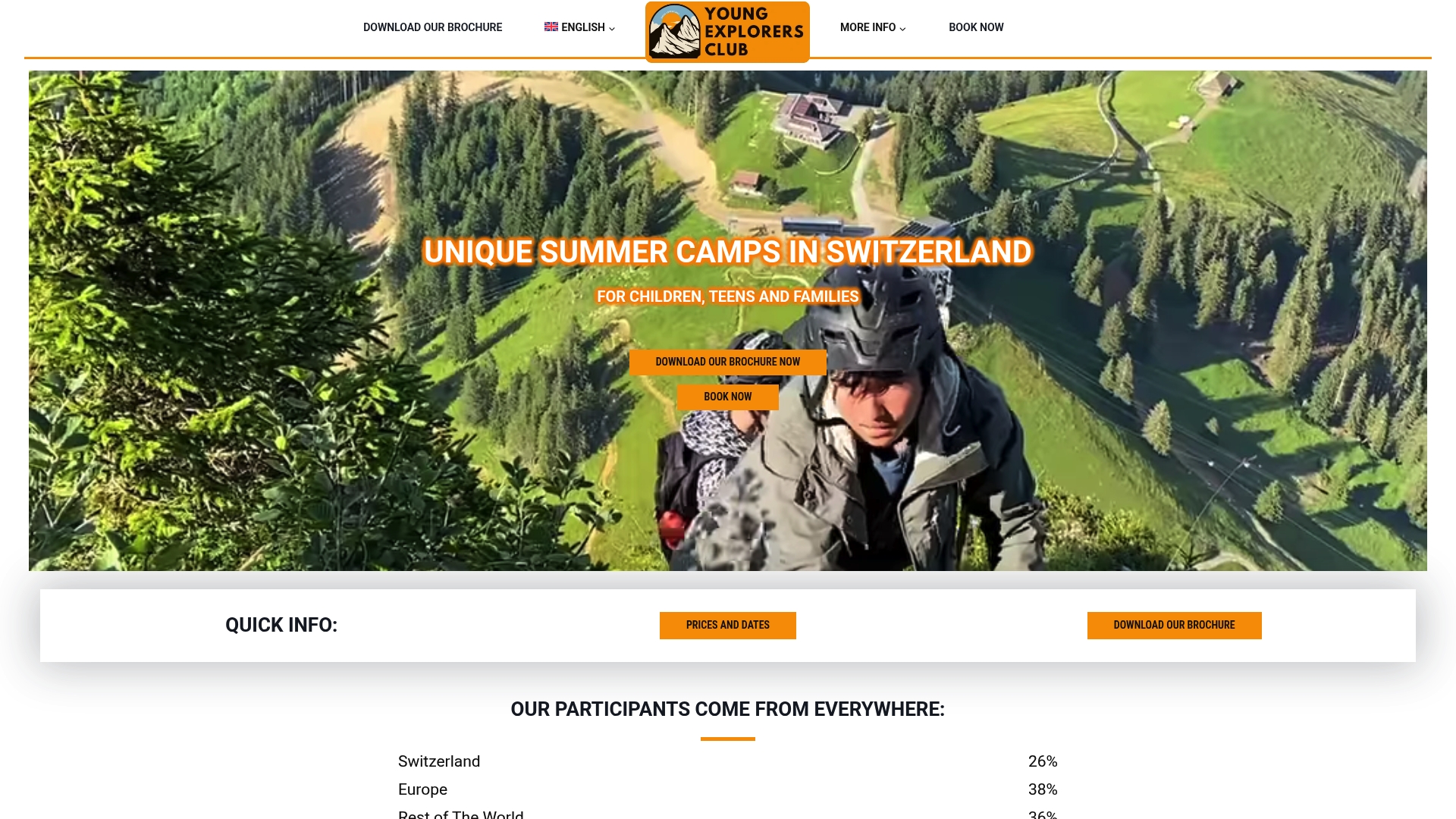
Our bilingual environment supports language learning alongside outdoor education, creating opportunities for international friendship and cultural exchange. Weekly activities for youth include progressive challenges that allow campers to develop leadership skills and try new things in a supportive community. Parents consistently report that their children return home more self-assured, socially skilled, and eager to tackle new challenges.
The benefits you’ve read about in this guide align directly with our program design. We prioritize the confidence and independence benefits that research demonstrates while maintaining the highest safety and inclusivity standards. Explore our camp schedules, read testimonials from families worldwide, and discover how Young Explorers Club can support your child’s growth this summer.
What role do outdoor activities play in kids’ mental health?
How do outdoor activities improve mental health in children?
Outdoor activities reduce anxiety and depression symptoms by lowering stress hormones and promoting physical activity. Structured nature experiences support youth mental, emotional, and social health through immersive environments that encourage coping skills and emotional regulation. Time in nature improves mood, increases focus, and provides a break from screen time and academic pressure.
Are outdoor camps safe for my child?
Reputable Swiss outdoor camps maintain rigorous safety protocols including certified staff, regular equipment inspections, and clear emergency plans. Switzerland’s high safety standards and structured programs ensure appropriate supervision and risk management. Parents should verify accreditations and ask detailed questions about safety measures before enrollment.
Will my child make friends at outdoor camp?
Research shows 70 to 90% of campers make new friends during their stay, with many forming lasting connections. The communal living environment and cooperative activities naturally foster social bonds. Campers develop empathy, communication skills, and a sense of belonging through shared experiences and challenges.
How do outdoor activities support academic learning?
Well-designed camps prevent summer learning loss by integrating educational content into outdoor activities. Geology hikes teach earth science, navigation exercises apply math skills, and journaling maintains literacy. Experiential learning enhances retention and makes academic concepts tangible and memorable.
How do outdoor camps help my child develop independence?
Outdoor camps foster independence through progressive challenges that require decision-making and self-reliance. Campers manage personal belongings, choose activities, and navigate social situations without parental guidance. Roughly 70 to 80% report feeling more independent after camp experiences.
Daily routines build responsibility as children participate in meal preparation, cabin maintenance, and group planning. Leadership opportunities emerge naturally as campers gain competence and confidence. This scaffolded approach to boosting independence at camps prepares youth for increasing autonomy in their everyday lives.
Are outdoor summer camps safe for children with special needs?
Yes, many camps have trained staff and safety protocols tailored for participants with diverse abilities. Well-designed camps prioritize inclusivity and safety, with accommodations for diverse abilities through modified activities, specialized equipment, and individualized support plans. Parents should inquire about specific accommodations during the enrollment process.
Quality programs conduct thorough intake assessments to understand each child’s needs and create appropriate support structures. Staff training includes strategies for supporting neurodiverse campers and those with physical disabilities. Planning camp for special needs involves open communication between families and camp directors to ensure a positive experience.
What makes Swiss summer camps unique for international campers?
Swiss camps emphasize adventure, cultural exchange, and language immersion in stunning alpine settings. Swiss camps combine high safety standards with cultural exchange and immersion in nature, creating unique opportunities for personal and academic growth. The international environment allows campers to build global friendships and develop cross-cultural competencies.
Bilingual programming in English and French provides optional language learning alongside outdoor activities. The combination of rigorous safety protocols, diverse activity offerings, and scenic natural environments makes Switzerland an ideal location for transformative summer experiences. Families can explore weekly activities in Vaud to see specific program options and schedules.