How to Keep Kids Active Year-Round in Switzerland (Sports, Camps & Outdoor Adventures)
Plan, prepare & play: practical Swiss family guide to year‑round kids activities, J+S clubs, camps, safety checklists and canton‑specific tips.
Plan, prepare and play: this guide helps Swiss families find year‑round activities, compare organised options, and manage safety, costs and logistics. It’s practical, canton‑aware and ready to use when booking camps, joining Vereine or planning outdoor weekends. Use the checklists, links and quick tips below to save time and keep kids active and safe.
Quick facts & snapshot — Fast facts families need to know
Swiss snapshot & family access
Switzerland has a population of about 8.7 million (2024 est.), 26 cantons and four language regions (German, French, Italian, Romansh). The mountains shape family life here — 48 peaks rise above 4,000 m, and many are accessible by cable car or mountain railway, which makes family hiking Switzerland realistic from toddlers to teens.
Regional notes that matter to families:
- Public transport and mountain lifts: take the Rigi, Pilatus, Gornergrat or Jungfraujoch for easy high-altitude access with children.
- Lakes and lowland options: summer on Lake Geneva (Lac Léman), Lake Zurich or Lake Lugano offers swimming and paddle sports close to towns.
- Canton differences: school holiday dates, local fees for outdoor programmes and playground standards vary by canton — always check your canton’s calendar and municipal info before booking.
- Language regions: bilingual programmes and camps exist in Romandy and Ticino; search for courses in the child’s strongest language where possible.
Age-adjusted outing guidance:
- Preschool (2–5): short, frequent trips — 30–60 minute walks on flat trails; choose paths with play elements like streams or rocks.
- Children (6–12): mix playgrounds, 1–3 hour family hikes and structured sport clubs; introduce basic map skills and simple trail planning.
- Teens (13–17): longer day hikes, overnight hut stays and club sports; encourage leadership roles like route-checking or packing responsibility.
Daily activity benchmark & seasonal calendar
The WHO guideline recommends children and adolescents (5–17) get 60 minutes per day of moderate-to-vigorous physical activity. Jugend+Sport (J+S) supports that aim in Switzerland by running thousands of courses each year — check the Jugend+Sport (J+S) annual report for current numbers.
Seasonal activities at a glance — quick ideas and safety notes for each season:
- Spring (March–May): low-altitude hikes, early-season biking and map skills. Bring layered clothing and waterproofs. Ages 3–6: short nature walks with scavenger hunts. Ages 7–12: basic orienteering and guided bike routes. Teens: multi-stage rides and navigation.
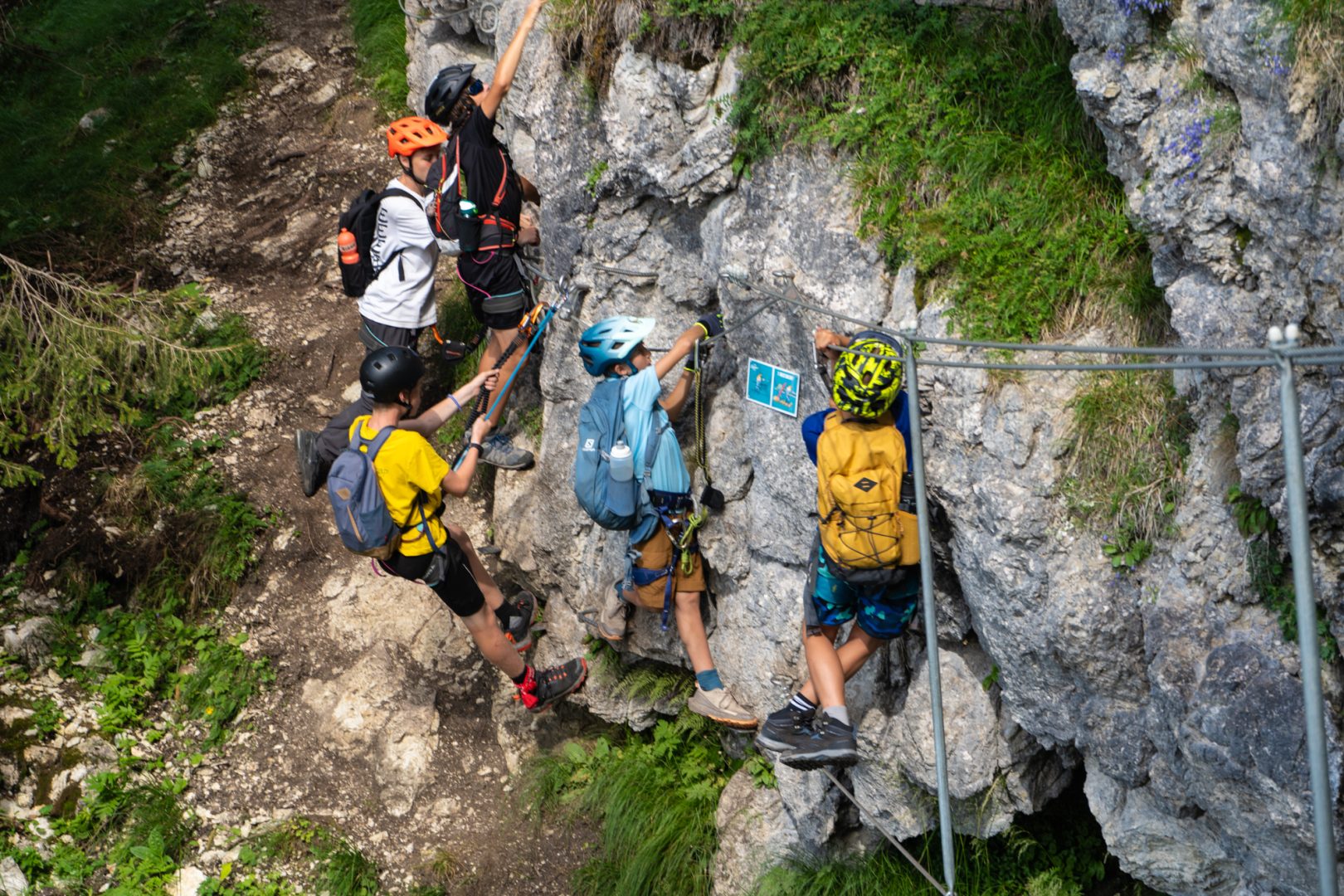
- Summer (June–Aug): sign up for summer camps, swim in lakes and try family-friendly via ferrata with secure harnesses. Apply broad-spectrum sunscreen and teach water safety. Ages 3–6: supervised paddling. Ages 7–12: lake swims, canoeing. Teens: overnight huts and mountain biking.
- Autumn (Sept–Nov): cooler weather for forest school, berry foraging and indoor climbing sessions. Teach seasonal hazard awareness and bring headlamps for early dusk.
- Winter (Dec–Feb): book ski lessons and try sledging and ice skating at rinks or frozen lakes where permitted. For any backcountry plans, consult the SLF avalanche bulletin and carry appropriate kit.
Practical actions we recommend right now:
- Compare local Jugend+Sport (J+S) offerings and book courses by canton; J+S is a fast way to add weekly organised activity.
- Pack a seasonal safety kit: sunblock, hat and water in summer; warm layers, headlamp and first-aid in colder months.
- Choose routes served by public transport to avoid long drives and model sustainable travel for kids.
- Start with short commitments—trial a club night or day camp before committing the whole season.
National programs, clubs and organized options — Jugend+Sport, Vereine and federations
We point families to three main channels for year‑round activity in Switzerland: the federal Jugend+Sport framework, certified federations and local Vereine, plus private commercial camps for specific needs.
Jugend+Sport (J+S) funds courses, subsidises weekend and week‑long sport camps and trains volunteer leaders. It runs thousands of courses across cantons and supports hundreds of thousands of young participants nationwide. Check the J+S course listings on the J+S website or your kantonale Sportamt to find local offerings.
Swiss Olympic and national federations provide the certified pathway for technical sports and competition. For mountain skills and hut trips consult the Swiss Alpine Club (SAC) youth sections. Swiss Swimming, Schweizerischer Turnverband (Swiss Gymnastics) and Swiss Orienteering list affiliated clubs and certified courses in cities like Zürich, Geneva and Lausanne.
Local Vereine form the backbone of community sport. Municipal and canton‑level Vereine offer weekly training in school gyms, sports halls and outdoor venues. Typical annual membership fees range from approx. CHF 50–200. Vereine provide continuity, local friendships and volunteer coaches—many trained via J+S.
Private providers and commercial camps offer specialised instruction, smaller groups and residential options—often including gear and meals. Confirm whether they follow federation curricula and provide staff CVs and staff-to-child ratios before booking.
Quick compare: J+S vs Vereine vs private camps
- J+S course — Cost: low/subsidised; Frequency: weekend courses and seasonal camps; Oversight: federal programme with trained J+S leaders; Action: search “J+S Kurs” on the J+S website or canton portal and request leader credentials.
- Vereine (sports clubs) — Cost: CHF 50–200/year; Frequency: weekly training year‑round; Action: contact your Gemeinde, try a free session and confirm insurance/competition expectations.
- Private commercial camp — Cost: higher (day and residential options); Oversight: varies — ask about federation affiliation and first‑aid/RK training; Action: request staff ratios, sample menus, safeguarding policies and certification.
- How we choose — Match your child’s interest (recreational vs competitive), your budget and weekly availability. Prioritise J+S or federation‑affiliated options for long‑term skill building, a local Verein for weekly social sport, and private camps for residential experiences.
Spring & Summer activities — hiking, biking, water sports and summer camps (family hiking Switzerland, lake swimming safety, summer camps Switzerland)
Spring and summer in Switzerland are perfect for keeping kids active — from gentle valley walks to week-long residential camps. Match route difficulty and supervision to your child’s age and skills, and use Swiss tools like SwissTopo and Komoot to plan.
For hiking with kids, pick family-friendly trails in every canton. For toddlers choose short loop trails with playgrounds and minimal elevation gain — examples include the Uetliberg family loop near Zürich or parts of the Gantrisch Nature Park. School-age children handle 2–4 hour hikes with modest altitude; teens can practice navigation on full-day routes with SwissTopo printouts or Komoot routes.
For biking, teach on lake promenades and rail-trails before tackling singletrack. Use bike trailers or child seats for preschoolers, and fit helmets and reflective vests. Many regional trains accept bikes with a bike ticket — check SBB rules before boarding.
Water safety: follow Swiss Swimming and Swiss Lifesaving guidance: supervise children within arm’s reach, practise open-water skills gradually, and use life jackets when boating. Start with supervised beach swims at Lake Thun or Lake Brienz, then introduce canoeing, kayaking or paddleboarding on calmer waters.
Climbing entry points: indoor climbing gyms provide bouldering and soft-play for preschoolers and children’s courses from about age 6. Via ferrata and outdoor cragging suit older, confident teens — only with certified guides or after formal training.
Summer camps in Switzerland vary from half-day programs to residential weeks. Typical costs run:
- Day camps: CHF 50–150 per day
- Week-long day camps: CHF 250–700 per week
- Residential camps: CHF 400–1,200+ per week
Check J+S affiliation as a quality marker, confirm supervision ratios, and ask whether meals, insurance and equipment are included. Many municipalities offer subsidies for local families; book popular cantonal camps early.
Practical checklists, route picks and quick tips
Use these short lists when you plan a day or book a camp.
- Essential gear for hikes and lakes:
- Water (1–2 L per person), snacks, sun hat, sunscreen
- Good shoes or boots, extra socks, light rainlayer
- SwissTopo map or saved Komoot route, charged phone and portable battery
- Whistle, small first-aid kit, child life jacket for boating
- Age-appropriate activity picks:
- Toddlers: Uetliberg loop, lakeside promenades, indoor climbing play sessions
- School-age: 2–4 hour hikes on Rigi/Engadin, family biking on rail-trails, canoe trips on calmer lakes
- Teens: full-day alpine routes with map navigation, graded singletrack in Lenzerheide, via ferrata with a guide
- Booking & transport tips:
- Check SBB bike on train rules and reserve space on busy regional services
- Use Komoot to match gradients and surfaces to your family’s level
- Confirm J+S affiliation for camps and ask about subsidies at your Gemeinde
Book cantonal camps well in advance, download SwissTopo tiles for backcountry hikes, and practise open-water skills in supervised spots before letting kids swim unsupervised in open lakes.
Autumn & rainy-day options — transition activities and indoor alternatives (orienteering, forest school, indoor pools)
Orienteering, forest school and nature-based learning
Autumn is ideal to move navigation and resilience training indoors and out. Forest schools and orienteering give children hands-on skills and suit Swiss landscapes. Many cantons keep mapped orienteering routes and family courses; Zurich, Bern and Vaud publish local maps and events every season.
To start, contact your local SAC section or orienteering club. They’ll point you to canton-specific routes and beginner sessions. Check J+S nature courses in your canton for subsidised youth outdoor programming.
Practical tips:
- Begin with short, simple courses in a park or near a village; set clear endpoints and time limits for younger children.
- Teach map basics before leaving: north, simple symbols, and how to count paces. Use laminated cue-cards for preschoolers.
- Use inexpensive gear — waterproof layer, sturdy shoes and a small compass for older kids. Label everything for canton-wide transport and school swaps.
- Mix in micro-challenges: find three different leaves, estimate steps to a bench, or use a simple bearing to a tree.
- Join club family days so kids see peers and progress; many clubs offer trial sessions.
Indoor climbing, pools and low-cost rainy-day ideas
When rain closes the trails, switch to weather-proof, high-energy options. Indoor climbing gyms and trampoline parks in cities such as Zurich, Geneva, Lausanne and Bern provide controlled, supervised activity. Municipal sports halls often publish open family hours and low-cost sessions on Gemeinde websites. Pools remain a year-round option: enrol in progressive Swiss Swimming lessons and book regular family swims.
Practical points:
- Call ahead: ask about child-specific hours, toddler or family sessions, and safety rules.
- Use municipal facilities first for budget-friendly sessions; private gyms add specialised coaching but cost more.
- Keep swim competence: schedule at least one indoor-pool lesson or family swim every fortnight in the off-season.
- Pack a simple “rainy-day kit”: socks for climbing, swimsuit, towel and a dry change of clothes.
Low-cost, high-value rainy-day activities to rotate:
- Public playground swaps: visit a new park within 15–20 minutes and let kids explore different equipment.
- Library movement and story hours: many libraries run active story sessions and craft corners for preschoolers.
- Indoor scavenger hunts: map your flat or a hall and give photographic clues to practise navigation.
- Home activity packs: countdown cards with 10-minute movement challenges.
- Circuit courses in a sports hall: set simple stations — jumping, crawling, target throws, timed in short bursts.
Action steps this week: check your Gemeinde site for sports-hall and pool schedules, email the nearest SAC or orienteering club to ask about family sessions, enrol children in Swiss Swimming lessons or a local climbing taster, and prepare a rainy-day kit with spare clothes and a laminated activity card.
Winter activities & snow safety — skiing, sledging, skating and backcountry rules (ski lessons for kids Switzerland, SLF avalanche bulletin)
We guide families to winter fun across Switzerland while keeping safety front and centre. Most resorts provide Kinderland areas, nursery slopes and child-focused lift systems. Resorts like Laax, Engelberg, Flumserberg, Zermatt, Verbier, Grindelwald and Arosa run busy Skischule programmes and nursery zones where children get used to skis and snow play.
When choosing lessons, consider weekly group lessons for social skill-building and private lessons for focused progress. Book early for school holidays.
Practical tips, safety kit and where to go
- Ski lessons and local contacts: search for “Skischule” and call the resort to confirm instructor-to-child ratios and language options.
- Toboggan runs and ice rinks: try Preda–Bergün for long sledges, or family areas at Flumserberg and Grindelwald. Check opening hours and rental skates.
- Backcountry safety (SLF guidance): consult the WSL Institute for Snow and Avalanche Research (SLF) daily before leaving a marked piste. Carry a transceiver, probe and shovel for backcountry trips and practice using them.
- Gear, clothing and rentals: insist on helmets for skiing and skating. Dress children in moisture-wicking base layers, insulating mid-layers and waterproof outer layers. Rent bulky items at the resort if visiting briefly.
- Practical on-the-day checks: check lift and piste status online, confirm daylight hours for toboggan runs, pack a small first-aid kit, sunscreen and water. For longer days, pack spare gloves and a warm blanket for toddlers.
Age-appropriate assessment: toddlers need one-to-one supervision and short sessions; preschoolers benefit from play-focused nursery slopes; school-age kids can join group lessons; teens progress to independent lessons and off-piste awareness when ready.
Before any backcountry outing check the SLF avalanche bulletin, download local piste maps, book a certified guide if needed and ensure every adult knows how to use a transceiver, probe and shovel—then confirm lesson or guide bookings with the local Skischule or guide service.
Choosing camps and programs — safety, ratios, accreditation and what to check (staff-to-child ratio, first aid certified)
Core vetting checklist before booking
Ask for these details and keep copies before booking any camp.
- Confirm age range and request a sample daily timetable.
- Staff-to-child ratio — request the advertised ratio and how it changes for excursions. Typical Swiss expectations: under-6 ≈ 1:4; 6–9 ≈ 1:6; 10+ ≈ 1:8–10—always verify actual practice.
- First-aid certified staff — ask how many staff hold Swiss Red Cross first-aid certification and whether someone with a current certificate is on site at all times.
- Background checks — request evidence of criminal-record checks (Strafregisterauszug) for staff and volunteers.
- Safeguarding and emergency plans — ask for written safeguarding policy, missing-child procedures, and an emergency contact tree. For residential stays, check night supervision protocols.
- Insurance and cancellation policy — confirm public liability (Haftpflicht) and accident insurance for participants, plus cancellation and refund terms.
- What’s included — verify meals, snacks, transport, gear, helmet use and whether specialist activities include equipment.
- Medical needs and allergies — provide the camp with medical forms and confirm staff training for anaphylaxis and asthma.
Certifications, practical comparisons and how to search locally
Look for Swiss certifications as reliable markers of quality and safety. J+S affiliation signals coach training, insurance cover and structured curriculum. Swiss Red Cross first-aid certification is standard for staff on medical and activity days. For specialist sports, prefer staff with J+S discipline-specific courses or national-federation qualifications (e.g., Swiss-Ski or SAC).
Residential stays should list youth-hostel accreditation or affiliation with the Swiss Youth Hostels network for dormitory safety standards and catering regulations.
Actionable next steps: request copies of staff first-aid certificates and Strafregisterauszug, ask for a sample daily schedule, confirm ratios during excursions, demand insurance policy numbers, and compare J+S vs private vs residential offers for your canton before booking.
Costs, subsidies and budgeting — realistic family budgets for activity (camp costs Switzerland, subsidized sports camp)
Typical cost categories and sample ranges
Typical expenses for activities and camps in Switzerland:
- Day camps: CHF 50–150 per day.
- Week-long day camps: CHF 250–700 per week.
- Residential/overnight camps: CHF 400–1,200+ per week.
- Club membership fees: CHF 50–200/year.
- Equipment (buy or rent): CHF 50–800 one-off depending on item.
- Lift passes and activity tickets: junior passes vary by resort; many Alpine areas offer reduced youth rates.
- Transport: CHF 10–60 per outing for public transport or shared drives; long-distance travel adds CHF 50–200.
- Clothing and seasonal layers: CHF 50–300 per season per child.
Subsidies, sample budgets and a practical cost-vs-benefit guide
Check municipal support for families and NGO programmes when planning; many cantons and Gemeinden offer aid. Subsidised sports camp options often come through Pro Juventute, municipal family services or local Jugendtreffs. Contact your Gemeinde’s Sozialamt or Familienbüro for eligibility and deadlines.
Ways to reduce costs:
- Sibling discounts and early-bird rates
- Equipment rental instead of buying for young kids
- Second-hand markets and community swaps
Sample monthly/yearly budget scenarios (per child):
- Low-cost: CHF 20–40/month — club membership CHF 60/year + subsidised sessions; rent gear.
- Mid-range: CHF 80–150/month — weekly club training, one week-long day camp per year.
- High-range: CHF 250+/month — private lessons, several residential camps, new seasonal gear every year.
Amortisation example: spread a CHF 600 ski setup over 3 years = CHF 200/year (~CHF 17/month). Add boots, helmet and upkeep to estimate CHF 300/year.
Age guidance for cost-effective choices:
- Ages 3–6: short day camps or half-day clubs; rent gear.
- Ages 7–12: weekly club training for consistency; add one week-long camp per season.
- Teens: consider residential camps and specialist coaching for sustained interest.
Practical next steps: request fee schedules from local clubs, apply for municipal support at least 6–8 weeks before programs start, compare rental vs purchase, and list transport + lunches + extras before committing.
Safety, insurance & first-aid essentials — season-specific kits and coverage (SLF avalanche bulletin, Swiss Red Cross)
Keep safety practical and predictable so families can focus on fun. Clear kit lists, confirmed insurance and basic first-aid training make outings safer and less stressful.
Check Swiss health insurance and accident coverage before any trip. The basic health insurance (KVG/LaMal) covers medical treatment in Switzerland, but accident insurance rules vary. For camps, confirm the provider’s liability insurance and ask about “insurance for camps Switzerland”. Consider travel or cancellation insurance for multi-day trips or international families.
We encourage parents and leaders to get trained. Swiss Red Cross courses teach practical first aid for children and outdoor incidents. Many J+S leaders are first-aid certified and carry enhanced kits.
Season-specific kits and an emergency checklist — carry these items every time
Keep one ready bag per season. Minimum items for each environment and an emergency plan checklist:
- Summer hike kit: water bottle (1L+), sun hat, SPF 30+ sunscreen, snacks, compact first aid kit, printed/dowloaded SwissTopo/Komoot route, light rain shell + fleece, map & compass or smartphone with battery pack, whistle, sturdy footwear.
- Water kit: CE-approved life jacket for children, buoyancy aids for toddlers, rope/throw-bag on boats, dry bag for phone/meds, shore supervision at all times.
- Winter & backcountry kit: helmet for every child, warm layered waterproof clothing, goggles, insulated boots, transceiver + probe + shovel for backcountry, headlamp, spare gloves, emergency bivy blanket.
- Emergency plan checklist: local emergency numbers (144, 117, 118, 1414, 112), meeting point, list of medications & allergy info, parental contact list, copy of insurance card and Swiss health number, location-sharing enabled on phones.
- Insurance & admin quick-check: verify personal accident insurance, confirm provider liability insurance for camps, note policy limits and consider travel/cancellation insurance for overnight stays.
Practical planning, transport & habit formation — weekly schedules, screen-time balance and getting there (SBB timetables, family travel Switzerland)
Plan active weeks intentionally with backups. Short, consistent sessions beat sporadic mega-outings. Aim for 60 minutes per day, slot a longer family outdoor time at the weekend, and build habit-forming cues so movement becomes automatic.
To replace screen time, schedule activity slots as fixed appointments in the family calendar. Rotate options: soft-play, parent-and-toddler groups, after-school sports clubs, cycling to school, and weekend hikes.
Check MeteoSwiss the evening before and again on the morning of an outing. For alpine trips consult SLF for avalanche conditions and download SwissTopo maps for offline use. Komoot helps plan family-friendly routes with elevation and surface details.
Transport logistics change what’s realistic. Use SBB timetables and the PostBus network to reach lakes, valley trailheads and many ski resorts without a car. Bikes go on most regional trains — check SBB policies and reserve space on long-distance services. Always review family discount and child fare rules on SBB and regional sites before booking.
Sample weekly schedules by age group and quick habit tips
-
Toddlers (1–4) — daily active play: 30–60 minutes; one structured play-based class weekly.
- Mon–Fri: 10–15 minute outdoor play bursts totaling 30–60 minutes.
- One midweek parent-and-toddler class for social motivation and routine.
- Weekend: 30–60 min family outdoor time—short lake walk or forest play.
- Screen-time replacement: fixed “active play” time after naps and an activity box with rotating toys.
-
School-age (6–12) — after-school sports 60–90 mins twice weekly; family outdoor time at the weekend; one week-day camp annually.
- Mon: active commute or cycle to school (15–30 min).
- Tue/Thu: after-school sports club (60–90 min).
- Wed: light skills practice (bike handling, basic orienteering).
- Fri: short family walk or scooter ride.
- Weekend: 2–4 hours family outdoor time or bike+train day.
- Screen-time replacement: weekly activity log with points for “60 minutes per day”.
-
Teens (13–18) — 3–5 structured training sessions/week plus weekend endurance outings.
- Mon/Wed/Fri: structured training (60–90 min) — club practices, running, climbing gym or ski training in winter.
- Tue or Thu: active cross-training (bike, swim, strength).
- Weekend: endurance outing planned on Komoot with SwissTopo offline maps.
- Screen-time replacement: training partners and club goals for peer accountability.
Resources, local examples & FAQs — apps, canton connections, family case studies and common questions (kids activities Switzerland, J+S courses)
Must-have tools, local tips and quick answers families in Switzerland need to keep kids active all year. Below are practical examples from Zurich, Valais/Graubünden and Geneva, plus a compact resource list and downloadable-checklist items to use when booking activities.
City family (Zurich): train with a local Verein two evenings a week, use after-school swimming lessons at the Hallenbad, and spend weekends at the lake for water adventures. Plan trips using SBB and Komoot.
Mountain family (Valais/Graubünden): seasonal rhythm matters — winter ski lessons and weekend resort stays, spring–autumn weekly alpine hikes. Check the WSL SLF avalanche bulletin and MeteoSwiss. Safety gear and SwissTopo route plans keep outings predictable.
Expat family (Geneva): use J+S and international camps to mix language learning with activity. Use J+S course search for Canton Geneva offerings and sign kids up for club training to build social networks and language skills.
Quick apps, canton links, checklists and FAQ navigation
- Jugend+Sport (J+S): use the J+S course search by canton for certified trainers and local programmes.
- SBB: plan public-transport trips, check bike rules and connection times.
- SwissTopo: official topographic maps for route planning and elevation profiles.
- Komoot: plan family-friendly routes, export GPX files and filter for low-traffic paths.
- MeteoSwiss: check mountain weather forecasts and lightning warnings.
- WSL SLF: consult avalanche bulletins during snow season.
- Swiss Red Cross: book child-first-aid courses for parents and older kids.
- Downloadable checklist — “Before you book: age range, staff-to-child ratio, first-aid, insurance, gear list”.
Frequently asked questions (FAQs)
Quick practical answers
Below are 15 practical questions parents ask and concise, actionable answers for families in Switzerland.
-
How much activity do kids need each day? We follow the WHO guideline: about 60 minutes per day of moderate-to-vigorous activity.
-
What is Jugend+Sport (J+S) and how do I find courses? Jugend+Sport is the federal youth-sport programme. Use the official J+S course search, filter by canton, age and sport, and contact the course leader to check language and level.
-
Are summer camps expensive? Costs vary: day camps CHF 50–150/day; week-long day camps CHF 250–700/week; residential camps CHF 400–1,200+/week. Check municipal offers for subsidies.
-
How can I keep toddlers active in the city? Short daily active play and fresh-air trips: forest kindergarten days (Waldspielgruppe), municipal toddler groups, open-play gymnastics and playground walks in 20–30 minute bursts.
-
When should I enrol my child in ski lessons? Many families start nursery-slope programs around ages 3–5. Book with a certified Skischule, insist on helmet use, and prefer small-group lessons for beginners.
-
How do I check avalanche risk? Consult the WSL SLF daily avalanche bulletin and take formal avalanche training before going off-piste. Avoid backcountry tours with unsupervised young children.
-
Do clubs provide insurance? Many clubs include accident insurance for organised activities, but coverage varies. Ask the club secretary for details and confirm what’s excluded.
-
How do I get my bike on a Swiss train and what are the costs? Most regional and intercity trains accept bikes with a bike ticket. Check SBB policies, buy a bike supplement when required and avoid peak commuter hours.
-
What age is appropriate for via ferrata or outdoor climbing? Indoor climbing and supervised easy crag climbs can suit preschoolers with trained staff. Via ferrata and exposed routes are for older children/teens and should use certified guides.
-
How can I keep my child’s swimming skills in winter? Enrol in year-round indoor pool lessons or book short refresher blocks. Swiss Swimming runs continuous progression courses to retain skills.
-
Are there subsidies for low-income families? Yes. Cantons, municipalities and NGOs like Pro Juventute offer financial aid. Contact your local family services or social office to apply.
-
What should I pack for a day hike with kids? Pack the essentials: water, snacks, sun protection, layered clothing, basic first-aid, map or offline SwissTopo route, and a small reward or game to motivate kids.
-
How to balance screen time with activity? Set predictable active windows, use a weekly activity chart and short family challenges to reach the 60-minute daily goal.
-
How early should I book summer camps? Book 2–4 months ahead for day camps and 4–8 months for residential camps, especially for school-holiday weeks in Graubünden and Valais.
-
Which apps are essential for planning? SwissTopo, Komoot, MeteoSwiss, SBB timetable and SLF avalanche bulletin — use offline maps and practice routes beforehand.
Appendix: Suggested comparison tables and downloadable checklists (insert on page)
Comparison table templates
Insert a clear, sortable comparison table so parents can quickly weigh options. Columns: Club / J+S day course / Private day camp / Residential camp. Rows to include cost, staff ratio, accreditation, age range, schedule, meals, equipment and transport needs.
Example notes to populate the table:
- Cost: Clubs CHF 50–200/term; J+S subsidised weekends CHF 30–120; private day camps CHF 120–300/day; residential CHF 500–1,200/week.
- Staff ratio: under-6 aim 1:4–1:6; ages 7–12 typically 1:6–1:10; teens 1:10–1:15.
- Accreditation: mark “J+S” where coaches are certified; list cantonal requirements where relevant.
- Age ranges: clubs suit toddlers to teens; J+S generally 6–18; private day camps accept younger kids (3+) with consent; residential camps better for 8+.
Downloadable checklists
- Season-specific gear checklist (summer / winter / water) — summer: sun hat, SPF 50, light layers; winter: insulated jacket, helmet; water: UV rash vest, PFDs.
- One-page safety & insurance checklist for camps — emergency contacts, allergy & medication log, signed consent forms, insurance policy numbers, nearest hospital info, staff qualifications.
- Printable weekly activity log to track the “60 minutes per day” — 7-day grid with activity type, intensity and total minutes counter.
Language and localisation notes to publish with the outline (for editors to implement on page)
Tailor content so parents in each canton feel the page is written for them. Use canton-specific headings and internal links. Examples: “Kids activities Zurich — Kinderaktivitäten Zürich”, “Summer camps Geneva — camps d’été Genève”.
Practical localisation checklist for editors:
- Provide full German and French pages for bilingual cantons; add Italian for Ticino and Romansh snippets for Graubünden where relevant.
- Link to J+S DE/FR pages and MeteoSwiss in the page language.
- Use local terminology (Skischule, courses d’escalade) and metric measurements.
- Include canton in H1/H2, meta title and schema: localBusiness or event schema with address and language.
- Switch weather widgets to MeteoSwiss DE/FR depending on page language and verify local resource links on publish day.
Conclusion & Next Steps
Get started this week: pick one local J+S course or club trial, prepare a season-appropriate kit using the downloadable checklist, and book a single trial day camp to test supervision and fit. Prioritise safety checks — staff first-aid certification, insurance and staff-to-child ratios — before you pay.
Call to action: Ready to book? Visit the J+S course search for your canton, compare one local Verein and one private camp using the comparison table, and contact providers to request staff-first-aid certificates and sample daily schedules. If you want a printable starter pack, download the seasonal gear checklist and the one-page safety checklist to bring to registration.
Final reminder: small, consistent activity sessions create long-term habits. Start local, keep it simple, and scale up to camps or residential weeks as confidence and interest grow.