

TL;DR:
- Sending your teenager to an international adventure camp requires assessing their physical and mental readiness, ensuring proper health, safety, and emergency preparedness. Proper planning includes detailed medical disclosures, packing essentials, and fostering language and social skills through immersive experiences. Most importantly, transparent communication and confidence-building prepare teens to thrive in challenging, culturally rich environments.
Sending your teenager to an international adventure camp is one of the most exciting decisions you can make as a parent. But it’s also one that comes with real questions: Is my teen physically ready? What if there’s a medical emergency? How do we handle packing, travel, and a language barrier all at once? These concerns are completely valid, and they deserve concrete answers rather than reassurance. This guide walks you through every major step, from assessing your teen’s readiness to maximizing language immersion, so you can feel confident that your teen will not just survive the experience but genuinely thrive in it.
Key Takeaways
| Point | Details |
|---|---|
| Readiness matters | Assess your teen’s physical and emotional preparedness for adventure before sending them abroad. |
| Safety first | Communicate all medical needs and verify the camp’s risk management processes for your teen’s well-being. |
| Smart packing | Pack efficiently using labeled, layered, and durable gear to empower your teen for adventure and minimize stress. |
| Immersive growth | Choose camps that blend language learning with real projects and excursions to super-charge social and communication skills. |
| Parent role | Beyond logistics, proactive risk-communication and scenario role-play help teens succeed in challenging environments. |
Assess your teen’s readiness for adventure
Before diving into logistics, parents should first gauge if their teen is truly ready for this intensity of adventure. This isn’t about doubting your child. It’s about setting them up for success rather than overwhelm.
Physical readiness is the most obvious factor, but it’s often underestimated. Adventure camps involve sustained physical effort, sometimes across multiple days. Hiking steep trails, mountain biking, or multi-sport challenges require cardiovascular endurance, strength, and the ability to push through discomfort. The Ten Tors Challenge, for example, tests navigational skills and resilience over distances up to 55 miles, a level of challenge that demands serious preparation over months, not weeks.
Mental resilience matters just as much. Can your teen handle frustration when a route is harder than expected? Do they bounce back from setbacks without shutting down? Problem-solving skills, particularly in unfamiliar settings, are a strong predictor of success at adventure camps. If your teen struggles to manage disappointment at home, a multi-week camp in a foreign country will amplify those challenges.
Signs that your teen is ready include:
- Willingness to try new activities without constant reassurance
- Comfort working in a team, including listening to peers and sharing responsibilities
- Basic self-care independence, managing their own schedule, sleep, and hygiene
- Openness to being corrected or coached by instructors
- Some experience with physical activity, whether sports, hiking, or outdoor programs
Here’s a quick comparison to help you understand the difference between program types:
| Factor | Self-guided adventures | Led adventure camps |
|---|---|---|
| Safety oversight | Teen-managed | Certified instructors on-site |
| Skill prerequisites | High | Low to moderate |
| Social structure | Self-organized | Built-in peer groups |
| Language support | None | Bilingual or multilingual staff |
| Parental risk level | High | Significantly lower |
For most teens aged 12 to 17, a well-structured led camp, especially one built around top adventure activities like climbing, survival skills, and multisport challenges, offers the right balance between challenge and support.
The concept of experiential learning for teens also applies here. Research consistently shows that teens who learn through doing, not just observing, develop stronger problem-solving skills and emotional regulation. Camp environments force exactly that kind of active engagement.
Pro Tip: Start local. Three to four months before camp, take your teen on progressively longer hikes and involve them in group activities that require cooperation and communication. This isn’t just physical training; it’s emotional preparation.
Understanding your teen through the lens of understanding teens abroad also helps. Teens in unfamiliar environments often surprise themselves. Many parents report that their teen’s resilience in a structured adventure setting far exceeded what they expected based on behavior at home.
Prepare for health, safety, and risk management
Once readiness is confirmed, parents must focus on the non-negotiable health and safety steps before enrollment. This area is where preparation can literally be the difference between a safe experience and a preventable tragedy.
Every reputable adventure camp should request detailed medical information before your teen sets foot on-site. This includes:
- Current medications, dosages, and administration schedules
- Allergies, including food, environmental, and medication allergies
- Chronic conditions such as asthma, diabetes, epilepsy, or heart conditions
- Emergency contact information, including a backup contact
- Insurance details and authorization for emergency medical treatment
- A signed management plan from your teen’s doctor for any ongoing condition
A critical legal finding illustrates why this matters so much. In one documented case, gaps in medical training created preventable incidents. The court found that extra staff training could have reduced risk significantly when a camp operator failed to train staff about diabetes management and did not fully disclose the student’s condition.
“Leaders need accurate medical information and training; gaps can cause preventable incidents. Extra training could have reduced risk.” — Safe Space Legal, reviewing a student death on camp excursion.
This is not meant to frighten you. It is meant to make you a more proactive advocate for your teen. Here’s a reference table for what to check before signing any enrollment contract:
| Document or protocol | Why it matters | Who is responsible |
|---|---|---|
| Medical disclosure form | Alerts staff to conditions | Parent + teen |
| Emergency action plan | Defines response steps | Camp medical team |
| Staff first-aid certification | Ensures trained responders | Camp administration |
| Condition-specific training | Prevents scenario-specific risks | Camp director |
| Insurance coverage letter | Covers evacuation and treatment | Parent |
| Signed consent for treatment | Allows emergency care | Parent |
Reviewing your packing for adventure camps checklist is also the right moment to include any prescription medications in a clearly labeled, accessible kit. Don’t leave this to your teen to organize alone.

Before committing to any program, ask the camp director directly: “How do you train your staff to manage medical emergencies specific to known conditions?” A well-run camp will have a clear, detailed answer. Vague responses should raise a red flag.
Understanding the basics of travel camp basics also helps parents know what duty-of-care standards to expect, so you can compare them against what any specific program offers.
Pro Tip: Ask for documentation. Request the camp’s emergency protocol in writing. Verify that at least one staff member per group is trained in wilderness first aid or equivalent. This is standard practice at quality adventure programs and should not be treated as an unusual request.
Packing, travel planning, and logistics
Having secured health and safety, parents shift to making travel and packing smooth and efficient. Poor packing is one of the most common sources of unnecessary stress for teens and parents alike during international adventures.
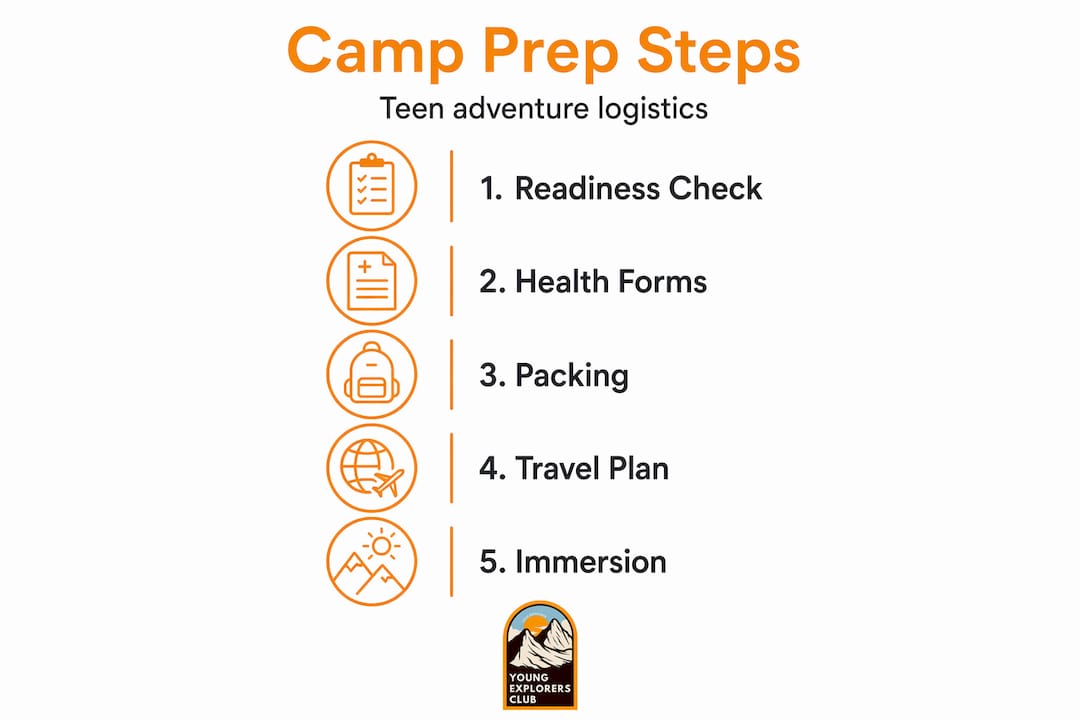
Follow this step-by-step process to get it right:
- Start with the camp’s official packing list. This is your baseline. Every item on that list exists for a reason, usually informed by past seasons and the specific activities involved.
- Identify climate and terrain. Switzerland, for example, presents dramatic weather shifts between valley and mountain altitudes. Layering is not optional; it’s essential.
- Choose gear by activity type. Climbing requires different footwear than mountain biking. Multi-sport camps need versatile, packable options.
- Label everything clearly. Use waterproof, permanent labels with your teen’s full name. Luggage tags should include a phone number, not just a name.
- Use waterproof bags for electronics and documents. A single rainstorm can destroy a passport or phone if they’re not properly protected.
- Pack a 24-hour carry-on kit. Delays happen. Include a change of clothes, medications, travel documents, and a snack in your teen’s personal bag.
- Weigh bags before leaving home. International airlines have strict weight limits, and overweight fees at the airport are both expensive and stressful.
Essential items beyond clothing include:
- Waterproof daypack with chest and hip straps
- Trekking poles for hilly or mountain terrain
- Reusable water bottle, insulated for temperature retention
- Sun protection: high-SPF sunscreen, UV-blocking sunglasses, and a wide-brimmed hat
- Personal first-aid kit with blister treatment, pain relief, and any personal medications
- A small notebook and pen for journaling or language practice
- Copies of passport, insurance card, and emergency contacts stored separately from originals
The complete packing checklist on our site goes deeper into category-by-category guidance, including how to pack for both warm and cold conditions in the same trip.
Robust duty-of-care processes extend to logistical preparation too. Parents who communicate transparently about gear, travel arrangements, and their teen’s specific needs help camps perform better. It’s a two-way relationship.
Pro Tip: Use a color-coded packing system. Assign each category (clothing, gear, documents, medications) a different packing cube color. Your teen can then find what they need independently, building confidence and reducing reliance on adult help.
Boosting language skills and social growth through immersion
With logistical prep sorted, parents can focus on maximizing their teen’s growth through international language and adventure immersion. This is where the magic of international camps separates itself from any domestic experience.
Language immersion works differently from classroom instruction. When a teen uses a language to complete a real task, ask for directions, negotiate a group decision, or explain their needs to a counselor, the learning is encoded much more deeply. Language camps combine classroom practice, daily projects, and excursions for real-world exposure, and immersion is maximized by practical, purposeful use rather than rote memorization.
Types of immersive activities that deliver the strongest outcomes include:
- Group challenges where mixed-language teams must communicate to succeed
- Daily excursions in which teens navigate, purchase, and interact using the target language
- Structured projects such as environmental surveys or community presentations
- Meal and social time in bilingual or multilingual settings
- Peer tutoring where stronger speakers informally support beginners
Compare the two main approaches to see why blended immersion consistently outperforms classroom-only models:
| Approach | Language exposure | Real-world practice | Social confidence | Retention rate |
|---|---|---|---|---|
| Classroom-only | 3 to 4 hours/day | Minimal | Low to moderate | Lower long-term |
| Blended immersion | All day, every context | High | Significantly higher | Substantially higher |
The social growth that happens alongside language learning is equally significant. Teens who work through language barriers together develop empathy, patience, and the ability to communicate with nuance across cultural differences. These are skills that no classroom can replicate fully.
Understanding language camp benefits gives parents a clearer picture of why these programs produce such measurable confidence gains. Teens often return home more articulate in their native language too, because they’ve had to think carefully about how communication actually works.
Programs that focus on building confidence and bilingual skills show that even four to six weeks of intensive immersion can produce lasting improvements in both social and linguistic ability. And if you want to understand the mechanics, the research on how language camps accelerate learning makes a compelling case for prioritizing real-world use over grammar drills.
Our perspective: What most parents miss when preparing teens for international adventure
Here’s the honest truth: most parents spend 80% of their preparation energy on gear and logistics, and almost none of it on the conversations that matter most. The waterproof jacket matters. But it matters far less than whether your teen knows how to ask for help in a foreign language or whether your camp’s staff fully understands your teen’s health profile.
We’ve seen this pattern repeatedly. Families arrive perfectly packed and completely unprepared for the emotional and communicative demands of a genuinely international experience. The teens who struggle most are rarely the ones with the wrong sleeping bag. They’re the ones who haven’t practiced navigating discomfort, communicating with strangers, or advocating for themselves when they feel scared or lost.
The risk conversation is equally neglected. Many parents hesitate to fully disclose medical conditions because they worry it will affect their teen’s acceptance into a program. This instinct is understandable but counterproductive. Transparent disclosure protects your teen. It allows staff to prepare, not to exclude.
Choosing a program that weaves cultural immersion growth into every activity, rather than treating language as a separate class and adventure as a separate block, produces dramatically better outcomes. The integration is the point. A teen who practices French while learning to rock climb is learning two things at once and retaining both more deeply.
Pro Tip: Role-play scenarios with your teen before departure. Practice what they would say if they felt sick and needed to tell a counselor. Practice ordering food in the camp’s second language. Practice explaining their medical needs to an adult they don’t know. These five-minute conversations build real-world confidence that gear simply cannot provide.
The deepest form of preparation is helping your teen trust themselves. The adventure will challenge them. That’s the goal. Your job is to ensure they arrive knowing they can handle that challenge and that the adults around them are equipped to support it.
Ready to launch your teen’s adventure?
If everything in this guide resonates with you, the next step is finding a program that actually delivers on all of it: structured adventure, genuine language immersion, transparent safety protocols, and real personal growth.
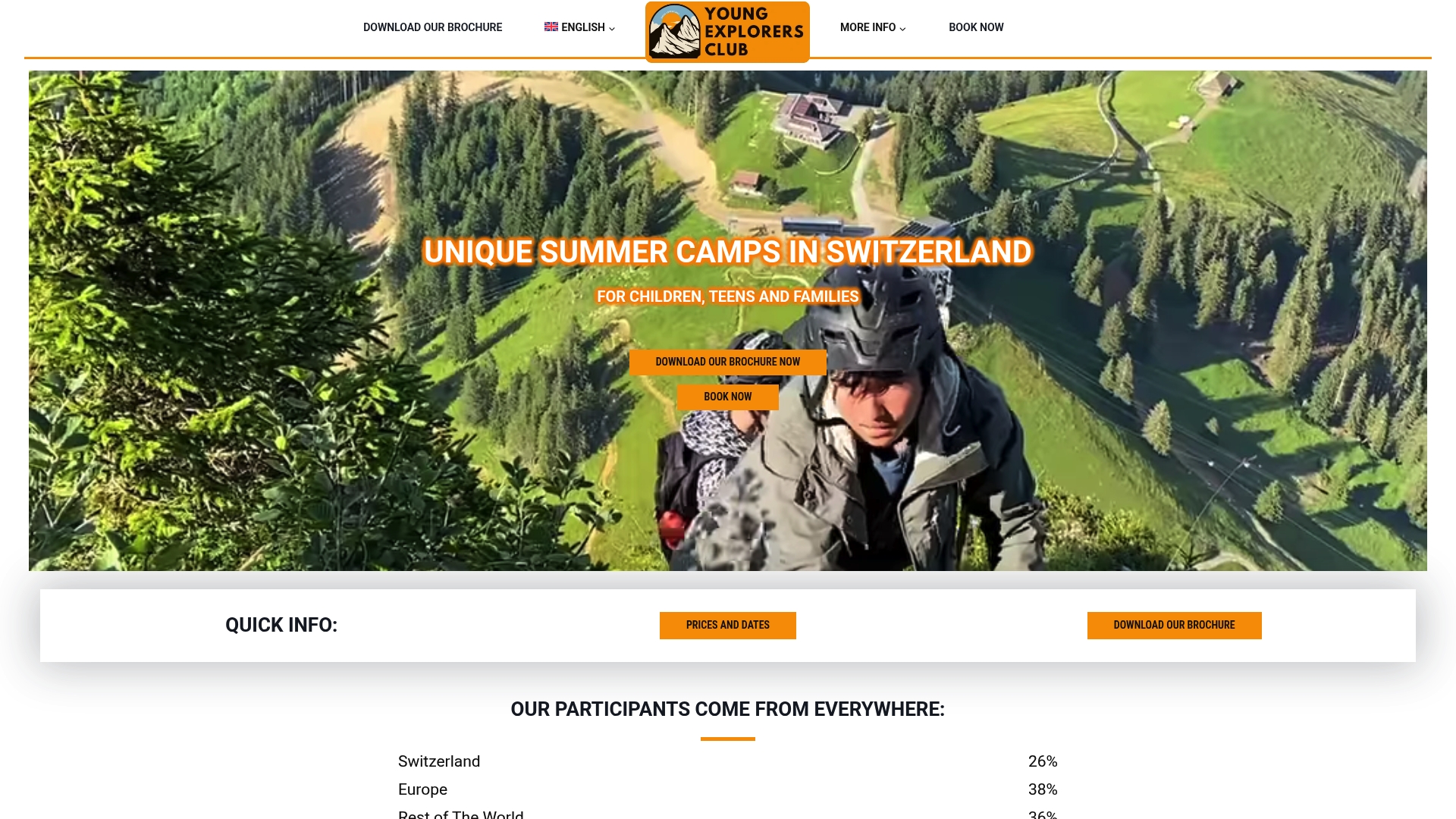
At Young Explorers Club, our teen summer camps in Switzerland are built around exactly this philosophy. Teens aged 12 to 17 engage in mountain biking, climbing, survival skills, and multisport challenges inside a fully bilingual English and French environment. Safety, health protocols, and experiential learning aren’t afterthoughts; they’re woven into every day of the program. Explore our full range of international adventure camps and browse our youth camp development guide to understand what a growth-focused camp experience can genuinely look like for your teen.


