Step-by-step camp registration: a parent’s guide
Follow this step-by-step camp registration guide to gather documents, meet deadlines, and secure the best outdoor adventure camp spot for your child.
TL;DR:
- Prepare all necessary documents and information months before registration opens to secure a spot.
- Complete the registration online promptly, following each step carefully to avoid errors or delays.
- Involve your child in the process and have backup plans to ensure a positive, stress-free camp experience.
Every summer, thousands of parents watch their child’s dream camp fill up before they even find the registration link. It’s not that they weren’t interested. They simply didn’t know when to start, what to prepare, or how the process actually worked. Missing a camp deadline by a day can mean waiting an entire year. This guide walks you through every stage of summer camp registration, from gathering documents to clicking submit, so you can secure a spot at an outdoor adventure program that genuinely excites your child and builds real skills along the way.
Table of Contents
- What to know before camp registration
- Step-by-step camp registration process
- Troubleshooting registration: common pitfalls and solutions
- After registration: confirmation, next steps, and parent best practices
- What most parents miss about camp registration
- Find the perfect camp for your child
- Frequently asked questions
Key Takeaways
| Point | Details |
|---|---|
| Start early | Begin camp search and registration 9-12 months ahead for the best selection, especially for popular outdoor or adventure camps. |
| Gather documents up front | Prepare all required child, medical, and emergency details before you begin the process. |
| Follow each registration step carefully | Moving through all steps smoothly ensures your child’s spot and prevents delays or form errors. |
| Anticipate waitlists and deadlines | Popular camps fill up fast, so consider alternate choices and know refund policies in advance. |
| Prepare for success post-registration | Use parent handbooks, double-check forms, and prep your child for a confident outdoor adventure. |
What to know before camp registration
Before you open a single registration form, you need to be organized. The biggest mistake parents make is treating registration like a quick online checkout. It’s not. Top outdoor and adventure camps require detailed information, and showing up unprepared means scrambling mid-session or, worse, losing your spot.
Documents and information to gather first:
- Child’s full legal name, date of birth, and home address
- Immunization records (often required as a PDF upload)
- Medical history, including allergies, medications, and any conditions
- Emergency contact details for at least two adults
- Insurance information (health and travel, especially for international camps)
- Doctor’s contact information for medical clearance forms
- Past camp experience, if required for skill-based programs
Timing is everything. Registration opens as early as October for returning families and November for the general public, and popular outdoor camps fill quickly on a first-come-first-served or lottery basis. If you’re eyeing a competitive program, treat the registration opening date like a concert ticket drop.
Not all camps are equal in structure, either. American Camp Association (ACA)-accredited camps meet specific safety and program standards, which matters when you’re sending your child somewhere unfamiliar, especially abroad. Non-accredited camps may still be excellent, but you’ll need to do more homework on their safety protocols and staff qualifications. Reviewing parent handbook best practices from ACA gives you a solid benchmark for what a well-run camp should provide.
Waitlists are not a consolation prize. They’re a real strategy. Many families cancel between January and April, which means waitlisted families often get in. When you join a waitlist, respond immediately to any communication from the camp. Delayed responses often result in the spot going to the next family.
If you have more than one child, check whether the camp offers family accounts. Registering siblings under one profile saves significant time and keeps payment records in one place.
| Registration window | Who it applies to | What to do |
|---|---|---|
| October to November | Returning families | Log in early, update info, reserve spot |
| November to January | General public | Create account, prepare documents |
| January to March | Late registrants | Join waitlist, confirm backup options |
| April onward | Last-minute families | Contact camp directly, ask about openings |
For families exploring adventure program options for younger children, starting early is especially important because those sessions tend to have the smallest capacity.
Pro Tip: Start your camp research and document gathering 9 to 12 months before the target summer. The best programs, whether in your home country or Switzerland, fill fast. Being ready in October gives you a genuine advantage over families who start in February.
Step-by-step camp registration process
Once you’re organized, it’s time to proceed with actual registration. Here’s exactly what to do:
The typical registration process follows this sequence: select your camp, create an account, fill out the camper profile, sign required forms, pay your deposit, and then move into pre-camp preparation. Each step builds on the last, and skipping one often locks you out of the next.
Step-by-step breakdown:
- Select your camp and session. Confirm dates, age requirements, and activity focus. Make sure the program matches your child’s interests and readiness level.
- Create a family account. Use a primary email address you check regularly. This becomes your communication hub for all camp updates.
- Complete the camper profile. Enter personal details, medical history, dietary needs, and emergency contacts. Be thorough. Incomplete profiles delay processing.
- Upload required documents. Immunization records and medical forms are typically mandatory. Some camps also require a physician’s signature.
- Review and sign waivers. These cover activity risks, photo release, and medical treatment authorization. Read them carefully before signing.
- Select add-ons. Optional extras like language courses, equipment rental, or airport transfers are usually chosen here.
- Pay the deposit. Most camps require a non-refundable deposit (commonly between $100 and $500 USD, or equivalent) to hold the spot. This triggers your confirmation.
- Receive and save your confirmation email. This contains your registration ID, payment summary, and next-step deadlines.
Platforms like CampDoc and UltraCamp are widely used for online registration advantages. They include progress bars so you know exactly where you are in the process, auto-save features, and instant confirmation emails. Paper-based registration still exists at some smaller camps, but it introduces delays and increases the chance of lost forms.

| Registration method | Speed | Error risk | Confirmation | Recommended |
|---|---|---|---|---|
| Online platform | Fast | Low | Instant | Yes |
| Email-based | Moderate | Moderate | 1 to 3 days | Sometimes |
| Paper/mail | Slow | High | 1 to 2 weeks | No |
Pro Tip: Set aside 45 to 60 minutes and complete the entire registration in one session. Many platforms log you out after a period of inactivity, and unsaved progress disappears. Losing a half-finished form on a popular camp’s opening day is genuinely stressful.
Troubleshooting registration: common pitfalls and solutions
After completing the main process, it’s vital to anticipate and prepare for common stumbling blocks.
The most common issue parents face is discovering their preferred session is already full. Waitlists require prompt action and refunds are tiered by date, meaning the earlier you cancel, the more you recover. Medical forms cannot be changed after submission in most systems, which makes accuracy on the first attempt critical.
Common pitfalls and how to handle them:
- Camp is full: Join the waitlist immediately and confirm your position in writing. Ask the camp how many families are ahead of you and what the typical movement rate is.
- Missed the registration window: Contact the camp directly. Some hold a small number of spots for direct inquiries, especially for international families.
- Deposit confusion: Understand before you pay whether the deposit is refundable, partially refundable, or applied to the total balance. Get this in writing.
- Form errors after submission: Most platforms lock medical and permission forms once submitted. If you spot an error, call the camp immediately. They may be able to manually update records.
- Late fees: Many camps charge additional fees for balance payments made after a set deadline. Mark every payment due date in your calendar the day you register.
“Parents often underestimate how quickly spots fill and how unforgiving the refund structure can be. Submitting an incomplete or inaccurate form is one of the most costly mistakes in the registration process.” — Camp registration specialist, UltraCamp
A striking reality: some of the most sought-after outdoor and European camp waitlist programs fill within 24 to 48 hours of opening registration. Treating the opening date as a hard deadline, not a rough target, changes outcomes significantly.
For families who want to reduce the stress of last-minute issues, reading through ensuring a smooth registration resources before you begin is time well spent. Knowing the rules before you’re in the middle of the process keeps panic at bay.
If the camp registration stress feels overwhelming, remember: most camps want to help families succeed. A quick phone call to the registrar often resolves confusion faster than any online search.
After registration: confirmation, next steps, and parent best practices
The process doesn’t end once you click submit. Here’s how to confirm everything’s in order and prepare for a successful camp experience.
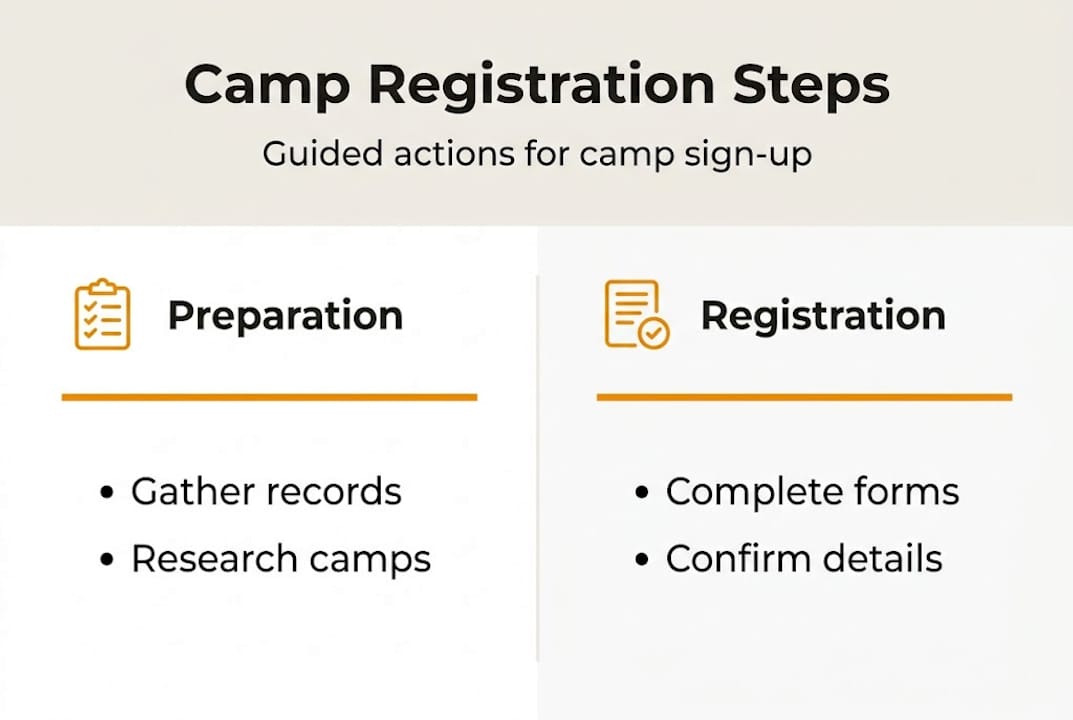
ACA recommends parent handbooks with clear dates and forms, and most camps issue auto-confirmations followed by structured follow-ups covering packing lists, orientation details, and payment deadlines. Don’t let these emails sit unread.
Your post-registration checklist:
- Verify your confirmation email arrived and contains the correct session dates, camper name, and registration ID
- Log back into the portal and confirm all forms show a “complete” or “submitted” status
- Note the final payment deadline and set a calendar reminder two weeks before it
- Download or bookmark the parent handbook as soon as it’s available
- Review the packing list early so you’re not buying gear at the last minute
- Schedule any required pre-camp medical appointments, especially for international programs
- Confirm travel logistics, including airport transfers if the camp offers them
The parent handbook is often underused. It contains answers to most questions parents ask in the final weeks before camp, including drop-off procedures, communication policies, and what to do in a medical situation. Reading it once, thoroughly, saves you multiple panicked emails to the camp office.
The registration benefits of using digital platforms extend beyond the sign-up itself. Most portals let you update emergency contacts, track payment history, and download signed forms well after the initial submission.
Pro Tip: Create a dedicated folder in your email for all camp correspondence. Label it with the camp name and year. When questions come up in June, you’ll find answers in seconds instead of scrolling through months of inbox clutter.
For families focused on camps that promote growth, the post-registration period is also a great time to start preparing your child emotionally. Talk about what they’re excited for, what might feel challenging, and why trying new things builds real confidence.
What most parents miss about camp registration
Here’s a perspective that doesn’t show up in most registration guides: the parents who have the best outcomes aren’t always the fastest to register. They’re the most prepared, and more importantly, they’ve involved their child in the decision.
Most parents over-focus on securing the spot and under-focus on setting expectations with their kid. A child who doesn’t understand what they’re signing up for, or who feels no ownership over the choice, is far more likely to struggle during the first week. The paperwork is the easy part. The harder work is the conversation at home.
Having a Plan B camp is genuinely smart strategy, not a backup for failure. Lotteries and waitlists are unpredictable. Families who identify two or three strong programs and research positive attitude training before camp starts tend to have far smoother experiences regardless of which program their child attends.
Shift the mindset from “getting a spot” to “preparing for growth.” When registration becomes about the experience your child will have rather than the transaction of securing a place, the whole process feels less stressful and more purposeful.
Find the perfect camp for your child
Ready to put this guide into action? Start your search and discover outstanding camp options below.
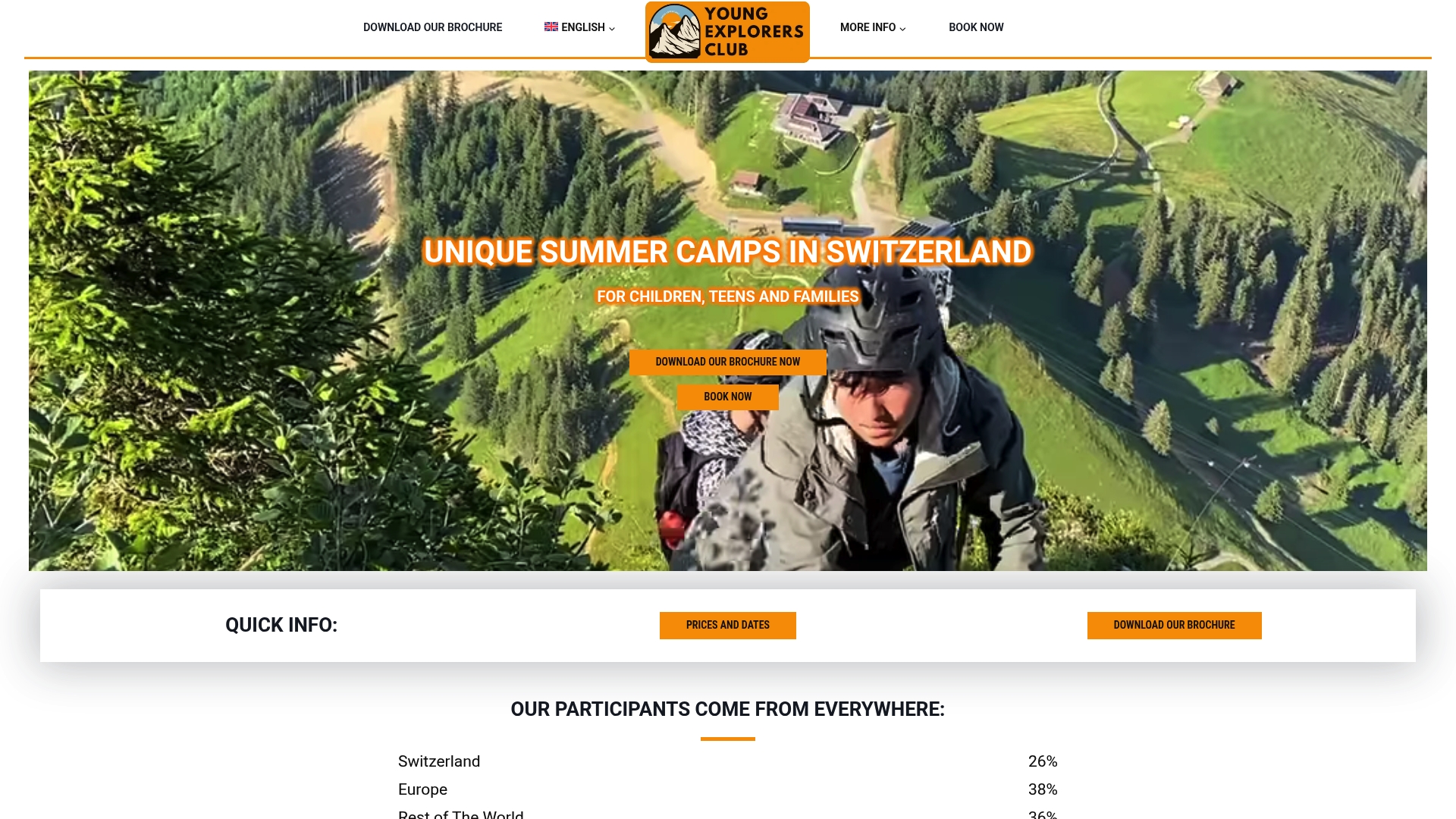
At Summer Camp Switzerland, we make registration straightforward and our team is available to walk families through every step. Whether your child is drawn to mountain climbing, survival skills, or multisport adventures, our programs are designed to build confidence and resilience in a stunning Alpine setting. Explore our international community camps for a truly global experience, or consider adding a language component with the option to Learn German at camp alongside outdoor adventures. Spots fill quickly, so use this guide as your starting point and reach out to our team today.
Frequently asked questions
When does summer camp registration open for most camps?
Registration opens in the fall-winter and operates on a first-come-first-served or lottery basis, typically between October and March depending on the camp and whether you’re a returning or new family.
What information do I need before registering my child for camp?
Required documents include your child’s camper profile, full medical history, immunization records, and emergency contacts, all of which should be gathered before registration opens to avoid delays.
How do camp waitlists and refunds work?
Waitlists and tiered refunds are standard at popular camps. Deposits are often non-refundable, and the amount you recover from a cancellation depends entirely on how far in advance you withdraw.
Why do so many camps use online registration now?
Online systems are preferred because they’re more secure, mobile-friendly, and reduce administrative errors, with instant confirmation emails and centralized family account management making the process smoother for everyone.
Can I edit my child’s information or forms after submitting registration?
Medical forms are non-editable after submission in most systems, so review every entry carefully before finalizing. Contact the camp directly if you spot a critical error after the fact.