Overview
What we offer
We, at the Young Explorers Club, see Swiss summer camps combine focused language instruction with hands-on activities and regional placement. Providers locate French programs in Romandy, German programs around Zurich, Bern, Lucerne and Interlaken, and Italian exposure in Ticino. Camps run as day, residential, family-immersion and teen-leadership formats.
Key Takeaways
At a glance
- Program formats: day, residential/boarding, family-immersion and teen-leadership. Typical lengths run 1–8 weeks; 2–4 weeks works best for noticeable progress.
- Language offerings and locations: French in Geneva, Lausanne, Montreux, Valais and Fribourg. German in Zurich, Bern, Lucerne, Interlaken and Graubünden. English often serves as a target language or lingua franca at many international camps.
- Instruction and assessment: 15–30 contact hours per week. Camps give placement tests on arrival and provide weekly feedback plus a final CEFR-linked certificate. Class ratios commonly run 1:6–1:12.
- Safety and logistics: Switzerland maintains high safety standards and punctual public transport. Providers organise airport transfers and give clear guidance on insurance, visas and required documents.
- Costs and planning: day camps cost CHF 150–600 per week. Residential stays range CHF 900–3,500 weekly. Book 3–6 months in advance. Expect peak season in July and August. Budget extra for exams, travel and insurance.
Program formats
Options and what to expect
Day camps suit local families or short stays and focus on daily lessons plus activities. Residential/boarding camps provide immersion with full accommodation and supervision. Family-immersion options place children with host families or offer family programmes for shared learning. Teen-leadership formats prioritise leadership, project work and often include volunteer or community elements.
Language offerings and locations
Where to find each language
Choose regions based on target language:
- French: Geneva, Lausanne, Montreux, Valais, Fribourg (Romandy).
- German: Zurich, Bern, Lucerne, Interlaken, Graubünden.
- Italian: Ticino.
- English: Offered as a target language or as a common teaching language at many international camps.
Instruction and assessment
Typical structure and outcomes
Most camps provide 15–30 contact hours per week, with a combination of classroom instruction and activity-based practice. Students usually complete a placement test on arrival, receive weekly feedback, and are awarded a final certificate aligned to the CEFR where applicable. Typical class ratios are 1:6–1:12, but always confirm the exact ratio with the provider.
Safety and logistics
Transport, documentation and wellbeing
Swiss camps emphasise safety, punctual public transport and structured supervision. Providers commonly organise airport transfers and provide clear lists of required documents (passports, visas if needed, insurance details, medical forms). Confirm teacher-to-student ratios, emergency contacts and local transport arrangements before travel.
Costs and planning
Budget and timing
Typical costs:
- Day camps: CHF 150–600 per week.
- Residential camps: CHF 900–3,500 per week.
Plan to book 3–6 months ahead, especially for peak season in July and August. Allow extra budget for exams, travel, insurance and any optional excursions or materials.
Recommendations
Practical tips before you go
We recommend checking transfer logistics and documentation well before travel. For meaningful progress, target 2–4 weeks where possible. Confirm placement testing, CEFR-assessment practices and exact teacher-to-student ratios with your chosen provider. Finally, verify insurance and visa requirements early to avoid last-minute issues.
 Watch on YouTube
Essential Overview of Swiss Language Summer Camps
We, at the Young Explorers Club, present the core facts so you can choose fast and with confidence. Switzerland recognizes four official languages: German, French, Italian and Romansh. Summer camp offerings focus primarily on German, French and English, so you’ll see many options for a summer camp Switzerland or a language camp Switzerland that fit different goals.
Program types and typical lengths
Below are the common program formats and how long they usually run:
- Day camps: local drop-off programs that mix language lessons with afternoon activities; good for younger children.
- Residential / boarding language camps: live-in experiences with full immersion and evening practice; ideal for teens seeking depth.
- Family immersion weeks: parent-child options where the whole household practices together.
- Teen leadership + language: combines language classes with leadership training and project work.
Typical lengths run from 1–8 weeks, with 2–4 weeks the most common choice for families balancing travel and impact. Age ranges cover 7–18, usually grouped as 7–12, 13–15 and 16–18+ to keep activities age-appropriate.
I recommend matching length to goals: choose 2–4 weeks for a strong boost; pick 1 week for taster sessions; extend to 6–8 weeks for near-fluent gains.
Instruction, intensity, ratios and assessment
We design programs around clear teaching structures. Language classes usually offer 15–30 contact hours per week. Daily target-language activities supplement formal lessons and create constant practice. Class ratios typically stay between 1:6 and 1:12, while activity supervision runs closer to 1:8–1:16. Those numbers keep interaction high and let teachers correct pronunciation and usage on the spot.
Placement testing on arrival is standard: written plus oral checks place students at the right level. We run routine progress checks and provide weekly feedback. Most camps issue a final certificate summarizing level and hours completed.
Practical selection tips we use with families:
- Match intensity to age and stamina; younger campers thrive with shorter daily sessions and more playful activities.
- Choose boarding if you want immersion and evening practice. Ask about evening language zones.
- Look for programs that combine classes with excursions; real-world use accelerates learning.
- Verify teacher credentials and native-speaker balance. Small classes mean more speaking time.
For parents focused on German, explore our dedicated German language camp Switzerland options to see sample schedules and levels. If English is the priority, look at our English summer school Switzerland pages for course structures aimed at non-native speakers.
We keep schedules transparent, list contact hours, and publish typical teacher-to-student ratios up front so you know what learning experience to expect.

Why Choose Switzerland: Location, Safety and Logistics
We, at the Young Explorers Club, choose Switzerland because its linguistic map gives learners real, everyday exposure. German is spoken by about 62% of the population, French by about 23% and Italian by about 8% (Swiss Federal Statistical Office). This multilingual Switzerland makes switching languages natural and frequent.
Swiss safety is a clear advantage for families. The country scores highly on safety rankings and maintains excellent emergency and healthcare services. We rely on that peace of mind for our youth programs and communicate safety protocols to parents before arrival.
Transport reliability matters for logistics and excursions. Swiss transport runs on time and covers the country with fast regional and intercity trains. Typical travel times help plan itineraries: Geneva–Zurich is roughly 3 hours by train; Zurich–Bern is about 1 hour by train. We often use the Swiss Travel Pass for guided day trips and independent learner excursions, which simplifies ticketing and reduces transit costs.
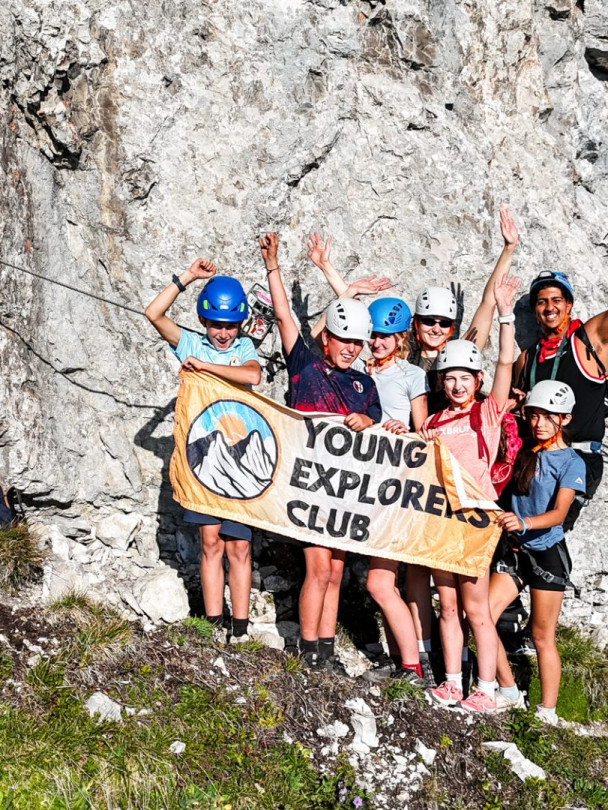
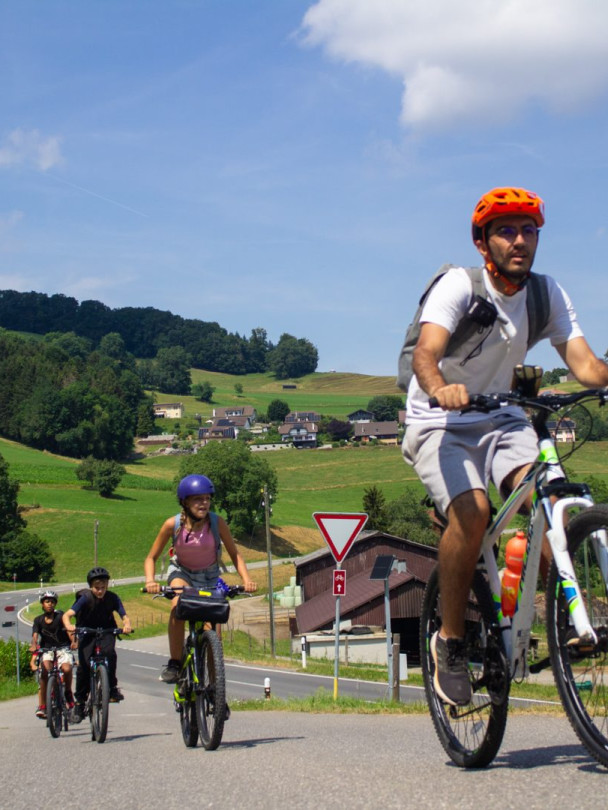
Outdoor learning complements classroom time. The Alps, lakes and well-equipped activity centres let us blend language practice with hands-on skills. Expect structured programs for hiking, climbing, water sports and day excursions that reinforce vocabulary and teamwork. We design routes and activities to match age and ability while keeping language immersion central to each session.
Summer climate and packing are straightforward but worth noting. Lowland summer averages sit between ≈18–25°C, while mountain zones stay noticeably cooler—pack layers, rain protection and a warm mid-layer for evenings. We send detailed packing lists and weather guidance based on camp location.
Regional placement and practical advice
- Romandy (Geneva, Lausanne, Montreux, Valais): best for immersive French camps and cultural day trips.
- Zurich, Bern, Lucerne, Interlaken: ideal for German immersion and outdoors-focused programs — see our Zurich language camp for sample itineraries.
- Ticino: choose this for Italian exposure and a Mediterranean-influenced summer climate.
- Transport tips we follow: plan arrival by major rail hubs, build buffer time for connections, and consider a Swiss Travel Pass for multiple-day excursions.
We manage logistics end-to-end: airport transfers, local transport coordination, and activity scheduling. That lets families focus on learning, exploration and safe fun.

Languages Offered: French, German and English (locations, exams, expectations)
French — locations, intensity and exams
We, at the young explorers club, run French tracks in Geneva, Lausanne, Montreux, Valais (Sion, Verbier) and Fribourg. Our courses suit beginners to advanced learners and often include DELF/DALF preparation for older teens. I emphasize immersion and a communicative approach, pairing classroom time with cultural excursions to markets, museums and local festivals; homestays are available in selected locations.
Below I list the typical course structure and assessment practices:
- Contact hours: 15–25 language hours per week plus constant conversational practice during activities.
- Assessment: placement test on arrival and CEFR-linked progress guidance.
- Exam focus: preparation routes for DELF (A1–B2) and DALF (C1–C2) where needed.
- Cultural add-ons: market tours, museum visits, festival participation and optional homestays.
Families who prefer a bilingual environment can see options for French immersion Switzerland via this link: French immersion Switzerland.
German — locations, dialect notes and certifications
I schedule German courses in Zurich, Bern, Lucerne, Interlaken and in German-speaking valleys in Graubünden. Lessons use standard High German (Hochdeutsch) as the teaching norm; optional exposure to Swiss German happens during activities. I brief families about the practical difference between dialects and standard German so expectations stay realistic.
Certifications commonly available include the Goethe-Zertifikat (A1–C2) and telc exams. Teacher ratios typically fall between 1:6 and 1:12. A common weekly format places lessons in the mornings and excursions or guided conversation practice in the afternoons, which accelerates real-world use of Hochdeutsch while still giving students confidence with local dialects.
English — as a subject and camp language
I use English both as a target language and as the lingua franca at many international camps. Cambridge certifications (Young Learners, KET, PET, FCE) map directly to the CEFR so you can pick a program with clear exam goals. Switzerland ranks “very high” on EF English Proficiency reports, so many staff and locals will already speak English; that helps learners get extra informal practice.
Typical contact hours range from 15–30 per week, and camps should state clearly whether English is taught as a subject or used as the main language of instruction. For exam and progress planning I follow CEFR study-hour approximations as a baseline:
- A1 ≈ 90–100 hours
- A2 ≈ 180–200 hours
- B1 ≈ 350–400 hours
- B2 ≈ 500–650 hours

Program Design, Teaching Methods, Qualifications and Measurable Outcomes
Program design centers on active use and measurable progress. We, at the Young Explorers Club, combine communicative activities with content learning so students use language from day one.
Teaching methods and staff qualifications
Below I list the core approaches and the staff credentials we require so you see exactly how we teach and who teaches.
- Communicative approach: lessons focus on real-life interaction, role-plays and fluency-building tasks.
- Task-based learning: learners complete meaningful projects that drive target-language use.
- CLIL (Content and Language Integrated Learning): subject matter (science, art, outdoor studies) is taught in the target language to boost vocabulary and retention.
- Project work and immersion activities: multi-day projects, excursions and peer collaboration reinforce spontaneous production.
- Qualifications: CELTA teachers and Trinity/Cambridge-qualified staff are central to delivery; many hold PGCE or equivalent.
- Exam trainers: where DELF/DALF or Goethe prep is offered, certified exam trainers lead targeted sessions.
- Safeguards: all residential staff undergo criminal background checks and first-aid training as standard.
Assessment, reporting and measurable outcomes
We use a placement test on arrival (written plus oral) to set groups. Students get weekly feedback and a final certificate aligned to CEFR.
I treat CEFR as the benchmark for claims about level gains. Typical study-hour approximations per CEFR are: A1 ≈ 90–100 hrs; A2 ≈ 180–200 hrs; B1 ≈ 350–400 hrs; B2 ≈ 500–650 hrs. Short stays of 2–4 weeks produce visible gains in confidence, conversational fluency and discrete skills like listening or pronunciation. Full CEFR-level jumps are rare in short courses because a full level generally needs roughly 100+ hours of focused study.
Transparency matters to me. Camps should publish hours, sample sizes and timeframes behind any reported pass rates — for example: “Camp X reported 75% DELF B1 pass rate in 2023, n=40.” I expect placement test results, weekly progress notes, and a final report linking achievements to CEFR descriptors. That makes DELF pass rate claims and statements about progress verifiable.
Typical assessment frequency we use:
- Placement test on day one (written + oral).
- Weekly progress reports to staff and families.
- Final reporting with CEFR-aligned certificate.
We emphasize evidence over hype. Parents who want a primer on immersion benefits can read our guide to language immersion.

Student Life, Accommodation, Activities, Safety, Insurance and Visas
We, at the young explorers club, run programs that put language learning alongside Alpine adventure and solid day-to-day routines. I outline what families can expect, how we supervise, and the paperwork you should bring.
Accommodation types
Below are the primary lodging options I offer, with practical notes on suitability and atmosphere:
- Homestay: students live with a local family, get daily conversational practice, and experience Swiss household routines. Great for beginners who need constant language exposure.
- Shared dormitories (boarding schools): rooms usually hold 2–4 students; staff are on-site and shared spaces promote peer learning.
- Hotel-style residences: private or semi-private rooms, daily housekeeping, and easy access to campus facilities; good for families wanting extra privacy.
- Family-run chalets: small groups in a mountain setting with communal meals and excursions right outside the door; ideal for outdoor-focused weeks.
Room occupancy typically ranges from 2–4 students. Overnight supervision ratios commonly sit between 1:8 and 1:20 depending on age. Curfews vary by age group; younger teens have earlier lights-out and more adult presence, while older teens gain graded independence.
Meals and facilities
I provide balanced meal plans in dining halls that show sample menus and clear allergen protocols. We accommodate common dietary needs and require advance notice for specific restrictions. Facilities include classrooms, sports fields, indoor pools, and science or tech labs. Many sites have direct lake or mountain access, which we use for supervised excursions and language-practice activities.
Activities and excursions
Activities combine structured language lessons with sports and culture. Expect a mix of hiking, climbing, water sports, and museum visits, plus local festival outings when schedules allow. Excursion frequency is planned to be consistent: one full-day trip per week plus two half-day activities per week. I advise packing layers, sturdy shoes, and a small daypack for hikes and excursions.
Safety
Safety is a priority in every detail. Each site has a site-specific risk assessment and first-aid trained staff on duty. We keep a doctor on call and follow public-health guidance from the Swiss Federal Office of Public Health (FOPH) where relevant. I brief students on local procedures during orientation and run regular safety drills.
Emergency numbers in Switzerland used by staff and students are:
- 112 (general EU emergency)
- 144 (ambulance)
- 117 (police)
- 118 (fire)
Insurance, visas and important documents
Non-EU/EEA visitors usually need travel and health insurance that covers medical care and repatriation; families should check rules for minors with the State Secretariat for Migration. Visa requirements often mean a Schengen short-stay (Type C) visa for non-EU/EEA participants. Camps typically supply invitation letters and guardian contact details to support visa applications and border checks.
Bring these documents when you arrive:
- Passport
- Signed parental consent
- Insurance policy details
- Emergency contact information
- Immunization/medical form
- Any visa paperwork if required
I recommend scanning copies and leaving digital backups with your guardians.
For an overview of immersion benefits and parental guidance on program choices, see our language immersion guide.

Costs, Dates, Enrollment, Transfers and Sample Weekly Schedule
We, at the young explorers club, keep pricing transparent so families can plan confidently. Day camps typically run CHF 150–600 per week. Residential language camps range CHF 900–3,500 per week depending on service level, location and inclusions — search our summer camp cost options if you want specific packages. Typical inclusions are tuition, accommodation, meals and scheduled excursions. Extras commonly charged separately include exam fees (DELF/Goethe/Cambridge), travel, travel insurance and pocket money.
I recommend watching for discounts and funding. We offer early-bird rates and sibling discounts. Some providers also list merit or need-based scholarships on application pages. Book in the recommended window of 3–6 months before arrival to secure better rates and transfer slots.
Peak season is July–August, with many programs starting in late June or running into early September. Enrollment usually operates on a rolling basis, but providers often set early-bird deadlines between January and April. Start researching in November–February, then book between January and April. Apply for visas at least 15 working days before travel; for non-EU/EEA families I advise allowing 6–8 weeks.
Pre-arrival checklist, transfers and packing
Below are the forms and essentials we ask families to submit before arrival. Send these at least two weeks ahead and check transfer availability early.
- Language placement form to set group level.
- Health/medical form and any medications with dosing instructions.
- Dietary requirements and allergy details.
- Photocopy of passport and visa (if applicable).
- Signed parental consent for minors and emergency contact details.
- Optional extras: exam registration and travel insurance proof.
- Transfers: airport transfer services commonly run to/from Geneva and Zurich. One-way transfer fees typically vary CHF 80–200; check the provider for exact rates.
- Packing essentials: Swiss francs (CHF), power plug types C and J, CET/CEST time zone, light summer layers (18–25°C) plus a warmer jacket for mountain evenings.
Sample weekly schedule and daily contact hours
Mon–Fri I schedule language classes 09:00–12:30 (about 3.5 hours per day, ≈17.5 hours/week). Afternoons 14:00–17:00 focus on language-led activities that reinforce classroom learning. Evenings feature cultural programs or supervised social time that build speaking confidence. Saturdays are full-day excursions — city visits, museums or alpine hikes. Sundays are optional family days or local excursions and rest. This balance keeps learners engaged while delivering measurable progress in French, German or English.
Include keywords like summer camp cost Switzerland, boarding camp price, camp enrollment Switzerland and airport transfer camp when searching and comparing offers to make decisions faster.

This article is part of our complete guide: The Complete Guide to After-School and Holiday Camps in Switzerland