

Choosing an international summer camp that balances language immersion, diverse outdoor activities, and safety standards can exhaust even the most diligent parents. Most camps either hide pricing, restrict detailed daily schedules until after booking, or offer only minimal supervision details, making direct comparisons and confident commitments difficult. This guide lays out program structures, language options, supervision ratios, and pricing transparency across five leading international summer camp providers so families can select the summer experience that fits their needs, priorities, and budget.
Young Explorers Club
At a Glance
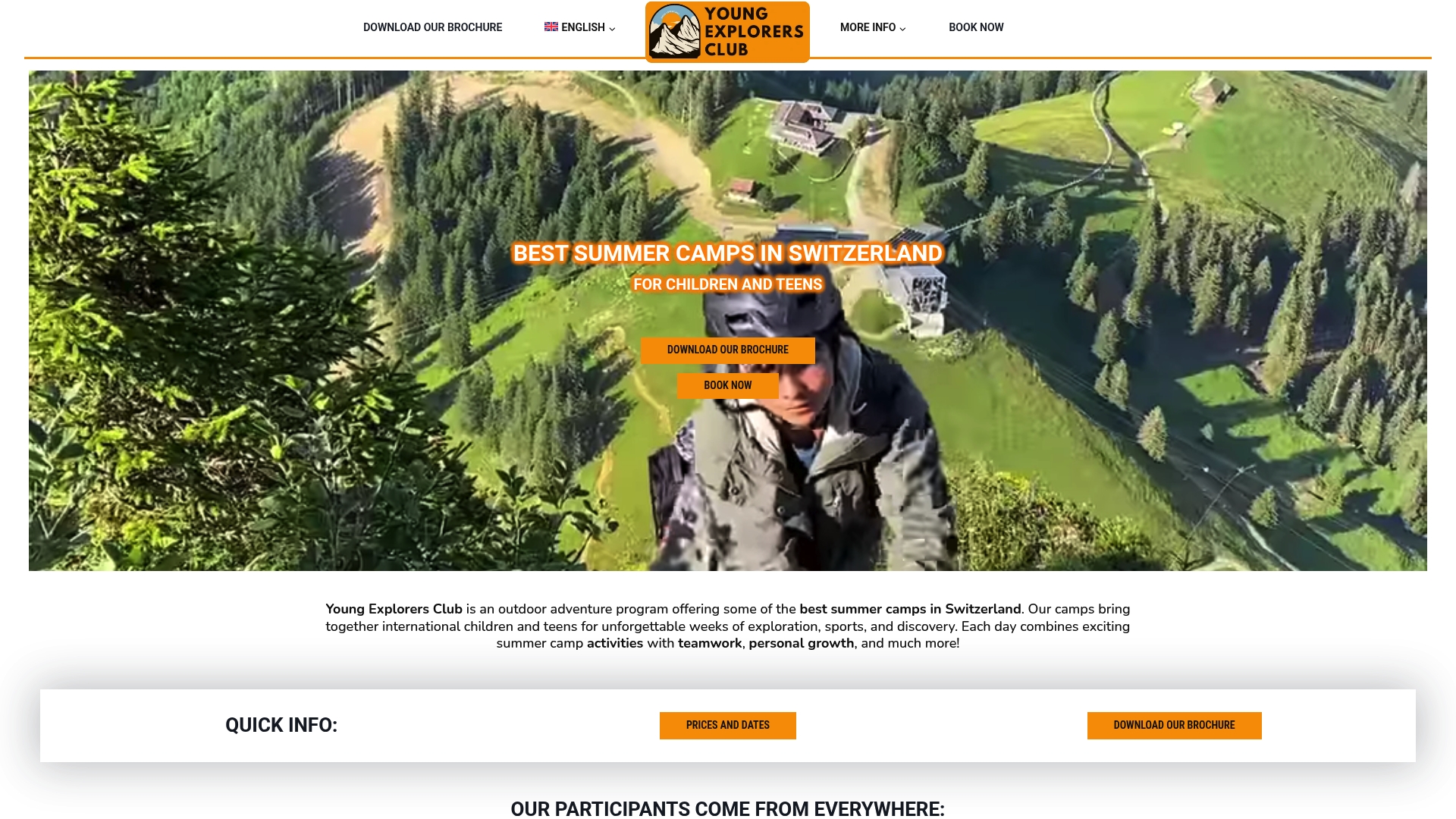
Camps operate from Les Diablerets and attract participants from over 30 countries, creating a truly international setting. The program pairs adventure sports with optional language classes and stays in traditional Swiss chalets for immersive weeks outdoors.
Core Features
- Bilingual environment with activities run in English and French and optional language classes in English, French, or German.
- A broad outdoor curriculum that includes climbing, mountain biking, water sports, football, survival skills, and multisport adventures.
- Accommodation in traditional Swiss chalets with modern facilities, certified guides, and high safety standards.
- Multiple formats: junior, teen, family, travel, residential, and custom group trips plus online brochures, FAQs, and registration.
Key Differentiator
Young Explorers Club uses a participant-driven model that schedules language immersion alongside hands-on outdoor challenges. Camp days mix guided skill sessions with free-choice adventure blocks so learning happens through activity rather than classroom drills.
Pros
-
Activity-first weeks build practical confidence. Kids spend hours climbing, biking, and practicing survival skills instead of sitting in passive lessons.
-
The multicultural roster exposes campers to peers from many countries, which accelerates informal language practice and cultural exchange during meals and team challenges.
-
Certified instructors and documented safety procedures reduce the logistical worry for parents who prioritize standards and supervision.
-
Multiple program types let families pick an age specific or family-oriented week, or schools arrange custom group trips tied to learning outcomes.
-
Language classes run alongside outdoor activities so improvements in spoken English or French come from practice in real situations rather than isolated drills.
Cons
- Price may be high for some families, with weekly rates reported between CHF 1100 and CHF 1600 all inclusive which can limit availability for budget-conscious households.
Who It’s For
Parents of children aged 8 to 17 who want an active, educational summer where physical challenge, social growth, and language practice happen together. Also a fit for international schools, youth groups, or families seeking a bilingual outdoor week in Switzerland.
Unique Value Proposition
A single week pairs structured language lessons with multiple hours of guided outdoor activity daily. That schedule turns every climb, trail ride, and group game into a language learning moment and accelerates confidence and independence faster than separated camp or classroom options.
Real World Use Case
A family from the United Kingdom signs their 12-year-old up for the teenage adventure camp in Les Diablerets. Over two weeks the child gains climbing competence, practices French in informal settings, and returns with increased confidence and several international friendships.
Pricing
Pricing is reported between CHF 1100 and CHF 1600 per week and is all inclusive. The fee covers accommodation, meals, activities, local transport, and equipment with specific weekly rates varying by program type and residency.
Website: https://youngexplorersclub.ch
Les Elfes
At a Glance
Les Elfes reports welcoming campers from more than 75 countries each year and operates across Swiss resorts and Niseko, Japan. The family run school, founded in 1987, runs programs year round that combine mountain sports, language learning, and cultural excursions.
Core Features
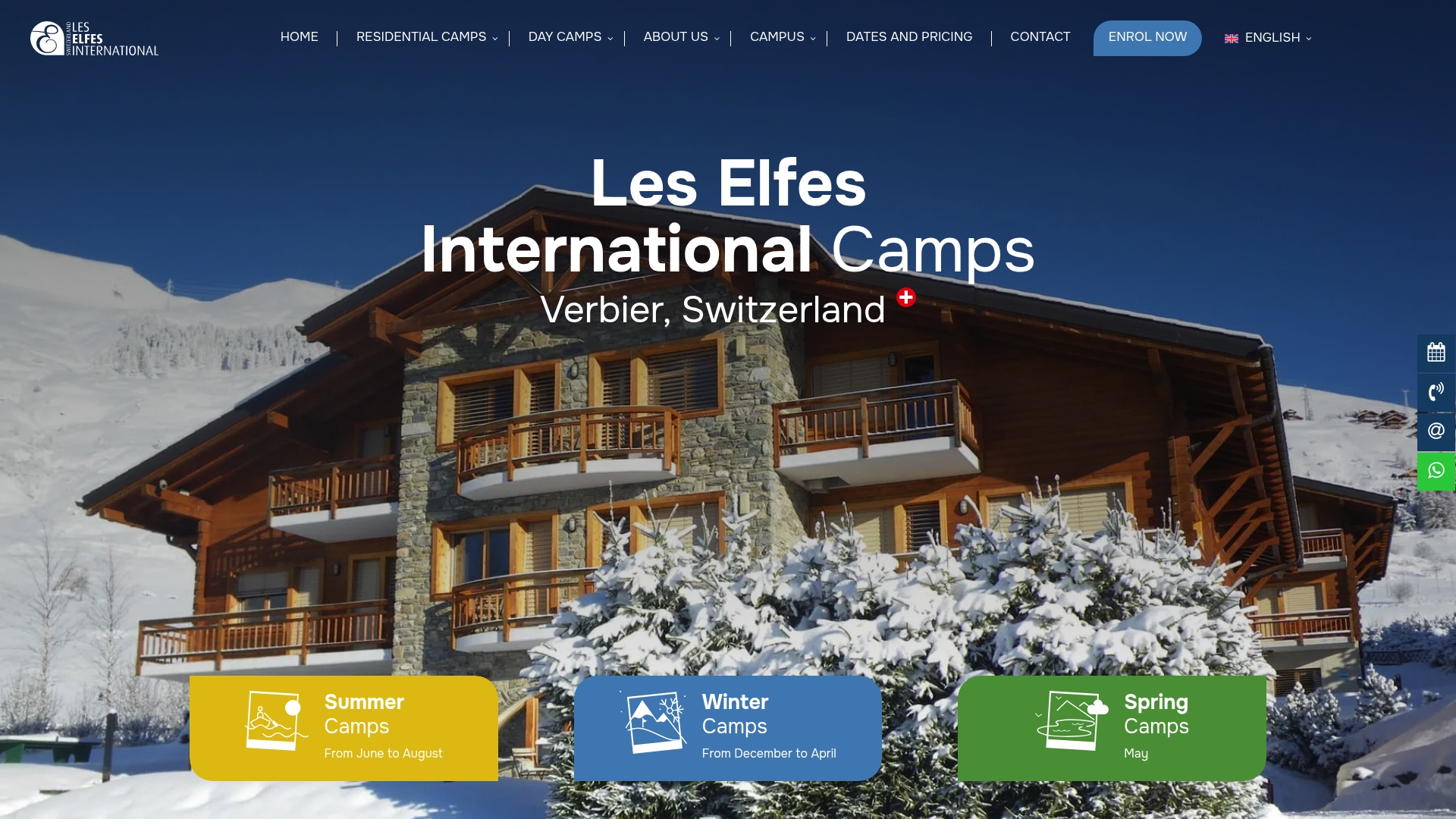
The program offers Year round camps across summer, spring, and winter sessions with activities scaled by age and ability. Outdoor pursuits include skiing, snowboarding, mountain biking, rock climbing, hiking, and water sports.
Indoor options include leadership workshops and elective language courses in English, French, Spanish, German, and Mandarin. Specialized school programs cover ski trips, field trips, and Duke of Edinburgh expeditions.
Key Differentiator
Les Elfes pairs a long operational history with an international camper mix and multiple alpine bases. That combination gives younger campers structured skill progression and teens chances to train, travel, and practice languages with peers from many countries.
Pros
-
Longstanding track record and local expertise. Decades of running camps and working with mountain operators reduces last minute logistics and improves risk planning.
-
Activity breadth suits mixed families. If one child wants climbing and another prefers language classes, both find full daily schedules and qualified instructors.
-
Multilingual environment accelerates practical language exposure. Daily activity groups and shared meals create informal practice that formal classes alone do not provide.
-
Multiple locations let families pick a program to match travel plans. Verbier, Crans Montan a, La Tzoumaz, and Niseko offer different difficulty levels and cultural experiences.
-
Safety and inclusion are explicit priorities. Staff-to-camper ratios and on site medical protocols are part of the offering, though specifics vary by location.
Cons
-
High demand means spots fill quickly. Early booking is necessary for popular weeks and specific activity tracks.
-
Pricing is not published in the available material, so comparing total cost across dates and locations requires direct inquiry.
-
Accommodation and facility details are thin in the public copy. Parents who want room photos, daily menus, or rooming plans will need to request that information.
-
Some third party reviews describe variability in day to day experience. That variability often tracks with season and specific site rather than the Les Elfes brand as a whole.
When It May Not Fit
Families with children who need ongoing specialized medical care or continuous one on one support should not assume suitability without prior discussion. The vendor does note health limitations, and detailed plans must be arranged before booking.
Who It’s For
Parents seeking an active mountain holiday with language exposure for children aged 6 to 17. Schools and youth groups that want organized outdoor education, ski or expedition programs will find ready made curricula and logistics support.
Real World Use Case
A family from France sends a 12 year old for a two week summer program in Verbier to combine mountain biking, climbing, and conversational French practice. The child returns with stronger technical skills, new friends from at least three countries, and improved confidence on steeper terrain.
Pricing
Pricing varies by location, session length, and accommodation option. The publicly available information does not list fixed rates, so request a program quote early to lock dates and compare total cost.
Website: https://leselfes.com
Village Camps
At a Glance
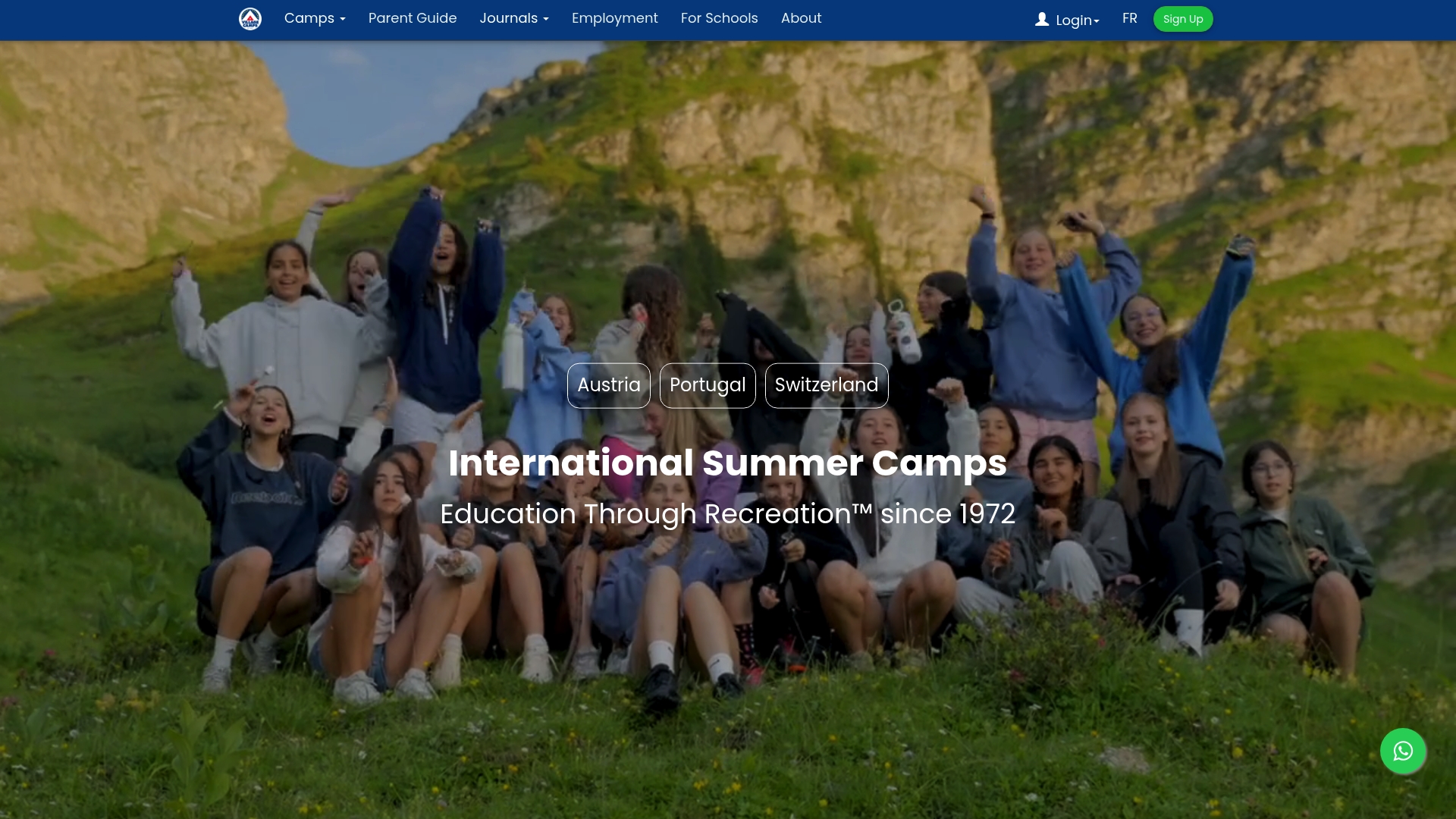
Village Camps’ marketing materials state a counselor-to-camper ratio of 1:6 across its European sites, a concrete supervision claim that stands out for families tracking staff attention. The organization also highlights decades of running international residential programs in Austria, Portugal, and Switzerland.
Core Features
-
Wide activity mix covering sports, arts, STEM, languages, leadership, and adventure to match varied interests and ages.
-
Screen-free residential settings that prioritize face-to-face social skills and uninterrupted group time.
-
Personalized parent portals for reservations, health information, and daily updates so families see progress without constant emails.
-
Trained staff and documented safety protocols in each location, with multilingual programs promoting cultural exchange.
Key Differentiator
Village Camps leans hard on a safety and social interaction angle, positioning residential, screen-free programs as the primary learning environment. That emphasis makes it a different fit from Youngexplorersclub, which centers on Switzerland-based outdoor adventure and bilingual immersion with a strong outdoor skills focus. Village Camps targets families seeking structured residential weeks across multiple European countries.
Pros
-
The vendor advertises more than 55 years of operation, which supports a predictable program rhythm and institutional knowledge for logistics and safety.
-
Activity breadth means siblings or mixed-interest groups can attend the same session and pursue different tracks without program gaps.
-
That 1:6 counselor figure above gives a clear supervisory benchmark for parents worrying about attention and safety on multiweek stays.
-
Multilingual staff and cultural diversity create daily language exposure, not just formal language classes.
-
Screen-free residential rhythm encourages social skills, teamwork, and longer uninterrupted practice of sports or arts.
Cons
-
Popular dates and flagship locations fill quickly, so late planners will face limited availability and fewer week choices.
-
The site and materials give only high-level pricing cues; families must request exact fees per camp and week before budgeting.
-
Accommodation standards and specific amenities are not detailed in the published summary, which makes side-by-side living-condition comparisons harder.
-
Some rural or mountain sites require significant travel for families coming from outside Europe.
When It May Not Fit
If your family wants a single-location, adventure-heavy, Switzerland-first program tailored around mountain sports, Village Camps can feel broader than necessary. Also, if you need transparent per-week pricing or granular room specifications before initial contact, the limited public detail will slow your planning process.
Who It’s For
Parents seeking multilingual, residential camp weeks in Europe for children aged roughly 7 to 17 who value structured days, face-to-face social development, and an established provider network. It suits families willing to plan travel and register early to secure popular weeks.
Real World Use Case
A U.S. family books a multilingual week in Leysin, Switzerland, to combine hiking, language classes, and team sports. Parents use the online portal to upload medical forms, follow daily photo updates, and confirm arrival logistics while the child spends seven screen-free days building confidence with peers.
Website: https://villagecamps.com
Camp Suisse
At a Glance
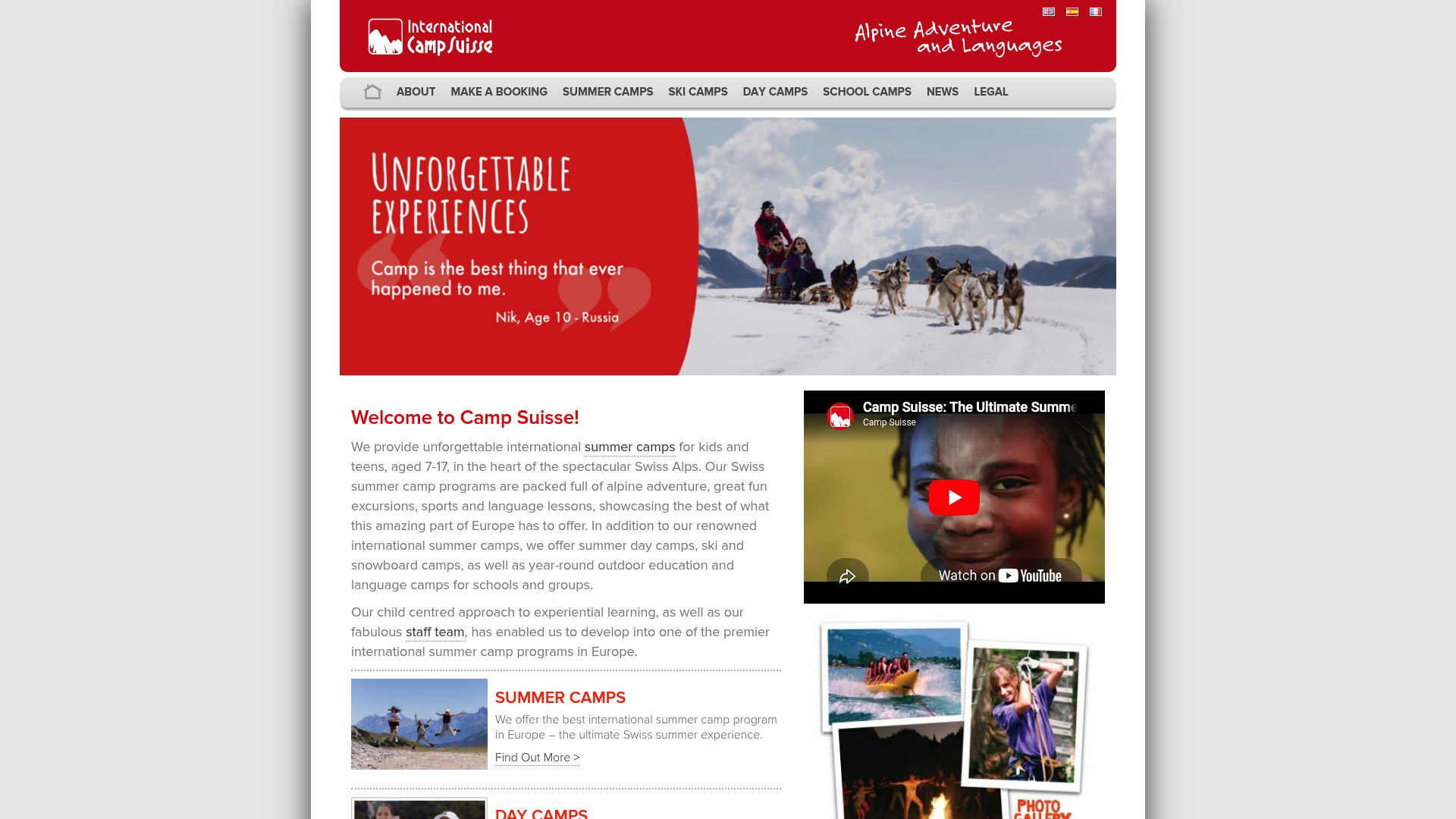
Camp Suisse advertises a 2:1 camper-staff ratio, a staffing level that points to intensive supervision and small-group instruction in the Swiss Alps. Programs cover ages 7-17 and mix guaranteed excursions with language classes and seasonal ski options.
Core Features
-
International summer camps and day camps hosted in the Swiss Alps for children and teens aged 7-17, including winter ski programs.
-
Age-specific programs (7-11, 12-14, 15-17) with tailored activities and supervision appropriate to each stage.
-
Activity roster: Alpine adventure, mountain biking, climbing, archery, glacier visits, husky dog sledding, cultural excursions, and classroom language lessons.
-
Staff model that emphasizes close oversight, with the vendor advertising a 2:1 camper-staff ratio and personalized supervision for small groups.
Key Differentiator
Camp Suisse centers its offering on full Alpine immersion with scheduled excursions, daily language practice, and a high-touch staff model. Compared with Youngexplorersclub, which markets bilingual experiential programs and family trips, Camp Suisse leans more toward fixed-location Alpine stays and structured language blocks, making it a narrower choice for families prioritizing a dedicated mountain campus.
Pros
-
Highly experienced staff focused on safety and camper development. The program highlights staff training and one-on-one attention during activities.
-
Broad activity mix that blends sport, culture, and language. That combination supports both outdoor confidence and practical language practice for international campers.
-
Appeals to an international audience. Camp Suisse reports campers from over 40 countries, which helps with cross-cultural exchange in group activities.
-
Age-segmented schedules reduce mismatched expectations between younger children and teens. Separate cohorts mean activities and supervision align with developmental needs.
Cons
-
Little public detail on pricing. The site does not list full program costs, which forces parents to contact admissions for budgets.
-
Accessibility and special needs support are not clearly documented. Families needing medical or behavioral accommodations should ask for written plans before booking.
-
Reviews and third-party accounts do not detail on-site medical staffing or emergency protocols. That gap means some families will need direct confirmation from the team.
When It May Not Fit
If your child requires ongoing specialized medical care or intensive behavioral support, Camp Suisse is not a safe default. The vendor notes prior arrangements are necessary for specialized needs, so families should not assume standard enrollment covers complex care.
Also, parents seeking a travel-style, multi-country itinerary or family-hosted stays will find Camp Suisse too campus-focused. And budget-sensitive families who need transparent pricing up front might prefer programs that publish rates.
Who It’s For
Parents and guardians who want a traditional Alpine camp experience with structured language instruction and high staff attention for children aged 7 to 17. Schools and youth groups seeking seasonal outdoor education or winter ski sessions will also find relevant programming.
Real World Use Case
A family from the United Kingdom enrolls their 10-year-old for a two-week summer session. He spends mornings on language lessons, afternoons on mountain biking and climbing, and joins a glacier visit on the weekend, returning with improved conversational English and new international friends.
Website: https://campsuisse.com
International Summer Camp Montana
Quick Snapshot
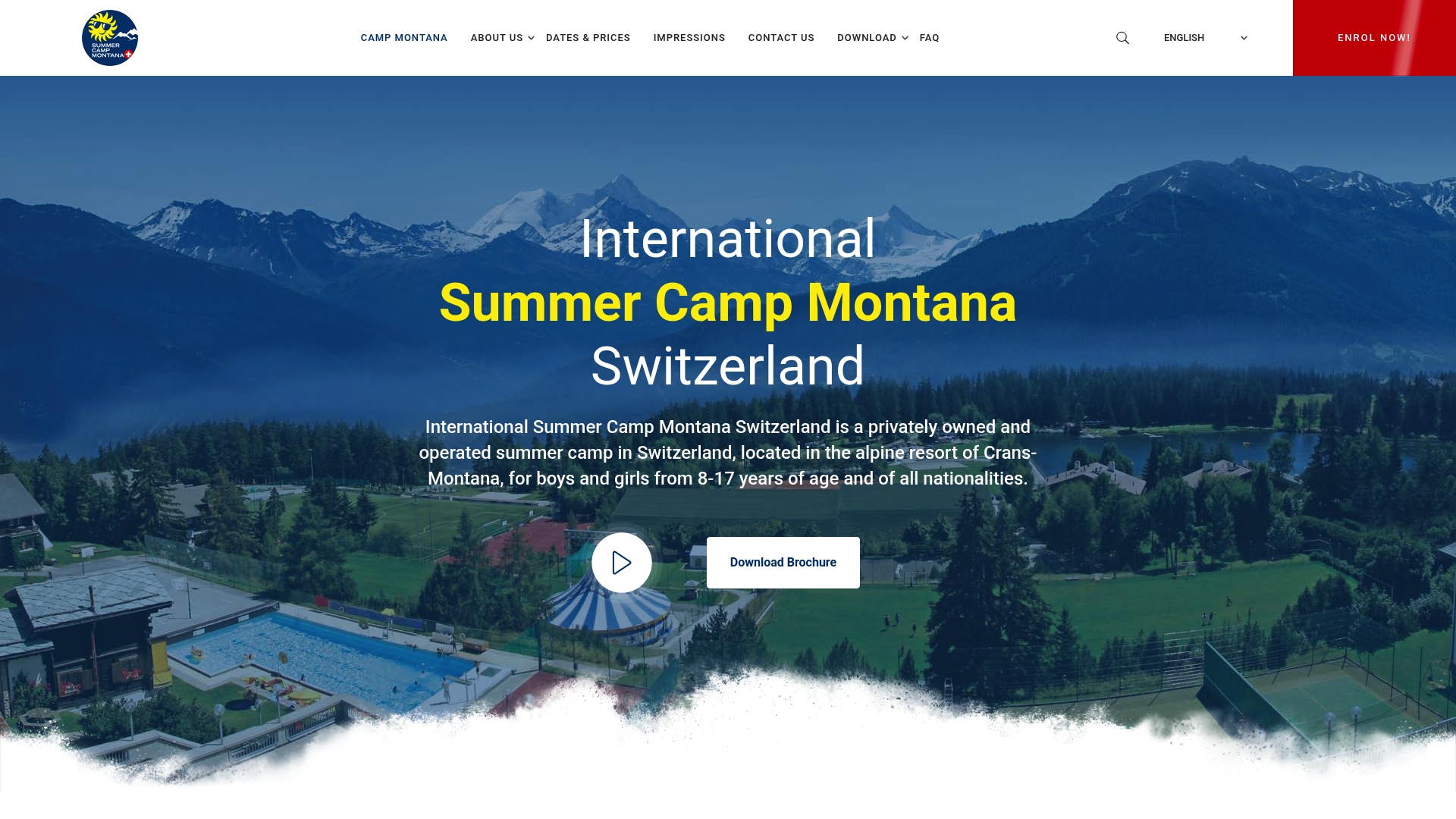
The camp reports participants from over 60 nations, creating a dense multicultural environment that families prize for real-world language practice and cross-cultural friendships.
Located in Crans-Montana and operating since 1961, the program runs multiple summer sessions that blend sports, excursions, and language classes.
Core Offerings
Full board residential sessions run across different durations and themes, mixing outdoor sports like hiking, climbing, and horseback riding with creative options such as circus arts.
Language instruction covers English, French, and Spanish, and staff-led excursions use the alpine setting as a classroom for practical skills and teamwork.
Standout Focus
The strongest claim is the program’s longevity and its international makeup; combined they create an environment where cultural exchange is built into daily life rather than added as an afterthought.
That emphasis makes language learning and interpersonal development central outcomes of the schedule, not optional extras.
Strengths
- Long history and experienced staff. Decades of operation translate into established routines, safety procedures, and a clear daily rhythm for campers.
- Wide activity slate. Sports and arts options mean most children find at least two activities they care about, which keeps engagement high.
- Multicultural exposure. The participant mix gives practical conversation practice and peer-level cultural exchange beyond classroom drills.
- Scenic, secure setting. The alpine location supports outdoor pursuits while enabling supervised excursions and rest periods.
- Developmental focus. The program combines recreation with structured opportunities for language improvement and independence.
Weaknesses
- The listed fee of CHF 8,200 for a three-week session may be out of reach for many families and adds to travel and insurance costs.
- Travel, personal expenses, and insurance are not included, increasing the true outlay beyond the headline price.
- The program is strictly for ages 8 to 17, so siblings outside that window cannot attend the same sessions.
When This Isn’t the Right Match
If you need year-round programming or a lower-cost local option, this seasonal residential model will not fit your requirements.
Also, families seeking continuous language tuition across the school year should look for school-based immersion options rather than a summer-only format.
Best For
Parents who want a supervised, immersive summer that mixes adventure sports with peer language practice and global friendships for children aged 8 to 17.
It suits families willing to budget for travel and higher tuition in exchange for a structured alpine experience and international exposure.
Example Scenario
A family from Brazil enrolls a 12-year-old in an adventure-focused session with English lessons. The camper returns with new confidence in outdoors skills and daily conversational English practiced with peers from several countries.
Website: https://campmontana.ch
Comparing International Summer Camp Programs
Choosing the right summer camp program can provide incredible experiences and lasting benefits for children and young adults. Each of the reviewed camps showcases unique strengths catering to specific needs and priorities.
Language Integration with Outdoor Activity
Among these programs, Young Explorers Club shines in its balanced integration of bilingual education with hands-on physical activities. Camps such as Les Elfes and Camp Suisse also offer strong language elements but differ in their implementation; Les Elfes incorporates broader multilingual exposure in its multi-location sessions, while Camp Suisse focuses on structured language lessons interwoven with alpine sports. The choice here depends on whether families prioritize language immersion through direct experience or structured, class-based learning.
Activity Breadth and Supervision Ratios
When comparing activity schedules and supervision, Village Camps emphasizes its 1:6 counselor-to-camper ratio, creating a program favoring close interaction and social development. Conversely, International Summer Camp Montana offers extensive activity selections, fostering self-discovery through disciplines ranging from circus arts to climbing. Families should weigh the supervisory detail of Village Camps against the multifaceted activity offerings of Montana based on their child’s needs.
Best Fit for Specific Scenarios
- For bilingual and multicultural outdoor learning, Young Explorers Club exceeds expectations with its unique pairing of language immersion and adventure activities.
- For families seeking a legacy provider with broad international exposure, Les Elfes provides decades of experience and diverse session formats.
- If supervisory detail matters most, Village Camps emphasizes camper attention, social interaction, and safety with its low counselor-to-camper ratio.
- For those looking for niche activities alongside traditional camp options, International Summer Camp Montana’s diverse program mix creates myriad ways for creative and physical skill cultivation.
Our Pick: Young Explorers Club
When families value immersive bilingual growth, global cultural exposure, and outdoor adventure in a single program, Young Explorers Club excels. Its program design uniquely capitalizes on active, participant-driven learning environments. However, those prioritizing highly specific disciplines or requiring detailed information on costs and ratios might explore alternatives like Camp Suisse or Les Elfes as strong alternatives.
International Summer Camp Programs Comparison
Explore diverse international summer programs focusing on bilingual learning, adventure activities, and immersive cultural environments to decide which best fits your family’s needs.
| Product | Core Feature | Best For | Pricing | Notable Limitation |
|---|---|---|---|---|
| Youngexplorersclub | Adventure sports with language immersion | Families seeking bilingual experiences in Switzerland | CHF 1100-1600 per week | Price may pose challenges for budget-conscious families |
| Les Elfes | Year-round alpine sports and language programs | Families prioritizing seasonal activity variety | Not disclosed | High demand limits availability; early booking necessary |
| Village Camps | Multi-country camps with structured programs | Families valuing structured residential environments | Not disclosed | Limited public pricing and detailed accommodation information |
| Camp Suisse | Intensive supervision and alpine immersion | Parents prioritizing high attention ratios and enabling language study | Not disclosed | Accessibility details for special needs are not clearly documented |
| International Summer Camp Montana | Long-established camp with multicultural focus | Parents seeking scenic, secure locations with global interaction | CHF 8200 per three weeks | Costs preclude broader accessibility; excludes travel, insurance, and personal expenses |
Discover The Best Summer Camp Experience With Youngexplorersclub
Choosing the right summer camp program comparison can feel overwhelming when juggling pricing, activity variety, language immersion, and safety concerns. Many parents want their children to have active weeks filled with adventure sports while also improving bilingual language skills in a supportive environment. Youngexplorersclub offers a proven approach that blends outdoor challenges like climbing and mountain biking with optional English and French classes, creating a seamless learning experience beyond traditional classrooms.
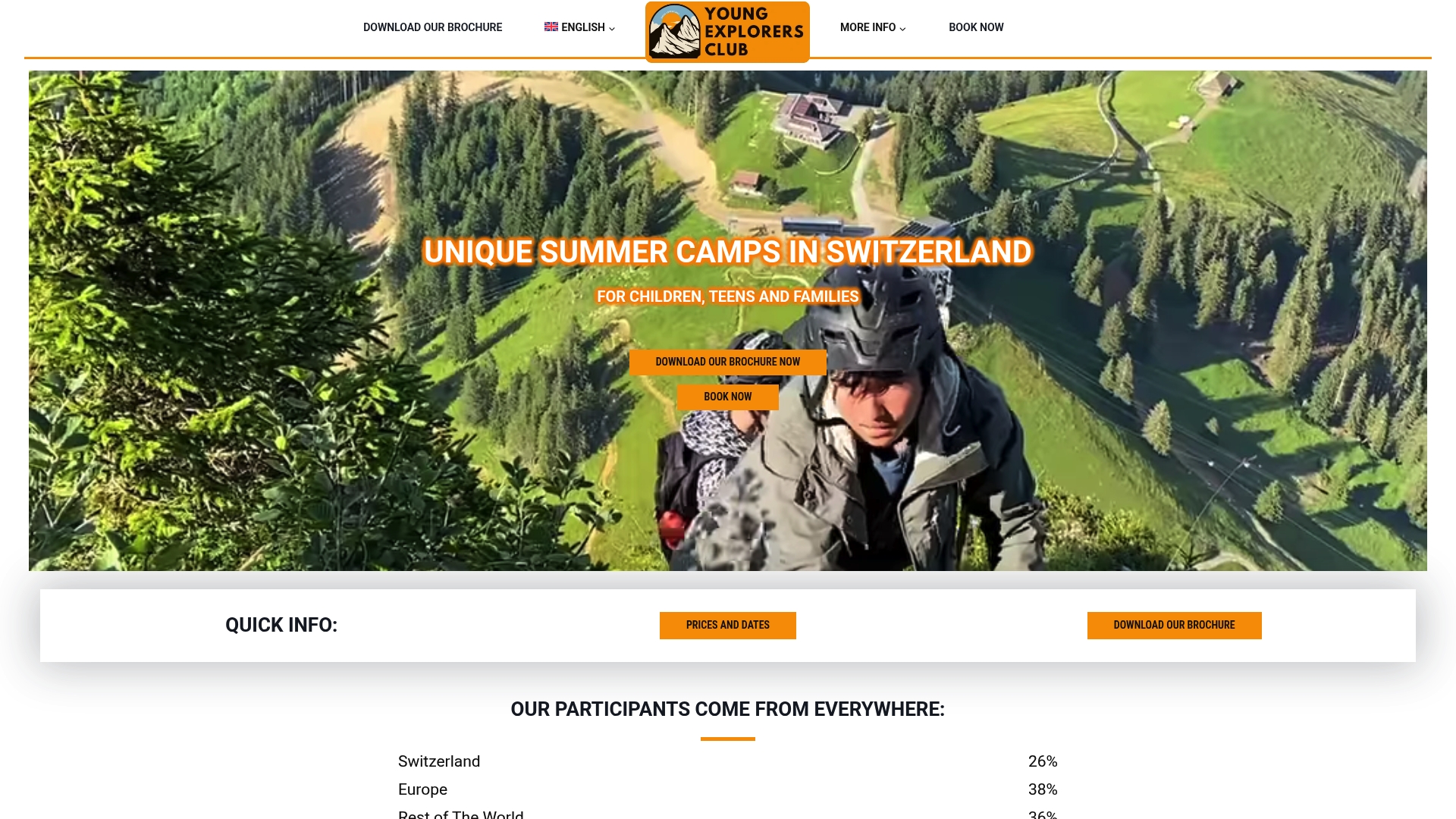
Explore how Youngexplorersclub turns each day into a confidence-building opportunity with expert-certified guides and a tight-knit international community. Don’t wait to secure a spot for your child in Switzerland’s most engaging bilingual outdoor camp. Visit Youngexplorersclub to check program options, download brochures, and complete online registration with ease today.


