
Teen experiential learning: adventure, growth & bilingual skills
Discover how bilingual adventure programs build resilience, teamwork, and language skills in teens. A practical guide for parents choosing experiential learning.
TL;DR:
- Experiential learning combines adventure and language immersion to foster real-world skills and confidence in teens.
- Choosing a safe, well-structured program with active reflection maximizes long-term growth.
- Post-program reflection and ongoing challenges help teens retain skills and build resilience over time.
Classroom grades tell you what your teen knows, but they rarely show you who your teen is becoming. Many parents feel that traditional schooling, however good, leaves a gap: the chance to build real confidence, navigate challenges with peers, and communicate across languages. Immersive experiential learning fills that gap by combining adventure, teamwork, and language exposure in ways that stick. This guide walks you through the research behind these programs, how to choose the right one, how to prepare your teen, and how to make the growth last long after the bags are unpacked.
Table of Contents
- Why experiential learning matters for teens
- How to choose the right experiential program
- Step-by-step preparation for your teen’s immersive experience
- Maximizing growth during and after the experience
- A fresh look: What most guides miss about experiential learning for teens
- Find the right adventure for your teen
- Frequently asked questions
Key Takeaways
| Point | Details |
|---|---|
| Real-world growth | Experiential learning empowers teens to build confidence, teamwork, and problem-solving skills through hands-on challenges. |
| Power of language immersion | Bilingual environments help sharpen cognitive flexibility and boost social connections. |
| Program quality matters | Careful program selection and preparation make all the difference in your teen’s adventure outcome. |
| Lasting benefits | Reflection and continued engagement ensure skills learned last far beyond the camp experience. |
Why experiential learning matters for teens
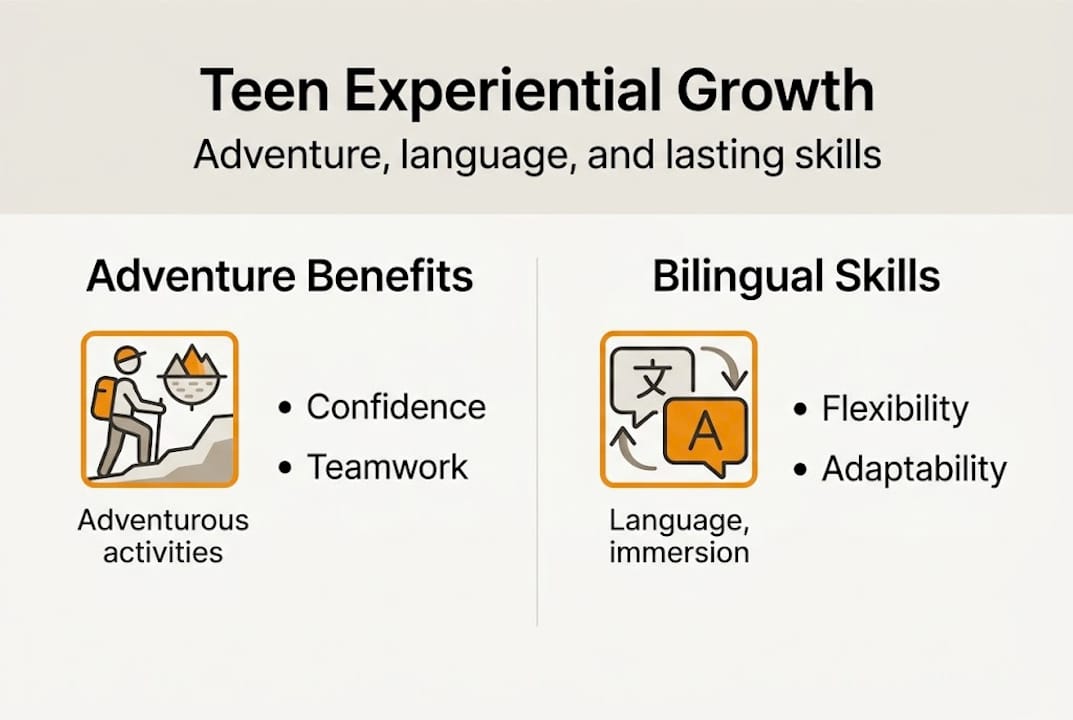
Experiential learning, at its core, means learning by doing. Instead of reading about teamwork, your teen practices it while navigating a mountain trail with people they met two days ago. Instead of studying a language in a textbook, they use it to ask for directions or negotiate a group decision. For teenagers specifically, this approach is powerful because the adolescent brain is wired for novelty, social connection, and identity formation. Give it the right environment, and growth happens fast.
The benefits are well-documented and wide-ranging:
- Real-world problem-solving: Teens face genuine challenges, like reading a map, managing group conflict, or adapting to unexpected weather, that no worksheet can replicate.
- Emotional resilience: Struggling through a hard climb and reaching the top teaches something that a pep talk cannot.
- Communication skills: Mixed-nationality groups push teens to listen carefully, express themselves clearly, and read social cues across cultures.
- Teamwork under pressure: Adventure activities create natural moments of interdependence, where one person’s hesitation affects the whole group.
- Language acquisition: Immersive bilingual settings accelerate vocabulary and fluency in ways that classroom instruction alone rarely achieves.
Adding a bilingual layer amplifies every one of these benefits. Research shows that bilingualism aids resilience and executive function, meaning teens in dual-language environments build stronger mental flexibility alongside their language skills. A separate study confirms that bilingual immersion boosts executive functions, language acquisition, and cognitive flexibility in immersive settings.
“The combination of physical challenge and bilingual interaction creates a feedback loop where teens build confidence in their abilities and their voice at the same time.”
It is also worth knowing what experiential learning is not. These programs are not therapeutic interventions for teens in crisis. They are designed for general growth, curiosity, and challenge. If your teen needs clinical support, a specialized program is a better fit. For most teens, though, the language camp benefits and the social rewards of healthy peer relationships built through shared adventure are exactly what they need to grow.
How to choose the right experiential program
Not every program that calls itself “immersive” or “adventure-based” delivers equal results. Parents need a clear framework for evaluating options before committing.
Here is a numbered checklist to guide your search:
- Verify safety standards. Ask about staff-to-teen ratios, emergency protocols, and certifications for outdoor activities like climbing or mountain biking.
- Understand the program philosophy. Look for programs built around adventure-based learning philosophy rather than pure entertainment.
- Check language immersion depth. A truly bilingual program integrates both languages into daily activities, not just optional classes.
- Review staff qualifications. Outdoor instructors, language coaches, and counselors should have verifiable credentials.
- Read parent communication policies. Regular updates, clear emergency contacts, and transparent schedules signal a well-run operation.
- Look at the activity mix. Programs that encourage new experiences through a variety of challenges tend to produce broader growth than single-activity camps.
It also helps to understand the difference between program types before you compare:
| Feature | General growth program | Therapeutic program |
|---|---|---|
| Target participant | Curious, typically developing teens | Teens with clinical or behavioral needs |
| Primary goal | Confidence, skills, resilience | Structured intervention and support |
| Staff training | Outdoor education, language, coaching | Clinical psychology, licensed therapy |
| Language immersion | Often included | Rarely a focus |
| Peer dynamic | Mixed international groups | Carefully managed therapeutic cohorts |
Note that some programs serve struggling teens, while others focus on general growth. Matching your teen to the right category matters as much as any other factor.
Pro Tip: Ask the program directly how they communicate with parents during the session. Frequent, structured updates are a sign of professional operations and genuine transparency.
Step-by-step preparation for your teen’s immersive experience
Choosing the program is only half the work. How you prepare your teen in the weeks before departure shapes how quickly they settle in and how much they gain.
Here is a practical preparation sequence:
- Handle paperwork early. Gather health records, travel insurance, emergency contacts, and any required consent forms at least four weeks before departure.
- Schedule a medical check. Confirm your teen is fit for the planned activities, especially anything physically demanding like climbing or multi-day hikes.
- Pack smart, not heavy. Focus on layers for variable mountain weather, sturdy footwear, a reusable water bottle, a small journal, and any personal medications.
- Introduce the language. Even a few weeks of basic vocabulary practice in the second language reduces anxiety on arrival and speeds up immersion.
- Set expectations together. Talk honestly about what will be hard: being away from home, navigating a new language, and pushing through physical challenges.
- Build excitement, not pressure. Frame the experience as an adventure to explore, not a performance to ace.
| Preparation area | Action | Timeline |
|---|---|---|
| Documents | Insurance, health forms, consent | 4 weeks before |
| Health | Doctor check, medications list | 3 weeks before |
| Packing | Gear, clothing, journal | 1 week before |
| Language | Basic vocab practice | 4 to 6 weeks before |
| Mindset | Family conversation about expectations | Ongoing |
Research confirms that bilingual immersion enhances flexibility and independence, but teens adjust faster when parents help them set realistic expectations for the language transition. Teens who arrive expecting to understand everything immediately often struggle more than those who arrive curious and open.
Involving your teen in the packing and planning process also builds a sense of ownership. When they choose their gear and help organize their documents, they feel more in control. Programs that focus on boosting confidence at camp reinforce this ownership from day one.
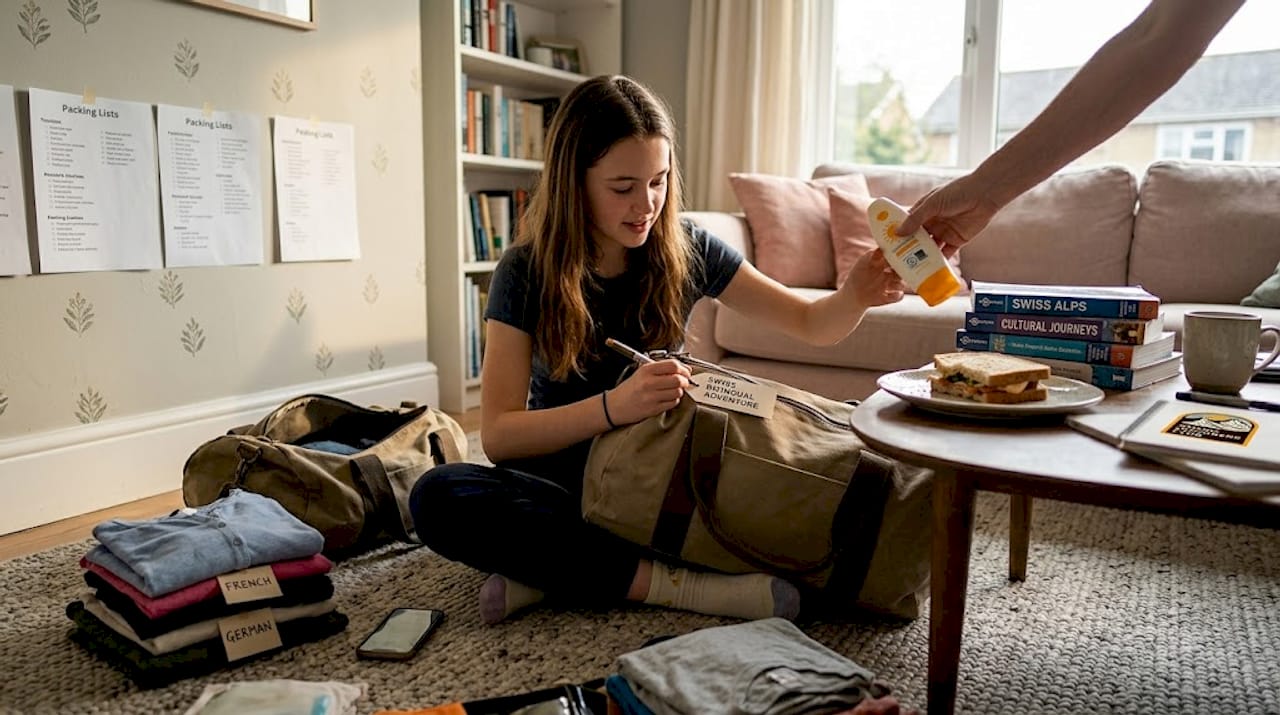
Pro Tip: Give your teen a journal before they leave and suggest they write one sentence each evening about something that surprised them. Journaling prompts for campers are a simple tool that pays off significantly during the debrief conversations you will have when they return.
Maximizing growth during and after the experience
The adventure itself is just the beginning. What happens in the weeks after your teen returns home determines whether the growth sticks or fades.
Reflection is the engine of lasting change. When teens process what they experienced, the lessons move from short-term memory into genuine self-understanding. Without reflection, even the most intense adventure can feel like a great story rather than a turning point. Cognitive skills and social-emotional learning are especially strengthened when teens actively process their immersive experiences.
Here are the most effective ways to support your teen after they return:
- Schedule a debrief conversation. Ask open questions: What was harder than expected? What surprised you about yourself? What do you want to do differently at home?
- Revisit the journal. Reading back through daily entries helps teens see their own arc of growth across the program.
- Encourage language practice. Find a conversation partner, a language app, or a film in the second language to keep the immersion momentum going.
- Stay connected with new friends. The international friendships formed during adventure programs are a real asset. Help your teen maintain them through video calls or shared online spaces.
- Set a new challenge. Growth compounds when teens move from one stretch experience to the next. Even a local club, sport, or creative project keeps the momentum alive.
“Supported reflection and peer dialogue after an immersive experience accelerates development more than the experience alone ever could.”
Reading alumni reflections from teens who have been through similar programs can also inspire your teen and show them that the skills they built are genuinely transferable. Exploring the broader context of building global friendships through international camp culture helps both parents and teens appreciate the long-term social value of these connections.
A fresh look: What most guides miss about experiential learning for teens
Most articles on this topic treat adventure programs as a kind of magic switch. Send your teen away for two weeks, and they come back transformed. We have seen enough families go through this process to know that the reality is more nuanced, and more interesting.
The teens who gain the most are not always the most adventurous or the most linguistically gifted. They are the ones who arrive with a small amount of intentional curiosity and leave with a habit of reflection. The adventure is the trigger, but the growth is built in the processing.
There is also a real difference between how bilingual immersion affects young children versus teenagers. Most of the strongest research on language acquisition and cognitive flexibility comes from studies of younger kids. Applying those findings to teens requires some caution. Teens bring more existing language structure, more self-consciousness, and more social stakes to the experience. That does not make immersion less valuable. It makes the motivational context more important. A teen who chooses to engage with the bilingual environment will gain far more than one who is simply placed in it.
True growth also requires ongoing challenge after the program ends. One summer does not build resilience forever. It builds a foundation. Programs that foster team spirit without competition understand this, and they design experiences that teach teens how to keep growing, not just how to survive a single challenge.
Find the right adventure for your teen
You now have a clear picture of what makes experiential learning work, how to choose wisely, and how to support your teen before and after the experience. The next step is finding a program that puts all of this into practice.
At Young Explorers Club, we run bilingual adventure programs in Switzerland designed specifically for teens aged 13 to 17. From mountain biking and climbing to survival skills and multisport challenges, every activity is built around real growth in a supportive, international environment. Explore our summer camps for teens or check out our weekly activities in Vaud for year-round options. Your teen’s next big step forward might be closer than you think.
Frequently asked questions
How does bilingual immersion benefit teenage campers?
Bilingual immersion can boost teens’ cognitive flexibility, language skills, and adaptability, especially when combined with hands-on adventure learning. Research confirms that immersion boosts executive functions and cognitive flexibility in active learning environments.
Is experiential learning suitable for all teens or just those with specific needs?
Experiential programs serve both general growth and teens facing challenges; parents should read each program’s philosophy to ensure the right fit. Evidence for bilingualism’s impact is strong, though it is worth noting that most foundational research focuses on younger children.
How can parents support their teen’s growth after an experiential camp?
Debriefing, journaling, and encouraging ongoing peer and language practice help teens apply new skills long-term. Adventure activities boost social-emotional learning most when teens actively process what they experienced.
Are all bilingual experiential programs equally effective?
Program quality, staff training, and intentional reflection practices matter more than the bilingual label alone. As some programs target struggling teens while others focus on general growth, matching your teen to the right program type is essential.