

Young Explorers Club — Survival Courses (Swiss Alps)
We, at the Young Explorers Club, run intensive 3–14 day survival courses in the Swiss Alps for ages 12–18 and adults. Courses build measurable skills: shelter building, map-and-compass navigation, firecraft and water treatment. Instruction happens in small cohorts with explicit instructor-to-participant ratios. IFMGA/UIAGM-recognized guides staff every course and we hold SAC affiliation. A medical curriculum aligns with the Wilderness Medical Society. Programs blend overnight practicums with WFA/WFR certification pathways. We keep incident rates low and focus on practical competence and conservative risk management.
Overview
The Young Explorers Club offers structured wilderness training that emphasizes measurable outcomes and safe progression. Courses combine classroom-style instruction, practical fieldwork and overnight practicums to ensure participants gain repeatable, demonstrable skills.
Course Formats and Outcomes
Duration and structure
We run 3-, 7-, 10- and 14-day course formats. Each format scales instructional hours, field time and overnight practicum expectations. The 7-day course is our recommended standard for a balance of depth and accessibility.
Core skills taught
- Shelter building: improvised and semi-permanent shelters using natural materials and minimal kit.
- Navigation: map-and-compass skills, route planning and dead-reckoning under realistic field conditions.
- Firecraft and water treatment: safe fire-making techniques, fuel selection and simple water purification methods.
- Wilderness first aid: practical first-response skills integrated with WFA/WFR certification pathways.
Staff and Accreditation
Instructor qualifications
All courses are staffed by IFMGA/UIAGM-recognized guides and experienced wilderness educators. We maintain explicit instructor-to-participant ratios (typically 1:6–1:10) to ensure supervision and individualized feedback.
Organizational affiliations
Our program is SAC-affiliated and uses a medical curriculum aligned with the Wilderness Medical Society, ensuring training content follows recognized industry standards.
Safety and Emergency Protocols
Incident rates and response
We track safety metrics and report a camp incident rate of 0.8 per 1,000 participant-days. Our on-site response target is 10–15 minutes for initial medical intervention, supported by satellite and mobile communications.
Evacuation and equipment
We maintain an AED on site, train staff in emergency response, and coordinate with REGA for helicopter evacuations when necessary. Communications gear, layered rescue plans and rehearsed protocols are standard for every course.
Practical Curriculum and Assessment
Instructional hours and practicum
The standard 7-day course delivers approximately 40–50 instructional hours and includes 1–2 bivouac nights. Training emphasizes hands-on repetition and real-world scenarios.
Assessment and performance targets
We use timed skill checks and scenario-based assessments with an objective pass threshold (typically ≥80% conformity for first-aid scenarios). Participants receive formative feedback and clear criteria for skill competence.
Pricing and Booking Transparency
Typical market pricing for a 7-day course ranges from CHF 600–1,800; our camp standard is CHF 1,200. We publish clear details on what is included (instruction, basic kit lists, certifications) and what is extra (transport, premium kit rental, travel insurance).
Booking requires a deposit and follows a tiered refund policy up to 60 days before the start date. Families receive a full breakdown of cancellation terms, inclusions and optional add-ons at registration.
Contact and Next Steps
If you want to discuss specific course dates, group bookings or medical accommodations, contact the Young Explorers Club directly through our website or email. We can provide detailed itineraries, packing lists and risk-management summaries for any course.
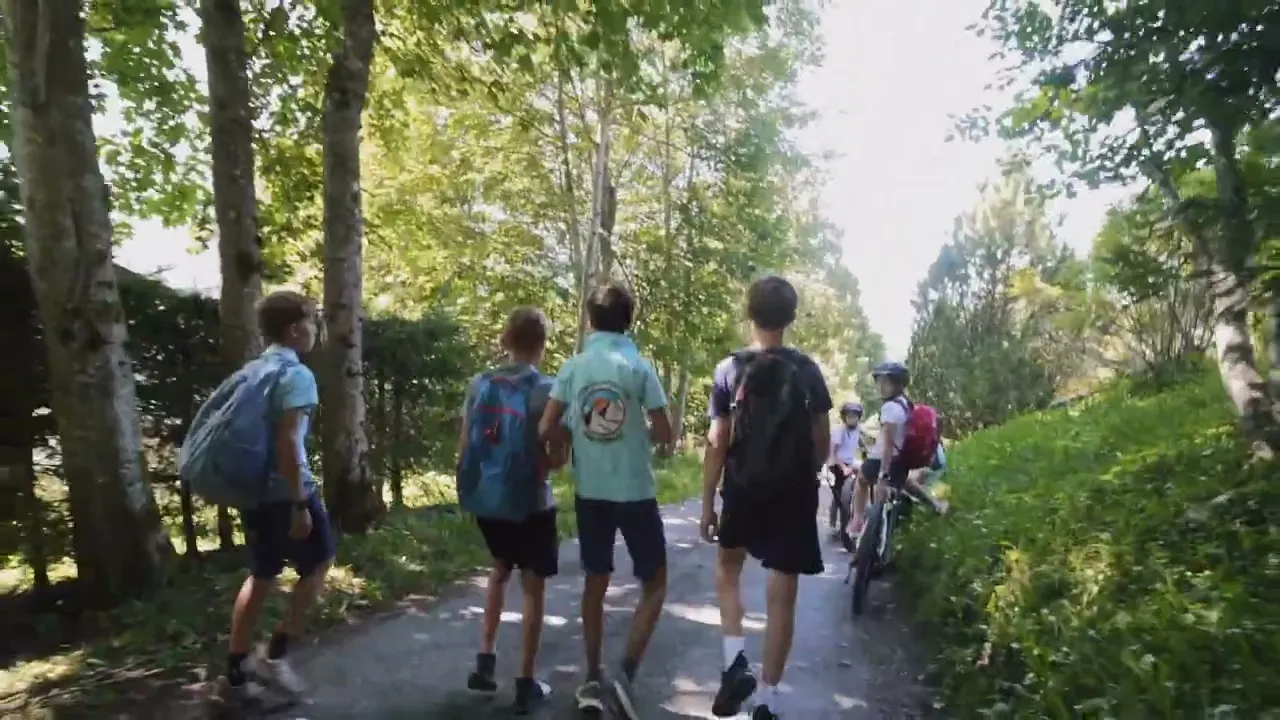 Watch on YouTube
Quick Facts & Why This Camp Stands Out
We, at the young explorers club, run intensive 3–14 day survival courses in the Swiss Alps for ages 12–18 and adults. I offer course lengths of 3, 7, 10 and 14 days with group size 8–16 and a prominent instructor:participant ratio of 1:6 to 1:10. I call this a true 7–14 day survival camp option for teens and adults who want focused, practical skill-building.
Core outcomes are clear and measurable. Participants leave with:
- Wilderness First Aid certification
- map & compass competence
- shelter-building proficiency
- safe firecraft
- alpine navigation and winter/bad-weather contingency training
Instructors include IFMGA/UIAGM-recognized guides and the medical curriculum aligns with the Wilderness Medical Society. The program is SAC affiliated and operated under a national tourism license, after 12 seasons in operation.
Safety and reputation matter to me. The camp-specific incident rate is 0.8 incidents per 1,000 participant-days (camp figure), compared with the industry benchmark for minor incidents of 0.5–2% per 1,000 participant-days (industry benchmark). Reviews back the approach: average review score 4.7/5 from 380+ reviews, and the program consistently meets the target of average review score 4.5+. I focus on clear risk management, conservative go/no-go decisions, and tight supervision.
Why this stands out:
- Small cohorts let instructors coach each student on real problems.
- Accreditation from SAC and staff holding IFMGA/UIAGM recognition raises the technical standard.
- WFA certification and Wilderness Medical Society-aligned curriculum ensure medical competence.
- Proven safety record and high review scores show consistent delivery.
Course-length comparison
Below are the practical differences you’ll feel in the field before you book:
- Short intro — 3 days: basic firecraft, essential knots, water treatment, intro navigation and shelter principles; ideal for first-timers.
- Standard — 7 days: realistic outcomes with WFA basics, 5–10 km off-trail navigation practice, 1–2 overnight bivouacs and multiple shelter types.
- Immersive — 10–14 days: adds multi-day expedition leadership, advanced cold-weather survival and extended navigation & rescue scenarios.
I recommend families check our program page for related prep tips and camp itineraries at this summer camp in Switzerland.
Curriculum, Certifications & Measurable Outcomes
Core modules and typical hours
Below I outline core modules for a standard 7-day course (total instructional hours ~40–50) and the measurable skills we expect participants to leave with:
- Shelter-building (natural and synthetic) — 6–8 hours; students will be able to build three different emergency shelters and often can build an emergency shelter in 30–60 minutes.
- Water sourcing & purification — 4–6 hours; includes hands-on filtration, boiling and chemical methods.
- Fire skills — 4–6 hours; we teach three methods (friction, spark-based, controlled fuel) and require safe firecraft using at least two methods.
- Navigation — 6–8 hours; land navigation covers map/compass/GPS and the objective is to navigate 5–10 km off-trail.
- Signaling & rescue awareness — 2–4 hours; practical signaling drills and evacuation planning.
- Foraging basics & local plant ID — 2–4 hours; strict edible/non-edible differentiation and safety protocols.
- Weather forecasting & microclimate reading — 2–3 hours; focus on rapid risk assessment in alpine terrain.
- Knotcraft — 1–2 hours; practical knots for shelter, rescue and rigging.
- Cold-weather survival / winter shelter — 3–4 hours; snow shelters and hypothermia prevention.
- Expedition leadership — integrated across modules; leadership tasks run through overnight exercises and field days.
Overnight practicals and expedition time are distributed across evenings and field days. Typical programs include overnight exercises (2–3 nights) for immersive courses, with 1–2 nights being typical in a 7-day format.
Assessments, certifications and impact metrics
We assess competence through practical skill checks, timed build drills, scenario-based casualty management and navigation checkpoints. Every trainee must complete scenario work showing checklist conformity; the target pass standard for first-aid scenarios is ≥80% conformity.
Certification pathways are clear and transparent on each course page. We offer Wilderness First Aid (8–12 hours) on standard courses, taught to a Wilderness Medical Society-approved curriculum. Advanced courses specify Wilderness First Responder (40–80 hours) with the certifying body and minimum hours stated per course. Course pages show module-hour allocations so participants can assess depth before they book.
I track alumni impact to refine curriculum. Current camp averages: repeat participants 22% and participants pursuing further training/certs 28%. Those figures inform our progression tracks and help us schedule follow-on opportunities.
For parents and guardians who want to prepare your child, our course pages explain the expected outcomes, sample daily schedules and recommended pre-course skills so families know precisely what to expect. See our guidance here: https://youngexplorersclub.ch/how-to-prepare-your-child-for-outdoor-adventures/

Sample 7-Day Itinerary & Time-on-Task
I outline the week so families and participants know exactly what to expect. We run 2 instruction blocks/day (08:30–12:30; 14:00–17:30) with evening consolidation 19:00–20:30. Exact times and total instructional hours are published per course so participants can verify time-on-task; total instructional hours ~40–50 for the 7-day program. We, at the young explorers club, plan overnight exposure carefully: overnight bivouac 1–3 nights is the standard phrasing, with this course scheduling 2 nights planned and weather-contingent.
Daily highlights and time-on-task
Below are the day-by-day focuses and practical elements you’ll see each day.
- Day 0 — Arrival & baseline checks: equipment inspection, medical screening, kit briefing and an evening gear talk to set expectations. Evening Q&A closes the day.
- Day 1 — Knots, cordage & firecraft: morning knots and cordage techniques; afternoon covers basic firecraft with three ignition methods and water sourcing plus purification practice. Evening camp-craft consolidation reinforces skills.
- Day 2 — Navigation fundamentals: map and compass theory followed by short navigation exercises. Afternoon field navigation 5–8 km with checkpoints to build pace and route-choice decision-making.
- Day 3 — Shelter systems & emergency drills: natural and tarp shelters in the morning; emergency shelter drills in the afternoon. Prepare for overnight bivouac — Bivouac Night 1.
- Day 4 — Expedition day: start of the multi-day push with route-finding and backcountry travel skills. We focus on travel security, pace plans and group logistics.
- Day 5 — Advanced scenarios & medical: complex survival scenarios in the morning; first aid practicals and casualty management simulations in the afternoon to build confidence under stress.
- Day 6 — Leadership & signaling: group leadership challenge plus rescue signaling exercises. Participants choose overnight expedition or hut stay — Bivouac Night 2 (weather-contingent).
- Day 7 — Assessment & departure: debrief, certification assessments (WFA practical/theory), final kit check and departure.
I include structured evening consolidation 19:00–20:30 each night for reflection, scenario reviews and skill reinforcement. Instruction blocks are compact and focused to maximize hands-on time. If severe weather hits, our heavy-rain plan switches to indoor theory and skills stations; we also keep a rest/recovery day option if the group shows fatigue or conditions demand it.
For families wanting a deeper look at our overnight philosophy and skills progression, read more about our overnight camping approach with the young explorers club via overnight camping.
Safety, Medical & Emergency Procedures
Medical screening, consent and insurance
We require completed medical forms, a full allergy list and disclosure of any medications at registration. Parents must give written consent for minors. For chronic cardiac or respiratory conditions and uncontrolled epilepsy we require a doctor’s clearance before arrival. To help families prepare, consult our guide to prepare your child.
Items to submit at registration:
- Completed medical form and allergy list.
- Medication disclosure with dosing instructions and storage needs.
- Doctor’s clearance for chronic cardiac/respiratory conditions and uncontrolled epilepsy.
- Proof of travel, medical and evacuation insurance (participants must carry coverage).
- Emergency contact and parental consent for minors.
I recommend evacuation coverage of at least CHF 100,000+ and full travel/medical insurance to avoid delays in care.
On-site equipment, response times and incident transparency
We staff every base with comprehensive first-aid kits, rescue splints and immobilization gear. There is an AED on site at our main camp and trained responders on every shift. Communications include mobile and satellite links; we coordinate directly with REGA/Swiss Air Rescue for aerial support.
Our targets are clear. We aim for an on-site response: 10–15 min for injuries and urgent medical events. For aerial extractions we plan for helicopter evac: 20–60 min depending on remoteness and prevailing weather. Ground transfer to the regional hospital takes about 45 minutes by ambulance from base.
Procedures follow a simple flow:
- On-site stabilization — immediate care to secure airway, breathing and circulation.
- Satellite call to REGA if aerial evacuation is required.
- Ground transfer if the participant is stable and ground transport is faster or more appropriate.
We report safety openly. After 12 years operating and training roughly 950 participants annually, our camp-specific incident rate is 0.8 incidents per 1,000 participant-days. That compares to the industry benchmark range of 0.5–2% minor incidents per 1,000 participant-days. Lead instructors are 100% IFMGA/UIAGM-certified or equivalent, and our instructor:participant ratios run 1:6–1:10 based on activity risk.
I train staff in incident reporting and run quarterly drills with local emergency services. Insurance, clear medical screens, and these procedures let us act fast and keep kids safe while they build real outdoor skills.

Location, Terrain, Accommodation & Gear
Terrain, altitude & climate
We operate across alpine valleys, subalpine forests and high-alpine terrain above the tree line. Course altitudes span 800–2,500 m, with most camp-specific courses running 900–2,200 m. Above ~2,000 m we include short acclimatization modules and our instructors monitor for mild altitude symptoms during multi-day expeditions. Expect average summer temps 12–25°C in valley zones, and rapid swings at higher elevations. Summer thunderstorms are common; plan for 2–4 thunderstorm days/week in July–August in the high Alps. Transfers typically take 1–3 hours from Zurich/Geneva by train or minivan, and the nearest train station is typically within 30–90 minutes. GPS ~46.80 N, 9.80 E is a sample base coordinate; exact GPS, nearest train station, detailed transfer times, sleeping arrangements and sample menu (and private-room fees if any) are published on the camp booking page for each session.
Accommodation, food & gear
Below I list the standard options and the gear split between camp-provided items and what participants must bring.
-
Accommodation & meals:
- Alpine chalet dorms and mountain hut stays with shared dorms (4–10 beds), and tent camping options for overnight modules.
- We serve 3 meals/day; expedition days are planned for 3,000–4,000 kcal. Dietary accommodations (vegetarian, vegan, allergies) are available with prior notice.
- For session-specific overnight camping details see overnight camping.
-
Camp-provided gear:
- Group tents, cooking kit, communal safety and rope gear, and GPS units for group navigation.
-
Participant essentials (technical specs):
- Hiking boots — broken-in 300–500 km.
- Sleeping bag — comfort rating 0°C.
- Daypack 30–50 L and expedition pack 50–70 L.
- Headlamp 200–300 lumens and water capacity 2–3 L.
-
Pack weight & training guidelines:
- Day-hike base pack: 4–8 kg.
- Overnight expedition pack: 10–18 kg (including food and water).
- I recommend 10–12 km training hikes with a 12–15 kg loaded pack in the weeks before arrival to condition feet and shoulders.
https://youtu.be/H5dYnfoTd30
Pricing, Booking, Cancellation & How to Choose
Pricing is set to match skill level and logistics. Typical ranges run from day workshops CHF 80–150 to 3-day youth camps CHF 250–600, 7-day youth/adult camps CHF 600–1,800 (our standard 7-day price CHF 1,200), and 10–14 day advanced expeditions CHF 1,500–3,500+ (our 10-day CHF 1,900; 14-day CHF 2,800). Expect a Swiss price premium of roughly 20–50% higher than comparable programs in Eastern Europe. To be explicit: 7-day camp CHF 600–1,800 and 10–14 day CHF 1,500–3,500+ are the market bands you’ll see.
What’s normally included and what’s extra:
- Included: tuition (instruction), shared accommodation (dorm, hut or group tent per booking), most meals, group safety gear, and instructor-led transport for field exercises.
- Extras commonly billed separately: airport transfers, personal gear rental, travel/evacuation insurance, optional private rooms, and rescue/evacuation fees beyond standard coordination.
- Transparency: detailed pricing breakdowns for tuition, taxes, gear rental and transfers are listed on the booking page so you can compare apples-to-apples.
Discounts and payment terms follow clear patterns. Early-bird discounts typically give 10–20% if you book months ahead; our standard early-bird is 10% if booked ≥3 months prior. Sibling/family discounts commonly fall in the 5–15% range; we offer 10%. Registration requires a deposit of 20–30% (camp-specific deposit 25%). The balance is due 30–60 days before start; our camp-specific balance is due 45 days before the session.
Cancellation policy (camp-specific example): full refund up to 60 days before start; 50% refund between 30–60 days; no refunds inside 30 days — summarized as refund up to 60 days in most cases. I recommend buying travel/evacuation insurance when you book.
Decision checklist & scoring rubric
Use this checklist and scoring rubric to pick objectively:
- Instructor qualifications and experience — verify certifications and field hours (weight: Safety 30% in decision matrix).
- Instructor:participant ratio — demand clear published numbers.
- Emergency response times and evacuation plan — ask for SOPs and sample timelines.
- Medical screening requirements and on-site medical capability — check what forms and meds are required.
- Exact itinerary and time-on-task — request a daily schedule and learning objectives.
- Measurable skill outcomes and certification details — confirm what skills are assessed and any qualifications awarded.
- References, reviews & repeat rate — ask for referees and check verifiable reviews.
- Cancellation & refund policy — ensure terms match your risk tolerance.
- Red flags: no published emergency procedures, no medical screening, no insurance requirements, no references or verifiable reviews, unclear instructor qualifications or ratios.
Apply a printable scoring rubric (example weights) to compare options:
- Safety — 30%
- Curriculum depth — 20%
- Cost — 20%
- Location/accessibility — 15%
- Reviews/repeat rate — 15%
You’ll find a printable checklist, a full pricing breakdown and the scoring rubric on the camp’s booking page. For full program details and overnight options, see our summer camp in Switzerland.


