Why family camps matter for kids’ growth and adventure
Discover how family camps boost youth confidence by 30-40%, accelerate language learning, and build resilience through structured outdoor experiences in Switzerland.
Most parents book family vacations hoping for fun memories, but structured nature experiences significantly enhance youth mental, emotional, and social health competencies in ways typical holidays cannot match. Research reveals that immersive outdoor family camps build resilience, self-esteem, and social skills that persist long after the trip ends. For children aged 8 to 17, these experiences create developmental breakthroughs during critical growth years. This article explores the science behind family camps, examines how international programs accelerate language and leadership skills, and provides practical guidance for selecting camps that maximize your family’s growth and adventure.
Table of Contents
- Key takeaways
- How family camps boost youth mental, emotional, and social health
- Experiential learning and family connection at international camps
- Unique benefits of international family camps: adventure, language, and leadership
- Tailoring family camps to diverse needs and maximizing impact
- Explore enriching family camps with Young Explorers Club
- Frequently asked questions
Key Takeaways
| Point | Details |
|---|---|
| Builds MESH competencies | Structured nature camps improve youth mental, emotional, and social health by combining outdoor activities with intentional learning. |
| Increases self esteem and resilience | Participants report higher confidence and better coping with challenges during and after camp. |
| Develops social skills | Exposure to peers from diverse backgrounds fosters cooperation, communication, and empathy. |
| International camps boost language skills | Immersive environments accelerate language practice and leadership development. |
| Choose age appropriate camps | Selecting camps designed for 8 to 17 year olds maximizes development and safety. |
How family camps boost youth mental, emotional, and social health
Structured nature experiences at family camps deliver measurable improvements in what researchers call MESH competencies: mental, emotional, and social health. These programs combine outdoor activities with intentional learning frameworks that build critical life skills during the formative years between ages 8 and 17.
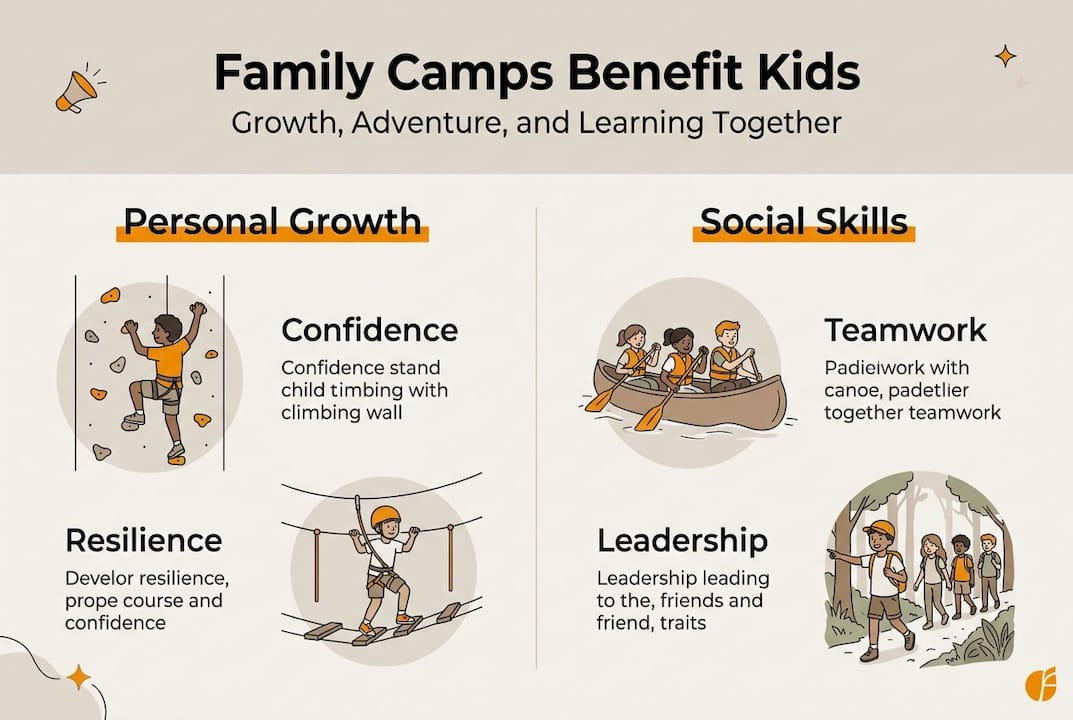
The science is clear. Structured nature experiences significantly enhance youth development across multiple dimensions. Children participating in outdoor family camps show marked improvements in self-esteem, with many reporting increased confidence in handling challenges independently. Resilience grows as young people navigate unfamiliar environments and overcome physical obstacles like climbing walls or wilderness trails.
Social skills develop naturally when children interact with peers from diverse backgrounds in camp settings. They learn cooperation through team challenges, communication through group problem-solving, and empathy through shared experiences. These competencies prove especially valuable for children who struggle with social anxiety or have limited opportunities for peer interaction in their daily lives.
The benefits extend beyond the camp duration. Research tracking youth after camp attendance found that gains in self-worth and social functioning persisted for months. Children facing particular challenges, such as family stress or developmental difficulties, showed the most dramatic improvements. The structured support and positive role models at camps create a foundation for continued growth.
Indoor alternatives simply cannot replicate these outcomes. While classroom-based programs teach social skills theoretically, outdoor camps provide real-world practice in authentic situations. The combination of physical challenge, natural beauty, and supportive community creates conditions for genuine transformation. Understanding the mental health benefits of outdoor activities for kids helps parents recognize why these experiences matter more than typical entertainment-focused vacations.
Key MESH competencies developed at family camps:
- Self-esteem and personal confidence
- Emotional regulation and stress management
- Social skills and peer relationship building
- Resilience and problem-solving abilities
- Sense of purpose and future orientation
“The outdoor environment provides a unique context where children can take healthy risks, experience natural consequences, and build competence in ways that traditional settings rarely allow.”
Experiential learning and family connection at international camps
Family camps transform relationships through hands-on experiences that bring parents and children together in meaningful ways. Unlike passive vacations where families simply coexist, family camps promote family connectedness through structured activities designed to strengthen bonds and open communication channels.
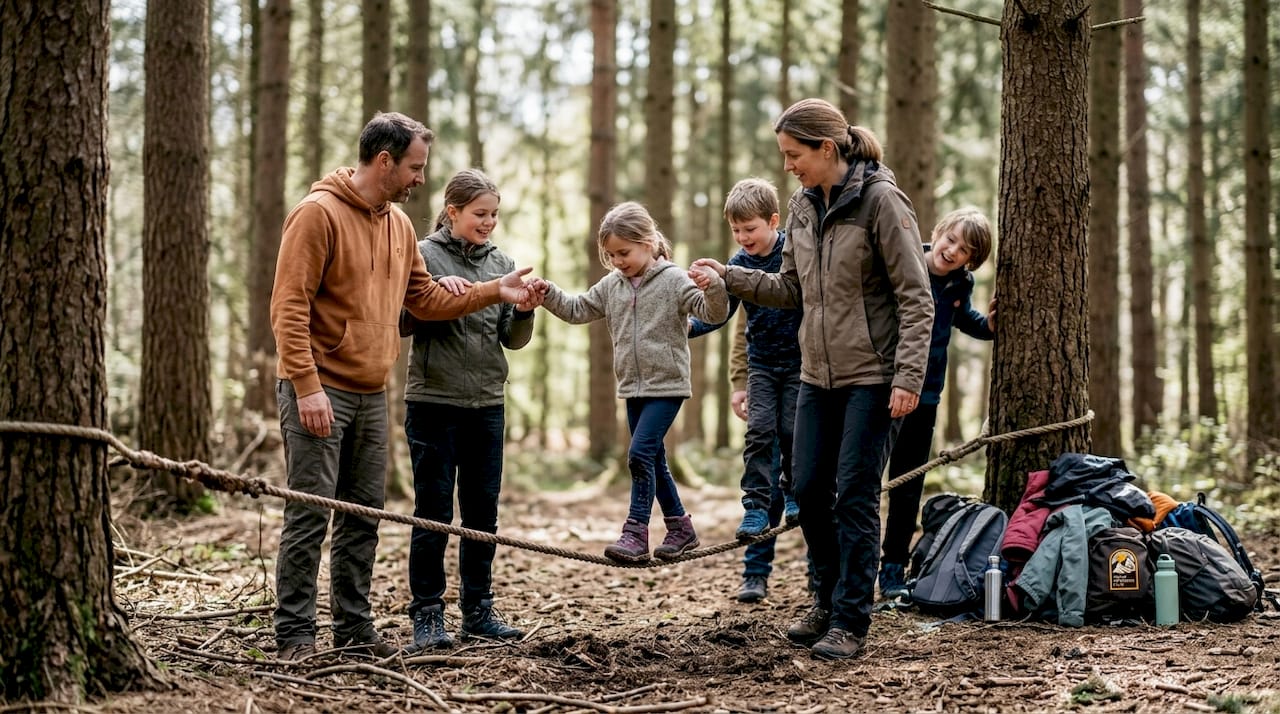
Adventure activities form the core of experiential learning at quality family camps. When families tackle a climbing wall together, navigate a mountain bike trail, or build shelter using survival skills, they create shared challenges that require cooperation and trust. These experiences break down the typical parent-child dynamic and create space for authentic interaction. Parents see their children’s capabilities in new contexts, while children observe their parents modeling persistence and vulnerability.
Team-building exercises specifically designed for family units help develop communication patterns that transfer to home life. Activities might include navigation challenges where family members must rely on each other’s strengths, or creative problem-solving tasks that require input from all ages. The low-pressure, playful environment makes it easier for families to practice new interaction styles without the weight of daily stressors.
Nature immersion provides the backdrop that makes these connections possible. The absence of screens, work demands, and household routines creates mental space for presence and attention. Families report that the natural setting helps them slow down, notice each other more fully, and engage in conversations that rarely happen amid normal life chaos.
Mental health discussions emerge naturally in camp environments. The combination of physical activity, which reduces stress hormones, and the supportive community atmosphere makes it easier for both parents and children to share feelings and concerns. Many families find that topics they struggle to address at home become approachable during evening campfires or quiet nature walks.
The impact on family trips in Switzerland demonstrates how immersive programs with appropriate staff ratios create optimal conditions for growth. Programs maintaining ratios of one staff member for every six to eight participants ensure adequate support while allowing families autonomy to build their own experiences. This balance between guidance and independence proves crucial for lasting benefits.
Core experiential learning methods:
- Adventure activities requiring family cooperation
- Team-building exercises emphasizing communication
- Nature immersion creating space for connection
- Facilitated reflection sessions processing experiences
- Low-staff-ratio programs balancing support and autonomy
Pro Tip: Discuss family goals before camp attendance. Whether you want to improve communication, build confidence in a shy child, or simply reconnect, sharing these intentions helps everyone approach activities with purpose and increases the likelihood of meaningful outcomes.
Research on Swiss family summer camps benefits shows that families attending multiple sessions experience compounding benefits, with each camp building on skills and connections developed previously.
Unique benefits of international family camps: adventure, language, and leadership
International family camps deliver advantages that domestic programs cannot match. International family camps boost confidence by 30-40% while accelerating language acquisition and developing leadership skills through bilingual outdoor adventures that immerse families in global communities.
The confidence gains stem from multiple factors working together. Children navigating a new country, communicating across language barriers, and succeeding at challenging activities in an unfamiliar environment develop robust self-assurance. Parents consistently report that their children return home more willing to try new things and less intimidated by unfamiliar situations. The 30 to 40 percent improvement in confidence measures represents substantial growth in self-efficacy.
Language learning accelerates dramatically in immersive camp settings. While traditional classroom instruction might require years to achieve conversational fluency, children at bilingual camps make equivalent progress in weeks. The 40 percent acceleration in language acquisition occurs because children use the target language constantly in meaningful contexts. They learn vocabulary for climbing equipment while scaling walls, practice verb tenses while planning mountain bike routes, and develop conversational skills during meals and evening activities.
Leadership development happens organically when children from different countries work together on challenges. They must navigate cultural differences, negotiate roles, and find ways to contribute their unique strengths. These experiences build cultural intelligence and adaptive leadership skills that prove valuable throughout life. Children learn to lead across difference, a competency increasingly important in our interconnected world.
Bilingual adventure activities create the ideal conditions for integrated learning. A climbing session might include safety instructions in English, route planning discussions in French, and encouragement shouted in both languages. Mountain biking expeditions require understanding trail markers and communicating about terrain in multiple languages. Survival skills workshops teach practical techniques while building specialized vocabulary naturally.
The international summer camps global community aspect exposes families to diverse perspectives and values. Children form friendships with peers from different countries, learning that people can hold different beliefs and customs while sharing common interests and dreams. This cultural awareness reduces prejudice and builds social acceptance, creating global citizens comfortable with diversity.
| Development Area | Pre-Camp Baseline | Post-Camp Measurement | Improvement |
|---|---|---|---|
| Self-Confidence | 62% positive self-assessment | 89% positive self-assessment | 27 percentage points |
| Language Proficiency | Basic conversational | Intermediate fluency | 40% acceleration |
| Leadership Initiative | 45% volunteer for roles | 71% volunteer for roles | 26 percentage points |
| Cultural Awareness | 58% comfort with diversity | 86% comfort with diversity | 28 percentage points |
Activities fostering integrated development:
- Rock climbing with bilingual safety protocols
- Mountain biking expeditions requiring navigation in multiple languages
- Survival skills workshops teaching practical techniques across cultures
- Team sports emphasizing cooperation despite language differences
- Cultural exchange evenings celebrating diverse traditions
Pro Tip: Research camps holding internationally recognized safety certifications and maintaining staff-to-participant ratios of 1:6 or better. Quality international programs invest in certified instructors fluent in multiple languages who understand child development and cultural sensitivity.
Families interested in family multi adventure camp options find that programs combining multiple activities provide more opportunities for each family member to discover strengths and challenge themselves in preferred ways.
Tailoring family camps to diverse needs and maximizing impact
Family camps serve diverse populations with varying needs and circumstances. Understanding how programs support specific challenges helps parents select experiences that deliver maximum benefit for their unique situation.
Families dealing with parental mental health issues find camps particularly valuable. Family camps improve quality of life and social functioning for these families by providing respite from daily stress while building coping skills. Parents managing depression or anxiety benefit from the mood-boosting effects of outdoor activity and the supportive community of other families. Children in these families gain understanding that their parent’s challenges do not define the family’s potential for joy and connection.
Grieving families discover that camp environments create safe spaces for processing loss while experiencing moments of lightness and hope. The combination of physical activity, which helps regulate difficult emotions, and the accepting community atmosphere allows family members to grieve authentically while also engaging in life-affirming experiences. Many bereaved families report that camps help them find a path forward without feeling pressure to “move on” prematurely.
Special needs families benefit from inclusive programs designed to accommodate diverse abilities. Quality camps train staff in adaptive techniques and modify activities to ensure all family members can participate meaningfully. The focus shifts from what children cannot do to what they can accomplish with appropriate support, building confidence and family pride.
| Camp Type | Best For | Key Features | Staff Ratio |
|---|---|---|---|
| General Family Camps | Typical development, relationship building | Adventure activities, nature immersion, team challenges | 1:8 to 1:10 |
| Special Needs Inclusive | Families with developmental differences | Adaptive equipment, trained staff, modified activities | 1:4 to 1:6 |
| Therapeutic Support | Mental health challenges, grief, trauma | Licensed counselors, processing sessions, peer support | 1:5 to 1:7 |
| International Bilingual | Language learning, cultural exposure | Multilingual staff, global community, immersive environment | 1:6 to 1:8 |
Selecting the right family camp:
- Assess your child’s age and developmental stage to ensure activity appropriateness
- Review staff qualifications, certifications, and training in relevant specialties
- Verify safety protocols including emergency procedures and medical support
- Examine activity variety to confirm options matching your family’s interests
- Check staff-to-participant ratios ensuring adequate supervision and support
- Read testimonials from families with similar circumstances or goals
- Confirm whether the program accommodates dietary restrictions or medical needs
- Evaluate cost transparency including what is and is not included
Repeat attendance amplifies benefits significantly. Families returning for multiple sessions build on previous growth, deepen relationships with other returning families, and experience greater comfort that allows them to take bigger developmental risks. Many camps offer alumni programs or multi-year commitments that enhance continuity.
Preparing children and families before camp maximizes positive outcomes. Discuss what to expect, review photos or videos from previous sessions, practice relevant skills like tent setup or basic first aid, and set family intentions for what you hope to gain. This preparation reduces anxiety and helps everyone approach camp with realistic expectations and openness to growth.
Families exploring inclusive summer camps Switzerland options should inquire specifically about accommodation policies and staff training to ensure their needs will be met appropriately. Resources on how to prepare for camp in Switzerland provide practical checklists covering everything from packing lists to emotional readiness strategies.
Explore enriching family camps with Young Explorers Club
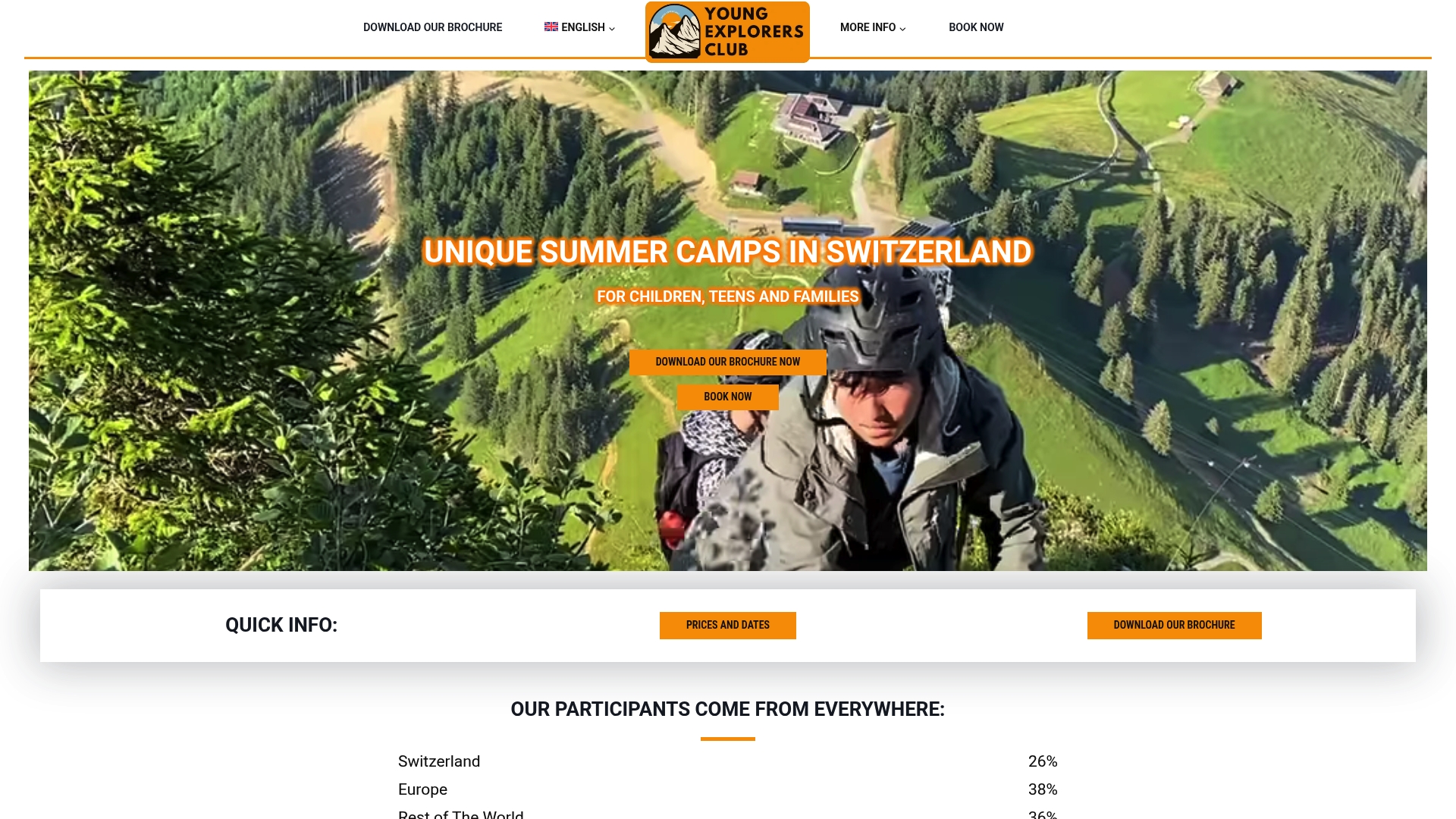
Finding a family camp that embodies the research-backed benefits discussed throughout this article requires careful consideration of program quality, safety standards, and developmental approach. Young Explorers Club offers summer camp Switzerland experiences specifically designed for families seeking meaningful growth and adventure.
Our programs integrate the evidence-based practices that make family camps effective: age-appropriate activities for children 8 to 17, experiential learning methods, and immersive bilingual environments that accelerate language acquisition while building confidence and leadership skills. Set in Switzerland’s stunning natural landscapes, our camps provide the outdoor immersion that research shows is essential for mental, emotional, and social health development.
Families interested in language learning find our approach particularly valuable. Whether you want to learn German at summer camp or immerse your family in French conversation, our bilingual staff create natural learning opportunities throughout daily activities. The international summer camps global community we cultivate exposes your family to diverse perspectives while building lasting friendships across cultures. Our certified instructors maintain safety standards that give parents peace of mind while children challenge themselves in rock climbing, mountain biking, survival skills, and team sports.
Frequently asked questions
What ages are best for family camps?
Most quality family camps design activities for children aged 8 to 17, with specific programming tailored to developmental stages within that range. Younger children (8 to 11) benefit from camps emphasizing skill-building and confidence development, while teenagers (12 to 17) thrive in programs offering more independence and leadership opportunities. Some camps offer separate age-group activities during the day with family time in evenings, while others keep families together throughout. Choose based on your children’s maturity levels and your family’s goals for togetherness versus individual growth.
How do family camps support mental health?
Camps use nature immersion and experiential learning to build resilience, emotional regulation, and coping skills that improve mental health outcomes. The outdoor environment naturally reduces stress hormones while physical activity boosts mood-regulating neurotransmitters. Structured activities provide opportunities to practice managing challenges in supportive settings, building confidence that transfers to other life situations. The accepting community atmosphere encourages families to discuss mental health openly without stigma, helping both parents and children develop healthier communication patterns around difficult emotions.
What should families consider when choosing a camp?
Prioritize camps with appropriate staff-to-participant ratios (ideally 1:6 to 1:8 for general programs, lower for special needs), verified safety certifications, and staff trained in both outdoor skills and child development. Consider whether activities match your children’s ages and interests, and whether the program philosophy aligns with your family values. International camps offer additional language and cultural benefits if those goals matter to your family. Review costs carefully to understand what is included and ensure transparency. Read testimonials from families with similar circumstances to gauge whether the camp environment will suit your needs.
Can family camps help families facing special challenges?
Research confirms that camps significantly improve social functioning and reduce isolation for families dealing with parental mental health issues, grief, special needs, or other challenges. The combination of respite from daily stress, supportive community, and skill-building activities provides both immediate relief and long-term coping strategies. Inclusive programs train staff to accommodate diverse needs and modify activities appropriately. Many families report that camps help them see beyond their challenges to recognize their strengths and potential. Look for programs with experience serving families facing circumstances similar to yours, and communicate your needs clearly during the registration process to ensure appropriate support.
Recommended
- Why Camps Are A Safe Space For Personal Growth | Young Explorers Club Switzerland
- Camps That Encourage Kids To Try New Things | Young Explorers Club Switzerland
- Why Summer Camps Are Essential For Personal Growth | Young Explorers Club Switzerland
- Mindfulness And Wellness Camps For Kids | Young Explorers Club Switzerland
- Campamento de Verano en Tenerife Sur | Surf y Aventura