What makes educational camps unique for adventurous kids
Discover what makes educational camps unique for kids aged 8-17 in 2026. Learn the key features, benefits, and how to choose the right international program.
Sending your child to summer camp used to mean campfires, canoe races, and two weeks away from home. But the best camps today do something far more powerful. They build real skills, spark genuine curiosity, and connect kids with peers from around the world. If you’ve been wondering whether an educational camp is worth the investment, this guide breaks down exactly what these programs offer, what separates the great ones from the average, and how to find the right fit for your child in 2026.
Table of Contents
- Defining educational camps: More than just summer fun
- Core elements of educational camps for kids in 2026
- Benefits of international and language-focused camps
- How educational camps nurture personal growth
- Choosing the right educational camp for your child
- What most parents miss about educational camps
- Give your child their next adventure with Young Explorers Club
- Frequently asked questions
Key Takeaways
| Point | Details |
|---|---|
| Educational camps blend fun and growth | These camps combine adventure, academics, and cultural exploration for well-rounded development. |
| International settings accelerate language skills | Language immersion in diverse communities boosts both confidence and communication abilities. |
| Personal growth outlasts camp sessions | Campers build life skills that extend far beyond camp, including leadership and resilience. |
| Choosing the right camp is key | Match philosophy, staff, and activities to your child’s interests for the best outcomes. |
Defining educational camps: More than just summer fun
An educational camp is not a classroom with a hiking trail attached. It’s a carefully designed environment where adventure and learning reinforce each other every single day. Kids might spend the morning practicing French conversation, then spend the afternoon navigating a mountain trail in a team. Both experiences teach something. Neither feels like homework.
Modern camps fuse traditional adventure with structured language and personal development programs for children aged 8 to 17. That combination is what makes them fundamentally different from a standard recreational camp.
Here’s what you’ll typically find at a quality educational camp:
- Expert-led courses in languages, leadership, or creative arts
- Hands-on projects that require teamwork and problem-solving
- Multilingual environments where kids communicate across language barriers daily
- Mentorship structures that pair campers with experienced, trained counselors
- Reflection time built into the schedule so kids process what they’re learning
“The best educational camps don’t separate learning from living. Every meal, every challenge, every new friendship is part of the curriculum.”
What separates these camps from traditional ones is their intentional focus on character education alongside academics. Traditional camps may prioritize a single sport or activity. Educational camps prioritize who your child is becoming.
Pro Tip: When reviewing camp options, ask specifically how the program supports character development. A camp that can answer this question clearly has thought deeply about its mission.
Core elements of educational camps for kids in 2026
Parents in 2026 are more informed than ever, and their expectations have shifted. Over 60% of parents now prioritize camps that offer both adventure and education, not one or the other. That demand has pushed programs to raise their standards significantly.
The core features of a strong educational camp today include:
- Academic enrichment in languages, STEM, or creative arts woven into daily activities
- Physical challenges like climbing, hiking, and team sports that build resilience
- Cultural programming that introduces kids to global perspectives through food, music, and storytelling
- Peer diversity that exposes children to different backgrounds and communication styles
- Structured reflection through journaling, group discussions, or one-on-one sessions with counselors
Language immersion and STEM programs are especially popular among modern educational camps, and for good reason. These skills translate directly into academic and professional advantages later in life.
Here’s a quick comparison to help you evaluate your options:
| Feature | Educational camp | Traditional camp |
|---|---|---|
| Primary focus | Growth and learning | Recreation and fun |
| Staff background | Educators and mentors | Activity specialists |
| Peer mix | International and diverse | Often local or regional |
| Language exposure | Multilingual environment | Single language |
| Outcome tracking | Personal development goals | Activity completion |
When choosing a camp, start by assessing your child’s interests, then review the program curriculum carefully, and finally consider what cultural and language offerings are available. A camp that offers a thoughtful balance of structure and free time gives kids room to grow without feeling overwhelmed.
Benefits of international and language-focused camps
There’s a reason families travel across the world to enroll their children in international camps. The benefits go well beyond picking up a few phrases in another language.
Camps in Switzerland attract students from more than 40 countries, creating a genuinely multicultural environment that’s almost impossible to replicate at home or in a traditional school setting. When your child eats breakfast with a peer from Japan, navigates a hiking trail with a teammate from Brazil, and practices English with a counselor from Canada, they’re building empathy and adaptability in real time.
Language immersion works differently than classroom instruction. Kids absorb vocabulary and grammar naturally because they need to communicate. There’s no test at the end of the day. There’s just a conversation that has to happen. That urgency accelerates learning in ways that textbooks simply can’t match.
Here’s a snapshot of what international educational camps typically offer:
| Language offered | Camp type | Location focus |
|---|---|---|
| English | Immersion and enrichment | Switzerland, UK, USA |
| French | Language and adventure | Switzerland, France |
| German | Cultural and academic | Switzerland, Germany |
| Spanish | Language and travel | Spain, Latin America |
Beyond language, international camps build a global mindset. Kids learn to read social cues across cultures, resolve misunderstandings with patience, and appreciate that there are many valid ways to see the world.
Pro Tip: Before camp starts, encourage your child to learn a few Swiss German phrases to use with new friends. Even small efforts to speak someone else’s language build instant connection and confidence.
The benefits here are not abstract. Kids who experience international environments early tend to be more comfortable with change, more curious about the world, and more effective communicators as adults.
How educational camps nurture personal growth
Academics and language skills matter, but ask any parent whose child has attended an educational camp what the biggest change was, and most will say something about confidence. Or independence. Or the fact that their child came home willing to try things they would have avoided before.
Camp environments are designed to develop independence, time management, and interpersonal skills in ways that feel natural rather than forced. The structure is intentional.
Here’s how personal growth typically unfolds across a camp session:
- Icebreakers and orientation help kids find common ground quickly with strangers
- Group challenges like survival skills or team sports require real cooperation and communication
- Individual reflection sessions give campers space to process what they’re experiencing
- Peer mentorship moments emerge organically as older campers support younger ones
- Closing ceremonies help kids articulate what they’ve learned and carry it forward
“Lasting friendships and genuine confidence often start with one small act of courage at camp, raising your hand, trying a new food, or asking a stranger to be your partner.”
The growth isn’t always dramatic. Sometimes it’s quiet. A child who struggled to speak up in class comes home and starts sharing opinions at the dinner table. A teen who avoided physical challenges tries rock climbing and discovers they love it. These shifts matter enormously.
Camps also teach practical life skills that often go unnoticed, like table manners and etiquette in shared living settings, which build social confidence in new environments. After camp ends, ask your child about one challenge they faced and how they handled it. That conversation alone can reinforce the growth they experienced.
Choosing the right educational camp for your child
With so many options available, selecting the right camp can feel overwhelming. The good news is that a clear framework makes the decision much easier.
Matching a camp’s philosophy to your child’s personal goals increases their engagement and the outcomes they experience. A child who loves music and languages needs a different environment than one who thrives on physical challenges and team sports.
Here’s a practical checklist to guide your search:
- Academic focus: Does the program offer structured learning in areas your child cares about?
- International mix: Will your child interact with peers from multiple countries and backgrounds?
- Activity balance: Is there a healthy mix of structured programming and free exploration?
- Support for first-timers: Does the camp have specific resources for children attending for the first time?
- Staff qualifications: Are counselors trained educators, not just activity supervisors?
- Testimonials: Can the camp share real stories from past campers and families?
If your child has a specific passion, look for camps that center it. For example, music camps in Switzerland combine artistic development with the broader benefits of an international educational environment.
Pro Tip: When you contact a camp, ask directly how they approach mentorship and whether they follow up with families after the session ends. A camp that invests in long-term relationships is one that genuinely cares about outcomes.
Don’t rush this decision. The right camp will feel like an obvious fit once you’ve done the research.
What most parents miss about educational camps
Most parents evaluate camps by comparing curricula, checking safety records, and calculating cost per week. Those things matter. But they’re not what determines whether a camp changes your child’s life.
What we’ve seen, again and again, is that the most transformative moments happen outside the scheduled program. A conversation at dinner with a new friend from another country. A moment of genuine fear before a climb, followed by the rush of reaching the top. A quiet evening where a child realizes they’ve been managing their own schedule for two weeks and doing just fine.
These are the experiences that reshape how kids see themselves. Reading first-hand camp experiences from past participants often reveals this pattern clearly. The curriculum is the container. The growth happens in the space between activities.
Parents who push their children toward camps that spark genuine excitement, even if the program looks unconventional, tend to see the biggest returns. Don’t just look for a camp that checks every box on your list. Look for one that makes your child lean forward when they hear about it. That excitement is a signal worth trusting.
Give your child their next adventure with Young Explorers Club
You’ve seen what a great educational camp can do. Now it’s time to find one that delivers it.
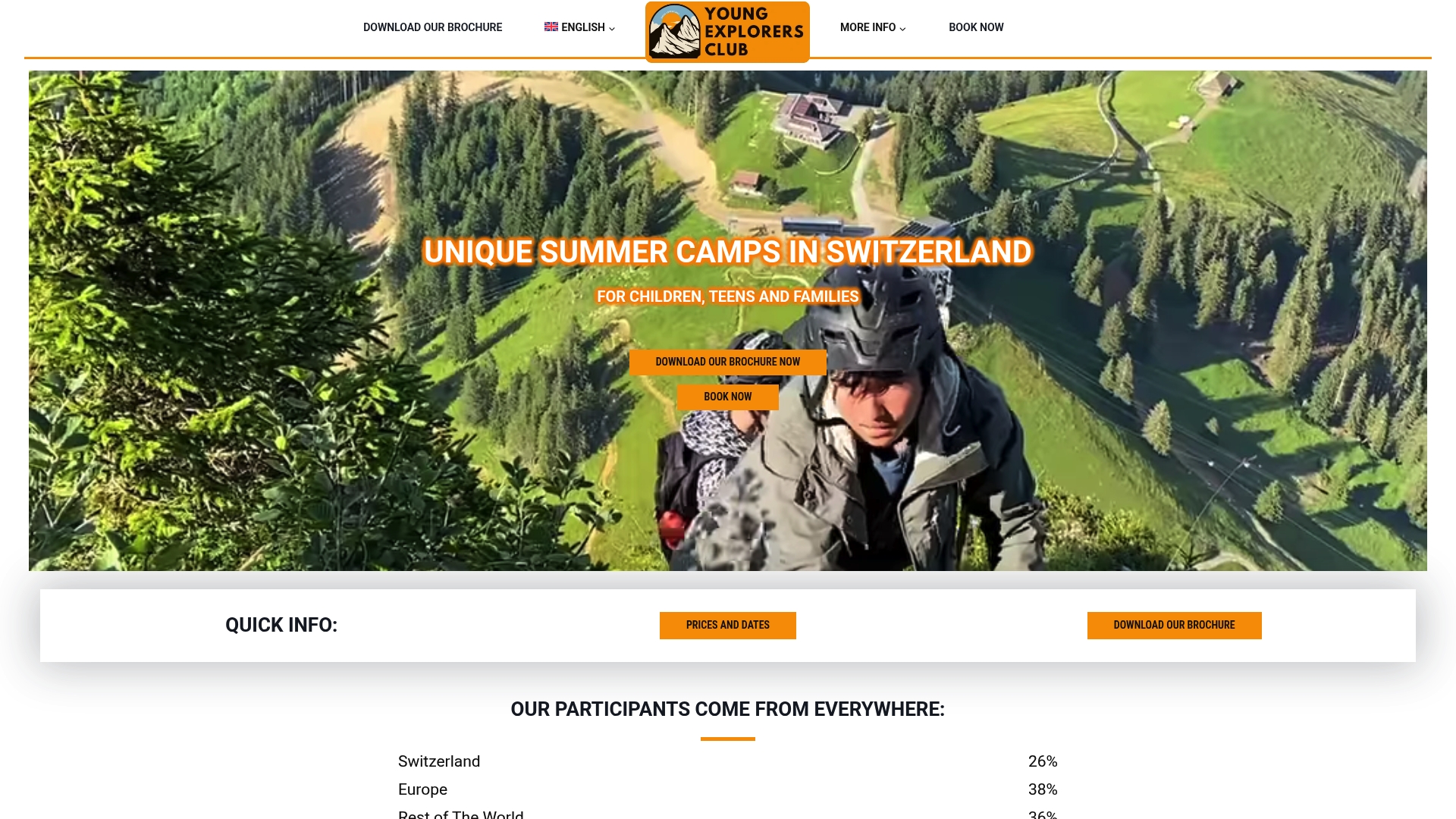
At Young Explorers Club, we design programs that blend adventure, language learning, and personal growth for children and teens aged 8 to 17 in the heart of Switzerland. Whether your child is ready to try new things at camp for the first time or is looking for a deeper challenge as a returning camper, our teen summer camp programs are built to meet them where they are. We even provide journaling prompts for campers to help kids reflect and grow throughout their stay. Spots for 2026 are filling fast. Explore our programs today and give your child an experience they’ll carry with them for life.
Frequently asked questions
What ages are best suited for educational camps?
Educational camps offer age-appropriate programs for children aged 8 to 17, with activities and group dynamics tailored to each developmental stage so every child feels challenged and supported.
How are educational camps different from regular summer camps?
Educational camps blend academics, adventure, and culture into a single experience, while traditional camps typically focus on recreation or a single activity without the same emphasis on personal or academic growth.
Do kids need to speak a certain language to attend an international camp?
No fluency is required. Camps feature a multilingual environment with language support built in, so kids learn by doing and communicating naturally with peers from around the world.
What safety measures do educational camps use?
Most accredited educational camps provide trained staff, on-site medical support, and 24/7 supervision to ensure every camper is safe and well cared for throughout the program.
How can parents help kids get the most from their educational camp?
Encourage your child to stay open, try unfamiliar activities, and use daily journaling to process experiences so they retain what they learn and return home with real clarity about how they’ve grown.