

How to choose the right bilingual camp in Switzerland
Learn how to choose the right bilingual summer camp in Switzerland for your child with this step-by-step guide covering goals, safety, and enrollment.
TL;DR:
- Choose a camp that matches your child’s personality, goals, and learning style for optimal growth.
- Research accredited camps with strong safety standards, immersive language programs, and suitable activities.
- Enroll early, prepare practical logistics, and prioritize finding the right fit over prestige or program fame.
Choosing a bilingual summer camp in Switzerland feels exciting until you realize how many options are out there. You want your child to return home more confident, more fluent, and genuinely changed by the experience. But with dozens of programs promising adventure, language progress, and personal growth, figuring out which one actually fits your child can feel overwhelming. This guide walks you through four practical steps, from clarifying your child’s goals to managing enrollment logistics, so you can make a decision you feel good about well before packing day.
Table of Contents
- Determine your child’s needs and goals
- Research bilingual camp options in Switzerland
- Evaluate program quality, safety, and accreditation
- Plan for enrollment, budgeting, and practical logistics
- Why the best bilingual camp is the one that fits your unique child
- Find the perfect Swiss bilingual adventure with us
- Frequently asked questions
Key Takeaways
| Point | Details |
|---|---|
| Align with child’s goals | Select a camp based on your child’s language needs, interests, and comfort zone. |
| Research thoroughly | Compare camp types, program quality, and safety standards before enrolling. |
| Prioritize safety and accreditation | Only consider camps meeting recognized safety, supervision, and teaching standards. |
| Plan logistics early | Handle enrollment, travel, and packing at least a few months in advance. |
| Listen to your child | Include your child’s feedback to ensure an enjoyable and meaningful experience. |
Determine your child’s needs and goals
Before you look at a single camp brochure, spend time thinking about your child specifically. Not the child in the glossy photo rappelling down a cliff. Yours. What makes them nervous? What lights them up? What kind of learner are they?
These questions matter because bilingual camps and language learning work best when the environment matches your child’s personality. A shy nine-year-old who freezes in loud group settings won’t thrive at the same camp as an outgoing fourteen-year-old who loves competition. The right fit depends on the child, not just the program’s reputation.
Here are the key factors to sort through before you start comparing camps:
- Language background: Is your child a total beginner in French or English, or do they already have a foundation? Camps vary widely in how they structure language exposure.
- Adventure comfort level: Some kids love high-adrenaline activities like mountain biking and rock climbing. Others prefer hiking, team sports, or creative projects. Neither preference is wrong.
- Social temperament: Does your child thrive in large, fast-moving groups or do they prefer smaller, quieter settings?
- Learning style: Some children absorb language naturally through activity. Others benefit from structured classroom time combined with outdoor practice.
- Duration and distance from home: Younger children or first-time campers may do better with shorter sessions or camps that encourage family contact.
Once you have a clear picture, separate your priorities into two columns: must-haves and nice-to-haves. Must-haves might include a specific language combination, certified safety staff, and a maximum group size. Nice-to-haves might be a swimming pool or a specific sport.
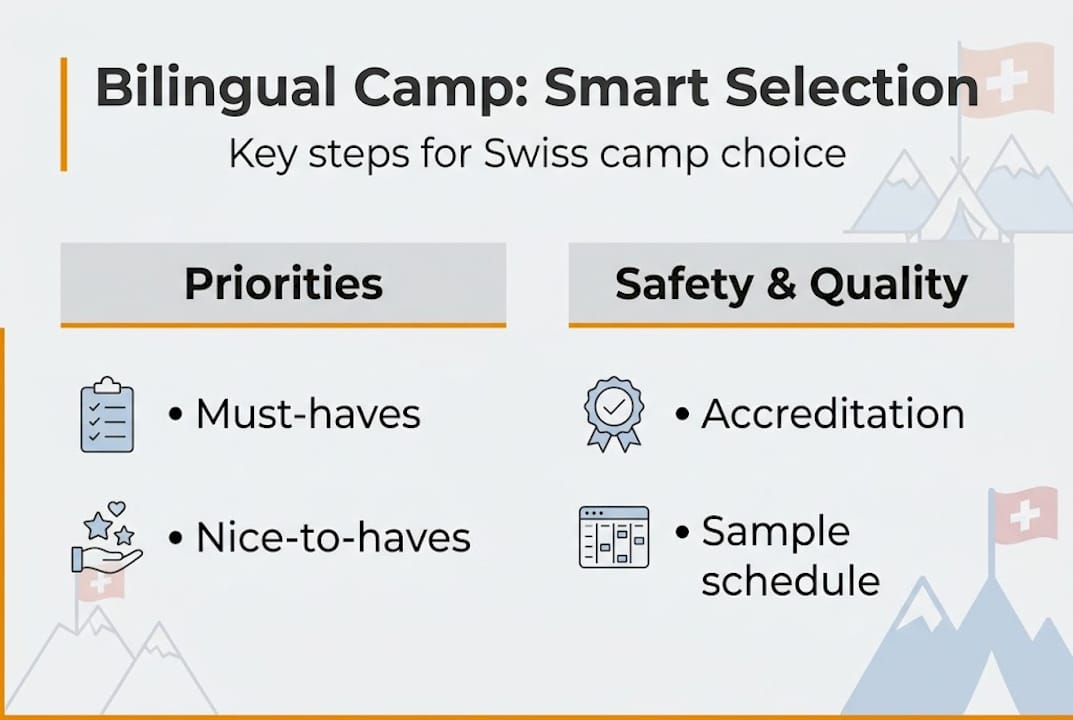
The benefits of bilingual camps go well beyond language. Children build self-confidence, learn to navigate unfamiliar social situations, and develop resilience. But those benefits only materialize when the child feels safe and engaged, not pushed into situations that overwhelm them.
Pro Tip: Sit down with your child and build the must-have list together. When kids help set their own goals, they arrive at camp more motivated and bounce back faster from the inevitable homesick moments.
Research bilingual camp options in Switzerland
With your child’s goals clarified, it’s time to see what’s available and match preferences with camp offerings.
Switzerland is home to a remarkable range of programs. Multilingual camp options span French, English, German, and Italian combinations, spread across mountain villages, lakeside resorts, and Alpine forests. That variety is a strength, but it also means you need a clear filter system.
Follow these steps to build a focused shortlist:
- Start with accreditation: Search for camps affiliated with recognized Swiss youth organizations or international bodies. Accredited programs are held to documented standards for staffing, programming, and safety.
- Check language structure: Look for programs that integrate language into daily activities rather than limiting it to classroom sessions. Immersive environments produce faster results.
- Compare supervision ratios: A ratio of one staff member to six or eight campers is generally considered strong for adventurous programs.
- Read activity descriptions carefully: Some camps list “outdoor activities” but mean afternoon walks. Others run technical climbing, survival skill courses, and mountain biking. Confirm specifics before shortlisting.
- Look at accommodation style: Shared dormitories vs. small cabins affect the social experience significantly, especially for younger children.
Here is a simplified comparison of camp types to help orient your search:
| Feature | Adventure-focused | Language-intensive | Balanced multisport |
|---|---|---|---|
| Language exposure | Informal, activity-based | Structured + immersive | Mixed daily schedule |
| Age range | 10-17 | 8-16 | 8-17 |
| Activity focus | Climbing, biking, survival | Language labs + excursions | Sports, arts, outdoor |
| Best for | Confident adventurers | Language beginners or improvers | Well-rounded growth |
If your family is open to German-language regions, exploring German-speaking camps opens additional doors. For families prioritizing French, dedicated French immersion camps offer structured programs with strong track records.
Evaluate program quality, safety, and accreditation
After shortlisting appealing camps, ensure their quality and safety meet your expectations.
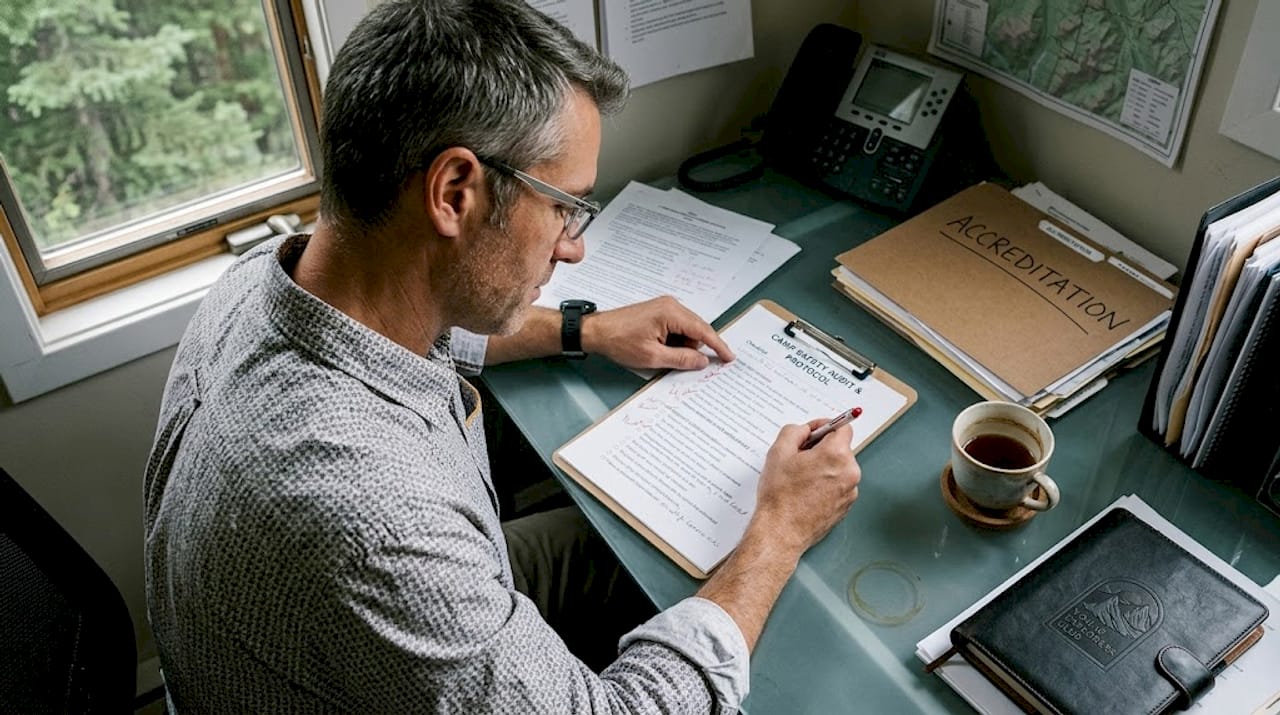
This step is where many parents get vague because they assume all Swiss camps operate to a high standard. Most do, but not all. Swiss camp safety standards are generally strong, but individual camps vary in how rigorously they enforce protocols, especially during outdoor adventure activities.
Here is a practical checklist for evaluating any camp on your shortlist:
| What to check | Questions to ask camp staff |
|---|---|
| Staff qualifications | Are instructors certified in their activity areas? |
| Medical support | Is there an on-site nurse or doctor? What is the emergency protocol? |
| Supervision ratio | How many staff members per camper during high-risk activities? |
| Outdoor safety protocols | How are weather conditions managed? What gear is provided? |
| Language staff credentials | Are language instructors native speakers or formally trained? |
| Accreditation | What body accredits this program and when was it last reviewed? |
Pay close attention to the response quality, not just the content. A well-run camp will answer questions clearly and without hesitation. Vague or defensive responses are a signal worth taking seriously.
“The unique features of Swiss camps often include their natural setting, experienced multilingual staff, and structured adventure programming, all of which contribute to a safe and enriching experience.”
Once you’ve confirmed safety basics, turn your attention to program structure. Ask for a sample weekly schedule. A good bilingual camp balances language exposure, physical activity, downtime, and social interaction. Overloaded schedules can exhaust children and undermine learning.
Pro Tip: Ask for contact details of two or three families whose children attended previously. A five-minute phone call with another parent will tell you more than any brochure.
Plan for enrollment, budgeting, and practical logistics
Once you’ve selected a high-quality camp, the last step is managing the practical side for a stress-free experience.
Enrollment timelines for Swiss bilingual camps move faster than most parents expect. Enrollment tips for international camps consistently point to applying early, with many top programs filling up five to six months before the summer session begins.
Follow this enrollment sequence:
- Confirm your preferred dates and session length before contacting camps.
- Submit an inquiry or application form to your top two or three choices simultaneously.
- Gather required documents: passport copies, vaccination records, emergency contacts, any medical notes your child’s doctor recommends sharing.
- Review payment terms carefully: most camps require a deposit at registration and final payment six to eight weeks before start date.
- Secure travel insurance that covers activity-related incidents, which is especially important for adventure-focused programs.
When budgeting, break costs into four clear buckets:
- Tuition: The core camp fee, which varies by duration and program type.
- Travel: Flights or train connections to Switzerland, plus ground transport to the camp location.
- Gear: Outdoor camps often require specific equipment. Request a packing list early to avoid last-minute purchases.
- Extras: Spending money, optional excursions, and any language course supplements.
Here are the top reminders to keep logistics smooth:
- Label every item in your child’s bag clearly.
- Practice using public transport with your child if they will travel part of the route independently.
- Make sure your child knows their emergency contact numbers by heart.
- Confirm currency and whether the camp operates a cashless system.
- Review the camp’s communication policy so you know when and how you’ll receive updates.
Thinking through your child’s experience away from home before they leave reduces anxiety for both of you. A little preparation goes a long way.
Why the best bilingual camp is the one that fits your unique child
After working through all the practical steps above, here is something worth sitting with: there is no objectively perfect camp. There is only the right camp for your child, in this moment of their life.
Many parents fixate on prestige rankings or the intensity of language instruction. Those things matter, but they are secondary to something harder to measure. Children grow at bilingual camps when they feel genuinely included, appropriately challenged, and safe enough to take risks. A child who is miserable in a top-ranked program will not remember a word of French by September.
We have seen families choose programs based on personal growth in bilingual camps and come back transformed, not because the camp was the most expensive or the most famous, but because the fit was right. The child felt like they belonged. That feeling is the engine behind real language gains and lasting confidence.
Trust your instincts. Trust your child’s feedback during and after the experience. Sometimes the best camp is the simplest one that matched your child’s temperament and gave them room to grow.
Find the perfect Swiss bilingual adventure with us
You’ve done the thinking. Now let’s find the program that brings it all together for your child.
At Young Explorers Club, we run safe, accredited Swiss bilingual summer camps combining adventure and language learning in one of the most beautiful countries in the world. Whether your child is drawn to French immersion or wants to explore our German summer camp options, we have structured programs designed to stretch every child at the right pace. Our team supports families through every step of enrollment and preparation. Ready to explore? Join a global camp community of adventurous young people who leave Switzerland more confident, more capable, and more connected to the world.
Frequently asked questions
What age is best for bilingual summer camps in Switzerland?
Most camps accept children from age 8, with programs tailored for different age groups up to 17. Swiss camps adapt activities and peer groupings to suit each child’s maturity level and social readiness.
How do I know if a camp’s language immersion is effective?
Look for native-speaking instructors and daily structured opportunities to use both languages in real situations. Immersion works fastest when language is woven into meals, activities, and free time, not just formal lessons.
What safety standards should I check for a bilingual camp?
Confirm that camps hold recognized accreditation, employ certified activity staff, and follow documented Swiss protocols for outdoor supervision. Swiss camps maintain high standards for safety, but it’s worth verifying each program individually.
Are there camps for both beginners and fluent bilinguals?
Yes. Most Swiss bilingual camps group children by language proficiency rather than age alone. Bilingual camps design activities and courses to stretch both newcomers and advanced speakers without leaving anyone behind.
How early should I enroll my child in a Swiss bilingual camp?
Aim to apply at least four to six months before your chosen session. International camps recommend early applications because popular programs fill quickly, especially for July and August sessions.
