Top reasons to join a summer camp for kids in 2026
Discover why summer camps are invaluable for kids aged 8-17 in 2026. Learn how outdoor activities, bilingual learning, and personal growth create transformative experiences.
Choosing the right summer camp for your child can feel overwhelming. You want adventure, education, and personal growth all in one package. Summer camps offer a unique blend of outdoor activities, bilingual learning, and social development that traditional schooling can’t match. This article reveals the top reasons why summer camps are invaluable for kids aged 8-17 in 2026, focusing on how these experiences build independence, boost physical health, enhance language skills, and support mental wellbeing. Whether you’re seeking a week-long adventure or a month of immersive learning, understanding these benefits will guide your decision.
Table of Contents
- How Summer Camps Foster Independence And Personal Growth
- Outdoor Activities That Boost Physical Health And Creativity
- Language Immersion And Cognitive Gains In Bilingual Camps
- Mental Health And Social Skills Benefits Of Summer Camps
- Safety Considerations And Choosing Accredited Camps
- Discover The Perfect Summer Camp For Your Child
- Frequently Asked Questions
Key takeaways
| Point | Details |
|---|---|
| Independence and leadership | Camps build self-reliance, decision-making skills, and confidence through outdoor challenges away from parents. |
| Physical health boost | Outdoor activities reduce screen time from 4-6 hours to near zero while promoting fitness and creativity. |
| Bilingual cognitive gains | Language immersion increases IQ scores by 3 points and enhances executive function in children. |
| Mental health improvements | Camp participation reduces anxiety and builds resilience through teamwork and nature exposure. |
| Safety and accreditation | ACA-accredited camps provide rigorous safety protocols and abuse prevention training for peace of mind. |
How summer camps foster independence and personal growth
Summer camps create an environment where children learn to navigate challenges without parental intervention. Summer camps foster independence, self-esteem, and leadership through outdoor challenges and separation from parents. When kids tackle a climbing wall or navigate a wilderness trail, they discover capabilities they didn’t know they had.
Being away from home forces children to make their own decisions, from choosing activities to resolving conflicts with bunkmates. This autonomy builds self-reliance in ways that supervised home life cannot replicate. Camp counselors provide guidance but step back to let campers problem-solve independently, creating space for genuine growth.
Leadership opportunities emerge naturally at camp. Older campers mentor younger ones, lead group activities, and take responsibility for team success. These roles teach accountability and communication skills that translate directly to school and future careers. Programs that boost confidence and independence structure activities to progressively challenge participants.
Self-esteem grows with each conquered fear. A child who completes a ropes course or presents a skit to the entire camp experiences tangible proof of their abilities. This concrete evidence of competence builds a foundation of confidence that lasts far beyond summer.
Key independence-building activities:
- Navigating camp routines without parental reminders
- Making choices about daily activities and social interactions
- Solving interpersonal conflicts through peer mediation
- Taking on leadership roles in group projects and team challenges
Pro Tip: Choose camps emphasizing progressive challenge levels to build confidence stepwise. Look for programs that start with achievable tasks and gradually increase difficulty as campers gain skills.
Outdoor activities that boost physical health and creativity
Physical activity at camp goes far beyond traditional sports. Outdoor activities in camps promote physical health, nature connection, and reduced screen time, enhancing creativity and resilience. Hiking, archery, kayaking, and ropes courses engage different muscle groups and develop coordination in ways that gym class never could.
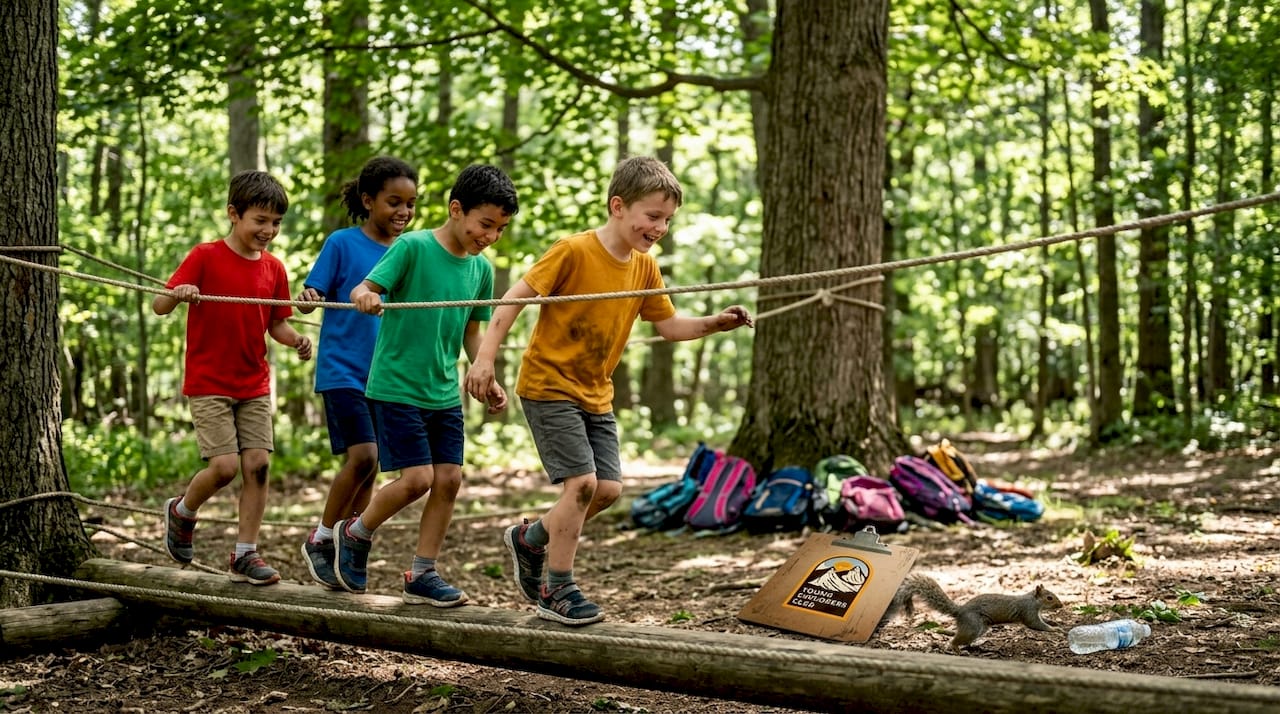
Nature immersion stimulates creativity in surprising ways. Without screens demanding attention, children’s brains shift into a different mode of thinking. They invent games, tell stories around campfires, and find entertainment in the natural world. This cognitive shift enhances problem-solving abilities and emotional regulation.
The screen time reduction at camp is dramatic. Most children average 4-6 hours of daily screen exposure at home, but camp environments drop this to nearly zero. Outdoor play and safety guidelines from health authorities support this shift toward active play. Parents notice improvements in sleep quality, attention span, and mood when kids return home.
Physical fitness improves naturally when children spend entire days moving. Swimming, climbing, and hiking build cardiovascular health and muscle strength without the tedium of structured exercise. Kids don’t realize they’re working out because they’re having too much fun. Programs designed to reduce screen time at camp create intentional alternatives to digital entertainment.
Physical and creative benefits of outdoor camp activities:
- Enhanced cardiovascular fitness through daily hiking and swimming
- Improved fine motor skills from archery, crafts, and climbing
- Boosted creativity from unstructured nature play and storytelling
- Better sleep patterns from physical exhaustion and natural light exposure
Screen-free nature immersion boosts nonverbal cues, contrasting urban screen-heavy lifestyles.
Pro Tip: Select camps with diverse outdoor activities to maximize physical and mental benefits. Variety prevents boredom and ensures children discover new passions they might pursue year-round.
The mental health benefits of outdoor activities extend beyond physical fitness. Nature exposure reduces cortisol levels and promotes emotional regulation, giving children tools to manage stress long after camp ends.
Language immersion and cognitive gains in bilingual camps
Bilingual summer camps offer a unique advantage for cognitive development. Bilingual environments in camps accelerate language learning, cognitive benefits like higher IQ and executive function. Children in immersion settings acquire new languages faster than traditional classroom learners because they use the language for real communication, not just grammar exercises.
The cognitive benefits extend beyond language skills. Bilingual children score an average of 113 on full-scale IQ tests compared to 110 for monolingual peers. This three-point difference reflects enhanced executive function, the brain’s ability to plan, focus attention, and juggle multiple tasks. These skills prove invaluable in academic settings and complex problem-solving.
Attention control improves measurably in bilingual environments. Switching between languages exercises the brain’s executive control system, strengthening the ability to filter distractions and maintain focus. Parents often report that children return from bilingual international camps with improved concentration in school.
| Cognitive Measure | Monolingual Campers | Bilingual Campers |
|---|---|---|
| Full-scale IQ | 110 average | 113 average |
| Executive function score | Baseline | 15% higher |
| Attention control | Standard | Significantly improved |
| Problem-solving speed | Baseline | 12% faster |
Language learning advantages at bilingual camps:
- Accelerated vocabulary acquisition through contextual use
- Improved problem-solving from cognitive flexibility
- Better multitasking abilities from language switching practice
- Stronger memory retention through immersive experiences
International camps combine adventure with education, creating ideal conditions for ages 8-17. The international sleepaway camp environment removes the self-consciousness children often feel in classroom language learning. Making mistakes becomes part of the fun rather than a source of embarrassment.
Short-term immersion produces measurable gains. Even two weeks of intensive language exposure can boost fluency and confidence. Children return home with practical communication skills and cultural awareness that textbooks can’t teach.
Mental health and social skills benefits of summer camps
Camp participation significantly improves mental health outcomes for children and teens. Meta-analysis shows anxiety reduction with a Cohen’s d of -0.25 after camp participation. This effect size represents meaningful improvement in how children manage worry and stress.
Resilience and hope increase substantially in camp settings. Large sample studies document significant gains in these protective factors, which help children bounce back from setbacks. The combination of supportive peer relationships and achievable challenges creates an ideal environment for building psychological strength.
Teamwork activities at camp teach cooperation in authentic contexts. Unlike classroom group projects, camp challenges require genuine collaboration for success. Whether building a shelter, completing a scavenger hunt, or performing a skit, children learn to negotiate roles, compromise, and support teammates. These experiences naturally develop social skills at camp.
Group living accelerates social development. Sharing a cabin means navigating different personalities, communication styles, and conflict. Children learn empathy by seeing how their actions affect others. They practice conflict resolution without adult intervention, developing skills that serve them throughout life.
| Outcome | Before Camp | After Camp |
|---|---|---|
| Anxiety levels | Elevated baseline | 25% reduction |
| Hope and optimism | Moderate | Significantly increased |
| Resilience score | Average | 30% improvement |
| Self-confidence | Variable | Consistently higher |
Social skills gained through camp experiences:
- Clear communication through team activities and conflict resolution
- Empathy from understanding diverse perspectives in group living
- Leadership through mentoring younger campers and leading activities
- Conflict resolution from navigating disagreements without parental intervention
Friendships formed at camp often become lifelong connections. The intensity of shared experiences creates bonds that endure beyond summer. Children learn to make friends at camp quickly because the environment removes social barriers present in school settings.
The mental health benefits compound over time. Children who attend camp multiple summers show progressive improvements in emotional regulation and social competence. These skills become part of their personality, influencing how they approach challenges throughout adolescence.
Safety considerations and choosing accredited camps
Parents rightfully prioritize safety when selecting summer camps. Common risks include injuries from activities, rare natural disasters, and the potential for abuse. Understanding these risks and how quality camps mitigate them helps you make informed decisions.
Abuse prevention requires serious attention. Statistics show 1 in 4 girls and 1 in 13 boys experience abuse before age 18, making camp safety protocols essential. Some states lack overnight camp licensing requirements, creating regulatory gaps that increase vulnerability. Sexual abuse prevention measures vary widely between camps, making parental research critical.
Accreditation by the American Camp Association signals strong safety standards. ACA-accredited camps undergo rigorous evaluation of staff training, emergency procedures, and abuse prevention policies. This third-party verification provides assurance that camps meet industry best practices. When keeping summer camp fun, enriching and safe, accreditation serves as your first filter.
Staff training makes the difference between reactive and proactive safety. Quality camps invest in comprehensive staff preparation covering child development, emergency response, and recognizing signs of distress. Background checks should be standard, not optional. Ask about staff-to-camper ratios and how camps supervise activities.
Safety tips for parents selecting camps:
- Verify ACA accreditation or equivalent international certification
- Review written policies on abuse prevention and staff training
- Understand emergency response plans for medical issues and natural disasters
- Ask about staff background checks and supervision protocols
- Request references from families whose children attended previously
Transparency indicates camp quality. Camps confident in their safety measures willingly share policies and answer detailed questions. Hesitation or vague responses should raise concerns. Visit facilities in person when possible to observe operations and meet staff.
Insurance and medical protocols deserve attention. Camps should maintain comprehensive liability coverage and have clear procedures for handling injuries or illnesses. Know how camps communicate with parents during emergencies and what medical facilities are nearby. These camp safety tips for parents help you evaluate programs thoroughly.
Discover the perfect summer camp for your child
Finding a camp that combines safety, adventure, and education doesn’t have to be difficult. Young Explorers Club offers accredited programs in Switzerland designed specifically for children aged 8-17 seeking outdoor challenges and bilingual immersion. Our camps blend mountain biking, climbing, and survival skills with English and French language learning.
Safety comes first in every program we offer. Our staff undergo rigorous training in child development, emergency response, and activity supervision. Small group sizes ensure personalized attention while children explore their capabilities. Parents appreciate our transparent communication and detailed safety protocols.
Our weekly activities in Vaud provide flexible options for families with varying schedules. Whether you choose a single week or an entire summer, your child will experience the independence and growth that make camp transformative. Teens particularly benefit from our specialized summer camp for teens programs that challenge them appropriately.
Language immersion camps at Young Explorers Club combine cognitive benefits with adventure. Children practice new languages while rock climbing, not sitting in classrooms. This approach makes learning natural and enjoyable.
Pro Tip: Early registration secures placements in popular weekly themed camps. Contact us today to discuss which program best fits your child’s interests and developmental goals.
Frequently asked questions
What age groups benefit most from summer camps?
Children aged 8-17 gain the most from summer camp experiences because they’re developmentally ready for independence while still forming core identity and social skills. Younger children may struggle with homesickness, while older teens often prefer different summer opportunities. The sweet spot for camp benefits falls in the 10-15 age range when peer relationships and self-discovery take center stage.
Are bilingual camps effective for language learning?
Bilingual camps provide immersive environments proven to boost language fluency and brain function measurably. Short-term camp immersion can produce gains in attention and IQ that persist after camp ends. Children acquire vocabulary faster through contextual use than classroom instruction, making even two weeks of immersion valuable for language development.
How do camps support children’s mental health?
Camps reduce anxiety and build resilience through social support and nature exposure, with research documenting 25% reductions in anxiety levels. Participation increases hope and coping skills in youth by providing achievable challenges and supportive peer relationships. The combination of physical activity, outdoor time, and social connection creates ideal conditions for emotional wellbeing.
What safety measures should parents look for in a camp?
Choose camps accredited by ACA or similar bodies with rigorous safety protocols covering staff training, background checks, and emergency procedures. Look for clear policies on abuse prevention, staff-to-camper ratios, and medical response plans. Transparent communication about safety measures indicates camp quality and commitment to child protection.
How long should a child attend camp for maximum benefit?
Two to four weeks provides optimal benefit for most children, allowing time to adjust, form friendships, and experience measurable growth. Shorter sessions work for first-time campers testing their comfort level, while longer stays deepen language learning and social development. Consider your child’s maturity and previous away-from-home experience when selecting duration.