

How to organize an international youth camp in 2026
Learn how to organize an international youth camp in 2026 with this step-by-step guide covering safety, logistics, bilingual immersion, and budgeting for parents.
TL;DR:
- Organizing an international youth camp requires detailed planning 6 to 12 months in advance.
- Safety protocols, staff ratios, and cultural integration are essential for a successful program.
- Bilingual immersion significantly boosts language skills and social confidence within four weeks.
Organizing an international youth camp sounds exciting until the reality of passports, staff ratios, bilingual schedules, and multi-country logistics hits you all at once. Many parents and organizers start with a clear vision and quickly feel buried under the details. But here’s the good news: with the right roadmap, the process becomes manageable, and the payoff is enormous. Research shows that bilingual immersion boosts confidence 30% in just four weeks, while kids build friendships that last years. This guide walks you through every major step, from early planning to enrollment, so you can deliver a genuinely life-changing experience.
Table of Contents
- Laying the groundwork: Timeline, team, and vision
- Securing safety and support: Protocols, staff, and supervision
- Managing logistics: Travel, documents, and group diversity
- Designing a powerful program: Activities, language immersion, and growth
- Budgeting and enrollment: Making it all possible
- What most camp organizers miss: Real success comes from cultural connection
- Take the next step: Trusted international camps for every child
- Frequently asked questions
Key Takeaways
| Point | Details |
|---|---|
| Plan early | Start your international camp planning at least 6-12 months ahead for the best results. |
| Prioritize safety | Strict staff ratios, certified first aid, and robust protocols are essential for parent trust and camper well-being. |
| Handle travel logistics | Double-check passports, visas, and insurance well in advance to avoid travel disruptions. |
| Maximize bilingual growth | International camps with language immersion accelerate learning and build real-world confidence quickly. |
| Budget smartly | Comprehensive budgeting and early marketing keep your camp well-resourced and fully enrolled. |
Laying the groundwork: Timeline, team, and vision
The single biggest mistake new camp organizers make is starting too late. Planning 6-12 months ahead gives you the time to secure venues, hire qualified staff, and negotiate with vendors before availability disappears. A rushed 3-4 month timeline is possible, but you will almost certainly face compromises on location quality, staff experience, or program depth.
Building the right team is just as important as the timeline. Every successful international camp needs a few core roles filled before anything else moves forward:
- Camp director: Owns the overall vision, budget, and final decisions
- Safety lead: Manages emergency protocols, medical access, and staff training
- Logistics coordinator: Handles travel, documents, and vendor relationships
- Bilingual counselors: Bridge language gaps and support cultural integration daily
Once your team is in place, define your camp vision clearly. Decide on the age range you are serving, whether the focus leans toward adventure or academics, and how prominently bilingual goals feature in the program. These decisions shape every other choice you make.
| Planning milestone | Lead role | Target deadline |
|---|---|---|
| Venue confirmed | Camp director | 9-12 months out |
| Staff hired and vetted | Safety lead | 6-8 months out |
| Activity program designed | Program lead | 5-6 months out |
| Travel logistics finalized | Logistics coordinator | 3-4 months out |
| Final enrollment confirmed | Camp director | 6-8 weeks out |
If you want to skip some of this groundwork, custom camp programs can give you a pre-built structure to build on.
Pro Tip: Assign one lead counselor per nationality group. This person becomes the cultural bridge for their peers and dramatically smooths the first few days of integration.
Securing safety and support: Protocols, staff, and supervision
Once your planning foundation is in place, ensuring safety is the next critical priority. Parents trust you with their children across international borders, and that trust requires concrete, documented systems, not just good intentions.
Staff ratios are your first line of defense. Most reputable programs maintain a ratio of 1 staff member for every 5 to 10 campers, depending on activity risk level. High-adventure activities like climbing or river activities should sit closer to 1:5. Strict safety protocols including emergency plans, medical access, and regular staff training are non-negotiable for any quality program.
Over 90% of reputable international camps require all senior staff to hold current certified first aid qualifications before the program begins.
Here is a practical emergency protocol checklist every camp should have ready before day one:
- Written emergency action plan for fire, medical, and missing person scenarios
- On-site first aid kit and a designated medical officer or nurse
- Clear parent communication plan with guaranteed response windows
- Nearest hospital or clinic identified and route confirmed
- 24/7 duty staff schedule so no child is ever unsupervised overnight
Residential camps carry a higher supervision responsibility than day camps, but they also deliver far deeper immersion. 24/7 residential camp supervision means staff are present through meals, evening activities, and overnight hours, which creates a much stronger sense of community and security.
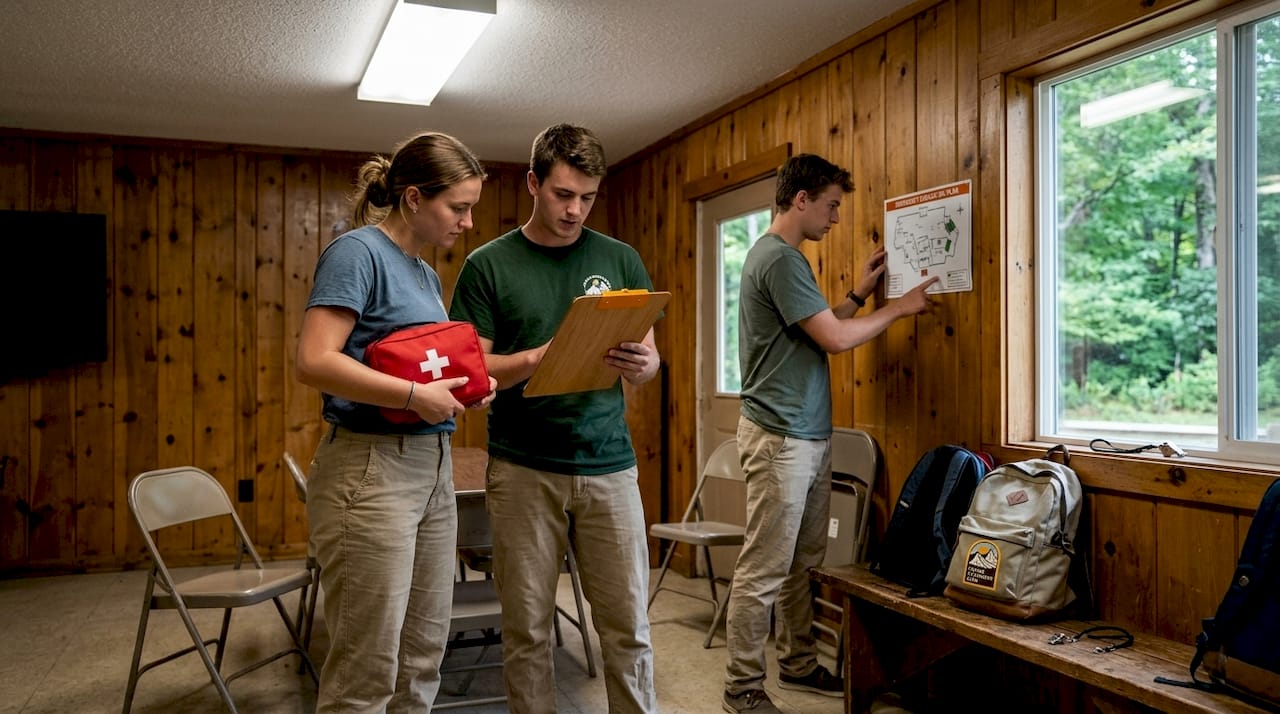
Schedule at least two full staff training days before campers arrive. Use that time to walk through emergency scenarios, practice communication protocols, and align everyone on behavioral expectations. It is time well spent.
Meeting international camp safety standards is not just about compliance. It is the foundation that lets kids take real risks, push their limits, and grow, because they feel genuinely safe doing it.
Managing logistics: Travel, documents, and group diversity
With safety protocols ready, it is time to tackle the most challenging yet vital part of the process: international logistics. This is where many well-intentioned camps stumble, and where good preparation pays off most visibly.
Start with documents. Every child attending an international camp needs the following before they travel:
- Passport valid for at least 6 months after the return date
- Correct visa or entry permit for the host country
- Proof of comprehensive health insurance covering the full camp period
- Emergency contact information and medical history on file with camp staff
- Signed parental consent forms for activities and medical treatment
The international travel logistics side includes monitoring flight arrivals across multiple time zones, arranging ground transfers, and building buffer time into arrival schedules. A child flying from Tokyo and one flying from Toronto will land exhausted at different times. Plan for that reality.
Mixing nationalities is one of the greatest strengths of an international camp, but it requires intentional design. Split activity groups by age rather than nationality: ages 8 to 12 in one cohort, ages 13 to 17 in another. Within those cohorts, mix nationalities deliberately to encourage camp culture for diversity and natural language exchange.
Pro Tip: Use a single insurance provider for all international participants. Coordinating claims and coverage across multiple providers adds unnecessary complexity during a crisis.
For camp travel arrangements, consider partnering with a travel specialist who handles youth groups. They know the documentation requirements, airline policies for minors, and how to manage group check-ins efficiently.
Designing a powerful program: Activities, language immersion, and growth
With logistics under control, focus shifts to what makes a camp truly impactful: the daily activities and the environment you create around them. A packed schedule full of random activities is not a program. A thoughtfully designed progression of challenges, reflection, and connection is.
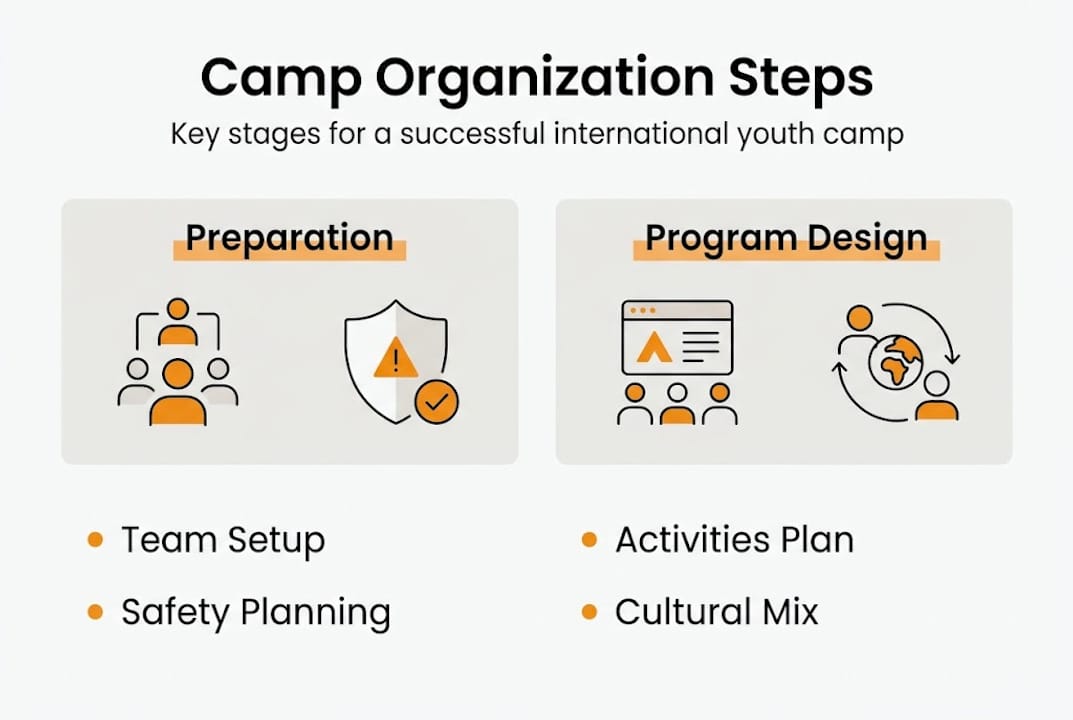
For younger campers aged 8 to 12, prioritize games, creative workshops, and guided outdoor activities that build teamwork without high pressure. For teens aged 13 to 17, introduce real challenge: mountain biking, survival skills, leadership workshops, and peer-led projects. Both groups benefit from shared social events where language mixing happens naturally.
The language immersion piece is where international camps genuinely outperform classroom learning. Bilingual immersion gains 0.5-1 CEFR levels in just four weeks, and children’s social confidence rises by 30%. The key is integrating language into activity, not separating it into formal lessons.
Here are the essential elements every transformational camp program should include:
- Mixed-nationality activity teams that rotate weekly
- Daily unstructured social time where language exchange happens organically
- Evening reflection sessions to process the day’s experiences
- At least one major shared challenge per week, like a group hike or team competition
- Optional language workshops for campers who want focused practice
The confidence and adventure benefits of this kind of design go far beyond language. Kids develop resilience, empathy, and real self-belief.
Pro Tip: Pair older teens with younger campers for specific activities. The older teen practices leadership, the younger child gains a role model, and both leave the experience more confident.
Budgeting and enrollment: Making it all possible
To turn your vision into reality, smart budgeting and strong enrollment must go hand in hand. Underestimating costs is one of the most common reasons promising camps fail in their first year.
Your budget needs to account for these major categories:
| Cost category | Key items | Budget priority |
|---|---|---|
| Staff | Salaries, training, travel | High |
| Venue | Accommodation, facilities, meals | High |
| Activities | Equipment, guides, permits | Medium-high |
| Travel | Transfers, group flights, logistics | Medium |
| Insurance | Health, liability, cancellation | High |
| Marketing | Website, ads, enrollment platform | Medium |
For enrollment, budget comprehensively and market early to build momentum. Early-bird discounts work well for international families who need time to arrange travel. Set clear enrollment deadlines and cap capacity at a number your staff can genuinely support.
Here are five budget pitfalls to avoid:
- Underestimating food and dietary accommodation costs for international groups
- Forgetting activity permit fees and local regulatory requirements
- Skipping liability insurance to save money
- Not accounting for currency exchange fluctuations in multi-country budgets
- Leaving no room for last-minute travel disruptions or medical emergencies
Pro Tip: Build a contingency fund of at least 10-15% of your total budget. Unexpected health costs, flight delays, or equipment failures happen, and having reserves means you handle them calmly instead of scrambling.
What most camp organizers miss: Real success comes from cultural connection
Here is something most planning guides will not tell you: the logistics are not what makes a camp unforgettable. After years of working with international youth programs, we have seen highly organized camps fall flat because they treated cultural mixing as a background feature rather than a core design principle.
Many organizers focus on getting the schedule right and forget to design for genuine human connection. Peer-to-peer immersion, where a teenager from Brazil and one from Switzerland figure out how to communicate during a ropes course, produces more language growth and more confidence than any structured lesson. It is messy, sometimes frustrating, and deeply effective.
Small group traditions, shared inside jokes, and mixed-nationality team challenges create the memories that kids talk about years later. The goal is not a perfect program. It is a real experience. Learning to overcome language barriers together in a challenging outdoor setting builds a kind of bond that simply cannot be replicated in a classroom. Design for those moments intentionally, and everything else falls into place.
Take the next step: Trusted international camps for every child
You now have a clear framework for organizing an international youth camp that is safe, enriching, and genuinely transformational. But knowing the steps is only part of the journey.
If you are ready to connect your planning with a proven program, explore summer camps in Switzerland at The Young Explorers Club. From adventure-focused residential sessions to German language camps and a thriving international camp community, there is an option for every child aged 8 to 17. Browse programs, download the brochure, and take the first real step toward giving your child a summer they will never forget.
Frequently asked questions
How early should I start planning an international youth camp?
Start planning 6-12 months in advance to secure the best venues, staff, and vendors. A 3-4 month window is possible but typically means accepting compromises on quality or availability.
What documents are essential for children attending international camps?
Children need a passport, visa, and insurance at minimum, with the passport valid at least 6 months after the return date. Emergency contact information and signed medical consent forms should also be on file with camp staff.
What safety standards should international youth camps meet?
Look for camps with certified first aid staff, staff-to-camper ratios of 1:5 to 1:10, written emergency protocols, and 24/7 supervision coverage for residential programs.
How does bilingual immersion at camp compare to classroom learning?
Bilingual camp immersion accelerates language progress by 0.5 to 1 CEFR level in four weeks and boosts social confidence by 30%, significantly outpacing traditional classroom programs.
What is the difference between day and residential international camps?
Day camps are simpler to manage logistically, but residential camps deliver deeper cultural immersion, stronger friendships, and more meaningful personal development because children share every part of the day together.
