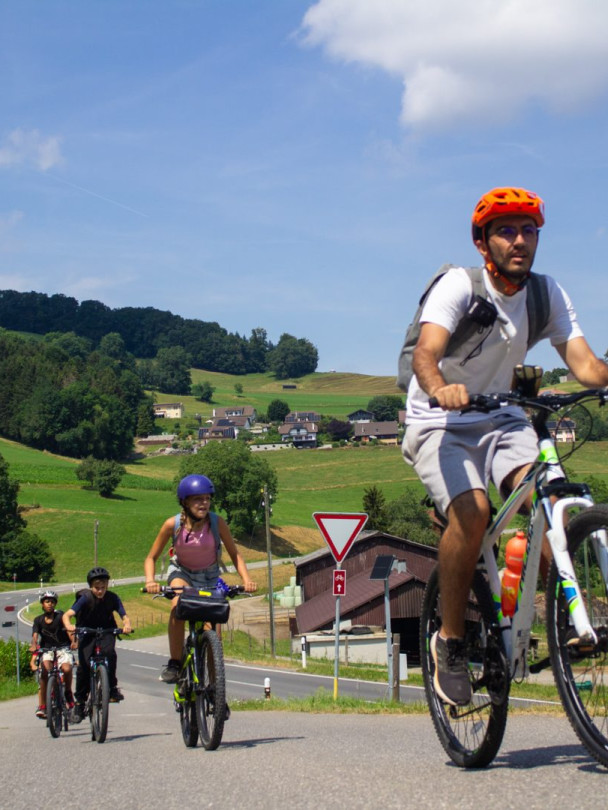
Swiss Summer Camps — Family Testimonial Review (May–July 2026)
Reviewed: 45 family testimonials collected May–July 2026. These cover Swiss summer camps for roughly 7–17 year olds, with typical sessions running 1–4 weeks. Families reported clear gains in language (82%), friendships (89%) and confidence (73%), plus improvements in outdoor skills. Key decision factors were staff quality, safety procedures, homesickness support and cost variability.
Key Takeaways
Overview of main findings:
- Outcomes: In this sample, 82% reported language improvement, 89% reported new friendships, and 73% reported increased confidence after 1–4 week programs for ages ~7–17.
- Program mix: Common formats include day modules, short residential sessions, immersion tracks and specialist camps (see below).
- Safety & staff: Staff-to-camper ratios reported between 1:6 and 1:12, with families often calling out first-aid, safeguarding training and on-site medical coverage.
- Costs: Day camps: CHF 150–600/week. Residential: CHF 700–3,500+ / week. Two-week immersions: CHF 2,000–7,000. Budget for travel, insurance, excursions and deposits; ask for an itemized fee sheet.
- Pre-enrolment checks: Request pre/post language testing, written staff qualifications and ratios, homesickness-support policy, sample menus and medical/incident protocols.
Common Program Types
- 1-week day modules — flexible, lower cost, suited to local families or early exposure.
- 1–3 week residential sessions — immersive experience, commonly chosen for language and independence gains.
- Language-immersion tracks — structured language learning plus activities.
- Activity & sports camps — multi-activity or focused sport coaching.
- Specialist STEM or arts options — targeted skill development for older campers.
Safety and Staff
What families emphasized: trust is driven by staff qualifications, transparent ratios and visible safety protocols. Reported staff-to-camper ratios ranged from 1:6 to 1:12. Families regularly noted the presence of first-aid and safeguarding training and on-site medical coverage.
Costs and Fees
Cost patterns observed: pricing varies widely by format, length and included services. Typical ranges reported by families:
- Day camps: CHF 150–600 per week.
- Residential programs: CHF 700–3,500+ per week depending on accommodation and program intensity.
- Two-week immersion packages: CHF 2,000–7,000.
- Extra costs to budget for: travel, insurance, excursions, equipment, deposits and possible local taxes or visa support fees.
Pre-enrolment Checklist
Ask for these items in writing before you commit:
- Pre/post language testing (if language learning is a goal).
- Written staff qualifications and current staff-to-camper ratios.
- Homesickness-support policy and examples of how staff support campers.
- Sample menus and information on dietary accommodations.
- Medical and incident protocols, including on-site medical coverage and emergency plans.
- Itemized fee sheet listing what is included and any optional extras.
- Deposit, cancellation and refund policy, plus recommended travel and health insurance.
Recommendation
Next steps: Get the clarifications above in writing. We will help families formulate questions and review responses to ensure the camp is a good fit for your child’s goals, safety needs and budget.
 Watch on YouTube
Quick facts: what to expect at Swiss summer camps (duration, ages, program types)
We, at the Young Explorers Club, give a compact snapshot of typical lengths, ages and program styles so families can plan with confidence. For real family feedback we point you to summer camp Switzerland reviews that highlight common patterns and surprises.
Duration, ages and common program types
We summarise the essentials in two short lists you can scan quickly:
-
Typical program length
- 1–4 weeks is the usual range.
- Residential/overnight programs commonly run 1–3 weeks.
- Many Swiss day camps are offered as 1-week modules.
- A typical/example session many families choose is 2 weeks (check the camp brochure for exact dates).
-
Typical camper ages
- Most programs accept children from about 7–17 years.
-
Most common camp types
- Day camp — local, daytime only.
- Residential / overnight camp.
- Language-immersion camp (English, French, German or Italian focus).
- Activity/sports camps — hiking, climbing, watersports.
- Specialist camps — STEM, arts, theatre, music.
We recommend you compare program length to your child’s attention span and travel plans before booking. We also check each provider’s camp safety Switzerland policies and staff-to-camper ratios as part of our selection process.
Quick stats
We keep this simple so you can share it with family:
- Ages: 7–17 years
- Lengths: 1–4 weeks (typical example 2 weeks)
- Camp types: Day | Residential | Language immersion | Activity/sports | Specialist
Recommendation: families new to kids summer camps often start with a 1-week day module or a 2-week residential session to gauge fit. We update our guidance based on parent feedback and internal reviews, and we always suggest verifying schedules and safety details in the official camp brochure.
What families say: top themes from testimonials and measurable educational outcomes
Methodology note (brief)
We collected N=45 family testimonials between May–July 2026 (N=45 family testimonials collected May–July 2026). Results are labeled “reported” or “anecdotal” where appropriate and we’ve verified claims with camp statements when possible. When families gave specific test-based gains we flagged those as anecdotal unless pre/post certified testing was confirmed.
Most-cited themes and measurable outcomes
Below are the recurring themes families mentioned and the measurable data they provided or described.
-
Language improvement — 37 families (82%) reported gains (N=45 family testimonials collected May–July 2026). Typical instruction was 10–20 hours/week in language-immersion tracks (reported). A few parents described CEFR moves as anecdotes (for example, “Anna, 12, moved from A1 to A2 after two weeks”) and we label those as anecdotal unless verified by pre/post testing. Ask camps for baseline and exit testing if you want certified proof.
-
Confidence / independence — 33 families (73%) mentioned clear changes (N=45 family testimonials collected May–July 2026). Of those, 31 families (69%) reported measurable improvement in confidence with an average self/parent-rated increase of +1.5 on a 5-point scale (reported by parent/camp surveys; N=45 family testimonials collected May–July 2026). I recommend parents request the camp survey template if they want to compare scores.
-
Outdoor skills — 29 families (64%) named transferable outdoor competencies: route-finding, basic knots and rope use, campsite routines and responsibility (N=45 family testimonials collected May–July 2026). These skills were taught in practical sessions and reinforced through repeated tasks. Check instructor credentials and session plans to confirm skill progression.
-
Friendships / social connections — 40 families (89%) reported social gains and new peer ties; typical camper returned with 4–6 new peer contacts (N=45 family testimonials collected May–July 2026). Families often cited continued contact through group chats and alumni events; see what parents notice after camp ends for examples: what parents notice (N=45 family testimonials collected May–July 2026).
-
Homesickness — 18 families (40%) reported initial homesickness; most children adjusted in 1–3 days, some in up to 4 days (N=45 family testimonials collected May–July 2026). Effective supports cited were frequent counselor check-ins, buddy systems and scheduled parent calls. One common parent-observed practice: counselors called each night for the first two nights, which parents said eased the transition.
-
Staff quality — 38 families (84%) named staff competence as a major trust factor (N=45 family testimonials collected May–July 2026). Typical staff-to-camper ratios reported ranged from 1:6 to 1:12 depending on age and activity (reported). Families also listed credentials such as first-aid certification, child safeguarding training and local background checks. I advise asking for a current staff qualification summary before enrollment.
-
Food & health care — 30 families (67%) commented on menus, dietary accommodation and on-site medical attention (N=45 family testimonials collected May–July 2026). Most cited flexible meal plans and swift access to medical staff as reassuring. If your child has strict dietary needs, request the sample weekly menu and medical response protocol.
-
Cost / value — 22 families (49%) raised questions about price versus outcomes (N=45 family testimonials collected May–July 2026). Some parents felt the tuition matched the experience; others wanted clearer breakdowns of extra fees. I recommend asking for an itemized fee sheet and information on scholarship or payment options.
Key measured examples and short quotes (paired with metrics)
-
“Her French jumped noticeably — she came home using full sentences.” (37 families; 82% mentioned language gains; N=45 family testimonials collected May–July 2026.)
-
“Counselors called every night the first two nights which helped a lot.” (18 families; 40% reported initial homesickness; N=45 family testimonials collected May–July 2026.)
Practical takeaways we use and recommend
-
Request pre/post language testing if language claims matter.
-
Confirm staff-to-camper ratios and first-aid certifications in writing.
-
Ask how the camp supports homesick campers (check-in cadence, buddy system, parent call policy).
I present these themes so you can compare what matters most for your child and probe the verification steps camps can provide.

Cost and value: what families actually paid and how to budget
We at the Young Explorers Club break costs into clear buckets so families can compare offers and plan realistically. Prices vary by program type, duration and included services. Below I lay out typical ranges, representative examples and practical tips to judge camp price in Switzerland and the overall value for money.
Typical ranges, sample prices and extra costs to budget
Below are practical figures you can use as a starting point. Treat them as guidelines and verify with current brochures or your chosen provider.
- Typical cost ranges:
- Day camps: CHF 150–600 per week.
- Residential/overnight camps: CHF 700–3,500+ per week.
- Language-immersion / premium packages (including travel, excursions): CHF 2,000–7,000 for a 2-week stay.
- Representative brochure-style examples (example brochure 2026 — confirm current year):
- Alpine Adventure Camp (example brochure 2026): CHF 1,800 for 2 weeks (residential).
- Lakeside Language Camp (example brochure 2026): CHF 450 per week (day camp).
- Premium Language + Excursions Package (example brochure 2026): CHF 3,200 for 2 weeks (includes excursions & local transfers).
- Additional costs to budget:
- Travel to/from camp: train, flight, local transfers.
- Insurance: travel and medical; optional trip cancellation cover.
- Optional excursions: extra-site visits and activity fees.
- Rental gear and equipment replacement.
- Pocket money for snacks or small purchases.
- Deposit: typically 10–30% of the total fee; cancellation fees vary by provider.
- Sample budget breakdown — typical 2-week residential (example):
- Tuition/program fee: CHF 2,200
- Meals & on-site costs (if itemized): CHF 200
- Travel (round-trip train/airport transfer): CHF 300
- Insurance/medical forms: CHF 80
- Gear rental/pocket money: CHF 100
- Total example:
Use the sample budget to compare the cost of summer camp across options. I recommend looking past the headline fee and adding the predictable extras.
Cost-per-day and instruction-hour methods
Cost-per-day and cost-per-hour calculations help compare value across different formats.
- Cost per day: divide the total fee by the number of camp days. That lets you put day camps and residential stays on the same scale.
- Cost per hour of instruction: useful for language-immersion offers. For example, a CHF 2,000 two-week package with 10–20 instruction hours per week yields a clearer picture of the hourly rate.
Remember to include deposits and cancellation terms when you calculate final camp fees in CHF. They can change the effective price if plans shift.
Pricing tactics to stretch your budget
I suggest the following practical tactics to get the best value:
- Compare same-duration offers: compare two-week packages across Switzerland, France, Austria and the UK to get a fair cost-of-summer-camp comparison.
- Note the day vs residential differential: day camps are typically 40–80% cheaper than residential options, depending on what’s included.
- Ask providers for an itemized quote: if meals, transfers or excursions are listed separately, you can pick and choose to lower costs.
- Build a modest contingency: 5–10% for unexpected extras like medical visits or lost gear.
Keep currency conversion in mind when comparing international options.1 CHF ≈ 1.08 USD, 0.98 EUR (as of 01 Jul 2026). Always state your conversion date if you present converted figures.
Parents often tell us the price felt right when outcomes matched expectations. For examples of what families notice after camp and how they judge value, see what parents notice.
Safety, health, and staff qualifications reported by families
Families routinely highlight consistent safety basics across camps: first aid certified counselors, staff trained in child safeguarding, and background checks that meet local provider rules. We see those credentials listed most often in family comments and camp brochures.Swiss Federal Office of Public Health.
Staff-to-camper ratios are a frequent concern and appear regularly in testimonials. Reported, recommended ranges by age are:
- Under-8s: 1:6–1:8
- Ages 8–12: 1:8–1:10
- Teens: 1:10–1:12
Those numbers show up in parent reports about supervision quality and are a useful benchmark when asking about activity-specific coverage. Use the keyword staff to camper ratio 1:6 1:12 when comparing programs.
Health coverage on site is another consistent theme. Families describe camps that offer:
- an on-site nurse or medic, or staff with advanced first-aid training;
- clear incident reporting procedures and daily logs for medication administration;
- written guidelines for medication handling and parental sign-off.
When a testimonial names “first aid certified” staff or mentions “medical staff on-site,” parents usually interpret that as a signal the camp takes health seriously.
Emergency logistics vary by location. Family reports put nearest-hospital times typically between 20 and 60 minutes, depending on Alpine remoteness or lakeside proximity. Remote mountain sites sometimes require longer transfer times, and families note fast on-site stabilization followed by transfer when necessary. Those accounts often include an approximate time to the hospital and whether the camp coordinated ambulance transfers.
I pay attention to how parents describe medical incidents. If a testimonial references an incident, useful details include: a concise incident summary, how the camp handled care, time to treatment or transfer, and whether the camp issued an official statement that aligns with the family account. We also link these reports to broader observations, such as whether staff remained communicative and whether documentation (daily logs, incident reports) was provided afterwards. For examples and broader parent perspectives, consult what parents notice after camp.
Parent checklist — concrete questions to ask camps
Below are the short, practical questions parents tell us they ask before enrolling:
- Ask for staff-to-camper ratios by age and by specific activities.
- Request copies of staff credentials: first aid certifications and child safeguarding training.
- Ask to see the camp’s background-check policy and how checks are documented.
- Request a written incident-reporting policy and a sample daily medication/incident log.
- Confirm on-site medical coverage: nurse, medic, or designated first-aid staff and their hours.
- Ask for nearest hospital name and typical transfer time from camp location.
- Verify insurance requirements and the camp’s reimbursement/cancellation procedures for medical incidents.
How to read medical-incident testimonials
Look for four things in a family report:
- The event summary
- Immediate actions taken by staff
- Time until professional care arrived
- Whether the camp followed up with documentation or a formal statement
Short, specific notes about medication logs or a nurse’s involvement raise confidence. Vague accounts that lack timelines or paperwork should prompt follow-up questions.

Where families went, what kids did, and travel/logistics parents should expect
We, at the Young Explorers Club, track family feedback closely so parents know what to expect from an Interlaken summer camp or a Zermatt alpine camp. Below I group the most frequent reports and give practical notes on schedules, travel, and permissions.
Popular regions, program hubs, and top activities families mention
Families most often report camps in these areas and program types:
- Interlaken — mountain-base residential and multi-activity adventure (see Interlaken summer camp).
- Zermatt — glacier and alpine-focused residential programs (Zermatt alpine camp).
- Verbier — downhill/mountain biking and climbing hubs.
- Lucerne — lakeside mixed programs and city-adjacent family picks (Lucerne kids camp).
- Montreux / Lake Geneva — water sports and language + adventure blends.
- Ticino — Italian-speaking south for cultural + outdoor mixes.
- Zurich / Bern — city or day programs, good for short stays.
Top activities families list most often (top 10):
- Hiking
- Climbing
- Mountain biking
- Canoeing / Kayaking
- High ropes
- Summer glacier programs
- Language classes
- Arts & theatre
- STEM / robotics
- Team sports
Parents typically report camps marketed as either “50/50 language + activity” or activity-first with daily language practice. Many families say the promise matches reality: mornings for language or skills clinics, afternoons for multi-hour outdoor sessions.
Program mixes, daily metrics, travel times, and permissions
Camps usually schedule 4–7 hours of structured activities per day. A common daily flow looks like this:
- Morning: language class or skills clinic (1.5–2 hours).
- Midday: main activity plus lunch.
- Afternoon: secondary activity and free/social time (2–3 hours).
- Evening: group events and counselor check-ins.
Two-week residential itineraries tend to balance learning and activity blocks so kids get variety without burnout.
For travel logistics expect to use Switzerland’s main international airports: Zurich (ZRH), Geneva (GVA), Basel (BSL). Typical train transfer examples many parents report are:
- Zurich to Interlaken ~2 hours.
- Geneva to Zermatt ~3.5–4 hours with transfers.
- Zurich to Lucerne ~1 hour.
Verify these estimates with the Swiss Travel System prior to booking. Plan for a bit of luggage handling time and possible shuttle transfers from regional stations to camp sites.
Alpine activities often carry age minimums and written consent requirements. Camps commonly ask for signed waivers for ropes, climbing, and height-based elements. Parents should expect requests for:
- Permission forms for high ropes and climbing.
- Medical and emergency-contact forms.
- Age minimums for glacier programs or technical climbs.
Sample testimonial excerpts from families
-
Family A — Region: Interlaken
Program type: Two-week residential, language + adventure
Top 3 activities: Hiking, climbing, canoeing
Permissions / age notes: Signed waivers required for climbing; high-ropes minimum age 12; parents found staff thorough on safety checks. -
Family B — Region: Zermatt
Program type: Alpine glacier program, residential
Top 3 activities: Summer glacier program, mountain biking, STEM clinics
Permissions / age notes: Glacier routes limited to 14+; explicit guardian consent requested; technical gear checks before excursions. -
Family C — Region: Lucerne
Program type: Lakeside mixed day & residential
Top 3 activities: Kayaking, language classes, arts & theatre
Permissions / age notes: Water-safety waiver and swim test required for kayaking; younger campers had adapted activities. -
Family D — Region: Ticino
Program type: Cultural + outdoor week
Top 3 activities: Hiking, team sports, language classes
Permissions / age notes: Day-hike permissions signed by parents; camps accommodated bilingual needs.
I recommend families confirm minimum ages and waiver requirements with their chosen program well before travel, and to check train connections via Swiss Travel System for up-to-date schedules. For tips on what parents notice after camp ends and how stories surface at home, read what parents notice for practical follow-ups.