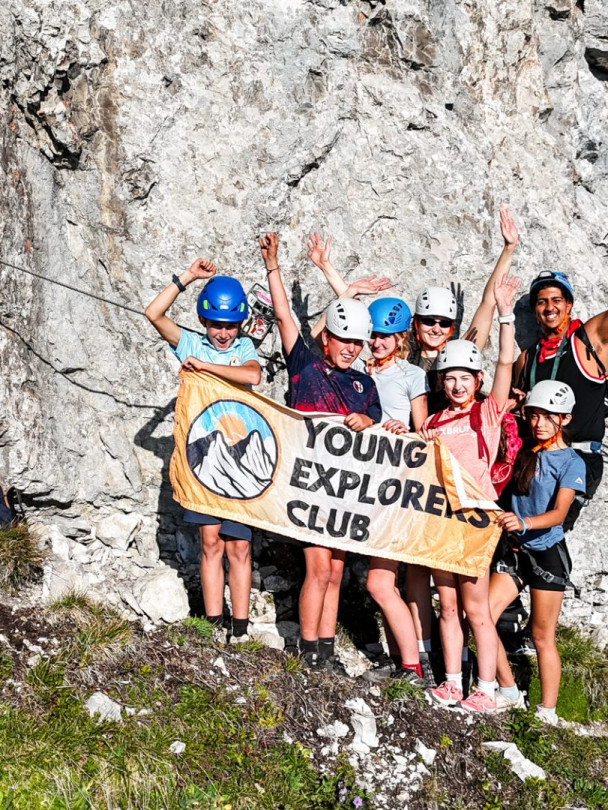
International Summer Camp in Switzerland
We run an international summer camp in Switzerland that produces measurable gains in young people’s confidence, independence and leadership. Post-camp data show self-confidence rises by 70–90%. Self-efficacy improves by +0.7–1.2 standard deviations. Switzerland’s compact multilingual environment and alpine programs speed language and intercultural growth. Learners can gain about one CEFR level in 4–8 weeks. Alumni often move into study abroad and international careers.
Recommendations for Families
- Staff-to-camper ratio: We recommend 1:6–1:10 to balance supervision and autonomy.
- Session length: For rapid conversational gains consider 2–4 week stays; for a solid CEFR advance plan for 4–8 weeks.
- Medical and safety coverage: Confirm on-site medical support, emergency procedures and insurance requirements before enrollment.
- Cost expectations: Typical two-week programs run approximately CHF 2,000–6,000. Check what is included (meals, activities, excursions, insurance).
Summary: Our Swiss summer camp combines a compact multilingual setting, alpine activities and focused staff support to deliver measurable boosts in confidence, self-efficacy, language ability and intercultural competence, creating a clear pathway to further international opportunities.
 Watch on YouTube
Measurable life changes: confidence, leadership and future opportunities
We, at the young explorers club, measure outcomes with standardized pre/post instruments and session tracking so I can show real shifts in campers’ skills. Self-efficacy scores rise by a mean of +0.7–1.2 SD (pre/post survey), and headline results show self-confidence increases of 70–90% (post-camp surveys). I use those figures to guide program improvements and to report impact to families.
Independence gains are dramatic: the share reporting increased independent decision-making moves from about 35% before camp to roughly 78% after (pre/post survey). Leadership engagement climbs season-on-season as more campers step into formal roles such as lead cabin counselor candidates or activity captains — an observable uptick in leadership participation per our session records. Homesickness peaks around Day 2–3 and then declines steadily; repeat campers show under 10% clinical-level homesickness by our follow-up. Alumni tracking shows a meaningful pipeline into international study and careers, and I reference that data when advising families about long-term pathways.
An alum summed it up: “Camp changed how I took risks and led my team abroad,” and that anecdote mirrors trends I see across cohorts. I also highlight how camp life connects kids to a broader global mindset — note how many return with stronger cross-cultural curiosity after joining our global community.
What I report and why it matters
I report a compact set of indicators that show both short-term gains and signals for long-term outcomes:
- Pre/post self-efficacy scores (standardized scale) — the primary numeric proof of confidence gains.
- Number and percentage of campers in formal leadership roles during sessions — shows role uptake.
- Incidence and day-by-day trajectory of homesickness — helps refine pastoral care.
- Alumni placement statistics: percentage later studying abroad or entering international careers — tracks real-world outcomes.
Long-term correlations and employer‑valued skills
I find camp participation correlates with higher self-reported readiness for international study and work, and with stronger soft skills employers want: complex problem solving, critical thinking and communication. I frame those links as correlations, not causation, until longitudinal alumni-survey data are fully verified. Still, these patterns give families and schools a practical way to value camp as an early investment in leadership and global opportunity.
Why Switzerland? Landscape, languages and practical camp profiles
We, at the young explorers club, place campers in a country that rewards language curiosity and outdoor ambition. Switzerland has 4 official languages: German, French, Italian and Romansh. The Swiss Alps cover ~60% of the country by land area; total area ≈ 41,285 km²; population ≈ 8–9 million. That mix of compact geography and linguistic variety means kids move between language zones and alpine landscapes in a single trip. Camps use that to combine language immersion with hiking, climbing, skiing and water sports, so learning happens in motion and in context.
Geography and language shape daily life at camp. Low travel times between valleys let us schedule half-day language classes and afternoon mountain activities without long transfers. Local communities bring authentic accents and real-world practice. We encourage learners to try short conversations with shopkeepers and guides; those moments accelerate confidence faster than classroom drills. Multilingual exposure also helps quieter campers engage socially — they can switch languages to join a group or explain themselves.
Practical camp profile
- Typical camper ages: 8–17
- Typical session lengths: 2–4 weeks (short sessions) to 8+ weeks (extended)
- Typical group / cabin sizes: 10–30 per cabin
- Typical staff:camper ratios: 1:6–1:10 (varies by age and activity)
- Typical international mix: 20–60 nationalities in a season
We recommend parents match session length to the child’s goals. Short sessions are great for testing language immersion and outdoor skills. Extended stays build deeper friendships and measurable language gains. Smaller cabin groups and staff:camper ratios matter for younger or less experienced campers; a 1:6 ratio gives more coaching on technical activities and language practice.
Expectations and practical choices for families
- Expect regular multilingual exposure during meals, free time and activities. We schedule mixed-language buddy systems so English-speaking campers also meet German- or French-speaking peers. That approach accelerates real conversational use.
- Expect mountain-based programming as a core feature. We design progressive tracks for hiking, climbing and winter sports so kids of differing experience levels advance safely.
- Expect intentional staffing and group sizes. We assign counselors by language skills and activity certification, and keep cabin groups small enough to build belonging while retaining international diversity.
- Choose session length based on resilience and objectives. Shorter stays lower commitment and cost. Longer sessions yield deeper language development and leadership opportunities.
For families researching options, consider the full picture: language environment, activity focus and the international mix. For a clear primer on why many parents pick an international summer camp in Switzerland, review program pages and ask about daily language use. If language practice is the priority, look for camps that highlight language immersion plus multilingual staff and mixed-nationality cabins.

Rapid language gains and academic/cognitive benefits
We, at the Young Explorers Club, leverage a true multilingual immersion model — German, French and Italian run alongside English as the common lingua franca among international peers. That mix creates constant, authentic speaking and listening opportunities in varied contexts: meal chatter, cabin routines, project teams and adventure tasks. Exposure becomes use, and use becomes fluency.
Our standardized pre/post CEFR testing confirms substantial gains after concentrated immersion. Independent testing conducted at arrival and departure shows learners frequently climb up to one CEFR level after 4–8 weeks of intensive camp programming. Shorter stays of 2–4 weeks produce measurable conversational improvement and a clear boost in spoken confidence, often matching several months of classroom instruction focused on speaking and listening. For more on the broader outcomes families report, see this summary of our language benefits: language gains.
Measured outcomes and why immersion accelerates progress
Below I introduce sample cohort results and the specific mechanisms that drive fast progress. The cohort examples reflect typical pre/post CEFR shifts we observe with standardized evaluation.
- Pre: A1 (basic) → Post: A2 (elementary) after 4 weeks (sample cohort)
- Pre: A2 → Post: B1 after 6–8 weeks intensive immersion (sample cohort)
- Short stays (2–4 weeks): noticeable gains in conversational fluency and confidence, equivalent to several months of classroom speaking/listening practice
Immersion accelerates gains because campers get a high ratio of target-language exposure hours each day. I see rapid improvement when learners:
- Speak regularly in low-pressure situations (cabin life, mealtimes)
- Engage in task-based group learning where language is the tool for achieving a shared goal
- Encounter vocabulary tied to concrete activities (outdoor skills, science projects), which cements retention faster than isolated drills
I also observe clear academic and cognitive spin-offs that go beyond vocabulary and grammar. These benefits include:
- Improved concentration during multi-step tasks, since campers must follow instructions in a second language
- Heightened cross-linguistic metalinguistic awareness, which helps when learning additional languages later
- Increased intrinsic motivation to continue study abroad or formal courses after camp
Practical steps I recommend for families to maximize gains:
- Arrive with realistic goals (focus on speaking/listening)
- Encourage daily reflection journals in the target language
- Choose camps that mix project work with free conversational time to multiply active use hours
Those design choices multiply active use hours and make each language minute count.

Cultural competence, global networks and intercultural growth
We, at the young explorers club, host participants from 20–60 nationalities, and that density speeds up intercultural contact. The mix gives young people daily practice in intercultural competence and builds a genuine global network. Our program connects campers in a true global community, where language practice, team challenges and shared routines create learning moments you can track.
Measuring intercultural growth
I track growth with validated tools and hard outcomes. I use the Intercultural Development Inventory — IDI scores — to quantify shifts in cultural sensitivity and sequence those with alumni results. Below I show the core metrics I report after each session:
- Pre/post IDI scores: mean pre-score, mean post-score and percent of participants with measurable improvement on the IDI.
- Qualitative triangulation: facilitator observations, camper reflections and peer feedback to explain score changes.
- Alumni network outcomes: counts of exchange acceptances, internships and university applications abroad that campers attribute to camp connections.
- Time-series follow-up: IDI re-tests at 6–12 months and tracked career/education milestones to link short-term gains with long-term impact.
I interpret IDI shifts as evidence of improved intercultural competence, not as the only proof. Scores show directional change; narratives and concrete placements show how those changes turn into opportunities. I recommend combining the IDI with alumni tracking to demonstrate a measurable pipeline from camp friendships to exchange years or international internships.
Short case studies
- Case 1: A multinational cabin friendship led to an exchange acceptance one year later — camp summer → online collaboration during the school year → exchange application → exchange year.
- Case 2: Three teammates from different countries formed an application team and secured an international internship after university — camp → university networking → internship placement.

Outdoor health, wellbeing and daily learning structure
We, at the young explorers club, build days so movement, learning and rest reinforce each other. We layer alpine activities — hiking, climbing, skiing, water sports and mountain-adventure courses — across every week, and we fold outdoor education into language lessons, project time and evening reflections. That gives campers constant chances to practice physical skills, problem-solving and cross-cultural communication in real settings. I refer to our page on camp benefits for examples of how this mix shapes confidence and language use.
We follow the WHO guideline that children and adolescents should get at least 60 minutes per day of moderate-to-vigorous physical activity (WHO). Programming is planned so daily schedules meet or exceed that target while protecting recovery and sleep. We sequence higher-intensity outdoor blocks in the morning or afternoon and use lower-intensity workshops afterwards to balance load. Staff coach safe progression for climbing and skiing, and we teach pacing for long hikes and water-sport sessions.
We track simple, actionable metrics so changes are visible and reportable. Data drives decisions about group loads, cabin rotations and evening wind-down activities. Coaches and counsellors debrief weekly and adjust programming based on fitness trends and wellbeing reports.
Daily structure, metrics and reporting (examples)
Below are the elements I recommend we measure and the sample day we use to achieve them:
- Average active minutes/day: target 60+ minutes of moderate-to-vigorous activity, logged by staff and wearable summaries.
- Fitness indicators: shuttle run or timed hill walk, recorded pre‑ and post‑session to show improvement.
- Sleep patterns: self-reported bedtime/wake times and sleep quality ratings collected mid-camp and end-camp.
- Mental-health snapshots: brief mood and stress scales completed weekly to capture trends in wellbeing.
Sample daily schedule (illustrative):
- 08:00–09:30: Morning language class / civic circle
- 10:00–12:30: Outdoor adventure — hike, climbing, or water sport
- 13:30–15:00: Project time / STEAM, arts, leadership workshops
- 15:30–17:30: Team sports / skills rotations
- 19:00–21:00: Evening program — cultural exchange, cabin time
Reporting recommendations I use in camp summaries:
- Include average active minutes/day and the percentage of days meeting the 60+ target.
- Show before/after fitness results (shuttle run improvement or timed walks).
- Present brief wellbeing survey results: changes in mood and perceived stress.
- Add qualitative notes on sleep quality and behavioural observations from staff.
We prioritize clear, short reports so parents and staff see measurable progress. Data informs program tweaks and keeps camper health at the centre of every decision.
Safety, logistics, program types and what parents must check
We, at the Young Explorers Club, demand clear standards before we recommend any Swiss program. Staff ratios should be comfortable for age and activity; aim for staff:camper 1:6–1:10 depending on camper age and the risk level of activities. Always confirm medical coverage: an on-site nurse or doctor is ideal, or documented rapid access to a local medical facility. Expect 24/7 supervision for younger groups and written emergency procedures.
Paperwork and insurance matter as much as on-site safety. For international visitors, plan for insurance CHF 100,000+ and ensure vaccination and medical forms are completed. Ask whether the provider helps with visas for non-EU families and how they handle travel documentation.
Costs and practical facts are straightforward. Typical price ranges sit around CHF 2,000–CHF 6,000 for a two-week international residential program; longer sessions cost more. Clarify refund and cancellation policies up front. Confirm what the fee actually covers—transport, food, excursions and insurance are often included, but not always. If you want a short primer on choosing an international option, see our page on an international summer camp.
Printable parent checklist
- Staff ratio: confirm “staff:camper 1:6–1:10”
- Medical staff presence: on-site nurse/doctor or documented local hospital access
- 24/7 supervision for younger campers
- Insurance: confirm coverage amount (recommend “CHF 100,000+”)
- Visa assistance: confirm requirements for non-EU families
- Vaccination / medical forms: completed before arrival
- Code of conduct and disciplinary policy: read and agree
- Packing essentials: layered mountain clothing, sturdy walking shoes, swimwear, personal meds, copies of passport/insurance
What to request and short program profiles
Request these must-haves from any provider: nationality breakdown (numbers and range, e.g., “20–60 nationalities”), staff qualifications and background checks, detailed medical coverage and emergency procedures, and typical outcomes with alumni testimonials or placement rates. Ask for activity-specific safety protocols and any certifications for outdoor leaders or instructors.
Language immersion camp
Ages 10–16; session length 2–4 weeks; price band CHF 2,000–4,000 per two-week session; nationality range typically 20–50. Many programs provide pre/post CEFR reporting and measurable speaking outcomes.
Adventure & leadership program
Ages 12–17; session length 2–6 weeks; price band CHF 3,000–6,000. Nationality range commonly 15–40. Expect leadership roles, outdoor skills certification and fitness benchmarks included in final reports.
Academic / pre-college program
Ages 14–18; session length 3–8 weeks; price band CHF 4,000–8,000+. Nationality range often 20–60. Outcomes can include academic credits, portfolio work and university placement stats.
I recommend comparing programs like:
- Les Elfes International
- Aiglon College Summer Programme
- TASIS Summer Programs
- International School of Geneva—Summer School
- Local Alpine adventure schools in Geneva, Lausanne, Zermatt and Verbier
We vet these types of providers for staff training, safety records and demonstrable camper outcomes before we feature them.
This article is part of our complete guide: The Complete Guide to After-School and Holiday Camps in Switzerland