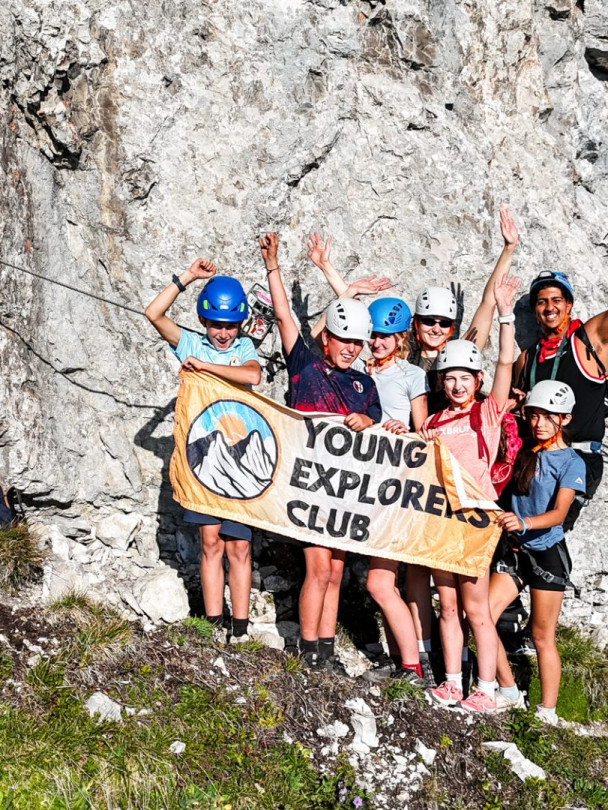
Young Explorers Club — Swiss Residential Summer Camp
At the Young Explorers Club, we run a Swiss residential summer camp that helps introverted children, quiet kids and youth with selective mutism or social anxiety build verbal confidence. We use CBT‑informed practice and low‑pressure social exposure in calm mountain and lakeside settings. Families can choose 1‑week tasters or 2–4 week sessions. Multilingual staff, SLPs and clinicians deliver graded exposure, daily speech practice, measurable metrics and 1‑ and 3‑month follow‑up.
Key Takeaways
Camp focus and setting
The program is a residential Swiss camp for ages 7–17, designed specifically for introverted children, quiet kids, and youth with selective mutism or social anxiety. Activities take place in nature‑based, low‑stimulation environments (mountain and lakeside) to reduce overwhelm and support gradual social engagement.
Therapeutic model
Core therapy is CBT‑informed and emphasizes graduated exposure combined with daily focused social practice. Key elements include:
- Daily 45–90 minute focused social practice sessions.
- SLPs supporting targeted speech work and communication strategies.
- Complementary sessions such as mindfulness and creative therapies to reduce anxiety and build skills.
Program structure
We offer flexible durations and small group formats to match family needs and clinical goals.
- Durations: 1‑week taster, 2‑week standard, or 3–4 week intensive sessions.
- Typical group sizes: activities 8–14 participants; therapy groups 4–8 participants.
- Counselor ratios: approximately 1:4–1:8 for specialized sessions to maintain low pressure and close support.
Measurement and outcomes
Progress is tracked with reliable, measurable approaches to support clinical decision‑making.
- Daily verbal‑utterance logs to record observable speech behavior.
- Pre/post assessments: Standardized measures such as the SMQ and SASC‑R.
- Conservative cohort goal: 50–70% of campers showing measurable improvement after 2–4 weeks.
Safety and continuity
Safety and ongoing care are central to the program design.
- Clinically staffed with licensed psychologists, SLPs and trained counsellors.
- Mandatory pre‑camp training for staff and clear emergency procedures on site.
- Telehealth follow‑ups at 1 and 3 months to support continuity and generalization of skills.
 Watch on YouTube
What this camp is and who it serves
We, at the young explorers club, run a Swiss residential summer camp focused on introverted children, quiet kids and youth with selective mutism or social anxiety. Our program mixes therapeutic practice with low-pressure social exposure in calm mountain and lakeside settings. Families can choose a short 1‑week taster or longer 2–4 week sessions for deeper social gains.
Key program details
Practical facts you should know before booking:
- Camp type: Swiss residential summer camp for introverted children, quiet kids, those with selective mutism and youth with social anxiety.
- Typical ages: 7–17 years.
- Session lengths: 1‑week taster, 2‑week standard, 3–4 week intensive.
- Typical group sizes: 8–14 children per session; therapy or skill groups run at 4–8 children.
- Counselor-to-child ratio: 1:4–1:8 for specialized camps, kept low to allow personalized support.
- Therapeutic approach: CBT‑informed methods with multidisciplinary supports (speech, psychology, social skills coaching).
- Setting: nature-based, multilingual, low-pressure social exposure in Switzerland.
Who benefits most and how we help
We serve kids who prefer quieter environments and those who struggle in noisy group settings. Children with selective mutism typically find the gentle, repeated practice less threatening; selective mutism has an estimated lifetime prevalence around 0.5% (range ~0.3–0.8%). Social anxiety affects a larger share of youth, roughly 6–8%, and responds well to graded exposure plus cognitive work.
I recommend the following depending on needs and goals:
- 1‑week taster: For first-time campers or highly anxious children to build trust and gauge fit.
- 3–4 week intensive: When you want measurable social gains: increased peer initiation, longer verbal interactions, and stronger coping routines.
- 2‑week option: Suits families who want more than an intro but can’t commit to a full intensive.
We blend structured practice with everyday opportunities to speak and connect. Counselors scaffold interactions and use small-group games, paired tasks and short public-speaking exercises to reduce pressure and encourage success. For practical examples of activities that build confidence and peer skills, see our page on support social skills.
I emphasize measurement and follow-up. We track small, observable steps—such as:
- Initiation of conversation
- Length of speech
- Participation in group activities
Progress notes are shared with families. Multilingual staff lower the linguistic barrier for bilingual kids, while the natural setting reduces overstimulation and gives quieter children room to try new behaviors at their own pace.

Program and daily life: therapeutic design, activities and a sample schedule
We build the camp around a CBT-informed core that combines graduated exposure with daily speech practice and calming routines. Therapy is developmentally tailored and trauma-informed. I design each day so therapeutic work feels natural, not overwhelming.
We center core therapeutic components on:
- Structured social skills groups
- Graduated exposure exercises
- SLP-supported speech-language practice
- Mindfulness
- Nature-based activities
- Creative arts therapy
- Low-pressure language immersion
I schedule a clear anchor of daily focused social practice (45–90 minutes) and recommend mindfulness 20–30 minutes/day (I aim for 30 minutes daily). We require at least one low-stress social activity every day and a graded challenge 2–3 times per week. Exposure is gradual and always paired with support.
At the Young Explorers Club, we keep one-to-one and small-group options available so progress matches age and need. I adapt difficulty across these domains:
- Drama & improvisation (non-judgmental)
- Low-element challenges
- Language conversation circles
- Music and creative arts
- Journaling and reflective practice
Daily rhythm, activities and progression examples
I use this compact list to show how those elements appear in practice:
- Core daily blocks and time targets: small-group social skills/therapy (45–60 min), guided outdoor activity (60–120 min), creative therapy (60 min), SLP sessions or language circle (45–60 min), and mindfulness (20–30 minutes/day).
- Required frequency: one low-stress social activity daily; one graded challenge 2–3×/week; daily focused social practice 45–90 minutes.
- Typical activities: nature hikes, lake-swimming, ropes course / low-element challenges, collaborative art projects, drama & improvisation (non-judgmental), music therapy, small-group public speaking practice, language conversation circles, journaling, mindfulness walks.
- Progression examples:
- Drama & improvisation: mime → single-word responses → short lines across 2–3 sessions.
- Language conversation circles: listening practice → scripted partner exchanges → spontaneous conversation.
- Low-element challenges: observation → supported attempt → independent attempt with a peer buddy.
- Sample flexible daily schedule (two-week template, adjusted by age/need):
- 07:30–08:15 breakfast
- 08:30–08:50 guided mindfulness (20 minutes)
- 09:00–10:00 small-group social skills/therapy (45–60 min)
- 10:30–12:00 outdoor activity (hiking, low ropes)
- 12:30–13:30 lunch & rest
- 14:00–15:00 creative therapy
- 15:30–16:30 language conversation circle / SLP practice
- 17:00–18:30 free/low-stress social time & dinner
- 19:30–20:00 evening reflection/journaling
I weave low-pressure SLP support into play and routines; see speech-language practice for related approaches. Schedules and challenge levels shift daily so each child moves forward with confidence and choice.

Clinical support, staffing and measurable outcomes
Staffing & training
We, at the young explorers club, staff each specialized session to match clinical needs and safety standards. Below I list the recommended composition and training benchmarks for a program working with quiet or selectively mute campers:
- Licensed child psychologist: one per session or available on-call for intake, risk management and clinical oversight.
- Speech-Language Pathologist: embedded for selective mutism programs to run exposure hierarchies and SLP-led group exercises.
- Qualified counsellors with mental health first aid and trauma-aware skills.
- Outdoor instructors holding first-aid and lifeguard certifications.
- Trained residential staff experienced in gradual exposure and rapport-based approaches.
I require all staff to complete pre-camp training that totals between pre-camp training 16–40 hours. That training covers selective mutism, CBT basics, trauma-informed care and crisis procedures. I maintain a clear credentialing checklist and sign-off for role-specific competencies before campers arrive. For safety and intensity-matching I use a counselor ratio 1:4–1:8 for specialized groups; clinical coverage averages one clinician per 10–20 campers depending on assessed need.
Measurement & outcomes
I measure progress with standardized tools and simple daily metrics so results are clear for families and clinicians. Core assessment tools include the Selective Mutism Questionnaire (SMQ) and the SASC-R administered pre/post by parents and clinicians. I pair those with a behavioral log: staff record the measure: verbal utterances/day — voluntary verbal attempts logged each day and summed per camper.
Key performance indicators are explicit. My target is KPI: 50–70% show improvement after 2–4 weeks as a conservative cohort goal. I define clinically significant change as an SMQ or SASC-R shift that exceeds published minimal clinically important differences, combined with a meaningful uptick in daily verbal utterances.
Metric collection methods I use:
- Daily staff logs capturing voluntary utterances and participation patterns.
- Pre/post standardized SMQ and SASC-R completed by parents and clinicians.
- Anonymized cohort charts summarizing trends and responder rates.
- Brief case vignettes highlighting representative individual change.
Follow-up is built into the model. I do 1‑month and 3‑month follow-ups by email or telehealth and offer a complimentary 30‑minute telehealth review within 30 days to review data and next steps. That continuity helps maintain gains and informs any need for booster sessions.
For practical guidance on translating gains into everyday confidence, see our piece on helping kids build confidence, which explains program elements that sustain vocal progress beyond camp.

Why Switzerland: location benefits, accessibility, safety and multilingual immersion
We, at the young explorers club, pick Switzerland because the setting itself helps quiet kids find their voice. Crisp alpine air and pine-scented trails calm overstimulated senses. Mirror-like lakes and quiet forest classrooms invite focused attention and reduce social noise, so kids can practice small interactions at their own pace. I structure days to use those calm spaces for gentle peer work, solo reflection, and guided group sharing.
Nature exposure supports mental health and concentration; the evidence is clear in Bratman et al. and in the Frumkin review. I fold nature therapy into every day: short mindful walks before activities, lake-side reflection after team tasks, and skill drills that pair low-pressure social tasks with outdoor challenges. Those micro-doses of green time help build attention and reduce anxiety, which makes speaking up easier.
Switzerland also wins on accessibility. Major international flights arrive at Zurich or Geneva. Camps in mountain regions are typically reachable within about 1–3 hours from those airports by reliable Swiss rail or a short transfer. That predictability keeps travel stress low for families and campers.
Safety matters every day. Swiss emergency response and healthcare are high-standard by international measures, and I make that visible in our plans. Staff review ambulance and hospital procedures with parents and campers, and we maintain clear expectations for rapid access to medical care if needed.
Multilingual immersion is subtle and low-pressure. I encourage casual conversations in multilingual (English/German/French) settings: at meal tables, during craft circles, and on trail teams. Staff model simple phrases and scaffold responses so shy campers can try a word or two without spotlight pressure. Over time those small practices build real conversational confidence.
Practical benefits and what to expect
- Travel: accessible via Zurich/Geneva airports with typical transfers of 1–3 hours.
- Setting: Alps trails, quiet forests, and lake-based activities that calm and engage.
- Daily program: intentional nature therapy moments supported by Bratman et al. and the Frumkin review.
- Safety: transparent emergency plans and connection to high-standard healthcare.
- Language practice: everyday multilingual (English/German/French) exposure in low-stress routines.
I focus on creating paced social steps, so quiet kids leave with steadier voices and more ease in group settings.

Safety, legal requirements, enrollment process and parent communication
We, at the Young Explorers Club, require completed medical forms and up-to-date immunization verification before arrival. We also ask families to supply an emergency contact plan and recommend travel/medical insurance for international families. Staff review all paperwork at intake and flag any clinical needs for the clinical lead to address.
Our safeguarding standards include background checks (DBS or equivalent) for every staff member, a clear child-protection policy, and explicit staff–child contact rules that staff sign and follow. We keep a trained first-aider onsite at all times and maintain rapid access to the nearest hospital; ambulance and response times vary by site, so we confirm local emergency details in your admission packet.
The enrollment flow is straightforward and clinically informed:
- Inquiry
- Intake questionnaire (developmental & clinical history)
- Phone/video clinical consultation with the clinical lead
- Trial day or tiered admission
- Paperwork & payment
The intake questionnaire flags school-based supports, clinical diagnoses and sensory needs, so our clinical consultation can focus on fit and reasonable adjustments. Trial days let shy campers try short stays with support before full admission.
I outline practical pre-camp steps we recommend for parents. Start gradual exposure practice 4–8 weeks before camp to build tolerance for new settings and routines. Gather a few comfort items and introduce simple camp language phrases if the child needs them. We provide a short list of suggested phrases and routines during the clinical consultation.
We commit to clear parent communication and structured aftercare. You’ll get daily updates by secure portal or brief notes, a mid-session clinical summary, and an end-of-session discharge plan that includes SMQ pre/post and SASC‑R results. We also deliver an action plan with five practical home exercises to continue progress. One free telehealth follow-up happens within 30 days; we recommend additional check-ins at 1 month & 3 months to review adjustment and next steps.
Parent checklist & timeline
- Forms due 6–8 weeks before start: completed medical forms, immunization verification, emergency contacts, and consent forms.
- Begin pre-camp exposure practice 4 weeks before (ideally 6–8 weeks): short separations, simulated activities, and bedtime routine practice.
- Trial day scheduled as arranged after clinical consultation (if applicable).
- Finalize packing and travel plans 1 week before: include comfort items and medication in original containers.
- Bring proof of travel insurance (travel insurance recommended) if arriving from abroad.
For practical tips on building confidence through outdoor challenges and peer interactions, see our guide on helping kids build confidence.
https://youtu.be/5n7h0J-X1WI
Costs, financial aid, FAQs and illustrative case vignettes
Costs & additional fees
We price programs transparently and ask families to confirm exact rates with individual camps. Typical ranges are:
- Day camp CHF 250–600/week for regular day programs and activity-focused weeks.
- Residential camp CHF 1,200–4,500/week for clinically staffed programs and specialty facilities.
Expect additional expenses beyond the base fee:
- Transfers and logistics: transfer costs CHF 100–400 one way (estimate).
- Travel: international airfare or train fares to Switzerland.
- Gear and clothing: hiking boots, weather layers, and any required medical supplies.
- Optional private therapy: scheduled with the camp clinical lead and billed separately.
- Insurance and incidentals: travel and health insurance are strongly recommended.
Sample family budget (illustrative): a 2-week residential stay = CHF 2,400–9,000 in base camp fees, plus airfare and transfer costs CHF 100–400 per way, plus insurance and gear. We provide clear refund and cancellation terms at booking; always confirm specific dates, deposit rules and any pandemic-related clauses in writing.
Financial aid: we list scholarships & bursaries where available and encourage families to ask about camp-specific bursaries. Schools, social services and charitable foundations can sometimes help with costs. Contact the camp’s admissions or clinical lead early to discuss application deadlines and documentation for grants.
Case vignettes and brief FAQs
Camper A — selective mutism, age 9: baseline SMQ score 20; after a 2-week intensive program (sample cohort N=12 over 2 weeks) SMQ improved to 35, voluntary verbal utterances per day rose from 2 to 12, and parent-rated confidence increased by 3 points on a 0–10 scale (sample internal program audits). This SMQ score change reflected meaningful, observable gains and staff recommended a short home-practice plan.
Camper B — social anxiety, age 14: baseline SASC‑R in the high range; after a 3-week program (sample cohort N=8 over 3 weeks) SASC‑R decreased by 20% and spontaneous peer interactions per week increased from 1 to 6. The clinician summary recommended a 1-month telehealth follow-up and a structured home-exposure plan to consolidate gains (sample internal program audits). Families saw these outcomes as clinically significant improvement in social engagement.
When numbers are used they reflect sample internal program audits over the stated sample sizes and timeframes and are illustrative, not guaranteed.
Brief FAQs (practical answers)
- Q: Is this camp only for diagnosed selective mutism?
A: No. Diagnostic status isn’t always required. We use an intake questionnaire and clinical consultation to determine fit and to match the right program for each child. - Q: What if my child doesn’t speak at all?
A: Non-speaking children are supported with an individualized non-speaking child protocol, exposure plans, SLP strategies and nonverbal participation options. Staff escalate clinical supports per protocol when needed. - Q: How is homesickness handled?
A: Our homesickness policy includes graduated separation, buddy systems, frequent parent contact and comfort-item plans. Clinical staff remain available for extra support. - Q: Can we arrange private therapy during camp?
A: Yes. Optional private therapy can be scheduled with the camp’s clinical lead; we’ll coordinate timing and billing details.
Practical recommendations I give families: confirm the refund/cancellation policy before you pay, ask for written details on transfer costs and insurance coverage, and apply early for scholarships & bursaries if cost is a barrier. If you want examples of how camps help kids develop social skills and confidence, read our piece on how camps help children build confidence and lasting self-esteem for program-level descriptions. I also recommend reviewing parent reports of SMQ score change and verbal utterances per day in any intake packet to set realistic expectations.