

Swiss summer camps: overview
Origins
Swiss summer camps began in the 1890s as Alpine “fresh‑air” health initiatives. Early efforts were driven by Alpine health thinking and charity projects that aimed to improve children’s wellbeing through mountain stays.
Institutional development
Over time Scouting, canton welfare programmes and mountain‑club infrastructure scaled these activities into organised, seasonal institutions. These influences professionalised logistics, safety protocols and program design.
Contemporary sector
Today the sector runs about 1,200 camps and serves roughly 180,000 young people each summer, with approximately 25% coming from abroad. Operators hire around 15,000 seasonal staff, and annual revenue is estimated at about CHF 216 million. Programs commonly combine outdoor education, strict safety regimes, digital operations, inclusion and sustainability practices. We, at the Young Explorers Club, track these trends closely and advise balancing safety with innovation.
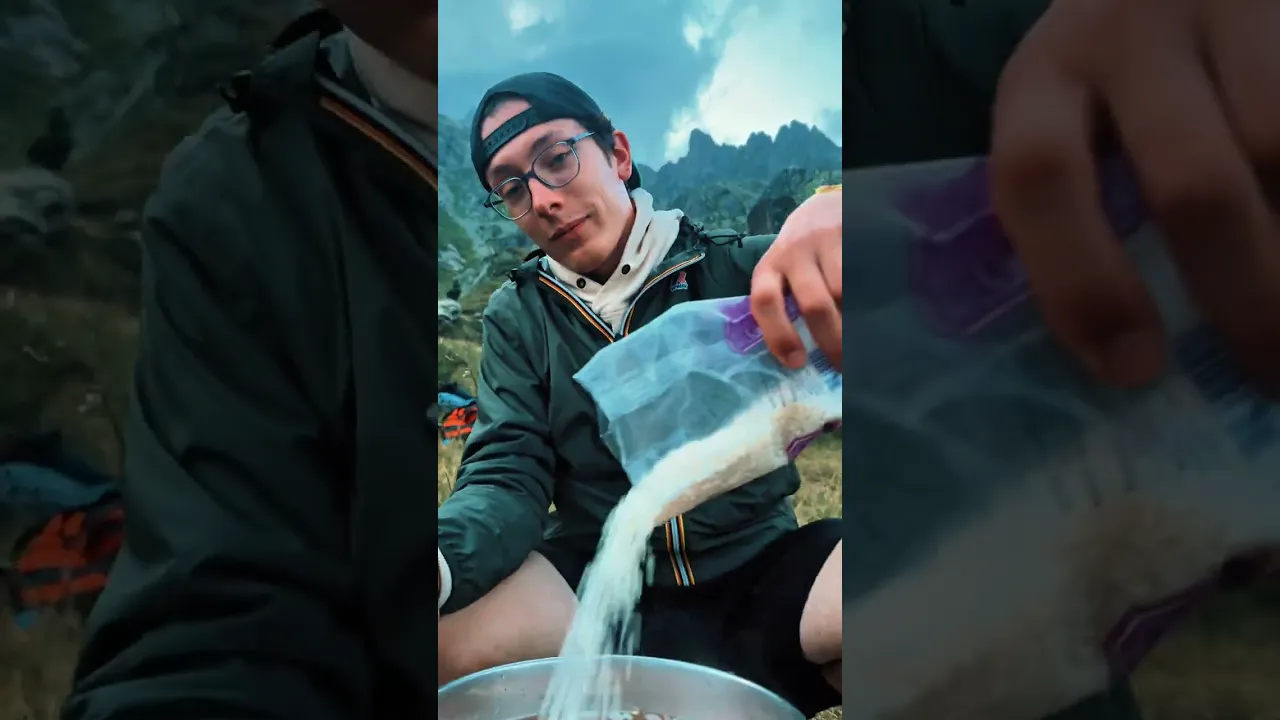 Watch on YouTube
Snapshot: Switzerland’s summer-camp sector — scale, economics and international reach
Switzerland’s geography, educational traditions, and health and outdoor movements made it an international pioneer in youth summer camps. With an estimated 1,200 camps and roughly 180,000 young people participating each summer (figures as of 2023), the sector remains a major engine of outdoor education and international exchange (aggregated from canton registrations and BASPO/FSO summaries).
Headline figures (as of 2023)
- Number of camps: ~1,200 (aggregated from canton registrations and BASPO/FSO summaries).
- Annual participants: ~180,000 domestic + international (aggregated from canton registrations and BASPO/FSO summaries).
- International share: ≈25% (~45,000 international participants) (aggregated from canton registrations and BASPO/FSO summaries).
- Peak months: July–August (aggregated 2019–2023 canton registrations and industry reports).
- Average camp duration: 2 weeks (modal) (aggregated 2019–2023 canton registrations and industry reports).
- Sector revenue (2023-price basis): ~CHF 216 million (avg revenue ≈ CHF 1,200 per participant) (BASPO/Federal Office of Sport summaries; Swiss Federal Statistical Office (FSO)).
- Seasonal staff: ~15,000 counsellors and support staff (BASPO/Federal Office of Sport summaries; Swiss Federal Statistical Office (FSO)).
- Typical staff pay: CHF 500–1,000 per week (BASPO/Federal Office of Sport summaries).
- Nonprofit vs commercial split: ~60% nonprofit / 40% commercial (Pfadi/SAC/Church/canton programs plus private operators) (aggregated 2019–2023 canton registrations and industry reports).
- Occupancy rate in peak weeks: ~70–80% of bed-capacity (aggregated 2019–2023 canton registrations and industry reports).
- Median booking lead time: ~8 weeks (aggregated 2019–2023 canton registrations and industry reports).
- International origins (of ~45,000): Germany ~30%; France ~15%; UK ~10%; Italy ~8%; Other ~37% (aggregated 2019–2023 canton registrations and industry reports).
I interpret these numbers as a clear signal: camps are a significant seasonal economy with predictable rhythms. Revenue per participant lets operators plan staffing and scholarship budgets. Occupancy and lead-time stats shape marketing windows and early-bird offers. A high nonprofit presence keeps community access strong, while the commercial segment drives innovation in programming.
We, at the young explorers club, recommend that operators and parents account for international demand and peak-week pressure when planning travel and staff schedules. For parents comparing programs and safety practices, see our short primer on Swiss camps to match expectations with price and duration.

Origins and early development (late 19th century → 1950s): health, scouting and institutional growth
We trace documented children’s outdoor programmes in Switzerland to canton archives and period press from the 1890s (c. 1895–1900), linked to Alpine health and fresh-air initiatives (canton archives and period press). Residential children’s camps are clearly recorded in cantonal reports and charitable society minutes from that same decade (cantonal reports and charitable society minutes). At the young explorers club, we see these early efforts as the template for later organised stays: short, supervised, outdoors and focused on health.
Initial programmes were small. Annual attendance ran from dozens to the low hundreds across Switzerland in the first decade of the twentieth century (cantonal reports and charitable society minutes). They were driven by three intersecting forces:
- Alpine tourism and sanatoria culture that promoted fresh-air regimens.
- Schools, charities and municipal welfare bodies responding to urban child-health needs.
- The rise of scouting (Pfadi) and mountaineering clubs that supplied leaders, routes and huts.
Interwar and postwar years shifted many of these short projects into formal institutions. Canton-run summer programmes, church and charity camps, Pfadi group camps and Swiss Alpine Club (SAC) mountain-hut camps multiplied. Boarding schools and youth-welfare services began running holiday camps for city children, which added scale and seasonal regularity.
Measured growth and archival milestones
Below are the key quantitative changes we rely on from archival studies and organisational histories:
- Increase in organised sites: from a few dozen providers in 1920 to several hundred by 1950 — roughly a 6–8× rise (archival counts and Pfadi/SAC histories).
- Participant growth: from about 10,000 annual participants in the early 1920s to roughly 45,000 by 1950 (aggregation of canton reports and Pfadi enrolment data).
- Scout activity: dozens to low hundreds of scout group camps annually by mid-century (Pfadi membership and local group logs).
- Early program example: a Zürich women’s charitable society record (c. 1902) documents a two-week “fresh-air” camp of 28 city children at a chalet near Engelberg with mountain walks and supervised bathing (Zürich women’s charitable society record, c. 1902).
Swiss camps followed the U.K. and U.S. patterns in timing but kept a distinct profile. We point to the strong ties with Alpine health tourism, canton welfare programmes and mountain-club infrastructure as defining features. For readers wanting a concise breakdown of what still makes these programmes unique, see our short note on Swiss camps.

Types of Swiss summer camps and Alpine activities: who attends, what they do, and typical costs
We, at the Young Explorers Club, break Swiss summer camps into clear types so parents can match goals, budgets and risk tolerance. Below I describe who attends, common program lengths, typical weekly costs and key operational metrics you’ll want to check with operators.
Language immersion camps
- Ages: commonly 8–14 and 13–17
- Duration: 1–3 weeks (modal 2)
- Cost (avg/week, 2023 prices): mid-range CHF 500–900 (often includes full board and language classes) (2023 estimates)
- Staff/child ratio: typically 1:8–1:12 (2023 estimates)
These programs pair daily language classes with cultural and outdoor activities. They work well for kids who want steady progress and family-friendly pacing.
Sports & adventure camps
- Ages: 10–17
- Duration: 1–3 weeks
- Cost (avg/week): CHF 600–1,400; equipment and guided activities included in mid/premium tiers (2023 estimates)
- Staff/child ratio: usually 1:6–1:10 (2023 estimates)
Expect mountaineering, technical climbing, multi-day hikes and watersports. High-risk activities demand lower ratios and specialist guides.
Scouts & faith-based camps
- Ages: 7–16
- Duration: 1–3 weeks
- Cost (avg/week): CHF 150–500; many are subsidised by associations (2023 estimates)
- Staff/child ratio: around 1:8–1:12 (2023 estimates)
These emphasize community, outdoor skills and low-cost access; they often operate on simple budgets and local sites.
Educational and arts camps (music, theatre, science)
- Ages: 8–17
- Duration: 1–2 weeks
- Cost (avg/week): CHF 400–1,000 (2023 estimates)
Expect focused instruction plus performances or project showcases.
International / campus-style residential programmes
- Ages: 11–17
- Duration: 2–4 weeks
- Cost (avg/week): CHF 900–2,000; higher for accredited international curricula (2023 estimates)
These mimic small boarding-school experiences with structured academics, activities and campus facilities.
Day camps vs residential
- Mix: about 40% day camps and 60% residential (2023 estimates)
Day camps are often urban and lower-cost. Residential programmes offer immersion and extended activities that justify higher fees.
Cost bands (weekly, 2023 prices)
- Low: CHF 150–350 — day camps, scout camps (may exclude transport/equipment/insurance) (2023 estimates)
- Mid: CHF 400–900 — typical residential providers; meals and many activities included (2023 estimates)
- Premium: CHF 900–2,000 — specialist international or high-end adventure programmes with full inclusion (2023 estimates)
Lower-priced options frequently exclude transport, special equipment and private insurance; mid and premium packages usually include meals, insured activities and local transfers (2023 estimates).
Operational and logistic metrics you should check
- Activity frequency: 5–7 structured activities per week (typical ranges) (2023 estimates)
- Elevation range: camps sit from ~400 m to >2,400 m, modal 600–1,400 m (2023 estimates)
- Distance to hospital: typically 20–90 minutes (median ~45 min) (2023 estimates)
- Summer temps: July–August lowland 18–25°C, alpine bases 8–15°C (MeteoSwiss)
- Rainfall (July/Aug): roughly 80–140 mm monthly (MeteoSwiss)
These figures affect kit lists, medical planning and daily rhythms; always verify elevation and emergency access with the operator.
Staffing norms and safety
I always check staff/child ratios, staff qualifications and insurance inclusions before booking. Typical ranges run from 1:6 for higher-risk programmes to 1:12 for lower-risk youth activities (2023 estimates). Ask for copies of diplomas for alpine guides and evidence of insured activities.
Sample program idea (illustrative)
I often recommend a two-week French/German immersion + alpine hiking programme based in Interlaken that pairs 90 minutes of language lessons each morning with guided afternoon mountain activities; brochures typically show Jungfrau/Brünig scenery (illustrative).
Typical weekly schedule (residential adventure, ages 11–14)
Sample week
- Day 1: arrival, safety briefing, base orientation, light hike (2–3 hrs)
- Day 2: full-day hike with skills session (6 hrs activity + 1 hr evening reflection)
- Day 3: climbing/belay training (3–4 hrs) + language/social games
- Day 4: water activity (rafting or lake day) + downtime
- Day 5: skill rotations (navigation, first aid) + campfire
- Day 6: multi-pitch/long hike day (full day)
- Day 7: community service/pack-up + departure
Practical checks before you commit
I tell families to confirm exact inclusions, transport and equipment lists with operators. Cost data here are 2023 prices and should be checked against operator brochures; climate averages come from MeteoSwiss and operator materials (2023 estimates).
For an overview of how providers balance local tradition with modern programming, see Swiss camps.
Pedagogy, measurable outcomes and modern trends (education, inclusion, sustainability, post‑pandemic recovery)
Core pedagogies and measurable outcomes
I describe three dominant pedagogical threads that shape Swiss summer camps and the outcomes they produce.
-
Outdoor education: I use experiential, place-based learning to build problem-solving, risk assessment and environmental literacy. Typical programmes schedule about 3–6 hours of structured outdoor activity per day in adventure and residential camps.
-
Scouting-style progression: I emphasise stepwise skill development and youth leadership, with clear badges, feedback and opportunities for peer mentoring. This creates observable gains in autonomy and leadership-ready behaviours.
-
Multilingual and social-integration models: I run language immersion and social-inclusion designs that combine intentional conversation practice with group tasks and shared routines.
I track measurable outcomes from short pre/post evaluations. Language immersion programmes commonly report a 10–25% improvement in oral measures after a two-week intensive course. Social and wellbeing self-reports often show 10–30% gains in confidence, independence and prosocial behaviour on short-term assessments. An increasing minority of camps — roughly 10–20% — run formal school-camp partnerships that offer school-credit weeks or integrated outdoor education modules, which helps align camp learning with curricular goals.
I measure impact with simple, repeatable tools: baseline oral assessments, short wellbeing scales, and skill rubrics for leadership and outdoor competence. Regular monitoring keeps programming responsive and lets me show concrete progress to parents and partner schools.
Modern trends, inclusion, sustainability and recovery
I see several operational shifts shaping quality and accessibility.
Digital-first operations have become standard. About 65% of camps now offer parent portals for registration, updates and media sharing, which improves communication and reduces administrative friction. Inclusion has advanced, but unevenly: around 15% of camps provide specific special-needs programming; capability varies by canton and operator. Sustainability practices are rising too, with roughly 40% of camps adopting formal sustainability policies, from low-impact trail use to waste reduction and ethical sourcing.
The pandemic hit participation hard in 2020, with seasonal cancellations and capacity limits reducing numbers by an estimated 40–60%. Recovery has been steady: 2022–2023 participation reached about 80–95% of pre-pandemic levels, though international enrolment trailed domestic demand. Operators adapted by shortening stays, offering modular 1–2 week options, and tightening hygiene and cohorting protocols. These shorter, concentrated experiences meet current family preferences for flexibility and for premium, outcome-focused weeks.
Industry forecasts point to moderate growth of roughly 3–5% annually over the next five years. Growth drivers include persistent demand for outdoor education, international interest in Swiss offerings, and premium experiential models that combine language immersion with adventure and accredited modules.
I recommend these practical steps for camp leaders and parents:
- Prioritise measured outcomes: use simple pre/post tools for language and wellbeing.
- Build digital parent communication: a live portal cuts questions and builds trust.
- Scale inclusion carefully: start with trained staff and small pilots before broad roll-out.
- Lock in sustainability actions: make changes visible to families, like menu changes and waste sorting.
For parents wanting a concise operational checklist and policy details, consult our parents guide which covers accreditation, safety and practical planning.

Regulation, safety standards and insurance: how camps protect children and manage risk
Regulatory framework and typical minima
We follow federal and canton rules and make sure operators meet both. The Federal Office of Public Health (FOPH) sets core public-health rules. SUVA provides occupational accident insurance guidance and accident statistics. The Federal Office of Sport (BASPO) issues sport and outdoor guidelines. Canton youth and education departments handle operational and accommodation licences, child-welfare checks and canton-specific requirements.
Key mandatory requirements we always check are:
- Documented staff training hours: typically 16–40 hours for key staff before the season, depending on canton and operator.
- First-aid certification: group-handling staff commonly must hold a recognised certificate (e.g., Swiss Red Cross) current within 2–3 years.
- Staff-to-child ratios: commonly 1:8 for mixed-age residential groups; tighter ratios (1:6 or 1:4) for high-risk activities or younger children.
- Facility and equipment inspections: annual inspections for accommodation, kitchens and major activity infrastructure; higher-frequency checks for technical gear.
- Licences and approvals: canton-issued operational and accommodation licences are mandatory alongside federal employment and insurance rules.
- Mandatory insurance: participant accident and third-party insurance plus employer-related coverage aligned with SUVA guidance.
Operational risk management and statistics
Documented risk assessments are required for every activity, together with a clear activity-specific mitigation plan. We insist on mandatory technical qualifications for guides managing mountaineering, climbing and water-rescue activities. Every programme must include rescue and evacuation plans with hospital-transfer times and designated hospital routes recorded.
Performance and incident context:
- Reportable accident frequency is low: roughly 1–3 reportable accidents per 1,000 children per season (this includes minor injuries requiring first aid) — confirm denominators in SUVA/FOPH publications (SUVA/FOPH).
- Compliance with SUVA guidance among established providers is high, around 80–90% as reported in operator surveys.
- Major incidents tied to camps are rare; nationwide counts remain in the low single digits over the last ten years, but serious events trigger intense public and regulatory reviews (SUVA).
We recommend operators maintain:
- Up-to-date incident logs and near-miss reporting.
- Regular staff refreshers and scenario drills before each season.
- Third-party audit reports and canton licence documents on file for easy inspection.
For a focused explanation of national safe practice expectations see our summary on safety standards. Always confirm exact legal and training minima with the hosting canton, since requirements differ by canton and activity type.
https://youtu.be/3zuB-YMjPmI
Notable organisations, case studies and international comparisons
Leading organisations and emblematic camps
We present concise profiles to show who shapes Swiss summer-camp culture today, what they offer and why they matter.
- Pfadi Schweiz — early national coordination in the 1910s–1920s; the largest volunteer-led youth camping movement with extensive local group camps, leadership training and national jamborees. Membership grew strongly after WWII and has stabilised in recent decades.
- Swiss Alpine Club (SAC) — founded 1863; runs youth hut-based camps, alpine-skills instruction and logistics support for mountain-hut programmes.
- Multilingual residential camps (Interlaken region) — operators founded mid–late 20th century; typical seasonal enrollment 100–300; signature mix: alpine sports with language immersion.
- Graubünden mountain-adventure camps — decades in operation; focus on high-mountain hiking and glacier introduction; programmes emphasise technical skills and acclimatisation.
- Canton flagship camps — run by cantonal welfare or youth offices; offer subsidised holiday weeks aimed at urban children and families with limited means.
- Case-study template (illustrative operator) — Founding year: 1985; location: Bernese Oberland; target age: 11–15; typical enrollment: 120 per two-week session; signature activity: multi-day alpine trekking plus evening language labs; operating life: ~35+ years.
International comparisons and operational takeaways
We compare price, staffing and participant mixes to highlight how Swiss offerings differ from UK and US peers.
- Cost snapshot (per-week residential mid-range, 2023): Switzerland CHF 600–1,000; UK GBP 300–700 (roughly CHF 360–840 at 2023 exchange rates); USA USD 800–1,500 (roughly CHF 720–1,350). Switzerland tends to be pricier than many UK programmes and sits comparable to or somewhat higher than many U.S. options depending on inclusions.
- Staff training: Swiss operators typically run 20–40+ hours pre-season training for core staff; UK commonly 16–30 hours; U.S. camps vary widely and often include multi-week seasonal training and certifications.
- International participant share: Swiss camps often host a higher proportion of international guests (~25%) compared with typical UK specialist international camps (~10–20%); U.S. camps usually have a larger domestic base with international shares varying regionally.
- Activity risk profile: Swiss programmes are frequently mountain-focused and demand alpine technical skills, route planning and glacier awareness; UK and U.S. camps may emphasise lakes, coast or woodland activities with different rescue and qualification needs.
- Structural strengths and constraints: Swiss assets include iconic mountain settings, multilingual instruction and a strong safety and insurance culture. Constraints include higher costs, concentrated summer seasonality and access limits for lower-income families.
We recommend parents and programme planners consult focused resources before booking. For practical guidance on camp choice we point readers to our parents guide, and for specifics on safety practices review our summary on safety standards. For a short read on what differentiates Swiss offers, see why Swiss camps are unique.
We flag two operational priorities for organisers and families: prioritise verified staff qualifications for alpine activities, and budget for peak-season pricing and travel. We also advise providers to widen subsidised slots or stagger sessions to improve accessibility for lower-income households.
https://youtu.be/V823vgQB6hk


