

Top outdoor activities for children: adventure, growth, language
Discover the top outdoor activities for children that build confidence, friendships, and bilingual skills. A practical guide for parents choosing adventure camps.
Choosing the right summer activity for your child feels simple until you’re staring at a list of dozens of camps, programs, and options. You want something that builds confidence, sparks friendships, and maybe even teaches a new language. But most programs do one thing well and leave the rest to chance. Outdoor recreation significantly improves psychological well-being and social skills in children ages 6 to 18, which means the stakes are real. This guide walks you through how to choose wisely, which activities deliver the most growth, and why bilingual adventure camps are changing the game.
Table of Contents
- How to choose the right outdoor activities for your child
- Top outdoor activities for children in summer camps
- How different outdoor activities support personal growth
- Bilingual adventure camps: Benefits of language immersion outdoors
- How Young Explorers Club brings it all together
- Frequently asked questions
Key Takeaways
| Point | Details |
|---|---|
| Choose activities mindfully | Select outdoor adventures that match your child’s personality and developmental needs for the best results. |
| Adventure boosts growth | Camps with structured outdoor activities build confidence, teamwork, and reduce anxiety. |
| Language immersion works | Bilingual camps effectively combine language learning with adventure for holistic development. |
| Safety and inclusivity matter | Quality camps maintain small groups and adapt to special needs for a safe, inclusive experience. |
How to choose the right outdoor activities for your child
Not every outdoor activity is right for every child. A shy 9-year-old and a fearless 15-year-old need very different environments to grow. Start by matching the activity structure to your child’s personality and developmental stage, not just their age.
Here’s what to look for when evaluating any outdoor program:
- Age-appropriate challenge: Activities should stretch your child just beyond their comfort zone, not overwhelm them.
- Small group ratios: Small group ratios and hands-on challenges ensure safety and real learning in outdoor programs. Look for camps with no more than 8 to 10 kids per instructor.
- Progressive instruction: Skills should build week by week, not stay flat. A good camp teaches a child to navigate before they lead a trail.
- Language and cultural components: If bilingual growth matters to your family, look for programs that weave language into daily activities rather than treating it as a separate class.
- Experiential learning design: Hands-on, real-world challenges teach far more than lectures. Your child should be doing, not just listening.
Understanding adventure education for parents can help you ask better questions when comparing programs. And if bilingual immersion is a priority, knowing how to choose a bilingual summer camp will save you hours of research.
Pro Tip: Ask any camp director what happens when a child refuses an activity. Their answer tells you everything about their philosophy on challenge, safety, and respect for the individual child.
Top outdoor activities for children in summer camps
With a selection framework in place, let’s look at the best outdoor activities your child can experience at leading camps. Each one builds something specific, and the best programs combine several of them.
1. Hiking and orienteering
Hiking builds physical endurance, but orienteering (using a map and compass to navigate terrain) adds a mental layer that most kids find surprisingly addictive. Teams must communicate, problem-solve, and trust each other. It’s one of the fastest ways to build resilience in a group setting.
2. Boating and water activities
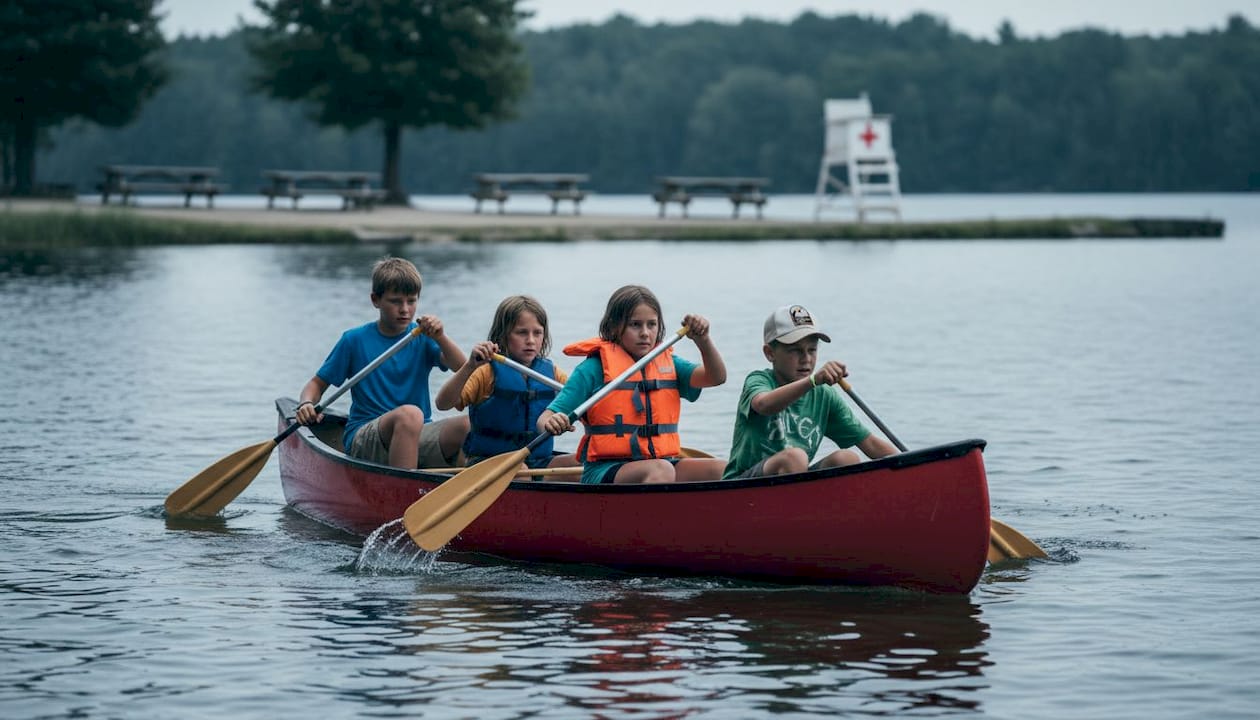
Kayaking, canoeing, and sailing teach children to read their environment and respond calmly under pressure. There’s no faking competence on water. Kids who master a kayak in choppy conditions carry that confidence into every other challenge.
3. Archery and climbing
Both activities demand focus and patience. Archery rewards stillness and mental control. Climbing rewards problem-solving and trust, especially when a child has to rely on a belayer (the person managing the safety rope). These are powerful tools for developing self-discipline.
4. Team-building games
Structured games like trust falls, blindfolded navigation, and group challenges force kids to lead, follow, and communicate. They’re often underestimated but deliver some of the strongest social outcomes of any camp activity.
5. Nature-based science projects
From water testing to wildlife tracking, outdoor science experiments spark curiosity in kids who might not respond to classroom science. Connecting learning to a real forest or river makes it stick.
6. Language-immersion adventures
Activities conducted in a second language, like a French-guided hike or a bilingual team challenge, integrate vocabulary and cultural understanding naturally. Kids absorb language faster when they’re using it to accomplish something real.
“Nature summer camps improve mood, build friendships, and develop skills, especially in urban kids.” This matters most for children who spend most of their year in cities and rarely encounter unstructured natural environments.
The best camps don’t pick just one of these activities. They sequence them so that each one builds on the last. A child who learns to trust their team during a blindfolded game will climb higher and navigate further because of it. Learning about outdoor sports and perseverance shows just how deeply these experiences shape long-term character.
Pro Tip: Watch how a camp schedules its activities. If high-challenge activities like climbing always come after trust-building games, that’s a sign of intentional program design, not just a fun schedule.
How different outdoor activities support personal growth
Each activity offers unique growth opportunities. Here’s how they compare in supporting your child’s development across four key areas.
| Activity | Confidence | Social bonds | Mental health | Language growth |
|---|---|---|---|---|
| Hiking and orienteering | High | Very high | High | Moderate |
| Boating and water sports | Very high | High | High | Low |
| Archery and climbing | Very high | Moderate | High | Low |
| Team-building games | Moderate | Very high | Moderate | Moderate |
| Nature science projects | Moderate | Moderate | High | Low |
| Language-immersion adventures | High | High | Moderate | Very high |
The table makes one thing clear: no single activity covers every dimension. A well-designed camp program layers these experiences so your child grows across all four areas, not just one.
Meta-analysis confirms that camps foster self-esteem, self-efficacy, sense of purpose, and social skills through structured challenges. The key word is structured. Unstructured time in nature is valuable, but it’s the intentional design of challenges that produces measurable growth.
Here’s what each growth area looks like in practice:
- Social bonds: Group orienteering requires kids to negotiate, compromise, and celebrate together. Friendships formed under shared challenge tend to last well beyond the camp session.
- Self-confidence: Boating and archery push personal limits in a controlled setting. When a child lands an arrow in the target or paddles through a rapid, they own that achievement completely.
- Mental health: Time outdoors, away from screens and academic pressure, lowers cortisol (the stress hormone) and improves sleep quality. Reflection activities built into the camp day deepen this effect.
- Language and culture: Bilingual camps integrate real-world language use into every activity, which builds cultural fluency alongside vocabulary.
The most powerful growth happens when a child faces a real challenge, succeeds with support, and then reflects on what they learned. That cycle, repeated across two weeks, changes how a child sees themselves.
For parents weighing whether camp is worth the investment, the top reasons to join summer camp go far beyond fun. And if you want to understand the philosophy behind the best programs, exploring adventure-based learning gives you a clear picture of what separates great camps from average ones.
Bilingual adventure camps: Benefits of language immersion outdoors
Language immersion is transforming the way summer camps shape kids. Let’s look at how these programs work and what the data says.
Traditional language classes ask children to sit, memorize, and repeat. Bilingual adventure camps flip that model entirely. A child learning French doesn’t conjugate verbs at a desk. They shout instructions to their kayaking partner, read a trail map, or negotiate roles in a team challenge, all in the target language.
Bilingual camps pair adventure activities like hiking, zip-lining, and archery with immersive language learning for cultural understanding and personal growth. The result is a child who doesn’t just know words but knows how to use them under pressure.
Here’s how a well-structured bilingual camp day might look:
| Time of day | Activity | Language focus |
|---|---|---|
| Morning | Group hike with map reading | French instruction and navigation vocabulary |
| Midday | Team challenge debrief | Bilingual discussion and reflection |
| Afternoon | Climbing or archery | English coaching with French peer support |
| Evening | Cultural storytelling or games | Immersive French or English depending on group |
This alternating structure prevents language overload. Kids get enough immersion to absorb new vocabulary and enough English to stay grounded and confident. Research on bilingual camps and rapid learning shows that this balance is what drives retention.
Children learn a language fastest when they need it to do something they actually care about. Adventure gives them that reason.
When choosing a bilingual program, look for staff trained in both outdoor instruction and language pedagogy (the science of teaching language). A great climbing instructor who speaks French is not the same as a trained bilingual educator who also leads climbs. The best international summer camps hire for both skill sets.
Pro Tip: Ask the camp how they handle a child who resists speaking the second language. The best programs use peer encouragement and activity-based motivation rather than pressure or correction.
One honest note: long-term biliteracy (reading and writing fluency in two languages) from a two-week camp is not realistic. What is realistic is a significant boost in spoken confidence, cultural curiosity, and motivation to keep learning. That motivation is often the most valuable outcome of all.
How Young Explorers Club brings it all together
For parents ready to help their child thrive this summer, Young Explorers Club delivers exactly the combination this article describes: structured adventure, personal growth, and bilingual immersion, all set in the Swiss Alps.
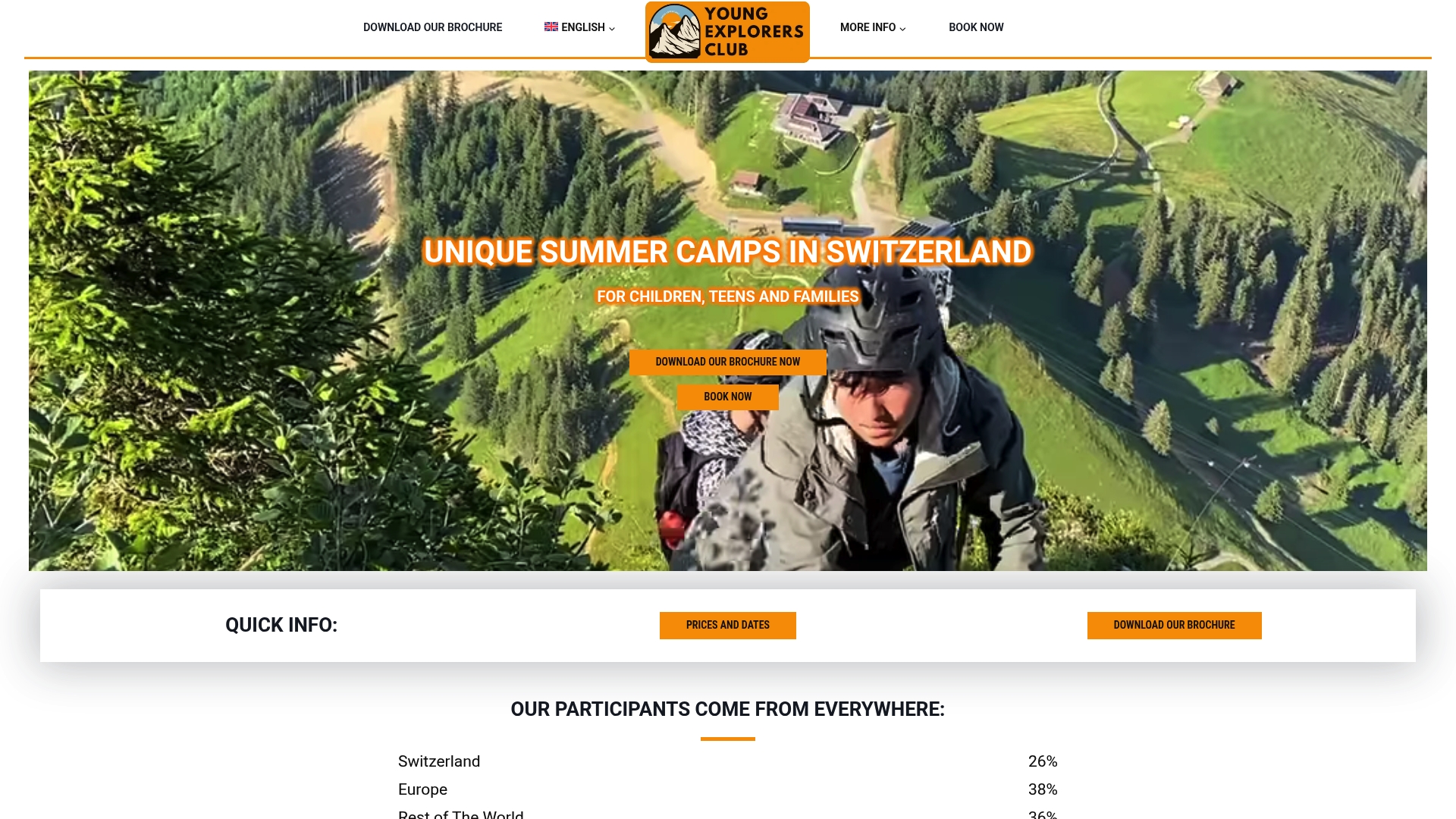
Our programs are designed for children and teens aged 8 to 17, with trained staff who hold both outdoor leadership certifications and language instruction experience. Whether your child is ready for their first overnight camp or looking for a more advanced adventure, our teen summer camps offer progressive challenges that build real confidence. Schools and groups can also explore our custom group camps for tailored programming. For families who want ongoing adventure beyond the summer, our weekly youth activities keep the momentum going year-round. Every session is built around the frameworks described in this article, because we believe outdoor adventure and language growth belong together.
Frequently asked questions
What are the most impactful outdoor activities for children’s well-being?
Activities that combine challenge and teamwork, like hiking, boating, and team games, produce the strongest results. Structured outdoor activities show moderate to meaningful improvements in mood, confidence, and friendships across age groups.
How do bilingual camps combine language learning with outdoor adventure?
They alternate language immersion with team-building activities so kids absorb vocabulary through real use rather than memorization. Bilingual camps pair adventure with language to foster cultural growth and skill-building without overwhelming children.
Are outdoor camps effective for anxious or urban children?
Yes, and the evidence is strong. Nature-based camps reduce anxiety and boost mood especially in urban kids who rarely spend time in natural environments.
What safety measures exist in quality outdoor adventure camps?
Look for small mentor-to-camper ratios and progressive instruction that builds skills before increasing risk. Small groups and trained leaders are the two most reliable indicators of a safe and effective outdoor program.


