Why choose residential camps for bilingual growth in 2026
Discover how residential camps combine bilingual immersion with outdoor adventure to boost confidence by 30% and accelerate language learning for lasting growth.
Children who attend bilingual residential camps show 30% greater confidence gains and 20% improved cognitive flexibility compared to traditional summer programs. These immersive experiences combine language learning with outdoor adventure, creating transformative environments where kids develop independence, resilience, and global communication skills. For parents seeking meaningful summer experiences beyond basic childcare, residential camps offer structured pathways to personal growth that extend far beyond the typical summer break.
Table of Contents
- What Are Residential Camps? Defining The Experience
- The Benefits Of A Bilingual Environment In Residential Camps
- How Outdoor Adventure Drives Personal Growth And Skill Development
- Safety And Supervision: Why Parents Can Trust Residential Camps
- Common Misconceptions About Residential Camps
- Residential Vs Day Camps: What Makes Residential Camps Unique?
- Choosing The Right Residential Camp: Practical Tips For Parents
- Summary And Next Steps: Making An Informed Residential Camp Choice
- Explore The Right Residential Camp For Your Child
Key takeaways
| Point | Details |
|---|---|
| Immersive bilingual environments accelerate language proficiency and cognitive development | Bilingual residential camps boost cognitive flexibility by 15-20% while preventing summer learning loss through continuous language exposure. |
| Outdoor adventures build resilience and emotional strength | Nature-based activities reduce childhood anxiety by 25-30% while fostering teamwork and problem-solving abilities. |
| 24/7 supervision ensures safety and fosters independence | Staff-to-camper ratios around 1:6 with trained professionals create secure environments for growth. |
| Residential formats produce deeper developmental gains than day camps | Overnight immersion yields 25-30% greater maturity and social skill gains compared to limited-hour day programs. |
What are residential camps? Defining the experience
Residential camps fundamentally differ from day programs through their multi-day overnight structure that creates complete immersion in camp culture and learning. Children live onsite for typically a week or longer, experiencing structured daily schedules that blend educational activities, outdoor adventures, and community living. This format offers unique opportunities for independence development that simply cannot occur during limited daytime hours.
The experience centers on round-the-clock engagement with camp activities, peers, and mentors. Morning might include language lessons, afternoons bring mountain biking or climbing challenges, and evenings foster group bonding through storytelling or campfire activities. The continuity creates natural learning moments throughout each day.
Safety forms the foundation of every residential camp experience in Switzerland. Trained staff maintain 24/7 supervision, ensuring children feel secure while exploring new challenges. This protective environment allows kids to take calculated risks, whether attempting a difficult climbing route or conversing in a new language.
Key characteristics that define residential camps include:
- Complete immersion in camp environment from wake-up to bedtime
- Structured daily routines balancing education, adventure, and social time
- Continuous adult supervision with trained staff always present
- Opportunities for independence within secure, supportive frameworks
- Multi-day duration allowing deep engagement with activities and relationships
The overnight component transforms casual participation into committed engagement. Children cannot retreat to familiar home environments when facing discomfort, pushing them to develop coping strategies and resilience.
The benefits of a bilingual environment in residential camps
Bilingual immersion during residential camps creates cognitive advantages that extend well beyond language acquisition. Research demonstrates that bilingual education improves problem-solving and academic performance by up to 20% through enhanced mental flexibility. Children constantly switching between languages develop stronger executive function skills, including attention control and task switching abilities.
The residential format amplifies these benefits through constant exposure. Unlike weekly language classes, camp environments surround children with authentic communication needs throughout each day. Ordering meals, planning activities with peers, and navigating daily routines all become language practice opportunities. This natural context accelerates fluency far more effectively than isolated classroom instruction.
Summer learning loss typically erases months of academic progress, particularly in literacy and numeracy. Bilingual camps counteract this decline by maintaining cognitive engagement through dual-language challenges. Children score 15-20% higher on cognitive flexibility assessments after participating in immersive bilingual programs, demonstrating measurable academic protection during summer months.
Key bilingual benefits parents should recognize:
- Enhanced metalinguistic awareness helping children understand language structure
- Improved academic outcomes across multiple subject areas
- Prevention of typical summer learning regression
- Development of global communication competencies
- Increased cultural sensitivity and adaptability
Pro Tip: Select camps employing native speakers as instructors and counselors to ensure authentic pronunciation, idioms, and cultural context that textbooks cannot provide.
Social interactions multiply language learning effectiveness. Children motivated to connect with international peers push through communication barriers more readily than in formal instruction settings. The emotional investment in friendships creates memorable context for new vocabulary and grammar patterns, cementing language retention.
How outdoor adventure drives personal growth and skill development
Nature-based challenges at residential camps catalyze profound personal development that indoor activities cannot replicate. Outdoor activities increase confidence by 30% while simultaneously building physical fitness and coordination. Climbing a rock face demands both mental calculation and physical strength, teaching children to trust their abilities while managing fear.
The psychological benefits extend beyond confidence building. Time spent in natural environments reduces anxiety and stress by 25-30%, providing crucial mental health support during developmentally challenging years. Away from screens and academic pressures, children reconnect with simpler pleasures and develop healthier stress management patterns.
Team-based outdoor tasks create cooperation requirements absent from individual sports or academics. Navigating a survival skills course or completing a group mountain biking expedition requires communication, role delegation, and mutual support. These experiences build social competencies that translate directly to school projects and future workplace collaboration.
Key developmental outcomes from outdoor programming:
- Problem-solving skills through navigation and challenge completion
- Resilience when facing physical discomfort or initial failure
- Environmental awareness and conservation ethics
- Physical literacy including balance, coordination, and spatial awareness
- Self-reliance when managing personal gear and safety
Pro Tip: Look for camps balancing adventure intensity with proper skill progression, ensuring challenges remain achievable while still pushing comfort zones for optimal growth.
The connection between outdoor challenges and self-esteem proves particularly strong during adolescence when identity formation accelerates. Successfully completing a difficult hike or mastering a new climbing technique provides concrete evidence of capability. These accomplishments counter negative self-talk and build growth mindsets that recognize effort as the path to mastery.
Parents seeking to help kids build confidence through adventure should prioritize camps offering progressive skill development across multiple outdoor disciplines. Variety prevents boredom while allowing children to discover unexpected talents and interests.
Safety and supervision: why parents can trust residential camps
Parental concerns about safety naturally intensify when considering overnight programs away from home. However, residential camps maintain rigorous supervision with staff-to-camper ratios around 1:6, exceeding most school environments. This ensures individualized attention while maintaining group safety during all activities.
Staff training extends far beyond activity instruction. Counselors receive certification in first aid, emergency response protocols, and child development principles. Background checks and reference verification processes screen all personnel before they interact with campers. Swiss camps particularly benefit from stringent national safety regulations governing youth programs.
Structured routines provide emotional security alongside physical safety. Children know what to expect throughout each day, reducing anxiety about unfamiliar situations. Predictable meal times, activity schedules, and bedtime rituals create comforting frameworks within which kids can safely explore independence.
Critical safety elements parents should verify:
- Certified staff with emergency response training always present
- Clear protocols for medical situations and family communication
- Activity-specific safety equipment and instruction before participation
- Regular safety audits and compliance with national youth program standards
- Transparent incident reporting and parental notification procedures
The comprehensive supervision model balances protection with autonomy. Staff monitor campers continuously while allowing age-appropriate independence. Younger children receive closer oversight during activities, while teenagers gain more decision-making opportunities within established safety boundaries.
Emotional well-being receives equal attention to physical safety. Counselors trained in recognizing homesickness, social conflicts, or mood changes intervene supportively when children struggle. This nurturing approach helps kids work through challenges rather than avoiding discomfort, building emotional resilience alongside physical skills.
Common misconceptions about residential camps
Many parents hesitate to consider residential camps due to unfounded fears about safety and emotional harm. The myth that overnight camps create dangerous or traumatic experiences contradicts extensive research showing these programs actually strengthen emotional regulation and coping abilities. Rather than harming children, structured residential experiences teach them to manage discomfort and seek appropriate support.
Another persistent misconception frames camps as purely recreational with no educational value. This outdated view ignores how modern residential programs integrate intentional skill development, academic enrichment, and personal growth objectives throughout seemingly playful activities. Camps supporting emotional resilience deliberately design experiences that build competencies while maintaining engaging, age-appropriate formats.
Research directly contradicts safety concerns:
- Studies show no increase in stress hormones among residential campers
- Social skills assessments reveal measurable improvements after camp participation
- Self-confidence metrics consistently rise following residential experiences
- Homesickness typically resolves within 48 hours with proper staff support
The structured environment actually provides more consistent supervision than many home situations. Parents juggling work responsibilities during summer often cannot match the continuous adult presence camps maintain. Quality programs offer safer environments than unsupervised time at home or with peers.
“The greatest risk to children’s development is not attending challenging programs like residential camps, but rather spending summers in unstimulating, isolated environments that fail to build resilience and social competencies.”
Parents frequently underestimate camps’ lasting developmental impacts. The independence, friendships, and skills gained during one or two weeks create foundations for confidence and adaptability that persist throughout adolescence. Children reference camp experiences years later when facing new challenges, drawing on proven abilities to overcome obstacles.
The fear that children are too young for overnight experiences often reflects parental anxiety more than child readiness. Most kids aged eight and older possess the developmental capacity for short separations when properly prepared and supported by trained staff.
Residential vs day camps: what makes residential camps unique?
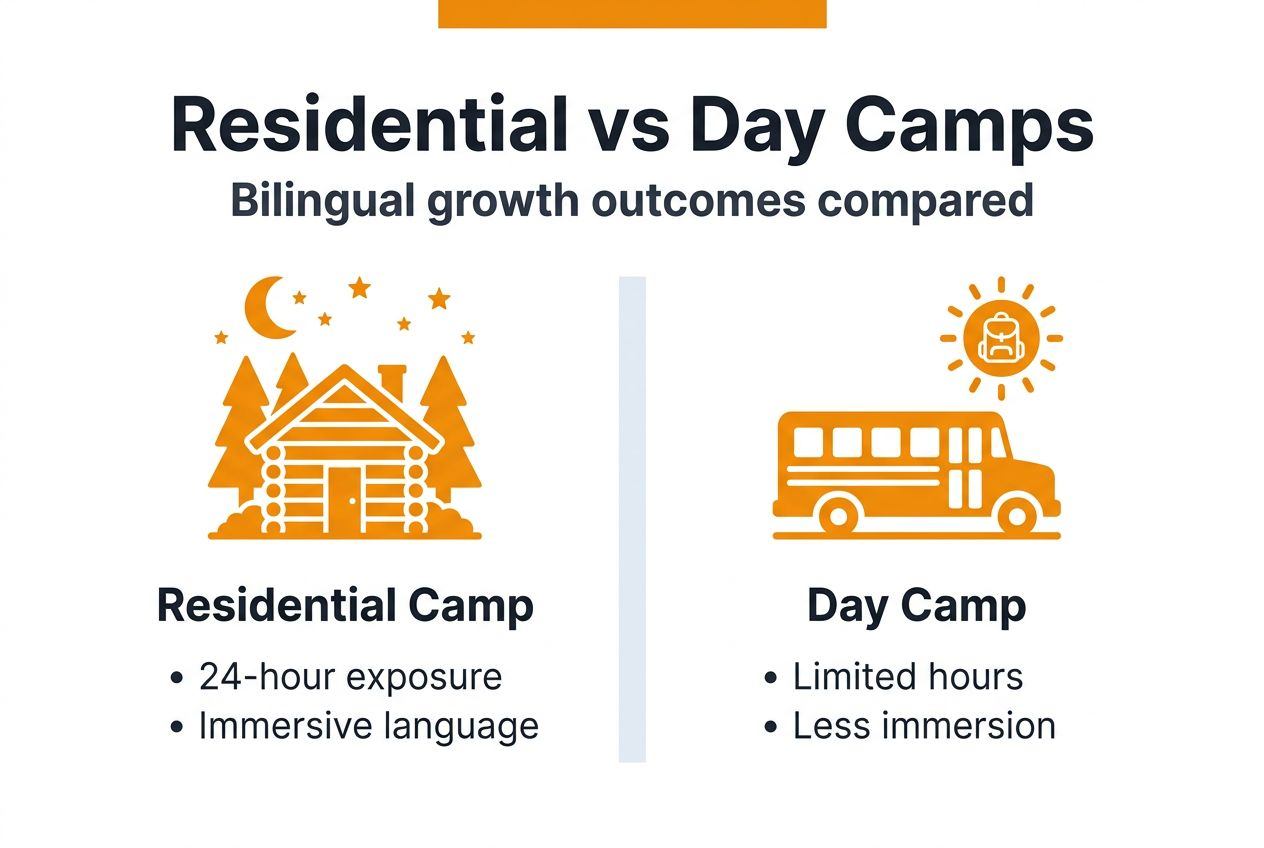
The structural differences between residential and day camps create dramatically different developmental outcomes. While day programs offer convenient afternoon enrichment, they cannot replicate the transformative immersion of overnight experiences. Research shows residential camps produce 25-30% greater gains in maturity and social skills compared to day formats.
| Feature | Residential Camps | Day Camps |
|---|---|---|
| Daily engagement | 24 hours including meals, activities, and evening programs | 6-8 hours typically with lunch |
| Independence development | High; children manage personal needs without parental support | Limited; parents handle morning/evening routines |
| Language immersion | Continuous exposure throughout all daily interactions | Interrupted by return to home language environment |
| Social depth | Deep friendships through constant interaction and shared challenges | More superficial connections during limited hours |
| Skill progression | Intensive practice allows rapid advancement | Slower development with daily interruptions |
| Convenience | Requires advance planning and travel arrangements | Easier logistics for working parents |
The overnight component fundamentally changes the experience. Children cannot rely on parents to solve problems, pack forgotten items, or provide emotional comfort. This necessary independence builds self-reliance and resourcefulness impossible to develop when home remains accessible.
Language acquisition particularly benefits from residential formats. Day campers return to predominantly English-speaking homes each evening, losing hours of potential practice. Residential participants continue language immersion through dinner conversations, evening activities, and dorm interactions, multiplying exposure time dramatically.
Social bonds deepen through shared challenges and vulnerability. Facing homesickness together, celebrating accomplishments, and navigating conflicts create authentic relationships that superficial daytime interactions cannot match. These friendships often persist years beyond camp, providing international connections and cultural understanding.
Parents should weigh priorities carefully. Day camps suit families needing childcare during work hours or children not yet ready for overnight separation. Residential programs serve those prioritizing maximum developmental impact and independence building, accepting the higher cost and logistical complexity.
Choosing the right residential camp: practical tips for parents
Selecting an appropriate residential camp requires evaluating multiple factors beyond marketing materials and glossy brochures. Start by researching bilingual program quality, specifically whether camps employ native speakers as instructors and counselors. Authentic language environments depend on staff who can model proper pronunciation, cultural context, and natural conversation patterns.
Safety verification should include specific questions about staff-to-camper ratios, counselor certifications, and emergency protocols. Request details about supervision during high-risk activities, nighttime monitoring procedures, and medical staff availability. Reputable camps provide transparent answers and welcome parent inquiries about safety measures.
Program balance matters significantly. The ideal camp integrates outdoor challenges, personal growth activities, academic enrichment, and free time in proportions matching your child’s needs. Overly structured schedules create exhaustion, while excessive unstructured time misses developmental opportunities. Review typical daily schedules to assess balance.
Practical selection steps:
- Verify bilingual instruction quality through staff credentials and native speaker ratios
- Confirm safety standards exceed minimum legal requirements for your comfort level
- Review activity variety to ensure multiple skill development opportunities
- Read recent camper and parent testimonials focusing on specific outcomes
- Assess camper demographics for appropriate age ranges and international diversity
- Understand costs fully including hidden fees for equipment, trips, or optional activities
- Visit campus if possible or request virtual tours showing facilities and settings
Pro Tip: Contact camps in January or February for best availability, as popular programs fill quickly for summer sessions.
Cultural and social fit deserves attention beyond program features. Some camps attract primarily local participants while others draw international enrollments. Consider whether your child would benefit from exposure to specific nationalities or prefer more familiar peer groups during initial overnight experiences.
Preparing your child properly increases success dramatically. Discuss realistic expectations about homesickness, challenges, and the commitment to complete the full session. Practice relevant skills like packing bags, managing personal hygiene independently, and sleeping away from home through shorter sleepovers.
Camps that encourage trying new activities create ideal environments for growth. Look for programs explicitly supporting risk-taking and celebrating effort over perfect performance. This growth mindset culture helps children push beyond comfort zones productively.
Summary and next steps: making an informed residential camp choice
Residential camps uniquely combine bilingual immersion, outdoor adventure, and personal development into transformative summer experiences. The 24/7 format creates cognitive, social, and emotional benefits impossible to achieve through day programs or traditional vacations. For parents seeking meaningful enrichment beyond basic childcare, these programs offer evidence-based pathways to independence and confidence.
Safety concerns, while understandable, should not prevent consideration of high-quality residential programs. Rigorous supervision, trained staff, and proven protocols create secure environments where children safely challenge themselves. The continuous adult presence actually exceeds supervision levels in most home summer situations.
Key decision factors:
- Bilingual program quality measured by native speaker staff and immersion depth
- Safety standards including ratios, training, and emergency preparedness
- Activity balance integrating outdoor challenges with personal growth and academics
- Camper fit based on age appropriateness, peer demographics, and individual readiness
Informed camp selection requires looking beyond marketing promises to verify specific program elements. Ask detailed questions, read recent reviews, and trust your assessment of whether staff genuinely prioritize child development over profit. Quality camps welcome scrutiny and provide transparent information about all operations.
Post-camp support maximizes lasting benefits. Help children maintain friendships through correspondence, continue language practice at home, and apply camp-learned skills to school challenges. Reference camp accomplishments when kids face difficulties, reminding them of proven capabilities to overcome obstacles.
The investment in residential camp experiences pays developmental dividends extending far beyond summer months. Children gain independence, global awareness, and confidence that shape their trajectories through adolescence and beyond. For families prioritizing holistic development over convenient childcare, residential camps offer unmatched value in 2026’s youth enrichment landscape.
Explore the right residential camp for your child
Finding the perfect residential camp becomes easier when you partner with experienced programs that prioritize both safety and growth. Young Explorers Club specializes in bilingual residential summer camps in Switzerland, combining outdoor adventure with language learning in secure, supportive environments. Our programs maintain the 24/7 supervision and favorable staff ratios parents need for peace of mind.
Our immersive approach helps children learn German at summer camp while developing independence through carefully designed challenges. Certified staff guide campers through mountain biking, climbing, and team-building activities that build confidence alongside language skills. The bilingual environment ensures continuous practice without the pressure of formal classroom instruction.
We provide comprehensive resources to prepare families for camp success, from packing lists to managing homesickness. Our experienced team understands parent concerns and addresses them through transparent communication and proven safety protocols. Explore our programs to discover how residential camp experiences can transform your child’s summer into a developmental milestone.
FAQ
What ages are residential camps suitable for?
Residential camps generally serve children aged 8 to 17 who demonstrate readiness for multi-day overnight programs. Younger participants focus on initial independence skills and confidence building, while older teenagers develop advanced leadership capabilities and specialized outdoor competencies. Camp programs typically group children by age to ensure appropriate challenge levels and social compatibility.
How do residential camps ensure child safety?
Camps maintain staff-to-camper ratios around 1:6 with counselors trained in first aid, emergency response, and child development. Comprehensive safety protocols cover everything from activity supervision to nighttime monitoring, with clear procedures for medical situations and family communication. Round-the-clock adult presence ensures continuous well-being support throughout each day.
Are bilingual residential camps effective for language learning?
Bilingual camps significantly accelerate language acquisition through constant immersive exposure that textbooks cannot replicate. Extended practice in authentic communication contexts develops fluency while enhancing cognitive flexibility and metalinguistic awareness. These programs also prevent typical summer learning loss across multiple academic areas through continued intellectual engagement.
What should parents look for when choosing a residential camp?
Prioritize certified bilingual programs employing native speakers alongside verified staff qualifications and appropriate camper-to-staff ratios. Evaluate the balance of outdoor activities, educational components, and personal growth opportunities to match your child’s developmental needs. Review recent testimonials and camper demographics to assess social fit and program quality beyond marketing materials.