
Adventure tourism for youth camps: a parent’s guide
Learn what adventure tourism really means for youth camps, which activities suit ages 8-17, and how to choose a safe, enriching program that blends outdoor adventure with language learning.
TL;DR:
- Modern adventure tourism for youth emphasizes cultural learning, outdoor activity, and personal growth.
- Activities range from nature hikes to cultural workshops, tailored to age and safety levels.
- Such camps build confidence, independence, and cultural awareness beyond just thrill-seeking.
Most parents picture bungee jumping or white-water rapids the moment someone says “adventure tourism.” That image keeps a lot of families from exploring some of the most transformative summer experiences available today. The reality is that modern adventure tourism for youth blends outdoor activity, cultural learning, and personal growth into one cohesive experience. This guide walks you through what adventure tourism actually means, which activities suit kids and teens, what real benefits look like, and how to pick a program that balances excitement with safety and genuine learning.
Table of Contents
- What is adventure tourism? A parent-friendly definition
- Types of adventure tourism activities for kids and teens
- Why parents choose adventure tourism camps: benefits beyond adrenaline
- How to choose a safe and enriching adventure tourism camp
- Why redefining adventure tourism matters for families today
- Find your child’s adventure tour and language camp
- Frequently asked questions
Key Takeaways
| Point | Details |
|---|---|
| Broad definition | True adventure tourism for youth blends physical activity, nature, and culture—not just thrills. |
| Safe for kids | When certified guides and age-appropriate options are in place, adventure camps are safe and enriching. |
| Educational value | Adventure camps uniquely build language skills, confidence, and global awareness in real-world contexts. |
| Parent priorities | Focus on programs with balanced adventure, proven safety standards, and rich cultural immersion for the best results. |
What is adventure tourism? A parent-friendly definition
The word “adventure” carries a lot of baggage. For some, it signals danger. For others, it means novelty. In the context of youth summer camps, it means something far more structured and intentional than either of those impressions suggest.
According to the UNWTO’s adventure tourism definition, adventure tourism combines at least two of three core elements: physical activity, interaction with nature, and cultural immersion. A program does not need all three to qualify. Two is enough. That matters because it means a hiking trip through Swiss forests where kids practice French counts just as much as a rock-climbing session with a certified guide.
The Adventure Travel Trade Association takes a similar position. ATTA defines adventure travel as experiences that combine immersion in nature, physical activity, and cultural exchange. Notice that cultural exchange sits at the center of that definition, not adrenaline.
Adventure tourism has evolved well beyond extreme sports. Today, it is one of the most effective vehicles for education, cultural understanding, and personal development available to young travelers.
This distinction matters for parents. Understanding adventure-based learning helps you see why a camp that takes kids on nature walks, teaches them to cook local dishes, and runs team challenges in a second language is delivering genuine adventure tourism, not a watered-down version of it.
It also helps to understand how adventure tourism differs from related travel styles. Ecotourism focuses primarily on environmental sustainability and conservation. Cultural tourism centers almost entirely on heritage, art, and local customs. Adventure tourism is the intersection: it uses the outdoors and physical engagement as the vehicle for cultural and personal learning.
Here is a quick comparison to make that clearer:
| Type | Primary focus | Physical activity | Cultural element |
|---|---|---|---|
| Adventure tourism | Outdoor activity + learning | High | Moderate to high |
| Ecotourism | Environmental sustainability | Low to moderate | Low |
| Cultural tourism | Heritage and customs | Low | High |
| Mass tourism | Leisure and sightseeing | Low | Low |
Globally, 67% of travelers say they are open to adventure travel, a number that has grown steadily as families recognize its educational value. For parents weighing summer camp options, this shift is worth paying attention to.
Types of adventure tourism activities for kids and teens
Adventure activities exist on a wide spectrum, and knowing where your child fits on that spectrum makes choosing a camp much easier.
At the softer end, you find activities like nature hikes, kayaking, team orienteering, and cultural cooking workshops. These are accessible for most ages, carry low physical risk, and deliver strong educational outcomes. At the harder end sit rock climbing, ziplining, and mountain biking on technical terrain. These require more preparation, stronger physical conditioning, and certified supervision.
For most kids aged 8 to 17, outdoor activities for kids in the soft to moderate range offer the best combination of challenge and reward. The goal is to stretch comfort zones without overwhelming them.
Real camp settings bring these activities to life in creative ways. A language hike, for example, pairs trail walking with vocabulary challenges at each checkpoint. An eco-challenge might ask teams to navigate using maps while identifying local plant species in a second language. These formats make learning feel like play, which is exactly how young people absorb new skills most effectively.
Here is how common activities break down by age, educational goal, and risk level:
| Activity | Best age range | Educational goal | Risk level |
|---|---|---|---|
| Nature hiking | 8+ | Environmental awareness | Low |
| Kayaking | 10+ | Teamwork, coordination | Low to moderate |
| Rock climbing | 12+ | Resilience, problem-solving | Moderate |
| Orienteering | 8+ | Navigation, strategy | Low |
| Ziplining | 10+ | Confidence, trust | Moderate |
| Cultural workshops | 8+ | Language, cultural empathy | None |
| Mountain biking | 12+ | Endurance, focus | Moderate to high |
As HTR Trends reports, adventure activities range from mild nature walks to the extreme end of the spectrum, with family-friendly formats like camping and hiking sitting firmly in the accessible middle ground.
Camps that inspire curiosity, like those found at camps that inspire curiosity, tend to mix activity types throughout the week. That variety keeps energy levels high and ensures every child finds at least one activity that clicks for them.
Key activities worth looking for in a quality program:
- Team-based outdoor challenges that require communication
- Language-integrated activities where conversation is part of the task
- Cultural workshops led by local experts or multilingual staff
- Nature exploration with educational context, not just sightseeing
- Progressive skill-building so campers grow over the course of the stay
Pro Tip: Always ask whether the camp’s certified staff tailor activity intensity to each participant’s age and skill level. A good program adjusts the challenge, not just the activity.
Why parents choose adventure tourism camps: benefits beyond adrenaline
The adventure tourism market reached $1.16 trillion in 2024, and families are a growing part of that number. The reason is not thrill-seeking. It is outcomes.
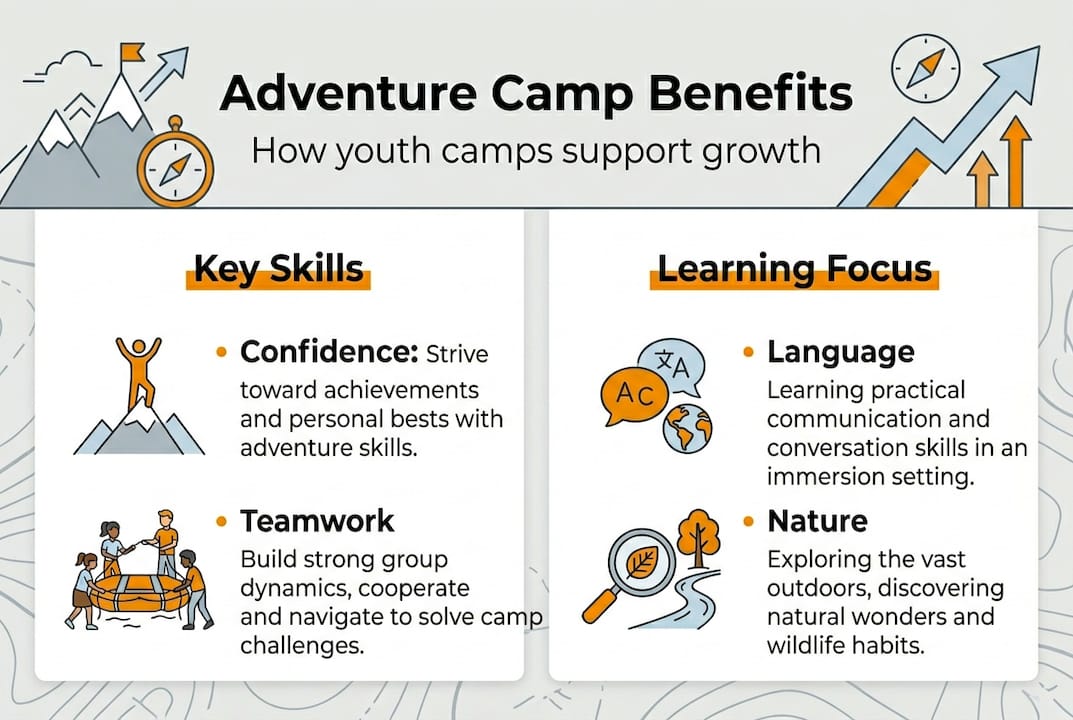
Parents who send their children to adventure camps consistently report gains in confidence, independence, and social skills. These are not incidental side effects. They are the result of deliberate program design. When a 13-year-old navigates a forest trail with a team of kids from four different countries, they are practicing leadership, communication, and adaptability all at once.
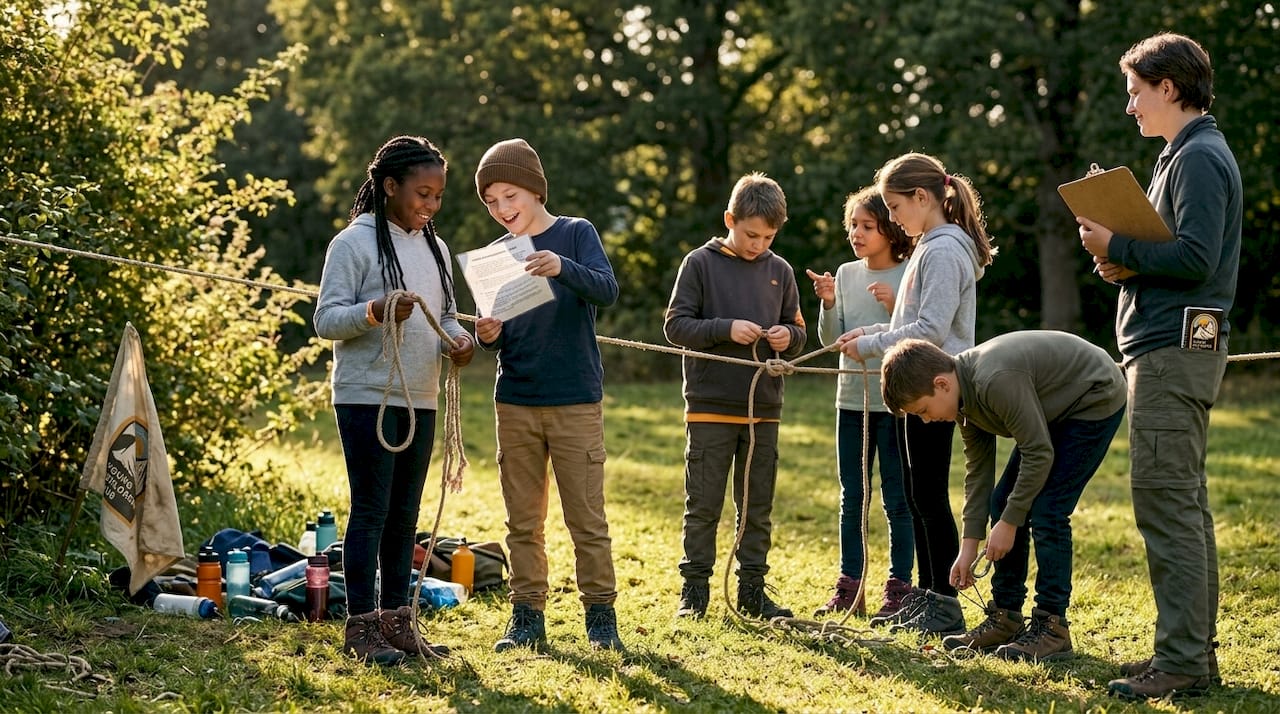
Language learning is one of the most compelling reasons families choose international adventure camps. Immersive settings, where a child must use a second language to complete a task or connect with a teammate, produce faster and more durable learning than classroom instruction alone. The cultural immersion benefits extend well beyond vocabulary. Kids develop cultural empathy, global awareness, and the kind of social flexibility that serves them for life.
According to ATTA research, soft adventure camps with certified guides and language immersion in nature settings are increasingly prioritized by parents seeking safe, enriching experiences. And data from HTR Trends shows that 60% of European families now prioritize cultural learning over pure adrenaline when choosing adventure travel for their children.
The international camp culture found in Switzerland, for example, naturally creates the conditions for these outcomes. Multilingual environments, diverse peer groups, and structured outdoor programs combine to deliver something no classroom can replicate.
Here are the top reasons parents choose adventure tourism camps:
- Language practice in real-world, low-pressure settings
- Building resilience through manageable physical challenges
- Developing independence away from familiar environments
- Forming international friendships that broaden worldview
- Connecting with nature in ways that build environmental awareness
- Gaining teamwork skills through shared outdoor experiences
Exploring why outdoor activities for youths matter reveals that the benefits compound over time. Kids who attend adventure camps often return more motivated, more socially confident, and more curious about the world around them.
How to choose a safe and enriching adventure tourism camp
Knowing the benefits is one thing. Finding the right program is another. Here is a practical framework to help you evaluate your options.
Start with accreditation and safety credentials. Any reputable adventure camp should have certified guides for all physical activities, clear staff-to-camper ratios, and documented safety protocols for outdoor settings. Ask directly. A good camp will answer these questions without hesitation.
Next, look at how the program integrates learning. Adventure-only camps that focus purely on physical activities without educational goals miss a significant opportunity. The most effective programs weave language practice, cultural exchange, and reflective activities into the outdoor schedule. If a camp cannot explain how it supports learning beyond the activity itself, keep looking.
Communication policies matter more than many parents expect. Find out how the camp keeps you informed, how staff handle homesickness, and what the process is if your child needs support. Strong communication between camp and family is a sign of a well-run program.
Soft adventure credentials are particularly important for tweens and younger teens. Look for programs that explicitly describe how they adapt activities for different ages and experience levels. A 10-year-old and a 16-year-old should not be doing the same version of every activity.
Useful checklist for evaluating any adventure camp:
- Verified guide certifications for all outdoor activities
- Clear staff-to-camper ratio (lower is better)
- Written safety and emergency protocols
- Evidence of language and cultural learning integration
- Parent testimonials that speak to communication and care
- Age-appropriate activity groupings
- Transparent cancellation and health policies
Pro Tip: Ask for testimonials specifically from parents of children the same age as yours. Their experience will be the most relevant to your decision.
Resources like overcoming language barriers and preparing for camp can help you get your child ready before the first day, which makes a real difference in how quickly they settle in.
Why redefining adventure tourism matters for families today
Conventional wisdom still frames adventure tourism as something reserved for risk-takers. That framing does real harm. It stops families from accessing programs that could genuinely change how their children see themselves and the world.
We have seen, across years of working with young campers, that the activities generating the most lasting impact are rarely the most extreme. A teenager who navigates a mountain trail in a second language with a group of international peers comes home changed in ways that a single adrenaline rush simply cannot produce. The growth is quieter, but it goes deeper.
Families who explore travel teen camps with a broader definition of adventure in mind consistently report outcomes they did not expect: a shy child who became a natural communicator, a reluctant traveler who asked to go back the following summer. These are whole-child outcomes, not just activity checkboxes.
Our perspective is this: challenge the labels. When you evaluate a camp, ask not just what activities it offers, but what kind of person your child might become by the end of it. That is the real measure of adventure.
Find your child’s adventure tour and language camp
You now have a clear picture of what adventure tourism means for young travelers and what to look for in a quality program. The next step is finding a camp that actually delivers on those standards.
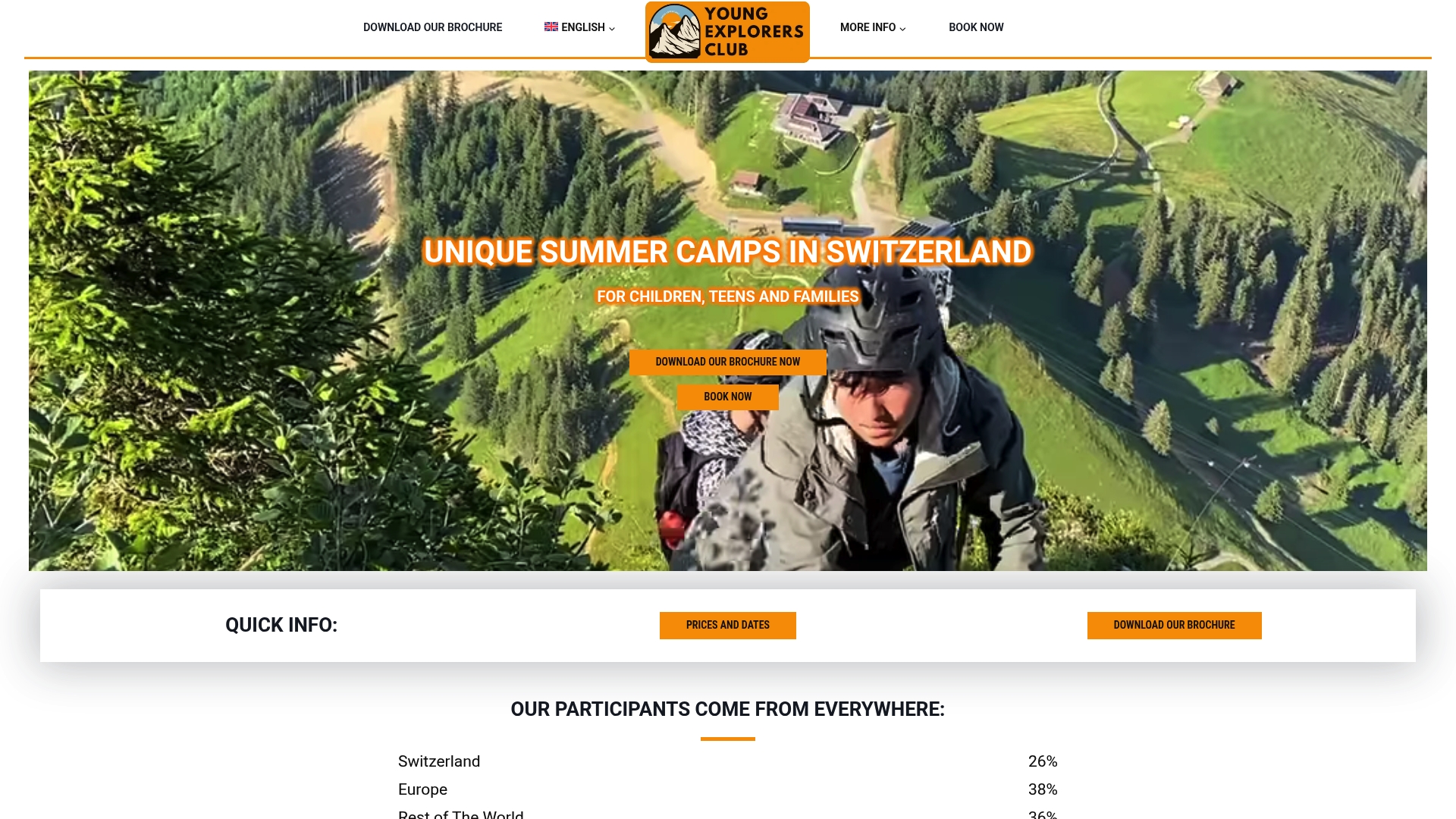
At international summer camps Switzerland, we design every program around the principles covered in this guide: certified guides, age-appropriate outdoor challenges, genuine language immersion, and a multicultural community that makes learning feel natural. Whether your child is drawn to hiking and team challenges or wants to explore a German language summer camp alongside outdoor adventure, we have a program built for them. Our global community summer camps bring together young people from across the world in one of Europe’s most beautiful settings.
Frequently asked questions
What does adventure tourism mean in a summer camp context?
Adventure tourism in summer camps means combining outdoor activities, nature exploration, and cultural experiences for kids, not just extreme sports. As the UNWTO framework confirms, two of three elements, physical activity, nature, and cultural immersion, are enough to qualify.
Is adventure tourism safe for children and teens?
Yes, when programs are run by certified guides with age-appropriate structures, adventure tourism camps offer safe and enriching experiences. Soft adventure camps with proper supervision are specifically designed to balance challenge and safety for young participants.
How do adventure tourism camps support language and cultural learning?
By placing children in real-world situations where they must use a new language to complete tasks and connect with peers from different countries. ATTA research confirms that the most effective programs combine nature immersion, physical activity, and genuine cultural exchange.
What if my child is not interested in high-adrenaline activities?
Soft adventure options like hiking, kayaking, and cultural workshops are available at most quality camps and carry very low risk. Family-friendly formats like camping and nature walks are a recognized and valued part of the adventure tourism spectrum.