

Why language camps boost kids’ skills and confidence
Discover how language camps boost your child’s cognitive skills, confidence, and social development through immersive bilingual outdoor adventures abroad.
TL;DR:
- Immersive language camps enhance cognitive, social, and academic skills through real-world, experiential learning.
- They foster confidence, empathy, and independence while leveling the playing field for all backgrounds.
- Camp experiences prepare children for lifelong global opportunities, travel, and cross-cultural collaboration.
Many parents worry that sending their child to a language camp abroad might cause confusion, slow their academic progress, or interfere with their native language. It’s a natural concern, but the research tells a different story. Studies show that immersive language programs actually strengthen cognitive skills, social confidence, and even school performance. This article walks you through the real, evidence-backed benefits of language camps, from brain development and academic gains to lifelong social skills and global readiness, so you can make a truly informed decision for your child.
Table of Contents
- What makes language learning at camp unique?
- Cognitive and academic advantages for campers
- Social and emotional growth through bilingual adventure
- Practical benefits that last a lifetime
- Why most people underestimate the power of a camp language experience
- Explore immersive international language camps
- Frequently asked questions
Key Takeaways
| Point | Details |
|---|---|
| Immersion accelerates learning | Camp environments give kids real-life practice that speeds up new language skills. |
| No confusion or setbacks | Studies confirm immersion does not harm a child’s native language or academic progress. |
| Social and emotional growth | Camps help children become more confident, adaptable, and globally minded. |
| Benefits last a lifetime | Language skills, friendships, and adventure at camp prepare kids for future academic and global success. |
What makes language learning at camp unique?
Most kids learn a second language through textbooks, apps, or weekly classroom sessions. These methods have value, but they share a common limitation: the learning stops the moment the lesson ends. At camp, language learning never stops. It happens at breakfast, during a rock-climbing session, while planning a team challenge, and around the campfire at night.
This is what makes camp-based learning so different. Language is not a subject to study. It becomes the tool kids use to live their day. When a child needs to ask a teammate for help during a mountain hike, or negotiate a strategy in a group game, they are using the language because they genuinely need it. That kind of real-world pressure, in a safe and supportive setting, accelerates acquisition faster than any app.
Immersion at camp enhances language and social development more effectively than traditional classroom methods. Bilingual staff model natural speech patterns throughout the day, and peer interaction creates constant, low-stakes practice. Kids stop translating in their heads and start thinking directly in the new language, often within days.
Here’s a quick comparison of the three most common learning environments:
| Feature | Classroom | App | Camp |
|---|---|---|---|
| Daily exposure | 1 to 2 hours | 15 to 30 min | All day |
| Real-life context | Low | None | High |
| Peer interaction | Structured | None | Constant |
| Emotional engagement | Moderate | Low | Very high |
| Cultural immersion | Rare | None | Full |
The difference is not subtle. Camp creates a living environment where language is inseparable from experience. Understanding how language camps accelerate learning helps explain why so many families see dramatic progress after just a few weeks.
Here are some of the everyday immersive activities that drive this growth:
- Outdoor challenges like survival skills, orienteering, and team obstacle courses
- Mealtimes and free time shared with international peers
- Group games and sports where communication is essential
- Evening programs, storytelling, and creative workshops
- Collaborative problem-solving activities led by bilingual counselors
The global camp experience wraps all of this together into a setting where every moment is an opportunity to grow.
Cognitive and academic advantages for campers
Once we understand why camp is unique, it’s essential to look at the science behind its benefits. Parents sometimes worry that adding a second language to the mix will overwhelm their child or pull focus away from their native language. Research consistently shows the opposite.
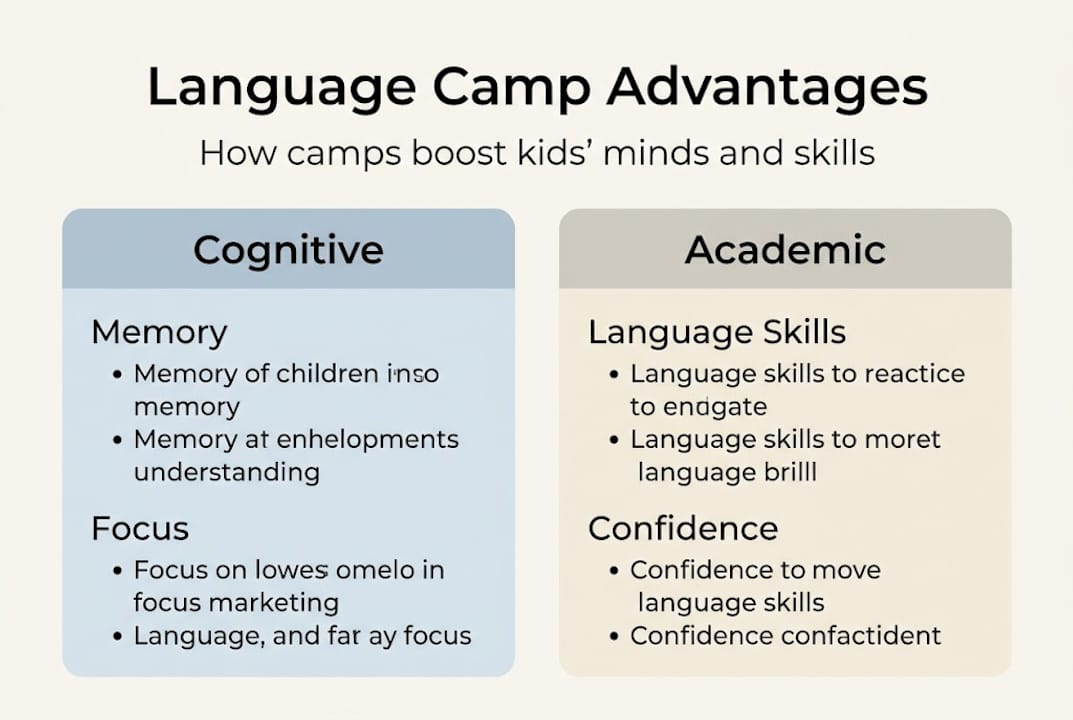
Camp language learners show improved memory, focus, and no decline in native language skills, regardless of their background. In fact, managing two languages actively exercises the brain in ways that sharpen attention, improve working memory, and build stronger problem-solving habits. These are skills that transfer directly to math, reading, and science back at school.
Some critics worry about confusion or delay in native language, but studies show no harm and often point to better academic outcomes overall. The brain is not a fixed container with limited space. It adapts. Children who practice switching between languages actually develop stronger cognitive flexibility, which means they can shift between tasks, perspectives, and ideas more easily than their monolingual peers.
Here’s a look at the key cognitive skills that immersive camp environments actively develop:
| Cognitive skill | How camp builds it |
|---|---|
| Working memory | Holding and using new vocabulary in real time |
| Attention control | Filtering distractions during bilingual conversations |
| Cognitive flexibility | Switching between languages and social contexts |
| Problem-solving | Navigating real challenges with limited vocabulary |
| Emotional regulation | Managing frustration and uncertainty in a new language |
One finding that surprises many parents is about equity. Working-class and minority campers perform as well as their middle-class peers in language proficiency by the end of a camp program. The immersive environment levels the playing field in a way that traditional schooling rarely does.
Pro Tip: Encourage your child to use the new language outside of formal lesson time as much as possible. The biggest gains come from natural, unscripted moments, not from sitting at a desk. Ask them to describe their favorite activity of the day in the new language each evening.
For families wondering how to prepare, exploring strategies for overcoming language barriers can help your child feel more confident before they even arrive.
Social and emotional growth through bilingual adventure
Building on academic gains, camp offers even deeper benefits that shape kids long after summer ends. When a child communicates successfully in a second language with a peer from another country, something shifts. They realize they can do hard things. That realization is powerful.
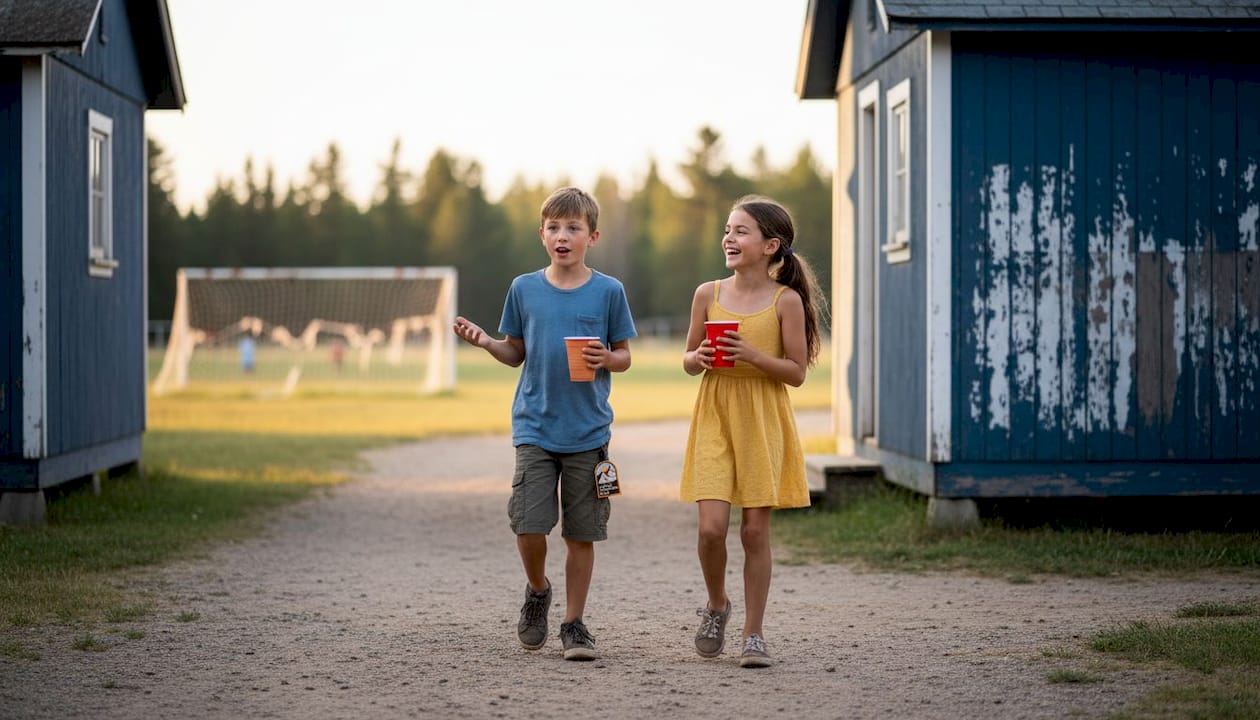
Friendships formed across language and cultural lines are among the most motivating forces in language learning. Kids want to connect. When connection requires using a new language, they push themselves naturally, without any external pressure. Language camps foster confidence, adaptability, and empathy alongside genuine language skill, which is something no app or classroom can replicate.
Adventure activities amplify this effect. Climbing a rock face together, navigating a forest trail, or completing a survival challenge as a team creates shared stakes. When kids work through something genuinely difficult together, they build trust quickly. That trust makes them more willing to take risks with language, to try a sentence even if they might get it wrong.
“The outdoor setting removes the fear of failure that holds so many kids back in a classroom. When you’re focused on reaching the summit, you forget to be embarrassed about your accent.” — Youth development specialist, Alpine camp program
Here are the social skills kids typically develop through bilingual adventure camps:
- Teamwork: Coordinating with peers who speak different native languages
- Empathy: Understanding perspectives shaped by different cultures
- Leadership: Taking initiative when language barriers require creative solutions
- Conflict resolution: Working through disagreements across cultural differences
- Active listening: Paying close attention when you can’t rely on every word
Pro Tip: Ask your child each evening to reflect on one challenge they faced that day, in both languages if possible. This simple habit builds metacognitive awareness and reinforces vocabulary in context.
Exploring international camp culture gives you a vivid sense of how these social dynamics play out in a real Swiss setting.
Practical benefits that last a lifetime
It’s not just about the present. These camp experiences pay dividends for years to come. The skills your child builds during a few weeks in a bilingual outdoor environment don’t disappear when they pack their bags. They become part of how your child moves through the world.
Travel becomes easier and more enjoyable. A teenager who has already navigated a foreign country, made friends across language barriers, and solved real problems in a second language approaches new destinations with confidence rather than anxiety. That ease is hard to teach in a classroom.
Language immersion at camp prepares kids for academic, career, and social opportunities on a global scale. University admissions teams and employers increasingly value candidates who demonstrate cross-cultural communication skills and real-world language experience. A summer at an international camp is exactly that kind of experience.
Here are the ways camp skills apply directly in later life:
- Stronger language foundation for future study in school or university
- Easier global travel with practical communication skills already in place
- University applications that stand out with genuine international experience
- Career readiness in fields that require cross-cultural collaboration
- Greater self-reliance from having lived independently in a new environment
- Open-mindedness built through real friendships with people from different backgrounds
These are not soft outcomes. They are measurable advantages that follow your child into adulthood. Discovering language adventure courses that combine outdoor challenges with structured language learning is a great way to see exactly what this kind of program looks like in practice.
Why most people underestimate the power of a camp language experience
Having covered the evidence, let’s challenge some popular assumptions with our first-hand insight. Most parents evaluate language programs by asking one question: how many words will my child learn? That’s the wrong question.
What actually changes at camp is harder to measure but far more important. Kids who struggle at school, who freeze up in class, who feel labeled as slow learners, often thrive in an outdoor bilingual environment. Why? Because camp removes the performance pressure that makes language feel like a test. It replaces it with genuine need and genuine connection.
Traditional language learning misses the adventure and social factor entirely. It treats language as content to be memorized rather than a living skill to be used. The immersive, outdoor setting is what unlocks lasting change because it ties language to emotion, movement, and real relationships.
Parents who focus only on test scores miss the growth in confidence, empathy, and independence that camps deliver. Those qualities are what make a child genuinely bilingual rather than just technically proficient. Exploring technology-free learning for kids reveals why stepping away from screens and into nature creates the conditions for this kind of deep, lasting development.
Explore immersive international language camps
If you’re inspired to give your child these advantages, here’s how to get started. At Young Explorers Club, we design every program around the idea that real learning happens when adventure and language meet. Our Switzerland summer camps combine bilingual outdoor activities with optional structured language sessions, so your child grows in every direction at once.
Whether your child wants to learn German at summer camp or build French fluency through mountain adventures, we have a program that fits. Our international community camps bring together children from across the world in a safe, inspiring Swiss setting. Browse our programs, download the brochure, or register online today.
Frequently asked questions
Will learning a new language at camp confuse my child or hurt their school performance?
No. Research shows no negative impact on native language development or academic achievement from camp-based language immersion. Most children actually see improvements in focus and memory.
At what age is it best to attend a language immersion camp?
Ages 8 to 17 are ideal, as children and teens are highly receptive to both language acquisition and social skill development during these years.
Do all children benefit, even if they aren’t from bilingual or privileged backgrounds?
Yes. Working-class and minority students matched middle-class peers in language proficiency in camp programs, showing that immersive environments level the playing field effectively.
What languages are typically offered at international camps?
Most popular international camps offer English, French, and German, with some programs including additional local language options depending on the host country.
Will my child still have time for outdoor adventure and fun?
Absolutely. Language camps build skills through outdoor activities, adventure challenges, and social games, so learning and fun happen at the same time, not separately.
Recommended
- The Best Strategies For Overcoming Language Barriers | Young Explorers Club Switzerland
- Global Camp Experience: Confidence, Language & Adventure
- How International Summer Camps Boost Confidence And Independence | Young Explorers Club Switzerland
- Benefits Of International Camps: Confidence, Language & Friends
