

TL;DR:
- Proper organization and labeling of gear help prevent loss and ensure quick access during camp.
- Camps typically ban electronics, valuables, and outside snacks to promote group bonding and safety.
- Involving children in packing fosters independence, responsibility, and confidence for their outdoor experience.
Packing for your child’s first youth adventure camp can feel like solving a puzzle with missing pieces. You’re not sure what the weather will be like in the Swiss Alps, whether your teen really needs five pairs of shoes, or if you’re about to overpack a bag they’ll struggle to carry. The fear of forgetting something critical, like a rain jacket or a prescription inhaler, is real. But here’s the truth: with a clear, structured approach, packing becomes straightforward. This guide walks you through every step, from building your core gear list to doing a final check the night before drop-off, so your child arrives confident and ready.
Key Takeaways
| Point | Details |
|---|---|
| Pack only essentials | Stick to the camp’s list, weather-appropriate clothes, and practical items to keep packing simple. |
| Involve your child | Letting your child help pack teaches responsibility and helps avoid lost items. |
| Label everything | Clear labels on all clothing and gear dramatically reduce lost-and-found issues at camp. |
| Check camp policies | Every camp has unique rules on what’s allowed—review their guidelines carefully before packing. |
What to pack: Core essentials and smart guidelines
Let’s break down exactly what your child needs in their bag. The goal is complete coverage without unnecessary bulk.
Core packing essentials for youth adventure camp include weather-appropriate layered clothing, footwear for hiking and water activities, sleeping gear, personal hygiene items, sun and bug protection, a reusable water bottle, a flashlight or headlamp, and rain gear. These aren’t optional extras. At an outdoor camp where kids are climbing, swimming, and hiking across multiple days, each of these categories serves a specific, daily function.
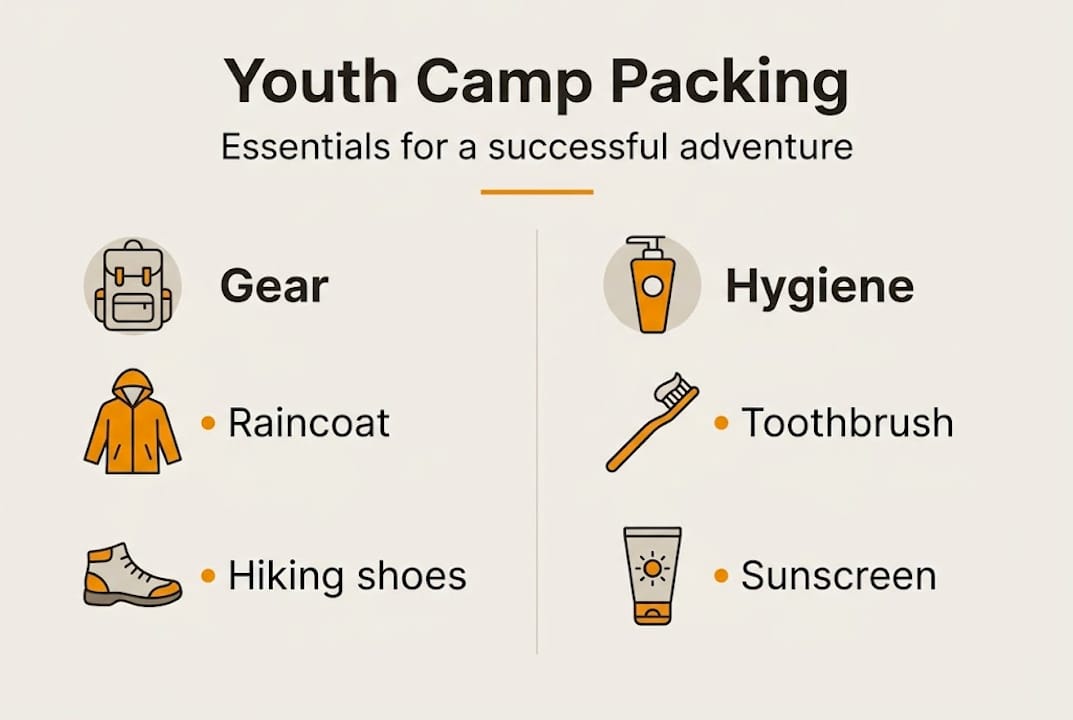
For a one-week program, pack 8 to 10 t-shirts and shorts, extra underwear and socks, and 2 to 3 sets of pajamas. Outdoor activities mean clothes get dirty fast, and having enough changes prevents hygiene problems and keeps your child comfortable throughout the session.
Here’s a quick comparison to help you calibrate by age group:
| Category | Ages 8 to 12 | Ages 13 to 17 |
|---|---|---|
| T-shirts and shorts | 8 to 10 | 8 to 10 |
| Footwear | Sneakers, sandals, rain boots | Trail shoes, sandals, water shoes |
| Sleeping gear | Sleeping bag, pillow | Sleeping bag, pillow, eye mask |
| Hygiene | Basic kit, sunscreen, bug spray | Full kit, deodorant, face wash |
| Extras | Comfort item, nightlight | Notebook, personal care items |
Younger campers often need a comfort item packed in, while older teens benefit from a more complete personal care kit. Both age groups need solid rain gear and layering options, especially in mountain environments where temperatures shift quickly between morning and afternoon.
Quick essentials checklist:
- Layered clothing (base layer, mid layer, waterproof outer layer)
- Sturdy hiking footwear and water-friendly sandals
- Sleeping bag rated for cool nights
- Sunscreen (SPF 30 or higher) and insect repellent
- Reusable water bottle (at least 1 liter)
- Headlamp with extra batteries
- Rain jacket or poncho
- Towels (2 minimum)
- Personal hygiene kit
Before you finalize anything, check the camp material list provided by your program, and cross-reference it with a complete family camp checklist to make sure nothing slips through.
Pro Tip: Use a permanent marker or iron-on labels to put your child’s name on every single item, including individual socks. Lost gear is the number one complaint from camp counselors and parents alike.
How to organize: Packing method and strategy
Once you set aside the essentials, focus on how to organize them so your child can actually find and manage their stuff during camp. A packed bag that your child can’t navigate independently defeats the whole purpose.
Start with the right bag. For most youth adventure camps, a large duffel bag (around 90 to 100 liters) or a hard-sided trunk works well for base camps. Wilderness trips or travel programs call for a structured backpack with proper hip support. Ask your camp what they recommend before you buy anything new.
Always check the specific camp packing list and policies first. Some programs provide bedding or ban certain items entirely. Never assume.
Once you have the right bag, use packing cubes or large zip-lock bags to group items by category. Label each cube: day wear, sleepwear, swim gear, socks and underwear, and extras. This system means your child can grab what they need without unpacking everything.
Here’s a step-by-step method for organizing the bag:
- Lay out every item on a flat surface and check it against the camp list.
- Sort items into categories (clothing, hygiene, gear, extras).
- Place heavier items (shoes, sleeping bag) at the bottom of the bag.
- Pack packing cubes in order of frequency: most-used items near the top.
- Keep hygiene items and the headlamp in an easy-access outer pocket.
- Put the camp’s contact sheet and any medical documents in a waterproof pouch inside the bag.
Involve your child in this process. When kids sort and pack their own gear with your guidance, they learn where everything is and feel a sense of ownership over their belongings. This is especially true for older campers. Check out how adventure education for parents frames this kind of responsibility-building as a core part of the camp experience.
The ultimate summer camp checklist is also a great resource to run through together as a family the week before departure.
Pro Tip: Take a photo of the fully packed bag’s contents before closing it. If something goes missing at camp, you’ll have a visual reference of exactly what was sent.

What to leave out: Banned and unnecessary items
Equally important as knowing what goes in the bag is knowing what stays home, so you and your child avoid camp hiccups.
Most youth adventure camps have a clear banned items policy, and the reasons are practical. Electronics distract from group bonding and outdoor focus. Snacks create food allergy risks and attract wildlife on trail programs. Valuables like jewelry or expensive watches create anxiety for both the child and the counselors responsible for their safety.
Camps ban electronics, valuables, food and snacks, and anything that could be considered a weapon. Items that are confiscated on arrival create an upsetting start to what should be an exciting week.
Items to leave at home:
- Smartphones, tablets, handheld gaming devices
- Expensive jewelry or watches
- Snacks, candy, or outside food
- Pocket knives or multi-tools (unless specifically listed by the camp)
- Aerosol sprays (most camps require pump-style products)
- Extra cash beyond a small, pre-approved amount
- Irreplaceable personal items or sentimental objects
Unlabeled clothing is the top cause of lost-and-found headaches at youth camps. When a dozen kids have the same brand of black fleece jacket, the only way to tell them apart is a name label. This is not a minor inconvenience. Counselors spend real time sorting through piles of unclaimed gear, and kids sometimes go days without a jacket because they can’t identify which one is theirs.
There’s also an important distinction between base camp programs and wilderness or travel programs. Base camps, like a residential camp with fixed cabins and dining halls, sometimes allow a few comfort items such as a stuffed animal for younger campers or a book for downtime. Wilderness trips and multi-day hiking programs operate under strict minimalism. Every extra item adds weight to a pack your child carries themselves. For those programs, review the youth camp guidelines carefully and cut anything that isn’t on the approved list.
If your child is anxious about leaving comforts behind, reading up on handling pre-camp anxiety can help you frame the experience positively before departure.
Last checks: Labeling, safety, and prepping for the first day
With everything packed, the last stage is making sure your child’s gear actually comes home and they stay safe, prepared, and independent.
Labeling is non-negotiable. Unlabeled clothing is the most frequently lost item at youth camps. Use iron-on labels, a laundry marker, or stick-on name labels designed for fabric. Cover clothing, shoes, water bottles, headlamps, and sleeping bags. If it leaves your house, it gets a name on it.
Next, handle the medical and safety review. Confirm that any prescription medications (inhalers, EpiPens, daily medications) are packed in their original containers with clear instructions. Write up an allergy action plan if your child has food or environmental allergies, and make sure the camp has a copy on file. Include an emergency contact card inside the bag.
Here’s your final night before departure checklist:
- Cross-check every item against the camp’s official packing list.
- Confirm all labels are secure and legible.
- Verify medications are packed and instructions are written clearly.
- Check that the sleeping bag is dry and fully compressed.
- Confirm the headlamp works and has fresh batteries.
- Walk through the bag with your child so they know where everything is.
That last step matters more than most parents realize. A child who knows their bag is organized and understands where their hygiene kit, spare clothes, and rain jacket are stored will feel far more confident on day one.
Most frequently lost items at youth camps:
| Item | Reason for loss |
|---|---|
| Socks and underwear | Unlabeled, small, easy to misplace |
| Fleece jackets | Identical across campers, rarely labeled |
| Water bottles | Left at activity stations |
| Towels | Mixed up in shared bathroom spaces |
| Shoes | Swapped or left outside cabins |
For answers to common questions about what camps expect from families, the summer camp FAQ is worth bookmarking before your child’s first day.
A smarter way to pack: Independence and patterns from decades of camps
Here’s a perspective that most packing guides won’t tell you: the biggest packing mistakes at youth adventure camps aren’t about gear. They’re about process. Specifically, parents who pack everything themselves, with zero input from their child, send kids who are completely lost the moment they need to find a clean shirt.
Children who are involved in packing, even partially, arrive at camp with a mental map of their bag. They lose less. They adapt faster when something goes wrong. And they feel a quiet confidence that comes from knowing they helped prepare themselves for something challenging.
For older campers, ages 13 to 17, we’d push this further. Give them the camp list and a deadline. Check their work. Ask questions. But let them lead. This is exactly the kind of structured independence that outdoor adventure programs are designed to build.
The parents who stress least during camp week are the ones who focused on preparation, not perfection. A forgotten hairbrush is not a crisis. A child who knows how to ask a counselor for help because they’ve been trusted to handle small problems? That’s the real outcome of a well-prepared camp departure. Review the family camp checklist together, then step back and let your child take ownership.
Find the right youth camp and resources for your child’s adventure
Packing is just the first step. Finding a program that matches your child’s personality, age, and interests is what turns a good camp experience into a genuinely transformative one.

At Young Explorers Club, we offer summer camp for teens and younger adventurers in the Swiss Alps, combining outdoor challenges with personal growth in a bilingual environment. Whether your child is drawn to mountain biking, climbing, or survival skills, our weekly activities for youth give them a structured, exciting framework to build confidence. Browse our full range of programs and resources at Young Explorers Club to find the right fit, download checklists, and get answers to your pre-camp questions before the season begins.


