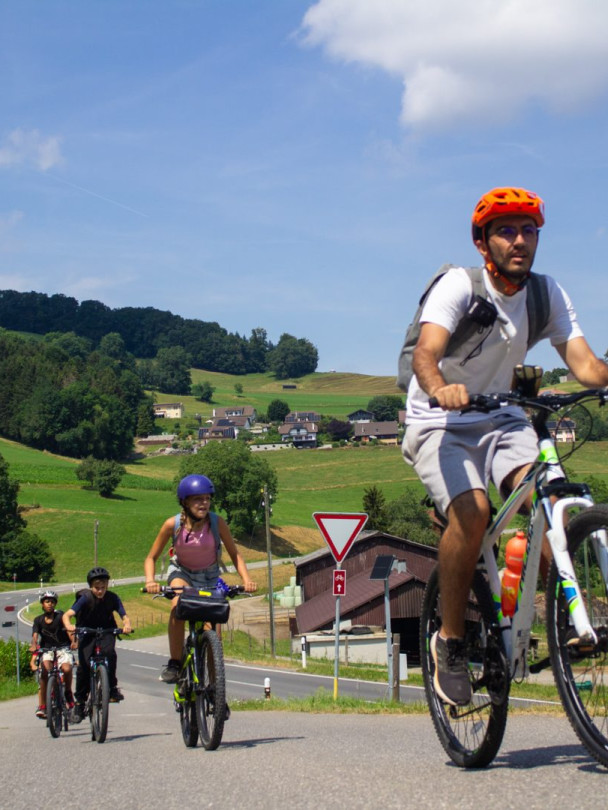

Summer camp funding in Switzerland
Summer camp fees in Switzerland typically run CHF 150–400 per week for day camps and CHF 700–2,500 per week for residential programmes. Scholarships and subsidies, from micro-grants to rare full awards, can cover travel, kit or most programme costs. Start searching 3–6 months before camp. Gather proof of income and residency early. Confirm award sizes, payment methods and covered items (meals, travel, insurance) in writing so we’ll plan and maximise aid.
Practical next steps
- Search early: Begin 3–6 months before the camp start date and note deadlines.
- Gather documents: Proof of income, residency, booking confirmation and any ID—assemble into one PDF.
- Prepare a short personal statement: Explain need, benefit to the child and why this camp matters.
- Get a recommendation: Ask a teacher, coach or community leader well in advance.
- Confirm payment terms: Verify award size, whether the camp is paid directly or reimbursed, and which items are covered (meals, travel, insurance).
- Combine funding: Layer micro-grants, local subsidies and payment plans to reduce upfront costs.
Tip: Always request written confirmation of award terms and deadlines so you can plan and maximise available aid.
 Watch on YouTube
Quick facts and cost context
We, at the young explorers club, give clear figures so families can compare options and plan budgets with confidence.
Typical fees and award sizes
Below are the common ranges and what they usually include — read each camp’s fine print before you book.
- Day camps: CHF 150–400 per week (typically includes daily instruction, snacks or lunch; transport sometimes extra) (Switzerland summer camps (2024 industry averages)).
- Residential / overnight camps: CHF 700–2,500 per week (includes accommodation, meals, supervision, instruction; some premium programs include transport, excursions, insurance) (Switzerland summer camps (2024 industry averages)).
- Partial scholarships: commonly cover 20%–80% of fees (for example, a 50% grant reduces CHF 1,500 to CHF 750 payable by the family) (Switzerland summer camps (2024 industry averages)).
- Full scholarships: rare, usually under 5% of available awards at most camps (Switzerland summer camps (2024 industry averages)).
- Typical award amounts: small camp-specific or NGO grants CHF 100–2,000 per session; larger multi-week exchange scholarships CHF 3,000–10,000 (rarer and program-specific) (Switzerland summer camps (2024 industry averages)).
Timing, deadlines and a practical cost tip
Start searching for financial aid 3–6 months before camp begins so you have time to assemble documents and ask questions (Switzerland summer camps (2024 industry averages)). Many providers set official scholarship deadlines about 6–12 weeks before the start date (Switzerland summer camps (2024 industry averages)).
Contact camp administrators and potential funders early to confirm exact deadlines and required paperwork; we, at the young explorers club, can help clarify what to prepare. Always verify what a listed price covers — meals, accommodation, instruction, on-site transport, off-site excursions and insurance can swing your effective cost dramatically. For quick reference on program-specific aid options, see our scholarships page.
 Watch on YouTube
Types of financial aid available and how camps administer funds
We, at the Young Explorers Club, break down the common aid types camps offer and how money is managed. I’ll cover definitions, concrete examples, allocation patterns, application steps, and a short contact template families can use.
Main aid categories
Below are the five main categories camps and partners use to reduce costs for families:
- Camp-specific scholarships (need- or merit-based): Grants run by the camp itself. They can be means-tested or awarded for achievement. Example: a camp may cover 30%–70% of fees for accepted applicants and reserve 5%–20% of seats for scholarship recipients.
- Government / cantonal subsidies (Youth+Sport / Jugend+Sport — J+S): Public subsidies target sport training and camps for Swiss youth. Example: J+S may provide per-participant subsidies for sport-focused camps, with amounts varying by canton and program.
- NGO and charity grants (Caritas, Swiss Red Cross, local youth offices): Local NGOs or social services often issue vouchers or micro-grants to low-income families. Example: a municipal youth office voucher combined with a small camp scholarship can markedly lower family outlay (Caritas; Swiss Red Cross).
- International exchange scholarships (Rotary, AFS, YFU): These grants support exchange participants or international program fees. They’re larger but competitive. Example: Rotary may offer partial awards of CHF 1,000–3,000 toward multi-week exchanges; AFS provides placement-specific scholarships.
- Private / corporate sponsorships or employer-funded benefits: Employers or local businesses sometimes sponsor places or offer education allowances. Example: an employer might contribute CHF 100–1,000 per year; a local company may sponsor a camper spot.
Allocation mechanics, application steps and admin practices
Camps typically allocate between 5%–15% of slots to some form of financial aid; individual camps often set aside 5%–20% of seats for awards. Programs usually separate awards by need-based (income-focused), merit-based (skill or achievement), or a hybrid model. I recommend families always ask how a camp classifies awards.
Many camps require a scholarship application or specific form in addition to the regular registration. Some decide aid at acceptance; others notify families afterward. Expect requests for proof of income or documentation of hardship. Camps vary on payment: some remit awards directly to the camp; others send funds to families to apply toward fees. I advise confirming the payment method in writing.
Camps commonly request follow-up items such as attendance verification, a brief post-camp survey, or documentation confirming ongoing need. I urge camps to publish a clear scholarship policy that states eligibility, the number of awards, typical award sizes, and application timelines. Families should ask for exact figures, deadlines, and whether awards reduce the balance or refund paid fees.
For more details on available options and application timing, see our page on camp scholarships.
Template email families can use to enquire about aid
Hello [Camp Administrator],
I am enquiring about financial aid options for [camper name, age, session dates]. Our household income is [brief statement: e.g., below X or experiencing hardship], and we would like information on available camp-specific scholarships, required application documents, deadlines, and whether awards are paid to families or directly to the camp. Could you also confirm how many awards you typically make and average award sizes?
Thank you,
[Name, phone, email]

Major public, NGO and exchange funding sources (names & specifics)
We list the main public, NGO and exchange funders that families should target for summer camp aid. Each entry highlights what they usually cover and how to apply.
Key organisations and what they typically support
-
Youth+Sport (Jugend+Sport, J+S) — Type: Public.
Typical support: per‑participant subsidies aimed at sport-focused training and camps; amounts vary by canton and program (Jugend+Sport, J+S).
Timeline & tip: Apply through the camp director or coach. We advise contacting the J+S cantonal office early to confirm deadlines and canton-specific amounts.
-
Caritas Switzerland — Type: NGO / social services.
Typical support: activity subsidies or vouchers for low-income families; awards tend to be small-to-moderate (Caritas Switzerland).
Timeline & tip: Applications or municipal referrals usually go via the local Caritas office. We tell families to check municipal social services for referral procedures.
-
Swiss Red Cross (local youth support) — Type: NGO / humanitarian programs.
Typical support: activity subsidies or local project funds directed at disadvantaged youth (Swiss Red Cross).
Timeline & tip: Local branches handle requests; we recommend contacting the municipal or national Red Cross office to learn what’s available in your area.
-
Municipal youth offices / local church programs — Type: Local government / community.
Typical support: vouchers or subsidies, often restricted to residents of the municipality or canton.
Timeline & tip: Apply via the municipal youth office. We stress checking residency rules and local deadlines early.
-
Rotary International — Type: Exchange & scholarship (club and district grants).
Typical support: partial-to-substantial grants for multi-week exchanges and some summer placements — commonly CHF 1,000–8,000 (Rotary International).
Timeline & tip: Club application cycles vary; contact your local Rotary club 3–6 months or more in advance.
-
AFS Intercultural Programs / YFU — Type: Exchange organisations.
Typical support: scholarships for exchange participants; amounts depend on program and donor funding (AFS Intercultural Programs / YFU).
Timeline & tip: Submit scholarship applications with your exchange application and check program deadlines.
-
Private foundations / family trusts — Type: Private philanthropic.
Typical support: project- or youth-specific grants; award sizes range widely from micro-grants to significant funding (Private foundations / family trusts).
Timeline & tip: Each foundation sets its own calendar. We recommend contacting program officers for guidance and sample successful applications.
We urge families to contact each organisation directly for current eligibility rules and average award sizes. For a broader overview and next steps, see our summer camp scholarships page.

Typical scholarship amounts, what they cover, and sample budgets
We, at the Young Explorers Club, group awards into four practical bands so families can plan quickly and confidently.
Award bands and typical coverage
- Micro-grants (CHF 50–200) — usually pay for transport, kit, or a slice of camp fees. They help remove small barriers fast.
- Partial grants (CHF 200–1,200) — commonly cover part of tuition or short-session costs; they often pair with local subsidies or sibling discounts.
- Substantial grants (CHF 1,200–4,000) — can take care of large portions of multi-week residential camps, including activity fees and some equipment.
- Full-coverage awards (CHF 3,000–10,000) — rare. They normally fund full exchange placements or specially funded spots and may include airfare, insurance, and full board.
Typical items awards will cover include tuition, accommodation, meals, activity fees, travel/airfare, insurance, and uniform/equipment. We encourage families to check award letters carefully—some grants exclude travel or insurance.
Worked examples and line-item budgets
Below are clear sample budgets to show how different awards stack up. Use these as templates when you check eligibility or set fundraising targets.
-
Case A — Local family, day camp
- Day-camp: CHF 300/week × 4 weeks = CHF 1,200
- Municipal subsidy: CHF 400
- Camp scholarship: CHF 300
- Sibling discount: CHF 120 (10% on second child)
- Family pays: CHF 1,200 − 400 − 300 − 120 = CHF 380
-
Case B — International participant, two-week residential
- Residential camp fee: CHF 2,000 (2 weeks)
- Camp scholarship: CHF 800
- Exchange organization grant: CHF 1,200
- Travel: CHF 600 (family)
- Balance: 2,000 − 800 − 1,200 = CHF 0 (camp fee covered); family pays travel CHF 600
-
Case C — Merit award + fundraising
- Multi-week exchange program cost: CHF 8,000
- Rotary partial scholarship: CHF 3,000
- Fundraising (crowdfunding/local events): CHF 1,500
- Family contribution: CHF 3,500
Percentage examples (CHF amounts relative to fee):
- A CHF 1,500 camp with a 25% grant → grant CHF 375; family pays CHF 1,125 (75%).
- 50% grant → grant CHF 750; family pays CHF 750.
- 75% grant → grant CHF 1,125; family pays CHF 375.
Simple visual for a CHF 1,500 camp (scale: █ = CHF 150)
Full price: [████████████████████] CHF 1,500
25% grant → family pays 75%: [███████████████—–] CHF 1,125 (grant CHF 375)
50% grant → family pays 50%: [███████████———-] CHF 750 (grant CHF 750)
75% grant → family pays 25%: [█████—————] CHF 375 (grant CHF 1,125)
We recommend families check complementary supports like municipal subsidies or sibling discounts and read award fine print. For details on our funding options and application timing, visit our page on summer camp scholarships.

Eligibility criteria, documentation checklist and common application mistakes
We, at the Young Explorers Club, review applications against a few predictable rules so decisions stay fair and fast. Typical eligibility factors include demonstrated financial need (official income statements or a means test), merit-based qualifications (activities, grades and referee recommendations), residency or municipal/cantonal restrictions, program age limits, and in some cases nationality or Swiss-residency requirements. For full program-level guidance and links to funders see our page on summer camp scholarships.
Documentation checklist, acceptable alternatives and common mistakes
Provide the following documents unless the fund specifies otherwise:
- Copy of camp acceptance or booking confirmation.
- Parental tax return or official income statement (most recent year).
- Proof of residency (utility bill, municipal registration).
- Short personal statement explaining financial need or merit.
- Recommendation letter (teacher, coach, social worker).
- Bank details for direct payment — redact account numbers if emailed.
- Any social services letters or proof of benefits, if relevant.
If you don’t have tax returns, these are acceptable substitutes:
- Recent bank statements (last three months).
- Employer letter detailing income.
- Social services or welfare office confirmation letter.
- Signed income declaration plus supporting documents (only where camps accept it).
Use the following sample wording to keep statements concise and focused:
-
Personal statement (one paragraph): “My family is applying for a partial scholarship to enable my child [Name, age] to attend [Camp, dates]. Due to [brief reason: e.g., recent job loss, single-parent household], we cannot afford the full fee. We appreciate any support you can provide and can supply income documents on request.”
-
Recommendation sentence for a referee:I recommend them for consideration for a scholarship.” — [Referee name, role, contact]
Avoid these common application errors:
- Do apply early; aim for three to six months before the camp starts.
- Do complete every requested field and follow the funder’s document formats.
- Do redact or send sensitive financial records through tracked or secure channels.
- Don’t miss deadlines or submit partial applications.
- Don’t apply for grants limited to municipal or cantonal residents if you’re international.
- Don’t rely on verbal promises — request award details in writing, including amount, payment method and any conditions.
We advise asking camps how many applications they receive versus awards made to judge competitiveness; that information often clarifies expectations and guides whether you should pursue alternative funding.

Application timeline, best practices to increase chances, and supplemental funding options for international families
We, at the young explorers club, recommend you apply 3–6 months ahead for most Swiss summer camps and start research at least 6 months out. Begin by comparing programs, eligibility, and funding sources — see our summer camp scholarships page for award types and common requirements. Send scholarship forms 3–6 months before camp and any municipal or NGO grant applications in that window.
Follow up 4–6 weeks before provider decision deadlines if you haven’t heard. Confirm the place 2–4 weeks before the start date, finalise payment plans, and request visa or support letters for minors early — processing can add weeks. Typical acceptance among qualified applicants ranges from about 10%–25%, so treat every application as competitive and complete.
We suggest these practical moves to strengthen applications and budget planning: personalise short essays and state need or merit clearly; organise financial documents in one PDF; request recommendations early and give referees a short template; meet every deadline exactly; ask camps whether they reserve seats or publish selection criteria. Use tracked delivery for sensitive paperwork and keep copies of all submissions.
Checklist, scripts and quick funding options
Below is a compact checklist and bite-sized templates to use immediately:
- Inquire: Ask camps about deadlines, required documents, number of awards, and visa support.
- Apply: Submit full scholarship applications; include budgets, bank statements, and a concise essay.
- Follow-up: Send a polite reminder 2–4 weeks before decision dates if you’ve had no response.
- Confirm: Obtain written award confirmation and a payment schedule before you accept.
- Best-practice tips:
- Personalise essays and supply clear financial documentation.
- Get recommendation letters early and provide referees a short template.
- Meet each deadline exactly and ask about reserved scholarship seats.
- Payment options and discounts to ask camps about:
- Monthly payment plans
- Sibling discounts (5%–15%)
- Early-bird discounts (5%–20%)
- Supplemental funding sources:
- Employer support (often CHF 100–1,000)
- Local Rotary or community sponsors
- Small-scale crowdfunding (typical CHF 200–1,500)
- Exchange grants (short-stay awards often CHF 100–1,500)
- Travel budgeting: allow CHF 200–1,200 for return flights within Europe/nearby and add visa fees if applicable.
- Crowdfunding headline (example):CHF 2,000 needed“
- Employer request (short sample):
- Subject: Request for CHF 300 travel/summer camp subsidy
- Body (2 sentences):CHF 300 subsidy to support my child’s attendance at [Camp Name], and a short sponsorship letter to assist with visa/award applications. Any help would be greatly appreciated and publicly acknowledged.”
- Negotiation script (short): “Hello, we need financial flexibility—do you offer payment plans, sibling/early-bird discounts, or partial scholarships? Can we review required documents and deadlines?”
- Worked budget example (CHF 2,000 camp):
- Camp fee: CHF 2,000
- Camp scholarship 50%: CHF 1,000
- Employer support: CHF 300
- Family pays: CHF 700 (payment plan ~CHF 233/month over 3 months)
 Watch on YouTube