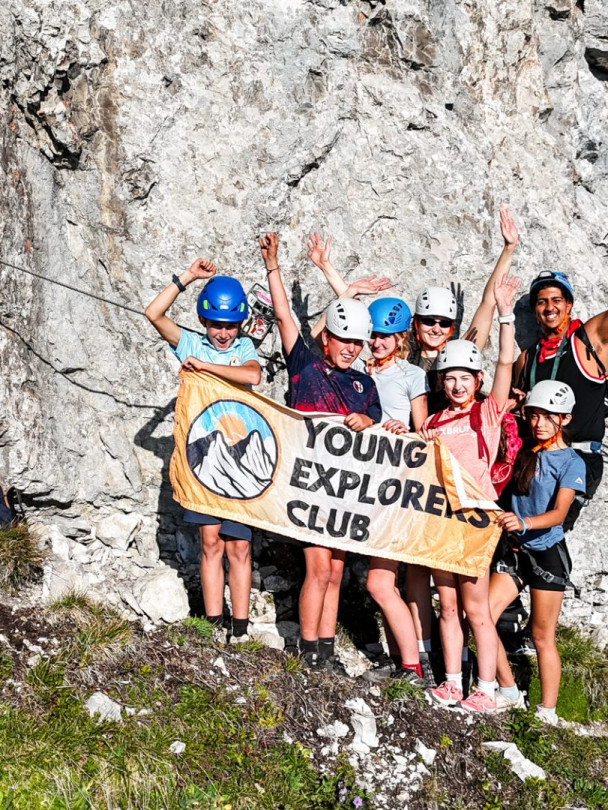
Switzerland summer rock‑climbing camps — overview
Switzerland‘s compact alpine terrain packs high peaks and varied crags into short approaches. That lets top summer rock‑climbing camps mix crag climbs, single‑pitch sport routes, via‑ferrata and basic alpine objectives in one week. Most run June–August. Valley temperatures typically sit around 15–25°C. To get the most on‑rock time and stay safe, choose programs that publish safety accreditations, list instructor‑to‑student ratios, spell out emergency and medical policies, and provide age‑appropriate curricula matched to your goals.
 Watch on YouTube
Why Switzerland Is a World-Class Place for a Rock‑Climbing Summer Camp
Switzerland packs 48 Alpine four‑thousanders into 41,285 km², so high peaks and crags sit unusually close together. Dufourspitze (Monte Rosa) tops out at 4,634 m, giving serious alpine objectives within short approaches. I use that compact geography when I plan week-long programs to mix crag climbing, single‑pitch sport routes, via‑ferrata and basic alpine routes in a single trip.
Best months for outdoor climbing camps are June–August. Valley temperatures typically average 15–25°C while higher alpine zones often range 0–15°C depending on elevation. Expect cool mornings and colder late afternoons at altitude; that timing shapes daily schedules and warm‑layer needs.
Accessibility is excellent: major international airports at Zurich and Geneva connect to fast SBB trains. Example transfer time—Zurich → Interlaken ≈ 2 hoursShort travel windows between crags let us access a wider variety of routes and difficulty levels inside a single week, which helps with weather avoidance and variety.
We, at the Young Explorers Club, recommend checking our summer camp in Switzerland guide to match objectives to location and season.
Packing and daily planning
Plan gear and schedules around altitude, weather swings and short transfers. Key points:
- Layer smart: lightweight base, insulating mid‑layer, and a windproof shell. Mornings and late afternoons demand the warm layer.
- Sun and cold protection: sunscreen, sunglasses, and a warm hat. Alpine sun plus chill at elevation is a real combo.
- Technical kit: light approach shoes, comfortable harness, locking carabiners and a helmet. Bring/wear gloves for via‑ferrata and rappels.
- Timing the day: aim for alpine approaches early, crag sessions mid‑day when rock warms, and technique or rescue drills in cooler afternoons.
- Route mix: pick one day for a sport crag, one for multi‑pitch technique, and one for a via‑ferrata or basic alpine approach to build skills fast.
- Logistics tip: use short transfers to rotate crags by aspect and difficulty, which helps avoid weather and keeps motivation high.
I plan itineraries that balance safety, progression and variety. Short national distances and strong public transport let me tailor each week to groups from beginners to advanced climbers while maximizing on‑rock time.
How to Choose the Best Camp — Practical Checklist & Comparative Criteria
We, at the young explorers club, expect parents and participants to demand clear, verifiable standards before committing. Prioritize published safety accreditations — check for IFMGA/UIAGM certification where alpine or multi-pitch climbing is offered and look for any SAC partnership. Require a stated instructor-to-student ratio; aim for 1:6–1:10 on technical days. Ask to see a published curriculum and sample daily schedules so you know how skill progression and downtime are balanced. Expect transparent pricing with an itemized inclusions/exclusions list. Verify documented medical and emergency policies, including nearest-hospital details and evacuation procedures.
Evaluate softer signals next. Inspect camp culture through photos, alumni testimonials, and social channels. Look for a sensible activity balance — climbing peaks should be mixed with rest, technical coaching, and non-climbing time. Confirm instructor experience includes teaching youth; coaching adults doesn’t guarantee expertise with children.
Plan your booking timeline early. Popular weeks fill fast; book 3–12 months ahead and confirm the refund and insurance rules before paying. If you want a step-by-step on choosing, see how to choose for a full guide.
10-point checklist for parents and participants
Use this checklist to ask concrete questions and record answers during calls or site visits:
- Are instructors IFMGA/UIAGM certified (where applicable)?
- Is an SAC partnership stated (SAC)?
- Is the instructor ratio published (seek instructor ratio 1:6–1:10)?
- Are staff certifications and CVs available for review?
- Are emergency procedures and nearest-hospital details published?
- Is pricing transparent — what is included and what’s excluded?
- Can you see a sample curriculum and daily schedule?
- Are helmets a 100% policy and is first-aid staffing described?
- Are participant reviews or references available from recent seasons?
- What is the cancellation/refund and insurance policy?
How to compare camps side-by-side
Create a simple comparison table with columns for safety accreditations, instructor ratio, published curriculum, transparent pricing, emergency policies, and participant references. Assign weights to each category — safety and emergency planning should get the highest scores. Request documentation for every claim: scanned guide certifications, copy of the daily schedule, sample packing list, and the medical/emergency plan. Call references and ask about real-world responses to injuries or bad weather. Inspect photos for consistent supervision and realistic activity pacing.
We advise scoring each camp numerically and comparing totals. If a camp can’t or won’t provide proof on any core item, mark it low. Trust camps that answer clearly and quickly, publish what’s included, and show recent alumni feedback.
Safety, Certifications & Staffing Standards to Look For
We, at the Young Explorers Club, expect clear, published staff credentials before we commit. Look for IFMGA/UIAGM guides on alpine and multi‑pitch programs. For youth-focused climbs, require nationally accredited climbing instructors and public CVs that list experience, qualifications and recent training.
Instructor-to-participant ratios must be explicit. I expect:
- 1:6 for younger children or complete novices.
- 1:8–1:10 for teens or older beginner groups.
Lower ratios are a sign the program treats safety as a priority.
On-site safety requirements should be written and visible. Demand that camps enforce helmets 100% for any outdoor climbing — and review helmet selection guidance in our climbing helmet guide: climbing helmet. Require pre-activity risk assessments for every route or exercise. Insist on a written emergency action plan that staff can produce on request.
Medical and rescue training matters. Staff should hold Wilderness First Aid at minimum, with at least one member certified at a higher level for remote or high-alpine operations. Verify:
- Who holds first-aid certifications and their expiry dates.
- That at least one rescue-capable instructor is on every high-alpine group.
List emergency numbers plainly and expect them to be posted: 112 (general EU emergency), 144 (ambulance), Rega air rescue 1414. Ask camps for the nearest hospital, sample emergency procedures, and average local response times if available. Those answers reveal how realistic the camp’s plans are.
Technical operations need documented rope and rescue plans. Confirm group ropes, anchors, hauling systems and rescue protocols match the technical difficulty offered. Ask for sample rescue scenarios or a short video of a practiced rescue. For high-alpine work, require satellite or verified mobile communications carried on each group. Cellular dead zones happen; redundancy prevents delays.
I also check operational transparency. Camps should publish:
- Staff certifications and CVs.
- Ratios by program.
- Copies or summaries of emergency action plans.
- Recent incident reports or safety audits, if available.
Quick on-site checklist
Review this on arrival or during your pre-camp call:
- Published staff CVs and IFMGA/UIAGM or national accreditations.
- Confirmed ratios (1:6 or 1:8–1:10).
- Helmets enforced 100% and appropriate gear inspections.
- Pre-activity risk assessment logs.
- Written emergency action plan and posted emergency numbers.
- At least Wilderness First Aid training on staff.
- Nearest hospital, sample emergency procedures, and typical response times.
- Appropriate group rope/rescue plans and satellite/mobile comms for alpine routes.

Types of Climbing Camps and Which Format Is Best for Different Ages and Goals
We, at the Young Explorers Club, classify climbing camps by format, age suitability, instructor ratios and intended outcomes so families can pick the right fit fast. I’ll map each common format to the ages and goals it serves, plus the practical trade-offs you should expect.
Formats, ages, and ideal outcomes
Below are common camp formats and how they match to different climbers and goals.
- Residential 1–2 week camps — Best for ages 13–17 and motivated younger teens. Our 1:8–1:10 ratios let instructors progress groups from top-rope to lead introduction and multi-pitch basics. A one-week block builds solid top-rope competence; two weeks lets committed teens gain lead confidence and basic multi-pitch skills. Choose two weeks if your goal is real progression rather than sampling.
- Day camps — Ideal entry point for ages 8–12 and families who want lower cost and no overnight logistics. We run tighter supervision (aiming for about 1:6 where possible) and focus on top-rope technique, safe belaying and climbing games that reinforce rope skills. Day camps accelerate early competence without the commitment of residential stays.
- Weekend clinics — Good for supplementing weekly training or for adults looking to focus on a single skill (lead switching, anchor building). We design clinics as intensive skill blocks that you can slot into an existing training plan.
- Family camps — Suited to mixed-age groups where parents climb with kids. We balance easy routes and skill sessions so families share time on the wall while each member gets targeted coaching.
- Youth-only camps — Optimised for social progression and peer learning. We use age-specific curricula for 8–17 year olds, splitting younger and older groups so sessions stay age-appropriate and safe.
- Guide-led multi-pitch/alpine weeks — Targeted at adults and older teens (often 16+ or with specific prerequisites). We recommend IFMGA-guided weeks for serious alpine ambitions; expect higher costs and technical prerequisites such as prior lead and multi-pitch experience. These weeks focus on route-finding, glacier travel where applicable, and committing multi-pitch sequences.
- Via‑ferrata experience camps — Great for exposure to airy, fixed-protection terrain without full lead commitment. We teach clipped-protection technique, movement on exposed terrain, and risk awareness. These camps suit confident top-rope climbers ready to handle exposure.
- Indoor-to-outdoor transition camps — Designed for climbers who’ve trained indoors and want to move safely to real rock. We cover gear differences, route reading, outdoor belay technique and ethics. Best for teens and adults who’ve already mastered indoor lead.
We structure programs around clear instructor ratios and outcomes so families know what to expect. If you want guidance on program fit, you can choose the best camp with our decision checklist.
We recommend these quick pairings by age and goal:
- Ages 8–12: day or short residential camps with ~1:6 focus on top-rope competence and safe belaying.
- Ages 13–17: residential 1–2 week camps with ~1:8–1:10 aiming for lead introduction; two-week formats deliver real progression.
- Adults/older teens aiming for alpine: IFMGA-guided multi-pitch/alpine weeks after you’ve proven consistent lead and multi-pitch experience.
Setting expectations: One week typically yields reliable top-rope competence. Two weeks often produces lead confidence and basic multi-pitch skills for motivated teens and capable adults. Guide-led alpine weeks teach advanced technical and route-management skills, but they cost more and require prerequisites. Via‑ferrata camps give exposure practice with fixed protection without the commitment of becoming a lead climber.

Typical Camp Curriculum & Sample Daily/Weekly Itinerary
We, at the Young Explorers Club, structure climbing weeks to build skills fast and safely. Camps come in three common formats: compact 1-week progressions, extended 2-week courses that add lead and basic multi-pitch, and weekend clinics for fresh introductions. Each format uses repeated morning skill blocks and afternoon crag practice to reinforce learning.
Mornings and afternoons time windows are predictable and purposeful. Mornings run 09:00–12:00 for focused technique work. Afternoons run 14:00–17:00 for outdoor application, with earlier alpine starts for higher objectives. I schedule a clear lunch and rest break to reduce fatigue.
Performance benchmarks and safety checks are non-negotiable. A belay assessment example: the participant must deliver a safe catch with no weight transferred to the instructor harness during orientation. I use controlled drills to test gear fit, knot integrity, and communication before any outdoor lead or multi-pitch work. Weather plans sit in every itinerary; if rain moves in we switch to indoor gym sessions or technical workshops on anchors, rescue basics, and rope management.
Sample 7-day youth residential itinerary (time windows included)
Below is a typical daily flow I use; adjustments are made for group size, age, and objective.
- Day 1 (09:00–17:00): Arrival, gear fit, safety brief, top-rope technique, belay assessment.
- Day 2 (09:00–12:00 skills clinic; 14:00–17:00 crag): Knotwork, static and dynamic belays, movement technique, on-belay coaching.
- Day 3 (09:00–12:00 skills clinic; 14:00–17:00 crag): Route reading, footwork drills, progressive lead-up problems on real rock.
- Day 4 (09:00–12:00 skills clinic; 14:00–17:00 crag): Efficiency on the wall, clipping practice on top-rope anchors, mock scenarios for gear failure.
- Day 5: Lead introduction and lead practice on single-pitch, including controlled lead-fall drills for older groups.
- Day 6: Basic multi-pitch approach, rope team movement, and descent practice — or a guided via‑ferrata day depending on group skills.
- Day 7: Skills review, final climbs that showcase progression, pack-up, and departure.
Learning outcomes align with duration and age. After one week participants should achieve safe top-rope competence and belay proficiency. Two-week attendees gain a structured lead introduction and basic multi-pitch workflow. Weekend clinics leave climbers comfortable with core skills and motivated to continue.
I plan contingencies for common issues. For slow skill uptake I add extra belay rotations and mini-assessments. For adverse weather I book local gyms and run technical seminars. For mixed-ability groups I split sessions by objective and rotate instructors so every climber gets targeted coaching.
For parents and older teens who want more detail on choosing the right program, see our guide to summer camp in Switzerland.

Where to Climb, Grades, Gear, Accommodation, Costs & Logistics (All-in-One Practical Details)
We, at the young explorers club, build climbing weeks across three Swiss regions that suit different goals and seasons. Interlaken and the Berner Oberland are our go-to for sport crags, multi-pitch routes and the gateway to higher alpine lines. Valais (Zermatt and Val d’Anniviers) gives access to classic ridges and higher-altitude rock that needs alpine techniques. Ticino’s southern cliffs offer warmer sport climbing and shoulder-season options with long, sun-drenched walls.
Grading primer and starter grades are straightforward and practical. Sport crags in Switzerland commonly use French grades: beginners sit around French 3–5; intermediate climbers feel at home in 5+–6b; advanced climbers work 6b+ and up. Alpine rock routes often use UIAA grades and range I–VIII; expect lower numbers for easy scrambling and higher numbers for sustained technical routes. I tell parents and students to match grades with recent experience, not just max redpoint.
I clarify what camps provide versus what you should bring. Camps typically supply group ropes, some group helmets and a selection of harnesses, but fit and comfort matter. We recommend a personally fitted harness and helmet for all participants; that reduces fuss on day one and improves safety.
Essential personal gear and technical specs
Below is a packing checklist I use for students and parents — bring the highlighted personal items unless the camp explicitly confirms otherwise:
- Fitted harness (adjustable, youth or adult size).
- Climbing shoes (comfortable, broken in).
- Helmet (certified, fitted for head).
- Belay device (ATC or GriGri) plus a locking carabiner.
- Dynamic single rope 9.8–10.2 mm if you own one; half/double ropes 8.0–8.6 mm for alpine use.
- Approach shoes or sturdy trainers for trail access.
- Layered clothing and a lightweight shell jacket for storms.
- Sun protection: SPF, sunglasses, lip balm.
- Small daypack with water and snacks.
I point to the technical spec choices above because rope diameter and device compatibility matter on multi-pitch and alpine terrain. Example brands I recommend for quality and field support include Mammut, Petzl, Black Diamond, La Sportiva, Scarpa, Edelrid and DMM — listed as examples only.
Accommodation and meals vary by program length and style. Options include SAC huts for high-alpine weeks, hostels, chalets and family-run pensions for valley-based camps, plus campsites when budget matters. Many residential weeks run full board with packed lunches on crag days. Special diets are usually accommodated if you tell the organizers in advance.
Transportation and logistics stay simple if you plan ahead. Major international hubs are Zurich and Geneva with reliable SBB train links; expect roughly Zurich → Interlaken ≈ 2 hours and Geneva → Lausanne ≈ 40–60 minutes as planning estimates. Local transfers use public trains and buses or arranged private shuttles. I advise arriving with an extra day or buffer time for gear fitting, orientation and any last-minute purchases.
Booking lead times and costs influence decisions. Book 3–12 months ahead for peak summer weeks to lock in dates and instructor ratios. Typical weekly prices sit between CHF 600–2,500 depending on accommodation standard, instructor ratio and alpine technical content; IFMGA-led weeks fall at the top of that range. Standard inclusions normally cover instruction, group ropes, full board (if residential), local crag transport and basic emergency coverage. Camp fees typically exclude personal travel to camp, specialist personal gear, insurance, guide gratuities and occasional hut fees.
I share practical tips I insist every camp communicates clearly. Camps should state what’s provided versus required and offer a packing checklist for parents. Verify route names and grades from current guidebooks or regional climbing associations before recommending specific climbs. For families still choosing a program, consult our page on how to choose the best camp to compare instructor ratios and accommodation styles.